|
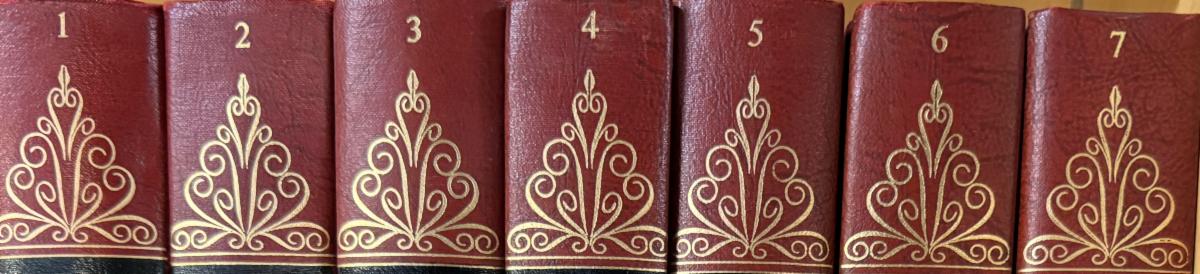
Nothing one owns affects and reflects one’s personality more than their books. We read them and they touch our hearts and stretch our minds. Reading books focuses one’s visions, clarifies thought, and gives us the sense that we are not alone in our minds. Physical books trigger sudden recollections of the thoughts and feelings their reading prompted. In choosing a book to read, one curates the ideas that will nurture one’s mind. Others see our books and understand us better for what they reveal about ourselves and our hopes.
Very few objects are as intimate as a book. They are low-tech vessels where refined thoughts, ideas, stories, and knowledge are there for the taking. To sit among one’s books is to find company with great minds. Readers call their books by their authors’ names more often than their titles. My books feel like brilliant friends. How fortunate I am to know Emma Goldman, Noam Chomsky, and Alan Watts.
It is hard for me to identify aspects of myself not shaped by reading. Since my youth, I have collected books I intended to read. For many years, I kept the books I had read– their physical presence like monuments and reminders of my journeys, my knowledge, my achievements, and the person I became. By my late twenties, I had developed appreciation for the bodies and historicity of books and I started seeking the nicest copies I could locate. For reasons I still haven’t fully comprehended, possessing the first edition, a fine press edition, or an autographed copy of a book that has impacted me, brings an exquisite joy that I am content relishing without scrutiny.
The idea of my book collection sounds fancier than it is. It’s only the books I like and want to read, in very good copies– not institutionally significant, but awesome and wonderful to me. The books will survive me, but the collection will not. Individual items will find their ways into new hands that will value and enjoy them as much as I did, I hope. Many of my books are older than I am. I am grateful to the succession of careful owners it took to preserve these books in good condition.
Reading is the foundation of bibliolust. The profound effect of the author’s mind pouring into the reader’s endows books with iconic significance in the lives of book collectors. The pursuit and acquisition of individual books while building a book collection can be as exciting as the first epiphanous reading. If a desired book is long in coming or dear in price, we might love it even more. Persons make lots of things and many can be collected. None has the mind and soul capacity of the book.
| |
RECEIVE 20% OFF WHEN YOU PURCHASE DURING MARCH AND APRIL | |
|
By Walter M. Miller
Harper Voyager
Paperback $18.99
Best Wellers' Price $16.37
Reviewed by Thomas Moore
| |
|
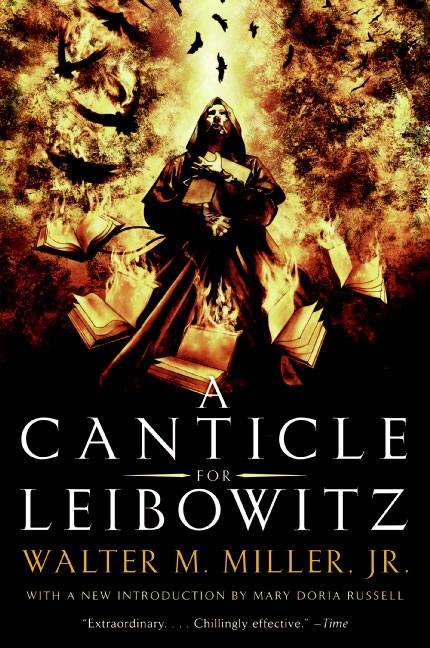
You should read A Canticle for Leibowitz if you'd like to ponder the cycles of humanity's conflicting agendas through the lens of science fiction. It is deceptively relevant to the struggles of our present society, as we contend with weapons turned upon the defenseless, declining environmental conditions, and the efforts of the ignorant to hinder both progress and decency. Miller presents an extreme global situation, where nuclear war has resulted not only in devastation, but in widespread distrust of the scientific understanding that led to such weapons being created in the first place. When the masses, labelled "simpletons", but proudly adopting the name, root out scientists, teachers, and officials deemed too dangerous on account of their intellect, civilization as we knew it enters a new dark age. Much like medieval times, it falls to the religious orders to doggedly preserve the books and documents of the past, despite not fully comprehending the relevance such information might hold for future re-discoveries. Amid this depressing backdrop, Miller unfolds his narrative in an awkwardly humorous and matter-of-fact tone that adds to the book's charm.
Miller's best known novel hits several points of interest for me, so it seems nearly inevitable I would have read it eventually. Most immediately, the setting of the southwestern United States (albeit after nuclear devastation) sets a somewhat familiar landscape. Brother Francis, the first central character to be introduced, is relatable, although in aspects unparallel to my own life. Like me, he is a young man raised in Utah, but the Utah of his time is a wasteland dominated by superstitious tribesmen. He is a defector from the tribes and a convert to Catholicism, while I was born-and-raised Catholic and am now estranged. His nervous and unsure behavior is reminiscent of the traits I believe, perhaps too hopefully, that I left behind in childhood. Finally, the book is a match for me because I'm a sucker for dystopian science fiction.
This book was originally written as three separate short stories, and it was not until writing the third that Miller decided his work constituted a novel. This means narratively that each of the three parts focuses on a different series of events, collectively covering a wide span of time without conventional continuity. The reader witnesses the transfer of information and the making of legends over generations. Within this format, the author also offers unforced worldbuilding, largely through character dialogue. The book presents many more thoughtful questions than answers, all the better to really make you think.
A theme that really resonated with me in the context of our work here at the bookstore is the preservation of knowledge. Here we store these items that contain so much of human history and the ideas of past generations, just waiting to be explored again by the very next person to take an interest. If I can recommend to anyone with even a slight interest in science fiction a work that gave me a greater appreciation of this task, then please consider Miller's timeless classic.
| |
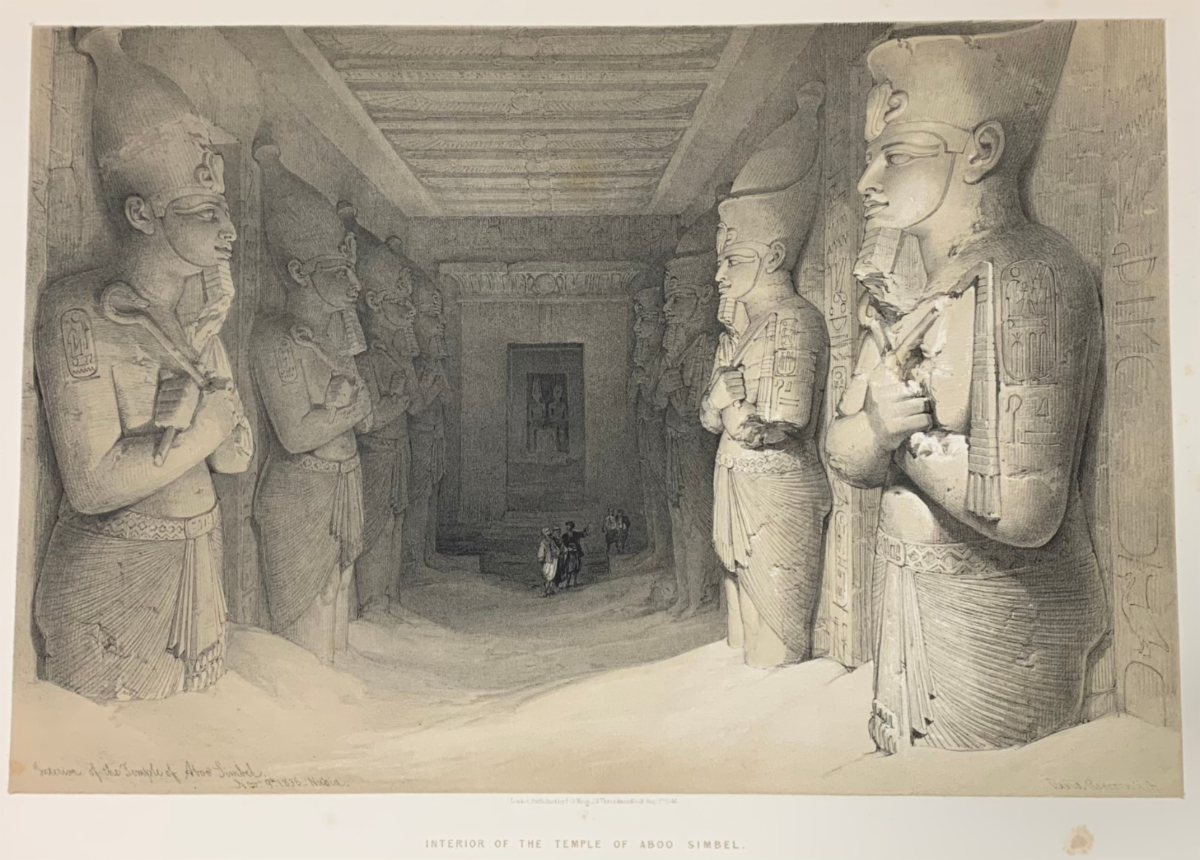
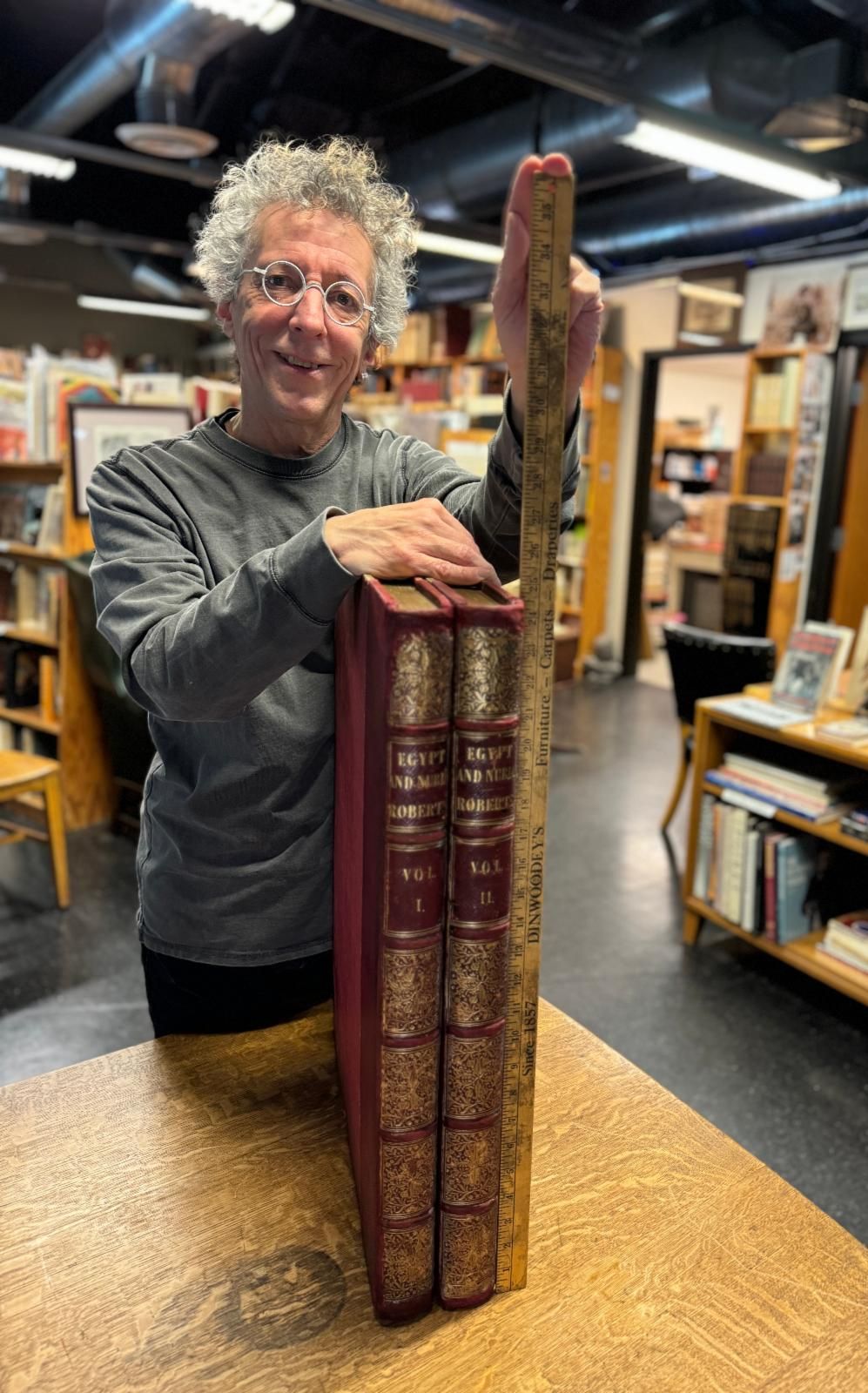
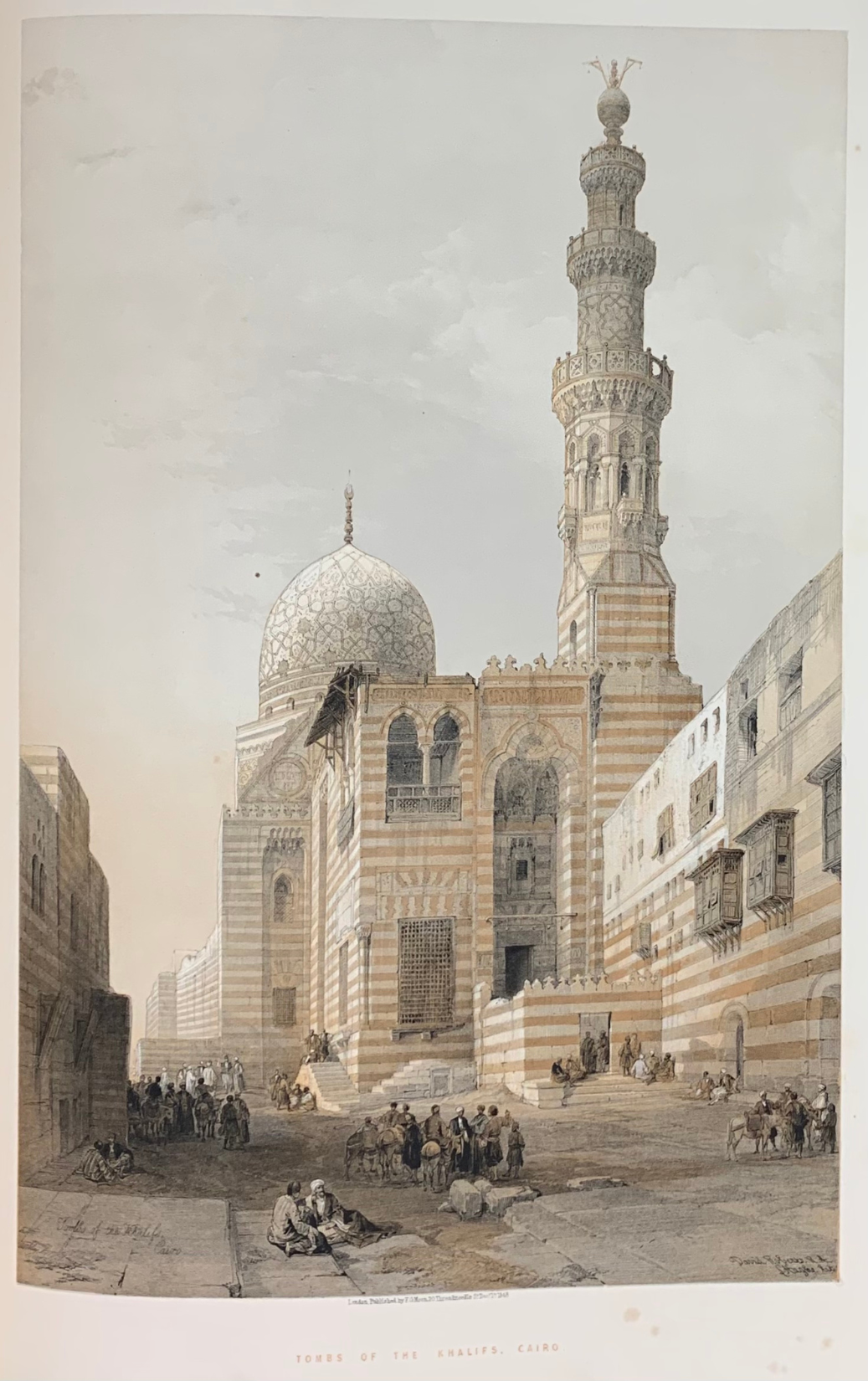
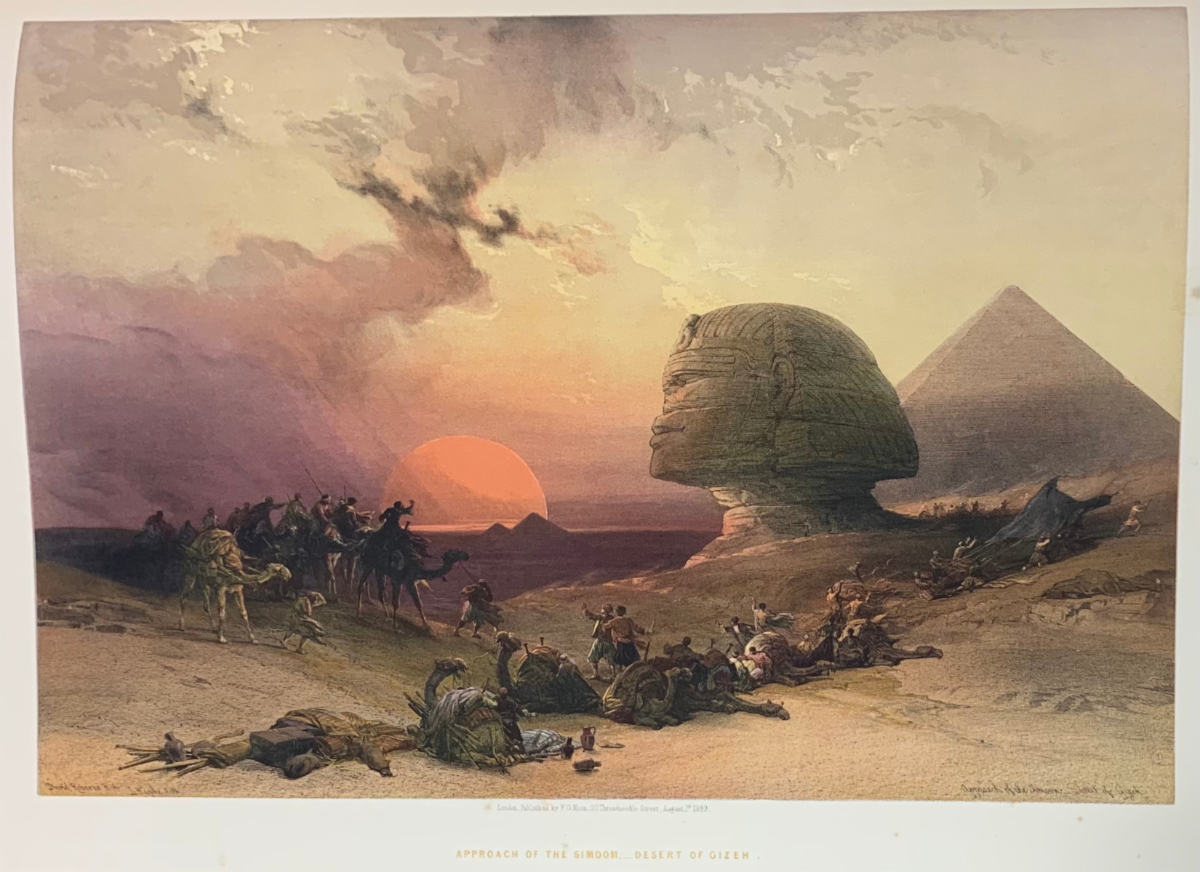
A while back, we acquired a set of the monumental and historically important folios, Egypt and Nubia by David Roberts and published in London between 1846 and 1849. These very heavy volumes contain 125 poster-sized engravings, nearly all tinted and with a few in full brilliant color. Since first getting the set, we have had the ¾ red leather morocco bindings restored to make the beauty of the package match that of its content. This gorgeous set is available now for $35,000. | |
|
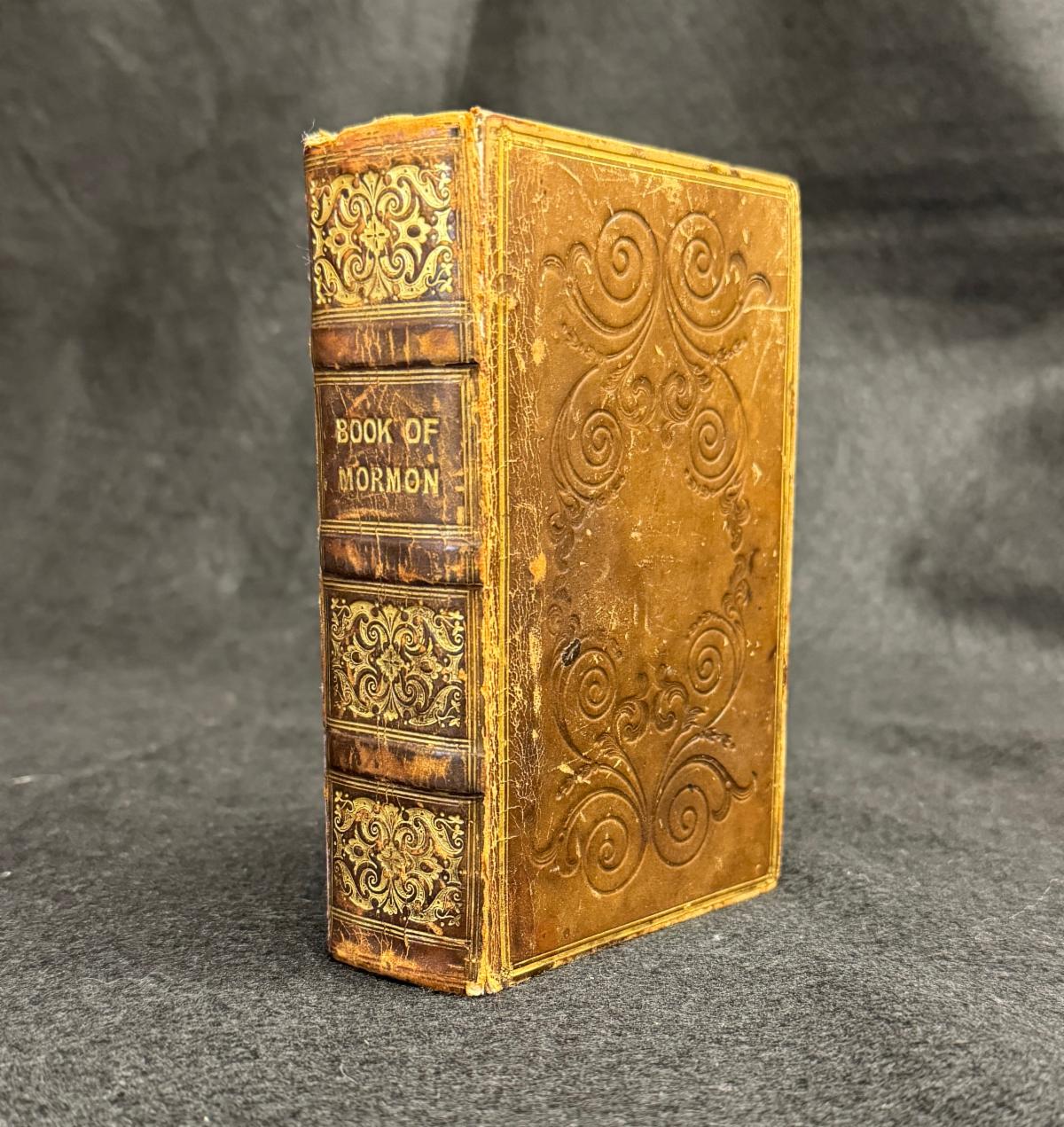
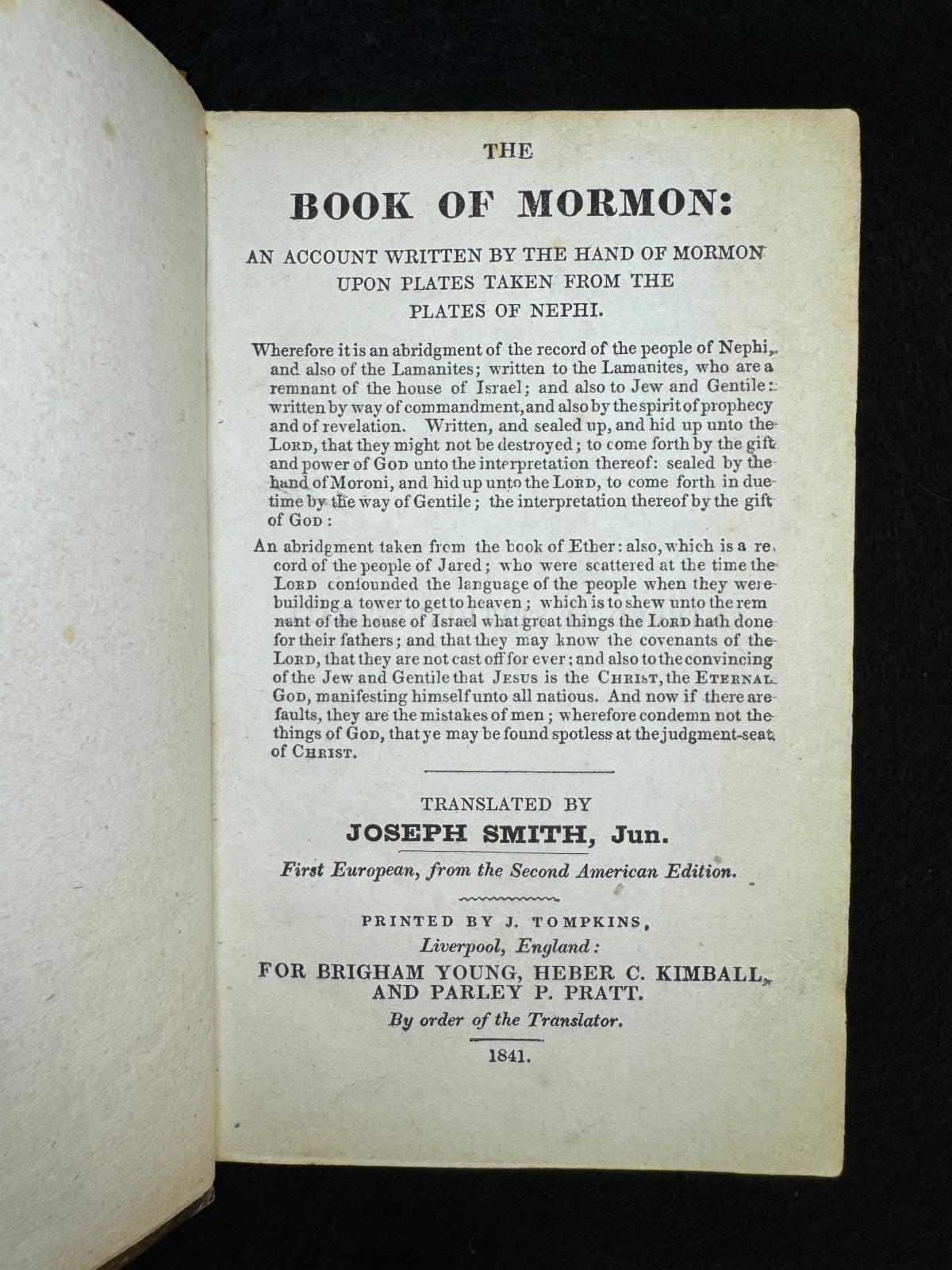
The first non-American appearance of Joseph Smith’s Book of Mormon occurred in England in 1841 in an edition of some 4050 copies, not all bound at once and also bound variously. 138 fancy copies were bound in decorated morocco. We have such a copy in tan leather with elaborate arabesque gilded backstrip and blind decorative designs in covers and pale yellow endsheets. Its edges are gently rubbed. A great unsophisticated copy in the most elegant contemporary binding. $40,000 | | |
|
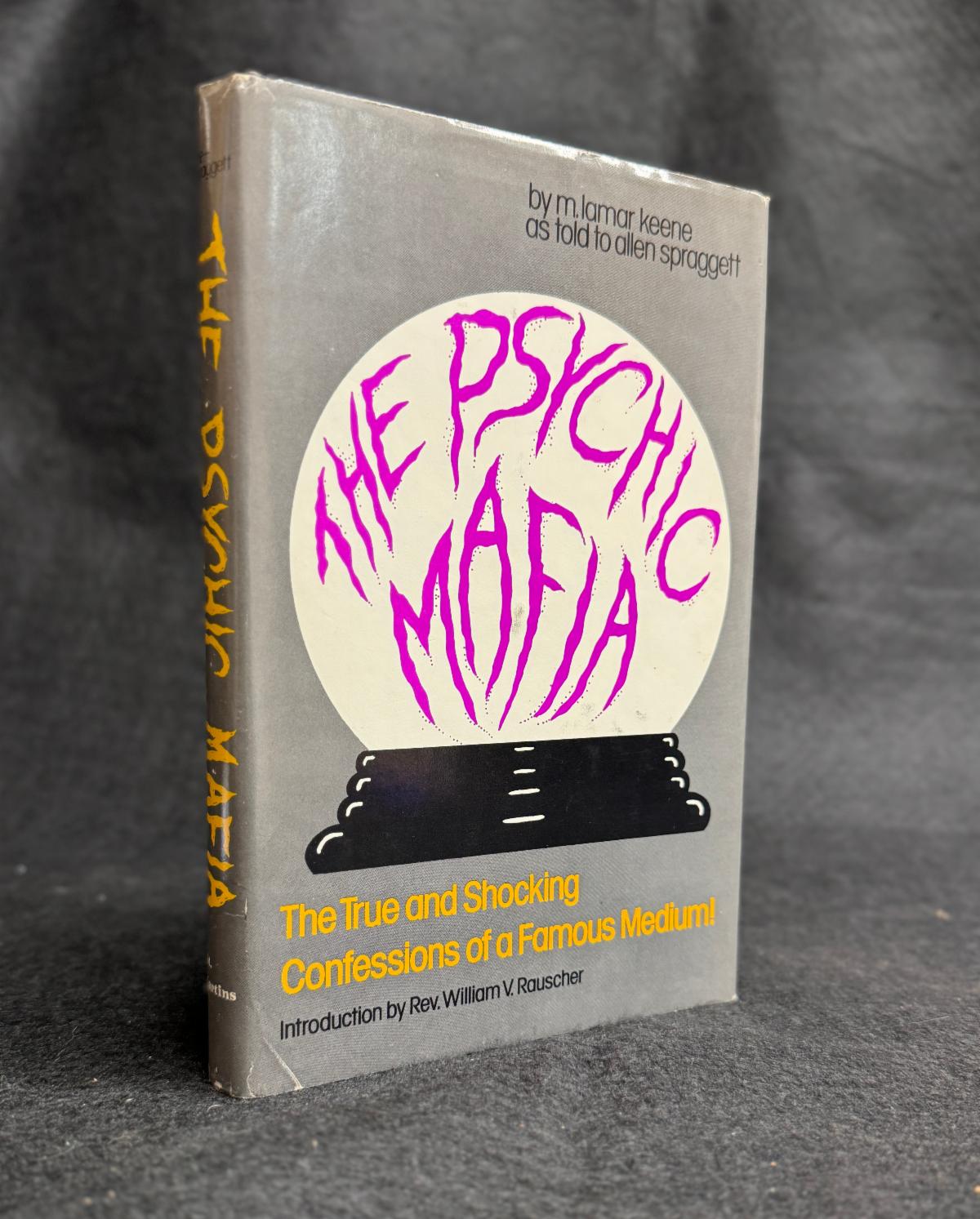
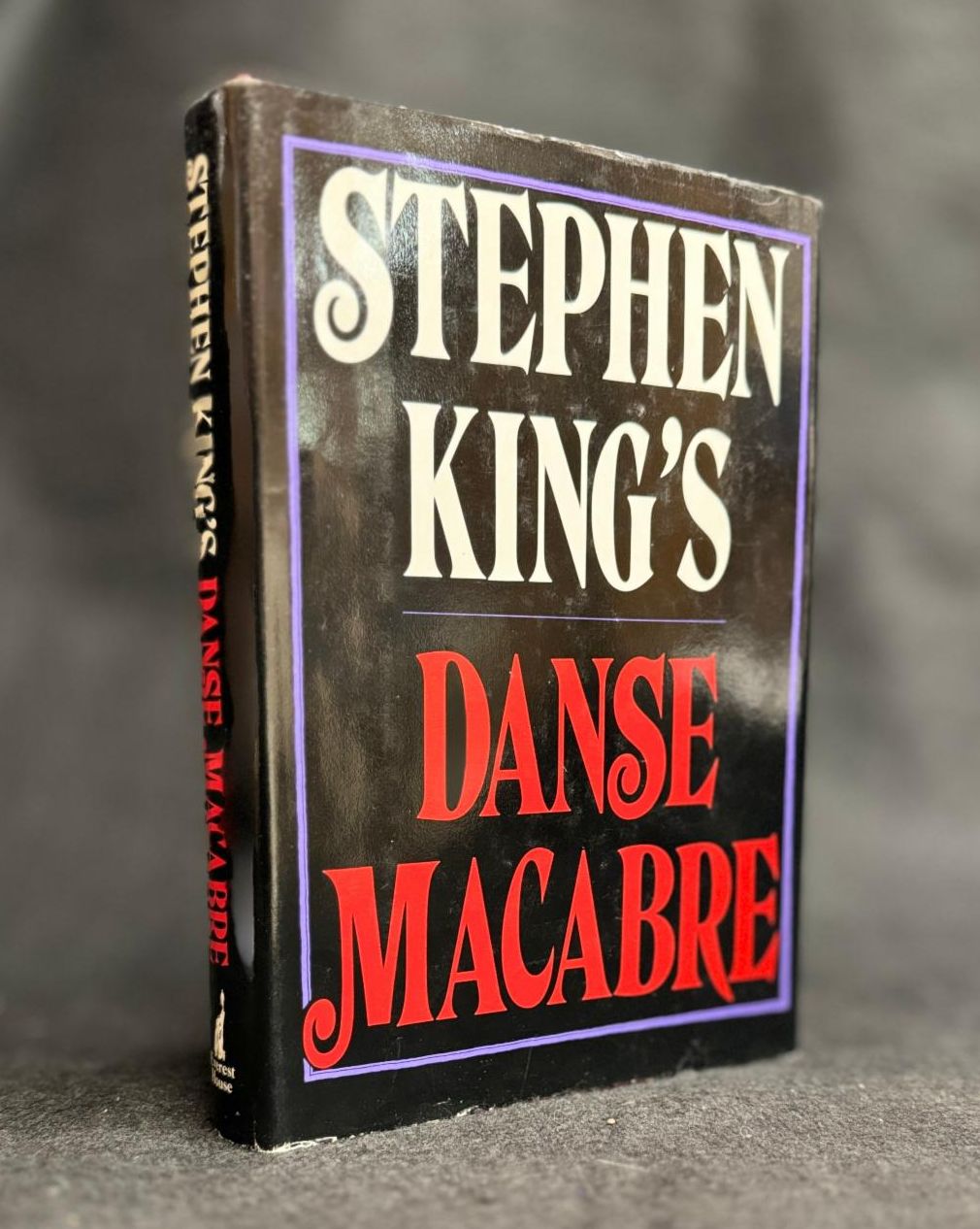
A really nice 1st edition of Stephen King’s 1981 book on horror, Danse Macabre in a brilliant clean dust jacket with only barely rubbed edges. $75 | |
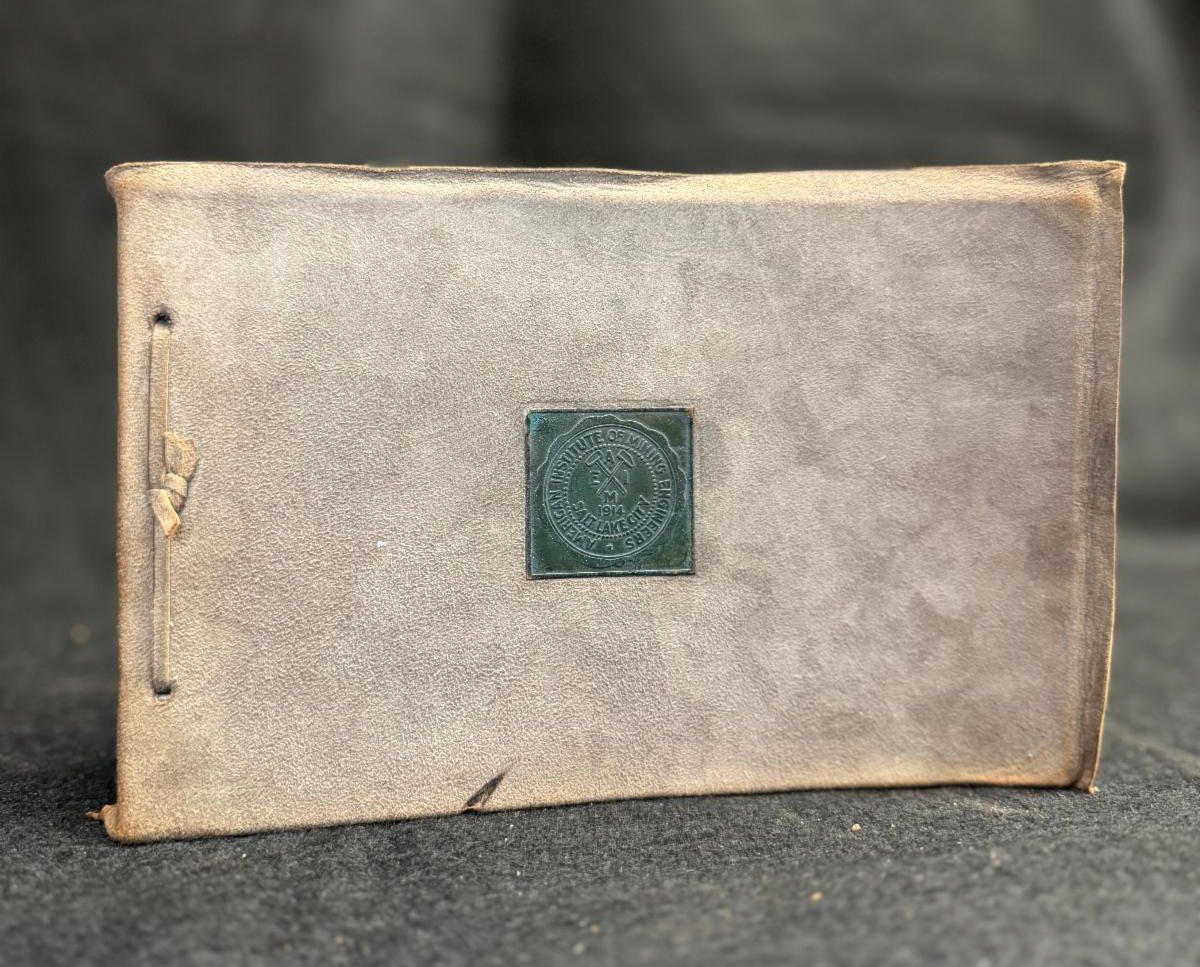
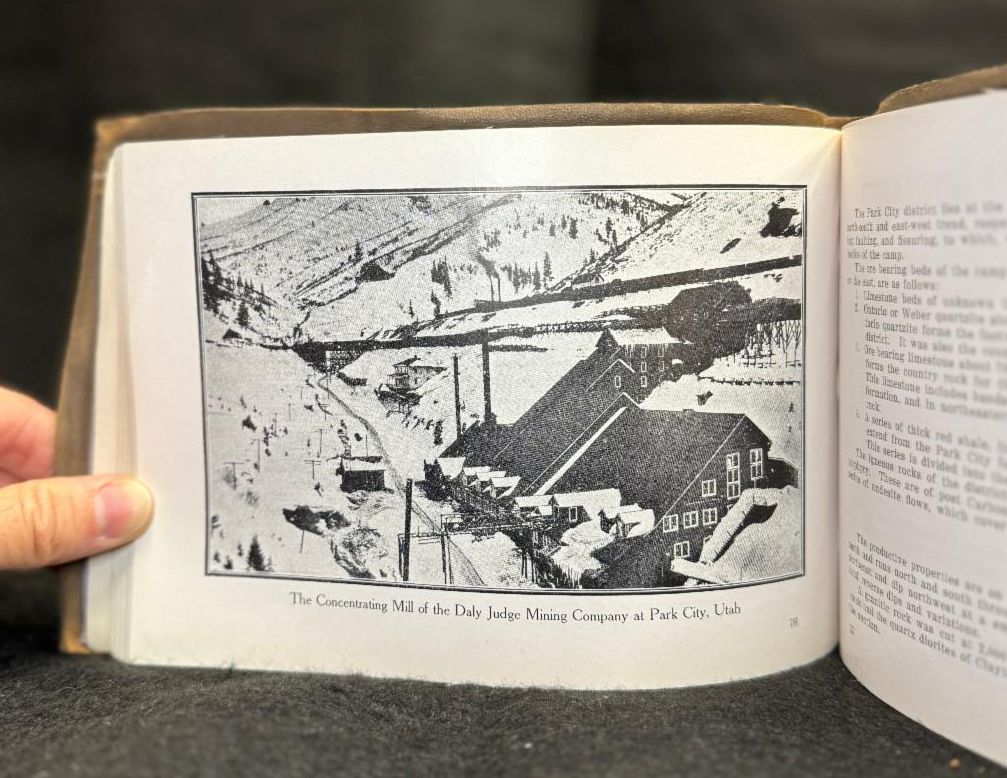
American Institute of Mining Engineers. A book from their 108th meeting in Salt Lake City, Utah, August 10-14, 1914. A suede bound, saddle sewn oblong octavo with 192 pages with many photos and text all dedicated to Utah. Terrific photographic content! $60 | | |
|
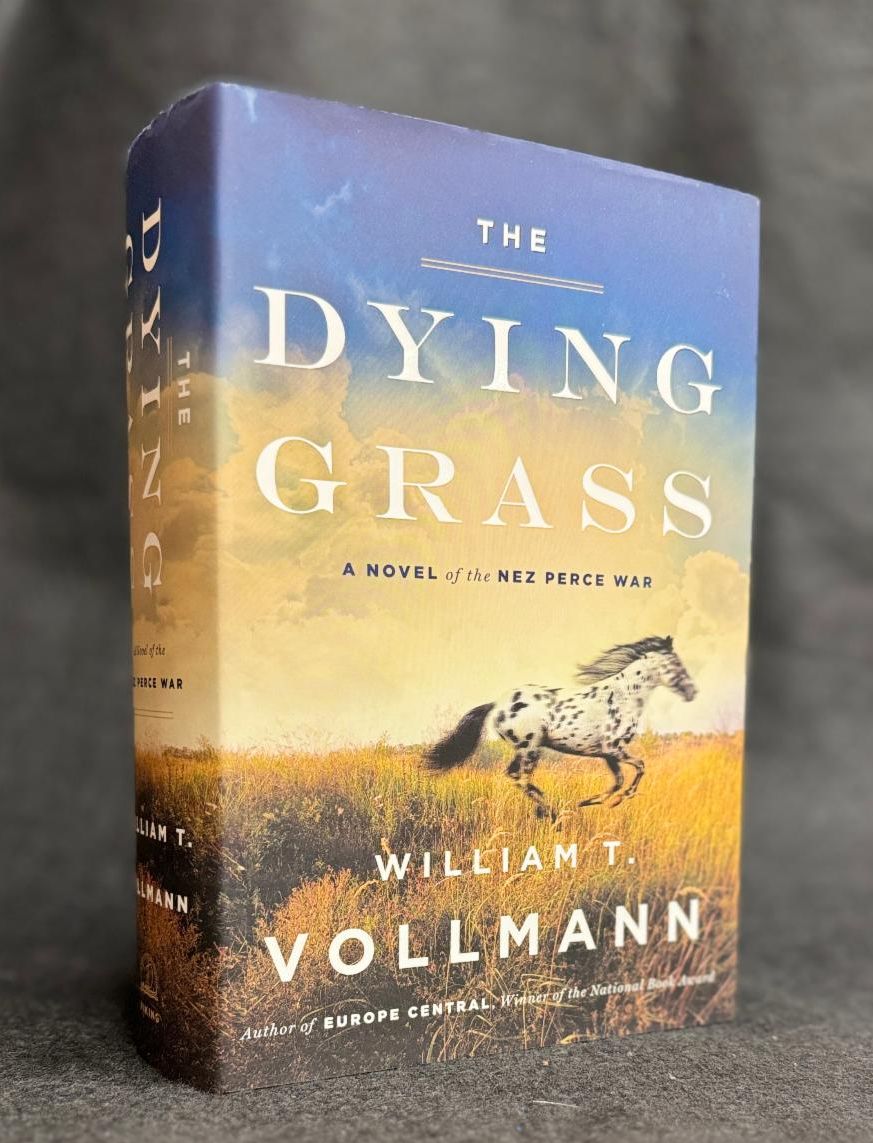
A fine 1st edition of William Vollmann’s massive Dying Grass: A Novel of the Nez Perce War. It is his fifth installment of the envisioned seven volume historical series Seven Dreams: A Book of North American Landscapes. This 1356 page work concludes with 137 pages of Chronology, Glossaries, Sources and Notes. Published in 2015. Signed by Vollman with a hasty sketch, on title and facing pages. $225 | |
|
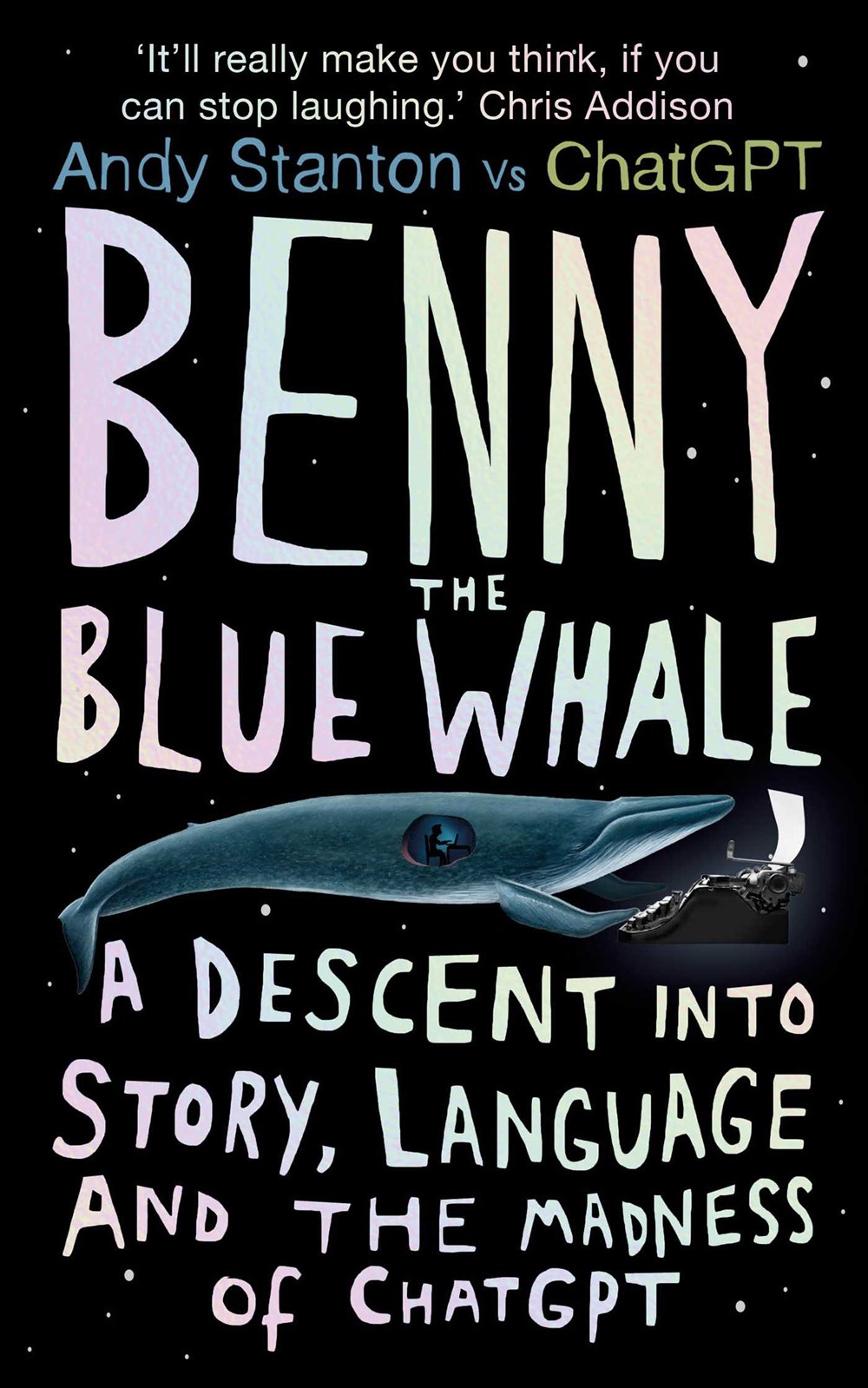
By Andy Stanton and ChatGPT
ONEWorld Publications
$ 29.00
Review by Claire Margetts
| |
|
I’ve spent the better part of a week ardently trying to describe Benny the Blue Whale to friends, family, and anyone who happens to look in my direction. I’m desperate to talk about it, but when I try, I’m left floundering for the right words. How do I tell people that this book on literary theory is outlandishly funny? How can you take me seriously when I talk about storycraft in the same sentence as Colonel Sanders’ evil plot to destroy the multiverse? Or, how can you not scoff when I use “creative writing” and “ChatGPT” together in a sentence? What I can say is that Andy Stanton has created an electrifying book that defies categorization.
Maybe I’ll use Stanton’s method and work with ChatGPT for an A+ book review:
Title: "Benny the Blue Whale" - A Riotous Romp into Absurdity and Literary Escapades
"Benny the Blue Whale" by Andy Stanton is a comedic gem. Stanton, inspired by greats like Douglas Adams and Roald Dahl, concocts a whimsical tale in collaboration with ChatGPT. The story revolves around Benny, a lovable blue whale with a unique charm.
Stanton skillfully blends humor, critiques, and playful musings on storytelling, with asides in the margins detailing his writing escapades. "Benny the Blue Whale" propels readers into a delightful whirlwind of absurdity as Stanton's storytelling meets ChatGPT's unpredictable twists. This fusion of Stanton's mastery and AI's contributions results in an entertaining experience, a must-read for those who relish humor that transcends storytelling norms.
Just as AI became a tool widely used by the public, Stanton set out to test its storytelling abilities. Sure, it can come up with text like the boring word-vomit above, but he wondered if he could coax a cohesive narrative structure out of the bot. What follows is the whole back and forth between human and robot as they workshop a story about a blue whale with a tiny penis.
Working with such a nonsense jumping off point, Stanton is able to test the bot’s use of language and intuition within a storytelling lens. He becomes an amature prompt engineer as we see how he learns to tailor his prompts to get the results he’s looking for. What truly makes this book sing is his running critique of his process and exactly what he is trying to achieve with each lunatic prompt. I woke up my cat on several occasions from laughing so hard. It’s an interesting spiral into how stories work and what goes into creating one that is even close to readable. Will Stanton be able to use this pocket Vonnegut to tease out the novel of the century, or is this an art that still belongs wholly rooted in the human experience? Riding a perfectly-timed wave of technological development, Benny the Blue Whale captures our discourse between humans, AI, and art like no other.
| |
|
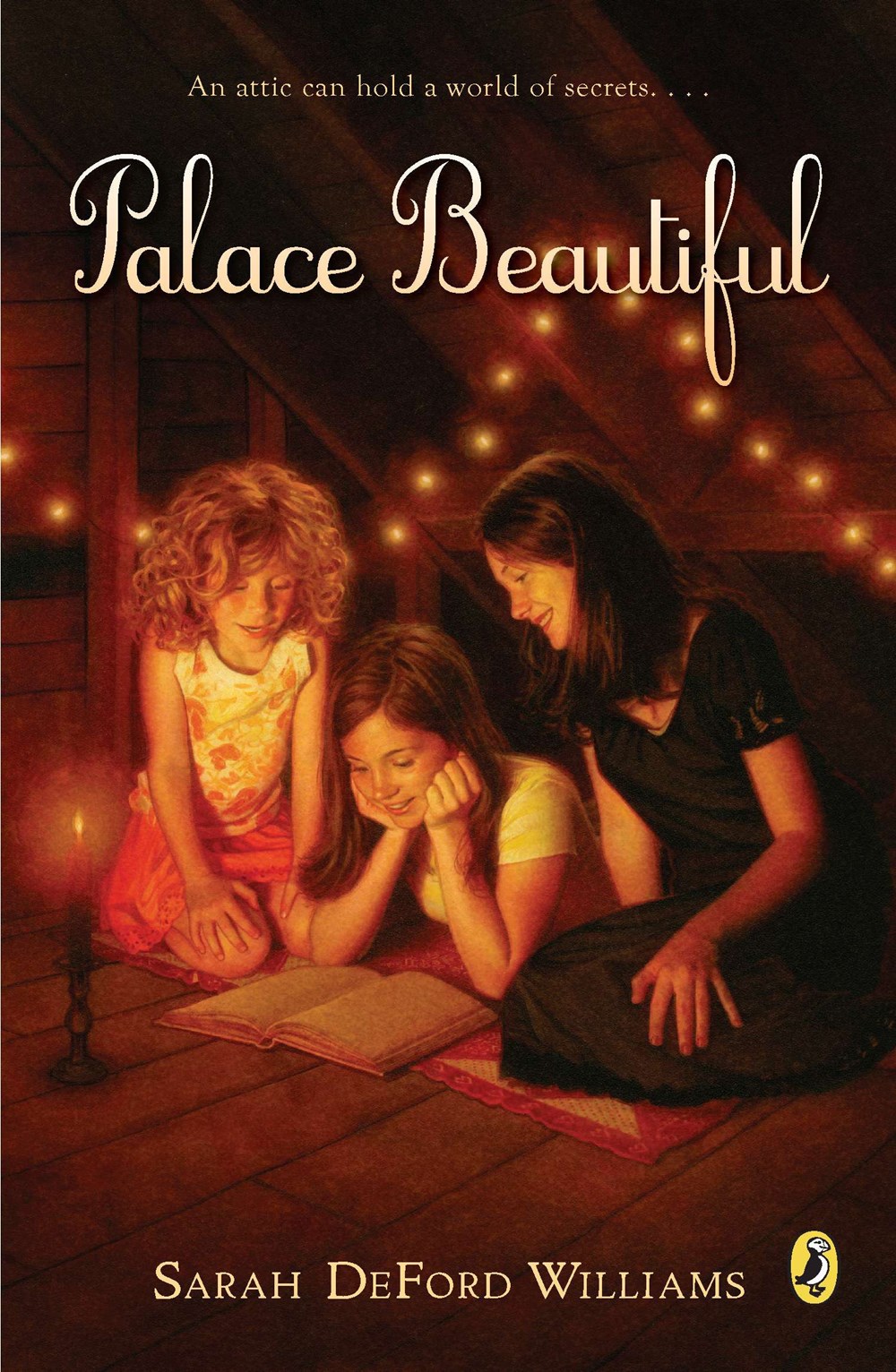
By Sara DeFord Williams
Puffin Books
$6.99
Reviewed by Liam Harrison-Stewart
| |
|
I always return to the work of fiction that sparked my love for literature and the art of storytelling. Palace Beautiful, which I have read more times than I can count, still has a significant meaning to me each time I read it.
Set in our very own Salt Lake City in the 1980s, Palace Beautiful tells the story of a thirteen-year-old girl, Sadie, who has just moved from Houston, Texas to be closer to her grandmother. Sadie brings along her sister, Zuzu, father and stepmother. She also brings with her the scarring memory of her mother, who died giving birth to Zuzu. Her family moves into an old Victorian home in the Avenues. Sadie and Zuzu are immediately charmed by the old house and feel it holds a secret. They meet Belladonna, a neighbor who is Sadie’s age and they quickly become friends. The three girls explore the old house extensively, one day stumbling across a secret passage in the attic that leads into a small room with the words “Palace Beautiful” engraved on the wall. Underneath these words, they find a diary that belonged to Helen White, a member of a large family that lived in the house in 1918, during the Spanish Flu Pandemic.
As the girls begin to uncover Helen’s story, her past is brought to life through her diary entries, detailing the reality and traumatic effects of the pandemic and how it changed Helen's perspective on life and fate. Sara DeFord Williams illustrates how traumatic experiences make us who we are, and how as children, we can learn to accept the challenges life throws at us and still be able to live happily.
This book sincerely changed me as a child. It later helped me through my own experience of isolation during the Coronavirus pandemic and losing members of my family. This book is a must-read for elementary-age children to adults of any age. It serves as a reminder that family is the most important thing we have and that we should remember that, because we have no ability to know what the future holds.
| |
|
By Terry Brooks
Del Rey
Paperback $15.00
Reviewed by Wade Brown
| |
|
Thousands of years in the future, after a nuclear holocaust, civilization has rebuilt itself from the ashes. In this new world named The Four Lands, humans live alongside other humanoid races like Elves, Dwarves, Trolls, and Druids. Science has been banished since it resulted in the nuclear war that decimated the world, and has been replaced with Magic. A magical shield, The Forbidding, prevents hordes of Demons from invading The Four Lands, confining the creatures outside time and space. The Ellcrys, a sentient tree that grows in the Elven capital city of Arbolon, created and maintains the Forbidding.
For hundreds of years the people of The Four Lands have lived in peace, safe from the Demons who seek to ravage the land. But now the unthinkable is happening– the Ellcrys is dying, and the Forbidding is weakening. Already, the most powerful Demons have entered The Four Lands. It’s only a matter of time before the tree dies, the Forbidding disappears, and the Demon horde invades the world. Wil Ohmsford, a young healer and inheritor of the magical Shannara Elfstones, as well as Amberle Elessedil, a member of the Elven royal family and tender of the Ellcrys, are entrusted with the task of finding a way to heal the tree before the Demons eradicate all humanoid life and bring about the final ruination of The Four Lands.
In 1982, when The Elfstones of Shannara was first published, I was thirteen years old. I had tried several times to read The Lord of the Rings, but found the prose sluggish and dense with baffling detail, and had given up every time. (Later as a young adult I returned to Professor Tolkien’s epic and fell into lifelong love with it, but that’s another essay.) I devoured Elfstones with delight, finding it relatable, fast-paced, action-packed, gripping, and emotional. The final twist was completely unexpected and blew my mind. A deep love of epic fantasy was instilled in me by this novel, and to this day I count it among my best-loved books of all time.
Terry Brooks’ Shannara Saga comprises 32 novels, with a few concluding books still to come. Although Elfstones is chronologically the second novel in the series (after The Sword of Shannara) it’s the perfect place to enter The Four Lands for the first time. Don’t be daunted by the size of this series, it’s conveniently constructed in 2-, 3-, or 4-novel arcs, each with its own set of characters and roughly a hundred years of in-story time elapsing between each. You can safely start with any of these arcs and fully enjoy the stories, but I suggest starting here.
Note on the edition: Unfortunately, the current trade paperback edition of The Elfstones of Shannara features some rather underwhelming cover art, as it is a tie-in with the short-lived Shannara Chronicles television series that ran from 2016 to 2018. Don’t let that stop you from visiting The Four Lands. The trip is definitely worthwhile, and you may find yourself falling in love like I did all those years ago.
| |
|
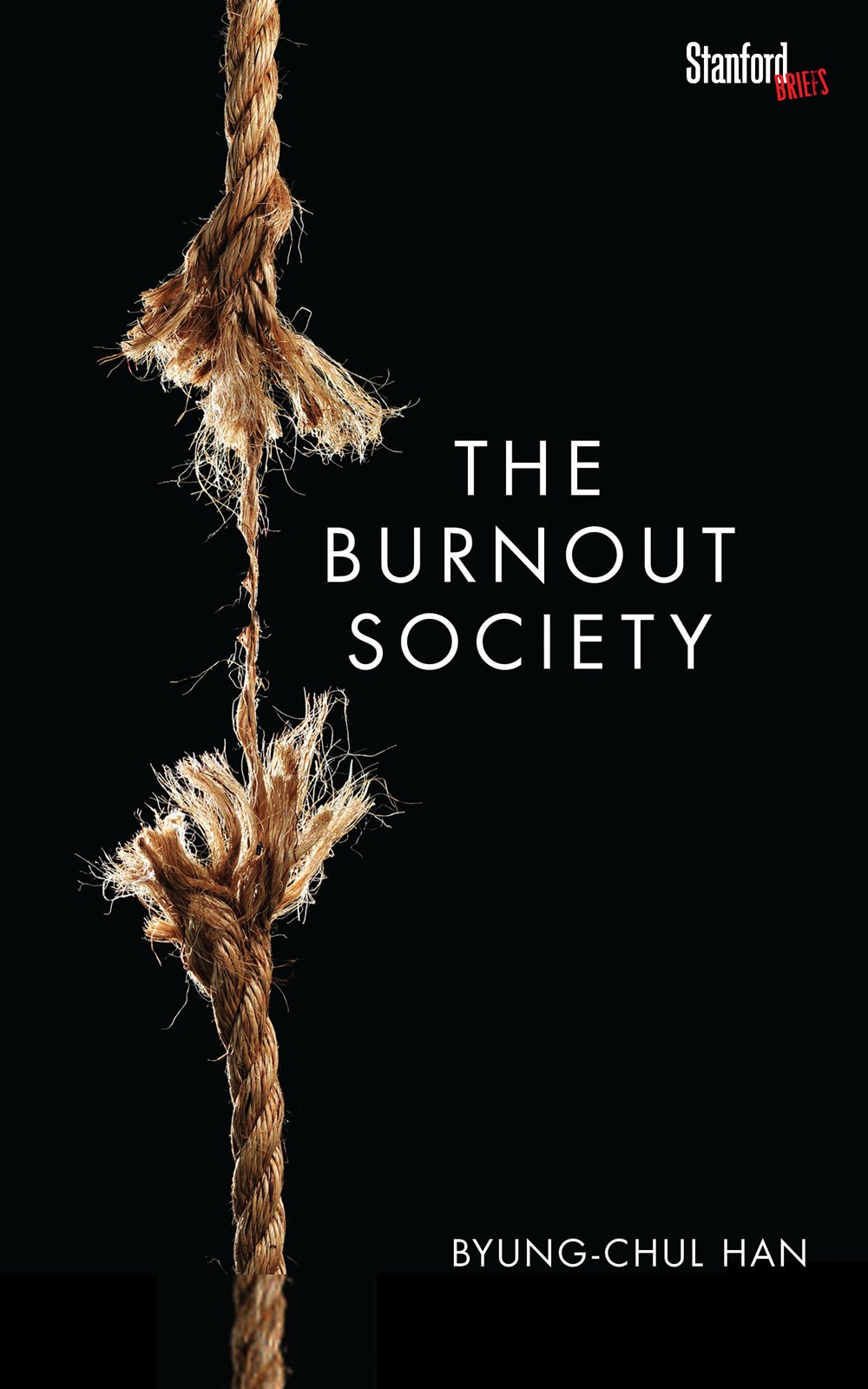
By Byung-Chul Han
Stanford Briefs
Paperback $14.00
Reviewed by Dylan Parry
| |
|
“How do I read Philosophy, with all these heavy and deep concepts?” is a question that one often asks themselves for a range of different reasons, and one I’m not here to answer with its range of different answers. Perhaps though, one will think to start with the Ancient Greeks like Plato or Epicurus? The Romans à la Seneca, or the “Philosopher Emperor” Marcus Aurelius? Maybe jump in with Enlightenment thinkers: Kant or Rousseau? All valuable and important in their own ways, not to say anything of later thinkers such as Arendt or Lacan, etc. Some will even prefer to explore contemporary philosophers such as Slavoj Zizek, Michel Onfray, or as this piece will actually go into: Byung-Chul Han, a Korean philosopher via Berlin, Germany.
Han, a philosopher who has been writing from his university post, is just now receiving the recognition that is deserved for someone who’s ideas and way of expressing those ideas can have a lasting and beneficial impact on so many around the world. Writing on philosophical subjects such as beauty, power, technology, society, and more, Han zeroes in on specific aspects of our modern life that he considers foolish paths to our own destruction, both socially and environmentally.
What are these points Han focuses so much on, you ask? For one, Han’s excellent introductory book, The Burnout Society, discusses how our submission to Big Tech and their social media platforms corrupt and destroy genuine social experiences and spaces. It drives us into what he calls “The Achievement Society”, where if a person isn’t perceived by society around them as putting all their time and energies into a project, either for work or working on one’s self, they’re seen as a failure or a loser, and this poor individual comes to believe what society says. By putting all that time and energy into Achievement Society projects, Han argues, we become burned out with everything around us, including ourselves. We become depressed and antisocial. To combat these issues, instead of giving ourselves the time and energy to change what are causing them, Han says we simply try to ignore them with antidepressants, selfies, and burying ourselves in work so we don’t have the time to think about anything else but achieving that “goal.”
It is this book, The Burnout Society, I recommend people to read from cover to cover. At a slim 72 pages, it is Han’s most foundational work. Whatever you may read of his after, you will find a sentence-nugget or entire chapter in The Burnout Society, that Han later dedicates an entire book discussion to. So start here, and if you’re so inclined afterwards, continue with these equally enticing critiques of our Modern Achievement Society.
Following from The Burnout Society, I recommend readers pickup Han’s 87-page book, Psychopolitics. A sweet follow up, Han discusses more in-depth Big Tech’s and social media’s effects on ourselves and society. From Big Tech’s friendly lie of connecting more with friends and family, to how the number of “likes,” “friends,” and “followers” gamify our outlook on society to everyone’s detriment.
But it is here that I will skip to the twist, and ultimate crux of how to read Byung-Chul Han. DO NOT read Psychopolitics or any other books, after The Burnout Society, cover to cover first. Begin with the last chapter of each, whether it’s The Expulsion of the Other, Vita Contemplativa, Capitalism and the Death Drive, or Saving Beauty, etc.
Why read the last chapter first? Not because Han is a difficult philosopher to read, quite the opposite. Han writes with a voice directed towards being read and understood by as many people as possible, not just snooty Academics looking to smell each other’s farts. The reason you should read the last chapter first, is Han’s summation in the last chapter (or last two chapters in the cases of: The Scent of Time and Vita Contemplativa) clears away the chances of being led astray by our own misjudgments or biases on where Han could be going with his books, and makes reading the rest of the book from the beginning a breeze, and in my opinion, real joy to read and take time to contemplate.
But this is just one of the many ways to read Byung-Chul Han, and not at all the only way, let alone the best way. Like Philosophy as a whole, how we choose to read a book, and in what order is wholly up to the individual reader to explore and share with others, even if nobody else does it the same way. So enjoy exploring the excellent works of philosopher Byung-Chul Han, and be sure to spread the good (or bad) word.
| |
|
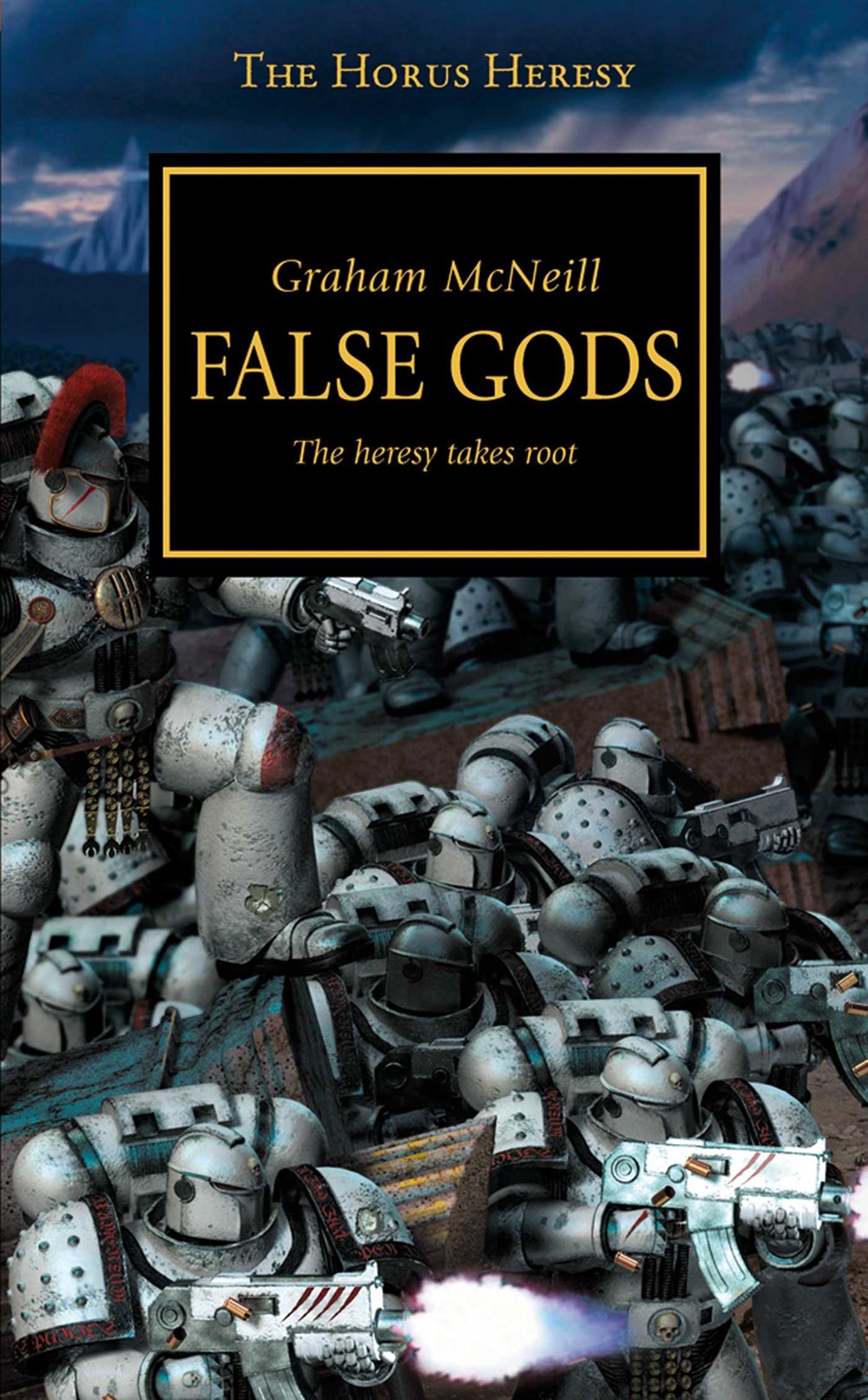
By Graham McNeill
Games Workshop
Paperback $9.99
Reviewed by Thomas Moore
| |
|
Working my way through the Horus Heresy series, it is always hard to predict what the next book will offer. Some of the books cover a wide span of time and encompass several major events within the fiction, while others are far more focused in scope. Graham McNeill's False Gods falls with the others of his entries in the series, firmly in the former category.
This is a book with an ever ebbing and flowing plot as Warmaster Horus and his legion are pushed to desperate action. The Warmasters' rising frustrations in the first book have turned to stubborn self reliance and he has become distanced from his closest advisors, the Mournival. Garviel Loken, the newest member of the Mournival, is troubled by signs of his leader's growing arrogance, and too by the demeaner of his space marine comrades towards the noncombatant humans of the expedition fleet. While Loken has formed camaraderie with several of the writers, poets, and artists tasked with documenting the war, many of his fellow warriors have developed resentment for those they see as beneath them. Tensions rise when the documenters find reason to level bold criticism at Horus' legionnaires. All the while, Loken uncovers the threads of a plot that promises to change the course of the war forever.
This story is truly a journey, and although McNeill's writing strikes me as only adequate at times, I am still impressed by each memorable twist. As a sequel, this book consists of pivotal intermediary events between Dan Abnett's Horus Rising and Ben Counter's Galaxy in Flames. Together these three make up the first arc of the long-running series and lay the groundwork for every title that follows. If you liked the first book, prepare to see the same characters altered as they contend with new circumstances, each more unthinkable than the last.
I feel I must say that in some cases this book touches on themes too terribly linked to our present day. I think of the abuses of power and the ambition of those in power that have led to war and mass bloodshed in recent times. The book touches on conflict between militarized protectors and their charges, which reminds me of similar conflict close to home, namely the recurring cases of police brutality, the all-too-often inhumane tactics employed to secure our borders, and the entitlement of those who would stoop to violence against their fellow humans sooner than compromise. These realities are difficult to confront, and it is important to remember that our beliefs, our ancestry, and even our enjoyment of fiction should never lead us to glorify violence. We must remember that war is hell. We all must rise above the worst of our past and our present if we hope for a righteous future.
On that theme, I hope our real future never comes close to the grim darkness of the far future I enjoy reading about.
| |
|
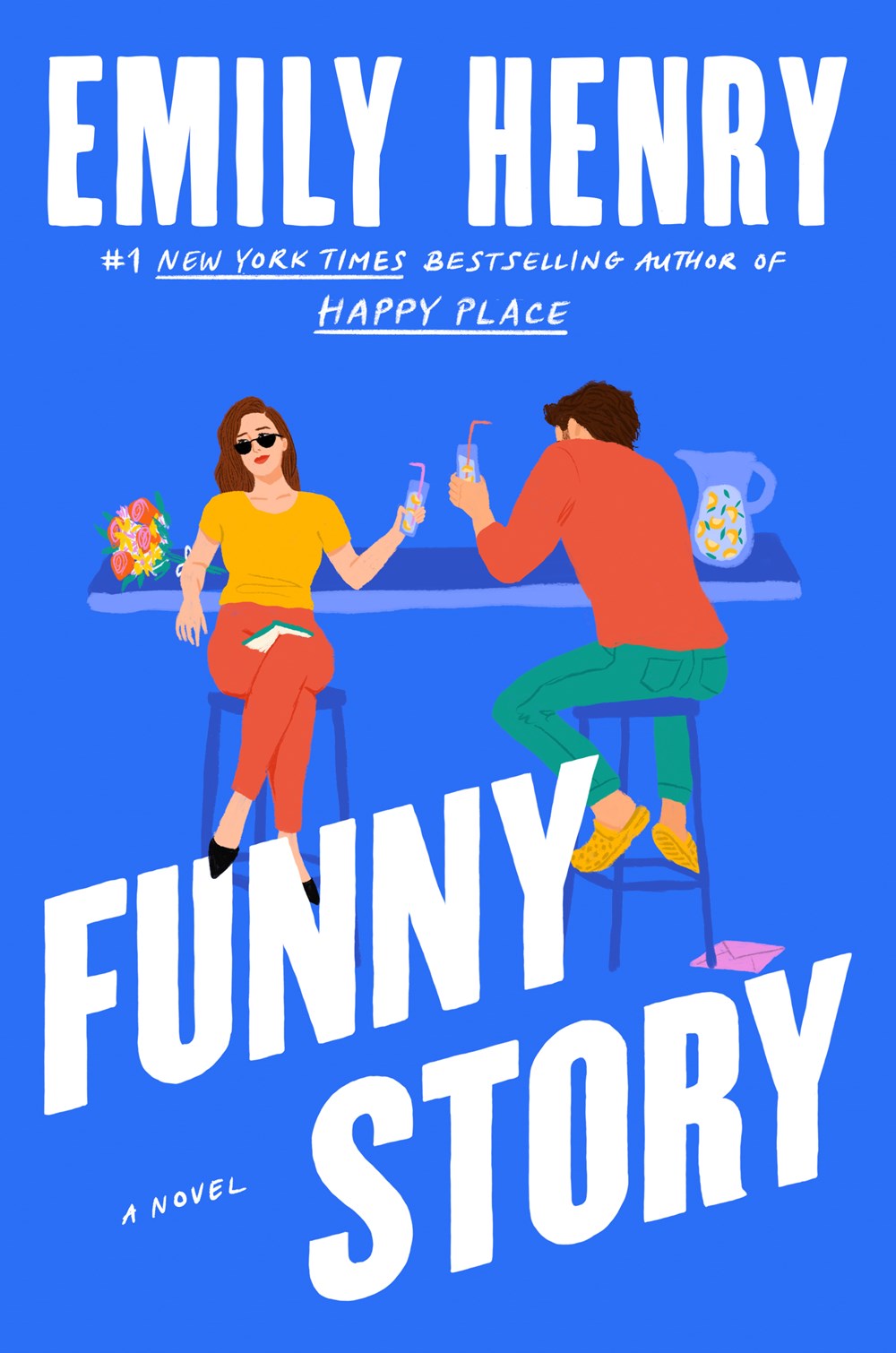
By Emily Henry
Berkley Books
Hardcover $29.00
Pub Date: April 23, 2024.
Preorder your copy today!
Reviewed by Aura Martinez
| |
|
This is Daphne’s Funny Story. The story she’ll be telling when someone asks her, “So how did you two get together?” It’s a classic tale of girl meets boy, girl falls in love with boy, boy asks girl to marry him, boy breaks off the engagement because he’s actually in love with his childhood best friend, so girl moves in with her ex-fiance's new finance’s ex-boyfriend.
A tale as old as time, some might say– at least in Emily Henry’s world it is.
Daphne, an awkward and quiet children’s librarian, is stranded in Waning’s Bay, Michigan after her fiancé Peter left her for his childhood best friend, Petra. Alone and heartbroken, she decides to take Miles’– Petra’s ex-boyfriend– offer to be roommates, at least until she can get a job far away from Waning’s Bay and leave all trace of Peter behind. Miles is everything Daphne isn’t: charismatic, outgoing, chaotic, and absolutely in love with Waning’s Bay. After a drunken night out together, Miles decides it’s his mission to make Daphne fall head over heels for his small Michigan town– and maybe he’ll also fall in love in the process.
Fake-dating, enemies to lovers, hot guy that works at vineyard. This book had a little bit of everything; enough wit and emotion to keep you on a roller coaster of a ride. It won’t be hard to fall in love with Waning Bay’s quirky little setting and eccentric cast of characters. Emily Henry once again proves that a love story full of tears and laughter is always the best story of all.
| |
|
Click here for our March events newsletter.
And, as always, view our events calendar to see all of our upcoming events.
We host both virtual and in-person events, and we look forward to seeing you soon.
| |
|
Come visit us!
SUNDAY 12-5
MONDAY-THURSDAY 10-8
FRIDAY & SATURDAY 10-9
| |
|
Can’t make it to the store?
Support your local indie from home!
Order by phone or online, then pick up at the store or the curb! We also ship!
| |
|
Give us a call at 801-328-2586.
Shop new books on our website.
Browse our entire inventory of new, used and rare books on Biblio.com.
Listen to audiobooks from Libro.fm.
Read ebooks from Kobo.
| | | | |