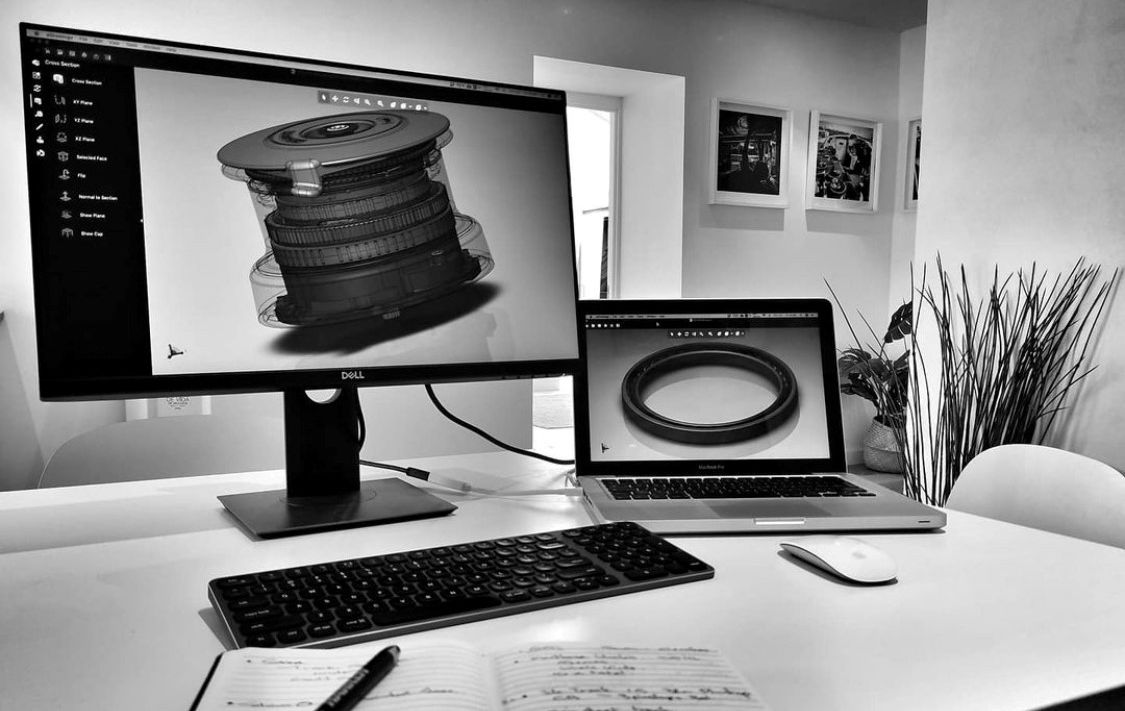
In this edition of the Harken ProCare News: |
PROCARE NEWS:
- Sydney Rigging Specialists appointed as ProCare Authorised Riggers
- From Concept to Reality
NEW PRODUCT:
-
Winch User & Maintenance Manuals
ASKED & ANSWERED:
- Blocks, Bearings and Load
|
|
|
|
Sydney Rigging Specialists appointed as ProCare Authorised Rigging Service Centre |
Harken ProCare are pleased to announce Sydney Rigging Specialists as an official ProCare Authorised Agent for Australasia. As the premier riggers in the region for over 25 years, and having a long term successful relationship with the Harken Australia office, Sydney Rigging Specialists were the obvious choice to bring in to the ProCare program.
“Sydney Rigging and Harken share a similar vision, they pride themselves on their quality of workmanship, customer service and going that extra mile to keep their clients on the water, and so we are very proud to have them on board with ProCare. Their expertise and skillset will be invaluable to the needs of Super and Grand Prix yachts in the Australasian region”
Callum Cecil (ProCare manager - Australasia)
Based in Rozelle, Sydney, Sydney Rigging Specialists are equipped with a rigging factory and machine shop, along with an offsite rig service centre based on the harbour at Sydney City Marine.
"Its fantastic to have a company like Sydney Rigging involved in the ProCare Support and Service program. Our goal is to be able to supply a consistent and connected support and service network to our Superyacht and Grand Prix customers as they travel worldwide and this is a key appointment in completing this goal. "
Mark Gardner (Global ProCare Manager)
|
|
Custom Support - From Concept to Reality |
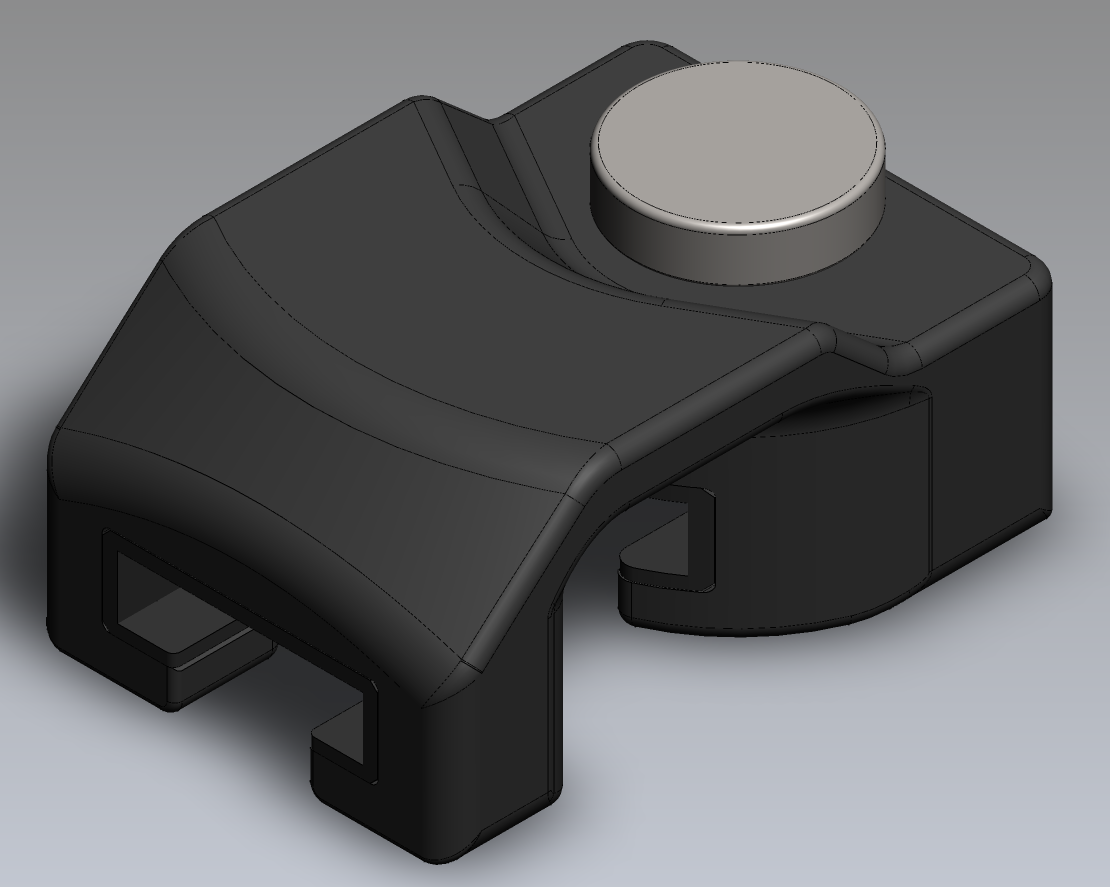
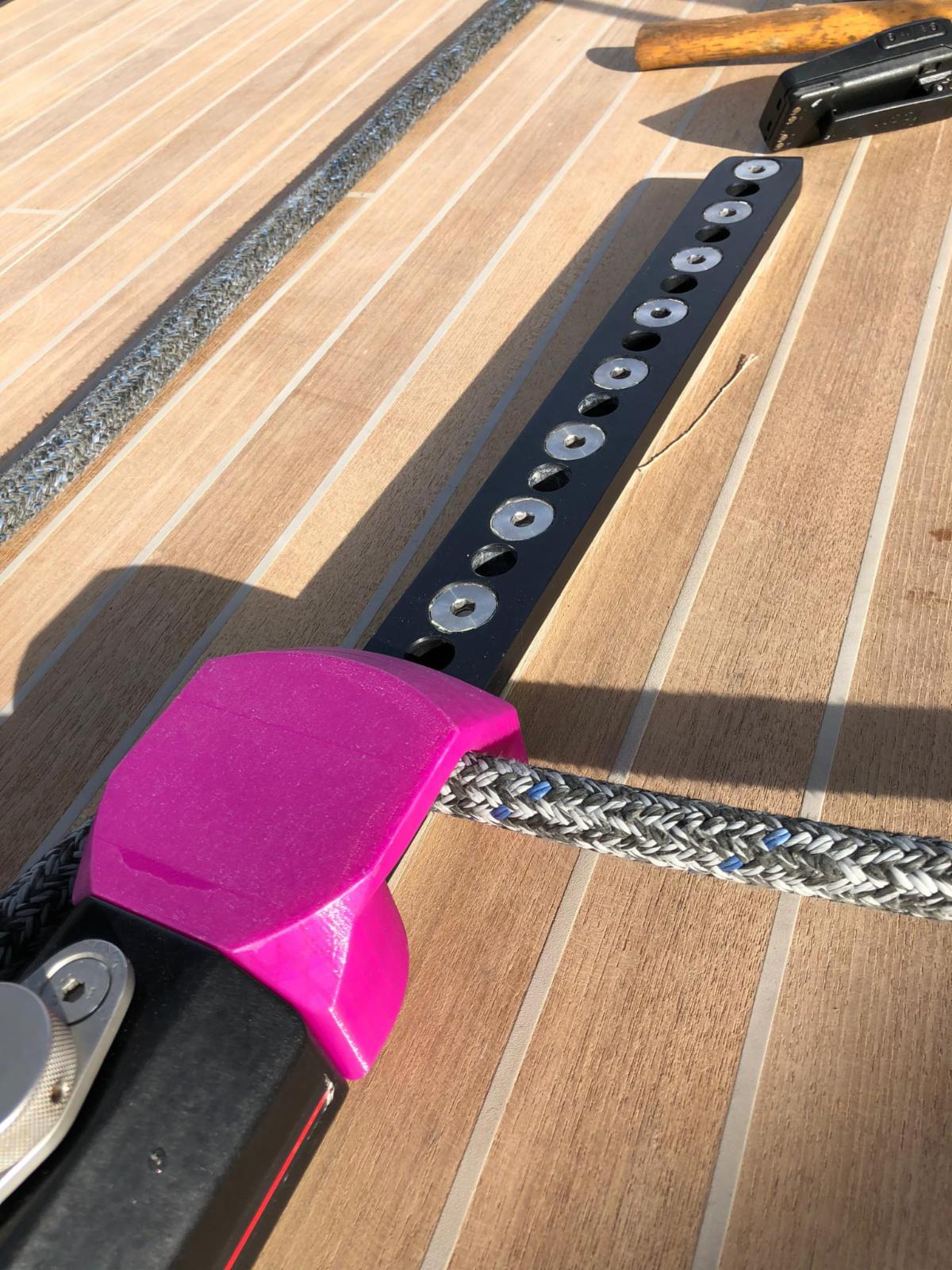
We were tasked by S/Y Missy to work on a solution to allow easy in-hauling of the headsail without having to run snatch blocks across the deck and aft to the winches.
With input from Captain and Crew and from onboard meetings, we started to develop a neat solution that would integrate seamlessly with their existing hardware.
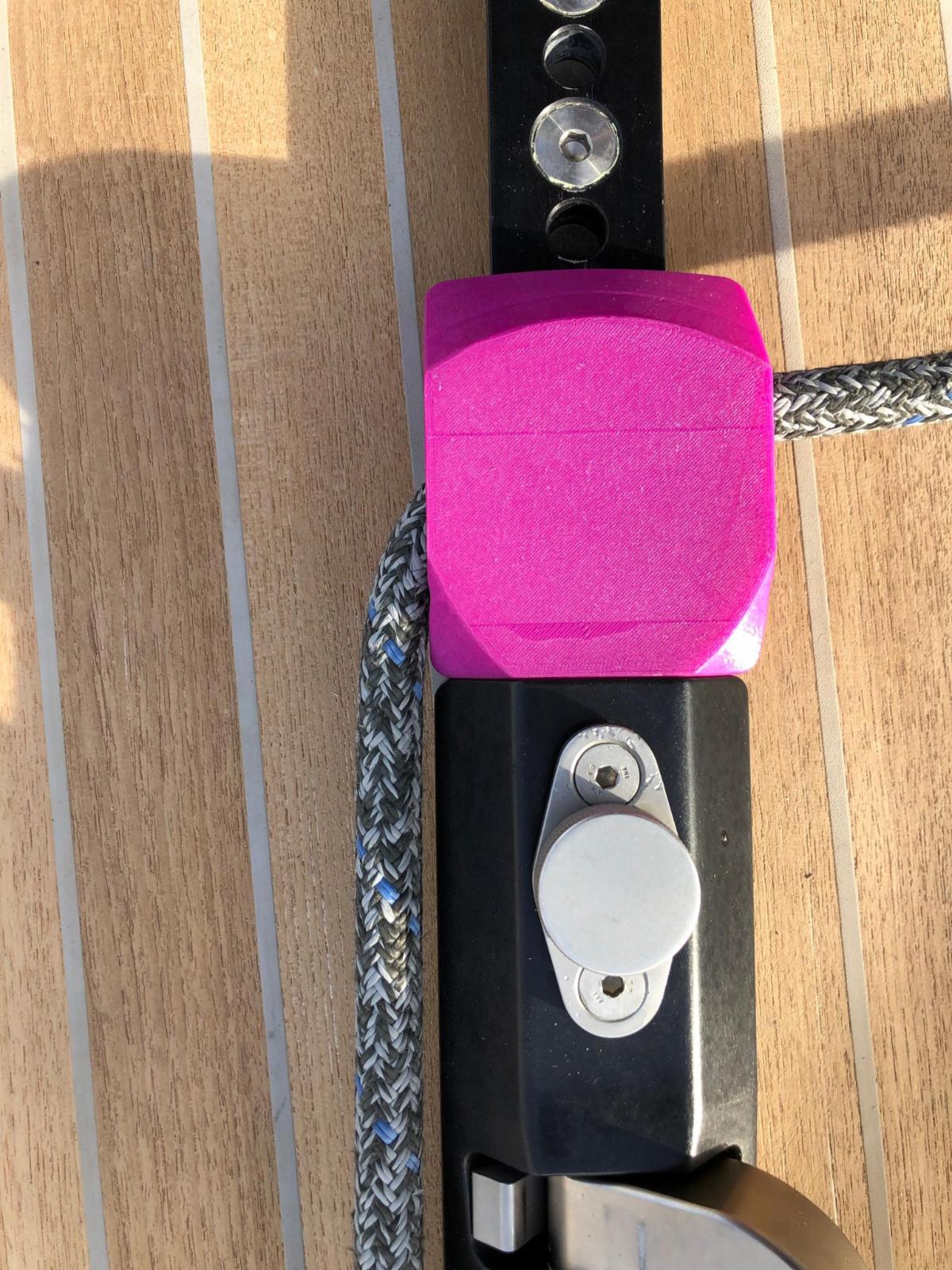
A concept drawing was presented for discussion, and after some small adjustments, we arrived at a design that could be 3D printed for final verification onboard.
From final approval the drawings move to our custom engineering production department for manufacture. (See "Its a blast" video below)
All machined in-house at our ISO 9001:2015 certified 16,000 square-meter lean-manufacturing facility in the USA.
The final cars were machined from T6061-T6 Aluminium and Hard Lube-anodized for a UV-stable finish - matching the existing hardware.
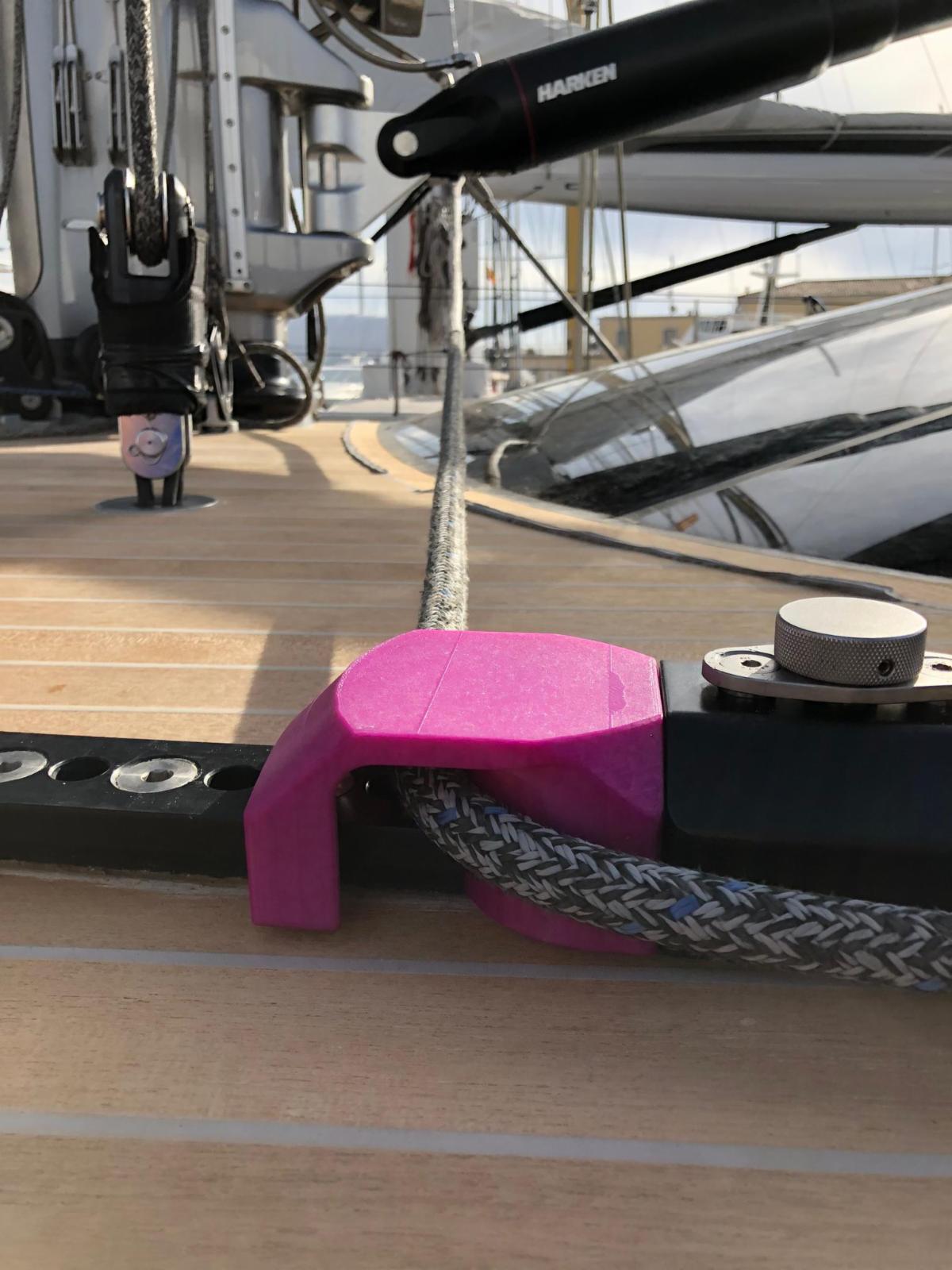
With safety a considerable concern with highly loaded lines on superyachts; we were able to clear the deck by running the in-hauler from the headsail clew deflecting aft through our custom car and to the winches through a below deck tube. With this lead the weather deck is kept clear from highly loaded line and snatch blocks.
A word from the Captain:
"It was clear from our first couple of regatta’s that we needed something to sort out a sheeting issue for our race setup. After a brief chat with Simon Botes from Harken ProCare Palma we had a good idea of what was needed and a couple of weeks later Harken came back with designs for a custom in-hauler car.
There was never going to be an off the shelf solution to this sheeting problem, so it was great to be able to sit down with Simon and discuss what was needed and how we were going to do it. The In-hauler car looks the part and most importantly, works just as we had intended."
Captain S/Y Missy
|
|
|
|
3D Printed Concept in place on the boat. |
|
"It's a Blast" Meet the artists behind the machine! |
Tom Nelson has over 30 years’ experience as a Custom Machinist at Harken US, he takes you behind the scenes of how a Custom product is taken from paper to reality...... |
|
|
|
|
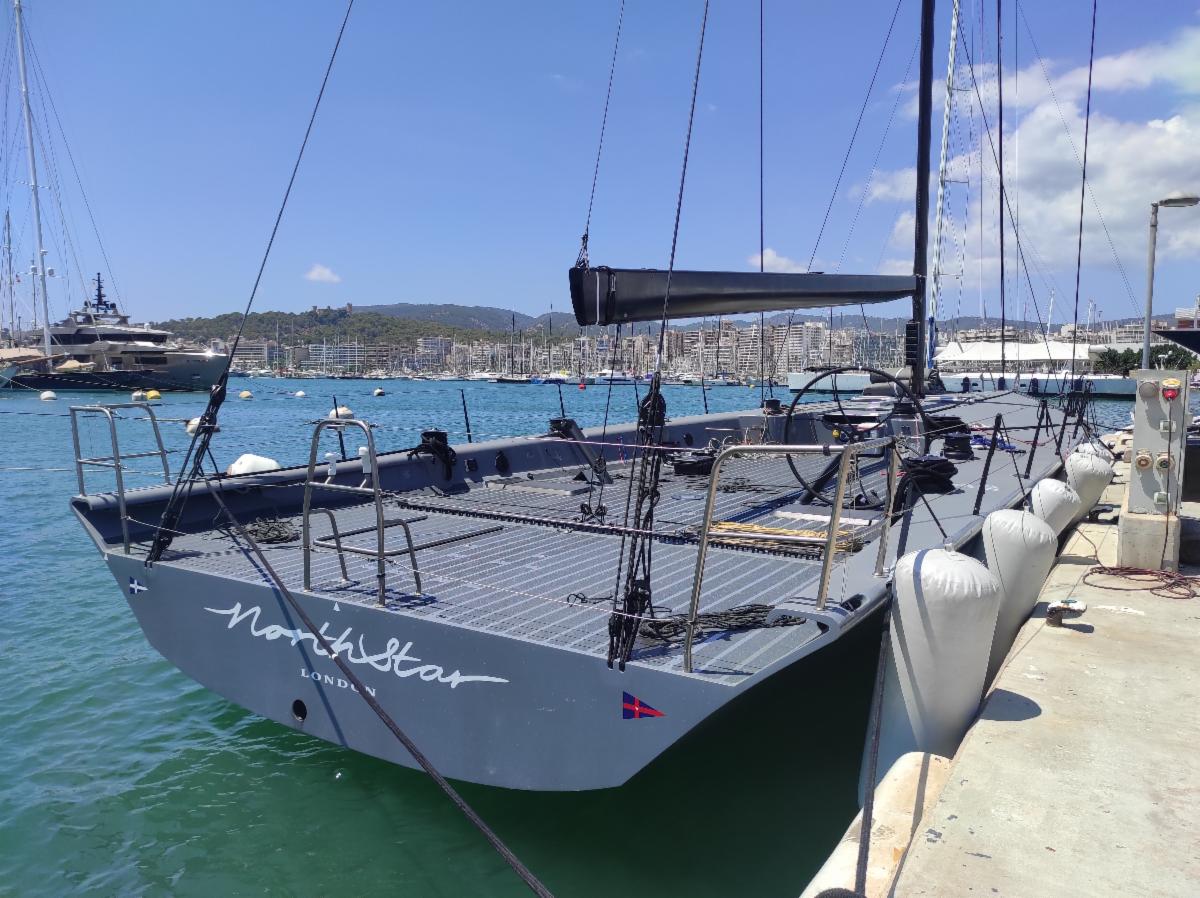
“During a difficult period worldwide all timescales were met, required customisation was discussed, designed, manufactured, delivered and installed with zero issues. We couldn't be happier with the collaboration with the Harken and Harken ProCare team.'
SY Northstar
|
|
|
New Harken Winch User and Maintenance Manuals |
Our equipment is being pushed harder and harder and can be working right at its limit. To keep a system working at this level, requires a good proactive service program and a good understanding of the equipment in use.
Our New winch User and Maintenance Manuals are designed to assist you to proactively maintain your equipment and in combination with a Full ProCare Service program will help to keep your equipment working at the highest level.
For more information or for more detailed parts drawings please contact Harken ProCare directly.
|
|
 |
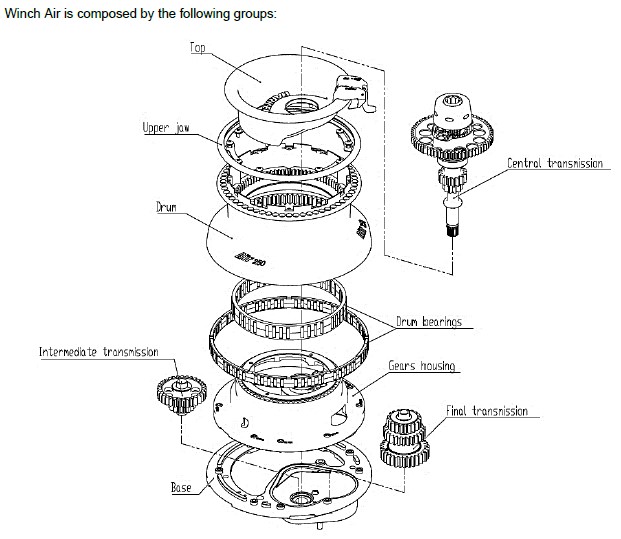
Helps identify components |
|
|
|
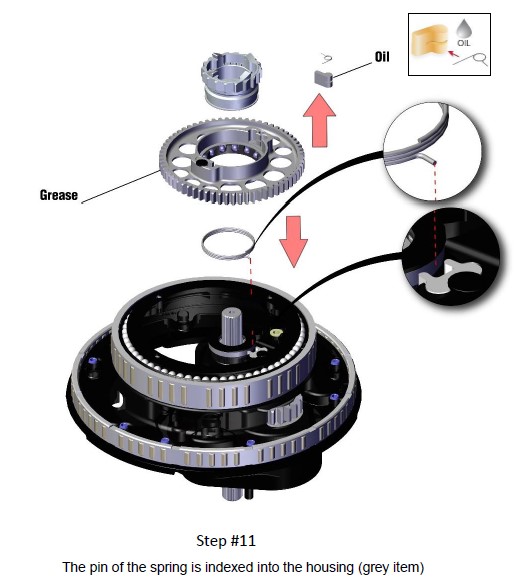
Lubrication and assembly information |
|
|
|
Blocks, Bearings and Load |
|
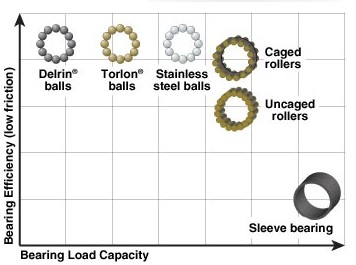
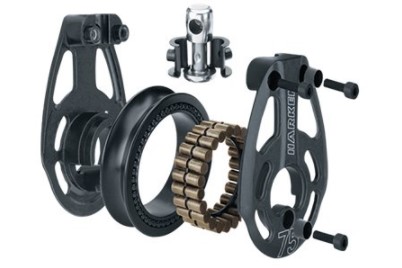
Within our technical support role we are always asked about how to specify a block for a particular application. First we need to take a look at the bearings, bearing properties are functions of contact area, material type, bearing cages, and whether the bearing rolls or slides. Below is some information to help:
|
|
Bearing Types
-
Ball bearings: Very low friction; low/medium load capacity. (Small boat blocks, Carbo)
-
Roller bearings: Low friction; high load capacity. (Black Magic & V-Blocks)
-
Sleeve bearings: Medium/high friction; extremely high load capacity. (Mega Yacht Range)
|
|
Contact Area
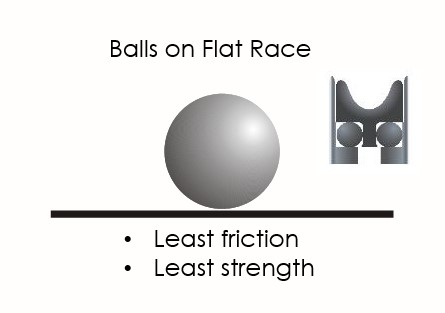
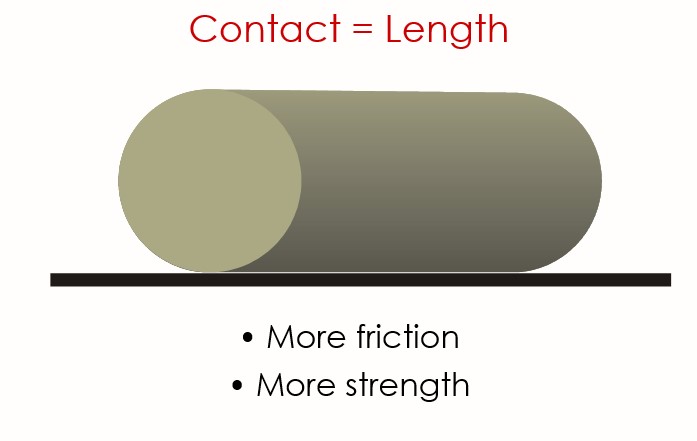
More contact between the bearing and the race increases friction, but also increases load capacity. Balls are loaded on small points, cylindrical rollers are loaded along their length, and sleeve bearings are curved around the shaft so a large portion is in contact. Unlike balls and cylinders, sleeves are not prone to being flattened by extreme or static loads because they already conform to the curvature of the shaft.
|
|
Motion (Rolling, Caged Rolling, or Sliding)
Sliding bearings (known as sleeve, plain, full-contact, bushing, or journal bearings) that are found in our Mega Yacht range and some High load sheaves are very high strength, but have nothing to reduce friction between contact areas. At most, they have a low-friction sleeve between the surfaces. These are great for lower speed / high static load application.
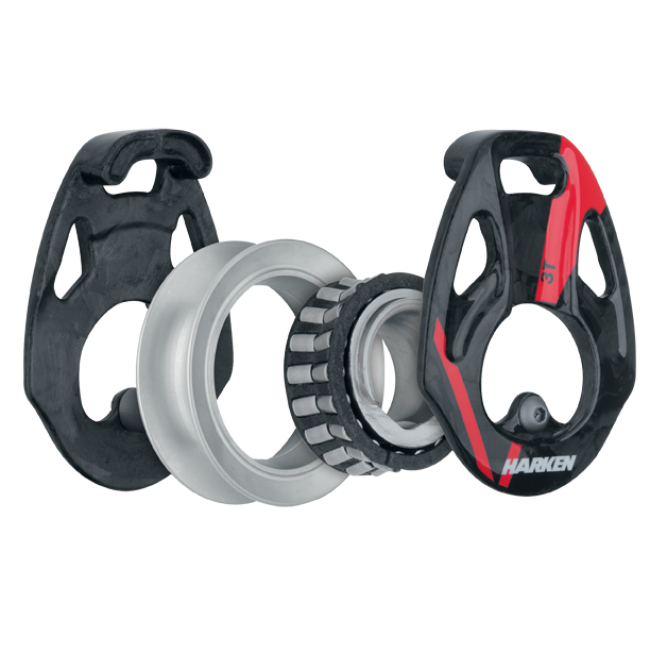
Rollers and balls avoid almost all of this friction because they do not slide against the race, though they can come in contact with each other, this is known as racking. Caged bearings are roller bearings are held in a cage that keeps them separated from each other and parallel to reduce friction. Caged bearings are used in Winches and Black Magic blocks as well as our our Titanium Roller V-Block range.
|
|
Attachment
How the block is attached is very important. Shackle v Soft Attachment. Soft attachment is a term encompassing lashings, loop lashings, and any other fiber-based equipment that replaces the function of a shackle or padeye. Soft attached offers incredible weight savings and if rigged properly can also offer better load articulation over a traditional shackles and padeyes. However, they are prone to wear and should only be used on regularly maintained race boats.
|
|
Block Loading v Angle of Deflection |
|
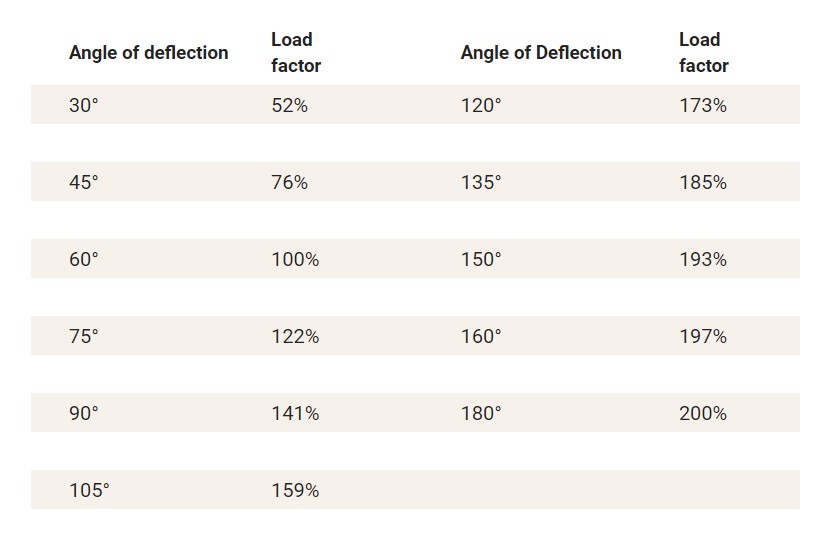
Load on a block is a combination of the load on the line passing through the block, plus a block-loading factor, which is determined by the angle by which the block turns the sheet . For example, a foot block that turns a sheet 180° will see a load equal to twice the load on the sheet. A deck organizer, which turns a halyard only 30°, will see just 52% of the load on the halyard. |
|
Because wind speed is squared, it is the most important variable and can greatly influence loading. Wind speed (the apparent wind) should be calculated for the specific sail being analysed. For example, the #1 genoa on 7 m (25 ft) boat might only be carried in 15 knots of wind while the #3 blade on a Maxi-boat could well be carried in 40 knots.
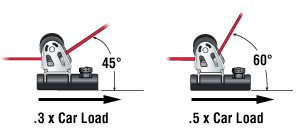
To calculate loading on a genoa lead car, multiply sheet load by the load factor of the sheet. Most #1 genoas will deflect about 45° while a #3 genoa may deflect 75° or more.
Lead car adjuster tackle load is dependent on the angle of deflection of the sheet in the lead car, but is generally assumed to be .3 of lead car load when deflection is 45° and .5 of lead car
|
|
(SL) Sheet Load in Kg
(SA) Sail area in Square Meters
(V) Wind Speed in Knots
|
|
|
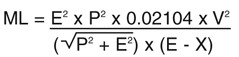
The formula for mainsheet loading is not as widely accepted as that for genoa sheet loads and should only be used as a rough guide for offshore boats from 30 ft to 60 ft (9 m to 18 m).
|
|
(ML) Mainsheet Load in Kg
(E) Foot Length of main in meters
(P) Luff length of main in meters
(V) Wind speed in Knots
(X) Length from aft end of boom to mainsheet take off point in meters.
Traveller car adjuster load is generally considered to be .2 times car load.
Formulas are for typical cruising monohulls with fixed keel and Dacron sails, sheets, and halyards. Assumes standard roach of 7.5%. For large roach sails such as “flattops” multiply calculated load by the percentage of the mainsail roach. If a sail has 25% roach, multiply the calculated load by 1.25. For all other types, please contact Harken for technical assistance in calculating loads.
|
|
|
|
Click the link below to view our Technical Newsletter Archive: |
|
|
|
|
|
|
|
|