|
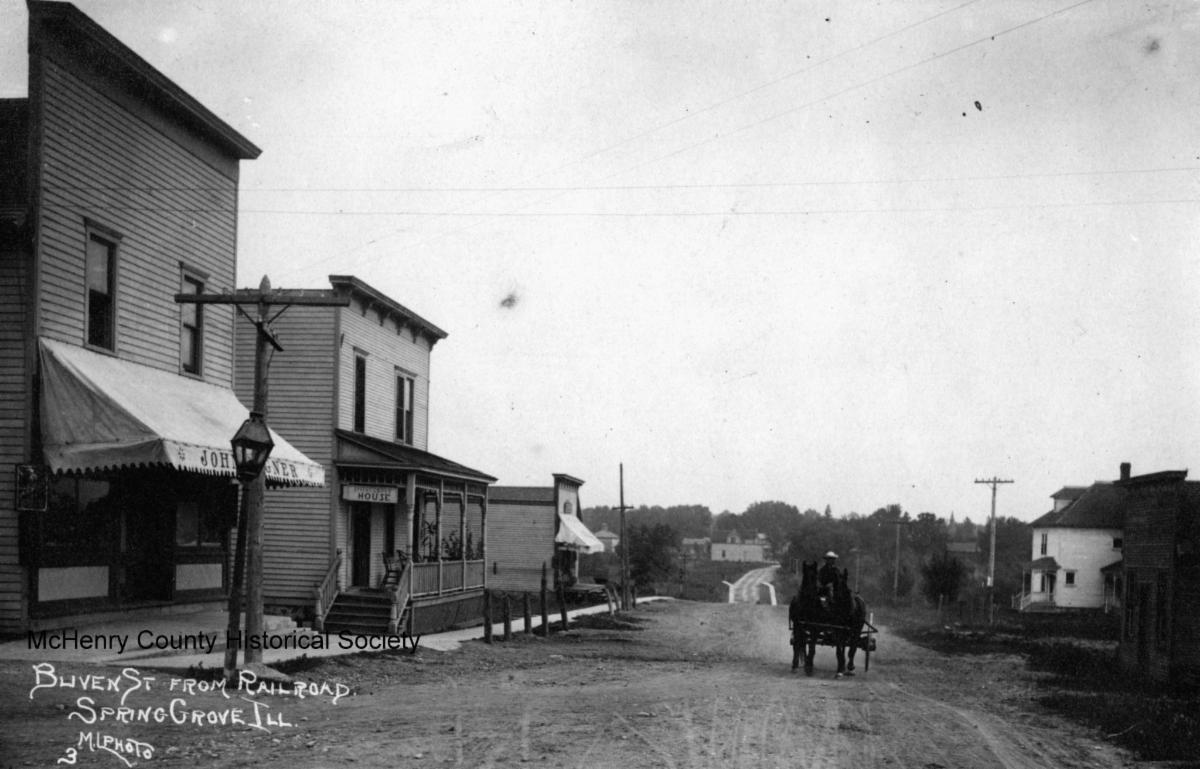
Last week we learned that before Joe Brown bought the Rauen Saloon at 2008 Main Street, he was the proprietor of the tavern Sample Room and the Wagner House hotel next door at the NW corner of Hatchery Road and Blivin Street (south of 7707 Blivin St.). When the Wartime Prohibition Act took effect in 1919, he was forced to move his stock of liquors into the hotel basement, hoping to be able to reopen the tavern when the war ended.
But soon Joe was arrested for violation of the law, the first one in McHenry County. Brown claimed he had been tricked by a roomer in his hotel who got angry when Joe forced a “woman of ill repute” to leave his hotel. The man then deceived him into furnishing him with whiskey on the pretense that he was ill, after which he reported Joe to the authorities. Armed with a search warrant, the sheriff found quarts of apricot brandy, a keg of sherry, Riesling wine, vermouth, bottles of rock and rye and crème de menthe, and 44 bottles of whiskey, brandy, bitters, etc. He pleaded guilty and was fined $50.
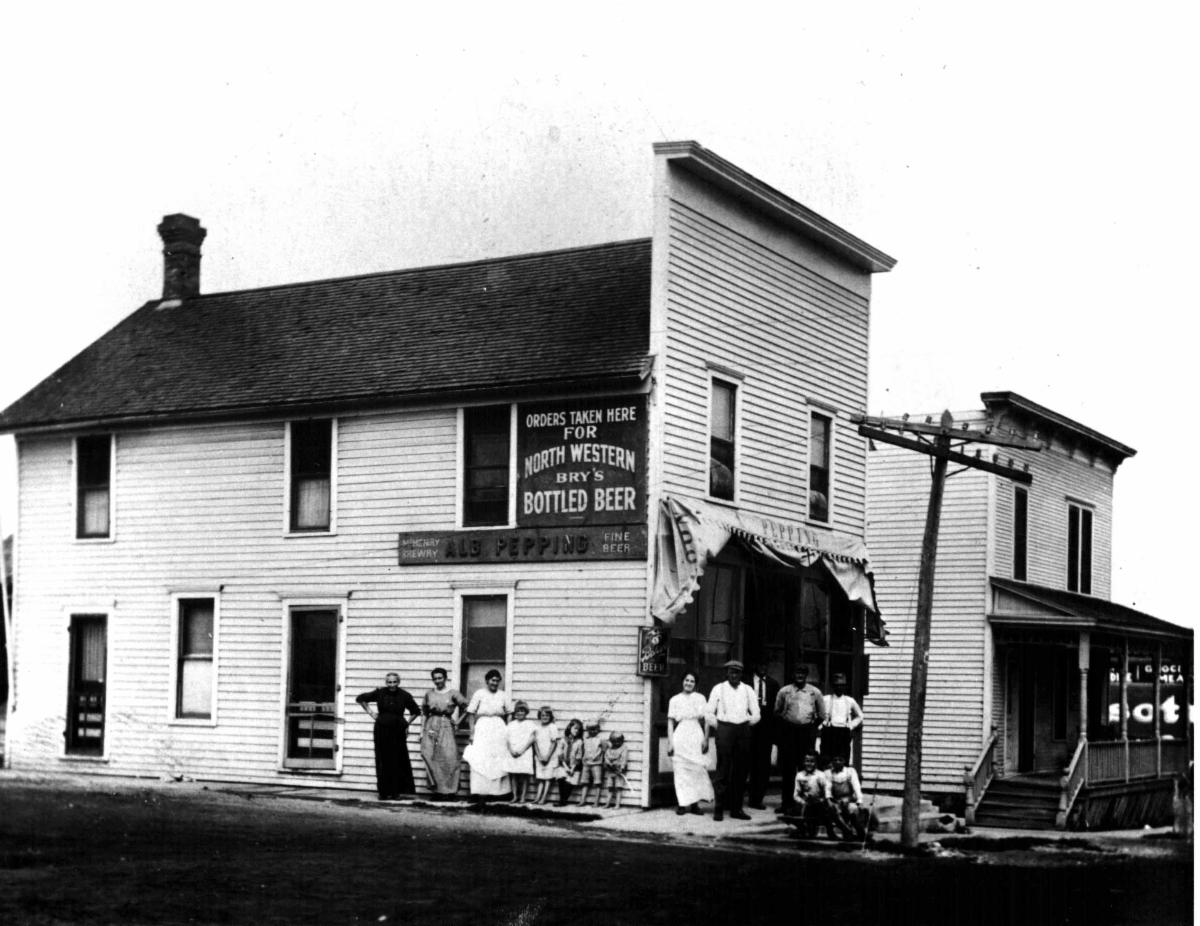
The arrival of the railroad in 1900 had started a building boom in Spring Grove. In 1901, John Wagner, a 45-year-old widower, gave up farming and sold the old homestead settled by his parents to build the Wagner House hotel by the railroad tracks. His son, Joe G., who was 21, built the Sample Room tavern, and his name was on the awning. The upstairs of the Sample Room was rented out as living space as related in the local newspaper in March 1903: Dan McCann and family are moving into the rooms over Joe Wagner's Sample Room on Sunnyside."
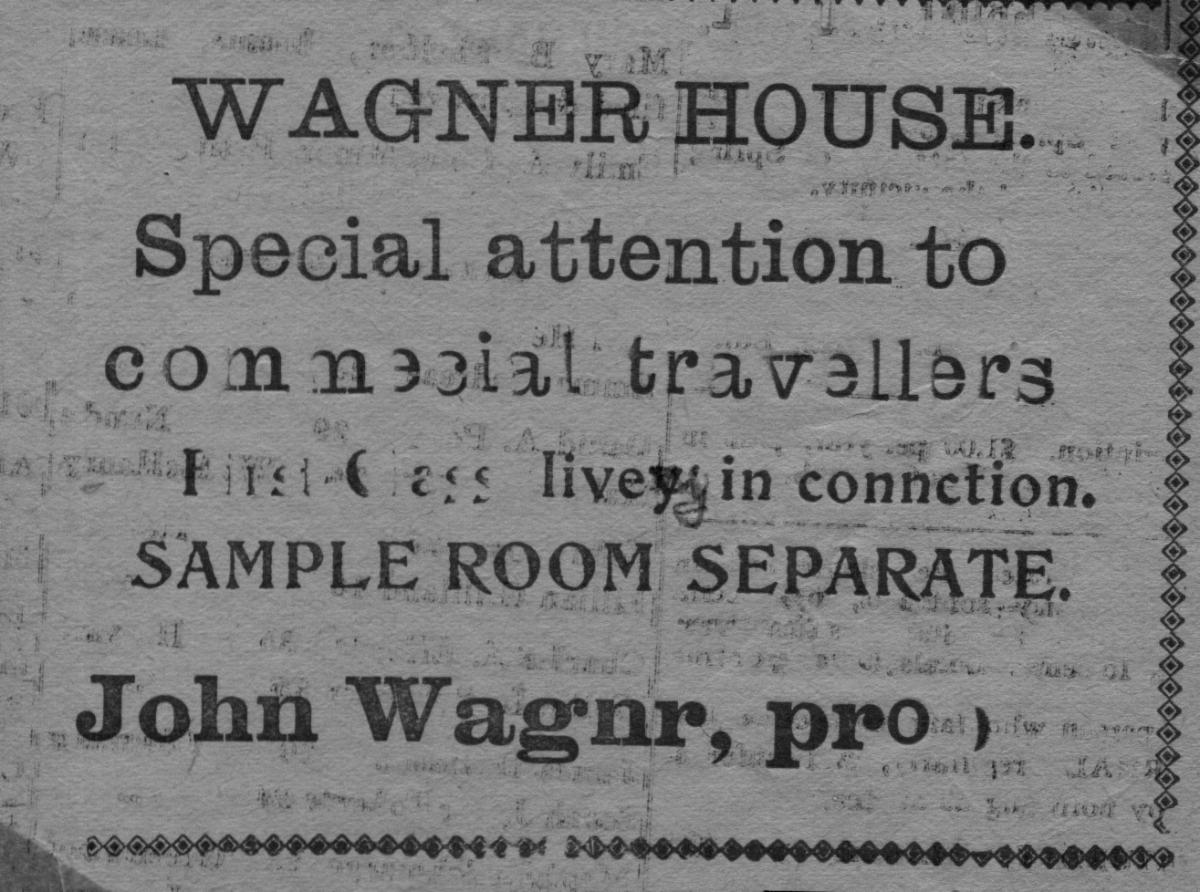
The hotel was a rooming house for the new railroad workers and other travelers. The ad above states they paid "Special attention to commercial travelers" and there was a "First Class Livery " in the back. In 1909 John sold out to his brother, Joseph, who lived in Stacyville, Iowa, and who apparently leased the buildings out from that time on.
On May 3rd, 1912, Albert Pepping received a dram shop license from the village to operate the tavern and his family lived upstairs. In 1916, a man named Arthur Bickler took over and sold his interest to Joe Brown in 1917, who left by 1921. Cocky Roos took over the tavern and remained for many years before starting up in his own tavern business a few doors down.
In 1927, the newspaper reported that Joe Wagner from Stacyville, was visiting his brother, John, and while he was here, also had the Wagner House, which had been vacant for a while, taken down. Peter May and his sons were hired to do the job and used the lumber to build a chicken house on their farm on May Lane.
In the 1930s or 40s the Sample Room was turned into an apartment building. People remember the Popelka and Williams families lived there – one family on each floor - and between the two families there were a total of 23 children!
Around 1960, Winnie Karls and her husband Charles owned the old saloon building but because of its poor condition had it torn down. It’s hard to believe these two buildings once stood on the small plot of land there at the corner, but if you look carefully, remnants of the old foundations may still be seen.
Story by Laura Frumet
|