SUN Movement Bulletin
September 2024
|
|
Hello SUN Movement Secretariat,
We are pleased to provide the latest news and information from the SUN Movement to support you in achieving your nutrition targets.
Please share the Bulletin widely with your networks!
| |
Healthy diets and food environments:
the Role of dietary guidelines
| |
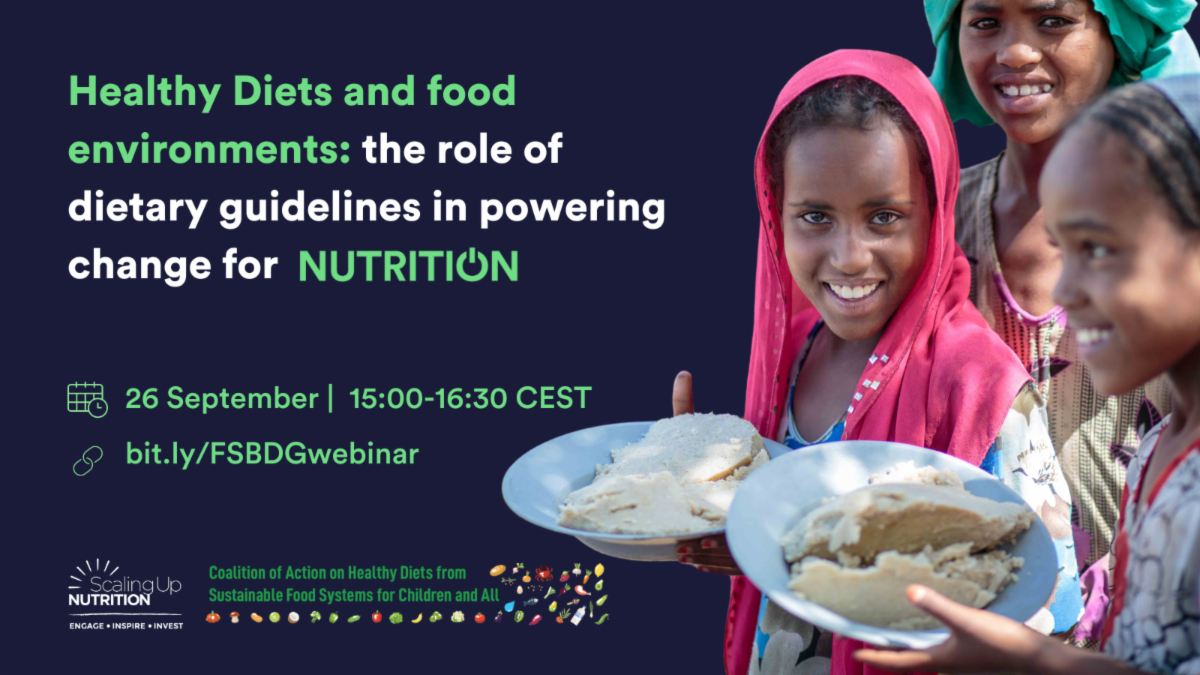
The Coalition of Action for Healthy Diets from Sustainable Food Systems (HDSFS) in partnership with the Scaling Up Nutrition (SUN) Movement are hosting a webinar on 26 September 2024, from 15:00-16:30 CEST. As part of the preparations for the SUN Global Gathering in Kigali, Rwanda, in November, the session will include coalition member countries and academic partners and will explore how dietary guidelines can promote healthy diets from sustainable food systems and introduce a new FAO methodology for food systems-based dietary guidelines. | | |
Nutrition International and SUN Movement launch Spanish and French version of e-learning course | |
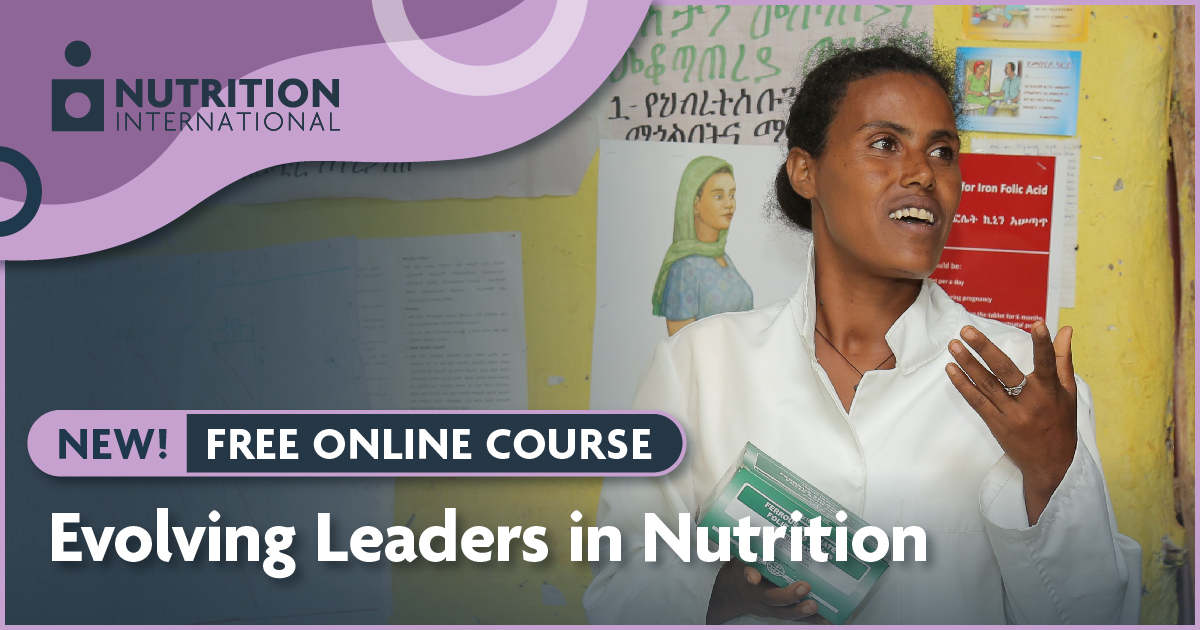
Nutrition International, in collaboration with the SUN Movement, has released Spanish and French versions of its Evolving Leaders in Nutrition e-learning course. This self-paced program aims to strengthen leadership skills for early-career professionals working in nutrition or involved in nutrition-related programs within their organizations or governments. | |
The Africa Food Systems Forum 2024 | |
The Africa Food Systems Forum 2024, held from 2-5 September in Kigali, Rwanda, brought together nearly 5,000 participants, including nine heads of state. The event focused on accelerating, innovating, and scaling agricultural solutions, with sessions on using data-driven evidence to reform the seed sector and the launch of the Africa Agriculture Status Report.
SUN Movement Coordinator, Afshan Khan, actively participated in the forum, attending a Ministerial roundtable and delivering a keynote address during the plenary session on Nutrition and Food Systems, emphasizing the critical role of nutrition in transforming food systems across the continent. The Coordinator engaged in key media interactions, including an interview with CNBC Africa.
| |
|
The SUN Civil Society Network (CSN) is expanding with two new Civil Society Alliances (CSAs) | |
During the month of August, the Civil Society Network of Latin America and the Caribbean welcomed two new CSAs:
- The Civil Society Alliance for Nutrition and Food Security of El Salvador, which has 6 national and international social organizations, and a plan to develop a network of sustainable and integrated civil society actors that will collectively contribute to creating a world free of malnutrition by 2030.
- The SUN Colombia Civil Society Alliance which, after years of work and commitment, officially became a member of the SUN Civil Society Network. It currently has 16 members. Among its objectives is to continue advocating for the government's adherence to the SUN Movement, to influence the formulation and execution of legal, political and financial commitments to advance in the guarantee of the Human Right to Adequate Food and to generate collective knowledge to contribute to the adoption of measures to improve malnutrition indicators in Colombia.
| |
|
FAO, IAEA and WHO revisit human energy requirements | For the first time since 2001, UN nutrition experts came together to review human energy requirements. This exercise is crucial not only for understanding human calorie needs to support regular bodily functions, but also for assessing global hunger. While FAO and WHO have long collaborated on this front, IAEA has joined the current effort, leveraging its nuclear science-based data to help improve the accuracy of these estimates and address knowledge gaps. | |
|
Improving childhood health and development need not be an Olympian effort | This Op-Ed by Afshan Khan, SUN Movement Coordinator, and Sania Nishtar, CEO of GAVI and member of the SUN Movement Lead Group, looks at how the Paris 2024 Olympic Games are the perfect moment to reflect on combining immunization and nutrition services to level the playing field for all children. | |
|
Asian countries agree on ways to improve nutrition financing | From 27-30 August, countries across Asia - Bangladesh, Cambodia, Indonesia, Laos, Myanmar, Nepal, Pakistan, Sri Lanka, Timor-Leste and Vietnam - convened for a Scaling Up Nutrition (SUN) Movement workshop to develop three-year sustainable nutrition financing plans. The event centered on advocacy strategies to increase political will and secure funding for nutrition. Participants worked with partners such as the World Bank, UNICEF, and the Asian Development Bank, and highlighted the alignment of sectoral investments ahead of the Nutrition for Growth 2025 Summit and the SUN Global Gathering 2024. | |
|
|
Nutrition Policy Playbook: picking the best benefits package
The Nutrition Policy Playbook aims to compare seven international guidelines and their constituent interventions and integrate them into a comprehensive resource for country policymakers seeking to use international guidelines to integrate nutrition into benefit packages and support nutrition interventions throughout the health system.
| |
|
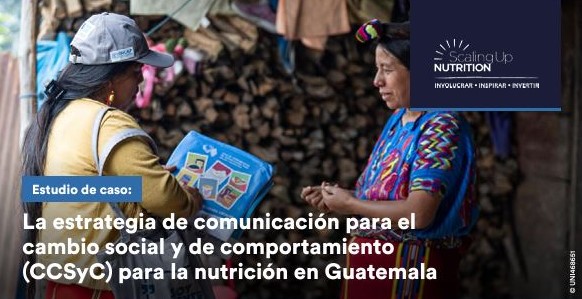
Communication strategy for social behaviour change for nutrition in Guatemala
Good practices help us all to reflect on our nutrition journey, document our progress and capture our lessons learned – including challenges and successes – that we can learn from and that we can share with others to strengthen all of our SUN Country nutrition action.
Read this case study to learn how in Guatemala, the Great National Crusade for Nutrition developed a Communication Strategy for Social and Behavioural Change (SBCC), that has become a unique example of the institutionalization of social change interventions.
| |
|
UNICEF, WHO and IBFAN release the 2024 status report on "Marketing of Breast-Milk Substitutes: National Implementation of the International Code"
Protecting exclusive breastfeeding through measures like restricting marketing of breast-milk substitutes is a 'double duty' and planet-friendly action. The International Code of Marketing of Breast-milk Substitutes and relevant World Health Assembly resolutions (‘The Code’) are crucial levers for promoting optimal breastfeeding practices. This report tracks the extent to which countries have embedded these provisions into their national legal frameworks. According to this year's report, just 33 countries have measures substantially aligned with ‘the Code’
| |
Have your news and events featured in the SUN Bulletin | |
Subscribe to this newsletter | |
If you've received this newsletter from a different origin, you can subscribe to receive future newsletters by clicking here. | | | | |