Director of
The Wisdom Page & The
Center for Future Consciousness
|
View Previous
Wisdom Page Updates
|
|
|
|
|
|
This Month's Highlights
October, 2016
|
Wisdom and the Future is an "
All Star Award" journal within
Constant Contact for excellence, a honor only given to the top 10% of
Constant Contact customers.
* * * * *
Included in this month's issue of
Wisdom and the Future:
|
Editorial
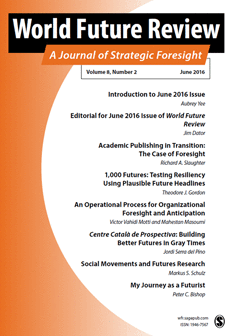
New Published Article from World Future Review
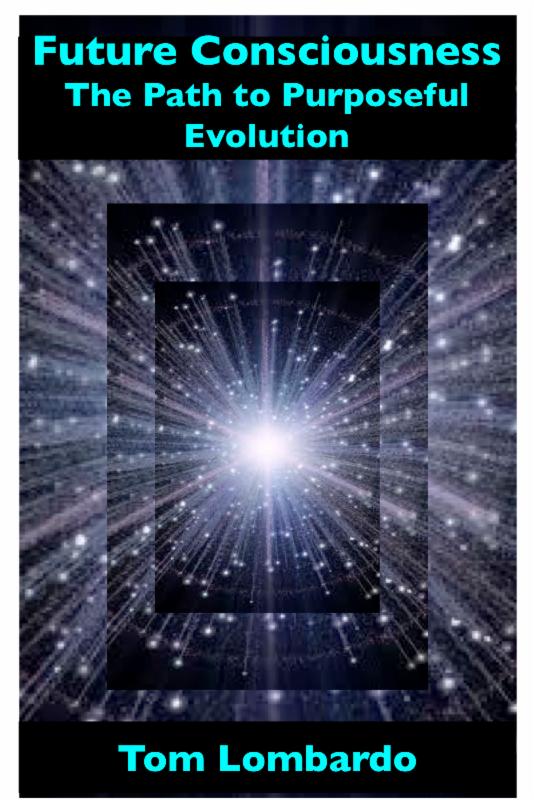
Future Consciousness: The Path to Purposeful Evolution - Introduction
|
As my new book
Future Consciousness: The Path to Purposeful Evolution moves toward publication (expected release in the spring of 2017), I had the good fortune and opportunity, thanks to the support of Jim Dator (Editor-in-Chief) and Wendell Bell (Consulting Editor), to have a substantial article summarizing the book accepted for publication within the
World Future Review for this fall.
The article is--I believe--the best and most comprehensive overview of my new book I have written; one independent reviewer described it as "such a singularly important work." As I state at the beginning of the article,
The Question of the Good Future
"In this essay I introduce my new book:
Future Consciousness: The Path to Purposeful Evolution, outlining many of its main arguments and key ideas.
The book begins with the question: How do we create a good future? Although the question is simple to state, it is the central and most important challenge in human life, which we recurrently address in our personal lives and have collectively engaged and debated throughout human history. It is also the pivotal question that motivates the professional and disciplinary study of the future, and all manner of writings on the future, whether popular or academic, spiritual or scientific, or broad or narrow in scope (Bell, 1997).
Furthermore, in considering the ubiquity and significance of this question concerning human life, we are led to a deep insight regarding the nature of the conscious human mind and our own personal existence. Being able to meaningfully ask the question and come up with various answers to it is a reflection of our most distinctive and empowering mental capacity: to desire and imagine; to think about and assess; to plan and strategize; and to purposefully pursue preferable or good futures. Our minds are uniquely constructed to raise, address, and answer--in theory and action--the question of the good future. However well we exercise this complex mental ability, we are all futurists in how we understand, organize, and direct our consciousness and our lives."
Read the article.
And coming in the spring, the big book
through John Hunt Publishing Company and Changemakers Books on how "we are evolution become conscious of itself" (to quote Huxley), and why it is through wisdom or heightened future consciousness we are best able to facilitate our purposeful evolution.

|
The "Wisdom Curriculum"
Leland Beaumont
New Courses: Recognizing Fallacies &
Assessing Human Rights
|
"Where is the wisdom we have lost in knowledge?
Where is the knowledge we have lost in information?"
T. S. Eliot
Leland Beaumont, one of the
Wisdom Page Advisory Board members and a frequent contributor to
Wisdom and the Future, has been developing an extensive "
Applied Wisdom Curriculum" on
Wikiversity, providing an informative, thoughtful, and rich interactive learning experience. This online curriculum is now featured on the home page of the
Wisdom Page.
This month Lee has added two new courses in the curriculum:
Recognizing Fallacies and
Assessing Human Rights.
As Lee states in the course introduction for "Recognizing Fallacies":
"A fallacy is a kind of error in reasoning. This course names common fallacies and provides brief explanations and examples of each of them. Because they are errors in reasoning it is surprising they are as common as they are. Fallacies often go unrecognized and unchallenged. Fallacies may be created unintentionally, or they may be created with the intent deceive other people. We think more clearly when we can identify fallacies and correct the underlying logic error."
Lee's introduction to the course on "Assessing Human Rights" is:
"All human beings are born with equal and inalienable rights and fundamental freedoms. These are your rights. How well are these essential rights being protected around the world? What can be done to advance human rights worldwide?"
* * * * *
Lee describes the Applied Wisdom Curriculum as follows:
"This Applied Wisdom Curriculum is being designed by asking how we can best prepare ourselves to solve the great universal problems that prevent us from realizing and enjoying all that is most important in life. Knowledge has not been enough; we need the broad scope, human perspective, and good judgment of wisdom.
Shih-Ying Yang writes: 'In the last analysis, individual actualization of conceptions of wisdom in real life, and the positive impact of these wise decisions and actions, may be the vehicle of the advance of human civilizations.'
This curriculum is based on the simple premise: If folly brings us problems, then perhaps wisdom can bring us solutions. The goal of the curriculum is to help you develop a tough mind and a tender heart.
Pursuit of well-being is the unifying theme for these courses."
|
"What Matters"
Emotional Competency
Leland Beaumont
|
"What Matters" Series
"Wise people seek a life well lived. The recent series on the virtue of the month provides moral guidance, but we must also focus our efforts on what matters most. While the virtues guide us in doing things right, focusing on what matters guides us in doing the right things. Therefore, we have begun a monthly exploration of
What Matters
.
Each month explore one topic that suggests how you should spend your time to attain fulfillment and live a meaningful life. What is most significant to you, your family, your community, nation and the world? How does what matters most change as your needs are met, as you gain experience, and as you grow and mature? Series topics will address surviving, thriving, recreation, success, significance, transcendence, and avoiding distractions and dead ends."
* * * * *
What matters this month is
Emotional Competency, the essential set of social skills required to recognize, interpret, and respond constructively to emotions in yourself and others. Emotional competency is an important skill that can provide several benefits throughout many aspects of your life. It can increase your satisfaction with relationships while it increases your gratification and contentment with the many interpersonal events in your life. It can give you greater insight and help you better understand the motives and actions of yourself and others.
Leland Beaumont
|
|
Walter Moss
Book Review: Ethics and the Quest for Wisdom
Article: "Wisdom from Russia"
|
Walter Moss,
Wisdom Page Advisory Board member, has contributed two essays to this issue of
Wisdom and the Future. Walter has written a great many articles for the
Wisdom Page: See, for example, all of his essays on
Profiles of Wisdom.
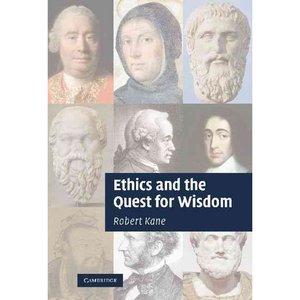
Walter's first contribution is a book review of Robert Kane's
Ethics and the Quest for Wisdom. As Walter states,
"Kane's book conveys valuable insights regarding how to live wisely in our modern age. This age he correctly maintains is characterized by uncertainty and pluralism. Does that mean, however, that we are stuck in a relativist universe where we must accept that one view is as good as another? Kane thinks not. He believes that we can still arrive at central, objective truths, both in our private lives and in the public sphere."
Read the entire book review.
|
|
Evidence-Based Wisdom Update
Charles Cassidy
|
Charles Cassidy on his
Evidence-Based Wisdom website has added a number of excellent educational videos, graphics, and articles over the last few months.

Included are:
"The Evidence-based
Wisdom Graphics Series is a new collection of infographics highlighting key findings from the field of wisdom research: Jeste's family model of the wise brain, the wisdom research timeline, the Berlin Wisdom Paradigm, the 6 components of wisdom, current wisdom scales, etc."
Wisdom Profiles:
Igor Grossmann
Dr Eeva K. Kallio
Monika Ardelt
Animations Series: Developing Wisdom
"The most intriguing question of all in the field of wisdom research surely has to be: 'Can we intentionally develop wisdom?' This animation outlines 3 surprising short-term wisdom-enhancing strategies developed in the research laboratory. And the long-term? Research is suggesting there are a number of potential paths to developing wisdom over the life course..."
The Myth of the Aged Sage: Does Older Really Mean Wiser?
"The concept of the white-haired, bearded 'wise aged sage', is very much part of our popular culture. Even if we put this image to one side, our common sense also seems to lead us to the same conclusion; more years lived means more life experience acquired, means more wisdom, surely? But what does the science of Wisdom research tell us? Does older really mean wiser?"
|
|
Copthorne Macdonald Interview
Jason Merchey
|
Jason Merchey, a past contributor to
The Wisdom Page and friend of the website's founder, Copthorne Macdonald, recently completed the transcript of his interview with Cop on wisdom (probably done around 2006). As Jason states,
"Wisdom is the heart of the enterprise
Values of the Wise, so I look forward to today's discussion here on
Values and Ethics: from Living Room to Boardroom. Wisdom is an apparently simple, yet surprisingly elusive matter, so I'm geared up to interview two capable and conversant individuals who can speak with me and help us all understand wisdom a bit better."
Read the transcript.
Listen to the complete series of interviews. (Interviews with Copthorne and other Wisdom Page writers.)
View Jason's
Values of the Wise webpage.
|
New Book -
Two Great Problems of Learning:
Science and Civilization
Nicholas Maxwell
|
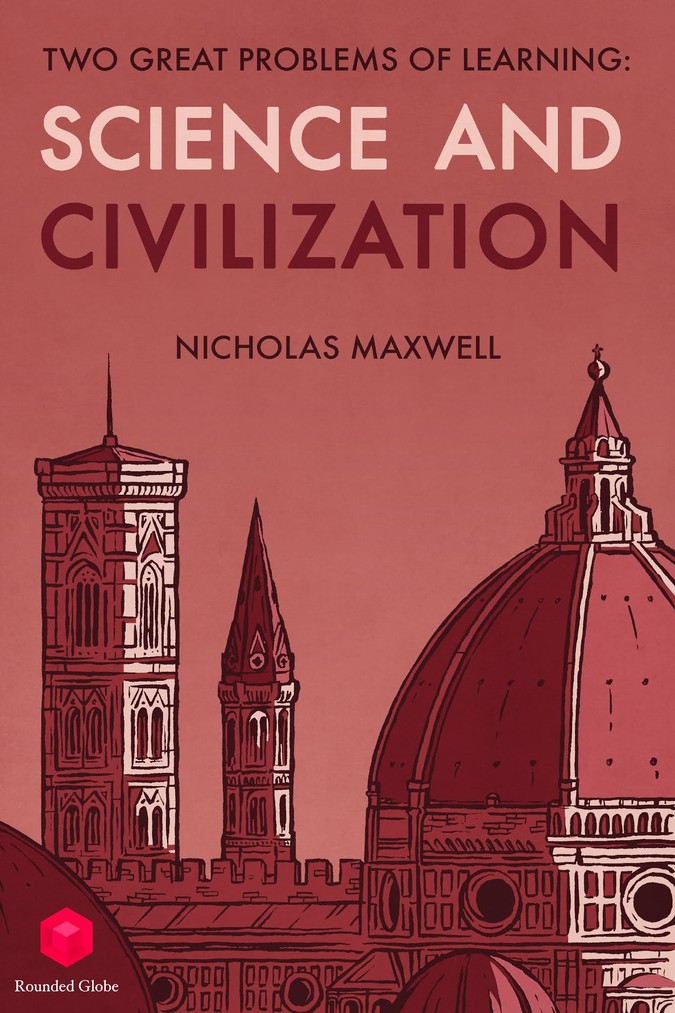
Nicholas Maxwell, member of
The Wisdom Page Advisory Board and founder of
Friends of Wisdom, recently published a new book,
Science and Civilization. From the book
webpage,
"Two great problems of learning confront humanity: learning about the nature of the universe and about ourselves and other living things as a part of the universe, and learning how to become civilized. The first problem was solved, in essence, in the seventeenth century, with the creation of modern science. But the second problem has not yet been solved. Solving the first problem without also solving the second puts us in a situation of great danger. All our current global problems have arisen as a result. What we need to do, in response to this unprecedented crisis, is learn from our solution to the first problem how to solve the second.
In this ebook, Nicholas Maxwell revisits the eighteenth-century Enlightenment in order to correct the defective vision on which the academic structures of today have been built. This will allow us, Maxwell argues, to succeed where the Enlightenment tried but failed: to learn from scientific progress how to go about making social progress towards as good a world as possible. The result would be a revolution in the nature of academic inquiry as a whole, which would finally take up its proper task of helping humanity learn how to become wiser by increasingly cooperatively rational means."
|
The School of Life
Philosophy Video Series
|
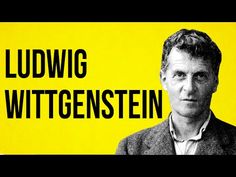
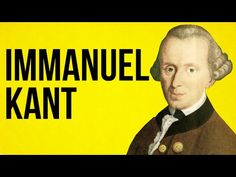
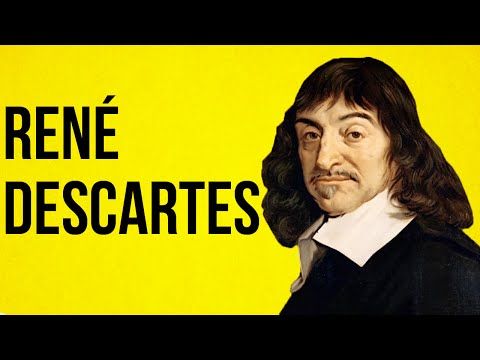
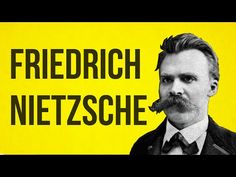
This summer I discovered an excellent series of animated videos on great philosophers and more, the School of Life. Each philosophy video is relatively short and both highly entertaining and educational, covering key ideas of each philosopher--from Plato to Derrida--along with commentary of the relevance of a philosopher's ideas to contemporary life.
|
|
Karen Sands New Book
The Ageless Way
|
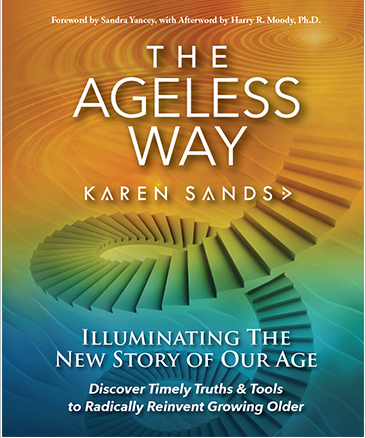
Karen Sands, futurist colleague and friend, has just published a new book
The Ageless Way. As stated in the introduction to the book,
"More of us than ever before are ready to reshape the chaos of our lives and planet, to change what aging means while transforming our lives and our world. The old story of aging no longer applies - if it ever did. We have more to give, not less, with each new year.
Why deny age when we can transcend it?
We can live beyond time, beyond age. We can be Ageless. Join leading Educational GeroFuturistTM Karen Sands in an exploration of past, present, and future stories, from the ancient oracles to modern trends... trends that lead to one extraordinary conclusion:
We are on the cusp of the new story of our age, as individuals and as a planet, a story in which multiple generations have an opportunity to redefine age and reimagine the future together, and in doing so, transform the world in visionary ways. It's time for us to illuminate this new story about what it means to age across our life course, a story in which we step forward to be not who we should be as we age but who we can be.
Let the old story go. Let the new story begin.
Usher in The Ageless Way now - at every age. It's our time to radically reinvent growing older!"
|
|
Videos on Wisdom, Consciousness, and Human Values
|

Three very good videos of presentations I discovered and viewed over the last few months, all of which have a great many things to say about topics relevant to wisdom and the future, include:
Donald Hoffman: Consciousness and The Interface Theory of Perception - A mathematical idealism theory of reality, knowledge, and the conscious mind. As argued in the video, all that exists is consciousness.
Robert Sternberg, one of the most well known researchers and writers on wisdom in the world, presents a short talk at the
University of Chicago Center for Practical Wisdom, on
"Why is the World Falling Apart: The (Non) Place of Wisdom in Today's World?"
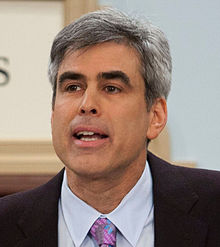
Jonathan Haidt, author of
The Happiness Hypothesis and
The Self-Righteous Mind, presents a highly provocative and stimulating talk--the
APA Keynote Address for 2016--
"What Is Happening to Our Country? How Psychology Can Respond to Political Polarization, Incivility and Intolerance," in which he discusses human values, the chaotic state of the world, cultural conflicts and political polarization, and biases in academia. Highly recommended.
|
Model Earth
Designing the Future Cooperatively
|
Jan Hearthstone shared his extensive website collection of articles on a "Universal Model for a Sustainable World." As stated on his home page,
"It would be possible to accommodate any and all sustainable life-styles on one Earth, as long as those could be demonstrably proven to, indeed, be sustainable both--ecologically and socially."
See his home page
Model Earth.
|
|
Finally from the
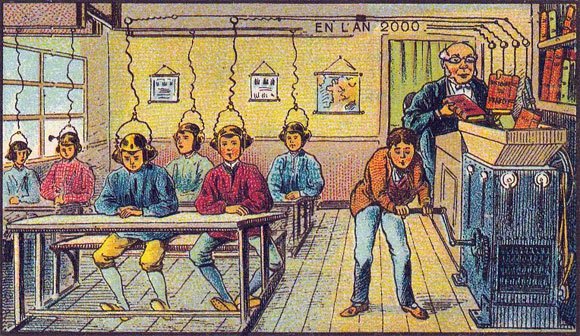
Singularity Hub, a provocative and entertaining look at predictions of the future created over a hundred years ago (circa 1899) in the form of picture cards. See Postcards of the Future.
|
Archive Pages for Center for Future Consciousness and Wisdom Page
|
From the fall of 2012 to the spring of 2014, I published two newsletters: the revitalized and redesigned
Wisdom Page Updates and
Futurodyssey (the monthly publication of the
Center for Future Consciousness). Readers

can view issues of both
these
newsletters; each
newsletter has an
Archive Page. View the
View the
Futurodyssey Archive Page
.
Beginning in June, 2014, the newsletters were combined into one electronic journal that serves both
The reader can subscribe to
Wisdom and the Future either on The Wisdom Page or the Center for Future Consciousness Page. See
The Wisdom Page Contact Page
|
|
| |
|