|
Prior to its construction, the site held a temporary structure built to house the 1870 Saengerfest of the Nord-Amerikaner Saengerbund, a society of German men’s choruses that met on Sunday afternoons in their respective cities as social and musical clubs that celebrated German heritage. Beer was ever-present as was a vast repertoire of part songs. When Maria Longworth Nichols and a group of businessmen started the May Festival, which had its first performance in 1873, it was held in Saengerfest Hall, sometimes called Exposition Hall because of industrial expositions also held there.
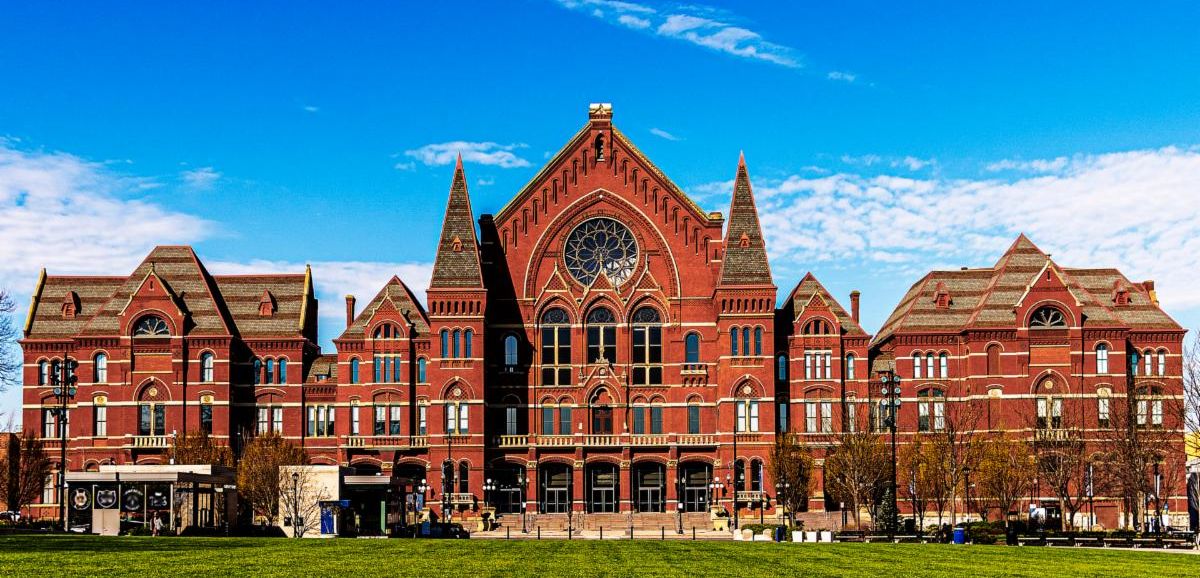
Cincinnati Music Hall is a direct result of the 1873 and 1875 May Festivals. Cincinnati’s usual springtime thunderstorms pelted the leaky tin roof of Saengerfest Hall with rain and hail. The cavernous hall acted as a resonating chamber and the conductor had to stop the concerts on more than one occasion to let the storms pass. It was also hot and crowded. Windows were broken to reduce the temperature, but the 6,000 attendees, a third of them outside the hall, could not be moved.
Kentucky-born Reuben Springer was so annoyed by the situation that he made the initial $125,000 donation to create a matching fund, the first such financial plan in history, to enable the construction of Music Hall, which was completed in 1878. The Third May Festival, originally scheduled for 1877, but postponed until the new hall could be finished, cemented the festival as a recurring event deserving of notice on a national level largely because of the clarity of sound within.
Cincinnati’s Music Hall was officially dedicated at the first concert of the 1878 May Festival on May 14, 1878. This temple of music still serves as the primary venue for art music, opera, and ballet in Cincinnati. This year the May Festival celebrates its 150th Anniversary Season!
|