 |
|
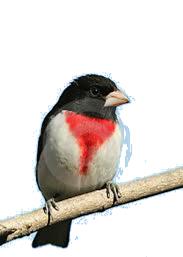
Rose-breasted Grosbeak
What a joy it is to attract the Rose-breasted Grosbeak to our feeders after they have wintered in Central and South America. This little finch, which weighs about 1-3/4 ounce, has had a long trip to its nesting territory. The Nature Center has banded these birds in past years and it is always exciting to recapture one. Some had been banded three years prior to them being caught in the mist nests once again. This truly makes one contemplate the wonders of bird migration when this little bird has traveled all those miles down to the tropics and back, returning to the exact location where it was hatched.
Read more about the Rose-breasted Grosbeak
|
| In Nebraska have Oriole feeders ready by April 25th |
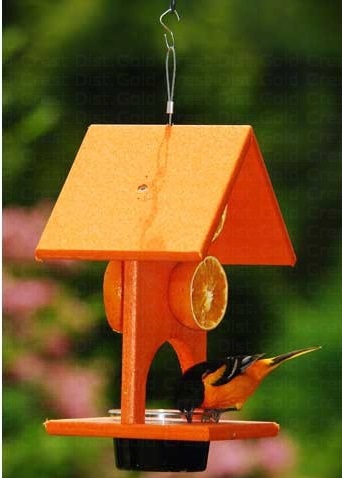
Orioles begin arriving across the middle United States about April 25th. Timing is very important when trying to attract them to various feeders. Migrating at night they are normally cold, tired and hungry upon their arrival. This is why timing is so important and the feeders should be ready before they migrate back. It is wise to put the feeders out approximately one week prior to their average arrival time. To do so after you see them in your yard may take a little more time to entice them to the feeder. This preparedness may mean changing the nectar or replacing the oranges and grape jelly several times to maintain freshness.
|
|
Go birding in Nebraska at
NEBRASKA METRO BIRDING |
|
Go birding in Nebraska at
CHICKEN DANCE TRAIL |
|
Dave's June Bird Chatter
Watching the birds at our bird feeders is certainly a source of relaxation and enjoyment since warmer weather allows us to sit on our decks and patios. The cool breezes through open windows at night also ushers in the sounds of birds singing at the crack of dawn replacing the alarm that reminds us it is time to get up. Yes the late winter we experienced is but a memory now and the spring rains promise an easing of the persistent drought. Spring is a time of renewed life after a long period of dormancy.
Read more Bird Chatter
|
|
Go birding in Nebraska at
NEBRASKA FLYWAY |
Protect Your Bird Feeders
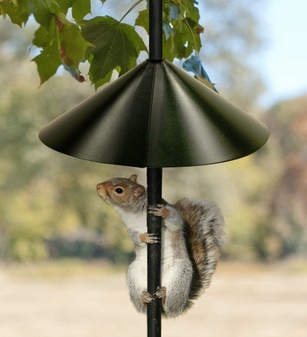
A properly installed and located squirrel baffle or
raccoon baffle will protect your bird feeders. Don't
let the squirrels keep your birds away, damage your
bid feeder, and waste your wild bird feed.
Ask our staff for more details and applications available
|
|
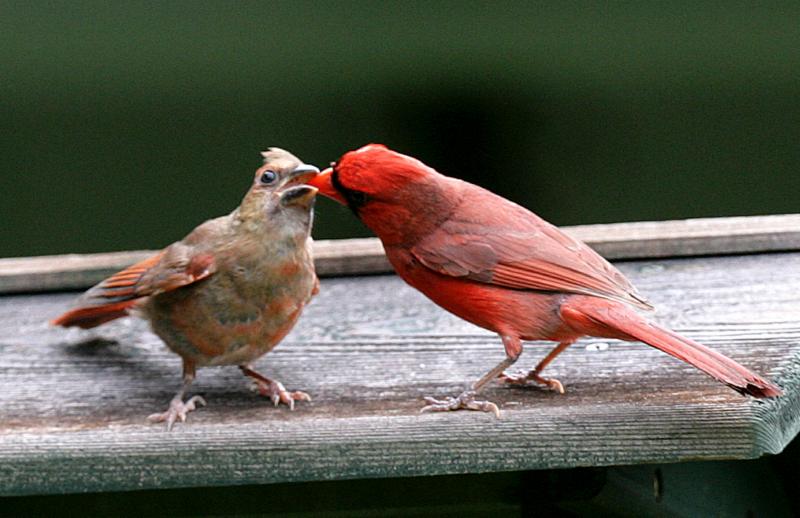
The renewal of life is well underway as many fledglings have recently left the nest. These immature birds are fairly easy to identify even though they will not adorn their adult feathers for a while. Young Robins have the mottled or speckled breast that is common to the thrush family. Immature Cardinals leave the nest with feathers that make them appear as if the entire brood was females since the adult male Cardinal is so territorial that if the male fledglings had bright red feathers they would be driven off. These immature Cardinals also sport a grey bill which will change to the distinguishing orange as they molt into their adult plumage. Many first year birds, including woodpeckers, do not have the vibrant colors as their adult counterparts. They act clumsy, are uncertain how to enter the water in the bird bath, and constantly beg for food. The red patch on the young Downy males is ontop the crown but will move down after they molt in late summer. Eventually however they will become very proficient flyers, enjoy a robust bath, and begin to feed at the bird feeders. This is truly an exciting time of the year in the avian calendar.
|
|
Wingtips: Bird Bath Cleaning
Here's a few tips to keep your bird bath cleaner longer. Try and locate the bath in a shady area. Sun promotes algae growth. Scrub concrete bird baths with a week solution of Clorox and water then rinse well. The Clorox
will kill any algae spores in the pores concrete. Use vinegar and water for ceramic, metal, and plastic bird baths. A few drops of a non-toxic water treatment from Wild Bird Habitat will help keep the bath cleaner.
|
|
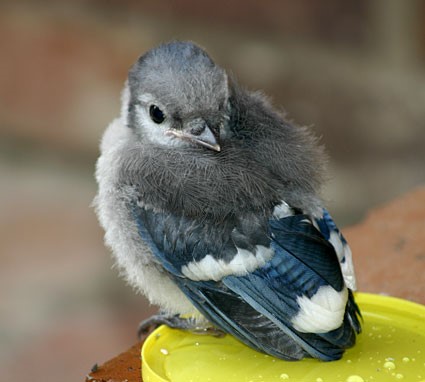
This is the time of year when many young birds are beginning to fledge from the nest. On their first attempt they often times end-up on the ground, much like the first time we tried to walk and fell down. Although these birds may seem to flounder, you can bet the parents are nearby to protect, and encourage their offspring. Too many times people will pick these youngsters up with good intentions thinking they are in trouble. However it is best to leave them alone unless they are in immediate peril from a cat or other eminent danger. You may place them back in the nest if you can safely do so. Unlike mammals, handling young birds will not lead to their abandonment by the parents, a common misconception. If you must retrieve a young bird that is in danger, or if it becomes orphaned or injured, you can contact a licensed rehabilitator in your area who will care for them. Once the bird has been rehabilitated they will release them back into the wild.
Birds, Mammals, Reptiles
- Wildlife Rescue, Inc. / Lincoln, NE area / (402) 473-1951
- Wildife Rehab, Inc. / Omaha, NE area / (402) 341-8619
Raptors (Hawks, Owls, Falcons, etc.)
- Raptor Recovery Nebraska / Statewide / (402) 994-2009
Or call the Wild Bird Habitat Store during business hours (402) 420-2553
How to Find a Wildlife Rehabilitator where you live
Get help for orphaned, sick or injured wildlife using this state-by-state listing
|
|
The Cornell Lab Bird Academy
Broaden your understanding of birds
- Free and premium content for all knowledge levels
- Learn everything-from birding basics to college level ornithology
- Courses, interactives, videos, articles, and all kinds of bird-ology
|
|
Summer Bird Feeding Program Suggestions
Grackle proof bird feeders are an investment that you will enjoy all year long. Many of these feeders carry a Lifetime Warranty and any needed repairs are made right at the Wild Bird Habitat Store.
|
|
Black Oil Sunflower Seed
25 LB Bags - $11.49
- Premium Grade A
- Pesticide Free
- Certified NON-MGO
|
Support Bird Conservation
and Other Non-Game Wildlife In Nebraska
Make a tax deductible contribution today.
Visit
|
|
BIRD ID APPS
Cornell Bird Lab offers two apps that includes a wizard to help you identify birds. Best of all there is no charge for these apps. Check them out and start identifying the birds you see today.
|
 |
|
Why Should U.S. Bird Enthusiasts Care About
the Canadian Boreal Forest?
The Boreal Songbird Initiative (BSI) is a non-profit organization dedicated to outreach and education about the importance of the North American Boreal Forest to birds, other wildlife, and the global environment.
As the voice for boreal birds, the Boreal Songbird Initiative is committed to protecting the Canadian Boreal Forest-the largest intact forest on Earth-on behalf of the billions of migratory birds that rely on it.
Why is this United States-based organization working on Canadian forests? The North American Boreal Forest-the majority of which is in Canada-is the largest intact forest left on Earth and is critical to North American birds. It also stores remarkable amounts of carbon and is the largest source of unfrozen fresh water on Earth, helping to keep our planet cool and our waters pure. Although we are primarily driven by the need to conserve boreal bird habitat, we recognize that these other values are also important reasons for conserving large portions of this majestic forest.
The mission is to protect critical bird habitat within the boreal forest for the billions of birds that call the boreal home. The BSI supports the
Boreal Forest Conservation Framework
, which calls for the conservation of at least 50% of the boreal forest and the application of leading-edge sustainable development standards in the remaining lands. The boreal forest-North America's bird nursery-is a biodiversity hotspot that sustains billions of migratory birds and countless other wildlife. The race to develop the boreal forest is on, and without science-based conservation strategies much of the forest and the countless values it provides will be gone before we know it.
Each spring, between 1 to 3 billion birds begin making their way up to North America's boreal forest. Some have shorter trips from the Lower 48 while others begin their journeys as far away as southern South America. During peak migration, millions of individual birds may cross the U.S. border into Canada toward the boreal forest on any given day or night. Many species of birds do in fact migrate at night, so that the migration of these huge numbers of birds can go largely undetected. Many will stop in places scattered throughout the U.S. along the way, becoming the beloved backyard birds of spring and fall migration we have come to know and cherish.
Of species regularly found within Canada and the United States:
- 80% of waterfowl species regularly breed in the boreal
- 63% of all finch species regularly breed in the boreal
- 53% of warbler species regularly breed in the boreal
Attend the documentary THE MESSENGER at the Mary Riepma Ross Theater in Lincoln, NE. April 22 - 28, 2016, presented by Nebraska's Wild Bird Habitat Stores.
Wingtip: Although up to 3 billion birds enter the Boreal Forest every spring to breed, more than 6 billion birds migrate out of the Boreal Forest every fall after the nesting season to or through the United States.
|
|
Wild Bird Habitat Stores
recipients of the 2015
Wildlife Communicator Award
from the
Nebraska Wildlife Federation
|
|
Wild Bird Habitat Stores
recipients of the 2015
Earth Keeper Award
from the
Wachiska Audubon Society
|
Environmentally Friendly Bird Feeders
Although the durability and natural look of cedar bird feeders continue to be preferred, the new line of feeders made from 100% post consumer recycled plastic is gaining in popularity. Many of these bird feeders have a lifetime warranty against fading, pealing, cracking, and chipping. They clean up like brand new, even after years of use. And speak of easy cleaning, many of the cedar and recycled plastic feeders we stock have removable perforated steel bottoms. This also allows moisture to pass through and the seed to remain dry.
Made in the USA
|
|
Wild Bird Habitat Stores
recipients of the 2015
Best U.S. Birding Retailer
from the
Gold Crest & the Bird Feeding Industry
|
Nutra Safflower for Goldfinch
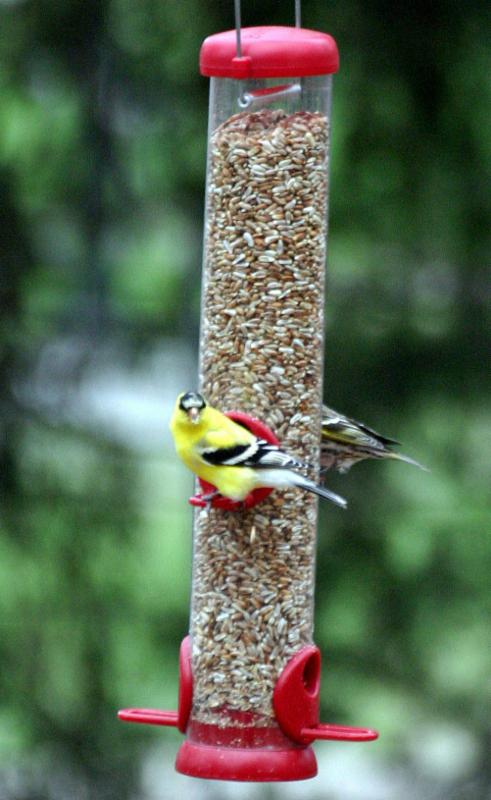
Nyjer thistle seed has traditionally been the preferred seed of the American Goldfinch. The cost of Nyjer seed can vary greatly as it is a product imported to North America from India and Ethiopia and they set the price, and the price is rising once again. Nyjer is an oil seed which is why it is enjoyed so much by finches. In countries where it is grown this seed is crushed and used for cooking oil, much as in North America we crush black oil sunflower and safflower seed for cooking oil.
At Wild Bird Habitat Store we have received many reports and have had personal experience that Goldfinch readily feed on Nutra Safflower seed. In fact they may prefer it over Nyjer thistle seed. This could be a great alternative to supplementing Nyjer thistle seed for attracting Goldfinch. One benefit of Nutra Safflower is that this is a product grown by American farmers.
Nutra Safflower is available in 20 and 50 pound bags at the Wild Bird Habitat Store locations or by bulk quantity.
Internet customers can order Nutra Safflower seed on line. Although Wild Bird Habitat Stores Internet store offers free shipping on orders over $100, there is
no free shipping on wild bird feeds. That allows us to keep our Internet wild bird feed prices low.
Order Nutra Safflower on line.
|
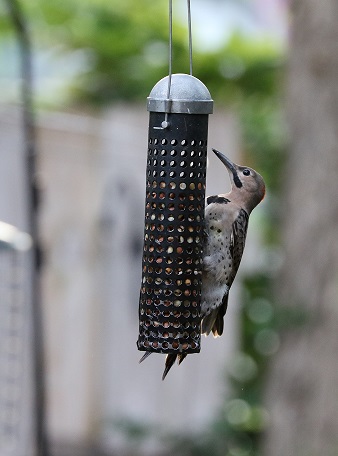
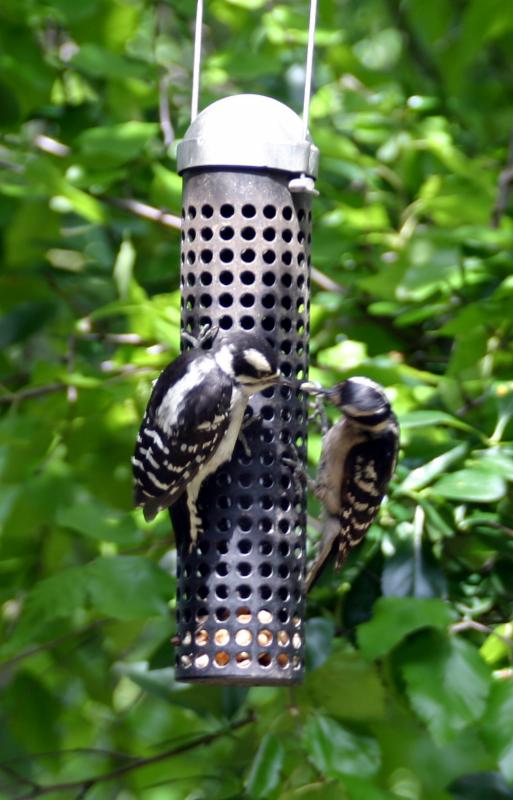
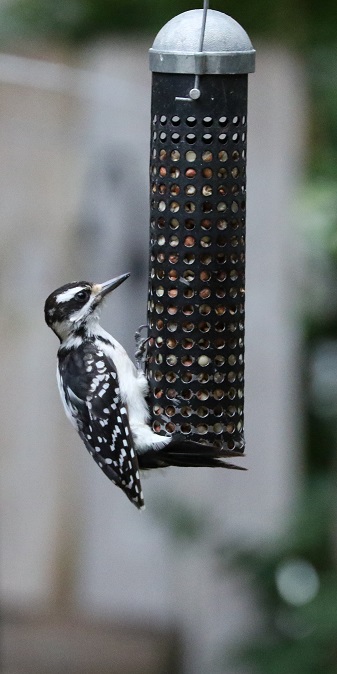
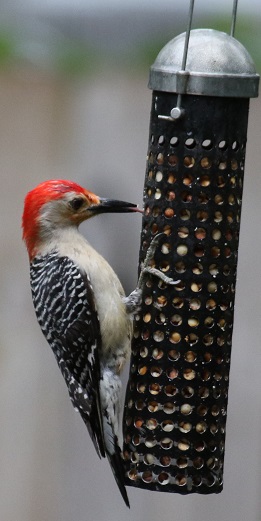
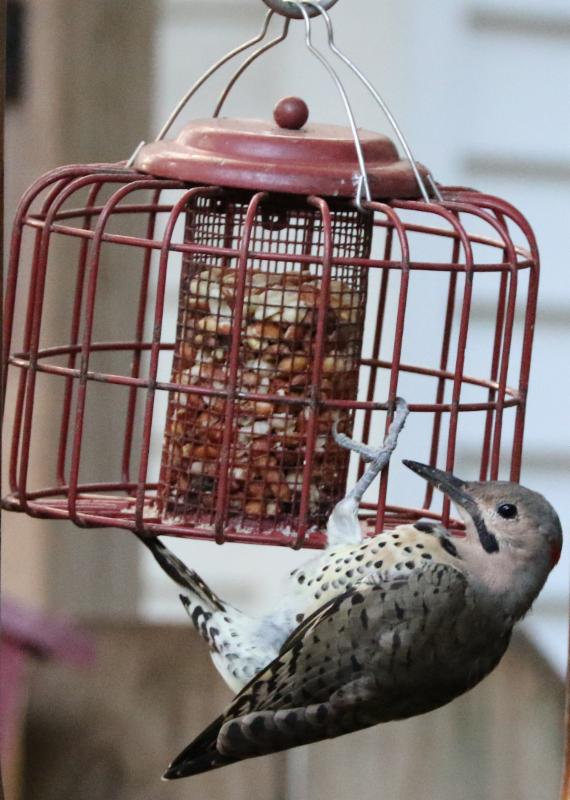
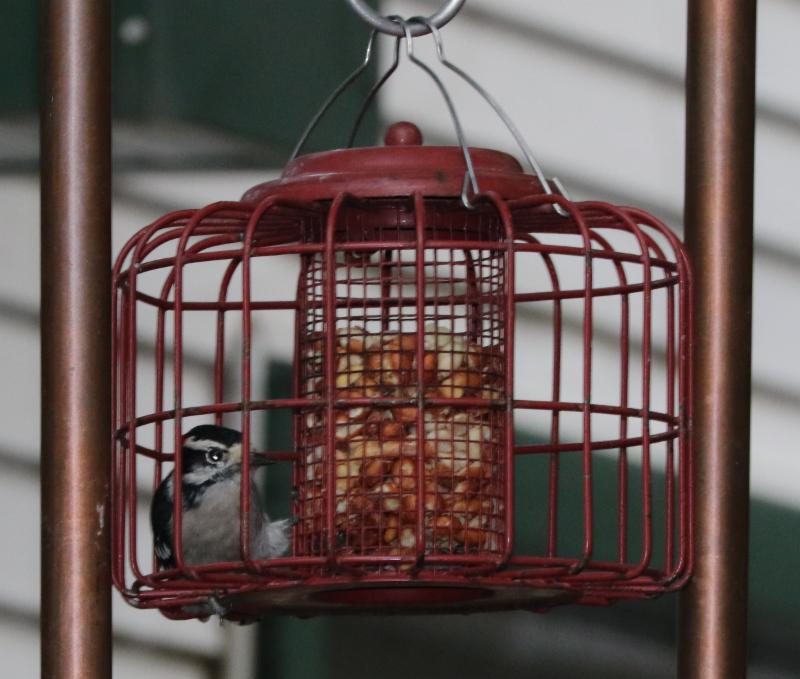
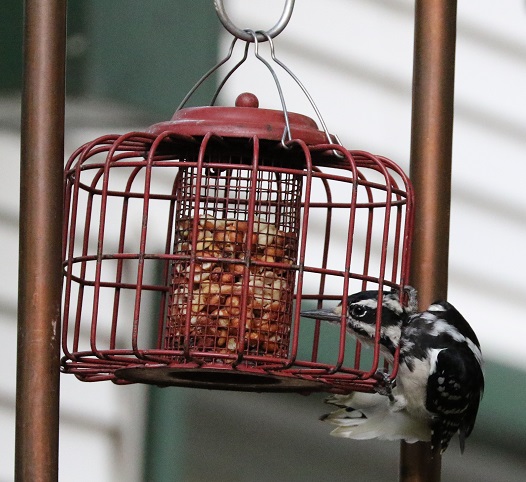
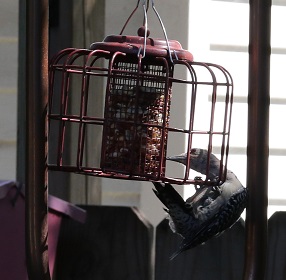
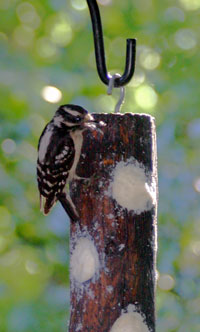
Peanut Feeders - A picture is worth a thousand words
photos by Dave of Wild Bird Habitat
|
Caged Peanut Feeders -
Feed woodpeckers not squirrels & starlings
photos by Dave of Wild Bird Habitat
|
|
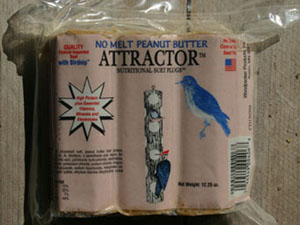
Best Woodpecker Suet Plugs
Attractor High Energy Suet Plugs available at
the Wild Bird Habitat Stores
- Roasted Peanut Attractor Plugs
- Sunflower Attractor Plugs
- No-Melt Peanut Butter Attractor Plugs
By the pack or by the case, woodpeckers love 'em
|
|
|
|
Nebraska Birding Trails Website
Has a New Look
The Nebraska Birding Trails was developed in 2003 listing more than 400 birding sites across Nebraska. Chaired by Dave Titterington of Nebraska's Wild Bird Habitat Stores with members of the Nebraska Bird Partnership's Birding Trails Work-group which was comprised of members from government agencies, the University of Nebraska, Nebraska Travel and Tourism, Nebraska Ornithologists Union, and conservation groups and individual birders, it was an immediate success. Recently the Nebraska Game and Parks Commission with the help of Nebraska Educational Television revised the Nebraska Birding Trails website to give it a new look and make navigation locating birding sites easier. We hope you check it out at:
NEBRASKA BIRDING TRAILS
Two other websites developed by the Educational Work-group of the Nebraska Bird Partnership have also been revised.
PROJECT BEAK -
Project BEAK is an interactive, web-based curriculum that contains scientifically accurate information about avian conservation, avian form, function and other adaptations that help birds survive, Nebraska's unique avian biodiversity, Nebraska's threatened and endangered birds, plus video clips, interactive games, quizzes and diagrams, additional resources and links, and classroom lesson plans.
This website is devoted to helping Nebraskans and visitors identify and learn about the over 400 species of birds which can be found in our state. Are you trying to identify a bird you saw? Use "search by characteristics", where you can search by size, color, range, and habitat. Or, you can search or browse the full Nebraska bird list by common name, scientific name, or bird group.
|
|
At the Bird Expo in Mexico, MO the Wild Bird Habitat Stores
received the Best Birding Retailer of 2015 Award
Over the 23 years Lincoln's Wild Bird Habitat Stores have been in business they have received numerous awards. These awards included The Lincoln Journal Star, Howard Wiegers "Conservationist of the Year Award", the Edna Shields "Sharing Nature with Children Award", the "Earthkeeper Award" and "Lyman's Award" from Wachiska Audubon, and the Better Business Bureau's "Integrity Award". On September 30th, 2015, the Wild Bird Habitat Stores were recognized by leaders in the birding industry as the 2015 Best Birding Retailer of the Year by leaders in the biding industry. On October 27th, 2015 at the Nebraska Wildlife Federation's Wildlife Awards Banquet the Wild Bird Habitat Stores were honored
to receive the "2015 Wildlife Communicator Award".
The successes Wild Bird Habitat has been recognized for is only because of the friends and customers our business has generated, our dedicated staff, and all those who continue to support bird conservation, environmental education, and outdoor birding recreation that Wild Bird Habitat has been honored and privileged to partner with over the past 23 years. We thank everyone for their support.
Dave, Linda, & Katie Titterington
|
|
|
|
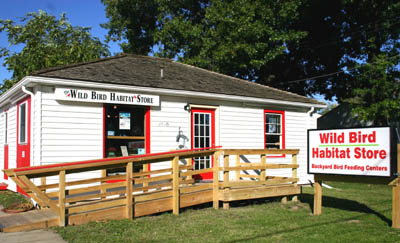
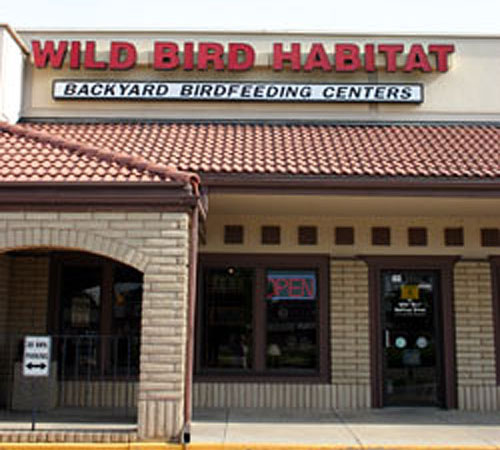
South Lincoln, NE location
5601 South 56th Street
In the Alamo Plaza
North Lincoln, NE location
4840 Orchard Street
in the little white house
Toll Free Phone: (800) 606-2553
|
|
|
|
|
|