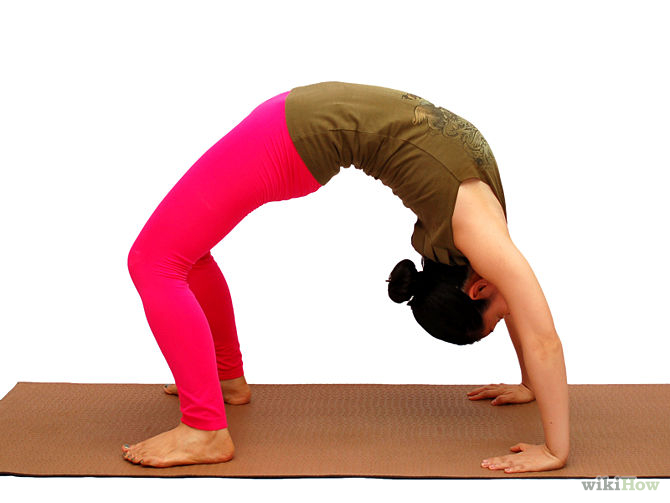
Stretching, it's been a cornerstone treatment and training technique for decades. So ingrained and accepted has stretching been that for a long time its benefits pretty much went unquestioned. That was until a couple of years ago, when a 20 year review of the research revealed that pre-exercise stretching was ineffective at preventing or reducing the prevalence of exercise induced injuries.
Given this, it is reasonable to question stretching's effectiveness with injury treatment. You see, stretching has been promoted as having many benefits including:
- Increasing muscle and joint flexibility
- Increasing muscle relaxation
- Decreasing muscle soreness
- Improving circulation
- Preventing excessive adhesions
- Promoting a flexible and strong scar
Despite this, many of these benefits have not been fully investigated and / or proven.
If you think about it, almost all physical injuries are due to some sort of breaking down of tissue. For example, a strain is a tear of muscle tissue and a sprain is a tear of the ligaments and / or capsule tissue that holds joints together.
Research has indicated that after about 5 days following an injury, a scaffolding or frame work of tissue is laid down randomly as a bridge over the damaged tissue. Initially, these fibres are fragile and easily broken if too much tension or stress is applied.
As the laying down of fibres tends to peak at about 3 weeks, these fibres become progressively more durable and mature. This means that applying tension to the healing tissue becomes progressively more important to ensure a strong and functional repair.
Stretching, if applied before this phase of healing, may have a number of detrimental effects. These include:
- Re-injuring the healing tissue (overstretch strain) by tearing the new, fragile tissue repair;
- Weakening tissue (overstretch weakness), making it more susceptible to re-injury;
- Delaying healing by reducing blood flow;
- Degrading the quality of tissue repair by impeding the nerve supply into the new tissue.
In our experience at Bodywise Health, people will often state that they "feel" better for a short time following stretching. However, on closer questioning and analysis, it is often evident that over the longer term, their condition is not improving.
What to do instead
Immediately following a soft tissue injury, ice and immobilisation should applied for the first few days following injury. Immobilisation enables a tissue framework to form across the injured tissue, knitting the damaged ends together and increasing the strength of the healing tissue so it can withstand greater muscle pulling (tension).
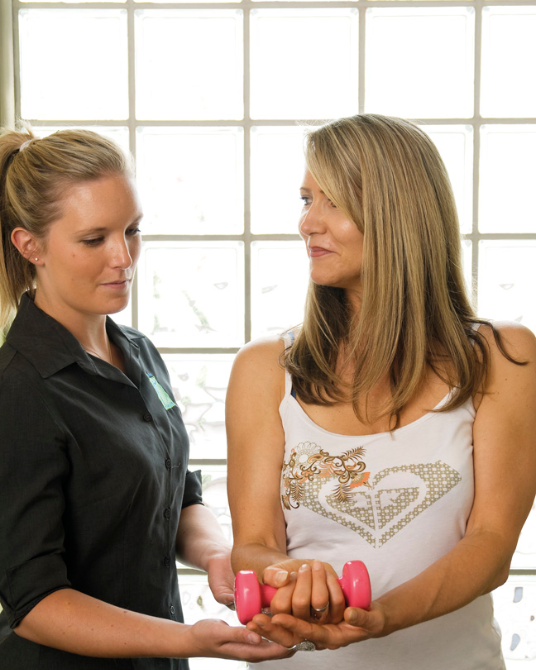
After the first few days following injury, early active protected (using taping or bracing) movement into directions which are pain free and which don't stress the injured tissue has been shown to have numerous benefits including improving circulation, preventing joint stiffness, reducing swelling, accelerating healing and stimulating a better, stronger tissue repair.
However, care must be taken when moving an injured tissue. Probably the number one cause why people don't get better from injury or don't get better as quickly as they should, is because they re-injure the damaged tissue. In the early stages, any movement must therefore be pain free and feel almost "too easy". Progression in movement must only take place, after it has been established how much movement is safe for the injured tissue.
At about the 2 week mark, contracting the overlying stabilising muscles in the position of maximum comfort and below the threshold of pain has the benefit of aligning fibres and producing a stronger, healthier scar.
It also prevents muscle wasting and begins conditioning the tissue repair to stress or force in a safe and measured way, thereby helping to protect it against re-injury.
As long as the injured tissue remains pain free, this strengthening program may be progressed first in the number a contractions applied and then with increasing movement, before increasing the loading force.
The specific exercise techniques and protocols that work best are beyond the scope of this article because they differ for different injuries and circumstances.
At Bodywise Health, we have found that stretching as a treatment technique has most value if applied later in the treatment program, after the healing tissue is more resilient to force.
At this point stretching can be important for remodeling the scar tissue into a flexible, strong repair as well as for restoring full bodily movement and function.
For a more detailed article as well as references, please read.
I hope that this helps.
Best Wishes,
Michael Hall
Director
Bodywise Health
P.S. For more information or for a FREE injury assessment and a 2nd opinion, please call 1300 BODYWISE (263 994)