|
Dear Generation,
This month, we submitted a Close to Home piece to the Press Democrat about learning from our past mistakes in present and future housing decisions. I encourage you to take a few minutes to read it if you have not already. The take home message is this: our housing needs are too great to allow perfection to be a barrier to progress.
At Generation Housing, we look forward to a busy year continuing to promote pro-housing policies, support great projects, and provide housing education. We have lots coming up in the early Spring, as we prepare to release our second annual State of Housing report and a study on the human impacts of housing cost burden. And keep an eye out for an announcement coming very soon about an exciting event we are putting together!
Now is the best time to get started on moving forward with more, more affordable and more diverse housing. Your voice makes these goals possible!
In partnership,
Jen Klose, Executive Director
| |
|
It's not too late to make getting involved in the movement for more, more affordable, and more diverse housing part of your 2023 plans!
We’re asking you to make a commitment this year to stand with Generation Housing—whether it’s for the first time or it’s standing taller—to help make Sonoma County a place where the families who live here, and the people who work here, are able to find the housing that meets their needs at a price that allows them to do more than just make the rent.
Here are three ways to get involved or increase your engagement now and in 2023:
-
Become a member of Generation Housing to help us continue to lead Sonoma County’s pro-housing movement in 2023.
-
Support Generation Housing’s pro-housing advocacy with a one-time or monthly donation.
-
Sign up for our action emails and, once you have (or if you already have, resolve to take one pro-housing action each month in 2023.
By including us in your 2023 plans, you're making our communities better places for everyone to live. Thank you.
| |
Policy Update January 2023 | |
|
Sonoma County Housing Element Digest
Since our final policy update of 2022, two City Council’s, Sebastopol and Rohnert Park, have by resolution formally adopted their respective Housing Elements. The adopted Housing Element’s will be remitted to the California Department of Housing and Community Development for certification. Once secured, the Housing Element update process would officially end for those communities. As a refresher, all jurisdiction’s must have a substantially compliant and adopted Housing Element by January 31, 2023 or they will be subject to the “Builder’s Remedy” - a tool that allows developers to bypass the local zoning code and general plan of cities with a non-compliant Housing Element so long as 20 percent of the units in a proposed project are deed-restricted affordable.
For your information - If you live in a jurisdiction that has already submitted their draft Housing Element to Housing and Community Development for the 90-day review, you can still submit public comment to the jurisdiction, just be certain to carbon copy (“cc”) - housingelements@hcd.ca.gov. We would also love to see your comments too, so feel free to add calum@generationhousing.org to your cc line.
Check out our Housing Element tracker, posted on our website here!
-
Cloverdale: The draft Housing Element was officially submitted to HCD on December 9, 2022 for the 90-day review period. They will be out of compliance with state law after January 31, 2023.
-
Click here to track Housing Element updates on their website
- You can submit public comment to the City of Cloverdale by emailing CloverdaleHousingElement@4leafinc.com or mail/deliver to Cloverdale City Hall (124 N. Cloverdale Blvd)
-
Click here to get Cloverdale specific action alerts!
-
Cotati: The draft Housing Element was officially submitted to HCD on November 21, 2022 for the 90-day review period. They will be out of compliance with state law after January 31, 2023
-
Click here to track Housing Element updates on their website
- You can still submit public comment by emailing Cotati@TheCivicEdge.com.
-
Click here to get Cotati specific action alerts!
-
Healdsburg: The draft Housing Element was officially submitted to HCD on November 15, 2022 for the 90-day review period. They will be out of compliance with state law on January 31, 2023.
-
Click here to read the draft Housing Element
- You can still submit public comment by emailing HousingElement@Healdsburg.gov
-
Click here to get Healdsburg specific action alerts!
-
Petaluma: The draft Housing Element was officially submitted to HCD on October 31, 2022 for the 90-day review period. They are expecting a letter from HCD on January 27, 2023. They will review those comments and make the necessary revisions to the Housing Element. They are expected to be out of compliance with state law after January 31, 2023.
-
Click here to track Housing Element updates on their website
- You can still submit public comment by emailing planpetaluma@cityofpetaluma.org.
-
Click here to get Petaluma specific action alerts!
-
Rohnert Park: The City Council formally adopted their Housing Element on January 25, 2023. It will now be remitted to HCD for certification.
-
Click here to track Housing Element updates on their website
-
Click here to get Rohnert Park specific action alerts!
-
Santa Rosa: The 90-day review period by HCD has ended. The Santa Rosa Planning Commission will review the Housing Element on January, 26 2023. For meeting information and to view the agenda, click here. Assuming the Planning Commission approves this draft, the City Council will consider formal adoption of the Housing Element on February 14, 2023.
-
Click here to track Housing Element updates on their website
- Comments on the draft Housing Element can still be submitted via email srforward@srcity.org, through their website comment form, or by mailing or delivering handwritten comments in person to the following address: 100 Santa Rosa Avenue, Room 3, Santa Rosa, CA 95404
-
Click here to get Santa Rosa specific action alerts!
-
Sebastopol: The Sebastopol City Council formally adopted their Housing Element on January 3, 2023. It will not be remitted to HCD for certification.
-
Click here to track Housing Element Updates on their website
-
Click here to get Sebastopol specific action alerts!
-
Sonoma: The HCD 90-day review of the draft Housing Element ended on January 24, 2023. The City Council will consider formal adoption during a Special City Council meeting on January 31, 2023.
-
Click here to track Housing Element updates on their website
- You can still submit public comment on the draft by emailing publiccoment@sonomacity.org. For a redlined version of this document, please email ktierney@sonomacity.org.
-
Click here to get Sonoma specific action alerts!
- To learn more about the upcoming City Council meeting, click here.
-
Windsor: The draft Housing Element was officially submitted to HCD on November 2, 2022 for the 90-day review period. They expect to receive a letter with comments from HCD soon.
-
Click here to track Housing Element updates on their website
- You can still submit public comment on the draft by emailing pstreeter@townofwindsor.com.
-
Click here to get Windsor specific action alerts!
-
County of Sonoma: The draft Housing Element was officially submitted to HCD on December 30, 2022 for the 90-day review period.
-
Click here to track Housing Element updates on their website
- Comment on the draft Housing Element can be submitted via email to PermitSonoma-Housing@sonoma-county.org or by regular mail to Permit Sonoma, Attn: Eric Gage, 2550 Ventura Ave., Santa Rosa, California 95403.
-
Click here to get Unincorporated County of Sonoma specific action alerts!
New Year, New State Legislation
A full list of endorsed legislation is expected to be posted on our website by the end of February. Several important bills are in late stage development and working towards official introduction to the State Legislature in the next couple of weeks.
We’re proud to announce our early endorsement for SB-4 “The Affordable Housing on Faith Lands Act” which would make building affordable housing easier, faster, and cheaper on land owned by faith-based institutions and nonprofit colleges. (See a little more info below.) We think this is a very powerful opportunity to increase the amount of land that can be developed, and at reduced cost, and are sending the attached early letter of support.
This is an earlier endorsement than Generation Housing regularly gives, but we would like this to get some early momentum and publicity. Support for this legislation continues to increase and we are excited to see it gaining so much momentum this early in the process. This same bill has come close to reaching the Governor’s desk in the past, but has ultimately died in Assembly committees twice before. Both Senator McGuire and Senator Dodd offered their full support each time.
Per a study by the UC Berkeley Terner Center, there are approximately 38,800 acres of land—roughly the size of the city of Stockton—used for religious purposes and are potentially developable. Unfortunately, the land that these organizations hold can often be locked into complicated and cost-prohibitive local zoning rules and regulations. This bill was introduced as SB 899 in 2020 and as SB 1336 in 2022. As of now, the bill already enjoys the support of the Carpenters Union, Service Employees International Union (SEIU), California School Employees Association (CSEA), Jewish Public Affairs Committee (JPAC), Nonprofit Housing of Northern California (NPH), Southern California Association of Nonprofit Housing (SCANPH), and 80 plus faith-based groups across the state. This same coalition was behind the landmark passage of AB 2011 during the 2022 Legislative Session.
| |
Sign up for ACTION ALERTS! | |
Special Report from our
Director of Special Initiatives
| |
|
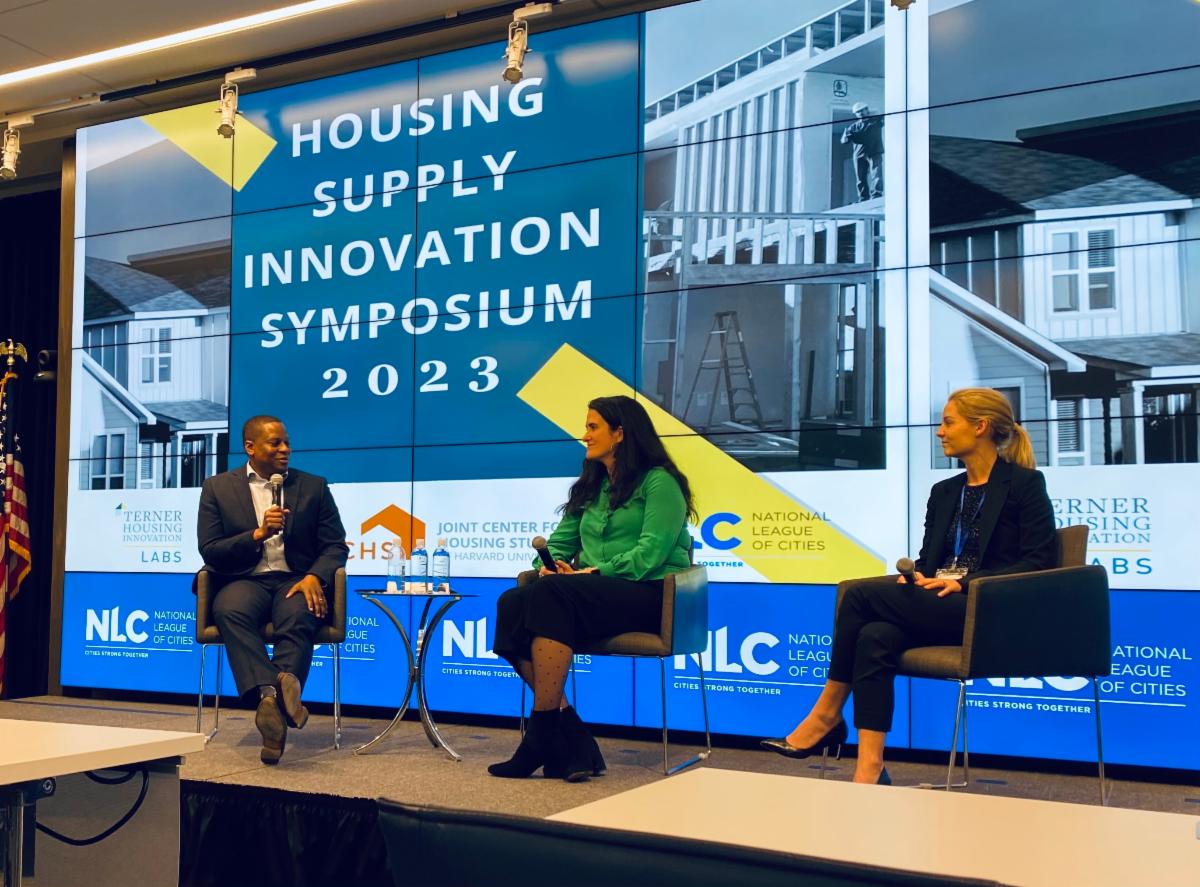
In early January, Joshua Shipper, Director of Special Initiatives, met with California congressional representatives and others in Washington, D.C. working to resolve the undersupply of housing in Sonoma County. The meetings served as a preface to our attendance at the 2023 Housing Supply Innovation Symposium hosted by the Terner Center for Housing Innovation in collaboration with the Joint Center for Housing Studies and the National League of Cities (NLC) where we participated in discussions on innovative models of affordable ownership, modular design, and financing methods supported by the Department of Housing and Urban Development.
At the symposium we learned from developers, community housing advocates, and funders how models of community-based homeownership can begin to reverse patterns of racial inequity in the housing market as well as how cities can do more to build affordable infill housing with limited resources using off-site (or modular) solutions to development.
In meetings with our local delegation including Rep. Mike Thompson (CA-04) and Rep. Jared Huffman (CA-02) we discussed ways to strengthen coordination on home preservation programs & Low Income Housing Tax Credits as a means to keep housing affordable for residents of low and moderate income. Drawing on housing models from beyond California, we also met with staff of Rep. Suzanne Bonamici of Oregon to discuss implementation strategies on her pioneering bill to streamline funding for colocated affordable housing & childcare centers. Housing and childcare are the two highest expenses for many new families, but when built together they offer a cost-effective solution for families who depend on reliable and affordable options for care during the workday.
We are optimistic about the progress and collaboration happening at the federal level, and look forward to working further with our federal representatives and our local policymakers to come together and work towards bold housing solutions.
Thank you to our partners at First 5 Sonoma County and to Tony Crabb & Barbara Grasseschi for making this trip possible. If you are interested in learning more details about our advocacy trip in Washington, D.C. feel free to contact our Director of Special Initiatives Joshua Shipper at joshua@generationhousing.org.
| |
We are teachers, first responders, farm workers. We are grocers, we are artists. | |
|
Together, each of you, all of us, and all residents of Sonoma County. We Are Gen H, and we all need affordable places to live.
The “We Are Gen H” prohousing campaign lifts up the experiences of workers, artists, and students in the community and organizes community members to take action and show support for more construction of more types of housing in Sonoma County.
| |
What's the Builder's Remedy? | | |
|
|
Our partners at the Greenbelt Alliance put together an excellent overview of the Builder's Remedy, outline exactly what it is and how it works.
Check out their FAQs for more information!
| |
|
Do you belong to a service, social, political, faith club or organization that wants to make a difference in our community?
Housing is an issue that affects everyone in our communities. We need plenty of it, in order to house all of our community members, specially the workers who help power our local economy, and aren't forced to leave the north bay in search of better opportunities elsewhere. We need housing that people can afford, to make sure that their families have a decent quality of life, and the cost of housing does not get paid at the expense of other basic needs.
However, we need public and political will to ensure we meet our housing production goals. That is why, as part of our #WeAreGenH Public Will Building Campaign, we are looking for opportunities to introduce the work of Generation Housing to your club or organization. Because together, building a prohousing voice, we will make a difference.
Please send any contact information to ramon@generationhousing.org or (707) 934-7124.
| |
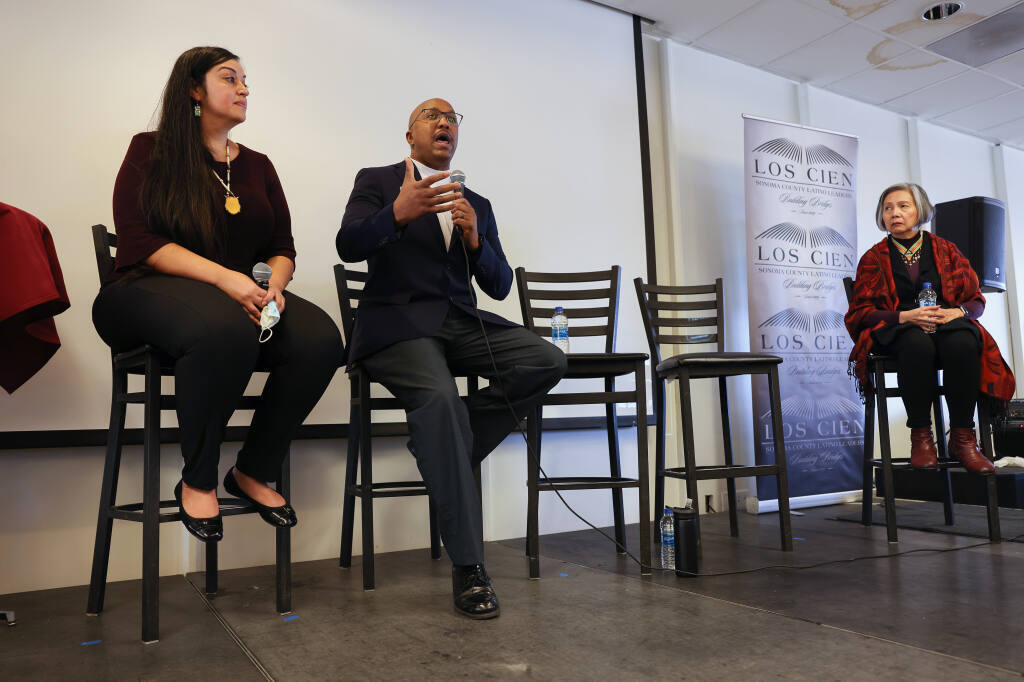
Report on the Los Cien
"Honest Conversation About Anti-Blackness"
| |
|
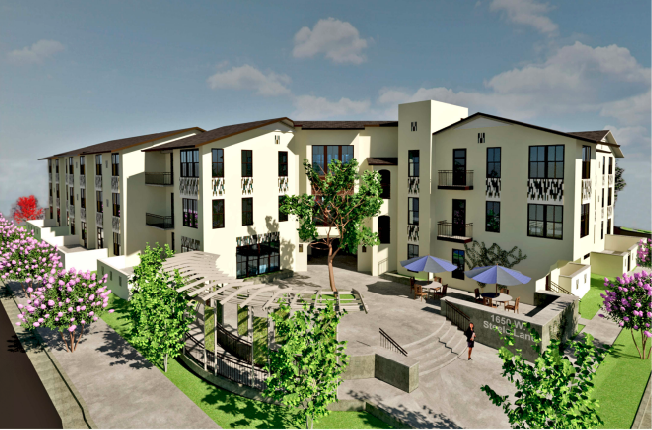
1650 West Steele Lane Apartments | Santa Rosa
Generation Housing is excited to share our endorsement of the multifamily development proposed at 1650 West Steele Lane (“project”).
The project proposes to develop a three-story, 36-unit multifamily housing development, located in the North Station Specific Plan Area. Of the 36 units proposed, 4 will be deed-restricted affordable to those earning an Area Median Income, or AMI, of 30-50 percent.
A total of 36 parking stalls are proposed in the project plans, 31 of which are covered. The project parking plans also include a two-level mechanized (or automated) parking structure with a battery backup that can keep it operational in the event of a power outage.
The project is consistent with the goals of the General Plan to encourage growth through infill development that is within walking distance of, and supports local businesses and to encourage affordable housing in those same zones. The project’s location in the Northwest Station area will encourage lifestyle patterns that are consistent with the city’s programs to reduce greenhouse gasses, positively contribute to the Climate Action Program, and promote economic vitality in a Priority Development Area.
The character of the area would change from being the last remaining vacant lot in the neighborhood to becoming a revitalized multifamily development. By implementing the Supplemental Bonus Density, the Project effectively supports the surrounding urban infrastructure, rail line, bus transit, and bike/pedestrian paths. The project vision is to be specifically transit oriented and to proactively reduce dependence on the automobile.
For more information, visit the City of Santa Rosa’s website by clicking here.
| |
|
500 Hopper Street | Petaluma
Generation Housing is pleased to announce our endorsement of the multifamily development proposed at 500 Hopper Street (“project”).
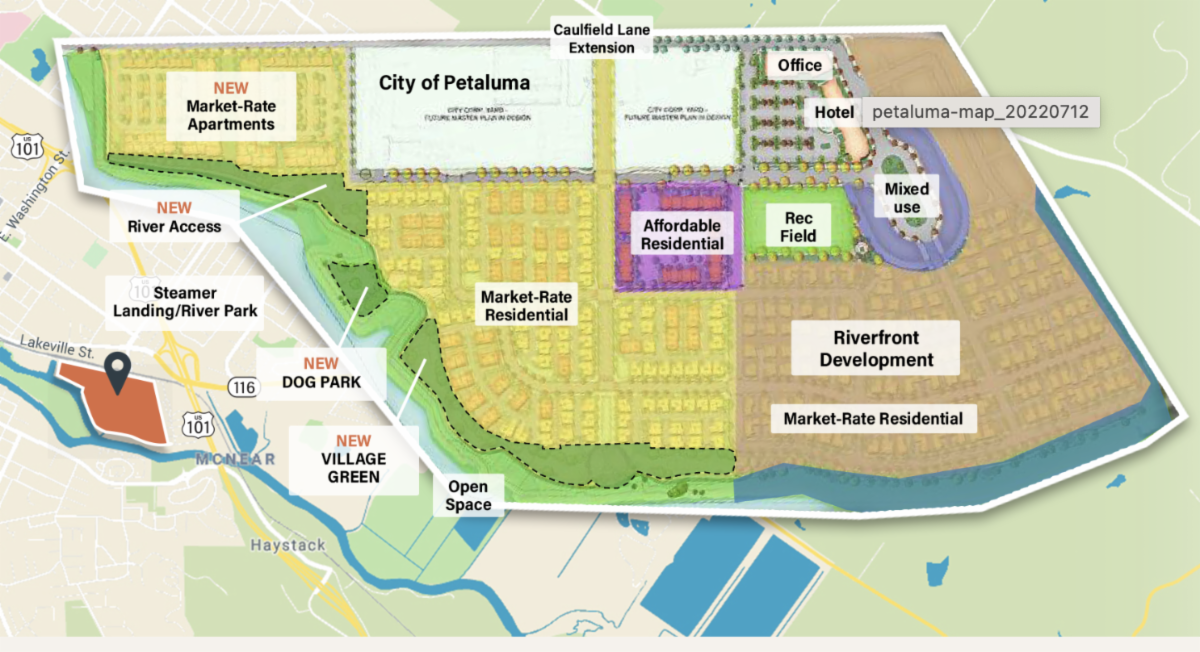
A vibrant place for all to live and play - the project is a 39-acre mixed-use residential development near downtown Petaluma. The project will consist of a four (4) major components: 245 market-rate for-rent multi-family apartments, 158 market-rate for-sale single family homes (attached and detached options), 72 affordable for-rent housing apartments, and a 3.5-acre activated park adjacent to the Petaluma River.
The single-family home sites will average 2,500 SF and be considered small or micro-lots compared to the average lot size in Petaluma, which is over double this size, even in the downtown area.
The activated riverfront park will consist of river access via an in-water floating dock for small watercraft such as kayaks, a dog park, playgrounds, fitness stations, restrooms, public bike parking and repair station, and a water fountain. The development will build over 3,000 linear feet of 14-foot wide pedestrian/bicycle path that continues the City-wide trails in a key connection between downtown and surrounding neighborhoods.
Restoration of the riverfront retaining wall structures including demolition of dilapidated structures and creation of natural slopes and wetlands will be an important component of allowing the public to interact with the river along the riverbanks of the development.
For more information, visit 500hopper.com or check out the information included in the Petaluma Planning Commission agenda packet for the January 24, 2023 study session.
The public can also submit public comments on the project here.
| |
Housing Happenings in January | |
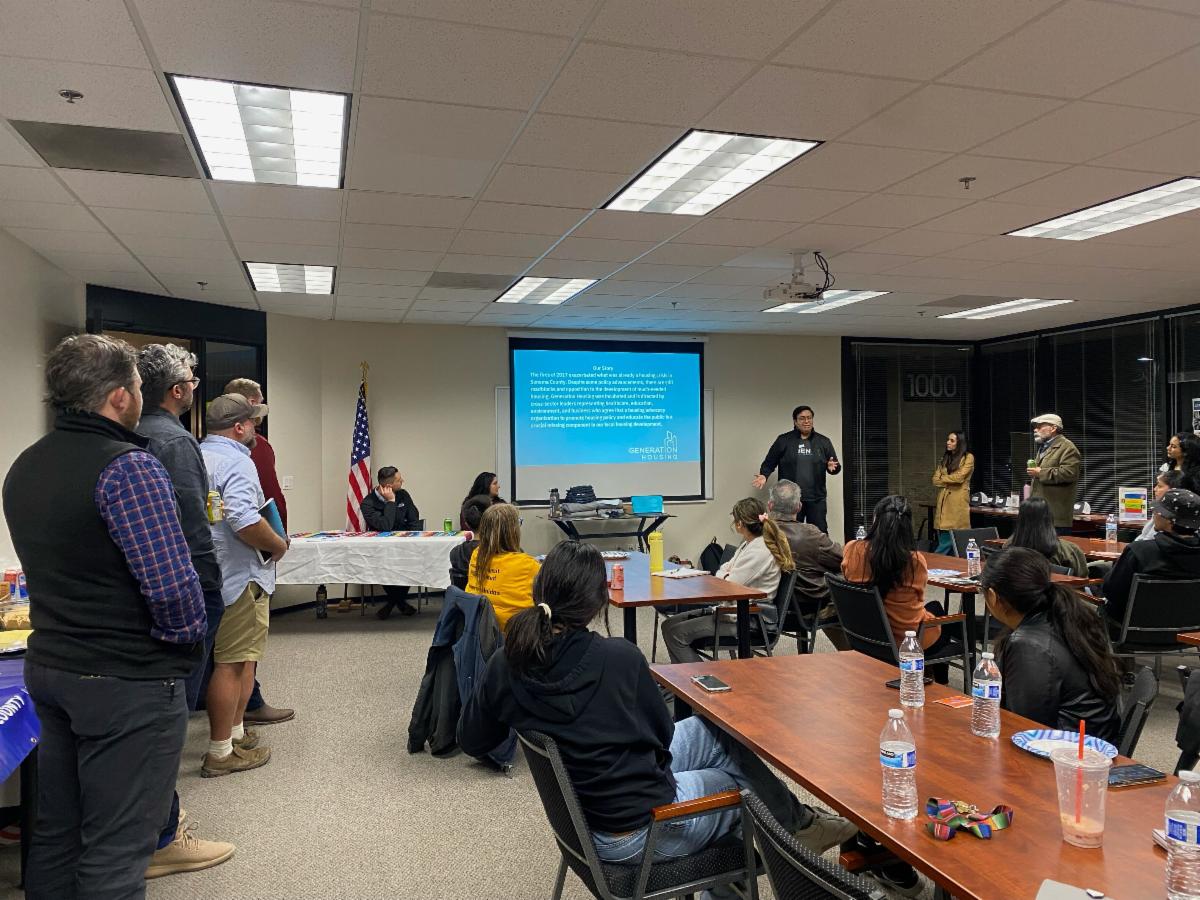
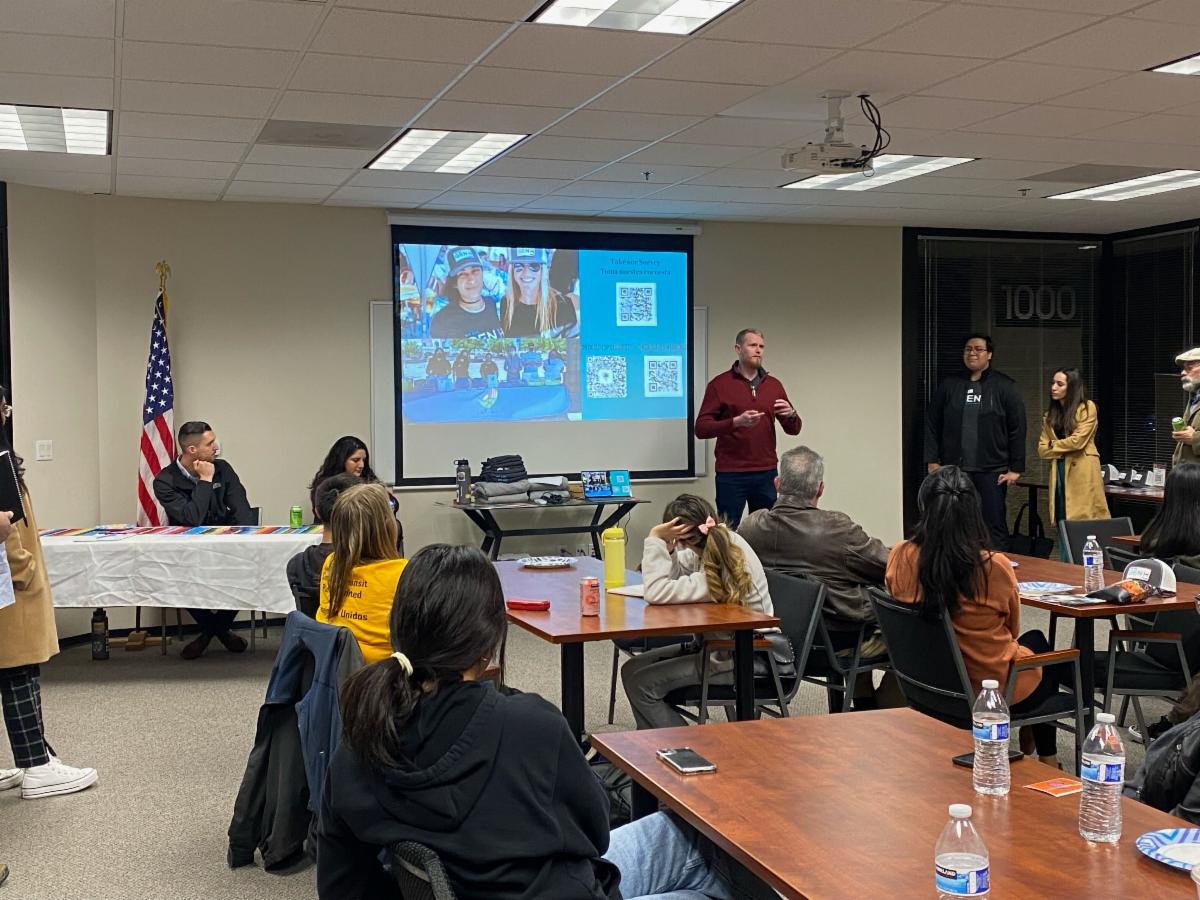
Thanks to all who joined us at Latino Service Providers at the January House Party. And another thank you to LSP for hosting! #WeAreGenH | |
Sonoma County Housing News Digest
In case you missed some of the key news items of the last few weeks on local housing, Generation Housing has procured a bevy of news articles from around Sonoma County.
| |
|
|
Demystifying Housing Policy:
Five Housing Terms Everyone Should Know
Housing affects all of us, yet the terminology used to discuss housing can be fraught with insider lingo and it can be difficult to fully grasp. So we’ve compiled a brief list of some of the most common terms used in the housing policy world to help everyone better understand and engage in the housing conversation.
PUBLIC HOUSING AUTHORITIES
Local government agencies that are authorized to manage housing for very low- and extremely low-income households, either as public housing, through Section 8 vouchers, or with other types of affordable housing. Generally, households pay no more than 30% of their income for rent and the remainder is subsidized by the Federal government through HUD.
RURAL HOUSING SERVICE
A division of the U.S. Department of Agriculture that provides housing grants and loans to housing projects in small cities and rural areas, similar to programs of HUD in urban areas.
SECTION 502
A program of the Rural Housing Service that provides low-income borrowers with direct low interest loans or loan guarantees to buy a new or existing home. The guarantors are used as an incentive for private, institutional lenders to make home purchase loans at interest rates slightly below market. Section 502 loans are also sometimes originated as low-interest second mortgage loans made in tandem with first mortgage loans from private lenders.
SELF-SUFFICIENCY PROGRAMS
A loosely defined term used to describe various programs that assist the homeless, people on welfare or public housing tenants in getting training, day care and employment. HUD funds or promotes several self-sufficiency programs for public housing tenants and tenants with HUD rent subsidies.
SECONDARY FINANCING
A term used to describe any financing used in conjunction with first mortgage loans from conventional financing institutions—for example, a down payment grant, a deferred payment loan, or an amortizing second mortgage loan.
| |
Thank you to our Catalyzing Members | | | | |