August 2022 Newsletter

A message from Executive Director, Jen Klose


For more than two years, Generation Housing has been working hard in parallel to (1) create a strong prohousing voice and ethic that shows up to say YES to housing; and (2) leverage that community support to ensure that new housing doesn’t get stalled by organized neighborhood opposition (NIMBYism) and to support good local and state prohousing policies and financial solutions. One without the other has little impact, as our policymakers need support for adopting pro-housing policy, and projects that get the benefit of streamlined processes can still be stalled or even halted by NIMBY opposition. 


Policy solutions are critical to lowering the barriers to housing development in Sonoma County and the greater Bay Area region. Lagging homebuilding is due in large part to decades of poor policy that has led to structural inequities with resounding intersectional impacts. Sonoma County’s housing policies have resulted in significant segregation by race, ethnicity, and income, leaving most people of color and low wage earners concentrated in low resource areas. This geographical segregation is the primary driver of the race/ethnicity segregation we see in the Sonoma County public schools.


Undoing and replacing those policies requires bold thinking and the willingness to make true systems change — this is challenging work and needs to be done strategically, thoughtfully and collaboratively. 


In June 2021, California’s Department of Housing and Community Development (HCD) released a new “Prohousing Designation Program” (PHD). The PHD program aims to accelerate housing production, particularly affordable and climate-smart infill multifamily development in alignment with the state’s equity and climate action goals. The state offers a big carrot for the cities and towns who obtain the Prohousing Designation: increased opportunities for millions of dollars of state grants for affordable housing development and sustainable, infill infrastructure. 


This program is a tremendous opportunity for new local housing policies that drive real systems change with generational impact for our most vulnerable. Bold prohousing policies can drive increased production of sorely needed, high-quality, affordable and workforce housing. Solving our stubborn housing scarcity and affordability challenges can improve the health and educational outcomes, and economic stability of our community members. Solving our stubborn housing scarcity and affordability challenges can strengthen our local economy, reduce traffic, and reduce our greenhouse gas emissions. 


Throughout the rest of 2022 and in 2023, Generation Housing will be expanding our strategic efforts to include our “Prohousing Initiative.” Through the Prohousing Initiative, the Generation Housing team will create policy “roadmaps” to guide each of the county’s jurisdictions to obtain the Prohousing Designation and draft the model policies needed to advance on that roadmap. Some of this work is the predictable wonky stuff: studying the best practices of, and lessons learned by cities who have made housing progress and the academic research regarding potential solutions. Equally important will be the work to tailor and prioritize these policies based on input from our partners representing those most impacted by the housing crisis and other historically marginalized communities, gathering input through direct community engagement via our partnership with Latino Service Providers, the Youth Promotores de Vivienda.


We will continue to keep you updated on this work with a new Prohousing Update section in our newsletter. And I’d love to hear from you any questions or ideas you have as we continue our work to champion more, more affordable, and more diverse housing in Sonoma County.

Read Jen's Message Online

Policy Update August 2022

What’s Happening in Sonoma County?


Be a Champion, Speak up for Housing!


The drafting of Housing Element’s continues in Sonoma County. So far, the City of Santa Rosa is the only jurisdiction to submit their draft to the California Department of Housing and Community Development (“HCD”). More importantly, several of our jurisdictions have opened up their mandated 30-day public review periods of their drafts. We need your local knowledge and input on housing in your community NOW more than ever


Here’s an overview of the Housing Element’s currently available for public review:


  • Rohnert Park - the public has until September 4th to review the document and provide feedback.
  • City of Sonoma - the public has until September 7th to review the document and provide feedback. No additional public meetings are planned to discuss this document prior to HCD submission.
  • Windsor - released on August 15th, the public has until September 22nd to provide comments. Additionally, the Windsor Planning Commission will hold a meeting on Tuesday, September 13th at 5:30 P.M. to open up an opportunity for in person comments from the public. The Town Council will offer the same opportunity on Wednesday, September 21st at 6:00 P.M. We strongly encourage everyone to attend and share your concerns around housing in the Town of Windsor or the draft Housing Element more specifically. 
  • Petaluma - released on August 29th, the public will have until September 28 to provide input. The City of Petaluma will also be hosting a Housing Element Public Draft Virtual Open House on Tuesday, Sep 20, 2022 - 6 PM. To register for the event and receive information about joining the meeting - click here. The City of Petalum is additionally hosting the following events:
  • Tuesday 9/13 7:00 PM: Planning Commission Workshop on Public Draft of the Housing Element
  • Thursday, 9/15 6:30 PM: General Plan Advisory Committee Session on the Public Draft of the Housing Element
  • Monday, 10/30 6:00 PM: City Council Workshop on Public Draft of the Housing Element


We expect Cloverdale and Cotati to release their drafts early to mid-September. Healdsburg’s draft will likely not be available until late September. The County of Sonoma will not have a draft prepared until late October. 


To learn more about the Housing Element process and to track the progress for each jurisdiction, click here. You can find information about the Housing Element process here as well. If you want more information on how to get directly involved with Generation Housing’s Housing Element work, email us at info@generationhousing.org!


—---------------------------------------------


Downtown Santa Rosa Surplus Parking Update


25 percent of the total landmass of downtown Santa Rosa is dedicated to parking - and even during our highest peak times of the week such as 1:00 PM on a Friday afternoon, our utilization of this parking averages about 26 percent. 


The City of Santa Rosa has launched a study session series that will provide a holistic overview of the opportunities and challenges of intensifying underutilized parking assets in the downtown core. The first of three study sessions was held on Tuesday, August 23rd and a recording of this meeting can be found here. During the first study session, the staff shared that a whopping 74 percent of all parking spots in downtown are vacant, a sharp decline from the already high 42 percent vacancy found in the 2019 pre-pandemic parking study.


In actual numbers, there are 3,245 public parking spaces (6,463 between public and private parking spaces) sitting vacant during Santa Rosa’s peak business hours. Even during an event like Pliny the Younger — which draws thousands from out of town who form day-long lines that wrap around a city block — only 45 percent of the parking is actually utilized. 


If we are to meaningfully tackle our housing challenges and drive city-centered growth, it’s time to better leverage our downtown assets and create conditions that make development feasible. 


Don’t miss the next two opportunities to engage on this important issue and so much more!


September 13, 2022: Santa Rosa Civic Center Project Feasibility Analysis Review

  • This meeting will discuss the relocation/redevelopment/consolidation of Santa Rosa’s City Hall and campus to a site yet disclosed.


October 11, 2022: Surplus Lands Act and its impact development opportunities; direction from City Council on next steps

  • This meeting will discuss the consideration of designating some public-owned parking assets as surplus parking which then allows developers the opportunity to submit proposals for redeveloping the site. Previously, the discussion has largely centered around redeveloping the 3rd Street Garage (built in 1965) which now has an estimated repair cost of $4M to $6M and would only create 15 to 20 more years of useful life. The D Street Garage (built in 1970) would similarly require an investment of $6M+ to prolong service life. Parking garages have an average service life of 40-50 years.


What’s happening at the State level?


It’s official, the Senate and the Assembly have both passed Generation Housing endorsed, AB 2011 (Affordable Housing and High Roads Job Act of 2022) and AB 2096 (Residential, commercial, or other development types: parking requirements)- two landmark bills years in the making! These votes bring us one step closer to a pivotal moment for our state and the Governor’s signature will set the stage for us to redefine housing statewide. 


To date, Governor Newsom has signed Generation Housing endorsed bills SB 886 (California Environmental Quality Act: exemption: public universities: university housing development projects) and AB 2244 (Religious institution affiliated housing: place of worship).


In other news, Generation Housing endorsed constitutional amendment SCA 2 (Public Housing Projects) continues to move forward and at the time of this update being written, it had yet to be voted on by the Assembly Floor. If approved on the Floor and signed by the Governor, SCA 2 will then be taken to the ballot for a statewide vote in Summer/Fall of 2023.


This is the last of our state endorsed legislation that has either been signed by the Governor or is seeking his signature. Governor Newsom will have until Sep 30, 2022 to sign or veto bills passed by the Legislature. 


Watch our social media for more updates soon! 


If you haven’t already, be sure to send Assemblymember Buffy Wicks (author AB 2011) and Assemblymember Laura Friedman (author AB 2096) a note of appreciation either via phone, email, or social media. Don’t forget to share your appreciation with our local leaders as well - Senator Mike McGuire, Senator Bill Dodd, Assemblymember Cecilia Aguiar-Curry, Assemblymember Jim Wood, and Assemblymember Marc Levine. We’re so incredibly grateful for all of their steadfast dedication towards creating more, more diverse, and more affordable housing in California! 

Read the Policy Update Online
Sign up for ACTION ALERTS!
Get Involved

Project Endorsements

19320 Sonoma Highway, “Montaldo Apartments” | Sonoma


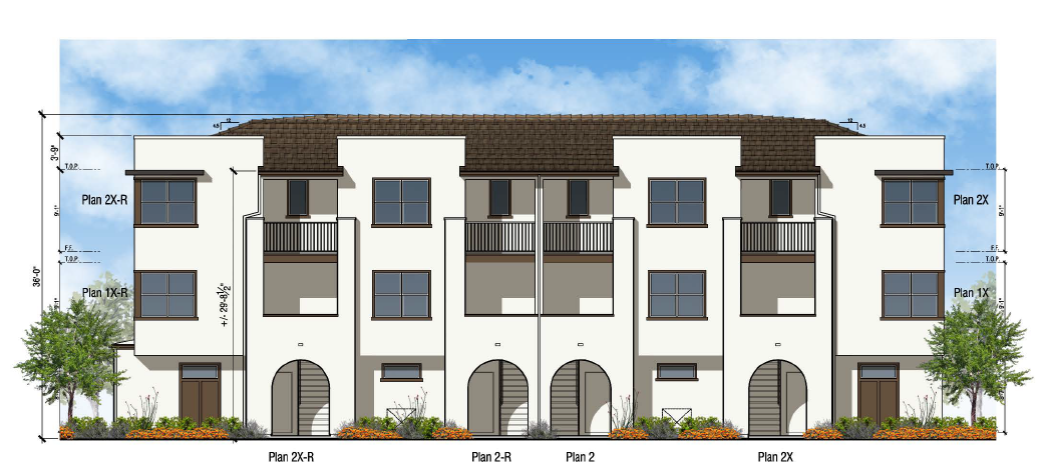
Generation Housing is excited to announce our endorsement of Montaldo Apartments, a DeNova Homes project that will deliver desperately needed workforce housing to the City of Sonoma. 


Montaldo Apartments will be located less than a mile from Sonoma Valley Hospital, a half-block from the Sonoma Valley Community Health Center, a half-mile from the Sonoma Valley Regional Library, and less than a mile from two major grocery stores and other essential services. We appreciate the intentional design of the outdoor community spaces which promote community cohesion. The proximity of this project in Sonoma enables most daily trips to be achieved either through walking, via a bicycle, or through the usage of the public transit system. This project also aligns with the Sonoma City Council’s stated goals of generating housing that allows their workforce to live where they work.


Montaldo Apartments will offer 50, 2-bedroom, 2-bathroom apartments, with 40/50 at “attainable by design” sizes of 750-925 square feet. Of the total units, 25 percent will be reserved for low-income households - 3 homes for extremely low-income (30% AMI), 5 homes for very low-income (30-50% AMI), and 5 homes for low-income (50-80% AMI). Inclusionary projects such as this are integral to creating economic mobility among lower-income households and counteracting decades-old ‘exclusionary zoning’ practices that have fostered racial segregation.


Generation Housing is proud to endorse this project and looks forward to it coming online!

Sign Up to Get Alerts on this Project
Be part of the SOLUTION!
Sign up to volunteer at community events to meet people, talk housing, and engage them in our work.
Become a Volunteer Here
#WeAreGenH Campaign
We are teachers, first responders, farm workers. We are grocers, we are artists.

Together, each of you, all of us, and all residents of Sonoma County. We Are Gen H, and we all need affordable places to live. 


The “We Are Gen H” pro-housing campaign lifts up the experiences of workers, artists, and students in the community and organizes community members to take action and show support for more construction of more types of housing in Sonoma County. 


Ready to make this a reality? Join us!

Black Voices in Housing Event Summary

On behalf of NAACP Santa Rosa-Sonoma and Generation Housing, we would like to thank everyone who participated in our Black Voices in Housing virtual event that we held on Wednesday, August 17. Our goal for this event was to provide a base overview of the Housing Element process, impart best practices for sharing your narrative, and to also help train you to be your own community organizer for housing advocacy at the local and regional level. We hope you left feeling empowered with the knowledge to better advocate for more affordable housing. 


As promised, we are following up with the recording of the event and that can be found at the following link.


If you have any questions or wish to learn more, feel free to contact Kirstyne Lange at naacp.srsc1074b@gmail.com or Calum Weeks at calum@generationhousing.org.


Change through advocacy - be the voice, be the champion!

Rewatch the Event
Sonoma County Housing News Digest

In case you missed some of the key news items of the last few weeks on local housing, Generation Housing has procured a bevy of news articles from around Sonoma County.

Marin grand jury: Housing crisis calls for collaboration | Marin Independent Journal

Marin County and its cities and towns should create a regional organization, or empower an existing authority, to coordinate efforts to create more affordable housing, according to a new civil grand jury report.


Construction starts on 90 affordable apartments in Napa | North Bay Business Jorunal

Construction is getting started on 90 affordable-housing units in two northeast Napa projects. The projects, located on 4 acres at 3700 and 3710 Valle Verde Drive, include the revamping and expanding of a shuttered assisted-housing site plus the building of apartments.


PD Editorial: Put ‘affordable’ back in housing | Press Democrat

Here in Sonoma County, building homes for low and moderate-income residents can cost as much as $700,000 a unit, The Press Democrat’s Ethan Varian reported. That is approximately 80% of the $865,000 median sales price for single-family homes in Sonoma County.


Gimme Shelter: Can California build millions of new homes amid drought? | CalMatters

On this episode of “Gimme Shelter: The California Housing Crisis Podcast,” CalMatters’ Manuela Tobias and the Los Angeles Times’ Liam Dillon sit down with Ellen Hanak, director of the Public Policy Institute of California’s Water Policy Center, to discuss the intersection between housing growth and drought.


Are public-private partnerships key to Sonoma’s affordable housing need? | Sonoma Index-Tribune

Despite meeting the goals for the state Regional Housing Needs Allocation (RHNA) in each of the past five eight-year cycles, affordable housing for low-income individuals is still hard to come by in Sonoma, forcing residents like Brown and others in the workforce to live outside of the region or share space with other low-income renters.


There's a massive housing shortage across the U.S. Here's how bad it is where you live | NPR 

Home prices are up more than 30% over the past couple of years, making homeownership unaffordable for millions of Americans. Rents are rising sharply too. The biggest culprit is this historic housing shortage. Strong demand and low supply mean higher prices.

California Density Law Didn’t Kill the Single-Family Neighborhood| Planetizen

After the passage of a contentious zoning reform law that sought to encourage ‘light infill’ in single-family neighborhoods, few California households have submitted applications to build extra units, largely due to onerous restrictions imposed by lo


Editorial: California should prioritize housing people, not cars| LATimes

California treats parking like a birthright. But that obsession with ensuring motorists can always find a parking spot sabotages more important goals, including building more housing and reducing driving.

California school district builds affordable housing to attract teachers | Associated Press

Rising rent, teacher shortages piquing districts’ interest in workforce housing.

Dear Bay Area: Please stop forgetting the North Bay exists | SF Gate

Somewhere along the line, the Bay Area got smaller. It became San Francisco, the East Bay, bits of Marin and the Peninsula, depending on who you’re talking to. The North Bay is regularly left out of the conversation.

The Next Generation of NIMBYs | The Atlantic

Younger buyers who sunk their savings into new homes have too much to lose.

Florida started penalizing bureaucratic delay. Housing permits spiked. | The Washington Post

With sales of existing homes slowing, the need for more new houses is only growing. Florida, my home state, might have found part of the solution: Reform the permitting process so that building houses is easier.


How the Push for Farmworker Housing is Hindered by Persistent Myths | Good Times

While advocates look for solutions, field workers try to make a better life for their families

Renting in the Bay Area on a minimum wage salary? You’ll need at least 3 jobs | Press Democrat

Trying to rent a two-bedroom, Bay Area apartment on a minimum-wage salary? You’ll need to hold down at least three full-time jobs to make it happen.

That’s the alarming conclusion from a new nationwide report that highlights the gap between what housing costs and what people earn, underscoring the affordability crisis gripping the country as a whole — and California and the Bay Area in particular.

Tell us: What’s housing like for Sonomans in their 20s? | Sonoma Index-Tribune

As part of an investigation into affordable housing and the generational divide to access it, the Index-Tribune is looking for local stories from people in their early adulthood who are challenged by the current housing landscape

‘Subjective’ language stripped from Sonoma’s development code| Sonoma Index-Tribune

At a meeting of the Sonoma Planning Commission in April, commissioners were considering what, if any, alternative options to the city’s “residential housing component” – the requirement that 50% of commercial or mixed-use development proposals be built as housing – would be available to project developers.

Sonoma County releases draft environmental report for Sonoma Developmental Center | Press Democrat

A long-anticipated draft report released Wednesday calls for approximately 1,000 housing units — including 283 affordable units — to go along with 940 on-site jobs and a resident population of 2,400 at the site of the historic Sonoma Developmental Center near Glen Ellen.

Petaluma Planning Commission recommends city approve controversial Scott Ranch housing development | Press Democrat

After 18 years of public pushback, discussion and compromise, a controversial Petaluma housing project is moving forward.

Nearly every Bay Area city lost kids over the last decade — except this one. Here’s why | SF Chronicle

Most Bay Area cities have seen their youth populations decline over the past decade, likely a consequence of the region’s increasingly staggering cost of living. But some cities have seen steeper drops in kids than others, and the cities with the fewest children and teens to begin with mostly appear to have stabilized.

Napa Valley College to break ground on 588-bed student housing complex this month | Napa Valley Register

After years of effort, Napa Valley College is breaking ground this month on a three-building, 588-bed student housing complex, set to open up for student use in fall 2024.

Thank you to our Catalyzing Members

See the rest of our members, or become a member, by visiting our website!
Generation Housing | generationhousing.org
Facebook  Twitter  Instagram  Linkedin  Youtube