July 2024 Markets Newsletter | |
|
In this issue:
-
"Put Some Zing into Your Writing: Explore the Power of Taste" by Ashley Harris
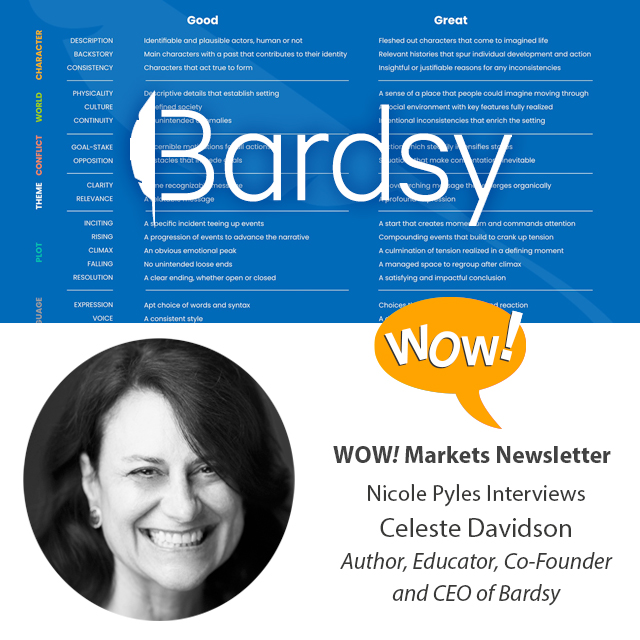
- "In Conversation with Celeste Davidson, Author, Educator, Co-Founder and CEO of Bardsy" interview by Nicole Pyles
- July Deadlines: Poetry, Fiction, Nonfiction, Multigenre, Just for Fun
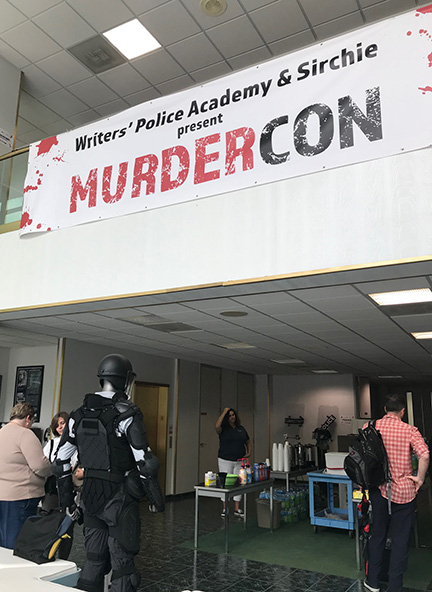
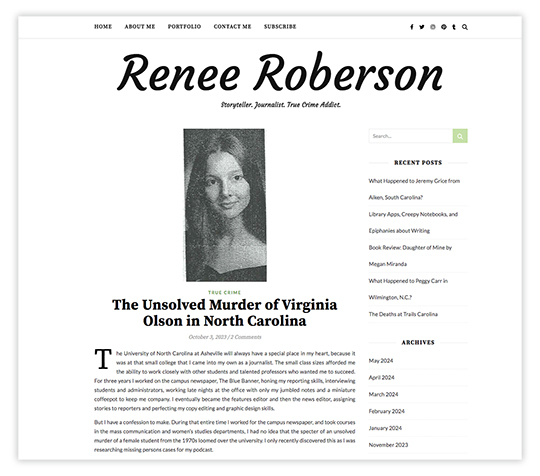
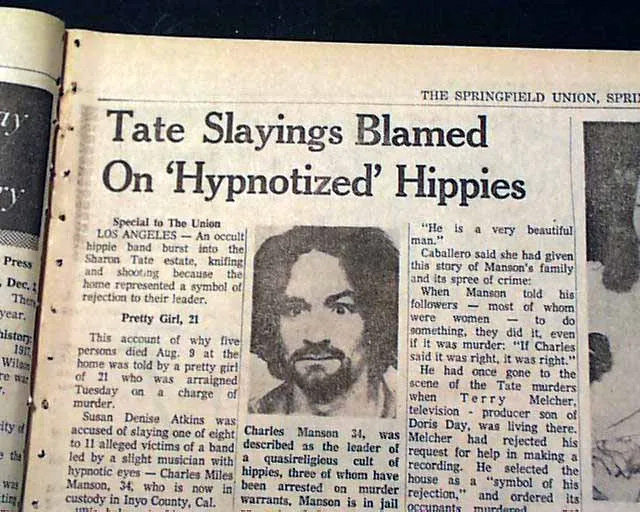
- Breaking In: "Introduction to Writing True Crime" by Renee Roberson
-
Recent WOW! Features and Posts from The Muffin
| |
|
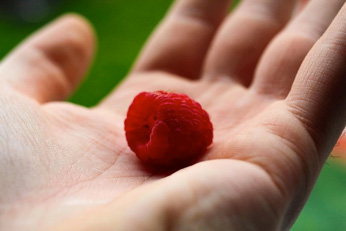
A few days ago, I picked the last of our first crop of raspberries, parting the thorny canes and reaching deep into the heart of a too-wide patch where I recently spied a corn snake. Barefoot and jumpy, I accidentally crushed a few berries, and I ate these right away, sucking the loose drupelets from my fingers. The crimson-purply juice is the sangria of summer for me—tangy, sweet, tangy again, finishing with a twinge of adolescent guilt, that I’m-getting-away-with-something-I-shouldn’t-be-doing kind of feeling.
In our modern world, we writers have a special challenge. We compete for the attention of readers against an astonishing mix of stimuli—smart phones, social media, movies, sports, reality shows, and more. This means we must do all we can to pull readers into our world and keep them there, and appealing to the senses is one of the best ways to do this.
Rather than start this article with: Today we’re covering taste, the least employed and one of the most powerful senses, I tried a more immediate approach, to capture your attention with a description of how raspberries taste when plucking them from a snake-infested garden. I don’t know if this worked, but if some of you are still reading, I like to think it may have!
Want to juice up your writing with a little umami? I hope the following tips inspire you to tap into the power of taste.
Be Specific. When writing about food, be as detailed and as unique as possible. One of the best recent examples of taste in action comes from the essay “I Don’t Know How to Live if My Anorexia Dies: A Salad-Eating Competition” by Billy Lezra in Electric Lit (May 9, 2024). In this piece, which covers Lezra’s struggles with anorexia, the author resolves to try a famous Italian dish while in Rome, what turns out to be a surprising experience.
| |
|
“The spaghetti was thick, eggy, covered in cheese; tiny pools of bright red oil dotted the carbonara sauce. It would be disingenuous to claim that I ate with pleasure or that I enjoyed the wheat, cream, grease, pecorino. The truer truth is that I ate with fear and delight and curiosity, and that when I finished I was dizzy and disoriented and worried but sated. For a moment, I felt proud of myself: there I was, in Rome, listening to church bells toll in a plaza tinged fuchsia by the setting sun, butter flecking the corners of my mouth.”
The beauty of this description is that Lezra magically transcends the gustatory sensations and actually takes the reader to Rome. Not only can we taste the buttery and eggy sauce of the dish, we can also picture the magical city itself. At the same time, and more importantly, we feel tremendous empathy for the author’s mixed emotions about food.
“I want to order the restaurant’s famous Bloody Mary,” writes Leslie Fiering, hooking the reader by the first line of “House Specials at the Castaway Grill” (First Place, WOW Winter 2024 Flash Fiction Contest). “It’s made with fresh pureed tomatoes, celery juice, lemon juice and grated horse radish…” Fiering actually uses the menu as the structure for her story and food as the main source of tension between the protagonist and her date. “While he leans back in his seat contentedly watching the other diners in the restaurant, I chew each bare strawberry on the plate with the same intensity an animal uses to gnaw its foot free of a trap.” Fiering’s blend of humor and delicious descriptions had me salivating throughout this story.
Peggy Rosen, author of “Recipe Box Envy” (Runner-Up, Q3 2023 WOW CNF Contest), uses the power of taste to take us back to the memory of her mother’s favorite casserole: “a gloppy mess of rye bread, sliced hard-boiled eggs, Swiss cheese, and onions.” This essay is more about connecting with her mother than about food, but the author’s masterful choice of details in her descriptions drew me in right away.
| |
Write a poem. What I like about writing poetry is that you can completely abandon traditional sentence structure and yield to the delights of taste, as Seamus Heaney does in “Blackberry-Picking”: “You ate that first one and its flesh was sweet / Like thickened wine: summer's blood was in it / Leaving stains upon the tongue and lust for / Picking.” | |
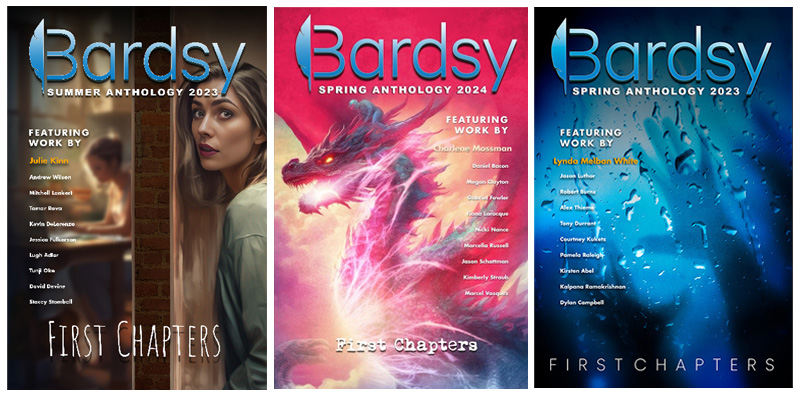
In Conversation with Celeste Davidson, Author, Educator, Co-Founder and CEO of Bardsy | |
|
As writers, we’re bombarded by opportunities to improve our writing at every turn. Workshops, courses, books, and more entice us with the promise that we will become better at our craft and, thus, achieve greater success. What makes one opportunity stand apart from another? Often, what is the best indicator of success is the one leading the charge.
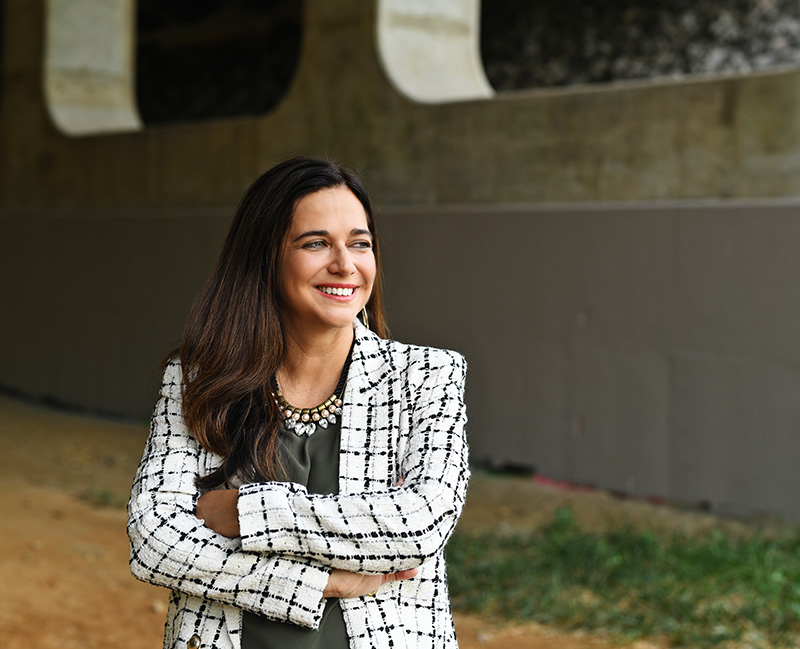
That’s what makes Bardsy such a special program for writers of all kinds. Bardsy leaders, Celeste Davidson and Adam Simon, are successful authors in their own right as well as trained educators. Celeste is the bestselling author of Who Was William Shakespeare? (Grosset & Dunlap). She’s also written several other award-winning titles, including One Leaf Rides the Wind (Viking) and Julia Morgan Built a Castle (Viking), and taught writing and English literature for over twenty years. Meanwhile, Adam is the author of The Winning Message (Cambridge University Press) and Mass Informed Consent (Rowman and Littlefield). As a social scientist, he’s taught at UCLA, the University of Washington, and Yale.
With Bardsy, Celeste and Adam offer writing groups, live coaching, and courses built upon their personal experience and firsthand knowledge of what works to help their members become more successful in their writing careers. Their program is based upon real results, using proven, empirically researched methods and a tailored approach. We had the opportunity to talk with Celeste about Bardsy, who gives us a look behind the curtain of this incredible program.
| |
|
WOW: First off, I love how much Bardsy offers its community members. How did this idea for Bardsy come to be?
Celeste: Bardsy grew from a belief that great storytelling is absolutely, 100 percent, a teachable skill. Too many people think successful authorship depends on “innate” talent. When developing Bardsy, we ran into many writing teachers, including bestselling authors, who hadn’t thought beyond their personal process and, so, were only helpful to those with similar learning and writing styles. Others deliberately mystified the process in an attempt to make themselves indispensable.
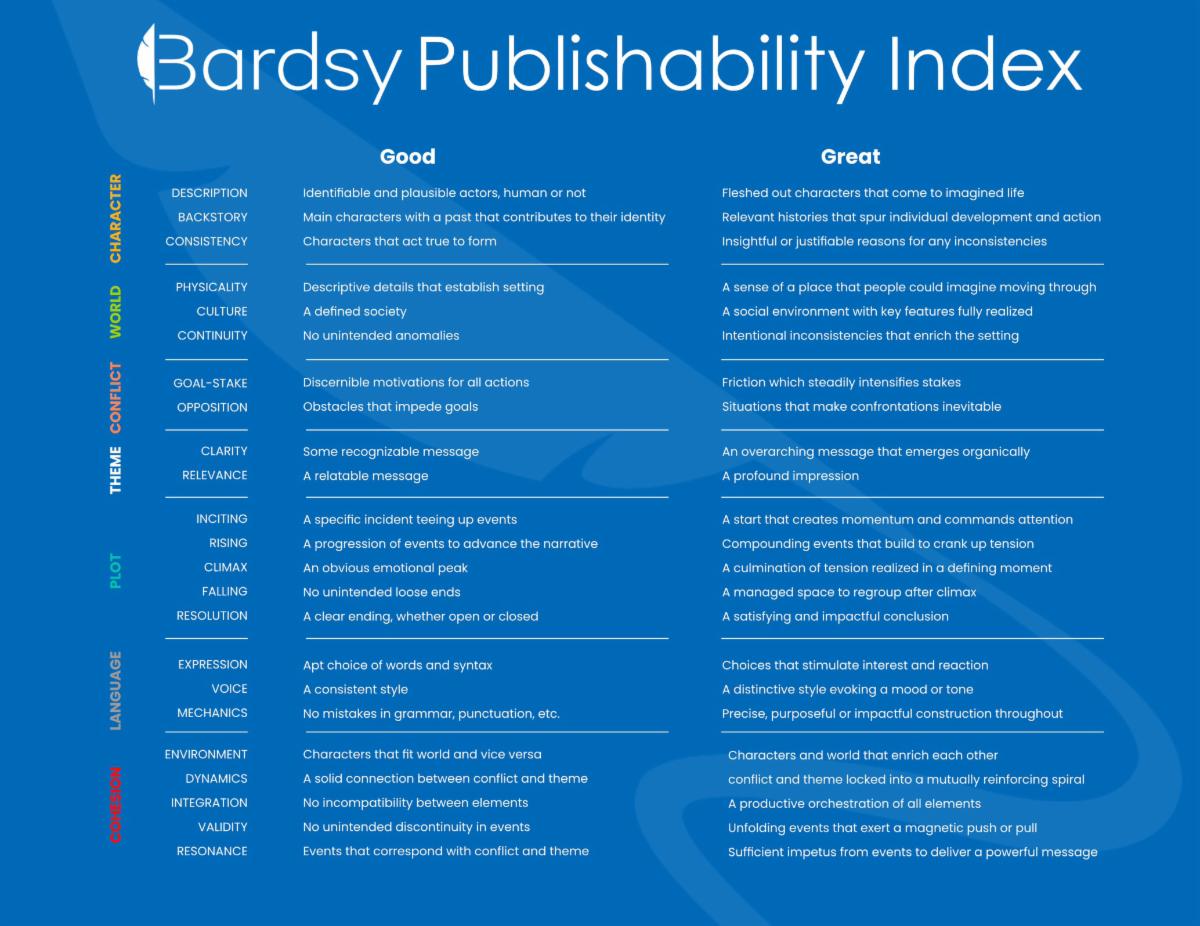
We realized that to teach writing successfully, we’d need to clearly articulate and share what a good story looks like. This led to our Publishability Index™, or, PI™—a set standard for great stories. We spent years synthesizing conventional writing advice to create a comprehensive framework for evaluation.
Then we organized our findings into a writer-friendly rubric. Divided into familiar story elements: character, world, conflict, theme and plot, as well as less recognizable sub-dimensions, the rubric has twenty-three items in all. Most importantly, we added a special element: cohesion. Though seldom discussed, cohesion is literally the glue that turns otherwise great writing into successful novels.
With the PI™ as a foundation, we next looked to pedagogy: how to teach anything effectively. Certain elements were non-negotiable. First, everyone on staff had to be effective teachers along with being traditionally published authors. Second, teachers would need to get to know their students one-on-one.
Third, writers would get support from peers and learn by helping others in a kind, constructive setting. Finally, we wouldn’t impose artificial time limits, such as six or eight-week terms, knowing that the time it takes to go from initial idea through first draft to a polished manuscript varies dramatically by author.
And that’s how Bardsy got to where we are today.
WOW: I love that you built this upon the idea that writing can be taught. I wholeheartedly believe that! When you first started to plan the creation of Bardsy, what did you know you needed to give authors that wasn’t already out there?
Celeste: At Bardsy we teach with compassion and integrity, meaning we don’t offer the kinds of false hope or gimmicks that ultimately lead to frustration and cause many talented writers to give up. Programs promising “six weeks to a successful novel” just don’t work. Also—and very importantly—our teachers are all traditionally published, meaning they can relate to our members’ struggles and offer them sound advice. It’s amazing how many “gurus” out there have never published anything of consequence.
WOW: I really appreciate your program uses authors that are already successfully published. I love that you come with an incredible depth of experience. How did your own success as an author guide you in creating Bardsy?
Celeste: Both Adam and I know what it takes to be successful and have suffered through all the typical feelings of rejection and imposter syndrome that every writer experiences. Along with research and testing, we have come to understand the creative process well enough to know that it can be developed and fine-tuned in just about anyone who has the will to learn.
| |
|
“At Bardsy we teach with compassion and integrity, meaning we don’t offer the kinds of false hope or gimmicks that ultimately lead to frustration and cause many talented writers to give up.”
| |
|
WOW: You have also been a teacher! How did your experience as a teacher inform your own writing? How did it inform you on what writers need to grow? How did this experience guide you into creating Bardsy?
Celeste: The funny thing is that I became interested in teaching only after having published. While touring, I fielded many questions on process, and quickly realized that what worked for me wouldn’t work for everyone. Around the same time, I was asked to teach an extension class at UC Berkeley and discovered I loved to work with students who had a commitment to creative and intellectual growth.
To provide a better foundation for teaching, I first enrolled at the University of Southern California’s Rossier School of Education and earned an MAT with a Secondary English teaching credential. Fascinated by the potential of online teaching, I then pursued a doctorate program and research in education at the University of California at Santa Barbara. This training, combined with a desire to leverage technology to reach beyond traditional classrooms, led to the methods Bardsy uses today.
At about that time, I met my business partner, Adam—a self-described MIT drop-out, PhD and former Yale instructor who’s also pretty handy with tech. He was looking to create an online platform for meaningful engagement, an antidote to Facebook, if you will. We immediately hit it off and decided to work together toward a goal of creating real community through creative writing.
We worked hard to understand what made certain stories successful and then how to teach others to write stories of that caliber. For example, we thought through and tested how to combine small group and individual learning opportunities. The notion of community standards has also been very helpful in developing writing groups, in particular, as they foster respect, and a safe space within which ideas flow freely.
WOW: How awesome! How did your own background and experience in the publishing world play a part?
Celeste: I’ve published five books (and contracted three more) with great publishers, including Viking, Bloomsbury, and Grosset and Dunlap. To date, I’ve sold over six hundred thousand copies and been blessed to receive numerous awards. My students know that I speak from experience and see me as an empathetic model who offers advice likely to increase their chances of success.
| |
|
WOW: So, I’m fascinated by your Publishability Index™. Can you tell us about it and how it works? What kind of feedback will it give an author trying to find out whether a story is ready for publication or not?
Celeste: Of course. The PI™ is easy to use but comprehensive. As previously mentioned, it has twenty-three dimensions that address every aspect of stories. For added precision, the PI™ has two criteria for each dimension—one “good” and another “great.” You can see the entire PI™, for free, here: https://bardsy.com/stories/pub. Authors should approach the PI™ as a checklist—one that will help them determine whether and what revision is needed.
To illustrate, the “character/backstory” dimension has two specific thresholds, good and great. These standards call for a story’s characters to have a “past that contributes to their identity” and “relevant histories that spur individual development and action,” respectively. Authors (or developmental feedback providers) should go through the PI™ one dimension at a time and decide, holistically, which criteria are satisfied.
The idea is to highlight concerns from which point authors would prioritize and revise accordingly. Then, they’d use the PI™ to conduct another review. This iterative process continues until the story receives “great” checks across all twenty-three dimensions. We consider stories that reach this level to be eminently publishable.
WOW: That’s so helpful and offers such helpful insights into how to approach the revision process. I see that you offer writing groups, and I’m impressed that you create a group based on the specific needs of who is joining and what they bring to the table. Why did you decide to format your groups this way?
Celeste: Our directed writing groups reflect our experience being and teaching graduate students. First, they’re small, no more than six members, not counting the instructor. So, everyone gets to know each other and their work. Each member is carefully screened for ability, commitment, and attitude; for example we exclude people who think they have nothing to learn. Prior to officially joining, each member undergoes a free “trial” to see whether they’ll be able to benefit while contributing.
Because we have many small groups, we’re able to assign members by genre, the stage and level of their work, and intangibles, like chemistry. And we periodically shuffle them to bring fresh perspectives to each other. All this ensures steady progress and the occasional breakthrough.
| |
|
“Because we have many small groups, we’re able to assign members by genre, the stage and level of their work, and intangibles, like chemistry. And we periodically shuffle them to bring fresh perspectives to each other. All this ensures steady progress and the occasional breakthrough.”
| |
|
WOW: It sounds like an in-depth experience. What kind of experiences can you share that people gained from being part of these groups?
Celeste: Let me discuss a few typical members while respecting their privacy.
Many authors we’ve worked with—especially those doing science fiction and fantasy—have created an amazing world, complete with complex characters and plot. However, they overwhelm the reader from the first page. We’ve developed a tool for them called the Minimal Complete Story (MCS), which helps these writers understand their story’s essentials and stay on track. Using the MCS turns their vision into a coherent story that builds steadily in their readers’ imagination.
Others produce beautiful sentences and paragraphs but haven’t had publishing success because their words don’t culminate in an impactful story. To make the story compelling, we’ve developed another tool, which we call the Inventory, that enables authors to step into the reader’s shoes in order to assess how well a story develops and pays off.
I’m especially proud of our work with members who have had little previous support for their writing. Many are isolated due to geography or other issues. Some have less than encouraging friends and family. Our community provides the space and encouragement for them to gain confidence and prioritize their goals. We've seen amazing and tremendously satisfying transformations.
Finally we have a few successes that hit close to home: members with a passion for helping other writers and who have an intellectual drive to study storytelling and teaching. They essentially apprentice with us, becoming familiar with our method and tools. And, with any luck, they’ll join our staff to direct writing groups of their own.
WOW: That sounds amazing! I love that you offer coaches. I think that’s an incredibly impressive part of your membership! Who are your coaches, and what experience do they bring to the table? And what can someone expect from working with a coach?
Celeste: As mentioned, every Bardsy instructor has an academic background as well as publishing credentials. These assets, along with our desire to work directly with members, led us to combine our directed writing groups with personal coaching. It’s akin to university office hours because the group’s instructor is also a personal coach.
In this way, our authors get an extra meeting once a month with their instructor/coach to go over things best discussed one-on-one. Because we don’t have artificial time limits, we really get to know who we’re working with, something that is much too rare in this world.
The agenda for these meetings varies. Usually we talk about process and progress, and, at the appropriate point, strategize and review publishing and marketing efforts. For example, sometimes a member just wants to check in and be held accountable. At other times, they may have a problem with their process or a story element. Often they want me to review a specific query letter or an agent pitch.
They may also just need a little cheerleading on occasion, and we’re very good at that. As authors ourselves, we get it! Really, it’s up to them; we’re here to support them in any way possible.
WOW: I appreciate you really personalize the experience based on the writer, not a one-size-fits-all. Who would benefit from a writing coach?
Celeste: Everyone serious about writing would benefit from one of our writing group/personal coaching combinations. Who wouldn’t want a successful author and experienced teacher to personally mentor them? Then we add a group of like-minded, capable peers to really amplify their progress.
WOW: I notice you offer both workshops and groups. Is there a difference between the workshops you offer and the smaller groups that are available?
Celeste: Workshops are “one-off” and focus on an important subject or tool that we think is relevant to our entire community. They’re opportunities to bring us together that are also open to all interested writers. For example, we just held a workshop on “retelling” that demonstrates ways in which a writer can test the success of their work with beta readers. This workshop is offered to the general public for a fee, and to members at a significant discount—they’re also a lot of fun.
WOW: That’s good to know! What are the memberships available?
Celeste: Our Elite membership, at $79.99 per month, includes directed writing groups and personal coaching. We’re currently offering a 50% discount on the first two months. We also offer Elite members a guarantee: a full refund—if after attending all their meetings, they’re not satisfied with their progress.
It’s hands down the best value in the industry. We keep the price low to make the community accessible. We want to welcome serious authors who may not have the means to afford alternatives, like an MFA.
Our other membership is $12.99 per month. It’s a way to reward people who continually submit to our anthology contests and attend our workshops. They receive a 15% discount on fees for these as well as our a la carte editorial services and coaching. They also receive asynchronous writing courses ideal for beginning writers.
WOW: You really give so much through the Elite membership! How does someone know what membership they need?
Celeste: Elite membership is highly recommended—for the reasons I've described: value, comprehensiveness, and community—for serious writers who want to make steady progress. For beginning writers or those who aren’t ready to share their work in a group setting, we encourage submission to our anthology contests. As discussed below, our feedback provides an opportunity to improve their writing while they benefit from our courses.
| |
|
WOW: The Elite membership sounds fantastic for writers to improve their craft in many ways! Your anthologies look so impressive. Tell me about why you run these anthologies.
Celeste: We love our anthologies, too! They satisfy three main goals. First, to make professional feedback available to all writers for a modest fee. Second, to give authors—especially those taking their first steps into the publishing industry—a win by publishing their work when it meets our standards. Third, to iterate our PI™, which also ensures that our feedback is consistent as entrants steadily revise their work.
In addition, we work closely with entrants whose submissions are selected for publication. Thus, our anthology contests offer an editorial experience similar to what they can expect if their novel, for example, is accepted by a publisher.
WOW: That’s so valuable. What types of stories do you see are the most successful and well-received by those who review entries?
Celeste: The stories that are most successful are those that satisfy our PI™ standards, regardless of genre. One other thing we pay attention to is attitude, namely, do entrants behave professionally? Writers should follow directions and carefully review their work before we ever see it. Failure to follow these simple rules, or outright rudeness, is a huge red flag.
| |
|
“Use of the PI™ ensures that feedback is comprehensive and systematic. By systematic, I mean that no matter who at Bardsy judges a work, their comments will be similar and thorough.”
| |
|
WOW: I think that’s such an important factor. I appreciate that you allow writers to rewrite their entry based on feedback after submitting to the contest. What kind of feedback can writers expect?
Celeste: Writers receive feedback based on the standards we set forth with our Publishability Index™ (PI™). As our editors read, they rate the story on each dimension of the index. Use of the PI™ ensures that feedback is comprehensive and systematic. By systematic, I mean that no matter who at Bardsy judges a work, their comments will be similar and thorough.
I’ve seen too many writers get it backward. When self-editing, or providing feedback for others, they focus on line editing (which is fun) instead of developmental editing, which has a larger impact. We think of our feedback as triage, as we focus on big issues first.
WOW: I agree. Why is feedback such an important part of someone’s growth as a writer?
Celeste: Often, we’re blind to our weaknesses. We also tend to be blind to our strengths! Good feedback helps writers revise productively and progress toward success.
When the editor and writer are working toward the same goals—those outlined in our Publishability Index™—it’s astonishing how much a piece can level up. We have given thousands their first taste of professional editorial feedback, and it’s one of my favorite parts of what we do.
WOW: I can only imagine! Why is individual attention such an important part of writing success?
Celeste: Every writer needs individual attention because they and their process are unique. Thus, when it comes to teaching and coaching, you need to get to know your writers in order to deliver results. For Bardsy, the bottom line is that an individual’s creativity is expressed within a universal framework to produce great work.
| |
|
“I’ve seen too many writers get it backward. They focus on line editing (which is fun) instead of developmental editing, which has a larger impact. We think of our feedback as triage, as we focus on big issues first.”
| |
|
WOW: What a great mission. I see you are hiring! Tell me about the roles available and the importance they play in Bardsy?
Celeste: Our core staff is devoted to helping our members succeed through our anthology contests and directed writing groups. Most have come through our community. We’re also hiring research assistants, again from the community, to help with developing our research and experience into a forthcoming series of writing guides. Administrative, marketing, design, and tech experts are also hired as needed.
WOW: Lastly, what kind of feedback have you received from writers who have joined Bardsy?
Celeste: These are some of the testimonials we’ve received:
“Bardsy has been an amazing experience for me. I started by stumbling upon it for the first chapter contest and then was welcomed into an amazing writing group. Through the group meetings and working alongside Celeste, my writing has soared. I was always open to taking feedback and editing my writing, and with their help, I believe my book has changed for the better. I have added, taken away, and even changed full chapters. Celeste and everyone in the group has been extremely supportive and have greatly helped my confidence as a writer. My book is well on its way to being wonderfully polished all thanks to the help of the Bardsy process! I would highly recommend this for any writer.” — Jocelyn C.
“Before joining Bardsy, I was getting stuck in my writing. I spent a year crafting multiple drafts for my first fantasy novel, but things weren’t clicking like I wanted them to. But once I had my first meeting with Adam, I was given feedback/critiques that quickly got me thinking about my story in a new way. Now having attended many group workshops, my writing has improved significantly—especially my ability to tell stories. Everyone puts in the effort for your own work with the expectation you’ll do the same for them, and it’s been a wonderful system. Not to mention the helpful guide of the Publishability Index™ we all try to use when giving our critiques.
I’ve also learned how to better critique my own work due to the practice of critiquing/supplying feedback to others. Lastly, I love getting to connect with other authors; their perspectives, experiences, and feedback have been invaluable. They’ve made me a better writer! Bardsy is here to help with your writing journey because they genuinely believe every story is worth telling. So whether you’re feeling stuck, looking to try out the writing contest, or just wanting a second opinion, you’ll receive invaluable encouragement, feedback, and direction from this awesome organization.” — Ariel J.
“Bardsy’s founders, Celeste and Adam, have significant experience in the literary world and have provided me with valuable guidance. The writing groups at all levels at Bardsy provide advice in an environment that encourages writers while at the same time providing feedback in a positive manner. I have made my way in a couple of years from a novice short story group to one where everyone is working on a book that they want to publish.
I would highly encourage writers at all levels to visit Bardsy and explore their various offerings. As a writer who is currently working on her second book in as many years, I am very thankful that I have Bardsy in my corner.” — Kalpana R.
“This is a wonderful community at Bardsy, and I’m thrilled to be a part of it. It’s been instrumental in shaping my soon-to-be-released book, Finding Davy. My writing group offered honest feedback and continual encouragement as I wrote, rewrote, revised, and polished the manuscript. Their input helped me prepare it for querying, and I landed a publisher. I’ve benefited tremendously from their input and couldn't imagine my next book without them!” — Pamela R.
“My work with the Bardsy Elite group has pushed my writing to a more professional level. My coach has challenged my writing a lot and helps me evaluate the components of my story for good craftsmanship. In this group, we can all handle the mechanical aspects of writing—each person knows how to wield words—but much more challenging is the endeavor to craft a complex story that brings readers into another world and draws the reader into the life of your characters. In these workshops, not only do the coaches help us drive our work forward, but we learn together how to support and compel our colleagues to create excellent stories.” — Neal M.
“As much as we’d like to think that writing a book is something we can do alone, it’s not. Bardsy is different from other critique groups because they consciously select competent, supportive, and focused writers for every Elite group so that each session is productive and effective with high-quality feedback. No time is wasted. I’ve made more progress in the past six months on my manuscript with my group than I have in four years alone or with any other critique group.” — Sarah K.
|
|
|
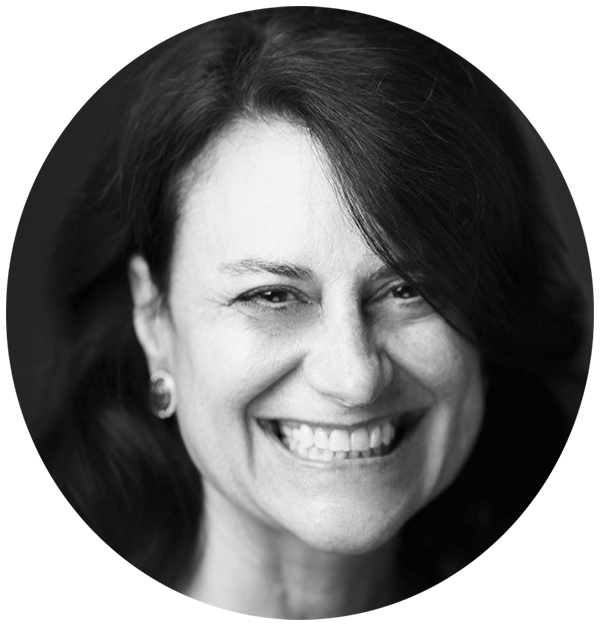
Many thanks to author, educator, and co-founder and CEO of Bardsy, Celeste Davidson!
Writers: visit Bardsy to find out more about their memberships, groups, writing contests, and anthologies. If you don’t know where to start, you can fill out an assessment, and Bardsy will provide a free personalized success plan tailored to you and your goals here: https://bardsy.com/will.
Be sure you take advantage of their 50% discount on the first two months. They also offer Elite members a guarantee: a full refund; if—after attending all their meetings—you are not satisfied with your progress.
| |
|
Nicole Pyles is a writer living in Portland, Oregon. Her writing has appeared in Sky Island Journal, Arlington Literary Journal, The Voices Project, The Ocotillo Review, and Gold Man Review. A poem of hers was also featured in the anthology DEAR LEADERS TALES. Her short story, “The Mannequin of Lot 18,” was nominated for Best American Science Fiction and Fantasy for 2024. Since she’s not active on social media very much, stay in touch by following her writing blog at World of My Imagination.
| |
|
Rail Switch Poetry
Deadline: July 1
Rail Switch Poetry is a new journal for poetry videos. Accepted submissions will be published online, to the publication website and possibly to a publication YouTube or Vimeo channel. A poetry video is a poem set to video or vice versa but really it can be anything that fits the title. All submission lengths are accepted. No fee.
https://railswitchpoetry.submittable.com/submit/234923/poetry-video-journal-issue-2
Arc Poetry Submissions – Theme: At Home
Deadline: July 1
Arc Poetry is accepting submissions for its next issue with the theme of “At Home.” It's about the relationships we can have with our physical or metaphorical homes. Submissions must not exceed 3 poems. Arc’s rate for poetry is $50 per print page and one free copy of the issue in which the work appears. No fee.
https://arcpoetry.ca/resources/call-for-105-at-home/
Marystina Santiestevan First Book Prize 2024
Deadline: July 7
Awarded annually to a poet writing in English who has not yet published a full-length poetry book, the prize is named in honor of a great supporter of young poets, and the grandmother-in-law of the contest’s final judge, Bob Hicok. The winning poet will receive $1,500 and 30 author copies. Manuscript Length: 48-90 pages. Fee: $25
https://conduit.submittable.com/submit/292867/marystina-santiestevan-first-book-prize-2024
Red Door Magazine – Theme: Resonance is Us
Deadline: July 10
Red Door Magazine is an Arts & Culture publication founded in New York in 2009 and now based in Copenhagen, Denmark. They release the magazine as a limited edition printed magazine shipped worldwide to subscribers, as well as a digital free magazine. Their theme for this upcoming edition is “Resonance is us.” Poetry entries can include up to 3 poems. Fee: $3
https://redpress.submittable.com/submit/288564/issue-37-resonance-is-us
Blessing the Boats Selections – Poetry Collections by Women of Color
Deadline: July 14
One poet receives: book publication by BOA Editions and a $5,000 honorarium. Blessing the Boats Selections spotlights poetry collections by women of color. As the 2021-2024 Blessing the Boats Selections Editor-at-Large, Aracelis Girmay will read submissions and select the final manuscript for publication. Open to all women poets of color in the U.S., including poets who identify as cis, trans, and non-binary people who are comfortable in a space that centers on women’s experiences, regardless of citizenship and publication history. Submit a poetry manuscript, a minimum of 65 pages, maximum of 120 pages. No fee.
https://www.boaeditions.org/pages/blessing-the-boats-selections
2024 Helen Schaible International Sonnet Contest
Deadline: July 15
There are two categories: a traditional sonnet (Shakespearean or Petrarchan) and a modern sonnet. Enter only one poem per category. Entries must be unpublished. First Prize: $50. Second Prize: $30. Third Prize: $20. Three Honorable Mentions and three Special Merits will be named per category, ranked. No fee.
https://www.poetsandpatrons.net/sonnet-contest-2024
Poetry South
Deadline: July 15
Poetry South is an international journal that considers all kinds of poetry. Though they pay particular attention to writers from the South—born, raised, or living here—all poetry within their covers has a claim to the South because it is published there. Send 1-4 unpublished poems in Word format. They consider long poems. Poems of more than two pages should be considered as 2 poems in your submission. No fee.
https://www.muw.edu/poetrysouth/submit/
Asheville Poetry Review
Deadline: July 15
Asheville Poetry Review is accepting general submissions. Please send 3–6 poems of any length or style. Simultaneous submissions are permitted. No fee.
https://ashevillepoetryreview.com/submissions
Rattle Poetry Prize Entry
Deadline: July 15
The annual Rattle Poetry Prize offers $15,000 for a single poem to be published in the winter issue of the magazine. Ten finalists will also receive $500 each and publication, and be eligible for the $5,000 Readers’ Choice Award, to be selected by subscriber and entrant vote. Open to writers, worldwide. Poems may be any length, any style, or any subject. Submit up to 4 poems in any length, style, and subject. Fee: $30, which includes a one-year subscription to Rattle.
https://www.rattle.com/prize/guidelines/
2024 Blue Lynx Prize for Poetry
Deadline: July 15
The annual Blue Lynx Prize for Poetry awards $2000 plus publication for a full-length poetry collection by a US author. Entries must be at least 48 pages in length. Fee: $28
https://lynxhousepress.submittable.com/submit/287930/2024-blue-lynx-prize-for-poetry
The Adrift Chapbook Competition
Deadline: July 15
Submit 15-40 pages of poetry for the Adrift Chapbook Competition. Poems may have been published individually, but not as a collection. The winner will receive $750 dollars and 20 copies of their chapbook. A print run of the winning chapbook will be sold on their website, through affiliate bookstores, and will be nationally and internationally distributed by Ingram. The managing poetry editor may offer a runner-up full publication. If a runner-up is chosen, they will be awarded $350, 20 contributor copies, and the same level of marketing and distribution. Guest judge is Diane Seuss. Fee: $25
https://www.driftwoodpress.com/adrift-chapbook-contest
Charles Simic Memorial Prize 2024
Deadline: July 31
Hole In The Head Review established the Charles Simic Poetry Prize in 2023 to honor their late friend and mentor. This year, first prize will receive $1,000. The Editor's Choice prize is a signed, first edition copy of Simic's Pulitzer winning book, The World Doesn't End. Please send just one poem for consideration. Fee: $10
https://theholeintheheadreview.submittable.com/submit
Red Wheelbarrow Poetry Prize
Deadline: July 31
The contest is open to all styles of poetry from national and international participants writing in English. Final Judge is Kim Addonizio. Three prizes: $1,000, $500, $250. Five finalists published in 2024 Red Wheelbarrow Literary Magazine. Letterpress broadside of winning poem printed by Gary Young, Greenhouse Review Press. Each poem must fit onto one 8.5 x 11-inch page. Fee: $15
https://redwheelbarrow.submittable.com/submit/292863/red-wheelbarrow-poetry-prize-2024
Stephen Spender Prize for Poetry in Translation
Deadline: July 31
The Stephen Spender Prize is the leading annual prize for poetry in translation, with categories for pupils, teachers and individual young people in the UK and Ireland, as well as an Open category for adults from all over the world. Translate into English any poem from any language—from French to Farsi, from Spanish to Somali—and win publication and cash prizes. Prizes: First Place: £1000; Second Place: £500; Third Place: £250. Fee: £10
https://www.stephen-spender.org/stephen-spender-prize/
Briefly Write Poetry Prize
Deadline: July 31
The Briefly Write Poetry Prize celebrates and rewards bold, succinct writing. Open internationally. They want well-crafted poems up to 10 lines, and are looking for innovative language, strong imagery and a subtle, focused composition. Prize fund: £75. No fee.
https://brieflywrite.com/poetry-prize/
Bad Betty Press - Full Length Poetry Collections
Deadline: July 31
This July, Bad Betty would love to receive samples of your full-length poetry collections, with selected works to be published by Bad Betty in 2026. Successful poets will work with founding editor Amy Acre to bring their book to life. Please send a maximum of 10 pages upfront. If your pages are shortlisted, they will ask for the full manuscript. They're keen to read poetry from anyone and on any theme, but are particularly interested in work that gives voice to stories less often heard or centered, that challenges patriarchal, heteronormative and white colonial narratives, that surprises, challenges and excites us, that digs deep and takes risks. No fee.
https://badbettypress.com/submissions/
2024 “Prime 53 Poem” Summer Challenge
Deadline: July 31
This is a free contest open to writers around the world to celebrate a poetry form created in 2019 by Press 53 poetry editor Christopher Forrest and publisher & editor in chief Kevin Morgan Watson: the Prime 53 Poem. The top four poems, judged by Christopher Forrest, will be published in Issue 263 of Prime Number Magazine on September 1, 2024. Winners receive a free softcover book from Press 53. Poem must adhere to the rules set by Press 53. No fee.
https://www.press53.com/prime-53-poem-summer-challenge
| |
|
Great American Fiction Contest
Deadline: July 1
The winning story will be published in the January/February 2025 edition of The Saturday Evening Post, and the author will receive $1,000. Five runners-up will each receive $200 and will also have their stories featured online. Stories must be between 1,500 and 5,000 words long. Fee: $10
https://www.saturdayeveningpost.com/fiction-contest/
Pigeon Pages Fiction Contest
Deadline: July 1
The Pigeon Pages Fiction Contest is judged by Vanessa Chan, author of The Storm We Made. The winning author will receive $250 and publication in Pigeon Pages. Honorable mentions will receive $50 and publication in Pigeon Pages. All submissions will be considered for publication. Previously unpublished short stories of 3,500 words or less are eligible for this contest. Fee: $15
https://pigeonpagesnyc.submittable.com/submit
The Garden
Deadline: July 2 (or until they reach their 1k submission cap)
The Garden is an anthology for stories that engage with the living world in all its glory and messiness. From blossom to decay, stories can interpret the premise in any way; be as metaphorical or literal as you wish—just don't be afraid to get a little dirt under your fingernails. The editors are looking for stories of any genre that respond to “The Garden” and/or the cover art. Submit a story of any genre, up to 5,000 words. Pay: €175, as well as a digital copy of The Garden. If the story is selected for The Archive, the writer will also be offered a flat rate of €50. No fee.
https://www.sanspress.com/submissions
HG Wells Fiction Short Story Competition – Theme: The Fool
Deadline: July 8
The annual HG Wells Fiction Short Story Competition offers a £500 Senior and £1,000 Junior prize and publication of all shortlisted entries in a quality, professionally published paperback anthology. There are two competitions: The Margaret and Reg Turnill Competition for young writers of 21 years and under, for which the prize winner receives £1,000, and a competition for the over 21s which offers the Grand Prize of £500. Their theme is “The Fool.” Stories must be between 1,500 to 5,000. Fee: £10 (for over 21) or £5 (for over 21 with student ID), and no fee for entrants 21 and under.
https://hgwellscompetition.com/how-to-enter/
Doris Gooderson Short Story Competition
Deadline: July 12
Wrekin Writers is accepting entries for the 2024 Doris Gooderson Short Story competition. Entries must not exceed 1200 words. Entries should be in the form of a short story, on any theme, and written in English. This competition is open to anyone, of any age, from anywhere in the world. Prizes: 1st = £200, 2nd = £100 and 3rd = £50. Fee: £5
https://wrekinwriters.wordpress.com/doris-gooderson-short-story-competition/
Spooky
Deadline: July 13
Spooky publishes two issues each year. Cozy horror. Fun horror. Classy horror. Wholesome horror. They love the old masters: Ray Bradbury, Charles Beaumont, Richard Matheson, Robert Bloch, Roald Dahl. And classic episodes of Thriller, The Twilight Zone, and Night Gallery. They love stories with a moral core, well-earned twist endings, high concept settings, magical realism, playfulness and dark humor, and classic Americana. Submit one story 5,000 words or fewer. Pay: $0.01 per word. No fee.
https://spooky-magazine.com/submission-guidelines/
Fractured Lit Flash Fiction Contest
Deadline: July 14
Fractured Lit is seeking your most creative and resonant flash and microfictions. No themes. Fractured Lit publishes flash fiction with emotional resonance, with characters who come to life through their actions and responses to the world around them. The first-place winner will receive $2,000 and publication, while the 15 finalists will receive $100 and publication. All entries will be considered for general publication. Submit two stories of 1,000 words or fewer each per entry. Fee: $20
https://fracturedlit.com/2024-flash-fiction-open/
The Stony Brook Short Fiction Prize
Deadline: July 14
Win $1000, plus a scholarship to the Southampton Writers Conference! The Stony Brook Short Fiction Prize welcomes undergraduate students from all over the United States and Canada to submit original fiction of 7,500 words or fewer. The judges are looking for lively storytelling and unique voices. No fee.
https://stonybrookshortfictionprize.submittable.com/submit/289823/2024-stony-brook-1-000-short-fiction-prize
If There’s Anyone Left
Deadline: July 15
If There’s Anyone Left journal is seeking science fiction and speculative fiction no more than 1000 words. This is a publication for marginalized members of the sci-fi/spec community—this includes people of color, the LGBTQ2S+ community, members of marginalized genders, and disabled and neurodiverse people. Submit up to three flash pieces. Pay: $0.08 per word. No fee.
https://www.iftheresanyoneleft.com/submission-guidelines
The Petrichor Prize for Finely Crafted Fiction
Deadline: July 15
2024 Winner receives $1,000 and book publication by Regal House Publishing. Entrants must be at least 18 years of age. Submit a minimum of 100 pages, maximum of 350 pages. Fee: $25
https://regalhousepublishing.com/the-petrichor-prize-for-finely-crafted-fiction/
The Molotov Cocktail - Flash Fiction
Deadline: July 15
The Molotov Cocktail is interested in volatile flash fiction, the kind of prose you cook up in a bathtub and handle with rubber gloves. All submissions must absolutely be under 1,000 words, and they tend to look more kindly on 750 or fewer. No fee.
https://themolotovcocktail.com/submission-guidelines/
William Faulker Literary Competition (Novel & Short Story)
Deadline: July 15
For the novel competition, entries should be works of prose from 50,000 to 150,000 words in length. A winner will receive $2000. Second place receives an Honorable Mention Certificate. For the short story competition, submit short fiction up to 10,000 words. Winners receive: First Prize: $600; Second Prize: $300; Third Prize: $200. Fee: $50 (Novel); $20 (Short Story);
https://williamfaulknerliterarycompetition.com/competition-details/
Gutsy Great Novelist Page One Prize
Deadline: July 17
The Gutsy Great Novelist Page One Prize, brought to you by award-winning novelist and writing teacher Joan Dempsey, is open to all writers internationally over 18 who are working on an as-yet-unpublished novel. This annual prize aims to find the best first page of a novel-in-progress written in the English language. Please submit only the complete first page of chapter one of your novel-in-progress. Entries accepted starting June 17. First prize winner receives $1,000, second prize will receive $500, and third prize will receive $250. Fee: $20
https://gutsygreatnovelist.com/page-one-prize/
Jolly Fish Press – MG and YA Manuscripts
Deadline: July 31
Jolly Fish Press accepts agented and unagented submissions for Middle Grade and Young Adult fiction only. Submit a query letter in the body of your email that includes: a pitch for the manuscript and a 1-2 paragraph plot synopsis, a short bio, 3 comparative books published in the last three years, your contact info, your answers to their marketing questions, and your first three chapters attached in a Word document. No fee.
https://northstareditions.com/jolly-fish-press-submission-guidelines/
Hawk Mountain Book Award for Short Story Collection
Deadline: July 31
Hidden River Arts offers an award of $1,000 and publication by Hidden River Press. Previous publication of individual stories is acceptable, as long as you include the list of the published stories, the journals and magazines where they appeared, date of publication and confirmation that all rights have reverted to you, as author. Fee: $20
https://hiddenriverartssubmissions.submittable.com/submit/96029/hawk-mountain-book-award-for-short-story-collection
Anthology Short Story Competition
Deadline: July 31
Established to recognize and encourage creative writing and provide a platform for publication, the Anthology Short Story Competition is open to original and previously unpublished short stories in the English language by a writer of any nationality, living anywhere in the world. There is no restriction on theme or style. Stories submitted must not exceed the maximum of 1,500 words. The winner will receive €1,000 and the winning story will be published in a future issue of Anthology. Second prize winner will receive €250 and third prized winner receives €150. Fee: €18.
https://anthology-magazine.com/awards/short-story-competition/
The Diverse Writers Grant & Diverse Worlds Grant – Book Length Speculative Fiction
Deadline: July 31 (Opens July 1)
The Diverse Writers grant awards $500 to speculative fiction writers from underrepresented and underprivileged groups—such as women, writers of color, queer writers, disabled writers, etc.—whose marginalized identities may present additional obstacles in the writing and publishing process. The Diverse Worlds Grant awards $500 for for work that best presents a diverse world, regardless of the writer’s background. The submitted project must be a book-length work of speculative fiction. Submit a written description of your project, a cover letter, a brief statement on the relevant aspects of your background, and a writing sample up to 5,000 words. No fee.
https://speculativeliterature.org/grants-3/slf-diverse-writers-and-diverse-worlds-grants/
Sisters in Crime: 2024 Pride Award for Crime Fiction
Deadline: July 31
The Pride Award is an annual grant of $2,000 for an emerging writer in the LGBTQIA+ community. Submit an unpublished work of crime fiction, aimed at readers from children’s chapter books through adults. This may be a short story or first chapter(s) of a manuscript in-progress of 2,500 to 5,000 words; a resume or bio, and a cover letter. No fee.
https://www.sistersincrime.org/page/Pride
Other – Fantasy Short Story Anthology by Women Writers
Deadline: July 31
Bannister Press is seeking international short story submissions by writers who identify as women for an anthology with a focus on what it means to be on the outside looking in, or comfortably or uncomfortably out of step with the world(s) at large, and with a fantasy element. The story can be visually focused, or character/narrative focused, as long as it leaves the reader thinking about the story long after closing the book. Humor is fine as long as it’s not about the mic drop. No erotica, gore, or excessive violence. Send them your best work, fully edited, up to 3,500 words. Publication date is November 1, 2024. Pay: $0.08 CAD per word. No fee.
https://bannisterpress.com/submissions/
Flash Frog – Theme: Ghost Stories
Deadline: July 31
Flash Frog is open year round for submissions, but in July they are looking for ghost story submissions only. Submit flash fiction up to 1,000 words. Pay: $25 per story. No fee.
https://flash-frog.com/submit/
The Other Stories: Vol. 102 - The Tarot
Deadline: August 1
A short story podcast that reaches 150k+ monthly listeners and performs your written stories. They are seeking submissions on the theme “The Tarot,” as well as other themes. Submit a story of 2,000 words. They accept reprints. Pay: 15GBP per story. No fee.
https://theotherstories.net/submissions/
PEN/Phyllis Naylor Grant for Children’s and Young Adult Novelists
Deadline: August 1
A $5,000 grant is awarded annually to an author of children’s or young adult fiction for a novel-in-progress. Writers must have published one or more novels for children or young adults that have been warmly received by literary critics, but have not generated significant sales. The writer’s previously published book(s) must be published by a U.S. trade publisher. Self-published works are ineligible. Submit a cover letter, one to three reviews of the novel(s) from professional publications, and a letter of recommendation. No fee.
https://pen.submittable.com/submit/289101/2025-pen-phyllis-naylor-grant-for-childrens-and-young-adult-novelists
| |
|
Vine Leaves Press: 2025 International Voices in Creative Nonfiction Competition - Full Length
Deadline: July 1
The competition is open to writers worldwide with the top prize of $1,000 and book publication by Vine Leaves Press. If your manuscript is narrative in nature (i.e. a memoir) then the length should be between 50,000 - 80,000 words. If your manuscript is experimental in nature (i.e. not straight prose, could be vignettes, poetry, or a mix), it should be at least 100 pages long. They welcome submissions from marginalized voices. Fee: $25
https://www.vineleavespress.com/international-voices-in-cnf.html
Prism's Creative Nonfiction Contest
Deadline: July 1
Prizes: $1,500 grand prize, $600 runner-up, $400 2nd runner-up. Maximum word count: 6,000 words. Judged by Suzannah Showler. Entries must be original, previously unpublished in print or online. PRISM will purchase First North American Serial Rights for all work accepted for publication. Fee: $35 for Canadian, $40 for US, $45 for International; all entries include a one-year subscription. Free entries for self-identifying Black and Indigenous writers.
https://prisminternational.submittable.com/submit
Motherhood Uncensored Writing Competition - Theme: Things Left Unsaid
Deadline: July 14
Starcroft Farm Cabins is holding a writing competition on the theme of "things left unsaid." The winner will receive feedback from literary agent Hannah Sheppard and a 2-night self-led writing retreat at Starcroft Farm Cabins. These stargazing cabins are in the beautiful Sussex countryside in southeastern England. Submit a piece no longer than 1,000 words. It can be in any format, but they think letters will work really well with the theme. No fee.
https://www.motherhood-uncensored.org/competition
The Kari Howard Fund for Narrative Journalism
Deadline: July 14
This is a grant for narrative journalism, and is open for women and nonbinary journalists. Grants will be for a maximum of $5,000. Applicants may be a print journalist or a print journalist leading a multi-media team. Projects reported and published in English anywhere in the world are eligible. All reporting and publishing must be completed within six months of the award of the grant. Applicants may be freelance or staff print journalists and may apply individually or as part of a multi-format team. Applicants must have three or more years of professional journalism experience. No fee.
https://iwmf.submittable.com/submit/296598/the-kari-howard-fund-for-narrative-journalism-2024
Under the Sun 2024 Summer Writing contest
Deadline: July 31 (Opens July 1)
Under the Sun is accepting submissions of works of creative nonfiction for their Summer Writing Contest. 5,000 word limit. First prize $500 and publication in their 2025 issue. All submissions will be considered for publication, and all entries will receive a summary of written responses from their contest’s readers. Published essays receive a $50 honorarium. Outside final judge will be Final judge this year will be Marcia Aldrich, former editor of Fourth Genre. Please submit all work without identifying information. Fee: $15
https://underthesunonline.com/wordpress/2024/submissions/
Barely South Review Summer Writing Contest 2024
Deadline: July 31
Barely South Review invites all creative nonfiction that is previously unpublished, original, and under 5,000 words. Guest judge is Anna Qu, author of Made in China: A Memoir of Love and Labor. The winner will receive $300 and publication in Barely South Review. Fee: $3
https://barelysouth.submittable.com/submit/294580/bsr-summer-non-fiction-writing-contest
Solastalgia - 2024 Nonfiction Anthology
Deadline: July 31
As opposed to nostalgia—the melancholia or homesickness experienced by individuals when separated from a loved home—solastalgia is the distress that is produced by environmental change impacting on people while they are directly connected to their home environment. They’re interested in creative nonfiction essays on change over time with an environmental lens. Submit creative nonfiction essays between 2,000 and 6,000 words. Pay: an honorarium of $100 for selected work. The author with the winning creative nonfiction essay will receive $1,000 and mentorship in either craft or professional development from their guest judge, Erica Hoffmeister. No fee.
https://fourpalacespublishing.submittable.com/submit/295043/solastalgia-2024-nonfiction-anthology
Constance Rooke Creative Nonfiction Prize
Deadline: August 1
The Malahat Review invites writers to enter the Constance Rooke Creative Nonfiction Prize. The contest is open internationally and there are no restrictions on subject matter or aesthetic approach. One winner will receive a prize of CAD $1,250 and publication in the magazine's winter 2024 issue #229. Creative nonfiction up to 4,000 words. The guest judge is Gloria Blizzard. Fee: CAD $35 for each entry from Canada *early bird discount until June 30, 2023: CAD $20; CAD $45 for each entry from elsewhere *early bird discount until June 30, 2023: CAD $30; CAD $15 for each additional entry (any writer, any country).
https://malahatreview.submittable.com/submit/140272/constance-rooke-creative-nonfiction-prize
| |
|
Hakkyu – Writers 16-21
Deadline: Rolling
Hakkyu is derived from the Japanese word “to spread.” Their team of editors are based in Japan and the US and focused on spreading the word of the young and new. They are currently accepting submissions from writers aged 16-21. Flash Fiction: 300-1000 words. Short Stories: 1000-6000 words. Nonfiction: 500-6000 words. Poetry: Up to 3 poems. Pay: $15. No fee.
https://hakkyu.com/about
Rising Action
Deadline: Rolling
Rising Action aims to cultivate a space where all writers feel comfortable to come and share their work with the world. They nominate for Best of Net and Pushcart Prizes. Fiction: up to 8,000 words, which can be one story or multiple pieces. Any genre and style. Poetry: up to 3 poems in one document in any genre and style. Pay: $25 per piece. No fee.
https://www.risingactionreview.com/general-5
ALOCASIA – Plants, Gardening
Deadline: Rolling
ALOCASIA is a journal about plants, gardens, gardening, parks, and indoor horticulture. They accept creative writing of all genres from queer writers on a rolling basis, and accept reprints. Please include a brief bio, and inform them where your piece was previously published, if applicable. They appreciate both traditional work, as well as the weird, erotic, explicit, anti-colonial, and whatever you can come up with. Pay: $10 per piece. No fee.
https://alocasia.org/about-send-work/
The BLR Prizes
Deadline: July 1
The BLR Prizes award outstanding writing related to themes of health, healing, illness, the mind, and the body. Winners are published in the spring issue of Bellevue Literary Review. For each genre, first prize is $1000 and honorable mention is $300. Fiction/nonfiction word max is 5,000 words (though most of our published prose is in the range of 2,000-4,000 words.) Please submit no more than three poems. Fee: $20
https://blreview.org/blr-prizes/
The 2024 Riddle Fence Contests
Deadline: July 1
Riddle Fence is now accepting entries for its latest contest. One short-fiction submission is one story, maximum 5,000 words. One poetry submission is up to 3 poems; no more than 100 lines per poem. $1,000 grand prize winner and publication in issue 53. Free entry for BIPOC contest submissions. Just self-identify upon entry. Fee: Canada $25, US $35 & International $55
https://riddlefence.com/submit/submit-contests/
Exposition Review’s Flash 405 Contest – Theme: Persona
Deadline: July 5
Flash 405 is Exposition Review’s multi-genre flash competition, awarding prizes and online publication to the winners. Submit fiction and nonfiction up to 405 words. Submit up to 5 lines of poetry. Stage & Screen: submit a complete scene, up to 4 pages. Experimental: a complete short form narrative utilizing innovative techniques and/or hybrid forms. The winners will all receive publication on the website. Their first and second place winners will also receive a cash prize. First place winner receives 40 percent of fees and second place receives 20 percent of fees. This contest’s theme is “Persona” and the guest judge is Madeline Grimm. Fee: $5
https://expositionreview.com/flash-405/
North Street Book Prize
Deadline: July 1
Your self-published or hybrid-published book can win up to $10,000 plus expert marketing services. North Street Book Prize accepts books published in a variety of categories, from mainstream fiction to nonfiction/memoir to poetry. One grand prize winner will receive $10,000, a marketing analysis and one-hour phone consultation with Carolyn Howard-Johnson, and other prizes. The top winner in each category will receive $1,000, a marketing analysis and one-hour phone consultation with Carolyn Howard-Johnson, and other prizes. There are also prizes for honorable mentions. Length limit: 200,000 words maximum. Submit an ebook or a printed book. Fee: $79
https://winningwriters.com/our-contests/north-street-book-prize
Tupelo Quarterly
Deadline: July 1
Tupelo Quarterly accepts submissions of poetry, fiction, nonfiction, lyric essay, hybrid work and visual art during open reading periods. Submit up to 5 previously unpublished poems of any style or sensibility. Submit prose, nonfiction, or hybrid work no more than 15 pages. Fee: $3
https://tupeloquarterly.submittable.com/submit
In Parentheses
Deadline: July 5
Founded in late 2011, In Parentheses prides itself upon analysis of the current condition of intelligence in the minds of these young people, and building a hypothesis for one looming question: what comes after Post-Modernism? Poetry Submissions: IP is looking for interesting, creative, and unique poetry of all forms and styles. No documents longer than five (5) pages will be accepted. Creative Writing Submissions: IP is looking for pieces that extend the contours of the human imagination. No pieces exceeding the 1000 word count will be accepted. No fee.
https://inparentheses.submittable.com/submit
Daikaijuzine
Deadline: July 7 (Opens July 1)
Take the word Kaiju, which means “strange creature,” add the prefix Dai, which means “large,” and you get Daikaiju, which means “Large strange creature.” Like Godzilla. Or King Ghidorah. Or Gamera. These are the strange, large creatures that the editors at Daikaijuzine get their inspiration from. They like stories that are strange, that have wacky, huge ideas, and are diverse in content and authorship. Fiction: 1,000 to 6,000 words. Flash Fiction: up to 1,000 words. Poetry: no more than a page, up to five poems per submission. Reprints: they are happy to receive stories, poems, and articles that have been published elsewhere. Pay: $10 per story, and $5 per poem or flash. No fee.
https://www.daikaijuzine.org/guidelines
Epiphany Literary Journal
Deadline: July 8
Submissions are currently open for work to be published exclusively online at Epiphany. Everyone who submits work for online publication will receive a complimentary digital subscription to Epiphany, available as a link in their initial submission response email. Submit one essay or short story at a time. Submit up to 5 poems at a time. Pay: Fiction and nonfiction contributors receive $175. Poetry contributors receive $75. Fee: $5
https://epiphanymagazine.submittable.com/submit
Seaside Gothic
Deadline: July 14 (Opens July 8)
Seaside Gothic publishes fiction, poetry, and nonfiction of high quality that meet the criteria of seaside gothic literature. Each issue also features a selection of images from a single photographer or artist, including the cover. Fiction, poetry, and nonfiction submissions must be self-contained pieces not in excess of 1,000 words in length and not serialized or extracts of larger works. Pay: £0.01 per word. No fee.
https://seasidegothic.com/submissions/
Robert and Adele Schiff Awards
Deadline: July 15
The Cincinnati Review invites submissions for the annual Robert and Adele Schiff Awards. One poem, one piece of fiction, and one piece of literary nonfiction will be chosen for publication in their prize issue, and winning authors will receive $1,000 each. All entries will be considered for publication in The Cincinnati Review. Writers may submit up to 8 pages of poetry (up to 5 poems total within those pages); up to 10,000 words of a single double-spaced piece of fiction; or 5,000 words of a single double-spaced piece of literary nonfiction, per entry. Fee: $25
https://www.cincinnatireview.com/contests/robert-and-adele-schiff-awards/
Ex-Puritan Magazine
Deadline: July 15
The Ex-Puritan Magazine is accepting submissions for its next issue. Pay: $200 per essay, $150 per work of fiction, $50 per poem or $100 if multiple accepted; $50 or possibly more for experimental or hybrid work. Please do not submit stories over 10,000 words, flash fiction (under 1,000 words), or novel excerpts. Essays should not exceed 5000 words. Poems can be any length (including sequences and long poems). No fee.
https://puritan-magazine.submittable.com/submit
MER (Mom Egg Review) Magazine
Deadline: July 15
They publish creative work on mothers, mothering, and motherhood, in all its forms. Poetry: up to 3 poems, no more than 5 pages. Flash and short fiction, creative prose/nonfiction, and hybrid works: up to 1000 words. They also seek mother-themed art. You need not be a mother to submit. Fee: $3
https://merliterary.com/submit/
Black Cat Tales
Deadline: July 15
Dazzle them with your best black cat story or poem. From the superstitious to the unlucky, from a witch's familiar to a soul stealing grave robber, black cats have captured our imagination and remain solidly in the realm of the dark. A black cat or a clowder of black cats must be featured predominantly in your story and not simply set decoration. They are open to horror, dark fantasy, sci-fi, erotica, weird westerns, cyberpunk, steampunk, and prefer dark fiction. Stories: 500 – 3,500 words. Poetry: max 25 lines. Pay: $50 per story; $25 per poem. No fee.
https://black-cat-publishing.com/submissions
Stone Canoe Magazine - Current or Former Resident of Upstate New York
Deadline: July 15 (Fiction); July 22 (Nonfiction); July 29 (Drama)
Stone Canoe, a journal of arts and ideas from Upstate New York. They showcase the work of a diverse mix of emerging and well-established artists and writers with strong connections to Upstate New York. Your bio note must include information that documents your current or past residency in the region. The writer must be a current or former resident of upstate New York, but the piece submitted can be about anything at all. Fiction submissions are limited to one piece not to exceed 7,500 words. Nonfiction submissions are limited to one piece not to exceed 6,500 words. Drama is limited to one piece up to 6,000 words. No fee.
https://stonecanoe.submittable.com/submit
Poet Cottage Writer’s Residency
Deadline: July 15 (Opens July 1)
The Annual Poet Cottage Writer’s Residency offers a 10-day stay at Poet Cottage November 1-10th free of charge, an award worth over $2,000. Poet Cottage is located just outside of Coral Bay on the island of St. John in the US Virgin Islands. The Residency is open to writers of Creative Non-Fiction, Fiction, and Poetry. Submit an artist’s statement, application, and 10-page writing sample. Applications will be judged blind. Fee: $20 (if you need the fee waived, please email them)
https://poetcottage.com/the-residency/
Loghaven Residencies
Deadline: July 15
Loghaven invites artists of all backgrounds and at any stage of their career, working in visual arts, dance, music composition, theater, architecture, and writing (poetry, fiction, nonfiction, screenwriting, and journalism) to apply. All resident artists receive a living stipend of $850 per week in addition to travel and freight reimbursement. The residency is located on 90 acres of woodland in Knoxville, Tennessee. Artists live in five historic log cabins that have been both rehabilitated and modernized to create an ideal setting for reflection and work, and they have access to new, purpose-built studio space. Submit an application, two to three samples of your writing no longer than 20 pages, and two professional references. Fee: $20
https://loghaven.org/residencies/apply/
2024 Black Voices in Children’s Literature: Writing Contest
Deadline: July 19
Open to US-based Black writers. Submit original children’s books for ages 0–4 (50–125 words) or for ages 4–8 (300–800 words). Must feature authentic, realistic Black characters and culture. Must focus on one or more of the following topics: character development, self-esteem, identity, diversity, getting along with others, engaging with family and community, or other topics related to positive childhood development. First Place: $1,000. Second: $500. Third: $250. No fee.
https://go.teachercreatedmaterials.com/free-spirit/black-voices-childrens-literature-writing-contest
Blanket Gravity Magazine
Deadline: July 19
Blanket Gravity Magazine is a journal for fiction, creative nonfiction, and visual art. They are interested in moments of emotional intensity, and how their effects ring out in the bigger picture of our identities. They are looking for writing and art that explore mental health or emotional life. Fiction and Nonfiction: up to 9,000 words. Art: submit 3-7 images. Pay: $40 per accepted submission for fiction, nonfiction, and artwork. No fee.
https://www.blanketgravitymag.com/submissions
13th Annual Summer Contests in Poetry & Flash Fiction
Deadline: July 20
Submit up to three works of flash fiction OR poems per entry. Please put all three in the same file attachment. GS defines flash fiction as works of 1000 words/less. Poetry may be of any length. Prizes: $100.00 and publication in Gigantic Sequins Issue 15 (June/July 2025). Fee: $6
https://www.giganticsequins.com/contests.html
Witch House: Issue 4
Deadline: July 21
Witch House is an amateur magazine that seeks to discover, inspire, and publish emerging horror authors who are enthusiastic about the pulp fiction tradition of a modern gothic literature called “cosmic horror.” Fiction: 1,500 to 2,500 words. They prefer atmospheric horror that emphasizes disturbing or suggestive settings. They prefer renderings of supernatural horror to be artfully sketchy and sublime. They generally prefer the first person perspective and are open to experimental narrative techniques. Poetry: submit up to 3 short poems, no more than 500 words of verse total. Pay: $10 per piece. No fee.
https://witchhousemag.blogspot.com/p/submissions.html
Toward Equality in Publishing Contest – Full Length Manuscripts, Women Writers of Color
Deadline: July 25
Each year, She Writes Press and SparkPress offer their Toward Equality in Publishing (STEP) contest and award two women authors publishing packages, each valued at $10,000, plus a 500-book print run, one author per season, to publish on either She Writes Press or SparkPress, which will be determined by the publisher based on genre and writing style. Women only (any writer identifying as female/woman, trans, non-binary, or genderqueer). Women of color (African, Indigenous to the Americas, Latinx, Asian/Pacific Islander, Arab, or people of mixed racial heritage with one or two parents who fit into the above groups). Submit a query letter, full chapter summaries, and the first 50 pages of the work. You can also submit a query letter and a full-length nonfiction book proposal. No fee.
https://shewritespress.com/equality-in-publishing/
Atlas of Deep Ones: A Cultural, Geographic and Unnatural History
Deadline: July 30
They want stories about Deep Ones: pirates willing to raid some truly unusual ships, beach bums sharing a smoke with a new friend. How do you handle the call to the sea when you live in Kansas? How did encounters with Romans, Vikings, and rum runners play out? Maybe they were the Sea People leading to the Bronze Age Collapse. Did they sink the White Ship that messed up English Royal succession? Or what or a more distant, perhaps primordial past? The “non-fiction” should be articles about aspects of Deep One culture, biology, history and everything in-between. Fiction: stories 500 – 6000 words. Poems: No more than 2 pages. Nonfiction: 500 – 1000 words. Pay: $25 per story; $15 per poem; $15 for nonfiction. No fee.
https://obsidianbutterfly.com/aodo.html
Mudroom
Deadline: July 31
Mudroom publishes poetry, fiction, essays, and essays in translation. Poetry: please send 3-5 original, previously unpublished poems in a single file (8 pages maximum). Prose: please send a previously unpublished work no longer than 6,000 words in double spaced 12-point Times New Roman font. Pay: $15. No fee.
https://www.mudroommag.com/submissions
Fiyah Literary Magazine - Theme: Spacefaring Aunties
Deadline: July 31
FIYAH is a quarterly speculative fiction magazine that features stories by and about Black people of the African Diaspora. "It’s time to explore the adventures of bold, fearless women who defy societal expectations and embark on daring space voyages. From thrilling space operas to quiet character studies, we want to see Aunties who are scientists, engineers, pilots, and leaders guiding their crews through uncharted territory." Submit your prose and poetry. They accept submissions of short fiction 2,000 – 7,000 words, novelettes up to 15,000 words, and poetry with speculative elements. Pay: Short stories (2,000 – 7,000 words): $0.08/word; Novelettes (<15,000 words): $0.08/word; Poetry: $50 USD. No fee.
https://fiyahlitmag.com/submissions/
NonBinary Review – Theme: False Memories
Deadline: July 31
Zoetic Press publishes the best in speculative lit—experimental, interstitial, luminous. They welcome submissions from everyone. The only requirement is that they be in English, or translated into English. NonBinary Review is currently open for submissions on the theme of FALSE MEMORIES. Pay: $0.01 per word for prose with a limit of 3000 words. Submitters may include up to three poems per submission and they pay a $10 flat fee for poetry. No fee.
https://nonbinaryreview.submittable.com/submit
The /tƐmz/ Review
Deadline: July 31
The /tƐmz/ Review is a literary journal based in London, Ontario that publishes fiction, poetry, and reviews four issues per year. Fiction and Creative Nonfiction: up to 10,000 words. Poetry: submit 1-8 poems. They prefer poetry submissions to be 10 pages for fewer. Pay: $20 per piece for prose; $20 per batch of poems. No fee.
https://www.thetemzreview.com/submissions.html
Galileo Press Submissions
Deadline: July 31
Galileo Press is accepting submissions for chapbooks or full manuscripts. Submit a chapbook collection of poems, essays, stories, or hybrid (with exception to 4-color art / text hybrids). For chapbooks, Galileo Press awards $200 upon acceptance of the final draft, 20 copies, swag, and old school royalties. Submit a full length collection of poems, essays, stories, novella, novel, memoir, or hybrid (with exception to 4-colour art / text hybrids). For manuscripts, Galileo Press awards a negotiated stipend upon acceptance, 20 copies, standard royalties, distribution, and promotion. Fee: $18 (Manuscript); $10 (Chapbook)
https://freestatereview.submittable.com/submit
Coffin Bell Volume 7, Issue 4: Queer, Feminist, & BIPOC Gothic
Deadline: July 31
Coffin Bell is an online journal for dark literature. Publishing quarterly, Coffin Bell reads submissions year-round. Volume 7, Issue No. 4 will launch 10/31/2024 and will be themed “Queer, Feminist, & BIPOC Gothic,” with fiction guest-edited by Kirsten Imani Kasai. They’re looking for flash (up to 1,500 words), short stories (up to 7,500 words), and poetry of any length. Please send up to 5 poems, 5 flashes, or 1 short story per submission. No limits to nonfiction but keep in mind its an online mag. No fee.
https://coffinbell.submittable.com/submit
Spoon Knife 9 – Theme: Numbers
Deadline: July 31
Autonomous Press is now accepting submissions of short fiction, short literary memoir, and poetry for the ninth volume of Spoon Knife, their annual genre-bending lit anthology. In celebration of the ninth year of Spoon Knife, the theme for Spoon Knife 9 is Numbers—stories in which numbers or counting or our relationship to numbers matter in some way. Fiction and Memoir: up to 10,000 words. Poetry: up to 3 poems in one document. Pay: $20 per piece plus $0.01 per word. No fee.
http://autpress.com/2023/08/call-for-submissions-spoon-knife-9/
Narrative Magazine Spring 2024 Story Contest
Deadline: July 31
Their spring contest is open to all fiction and nonfiction writers. We’re looking for short shorts, short stories, essays, memoirs, photo essays, graphic stories, all forms of literary nonfiction, and excerpts from longer works of both fiction and nonfiction. Awards: First Prize is $2,500, Second Prize is $1,000, Third Prize is $500, and up to ten finalists will receive $100 each. All entries will be considered for publication. Fee: $27
https://www.narrativemagazine.com/spring-2024-story-contest
Sarabande Series – Full Length by Kentucky Writers
Deadline: July 31
Sarabande is proud to be an independent publisher headquartered in Louisville, Kentucky. This series is open to writers and projects with ties to Kentucky. We accept manuscripts of poetry, short fiction, and literary nonfiction. Eligible submissions should meet at least one of the following requirements: The author is from Kentucky or lives/has lived in Kentucky. The manuscript is set in Kentucky or about a Kentuckian. Submit 48 to 100 manuscript pages for poetry, 150 to 250 for prose. Fee: $22
https://www.sarabandebooks.org/ky-lit
The Ekphrastic Review
Deadline: July 31
The Ekphrastic Review is an online journal devoted entirely to writing inspired by visual art. They are seeking short fiction, flash fiction, poetry of all kinds (they love prose poetry), creative nonfiction, translations of ekphrastic work from other languages (with permission of the author or public domain), and more. Length: Prose 50 to 4000 words. Poetry can be any length, but please query about any that are unusually long. EKPHRASTIC WORK ONLY! They define "ekphrasis" or "ekphrastic" as "creative writing inspired by visual art." Wherever the art takes you is fine, whether it is "about" the art or artist, or about something else. Fee: $5 CAD.
https://www.ekphrastic.net/submit.html
3 Cents Magazine Issue 8: Body
Deadline: July 31
3 Cents Magazine publishes poetry, fiction, and nonfiction with a twist. The theme for Issue 8 is “Body.” They want to read words that intertwine with limbs and torsos. They’re looking for work that truly embodies “body.” They will publish a minimum of one "mini collection" of three pieces from different writers (one poetry, one fiction, and one nonfiction) but are open to several, depending on the quality and quantity of submissions. They encourage you to submit work that pushes the boundaries of this issue's theme. No fee.
https://www.3centsmagazine.com/submit
Litmosphere – Fall Issue
Deadline: July 31 (Opens July 1)
Litmosphere—formerly home for Charlotte Lit’s Lit/South Awards winners and finalists—is now an open submission, paying online literary and art journal, published twice a year. Litmosphere is for lovers of image and metaphor, writers and readers as curious about inner experience as driving narrative. Poetry: submit up to 5 poems, ideally topically, thematically, or stylistically related. Flash Fiction and Nonfiction: submit up to 4 pieces (no more than 500 words each), preferably stories and essays that speak to each other in some way. Short Fiction and Literary Nonfiction: submit a single piece (up to 5000 words). Pay: $50 per poem; $50 per accepted flash; $100 per short story and nonfiction; $250 for art. No fee.
https://www.charlottelit.org/litmosphere/submit/
Robert Watson Literary Awards 2024
Deadline: August 1
Winners of the Fiction and Poetry Prizes will each receive a $1000 cash award and publication in The Greensboro Review. Please include no more than 7,500 words or 25 typed, double-spaced pages for fiction. Poetry entries can include any number of poems up to 10 pages, but we recommend 3 to 5 poems per submission. Fee: $15
https://greensbororeview.submittable.com/submit
| |
|
WOW! Women on Writing Quarterly Flash Fiction and Creative Nonfiction Contests
Deadlines: July 31 (creative nonfiction), August 31 (fiction). Our favorite writing community offers quarterly contests judged blindly with multiple cash prizes and more for 20 winners, up to $2,800 (fiction) and $1,175 plus a gift certificate to CreateWriteNow (nonfiction), an affordable critique option, and a 300-entry limit on each contest. Previously published work is accepted! What’s not to love? This season's fiction contest is sponsored by Reedsy with guest judge, author, editor, and creative writing instructor Tom Bromley. Fee: $10 (Fiction) and $12 (Nonfiction).
https://www.wow-womenonwriting.com/contest.php
| |
|
National Day of the Cowboy on the fourth Saturday in July recognizes the stoic, hardworking symbol of the American West. If you have a story between 2,500 and 7,500 words in length that features cowboys and the sport of Rodeo, or feel inspired to write one, consider sending it to the editors of Cowboy Up by July 31st. Stories can be in any genre as long as the sport of Rodeo is a key part of the story. 75% of all proceeds from this anthology will be donated to the Justin Cowboy Crisis Fund, an organization that provides help to injured riders and their families. Pay: $20 per story. No fee.
https://www.wolfsingerpubs.com/cowboy-up-guidelines
| |
|
July offers many days to indulge your food cravings—from Apple Turnover Day (July 5) and Pecan Pie Day (July 12) to Fried Chicken Day (July 6) and Macaroni Day (July 7). Satisfy your taste buds by submitting your creative writing to The Inquisitive Eater: New School Food. The best food writing is not just about what’s on the plate, but is, like all literature, also interested in language, psychology, and the most pressing issues of the day. Submit poetry (up to two poems), fiction (one piece at a time), essays (up to 4,000 words), visual art (up to five works), books and media (reviews up to 1,000 words), and think tank pieces (academic and theoretical writing on food topics up to 5,000 words). No fee.
https://inquisitiveeater.submittable.com/submit
| |
|
here was a time when true crime writing was limited to the mass market paperbacks by authors such as Ann Rule and Joe McGinnis, specialized publications like True Detective (which ceased publication in 1995), or shared through visual storytelling like television “movies of the week.” But over the last decade, more opportunities have appeared for writers interested in the genre.
I began reading those mass market paperbacks in high school, where I learned about the chilling crimes of Charles Manson and his followers and serial killers like Ted Bundy. Because I had read about Diane Downs and her attempt to murder all of her children and blame it on a carjacker, I immediately knew South Carolina mom Susan Smith was lying when I saw her interviewed on a local news station in 1994. But although I was trained as a journalist, I never imagined I would one day find myself writing true crime and becoming what some would consider an expert in the subject matter.
| |
|
True crime is a nonfiction genre of popular media that concerns real-life crimes. A work can focus on either a single case, such as a disappearance, murder, or sexual assault, or the collective acts of a single criminal, such as a serial killer. This genre places emphasis on a timeline of events and presentation of facts.
Hallmarks of a compelling true crime story can include excellent research, attention to detail, a chronological timeline the reader will be able to follow easily, a twist the reader did not see coming, the exploration of how a cold case was solved, and the determination involved (by law enforcement, a victim, or victim’s family members) in solving a case.
| |
|
Like many others, I began listening to podcasts several years ago, and true crime became my favorite genre. After attending MurderCon, a writing conference designed for writers interested in crime, I toyed with the idea of developing my own regional podcast focusing on missing people from North and South Carolina, which is the area where I live. Research included listening to other podcasts to get an idea of format. I made a list of unsolved cases that interested me. I wanted a podcast that focused more on the facts of the disappearances while also using unique storytelling methods.
Writing those first few scripts was an arduous process. I watched news segments and read any true crime articles and books I could find to learn different ways of presenting the information. Over time I began reaching out to other writers in the field to feature on the podcast and the show has evolved to feature regional crimes along with missing people. I interviewed the authors of Deceit, Disappearance & Death on Hilton Head Island to put together a two-part episode on the mystery of what happened to Liz and John Calvert from South Carolina in 2008.
Over time, I branched out and even secured an interview with true crime writer Leslie Rule, daughter of the prolific Ann Rule, and she shared tips for writing and researching true crime ethically in an article for WOW.
I launched the podcast in March 2020 and am about to release my 100th episode. By building this platform for myself, I’ve been able to meet some amazing authors, mentor other true crime writers and podcasters, create digital courses, and help breathe new life into cold cases.
| |
I’ve had a writing blog for years, and after I began posting short articles pulled from my true crime research, I realized there are some cases that lack a digital footprint. I’ve received e-mails and comments from people connected to the cases, retired law enforcement, and even other authors looking for additional information. One post I shared about a cold case from my university has garnered attention from a fellow alumnus who recently secured a book deal about the murder. We connected, and he shared information with me I used in a podcast episode, and in return, I’ve given him resources he didn’t know existed for his book project. While I have a separate website for my podcast, Missing in the Carolinas, I pull snippets from my podcast scripts and share them on my writing blog. I believe sharing my work in these different places has helped me build a platform in the true crime genre. | |
|
As a person who enjoys walking and jogging outdoors, I remembered a kidnap/murder case of a female runner that happened when I was in college. I then put together an entire episode titled “Missing Runners in North Carolina.” After becoming acquainted with a local professor and historian in my area, I interviewed him for an October episode that featured the oldest unsolved murder in our area.
Many times, I’ll be immersed in the news archives, and another headline will catch my eye. When this happens, I jot down the idea in a notebook I keep specifically for true crime ideas. This has led me to sharing stories about crimes that have virtually no digital footprint, such as the murders of Lucille Rinaldi and Brenda Anderson, who were allegedly murdered by their husbands in the 1960s for insurance money.
| |
|
My research methods have helped me produce thorough examinations of crimes and missing persons cases. Here are a few resources I recommend when putting together a detailed timeline of a crime. (All fees are accurate at time of article publication.):
Newspapers.com™ is the largest online newspaper archive consisting of 933 million-plus pages of historical newspapers from 25,100-plus newspapers from around the United States and beyond. A monthly subscription is $74.90 every six months.
Leagle.com is a resource for publicly available court documents.
The FBI Vault is the FBI’s new Freedom of Information Act (FOIA) Library, containing 6,700 documents and other media that have been scanned from paper into digital copies, so you can read them in the comfort of your home or office.
Scribd is a digital document library, with more than 170 million documents and counting. You can find and upload text on a variety of topics and niches, including true crime, for the monthly subscription of $11.99.
InternetArchive.org is free to use. The 501(c)(3) nonprofit is building a digital library of internet sites and other cultural artifacts in digital form. Like a paper library, they provide free access to researchers, historians, scholars, people with print disabilities, and the general public. Today it features twenty-eight-plus years of web history accessible through the Wayback Machine.
Since 1967, the FOIA has provided the public the right to request access to records from any federal agency. It is often described as the law that keeps citizens in the know about their government. Federal agencies are required to disclose any information requested under the FOIA unless it falls under one of nine exemptions, which protect interests such as personal privacy, national security, and law enforcement. An FOIA request must be in writing. Most federal agencies now accept FOIA requests electronically, including by web form or e-mail. There are exemptions to these requests, and you can find more information from FOIA.gov.
| |
|
Regional newspapers and magazines are a great place to pitch your work, especially if you are a local writer or have a tie-in that makes sense for the publication. Consumer magazines such as Texas Monthly, Outside, People, Cosmopolitan, Vanity Fair, and Atlantic Monthly also publish true crime articles. Duotrope, a searchable markets database, has current listings for journals, magazines to pitch, and book publishers. Black Rose Writing, WildBlue Press, and Arcadia Publishing are seeking proposals for nonfiction and true crime books.
The digital magazine Truly Adventurous pays up to $1,000 for longform articles that include true crime and real-life mysteries, and they were featured in the June WOW! Markets newsletter.
Atavist is another digital storytelling publication that publishes longform narratives, many focused on true crime. They pay authors a baseline of $6,000 per story as well as quarterly royalty fees based on traffic and paywalled versions of their stories. The WOW! Markets Newsletter has featured their calls, and you can find their submission guidelines here.
Because true crime is so popular, there are numerous YouTube Channels and podcasts in the works related to the genre. I often see listings for writers and editors on Fiverr and Upwork.
| |
Take Caution When Writing and Researching | |
|
Ethical true crime stories are the ones that focus on victims and don’t center the criminal as some cult of personality or mysterious mind to untangle. It’s important to have reverence for the victim or victims when writing true crime.
The popularity of true crime has given rise to the popularity of “citizen sleuths,” fans who frequent social media platforms like Reddit or Tik Tok. These sleuths enjoy discussing ongoing cases, but sometimes they take their sleuthing too far, discussing suspects that haven’t been confirmed by law enforcement, or worse, encouraging people to harass suspects or family members of victims online. In some instances, true crime content isn’t respectful of the victims and reduces the victims to memes or commodities and merchandise.
| |
Fiction Inspired by Real-Life Stories | |
|
Much of my fiction stories have been inspired by real-life crime. The unsolved missing person case of Tara Calico from New Mexico was the impetus for “The Polaroid.” I used the setting of the Oklahoma Girl Scout murders as the framework for “The Monster in the Woods.” I wrote the first draft of “The Last Circus” after visiting the Ringling Museum in Sarasota and reading about the circus fire of 1944. “In the Depths” was inspired by a highly-publicized case from my area of North Carolina.
Other writers have done the same. The young adult novel by Lauren Oliver, Broken Things, was inspired by the Slenderman stabbing. Emma Cline set her novel The Girls in 1960s Northern Carolina to explore the activities of a Charles Manson-like cult.
*
Don’t be intimidated when writing true crime. Be as creative as you want while still sticking to the facts.
Five years ago, I was working as a regional magazine editor and only dreaming about writing true crime. Then I took the leap, and I now have enough content written about crime in North and South Carolina that I’m considering self-publishing my podcast scripts in a book format. Not only that, I have built an incredible network of advocates, historians, listeners, and other writers.
| |
|
Renee Roberson is an award-winning writer who lives in the Lake Norman area of North Carolina. She produces the weekly true crime podcast Missing in the Carolinas and is currently seeking representation for her suspense/thriller novel about—what else—a podcaster trying to solve the disappearance of her sister. Learn more at FinishedPages.com.
| |
Learn How to Start Your Own Podcast | | |
|
You Can Start a Podcast!
30-minute pre-recorded webinar with Renee Roberson
($30!)
Learn the benefits of creating your own podcast, materials you need to get started, how to develop content that will keep listeners coming back for more, and ways your podcast can create supplemental income.
Includes:
- Examples of different types of podcasts.
- Deciding on a format.
- Ways to handle the technology necessary for creating a podcast.
- How to develop your first few episodes.
- Promotion and monetization ideas.
- Ways you can repurpose your podcast content.
Class Details
|
|
|
How I Feel After One Year of Being On Submission
By Kelly Sgroi
When I went on sub, I was full of hope. I convinced myself that I was one yes away from my dream - traditional publication - and it was sure to happen. I visualised my book in stores, my book launch and the most extravagant book tour.
But manuscripts don’t always sell.
READ MORE
| |
|
Many Paths to Writing Success
By Sue Bradford Edwards
The other night I was on the phone with my cousin. He wants to write a self-help book. He wanted to know two things. Where should he start and what credentials does he need? Given the type of book he wants to write, he has all the credentials that he needs. He’s lived it. But he doesn’t have a background in writing.
I assured him that he could learn to write. Why? Because, like me, he’s always loved stories.
READ MORE
| |
|
The Role of the Unreliable Narrator
By Renee Roberson
I have a love-hate relationship with the unreliable narrator literary device. I love that a story told from the POV from an unreliable narrator can keep you turning pages, questioning reality, or maybe, gasping in surprise at the end of a book. (This was me recently, when my mouth dropped at the conclusion of Lisa Jewell’s suspense/thriller None of This is True, followed by me shaking a fist at my Kindle).
READ MORE
| |
|
We're Not Competing with Human Writers Anymore
By Nicole Pyles
To tell you the truth, it's not so much that I really thought other writers were my competition throughout my career. Not really, anyway. It's more that I recognized who was in the same lane as I was, so to speak. In my earlier days of professional freelancing, I knew who was in my playground. I knew the kinds of writers who would be going for the same jobs as me. They had the skills I did for the most part. And what I didn't have, I knew I could learn and take courses if necessary.
Since I've pursued writing professionally and creatively, I've known that it isn't a competitive sport as much as an endurance race. Sure, there are awards and prizes and coveted agent representations and ideal publishing houses to be gained. Yet, somehow, I knew about the competition. And as long as I knew they shared one trait (that every one of us had, too), whatever they landed seemed possible for me.
The commonality? They were human.
READ MORE
| |
|
Creating a People List
By Jodi M. Webb
How do you keep track of all your writing related info? I have books about intriguing topics. Newspaper and magazine articles stuffed into the idea file in my file cabinet. I’m also a list keeper. Lists of plotlines. Lists of topics for essays. Lists of agents. Lists of publishers.
There used to be business cards too. But business cards have gone the way of the Rolodex and with them, the memory of many interesting people I meet. In the past few weeks I’ve touched base—either in real life or virtually—with so many unusual people:
READ MORE
| |
|
When You Have to Cut ... A Lot
By Sue Bradford Edwards
In my experience, tight writing is marketable writing. In part this is because I write for the school library market. A biography for fourth graders may be only 2500 words long. Some of you write essays that dwarf that word count! But flash writers also face tight word counts. The cut off for a flash piece may be only 750 or even 250 words.
So, what do you do when your draft is too long?
READ MORE
| |
|
Friday Speak Out! The Savvy Reader
By Megan Staffel
When I first started to write fiction, I was afraid to read. I didn’t want to pick up a published author’s style. We writers are good mimics and often, I would slide into the voice from whatever novel was my current book. But a life without reading fiction would have been dreary indeed, so luckily, I learned that the bits and pieces of other writers’ work sifting into my work would ultimately be transformed through the multiple revisions that anything I write goes through.
READ MORE
| | | | |