|
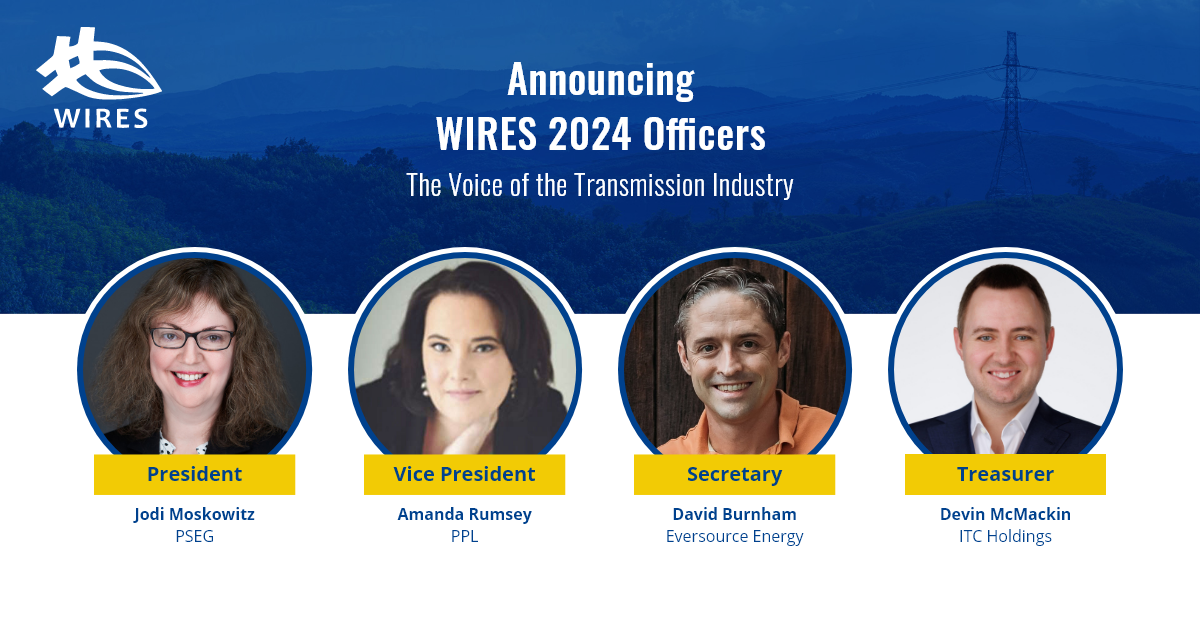
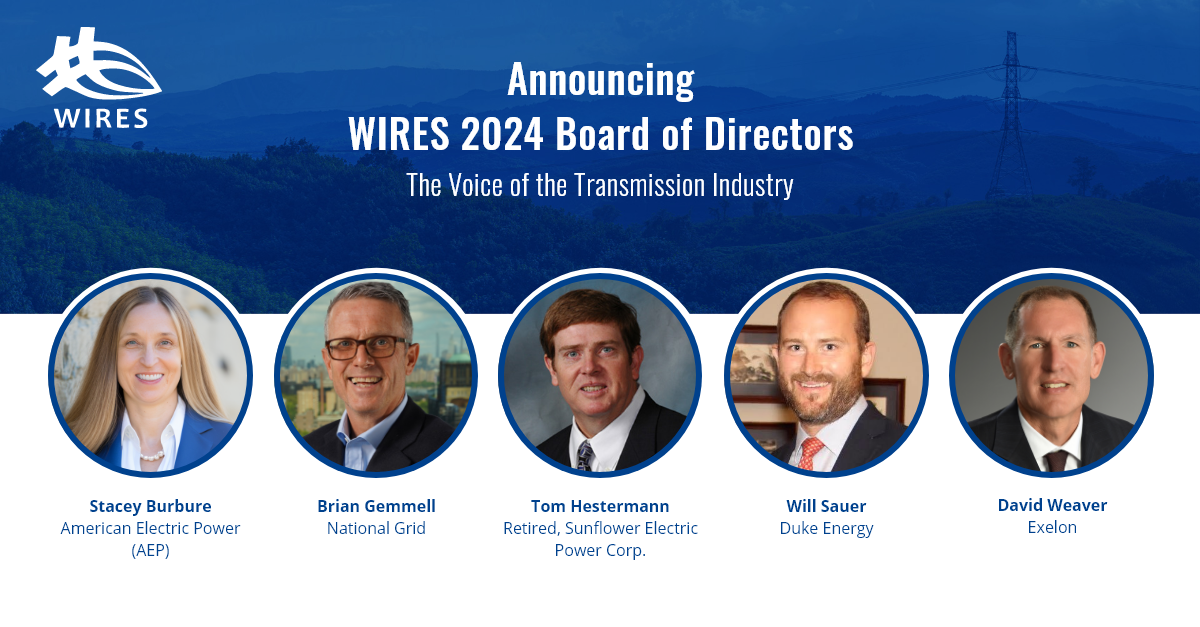
It’s my honor and pleasure to be writing to you as WIRES’ president for 2024 and to share my perspective on transmission issues as the Deputy General Counsel & RTO Strategy Officer of New Jersey-based Public Service Enterprise Group (PSEG).
Recognizing the value of transmission infrastructure, PSEG owns and maintains 834 miles of transmission rights-of-way with 1,560.5 miles of transmission lines over 100kV and 484 miles of 500kV transmission lines. Over the last decade, PSEG has put in service more than 200 transmission and substation projects, developing, or upgrading nearly 600 miles of transmission lines from 69kV to 500kV. PSEG has completed a number of large projects, many through densely populated portions of New Jersey and through environmentally sensitive areas.
Of the transmission projects I have supported at PSEG, one that stands out is our Susquehanna-Roseland project, which was placed into service in 2015. This was one of seven projects fast-tracked by the Obama administration’s Rapid Response Team for Transmission, streamlining and coordinating government action on the required federal permits. Then, as with many projects today, system reliability drove the need for this project.
As part of this large, linear project, we constructed 45 circuit miles of new 500kV overhead transmission lines from Pennsylvania into New Jersey and constructed a new 500 kV Gas Insulated Switchgear (GIS) station, which was state of the art at the time. (The 101 mile Pennsylvania portion of the project was built by PPL.) I had responsibility for obtaining a Certificate of Public Convenience and Necessity from the New Jersey Board of Public Utilities for the NJ portion of this project. I learned so much from this experience, and many of these lessons remain highly relevant today.
One important lesson was the need to interact early and often with all impacted stakeholders. This includes regulators, elected officials, environmental groups, legislators, community groups and individual property owners along the project route. This experience has shaped my approach to all regulatory issues and is one that will guide me at WIRES. It is so important to communicate – and in some cases over-communicate – about the value of transmission generally and then specifically about the customer benefits of individual grid upgrades. It is equally important to listen. PSEG made certain route adjustments in response to concerns that were raised and was constantly seeking to educate and alleviate concerns during the siting process. As President of WIRES, I am committed to always listening to opposing points of view on key transmission policy issues and to seek common ground that will enable the overall objective of 24/7 reliability for customers to be achieved.
Another key learning from the project was the complexity of the permitting process. For Susquehanna-Roseland, the project impacted three National Parks Service units, along a 4-mile-long section of land bookending the Delaware River. The project generated significant opposition from environmental groups because of that work, but ultimately we obtained the necessary federal approvals. These approvals were of course on top of the approvals needed from our state public utility commission, our state environmental permitting agency and certain other federal, state and local agencies. The actual process of building transmission is often messy and complicated. That is why it is so important that the federal government send a clear message about the critical need for transmission, both now and into the future. And of course, WIRES and its members will continue to work with regulators at both the federal and state levels to provide the support that is needed to execute this mission.
According to an independent analysis, to meet our growing clean electricity demands, we’ll need to expand transmission systems by 60% by 2030 and possibly triple those systems by 2050. That means significant investments in transmission infrastructure will be required. As part of WIRES, I am truly grateful for the opportunity to share my past experiences and to learn from one another as the industry moves forward.
|