WEL NEWSLETTER April 2024, Vol. 14, No. 1 | |
|
Dear Kenneth,
We missed Easter & Spring wishes this year, given the timing of these dates and how they fell with the timing of our last newsletter. So, from me-a belated Happy Easter & Happy Spring! Though we had a mild winter, I couldn’t be happier that spring is finally here. Let’s all enjoy warmer days and sunnier moments!
Since last newsletter, I went to Banff to attend the Cambridge Forum on Estate Planning & Litigation on April 7-9 and a good time was held by all in beautiful Alberta. Bryan came along and he co-led one of the discussion groups on a conflicts of law issue in guardianship provisions. Bryan provided a summary of the legislative issues and follow-on limitations. Bryan's paper: https://welpartners.com/resources/WEL-Foreign-Guardianship-Orders.pdf
I went to London to the STEP Worldwide Council Meeting. Travel, travel, travel…. I love it, but it can be exhausting for sure!
During my travels I was thrilled to see my kiddo-she met me in Banff, came home, and then we spent some time in London together - she has a special book review for us this newsletter!
I would be so thrilled if our Legislators would consider Albert Oosterhoff's proposed draft legislation for a Predatory Marriages Prevention Act: Read Albert's blog: Curbing the Scourge of Predatory Marriages by Legislation. Its such a simple answer to an increasingly sad and unnecessary problem- it would give the court the necessary tools to examine and remedy these terrible financial abuse cases.
I recently read a decision from Hong Kong which I found both fascinating and disappointing. I cannot imagine that the legislative reforms made there actually meant to drop the common law in being able to void a marriage as opposed to only retaining the ability to render a marriage voidable. The case, in the Estate of Lui Kwan Cheung is reviewed within. Thank you to Martin Tse, and Anna Chan, Hong Kong lawyers who graciously provided me with this case, and too, a link to an article on guardianship and committeeship: https://oln-law.com/10-reasons-why-a-mental-health-committee-should-be-appointed-for-a-mentally-incapacitated-person/ written by Martin and his colleagues, Jonathan Lam, Gareth Leung, of OLN, Oldham, Li & Nie. I met Martin and Anna at Braddell Brothers LLP where I attended a social as the guest of Yue-En Chong of Bethel Chambers in Singapore.
Please join me in congratulating Gabriella Banhara, our articling student, on passing her Bar Exams - well done!!
Our Associate, Brett Book has decided to pursue crown prosecution in Hamilton in association with MMLR Law. As an Agent for the Public Prosecution Service of Canada, Brett will be prosecuting federal offences under federal statutes including the Controlled Drugs and Substances Act and Income Tax Act. He will also provide legal advice and assistance to law enforcement agencies and take on criminal defence files that do not concern federal offences. We sincerely wish Brett all the best in his next adventures. Brett always wanted to try his hand at crown prosecution when he decided to go to law school. We will miss seeing him and working with him every day but know that he will excel at whatever he puts his mind to. Best of luck Brett from all of us!
Until next month, enjoy your spring and the read,
Kim
| |
1. OSGOODE INTENSIVE PROGRAM IN WILLS & ESTATES: MANAGING CONSENT AND CAPACITY ISSUES IN WILLS & ESTATES PRACTICE, MARCH 19, 2024 | Kimberly Whaley chaired the Osgoode Managing Consent & Capacity Issues program on March 19, 2024. Speakers included Lonny Rosen, Brittany Miller, Dr. Richard Shulman. The presentations were excellent. | |
2. OSGOODE INTENSIVE PROGRAM IN WILLS & ESTATES: PASSING OF ACCOUNTS AND FIDUCIARY ACCOUNTING, APRIL 2, 2024 | |
Kimberly Whaley chaired the Osgoode Passing of Accounts & Fiduciary Accounting on April 2, 2024, which included speakers, Ian Hull, Nick Esterbauer, Professor Albert Oosterhoff, Susan Stamm, Heather Hogan, and Tracey Phinnemore. The materials and presentations are excellent.
Link to webinar archives: https://osgoodepd.ca/professional-development/short-courses-and-conferences/passing-of-accounts-and-fiduciary-accounting-2024/
A link to Professor Albert Oosterhoff materials can be found here: https://welpartners.com/resources/WEL-Osgoode-Compensation-Paper-2024.pdf
| |
3. OSGOODE INTENSIVE PROGRAM IN WILLS & ESTATES: POWERS OF ATTORNEY & GUARDIANSHIP, APRIL 22, 2024 | |
Kimberly Whaley and Bryan Gilmartin both presented at the Osgoode Powers of Attorney and Guardianship on April 22, 2024. Kim on “Contentious Guardianship Applications & Removals of Attorneys and Guardians" and Bryan on "Incapacity Planning and Powers of Attorney". The program was chaired by Ian Hull and Suzana Popovic-Montag.
Link to paper: https://welpartners.com/resources/WEL-Contentious-Guardianships-2024.pdf
| |
4. THE PROFESSIONAL ADVISORY GROUP OF THE BAYCREST FOUNDATION, PROTECTING VULNERABLE OLDER ADULTS, APRIL 4, 2024 | Kimberly Whaley and Bryan Gilmartin presented on Civil & Criminal Remedies at Baycrest on April 4, 2024. | |
5. CAMBRIDGE FORUMS - ESTATE PLANNING AND LITIGATION, BANFF SPRINGS, APRIL 7-9, 2024 | |
Kimberly Whaley and Maria Grande were the discussion leaders on the Session: Equity Prevails: The Use of Equitable Remedies to Combat the Scourge of “Predatory” Relationships and Marriages”.
Bryan Gilmartin and Kimberly Whaley were on a panel discussion: Sealing the Gap: Examining Issues of Resealing and Domicile: along with Jonathan Feingold, Jessice Lyle and Geoffrey White.
| |
6. ONTARIO POLICE COLLEGE SEMINAR, ARPIL 16, 2024 | Evan Pernica and Oliver O’Brien presented at the Toronto Police College Seminar, Investigations Involving Older Adults Course, on Elder Abuse: Civil and Criminal Remedies on April 16, 2024. | |
7. CBA ELDER LAW WEBINAR, APRIL 16, 2024 | Kimblery Whaley presented at the CBA Law Series, April 16, 2024, on “Scams & Frauds Targeting Older Adults and the use of Equitable Relief”. Other speakers included Graham Webb, Corporal Ving NGO, and Chair, Amy MacAlpine. | |
8. LSO SIX-MINUTE ESTATES LAWYER, APRIL 18, 2024 | |
Kimberly Whaley presented at the LSO Six-Minute Estates Lawyer on: “Dealing with Emotional and Grieving Clients” on April 18, 2024. The program was chaired by Andrea Hill and Ian Hull.
Link to paper: https://welpartners.com/resources/WEL-Grieving-and-Emotional-Clients.pdf
| |
OBA KAREN PERRON APPOINTED
ASSOCIATE JUDGE | |
WEL congratulates OBA Past President Karen Perron who was recently appointed an associate Judge of the Superior Court of Justice of Ontario in Ottawa. | |
OBA FORMER PRESIDENT COLIN STEVENSON APPOINTED TO SUPERIOR COURT | |
WEL congratulates Colin Stevenson who has recently been appointed a judge of the Superior Court of Justice of Ontario in Toronto. | |
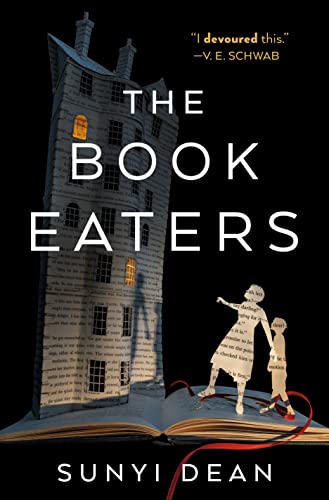
III. BOOK REVIEW – THE BOOK EATERS | |
|
By Samantha Whaley
The Book Eaters by Sunyi Dean is, in my opinion, a most unique and meaningful novel. The book follows Devon, our protagonist, who was raised as a part of The Family, a group of book eaters that live on the outskirts of human society, just out of sight. Devon’s family are just as they sound, people who sustain themselves by eating books and drinking ink tea. With every book they eat, a book eater will absorb the contents of their meal, then knowing whatever story is written amongst the pages by heart.
The novel alternates between a storyline in the past and present. Through descriptions of Devon’s childhood, we learn of a young girl with a rebellious spirit and a knack for critical thought, who questions the fairy tales that she has been fed and who longs for a different story. In the present-day, we are met with a grown-up Devon, a mother who fights to protect her son, a young boy with a hunger for neither books, nor human food, but for human minds, all the while wondering if there are any moral limits to a parent’s unconditional love.
This novel is dark, haunting, defiant, and hopeful, it is a story that interrogates the belief that anyone can be an entirely good person, and expertly exemplifies the power of the written word. This is a story worth taking a bite of!
| |
(i) RECTIFICATION OF INSTRUMENT THAT DID NOT ACCURATELY REFLECT PARTIES’ AGREEMENT | |
|
By Albert H. Oosterhoff
1. Introduction
In the last few years, it has become abundantly clear that taxpayers cannot resort to equity to engage in retroactive tax planning. Thus, the equitable remedies of recission and rectification are unavailable to taxpayers if they want to change their prior agreement when it has led to unintended tax consequences. This is clear, inter alia, from the following cases: Canada (Attorney General) v Fairmont Hotels Inc[1] and its companion case, Jean Coutu Croup (PJC) Inc v Canada (Attorney General),[2] and from Canada (Attorney General) v Collins Family Trust.[3] However, these cases do permit these remedies to be used, even to avoid adverse tax consequences, if the parties satisfy the requirements for those remedies as set out in Fairmont, which are summarized below. Indeed, in subsequent cases courts have granted rectification in tax cases when those requirements have been met.[4] The more recent case, Slightham et al v AGC[5] is another such case and is worth a closer look.
2. Facts
The Applicants, Jeffrey and Christopher Slightham, and their mother, Wendy, were the shareholders of two-family trusts. In 2016 they reorganized their shareholdings in a family operating company, Signature, to implement an estate freeze and allow Signature to pay or reduce surplus assets in a tax-efficient way. As part of the process, a new company, Holdco, was created and designated as a beneficiary of the Trusts, and the Trusts would own the common shares of Holdco.
The Reorganization also accommodated the potential future sale of Signature, which could qualify Jeffrey and Christopher for an exemption (the lifetime capital gains exemption (‘LCGE’) under the ITA if and when they sold their shares in Signature in the future. The LCGE allows for a tax exemption of up to $890,000 of proceeds of sale of the shares of qualifying corporations, provided that all or substantially all of the fair market value of the corporation’s assets are used principally in an active business carried on primarily in Canada. The phrase ‘all or substantially all’ is generally considered to mean 90% or more. To meet the 90% test at the time of sale, a corporation can reduce its surplus assets, for example by paying excess cash in form of bonuses or dividends.
The parties drafted the Trust Deeds to take advantage of section 75(2) of the Income Tax Act,[6] the ‘Attribution Rule’ that applies when amounts received from a beneficiary of a trust may be paid out to that beneficiary. To prevent an inadvertent triggering of the rule the Trust Deeds provided that Holdco would not be entitled to receive any income or capital derived from itself. However, the Trust Deeds contained a drafting error. In addition to the prohibition against payment to Holdco of income or capital derived from itself, it also provided that no portion of the annual net income derived from Signature should be paid to Holdco. The latter erroneous addition was contrary to the parties’ intention and agreement. Several years later, the error was discovered when Signature paid dividends to the Trusts, which the Trusts then distributed to their beneficiary Holdco. Holdco then claimed the intercorporate dividend deduction on the amount it received pursuant to section 112(1) of the ITA. The Canada Revenue Agency (‘CRA’) reassessed the Trusts because the Trust Deeds prohibited the distribution of dividends from Signature to Holdco. This meant that the Trusts had to pay tax on the dividends received from Signature.
The Applicants filed Notices of Objection and informed the CRA that it intended to bring an application for rectification. Then it brought this application to have the Trust Deeds rectified to fix the drafting error by deleting the offending words. The Attorney General on behalf of the CRA had taken the position that it would accept changes to the Trust Deeds only if made pursuant to a court order. Accordingly, the Attorney General did not oppose the remedy sought.
3. Analysis and Judgment
Justice Osborne began the analysis by considering the test for rectification. At paragraphs 14 and 38 of Fairmont, the Supreme Court listed the four requirements that must be satisfied before rectification can be granted:
a. the parties had reached a prior agreement whose terms are definite and ascertainable;
b. the agreement was still effective when the instrument was executed;
c. the instrument failed to record accurately that prior agreement; and
d. if rectified as proposed, the instrument would carry out the agreement.
His Honour noted that rectification, being an equitable remedy, is discretionary. It permits the court to give effect to the true intentions of the parties if the instrument giving effect to their agreement incorrectly expresses that agreement. In other words, it permits the court to ensure that the parties’ agreement and the instrument they used to give effect to their agreement correspond. In Fairmont and Collins, the parties sought to rectify their agreement because it resulted in adverse tax consequences. But rectification cannot be used to change the agreement.
The onus is on the parties to establish by clear and convincing evidence that the substance of their intention was not accurately reflected in the Trust Deeds. The Applicants submitted affidavits from: the three Trustees, the original settlor of the Trusts, the tax lawyer who drafted the Trust Deeds, the former partner in the same law firm who was involved in the preparation of the Trust Deeds and the Reorganization documents, and the Chartered Professional Accountant and Certified General Accountant who provided accounting services to the family and advice with respect to the Reorganization. Justice Osborne noted that the evidence was clear, consistent, and provided by all the parties and their professional advisors. Moreover, it was corroborated by the contemporaneously created documents, as well as by the subsequent conduct of the parties and their professional advisors. Consequently, he was satisfied on the basis of this evidence that all four of the Fairmont requirements were satisfied. In particular it was clear that the prior agreement did not restrict the Trusts from being able to pay amounts received from Signature to Holdco.
His Honour emphasized in paragraph 50 that the rectification remedy ‘is limited to cases where a written instrument has incorrectly recorded the parties’ antecedent agreement. Rectification is not available where the basis for seeking it is that the one or both of the parties wishes to amend not the instrument recording their agreement, but the agreement itself.’
Since the parties did not seek to amend their original agreement but only the instrument that was inconsistent with the agreement, the case was distinguishable from Fairmont and from Collins. Accordingly, by an order with immediate effect, the court ordered that the offending provisions in the Trust Deeds were rectified.
---
[1] 2016 SCC 56 (‘Fairmont’).
[2] 2016 SCC 55.
[3] 2022 SCC 26 (‘Collins’).
[4] See, e.g. 5551928 Manitoba Ltd v Canada (Attorney General), 2018 BCSC 1482, affirmed 2019 BCCA 376; and Sleep Country Canada Holdings Inc and Sleep Country Canada Inc v Attorney General of Canada, 2022 ONSC 6103.
[5] 2023 ONSC 6193.
[6] RSC 1985, c 1 (5th Supp) (‘ITA’).
| |
(ii) BREACH OF FIDUCIARY DUTY BY EXECUTOR | |
|
By Albert H. Oosterhoff
1. Introduction
It is of course well-known that executors are fiduciaries and owe fiduciary duties to the estate and the beneficiaries. In the recent case, Spisak v Spisak,[1] Justice Dietrich provides a detailed description of the consequences of a breach of those duties.
2. Facts
The testator died in 2020, survived by his two children, Steven and Karen. In his 2016 will the testator named Karen his executor and directed that the residue of his estate be divided equally between the two children. Karen delayed administration of the estate and failed to respond promptly to Steven’s questions about the estate and his request for a copy of the will. More than 15 months after her father’s death, Karen told Steven that there were no assets in the Estate for distribution to the beneficiaries. She claimed that all the deceased’s assets had been held jointly with her in a joint bank account that passed to her by right of survivorship.
Steven brought an application in which he sought: (a) an order that Karen was in contempt of court for failing to obey court orders; (b) an order for damages for breach of trust, breach of fiduciary duty, and conversion; (c) an order for punitive damages; and (d) an order for costs on a full indemnity basis.
Karen did not file any responding material to the application, although ordered to do so twice. She did send an unsworn 18-page letter on which Steven cross-examined her. She undertook to convert the letter into a sworn affidavit but never did so. She did inform Steven in an email that the deceased’s remaining investments were transferred into the joint account, that it was used to set him up for palliative care, and that the deceased instructed her to use funds in the joint account to assist her with her higher expenses that she incurred, inter alia, to rent a house in which the deceased lived with her until his death. In another email she stated that her dad had capacity to make those decisions and that she could produce a capacity assessment if necessary. The court ordered her to produce the assessment, but she failed to do so and in fact there was no such assessment. Karen did provide Steven with statements for the joint account, as well as a letter in which she admitted to having struggled with her gambling addiction and to withdrawing funds from the joint account for her own purposes. She continued to make withdrawals from the account after the deceased died. At her cross-examination, in addition to undertaking to convert her letter into a sworn affidavit, she also undertook to provide personal bank statements to identify withdrawals from the account. She did ultimately produce the statements.
3. Analysis and Judgment
Justice Dietrich began her analysis by summarizing the law on three points: (a) the presumption of resulting trust that arises when a parent gratuitously transfers property to her adult child and the obligation of the child to rebut the presumption by clear, convincing, and cogent evidence;[2] (b) the nature of a fiduciary duty, which, as the Supreme Court of Canada described in Alberta v Elder Advocates of Alberta Society,[3] requires ‘that the fiduciary act with absolute loyalty toward the beneficiary in managing the beneficiary’s affairs’; and (c) the requirement imposed by section 13 of the Evidence Act[4] that in an action by or against heirs, next of kin, executors, administrators or assigns of a deceased person, an opposite or interested party cannon obtain judgment on his own evidence about a matter that occurred before the death of the deceased person, unless the evidence is corroborated by other material evidence.
Her Honour found that Karen failed to meet the onus on her to rebut the presumption of resulting trust. She led no sworn evidence in support of a gift of the moneys in the joint account or a gift of the right of survivorship. Thus, she held the account on a resulting trust for the estate.
Next, her Honour found that Karen breached her fiduciary duty to the deceased. Although she may not have been her father’s attorney for property (no power of attorney having been produced), she was a joint holder of the joint account and thus had power over it. Further, she was a fiduciary because she held the property under a resulting trust for her father. She breached her fiduciary duty to her father by making significant transfers and withdrawals from the joint account for her own benefit. Her evidence to the effect that her father approved some of the transfers was uncorroborated and thus did not meet the section 13 test. Based on incomplete bank statement, Justice Dietrich found that, as a minimum, Karen converted more than $155,000 of the deceased’s property to her own and that a significant portion of this amount was used to support Karen’s admitted addiction to gambling.
Her Honour then went on to address Karen’s fiduciary duty to Steven. As executor she had a duty to act in the best interests of the beneficiaries. Thus, she had an obligation to look after the property of the estate and to keep proper records. She breached her duty to Steven by failing to respond promptly to his inquiries and give him a copy of the will. She also led him to believe that he could expect a report on her administration as soon as she recovered from her illness, but she did not provide such a report. Instead, as he discovered, she had taken significant amounts out of the joint account for her own benefit.
Justice Dietrich next considered what remedy should be granted for the breaches of Karen’s fiduciary duty to her father and her brother. That remedy in this case is equitable compensation, which the Ontario Court of Appeal described in Waxman v Waxman[5] as: ‘[t]he basic rule of equitable compensation is that the injured party will be reimbursed for all losses flowing directly from the breach’. Thus, the court ‘may remedy the breach’ by putting the ‘beneficiaries in the position they would have been' in if the breach had not occurred. Her Honour held that it was fair and appropriate to direct that Karen pay Steven one-half of the estimated amount that she converted as damages [compensation], since Steven would have been entitled to that amount as one of the two beneficiaries of the estate. She also ordered that Steven was entitled to additional damages for one-half the amount remaining in the joint account at the time of the deceased’s death.
Justice Dietrich declined to award punitive damages against Karen. She was not indifferent to the use of estate moneys for her own use, but she used the moneys to support her gambling addiction and was aware that that was wrong. She also declined to find Karen in contempt for failing to comply with two court orders. She did ultimately produce bank statements and although she did not file a responding record, there was no longer any useful purpose to have her to do so at this stage.
Nonetheless, her Honour found Karen in contempt and held that it was therefore appropriate to make an order requiring her to pay Steven’s full indemnity costs.
---
[1] 2023 ONSC 122.
[2] Pecore v Pecore, 2007 SCC 17.
[3] 2022 SCC 24 at para 22.
[4] RSO 1990, c E.23.
[5]2024 CarswellOnt 1715 (CA).
| |
(iii) THE DISTINCTION BETWEEN A VOID AND VOIDABLE MARRIAGE IN HONG KONG | |
|
In the High Court decision, in the matter of the Estate of Lui Kwan Cheung,[1] the Hong Kong Special Administrative Regional Court of Appeal addressed whether the mental incapacity of a party to a marriage renders a marriage void or voidable. In Cheung, the Hong Kong Court of Appeal upheld the lower court decision which found that such a marriage is voidable only, and not void. This is an important and consequential distinction in capacity to Marry proceedings.
The marriage in question was alleged to be predatory in nature by the family of the deceased. I have previously written extensively on predatory marriages and the capacity to marry.[2] However, what is unique about the decision in Cheung is its detailed and fulsome historical analysis regarding the history of legislative rules concerning provisions for a voidable marriage based on unsoundness of mind, or mental disorder.
Background
The matter concerns Lui Kwan Cheung (the “Deceased”) who was born in 1929 and died on July 31, 2014, at the age of 85. The nephew of the Deceased (the “Nephew”) claimed the Deceased made a will in 1994 (the “1994 Will”) which names he and other family members as beneficiaries.[3]
Madam Ng (the “Defendant”) claims to be the widow of the Deceased, pursuant to their purported marriage on August 1, 2010 (the “2010 Marriage”). The Defendant also claims the Deceased made a will on August 21, 2010 (the “2010 Will”), appointing her sole executrix and beneficiary. On December 1, 2015, she was granted probate of the 2010 Will.[4]
The Nephew claims that the Deceased never married and had no children. He also claims the Deceased did not in any event have the requisite capacity to enter into the 2010 Marriage nor, to execute the 2010 Will, which he claims was void and/or a product of the undue influence of the Defendant.
In 2019, the Nephew, commenced proceedings against the Defendant. Amongst his allegations, was one that related to another action, where the Defendant had previously stated in June 2010 that the Deceased had been diagnosed as suffering from an advanced state of Alzheimer's and incapable of managing his daily business.[5]
The Nephew’s claim was that the marriage was void, not just voidable. The Defendant issued a summons for an order that the Nephew’s claim be struck on the grounds that annulment of the 2010 Marriage is barred under s.20(4) of Hong Kong’s Matrimonial Causes Ordinance (“MCO”). Here, it was argued that the court shall not grant a decree of nullity on the grounds that a marriage is voidable unless the court is satisfied that the proceedings were instituted within three years from the date of the marriage.
In a decision dated August 11, 2020, the Nephew’s pleading seeking relief that the 2010 Marriage was invalid and/or null and void, was struck. The Nephew appealed. The singular issue on appeal before the court was whether it is arguable that the 2010 Marriage was void. In upholding the lower court decision that the 2010 marriage was voidable and not void, the court provided an extensive review of the relevant common law, and statutory legal developments in both England and Hong Kong.
At the heart of the appeal was the construction of s.20 of the MCO and the differences between the original s.20 (which applies to marriages that took place before July 1, 1972) and the current s.20. The Nephew’s position was that references to “unsound mind,” “mental disorder,” or “insanity” under the original s.20 as grounds for rendering a marriage voidable do not have the effect of displacing the general law that a marriage is void where one party lacks mental capacity to understand the nature of marriage.
The Decision
The court looked at the distinction between the grounds for a declaration that a marriage be void, and grounds for a voidable marriage. It was held that pursuant to s.20(1) of the MCO, there are no grounds upon which a marriage shall be void for mental incapacity. Rather, s.20(2) of the MCO sets out the grounds on which a marriage is voidable, including expressions relating to mental incapacity, such as “unsoundness of mind” and “suffering … from mental disorder.”[6]
The Nephew, through his counsel, relied on s.20(1)(b) of the MCO for his proposition that the “marriage is otherwise invalid by the law of Hong Kong,” and submitted that there is a common law rule that a marriage is void where one of the parties lacks the mental capacity to understand the nature of marriage at the time of its celebration.[7] In response to this submission, the court engaged in the review of the common law rule and its position in both England and Hong Kong.
The Common Law Rule
The court noted that the Common Law Rule originated from a doctrine of canon law which was adopted by ecclesiastical law,[8] and explored in the early English authorities of Turner v. Meyers[9] and Browning v. Reane.[10] Similarly, in 1857 the Matrimonial Causes Act (“MCA 1857”) was introduced which had the effect of transferring the jurisdiction exercised by ecclesiastical courts in relation to nullity proceedings to the common law courts. The MCA 1857 did not, however, specify any statutory grounds upon which a marriage may be rendered void or voidable.[11]
Statutory Grounds of Voidability
In 1937, s.7 of the Matrimonial Causes Act 1937 (“MCA 1937”) provided, for the first time, statutory authority for the grounds upon which a marriage shall be voidable.[12] Section 7(1)(b) MCA 1937 eventually became s.8(b) Matrimonial Causes Act 1950.
In 1970, the Law Commission in England published its 1970 Law Commission Report which recommended a comprehensive codification of the law on nullity.[13] Based on these recommendations, the Nullity of Marriage Act 1971 (“NMA 1971”) was enacted. Section 2 provides that a marriage shall be voidable on several grounds.[14] Section 2(c) of the NMA 1971 eventually became s.12(c) Matrimonial Causes Act 1973.
Hong Kong’s Position
The first statute in Hong Kong providing for divorce, was the Divorce Ordinance 1932 (“DO 1932”). Section 3 of DO 1932 provided that, “subject to the provisions in this Ordinance”, the court shall in all suits and proceedings hereunder act and give relief on principles which in the opinion of the court are, as nearly as may be, conformable to the principles on which the High Court of Justice in England for the time being acts and gives relief in matrimonial proceedings.[15]
The DO 1932 provided the court with the jurisdiction to declare a marriage void (as opposed to voidable). Importantly, s.13(c) of the DO 1932 provided for the two causes of mental incapacity rendering a marriage void under Common Law Rule (pursuant to Browning and Turner).
The court in Cheung did not accept the Nephew’s alternative argument that the Common Law Rule was incorporated and formed part of Hong Kong law by virtue of s.3 DO 1932. Rather, the court in Cheung, held that while the Common Law Rule was codified in s.13(c) DO 1932 in Hong Kong, it ceased to exist when s.13(c) of the DO 1932 was repealed. The court did, however, acknowledge that when the Hong Kong legislature adopted the provisions in NMA 1971, a comprehensive statutory code setting out the grounds on which a marriage shall be voided in Hong Kong was implemented.
Disposition
The court held that the lower court Judge was correct to strike out the parts of the Nephew’s Statement of Claim which sought to plead that the 2010 Marriage was null and void on the ground that the Deceased had no mental capacity at the time of the marriage.[16]
The appeal was dismissed with an order nisi that the costs of the appeal be paid by the Plaintiff to the Defendant.
Concluding Comments
Despite clear evidence which indicated that the Deceased was likely incapable of contracting into a marriage, the court in Cheung did not grant the Nephew standing to challenge the marriage. This case turned on the ever-important distinction between being able to discern whether a marriage could be characterized as a void, or voidable marriage.
The court was live to the fact that the Deceased suffered from mental deficits which would have made the marriage voidable however was not of the view that the 2010 Marriage was null and void. In this circumstance, pursuant to s.20(4) of the MCO, the Deceased would have had to annul the marriage within three years of entering it.
With the number of predatory marriage cases on the rise, it is always interesting to see how these complex matters are treated in different jurisdictions and to compare the different statutes which are relevant to marriages and the determination of the requisite capacity to marry.
---
[1] CACV 418/2020, [2023] HKCA 865, on appeal from [2020] HKCFI 1243 [Cheung].
[2] See WEL Partners, “Predatory Behaviours and the Vulnerable Client: A Quiet Welfare Disaster?” prepared for the STEP Global Congress, London, United Kingdom, July 7-8, 2022, available online: http://welpartners.com/resources/WEL-STEP-Congress-Predatory -Marriages.pdf; See also Albert Oosterhoff, “Curbing the Scourge of Predatory Marriages by Legislation” (November 12, 2019), WEL Partners Blog, accessed online: http://welpartners.com/blog/2019/11/curbing-the-scourge-of-predatory-marriages-by-legislation/
[3] Cheung, supra note 1 at paras 26-27.
[4] Ibid., at para 27.
[5] Ibid., at para 30.
[6] Ibid., at para 42.
[7] Ibid., at para 43.
[8] See The Law Commission’s Report on Nullity of Marriage (1970) §11.
[9] (1808) Hagg Con 414 [Turner]. In Turner, a husband, after recovering from insanity, brought proceedings to annul a marriage on the ground of his insanity at the time of the marriage. The court in Turner pronounced the marriage null and void and Sir William Scott held that “a party may come forward to maintain his own past incapacity” and that “a defect of incapacity invalidates the contract of marriage” for “want of consent.”
[10] (1812) 2 Phill Ecc 69 [Browning]. Browning, was a case which concerned a husband who sought administration of the effects of his wife who died intestate. The wife’s nephew alleged that at the time of the marriage, the deceased was incapable of contracting a marriage due to her mental deficiency. In Browning, Sir John Nicholl referred to marriages contracted by the antiquated terms ‘idiot’ and ‘lunatic,’ which are unacceptable terms today but commonplace in the 19th century. Sir John Nicholl held that these marriages are absolutely void.
[11] Cheung, supra at paras 45-49.
[12] Section 7(1)(b) of the MCA 1937 provided that “in addition” to any other grounds” on which a marriage is by law “void or voidable,” a marriage shall be voidable on the ground that either party to the marriage was at the time of the marriage “of unsound mind” or a “mental defective” within the meaning of the Mental Deficiency Acts 1913 or 1927.
[13] In §96 of the 1970 LC Report, the LC recommended that the law relating to nullity “should be incorporated in a comprehensive statute setting out the grounds on which a marriage governed by English law is (i) void or (ii) voidable).
[14] Including, “that either party to the marriage did not validly consent to it, whether in consequence of .. unsoundness of mind or otherwise” or “that at the time of the marriage either party, though capable of giving a valid consent, was suffering (whether continuously or intermittently) from a mental disorder within the meaning of the Mental Health Act 1959 of such a kind or to such an extent as to be unfitted for marriage.
[15] Cheung, supra at para 61.
[16] Cheung, supra at para 91.
| |
(iv) PETS AND ESTATES: THE RECENT DECISION OF CARVALHO V. VERMA | |
|
By Gabriella Banhara
Carvalho v. Verma, 2024 ONSC 1183
Recently, estate litigation has been embroiled in scenarios involving pets and what results of such pets respecting their care and ownership after the owner passes away. Legally, pets are classified as property.[1] Some of the statistics shared in the decision include:
“Eight in ten of the pet owners … (83%) consider their pet to be a family member; only 15 percent said they love their pet as a pet rather than as a family member.”
This research echoes one important point; the high level of care and importance to which Canadians place on their pets. In other words, estate planning for pets should be a consideration for all pet owners. Legal strategies include a pet trust, which allows for money to be held in trust to allow for the payment of food and care after the owner’s death.
The following case of Carvalho v. Verma[2], 2024 ONSC 1183 (“Carvalho”) exemplifies what may occur when pets are not considered in a Will or Codicil. Carvalho outlines the legal test that a litigant will have to pass in order to claim ownership of such pet. In Carvalho, the estate was able to successfully claim ownership of the dog.
Facts
In Carvalho, Mr. Carvalho (the “Deceased”) and his ex partner, Ms. Verma (the “Respondent”) had been in a relationship years before the Deceased’s death.[3] While still together, the Deceased and the Respondent bought a dog in February of 2022, Rocco Junior (“Rocco”), during a vacation together in Florida. At the time of the Deceased’s death in November of 2022, Ms. Verma and the Deceased were no longer in a relationship or romantically involved. Shortly after the Deceased’s death, Ms. Verma took Rocco into her care.
The Deceased divided his estate amongst his two sisters, and his former romantic partner Ms. Vasilevich. The Deceased then updated his Will by way of Codicil, slightly changing the distribution amongst the three parties. Neither the Will, nor, the Codicil mentioned Rocco.
Ms. Carvalho (the “Applicant”), one of the Deceased’s two sisters, was appointed as the Estate Trustee of the Deceased’s estate. The Applicant brought an application to the court, requesting a declaration that Rocco was owned by the Deceased, and should therefore be “transferred to Mr. Carvalho’s estate upon his passing and must be returned to the estate trustee”.[4]
The Position of the Parties
As previously mentioned, the Applicant stated that Rocco belonged to the Deceased at the time of his death, and therefore formed a part of the estate, and must be returned. On the other hand, the Respondent is of the position that she owns Rocco or, in the alternative, Rocco was a gift from the Deceased. Lastly, in the “further alternative” the Respondent argued the doctrine of promissory estoppel.
In relation to pets and litigation the Court stated[5]:
[22] Having summarized the positions of the parties, it is worth noting what this case is not about. This case is not about the extent of the love and devotion to Mr. Carvalho and/or Rocco felt by Ms. Carvalho and/or Ms. Verma. This case is also not about the disdain that the parties felt for each other. Litigants are entitled to a fair hearing and impartial adjudication from this court. However, the court does not have to agree with or endorse the motivations of the parties[6].
Additionally, the court asserted it does not take into account or decide “who loved whom more.”[7]
The Issues
The court identified three issues in this case: who had ownership of Rocco Junior and did the Deceased gift Rocco to the Respondent? Respecting the first issue, the court followed the Coates v. Dickson[8] decision and considered the following factors:
a. Whether the animal was owned or possessed by one of the people before the relationship began;
b. Any express or implied agreement as to ownership, made either at the time the animal was acquired or after;
c. The nature of the relationship between people contesting ownership at the time the animal was first acquired;
d. Who purchased and/or raised the animal;
e. Who exercised care and control of the animal;
f. Who bore the burden of the care and comfort of the animal;
g. Who paid for the expenses related to the animal’s upkeep;
h. Whether at any point the animal was gifted by the original owner to the other person;
i. What happened to the animal after the relationship between the litigants changed; and,
j. Any other indicia of ownership or evidence of agreement relevant to who has or should have the ownership of the animal.[9]
The court further discussed the following in it’s analysis: The Deceased purchased Rocco with his own cash and paid for a majority of the services pertaining to the dog. The only substantial bill that the Respondent contributed towards Rocco’s expenses was an emergency vet bill of $2,200.[10] Despite the Respondent’s contribution, it was clear from the Applicant’s evidence that Rocco lived with the Deceased. Text messages between the Respondent and the Applicant revealed the Respondent asking permission to visit Rocco at the Deceased’s home. As for factor (i), the Respondent asserted that the Deceased intended to gift the dog to her after the Deceased’s death, however, the Respondent was unable to provide evidence of such assertion. On this note, the court stated:
[43] Given the specific facts of this case (Mr. Carvalho passing away as opposed to a couple separating) this factor is perhaps less important than in family law cases in which two people separate. However, it is notable that there is no evidence of any intention on the part of Mr. Carvalho to bequeath Rocco Jr. to Ms. Verma at any time. At the time of Mr. Carvalho’s death, there is no evidence that the couple were common law spouses.[11]
As for the second issue, the court listed three essential elements of a legally valid gift that must be established on a balance of probabilities:
a. An intention to make a gift on the part of the donor without consideration or expectation of remuneration;
b. An acceptance of the gift by the donee; and
c. A sufficient act of delivery or transfer of the property to complete the transaction.[12]
Despite the contradictory evidence, there was proof that “Mr. Carvalho referred to Rocco as a gift for Ms. Verma (first factor) and that Ms. Verma accepted in the first instance (second factor)”[13]. Regardless, the court ruled that the test failed at the third factor, because the Deceased never transferred Rocco to the Respondent, and maintained “possession and control” of the dog until his death.
Lastly, as for promissory estoppel, the Respondent asserted that the Deceased’s estate should not be able to use the defense of promissory estoppel because it would be “unconscionable to rip this dog from her hands and provide it to the estate trustee as if he were nothing but a piece of furniture”.[14] The court failed to address this assertion because the Respondent failed, in the first place, to meet the elements of promissory estoppel defense. One of the three elements of such test included demonstrating that the “promise or assurance be intended to affect that relationship and to be acted on”.[15] The Respondent failed to demonstrate there was a promise or assurance because there was no evidence that the Deceased gifted or promised to give Rocco to the Respondent.
Summary
The court declared that the Deceased had ownership of Rocco at the time of his death, and that the Respondent had to return Rocco to the Applicant, who was the Estate Trustee of the Deceased. This decision sheds light on the various factors and legal tests a court will consider during litigation where a pet owner fails to adequately plan for the ownership of a pet upon death.
---
[1] The decision of Brown v Larochelle[1], 2017 BCPC 115 (“Brown”) from British Columbia, legally defines pets as property. Brown quotes the American decision of Coulthard v. Lawrence, a custody matter where pet ownership was discussed at length.
[2] Carvalho v. Verma, 2024 ONSC 1183 (“Carvalho”)
[3] Ibid at para 2.
[4] Ibid at para 5.
[5] Ibid at at para 21.
[6] Ibid at at para 22.
[7] Ibid at at para 23.
[8] Duboff; Coates v. Dickson, 2021 ONSC 992
[9] Ibid at para 26.
[10] Ibid para at 43.
[11] Ibid para at 43.
[12] Ibid para at 49.
[13] Ibid para at 14.
[14] Ibid para at 56.
[15] Ibid para at 57.
| |
(v) PARTITION OR SALE OF LAND IN ONTARIO | |
|
By Oliver O'Brien
In civil litigation, there are sometimes disputes between parties who own land together. When co-owners of property cannot agree and co-ownership ceases to be feasible, one remedy is to seek a court order for the partition and sale of the land.
What is a Partition or Sale?
Rule 66.01(1) of Ontario’s Rules of Civil Procedure states that anyone who is entitled to do so can commence an application or action to partition land under the Partition Act.[1]
The Partition Act states:
Who may be compelled to make partition or sale
2 All joint tenants, tenants in common, and coparceners, all doweresses, and parties entitled to dower, tenants by the curtesy, mortgagees or other creditors having liens on, and all parties interested in, to or out of, any land in Ontario, may be compelled to make or suffer partition or sale of the land, or any part thereof, whether the estate is legal and equitable or equitable only. [emphasis added]
Who may bring action or make application for partition
3 (1) Any person interested in land in Ontario, or the guardian of a minor entitled to the immediate possession of an estate therein, may bring an action or make an application for the partition of such land or for the sale thereof under the directions of the court if such sale is considered by the court to be more advantageous to the parties interested.
When proceedings may be commenced
(2) Where the land is held in joint tenancy or tenancy in common or coparcenary by reason of a devise or an intestacy, no proceeding shall be taken until one year after the decease of the testator or person dying intestate in whom the land was vested.
In Davis. v. Davis,[2] the Ontario Court of Appeal held there is a prima facie right of a joint tenant, tenant in common or coparcener to the partition or sale of land and a corresponding obligation to permit partition or sale. Only in exceptional circumstances will a joint tenant or tenant in common be denied their request that a property be partitioned or sold.[3]
A court has the discretion to refuse a request for partition or sale of land when the party requesting partition or sale has engaged in “malicious, vexatious or oppressive conduct”.[4] For instance, the Ontario Court of Appeal has stated:
"oppression" properly includes hardship, and a judge can refuse partition and sale because hardship to the co-tenant resisting the application would be of such a nature as to amount to oppression.[5]
The onus is on the party opposed to the request to established wrongful conduct – just because a party requests a partition or sale does not equate to bad faith or malicious conduct.[6]
Ultimately, the court has broad discretion and the power to make all allowances and give such directions that will result in equity to all the parties involved.[7]
Partition or Sale process
Once an order for partition or sale is made, a judge can direct that the mechanics of the sale be determined by a referee (such as another judge, an association judge, or private arbitrator). The information found in Ontario court Form 66A gives direction to the referee as to what they need to determined before allowing the distribution of the sale proceeds.[8]
Rule 66.03 of the Rules of Civil Procedure states that “all money realized in a partition proceeding from sale of land shall forthwith be paid into court, unless the parties agree otherwise, and no money shall be distributed or paid out except by order of a judge or, on a reference, by order of the referee”[9].
In the recent case of Peraziana v. Savage,[10] the court ordered that the estate of the deceased was to facilitate the sale of the property and distribute the proceeds, less any liabilities owing, in the ordinary course of the administration of the estate.
Case law
The partition and sale of a property was recently ordered in Sauve v. Davison.[11] In this case, the deceased died without a Will. The deceased held an interest in a property with her three brothers, which they held as tenants in common.
The deceased’s surviving spouse, acting as estate trustee, approached the three brothers and inquired if they were interested in purchasing the estate’s share of the property. Following no material response, he commenced an application for partition and sale.
The court noted that the deceased’s estate, as co-owner of the property, has a prima facie right to an order for partition and sale. The court further noted that none of the three brothers had responded to the application, nor was there evidence of malicious, vexatious or oppressive conduct. Accordingly, the court ordered that the property be partitioned and sold.
In Gartree Investments Ltd. v. Cartree Enterprises Ltd.,[12] the court refused a request for partition and sale. Gartree Investments Ltd held an interest in four Toronto properties and requested that they be partitioned and sold. The two remaining co-owners offered to buy-out Gartree Investments Ltd’s share of the properties for 15% over market value. This offer was declined.
The court found that Gartree Investment Ltd’s request was both vexatious and malicious. They were found to have abused their prima facie right under the Partition Act in an attempt “to thwart the legitimate concerns of the majority of co-owners”. This was sufficient reason for the court to exercise its discretion to refuse the application for partition and sale.
Summary
Obtaining an order for the partition or sale of a property is the prima facie right of any property owner in Ontario. However, this right is subject to the conduct of the parties involved and the ultimate discretion of the court.
The partition or sale of property is often seen in estate disputes where beneficiaries jointly inherit real property but the parties are in dispute and there is no agreement on the management of the property.
---
[1] Rules of Civil Procedure, RRO 1990, Reg 194, Rule 66.02.
[2] Davis. v. Davis, 1953 CanLII 148 (ON CA), [1954] O.R. 23 (C.A.), at p. 29; See also, Inniss v. Blackett, 2022 ONCA 166, at para 23.
[3] Brienza v Brienza, 2014 ONSC 6942, Rennie v. Rennie et al., 2019 ONSC 2948, at para. 26; and Duong et al. v. Duong, 2021 ONSC 4627, at para. 7.
[4] Economopoulos (Re), 2014 ONCA 687 at para 89 and Peraziana v. Savage, 2024 ONSC 217, at para 129.
[5] Greenbanktree Power Corp. v. Coinamatic Canada Inc. (2005), 2004 CanLII 48652 (ON CA), 75 OR (3d) 478,
[6] Ghada Kassab v. Margaret Abrahem, 2021 ONSC 3770, at para 21.
[7] Mastron v. Cotton, 1925 CanLII 464 (ON CA), [1926] 1 D.L.R. 767 (Ont. S.C. App. Div.), at p. 768.
[8] Ghada Kassab v. Margaret Abrahem, 2021 ONSC 3770 (CanLII), at para 32.
[9] Rules of Civil Procedure, RRO 1990, Reg 194, Rule 66.03
[10] Peraziana v. Savage, 2024 ONSC 217, at para 129.
[11] Sauve v. Davidson, 2024 ONSC 2091 (CanLII)
[12] Gartree Investments Ltd. v. Cartree Enterprises Ltd., 2002 CanLII 49640 (ON SC)
| |
|
OBA Elder Law Day, Serving the Baby Boomer Generation: Your Aging Client Base
June 20, 2024
Speaker: Kimberly Whaley
ACFI Conference – Association of Certified Forensic Investigators of Canada
September 9-10, 2024, ACFI Fraud Conference
Fraud & Scams in Wills, Estates and POA’s
Speakers: Kimberly Whaley and Bryan Gilmartin
https://www.acficonference.ca/spring
| |
VII. IN CASE YOU MISSED IT - RECENT BLOG POSTS | |
Do you follow us on social media? Do you subscribe to our blog? We invite our subscribers to read our blog on-line or via a feed reader using our blog's RSS feed and to follow us on social media.
Newsletter Archive
WEL Blog
Online Connections
Sign Up for Our Newsletter
WEL Directory
| |
WEL NEWSLETTER April 2024, Vol. 14, No. 1 | | | | |