Fleet of the Future, the eyes and ears of Metro, and the latest on our budget | |
Welcome to Metro Express newsletter, an inside look at what’s going on at Metro! This semi-regular newsletter is full of information for customers, a look behind-the-scenes, fun facts, historical tidbits, and more.
Inside this issue:
- An exciting event where the public can check out the Fleet of the Future
- How Metro is fixing issues faster
- MTA’s Purple Line project and Red Line impacts
- A look at our successes one year into our latest strategic plan
- The latest on our budget and service plans starting in July
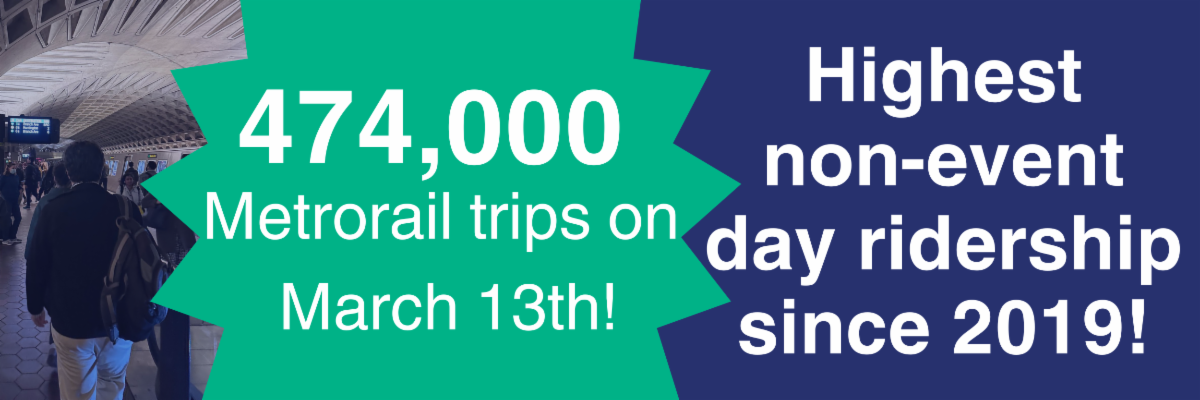
But first, a look at our increasing ridership!
| |
The mockup of Metro's new 8000-series train will soon be displayed on the National Mall for the public to tour and give feedback. New features include an open walkway between cars, more seating against the wall, and more open spaces for people who use mobility devices or have luggage or bikes. | |
Metro's Fleet of the Future is coming... | |
|
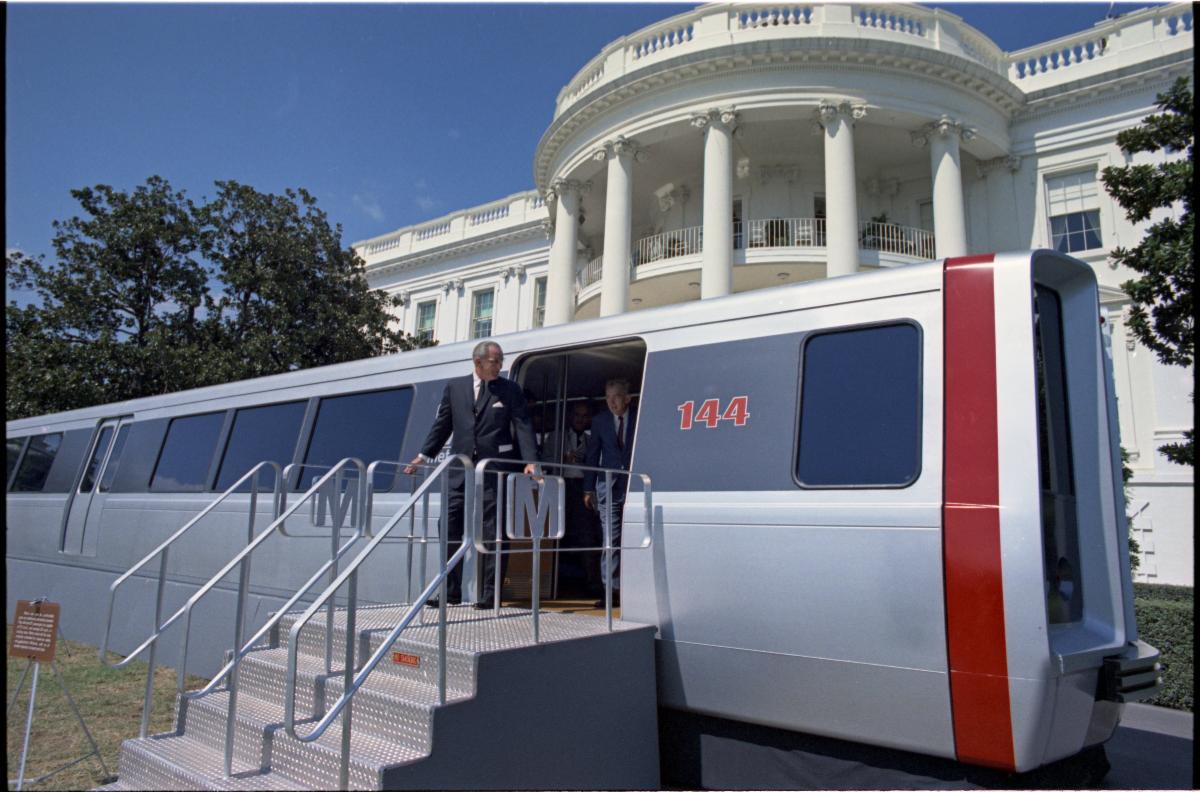
In 1968, Metro gave future customers a sneak peek at its first prototype railcar on the National Mall, the White House, and elsewhere across the National Capital Region -- years before the rail system opened.
More than 50 years later, we're bringing our train and bus of the future back to the National Mall so the public can get a glimpse.
The Fleet of the Future Expo, featuring a mock up of the upcoming 8000-series trains and our new electric buses, will be open daily from 9 a.m. to 5 p.m. March 20 through April 3. You can find it near 12th and Madison Drive NW, a short walk from the Smithsonian Metrorail station.
Visitors will be able to tour both vehicles, learn more about the design, and provide feedback. They can also view rare, historic photos of our old train and bus fleet, test their knowledge with a Metro history quiz, and take photos in a photo booth.
The 8000-series train features Metro's first open gangway design (a passageway for moving between two cars) which increases safety, passenger flow, and capacity. They also feature more seating along the walls to allow more standing room for passengers and dedicated spaces for people who use wheelchairs and bikes, strollers, and luggage. Technology is improved with larger and more visible digital information screens and more energy-efficient radiant heated floors.
Metro's new 60-foot electric buses have zero tailpipe emissions, which means improved air quality. They're also much quieter and have a smoother ride with less vibration since electric buses don't have an internal combustion engine. Improved customer amenities include digital passenger information screens, USB charging ports, and new fare boxes.
We hope to see you there!
| |
Faregates will be replaced in all 98 stations by this fall. Meanwhile, bus farebox replacement is more than 50% complete and should be done by fall. | |
New issue reporting system allows Metro workers to create fix-it tickets more quickly | |
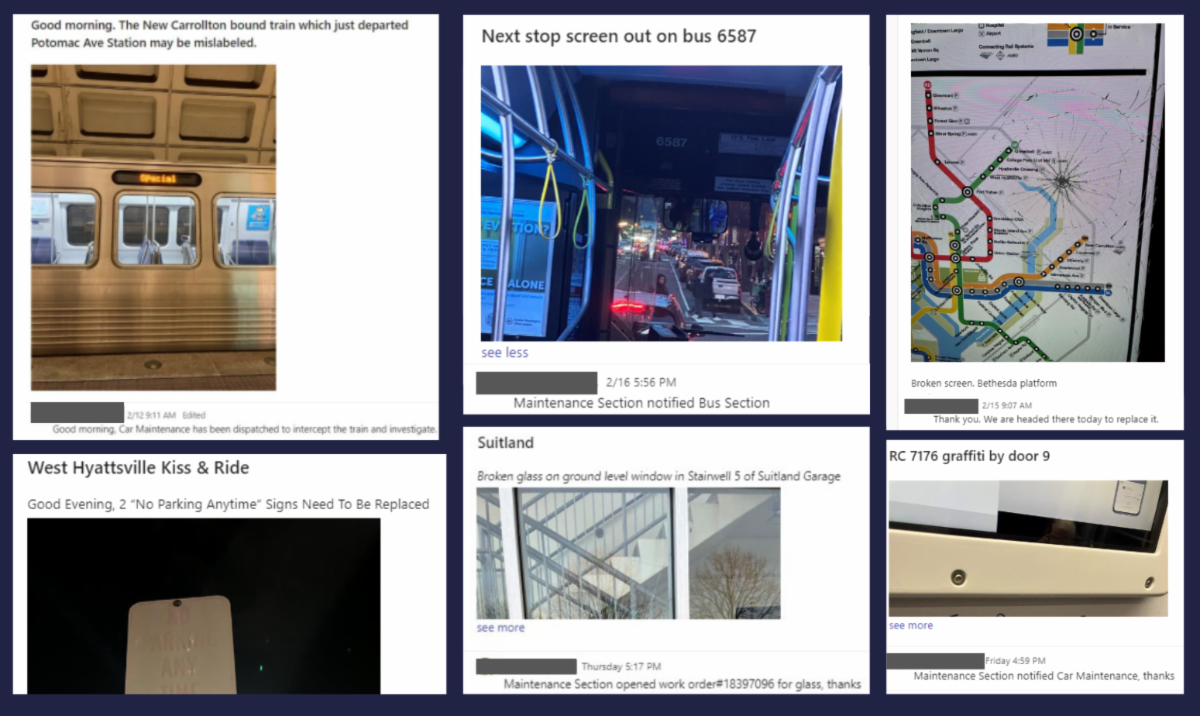
Metro workers are reporting everything from burnt out light bulbs to faded signs to trash left behind on trains and buses. Our new system enables us to address issues faster. | |
|
A new maintenance channel is empowering all Metro employees to report issues across the bus and rail system to get them resolved faster.
Metro has an incredible amount of property to maintain -- nearly 100 stations, 1,500 buses, dozens of facilities, and more. The goal is to use all our eyes and ears to foster a culture of continuous improvement and a sense of ownership over the system. Those values are part of our Strategic Transformation Plan, Your Metro, the Way Forward, and our guide to delivering the best service we can for customers.
The maintenance reporting channel has more than 630 members from all over the organization, from management to office workers to front-line staff. They've reported and fixed more than 500 issues – including broken glass, out of service elevators, and trash – in just the last three months.
The concept is simple: when employees spot an issue, they snap a picture, and report it through the Teams app. The channel is monitored by the maintenance and customer service teams in our Metro Integrated Command and Communications Center. Once issues are posted on the channel, maintenance personnel follow a process to address identified issues, then close the loop on items in the chat thread to provide awareness of the resolution.
The channel gives Metro employees a direct way of identifying any issues they encounter while riding the system We see this as a big asset for our front-line team members as we demonstrate that we are all responsible for and committed to providing safe and customer-focused service to our community.
In the near future, we hope to integrate issue reporting into MetroPulse so the public can quickly and easily report things they see, too. In the meantime, you can always report issues by calling 202-637-1328 or using our customer comment form.
| |
|
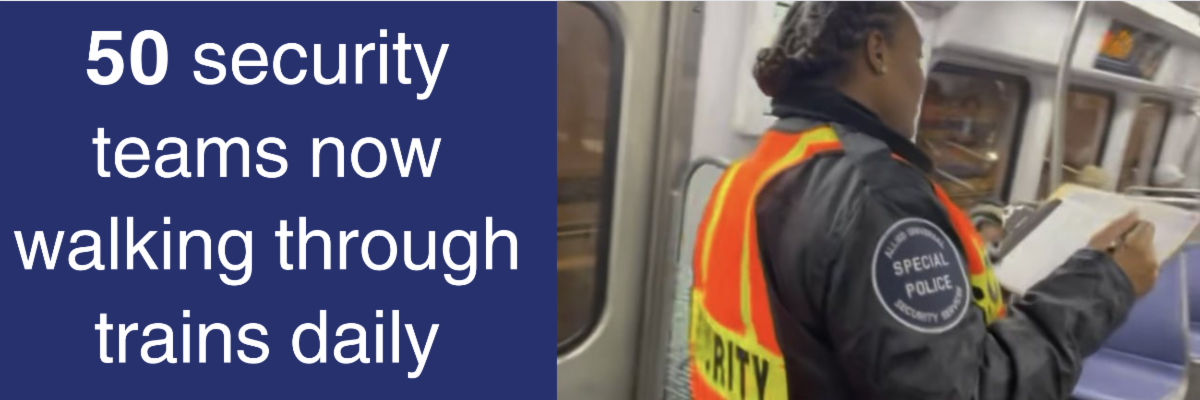
Part of our new safety campaign includes security officers walking through trains to ensure the safety and comfort of customers and employees and address illegal activity in real-time. Announcements made over train intercoms will alert customers that officers are on board and actively patrolling.
Metro Transit Police also patrol buses for safety and fare enforcement. Our control center also heavily monitors our 30,000 cameras across buses, trains, stations, and other facilities.
| |
MTA’s Purple Line work to impact part of Red Line this summer | |
|
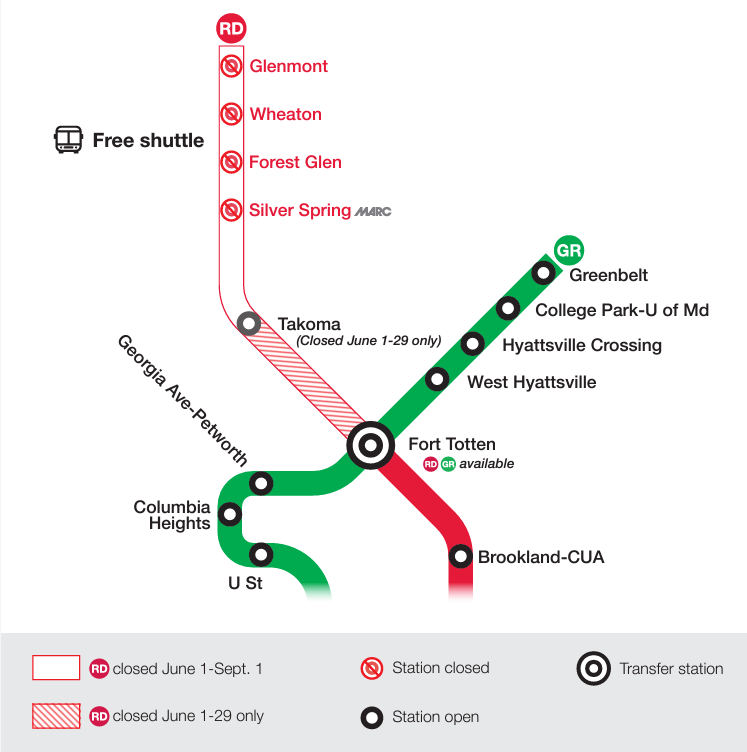
Starting this June, Metro will close some stations on the Red Line to accommodate construction on the Maryland Transit Administration’s Purple Line light rail.
In June, Glenmont, Wheaton, Forest Glen, Silver Spring, and Takoma stations on the Red Line will be closed. Takoma will reopen June 29. Glenmont, Wheaton, Forest Glen and Silver Spring will remain closed until Sept. 1.
Free shuttle buses will replace train service during that time. Detailed service plans, including express and local shuttle buses, will be announced in early April.
MTA is building a new mezzanine at Silver Spring to connect Metro and the light rail project, which requires shutting down both tracks.
Meanwhile, Metro will take the time to do work including:
- Fiber cable installation for communications
- Upgrades to the rail infrastructure (interlocking upgrades, switch replacements, tie and rail renewal, and grout pad replacements. All of which improve the quality of the train ride for customers)
- Upgrade the drainage pump system and standpipe
- Upgrade of the leak mitigation in the tunnel areas
- Upgrade of power and electrical components
- Lighting upgrades in the tunnel and platform areas for better visibility
- Installation of new digital screens in the stations and real-time arrival Passenger Information Displays on the platforms
- Updates to station assets such as doors, signage, paint, and sidewalk repair
- Overhaul of escalators at Fort Totten and Wheaton which will allow the equipment to run more efficiently
Metro decided to close all three stations north of Silver Spring to do needed maintenance work and provide a better customer experience than having customers ride three stops and take a shuttle.
| |
Metro marks one year of incredible progress on our strategic transformation plan | |
|
A year ago, Metro released its strategic plan, Your Metro, the Way Forward, and over the past 12 months, we’ve made incredible strides in ridership growth, customer satisfaction, and crime reduction.
We’ve also laid out the road map to autonomous trains, zero-emission buses and digitization to improve productivity and safety compliance.
Our first annual report shows bus and rail ridership increased by more than 4.5 million trips a month over the previous year, fueled by frequent, reliable, and safe service. Nearly half of Metrobus customers saw buses arrive every 12 minutes or less, and more than half of rail customers saw trains arrive every six minutes or less, on average.
We introduced new crisis intervention specialists, partnered with local law enforcement for enhanced station patrols, and added more patrols onboard trains and buses. We’ve reduced Part I (violent) crimes by 14%. Metro’s efforts to install new faregates, as part of a program of enhanced enforcement, have reduced fare evasion in targeted stations by 70%.
Metro’s emissions reduction saved the equivalent of driving about 200 million miles in an average gasoline-powered car.
While providing more frequent service, Metro has reduced costs by $183 million through one-time budget actions, newly identified recurring operating cost efficiencies, and salary freezes.
Metro has also sized trains to match ridership demand, launching its first six-car trains on its newest rail car fleet. Financially, Metro has outperformed expense projections with tight management controls, had a clean independent audit for the ninth straight year, and maintained its AA bond rating, keeping the cost of borrowing in check. At the end of the second quarter, Metro is tracking under its projected operating budget.
“All these achievements in the past year have been possible because of the culture transformation underway at Metro. Internally, we are changing the way we approach our work including identifying efficiencies, introducing new ways to recognize and empower employees, and streamlining internal processes,” Metro Board Chair Paul Smedberg said. “Through unprecedented collaboration across Metro and a new organizational structure, these efforts are already showing benefits.”
| |
Public weighs in on Metro's budget, plus the latest on our service proposal
| |
Metro's budget outlook has fluctuated throughout the first quarter of the year, but projected service impacts have changed for the better thanks to preliminary contributions from our jurisdictional partners. | |
We’re nearing the home stretch of our budget process, which has been one of the most challenging Metro has faced in its history. That’s thanks to a dip in ridership from stay-at-home workers, federal pandemic-era funding running out, and historic inflation.
Initially, Metro proposed a budget including drastic cuts – closing stations, cutting rail hours and service, and eliminating bus routes. We knew this would have a detrimental effect on customers, but Metro’s governing compact mandates we have a balanced budget using the funds we have available.
Metro held three in-person public comment hearings across all three jurisdictions, as well as a virtual hearing, and allowed customers to send comments via an online survey.
During the public comment period, we heard from 8,500 customers who shared their priorities, which included maintaining current service levels on all modes – particularly MetroAccess. We appreciate everyone who shared feedback. A staff report with all the comments will be presented to the Board of Directors in April.
Our latest budget proposal is far less drastic thanks to preliminary financial commitments from our regional partners. Updated service projections only include targeted changes like running more six-car trains in lower ridership areas, reducing service on holidays, and implementing our bus network redesign plan that reallocates existing resources to deliver more value to the region and adapting to how customers travel now.
A 12.5% fare increase will keep us in line with inflation. The 40 cent fare customers paid when the system opened in 1976 is on par with what they pay today, adjusted for inflation.
Metro’s Board of Directors will vote on the budget in April and the service changes will go into effect in July.
While we’ve mostly addressed the problem for the next fiscal year, we will continue to face budget deficits until the region develops dedicated funding for Metro. “America’s Transit System” is one of the few in the country that does not have dedicated funding.
Over the next year, we aim to have in-depth conversations with our regional partners to solve our funding issues for the long term.
| |
From the Archives: Retro Metro | |
|
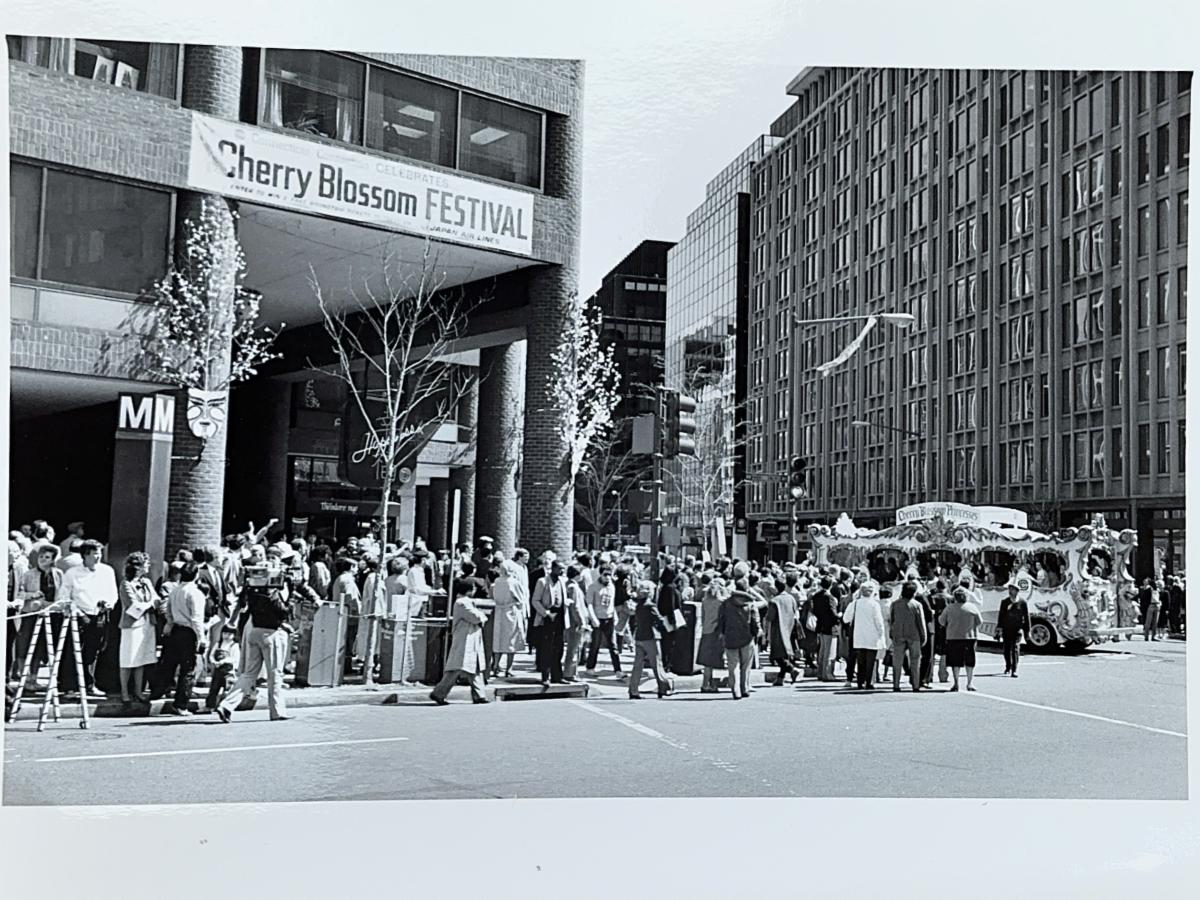
Cherry blossom season is upon us, and it is one of the busiest times of the year in Washington, D.C. Metro is the easiest way to get you to blooms and the Cherry Blossom Festival parade!
While digging through the archives, we found this great 1984 photo of the Cherry Blossom Festival parade outside one of our stations.
Can you identify which station? Send us your answer at MetroExpress@wmata.com.
| |
Have feedback? Let us know by emailing MetroExpress@wmata.com | |
|
Washington Metropolitan Area Transit Authority
WMATA.com
| | | | |