Correction: In our legislative policy alert issued on March 22, 2023, we incorrectly said the first round of increases in reimbursement rates for community behavioral health services would begin on July 1, 2024. The correct date is July 1, 2023. We apologize for the error.
Halfway through the
2023 Legislative Session
There is less than one month left of Maryland’s 90-day legislative session, and we have made significant strides with some of BHSB’s policy priorities. A lot can happen between now and Sine Die—the last day of the legislative session—on April 11.

Below is a quick status update on bills we have supported:
Building a stable behavioral health workforce
  • SB 283/ HB 418 Mental Health - Workforce Development - Fund passed out of their respective chambers. This legislation would establish a workforce fund to reimburse costs associated with educating, training, certifying, recruiting, placing, and retaining behavioral health professionals.

  • SB 534 Preserve Telehealth Access Act of 2023 passed the Senate unanimously earlier this session. There is no standalone telehealth bill in the House. Rather, the provisions are included in HB 1148 Behavioral Health Care - Treatment and Access (Behavioral Health Model for Maryland) which passed the House and has been referred to the Senate Finance Committee. This bill extends the telehealth sunset date to June 30, 2025.

  • SB 181/ HB 200 FY 2024 Budget includes an 11.5% Medicaid reimbursement rate increase for community-based behavioral health services. Starting July 1, 2023, rates will increase by 3.5% and the remaining increase will begin in January 2024 to align with the state's minimum wage increase.
Strengthening and expanding community-based behavioral health crisis services
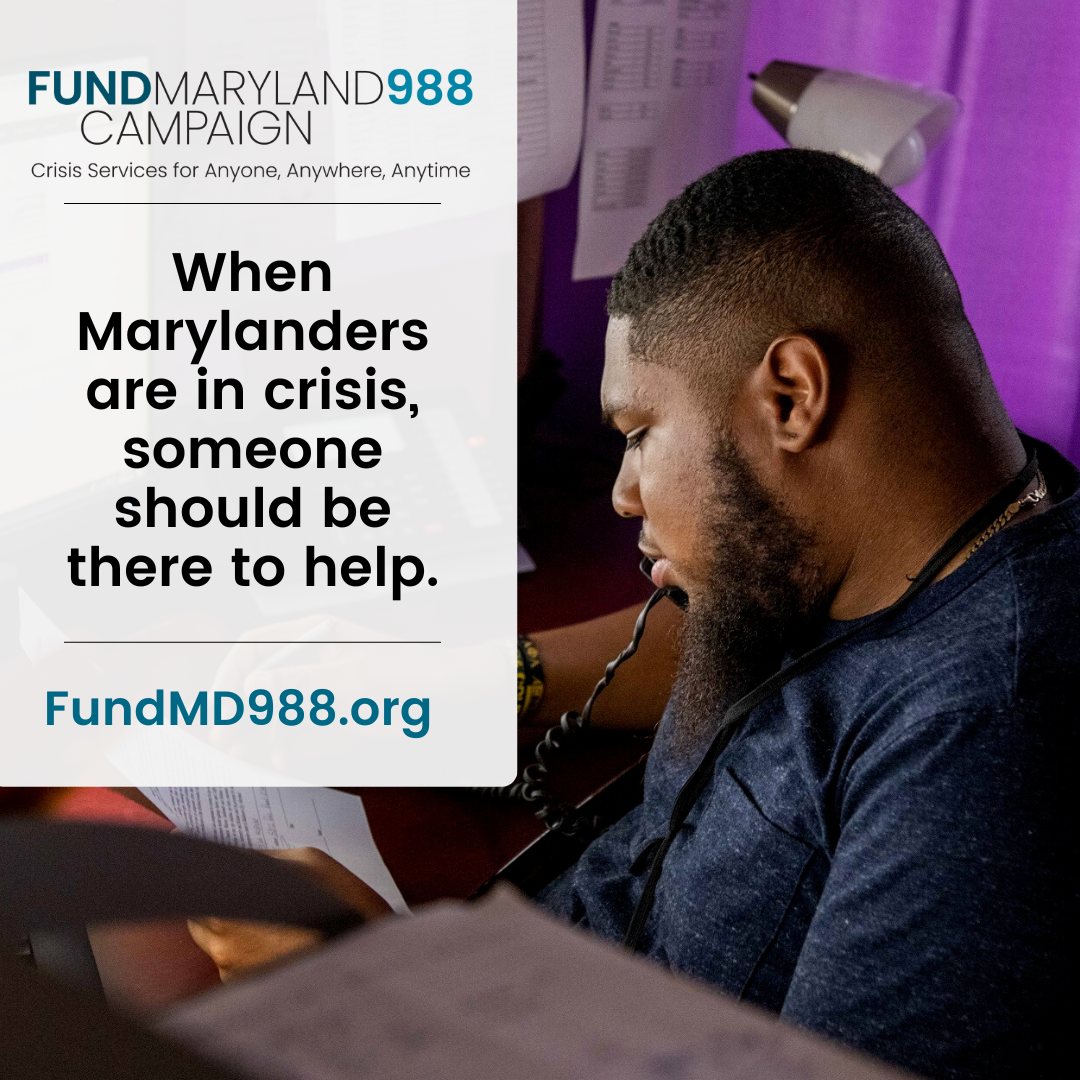
  • HB 271/ SB 3 988 Trust Fund—Funding passed both chambers and has been referred to the respective committees for bill hearings, starting this week. This bill would allocate $12 million in FY 2025 for the 988 Trust Fund, which was created to support behavioral health crisis services.

  • SB 181/ HB 200 FY 2024 Budget includes $5.5 million for the 988 Trust Fund. This funding will support Maryland’s network of 988 call centers.
Investing in co-designed mental health and support services for youth and families
  • HB 1155 Workgroup on Establishing a Youth Codesigned Integrated Behavioral Health Model had a hearing in the House Health and Government Operations Committee but was not called for a vote in the committee before crossover. This bill would create a Workgroup on Establishing a Youth Codesigned Integrated Behavioral Health Model staffed by the Behavioral Health Administration (BHA).  
Establishing Overdose Prevention Sites and promoting harm reduction strategies
  • HB 953/ SB 618 Public Health-Overdose and Infectious Disease Prevention Services Program was heard in both chambers but did not pass out of the House or Senate committees before crossover. This legislation allows organizations to open an Overdose and Infectious Disease Prevention Services (OPS) Program in one or more counties. The legislation allows no more than six OPS statewide: two in urban areas, two in suburban areas, and two in rural areas. The program must provide a location supervised by health care professionals or other trained staff where drug users can consume pre-obtained drugs. The program must also provide sterile injection supplies, information regarding safe injection practices, and referrals to obtain naloxone and treatment services.

  • HB 427/ SB 546 Criminal Procedure - Medical Emergency - Immunity (Good Samaritan Law) passed both chambers and has been referred to the respective committees in the House and Senate. This bill extends protections against the violation of parole and probation to the person experiencing the medical emergency.

  • HB 173/ SB 762 Drug Paraphernalia for Administration - Decriminalization passed the House and had a bill hearing in the Senate Judicial Proceedings Committee but did not pass out of the Senate before crossover. If passed, this bill will revise existing criminal law to remove items that could be used to consume drugs from the list of drug paraphernalia, effectively decriminalizing possession of those items.
Behavioral Health System Baltimore is the area’s leading expert and resource in advancing behavioral health and wellness. We help guide innovative approaches to prevention, early intervention, treatment and recovery for those who are dealing with mental health and substance use disorders to help build healthier individuals, stronger families and safer communities.