28 Iyar, 5783

May 19, 2023


Parshat Bamidbar

Sefer Bamidbar starts in the middle. 


Allow me to explain. The Torah begins in Parshat Bamidbar (1:1) by saying “Hashem spoke to Moshe in the wilderness of Sinai, in the Ohel Moed (Mishkan), on the first day of the second month [Iyar], in the second year after they had come out of the land of Egypt.” And yet, in Shemot (40:2), we find that Hashem tells Moshe “On the first month [Nisan], on the first of the month, you shall erect the Mishkan.”


So far so good; the Torah describes the building of the Mishkan at the end of Shemot (on the first of Nisan), describes the laws applicable to the Mishkan in Sefer Vayikra, and continues with the census of Bnei Yisrael in Bamidbar (on the first of Iyar). Everything is chronological.


But when we come to Parshat Naso (Perek 7), we suddenly find ourselves back on the first of Nisan! “It happened on the day that Moshe had finished setting up the Tabernacle [i.e. the first of Nisan]” (7:1), continuing with a description of the inauguration of the Mishkan. Yet again, in Parshat Beha’alotcha (Perek 9), we still find ourselves in Nisan: “Hashem spoke to Moses in the wilderness of Sinai, in the first month [Nisan] of the second year after they had come out of the land of Egypt, saying, let the Children of Israel do the Korban Pesach in its appointed season.” Going further, the Torah reverts back to Iyar (10:11-12): “It happened in the second year, in the second month [Iyar], on the twentieth day of the month, that the cloud was taken up from over the Mishkan of the testimony, Bnei Yisrael went forward.”


In short, the Torah describes the building of the Mishkan on the first of Nisan, picks up the story from the first of Iyar (in Parshat Bamidbar, with the census), goes back to inaugurating the Mishkan on the first of Nisan, continues with the Pesach sacrifice, and jumps ahead to Bnei Yisrael leaving Har Sinai on the 20th of Iyar. What are we to make of this jumping back and forth? Chazal tell us

אין מוקדם ומאוחר בתורה - “there is no chronological order to the Torah.” This rule can be readily seen in what is described above, but leaves the question, what is the purpose of having these events written out of order?

Upcoming Events:


May 21 - Sunday Morning Tefillah in the Kohelet Yeshiva Middle School Beit Midrash at 9:00 AM


May 21 - K/1 Chagigat Chumash


May 23 - HS Kohelet Cafe: 5:30-7:15 PM: Musical performance for girls and women only; 7:15-8:30 PM: A selection of musical performances. Men and women welcome.


May 25 - Erev Shavuot, Early Dismissal (Grades 6-12: 1:20 PM Dismissal; Grades K-5: 1:30 PM Dismissal)


May 26-27 - Shavuot


May 29 - Memorial Day, No School


May 30 - June 1 - HS Senior Trip


June 4 - Celebrate Israel Parade


June 6 - HS Graduation at 7:00 PM


June 9 - HS Last Day of Classes


June 9 - LS and MS Student-Led Conferences (In Person), No School for LS and MS


June 12 - MS End of Year Trip


June 12-13 - 8th Grade Trip


June 14 - 8th Grade Graduation at 7:00 PM


June 15 - K-8 Last Day of School, Dismissal for K-8: 1:30 PM


June 20 - PTSO End of Year Event at the Phillies Game


See what else is coming up at Kohelet Yeshiva here.

Visit Our Website
Click Here to View Our 2023-2024 Preliminary Calendar
Support Kohelet Here

The commentaries on Bamidbar 9:1 shed some light on this. In Perek 9, the Torah describes the second bringing of the Korban Pesach, the first being the one in Egypt itself. Rashi asks our question, and answers based on the Medrash, “it implies something disparaging to Israel – that during all the forty years they were in the wilderness they offered only this single Passover sacrifice.” As elaborated by the Ramban, Bnei Yisrael basically exempted themselves from the Korban Pesach through the sin of the spies, which caused them to stay in the desert for an extra 40 years. During this time, the boys did not get a brit milah, which is a necessary prerequisite for the bringing of the Korban Pesach. Since the chronological beginning of the Sefer implies something disparaging, that part is discussed in the middle of the Sefer, “hidden away,” so to speak. 


However, R. Ovadia Seforno uses the evidence to point to something laudatory. The Seforno says that the lack of chronological order is not to “tuck away” the disparaging parts. The Torah simply finished what it was talking about before (setting up the Mishkan, and then setting up the camp of Bnei Yisrael around it). The Torah then describes four events where Bnei Yisrael did well, and were it not for the Meraglim they would have immediately gone into Eretz Yisrael: 1) inaugurating the Mishkan, 2) the inauguration of the Leviim, 3) their excitement over the Korban Pesach (the people who missed it asked for a second chance to bring it), and 4) their willingness to follow Hashem in the desert. The Torah grouped these four events one after another not because they all happened one after another, but because they are all a description of the good things that Bnei Yisrael did.


We can learn a number of things from this. The first is that with the same exact evidence, someone can view it negatively, and from a different perspective it can be viewed positively. But another thing we can see is just how close we were to coming into the Land of Israel, not because of the Mitzvot themselves (the Bnei Yisrael were commanded to do them, and did them), but because of their excitement to do them. The Seforno specifically highlighted that as a reason for them to go right into the Land of Israel (were it not for the Meraglim). And the inverse is what prevented them from going in - “אַחֵינוּ הֵמַסּוּ אֶת לְבָבֵנוּ” - “Our brothers have made our heart melt” (Devarim 1:28). It was the lack of excitement for Eretz Yisrael that prevented them from going in, and it was their excitement for Mitzvot that led them to go in the first place. 


Shabbat Shalom and Yom Yerushalayim Sameach,


Rabbi Moshe Abrams

Please click on the image below to watch the wonderful video that was shown at our 23rd Annual Gala:

Coming Up:
Click Here to Sign Up for the Bake Sale
Click Here to RSVP for the Celebrate Israel Parade

News from Kohelet Yeshiva

Thank you to everyone who joined us at our 23rd Annual Gala this week to celebrate Kohelet Yeshiva's incredible success and to pay tribute to our esteemed honorees!

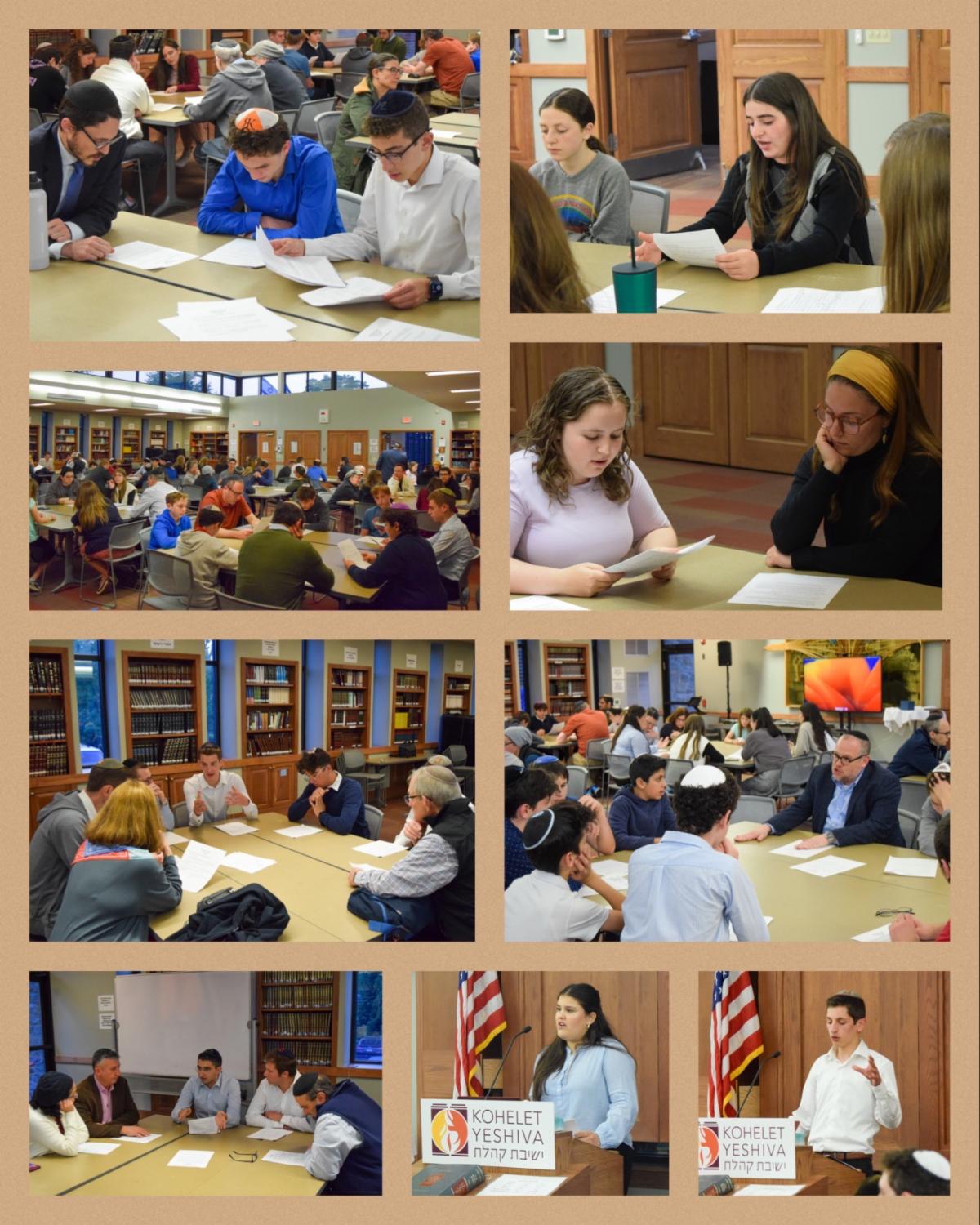
Our Kohelet Yeshiva High School Night of Learning was a huge success! The Beit Midrash was full of families and community members learning together, and it was wonderful seeing our students leading the group learning and giving shiurim. Mazal Tov to all of our students who wrote insightful and thought-provoking articles in the "Divrei Cheifetz" Torah Journal that was released and distributed at our Night of Learning! Kol HaKavod!

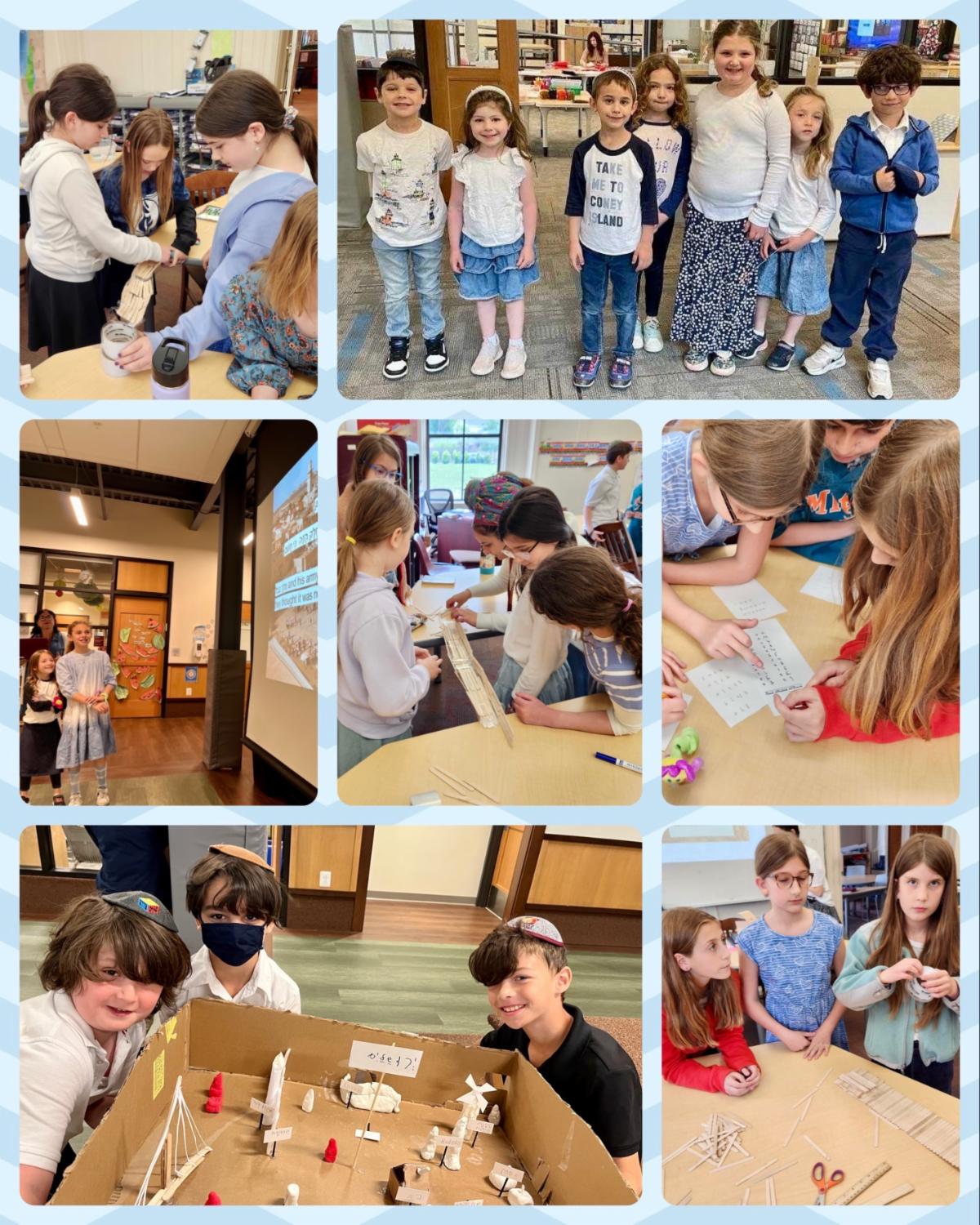
Our KYLS students celebrated Yom Yerushalayim with a range of activities and programs, including special video presentations, cracking the code on the Kotel note, building a model of the Gesher HaMeitarim (also called the Bridge of Strings or Jerusalem Light Rail Bridge), and and an activity relating to Chizkiyahu's Water Tunnel.

Updates from the Kohelet Beit Midrash
Parnas HaYom

Sponsor a day or a week of learning at Kohelet Yeshiva. Contact Nachi Troodler at ntroodler@koheletyeshiva.org for details or click here to sign up.

Thank you to this past week's Parnas HaYom sponsors!


May 17th


In Honor of Our 2023 Gala Honorees:


Diane Fenner Zwillenberg and David Zwillenberg


Shaindy and Noah Lindenberg


Morah Hannah Rothschild


Mazal Tov and thank you for all that you do!


וְכָל מִי שֶׁעוסְקִים בְּצָרְכֵי צִבּוּר בֶּאֱמוּנָה. הַקָּדושׁ בָּרוּךְ הוּא יְשַׁלֵּם שכָרָם


And all who are involved faithfully in the needs of the community, may the Holy One, Blessed is He, pay their reward


Kohelet Yeshiva | www.koheletyeshiva.org | 223 North Highland Ave, Merion Station, PA 19066
Facebook  Twitter  Instagram