Also... Acid Plaid, Pownouncements, Greek Life, and Gothic Novelty....

In Upper Middle Vol. 1 No. 27


STATUS → Diet Kennedy • Inconceivable! • Moneyballed

MONEY → Carpetbombed • Vote Poor • Pownouncement

TASTE Acid Plaid • Gothic Novelty • Greek Life

STATUS


  • Maritime investigators are looking into the sinking of the Silicon Valley exec Mike Lynch’s yacht, Bayesian, off the cost of Sicily[1]. There’s a joke to be made that won’t be made here, but the improbable turtling of a boat named for a method of modeling probability might, maybe, possibly, potentially... inspire just a bit of humility in risk-forward Palo Alto-types. Probably not.
  • Robert Kennedy Jr., who dropped out of the presidential race to endorse Trump on Friday, is now to the “Kennedy” brand (East Coast enlightened elitism) what Hollister was in 2000 when Abercrombie & Fitch spun it off: a downmarket California knockoff. There’s a playbook for this brand move and it can work – Hollister had a moment – but it can also devalue a vibe. Jack Kennedy was onstage at the DNC for a reason. He’s about to be ubiquitous.
  • The nomination of Kamala Harris, a former member of Alpha Kappa Alpha at Howard, has ignited an interesting, unpredictable discussion about status in Black Greek life. But Harris’s Greek past may be the most conventional element of her bio. Some 18 presidents have been ex-frat boys. And 65% of all cabinet members since 1900 have participated in Greek life alongside 80-something% of Fortune 500 execs and about 30% of Congress.

Making the Best of a

Good Situation

Upper Middle helps high-income, high-stress Americans keep score, keep perspective, and keep it together while living busy, joyful lives.


Learn More | Politely Decline

Illustration: How to Upper Middle
The Old Moneyball and Chain: What's better than beating your friends? Solidarity, maybe.

As Fantasy Football season looms, competitors resurrect old rivalries and group chats while building out new spreadsheets. They take it seriously, and not just because they believe Deebo is underrated in the slot. Fantasy is the ultimate game for the expanded “professional management class,” a value assessment competition that rewards the precise kind of contrarian, Moneyball-style thinking that gets P&L owners promoted. It’s an industry-agnostic professional competition. The average Fantasy Football player has a higher income at $92,000 than the average American at $63,795.


But what gets lost in the annual shuffle is that Fantasy Football rewards the precise kind of thinking that ruins high-earners’ careers. Seriously.


Despite 2014’s fun but confounding Draft Day, Moneyball remains the sabermetric ur-text and the chest-thumpiest shorthand for both Fantasy prowess and data-analytics driven value optimization. The problem with the movie (and the book, BTW) is that it’s too good [2]. It’s impossible not to root for Billy Beane as he rebuilds superstars “in the aggregate” by stuffing the A’s roster with overlooked castoffs. And that’s true despite the fact that Beane is an unconvincing protagonist. What he does isn’t all that admirable. He lays off or trades elite players and veterans. He lowers wages by hiring players without traditional qualifications. He mocks the recruiter and kinks the talent pipeline. That this makes him a hero of sorts to members of an elite class recruited via aging talent pipelines for their traditional qualifications is ironic in the extreme.

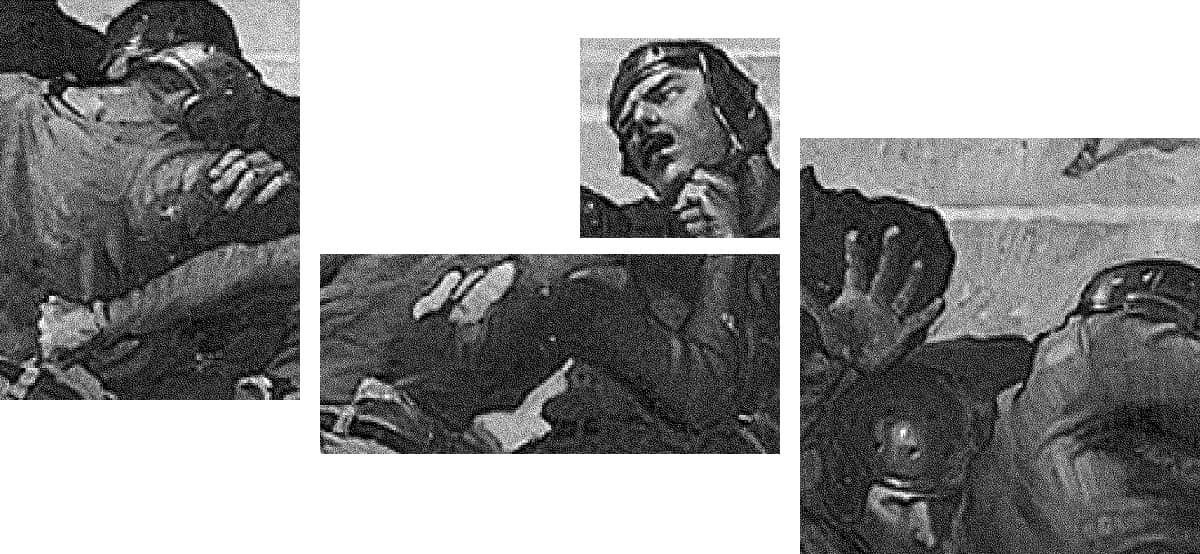
Football Painting

Beane’s story is a tale of class betrayal. After 2002, the stat he trumpeted, on base percentage, became more strongly correlated with players’ salaries and – more relevantly – the number of ex-player managers like himself plummeted. Between 1950 and 2000, roughly 43% of General Managers were ex-ball players. After Beane’s revolution, that number dropped to just one dude. Though it could be argued that this is precisely what makes Beane appealing to out-of-shape ex-Little League benchwarmers with college degrees, it shouldn’t. Beane is the consummate turncoat. He’s a reminder that there’s always some guy out there making a strong, well-reasoned case that you are worth less than you’re paid to a receptive boss.


Underdogs are appealing and new ways of thinking are exciting, but people who benefit from the status quo would do well to root for it. At least occasionally.


Sports management nerds – they are legion – think of Beane as smart. Maybe, but that’s not why he’s famous. He’s famous because he was right. There’s a difference. As Fantasy season ramps up, all those would-be Beanes out there – toggling between draft spreadsheets and P&Ls – ought to keep that in mind. It’s awesome to be the guy who makes a breakthrough and significantly less awesome to be the guy who gets his peers shitcanned. How many group texts is Beane on?

MONEY


  • Jerome Powell gave a speech in Jackson Hole and said pretty much what everyone thought he’d say. Rate cuts are coming, but won’t be extreme. The market jumped, but also seems to be getting better and better at pricing in J. Pownouncements.
  • Vogue is hailing the return of the carpet and slideshowing off a bunch of colorfully tufted options. The timing is interesting because one reason wall-to-wall coverage got less popular after the ‘90s was that low mortgage rates turned homes into workable shorter term investments – carpets were seen as a potential obstacle to a sale. The return of carpeting feels like a return to a very different economic moment.[3]
  • “Cash Rich, Vote Poor” would be a fair way to describe folks in California, New York, and Texas. According to a model from physicist Oliver Ernst, the value of a Presidential vote in San Francisco is roughly 30% of the value of a vote in Casper or Burlington and 50% of a vote in Charleston, WV. It’s probably not ideal that brain drain drives up vote value, but at least residents of high-income states can afford to buy back their influence on the cheap. The “Cost Per Winning Vote” varies election to election, but is likely – based on recent history – to sit around $10.

Unsquaring the Squares: It's plaid season, but not that kind of plaid season.

The rise of “Acid Plaid” suggests a rising distrust of lumberjacks as well as a sentimental attachment to aging patterns.

The ghost of Vivienne Westwood, the dead British punk designer, has possessed American plaid. Westwood, the charming lunatic who wrapped The Sex Pistols in Queen Elizabeth’s Royal Stuart Tartan and went commando to get an OBE, understood how to invert a signifier and, in doing so, weave together class and class resentment. Now she’s the animating spirit of the Acid Plaid Era.


When T. Swift was spotted in vintage Westwood early this month, the look was hailed as a Clueless moment (remember the yellow skirt suit?), but it was –as is often the case with Swift – a calibrated effort to both hold and critique power.


This fall, Burberry, Christian Dior, Loewe, and even J. Crew are all dropping collections heavy on plaid. But it’s worth noting that many of those plaids are either tartans (a form of plaid symmetrical on the diagonal and historically associated with Scottish clans) or unusually colorful. In other words, these bright, clashing, and secondary colored plaids – the menswear designers at Corridor call them “Acid Plaids,” the best descriptor I’ve heard – pull the old Westwood trick in reverse. They take something ostensibly low status and weave in a winking sophistication.[4]


It’s like the Royal family got together and released a single called “God Bless the Sex Pistols.”


Is it a coincidence that a lot of these new plaids look like the tartan Westwood created for herself (or the very similar tartan Alan Cumming created for himself)? Nah. Is it right on time? Absolutely. The rise of Zach Bryan and the popularization of urban-accessible country music – again, Swift excels at cultural geolocation – heralds a return to countrified aesthetics of the 2010s minus the “Urban Lumberjack” look, now politically incoherent in the context of schismatic politics. In short, Westwoodian Acid Plaid imbues plainspoken plaid with a tartan-esque clan-specificity. It’s not royal, but it’s sure as shit not blue collar.

TASTE


  • Crayola has copyrighted the smell of its crayons. A wax-rich company taking an interest in nostalgic smells? There’s a huge candle play coming. Orchid, Razzle Dazzle Rose, Electric Lime. It’s been sitting there this whole time.
  • This week, Netflix is dropping KAOS, a Greek-mythology infused dramedy starring Jeff Goldblum as Zeus. The show looks like a car crash mashup of Percy Jackson and Baz Luhrmann’s Romeo + Juliet[5], but at least Goldblum looks good flaneur-ing through Olympus in a series of velour track suits from Needles, the Japanese-Americana brand big with celebs. The choice is a shot at Hollywood, but it’ll just remind people that the track pants are cool.
  • Sak’s has released a collection with Beetlejuice Beetlejuice, the upcoming sequel to the 1988 Burton banger. The big opportunity here is “Upmarket Hot Topic,” but they didn’t nail it. Smart money is still on Yohji Yamamoto to own that niche. (Rick Owens is just too weird and expensive.)

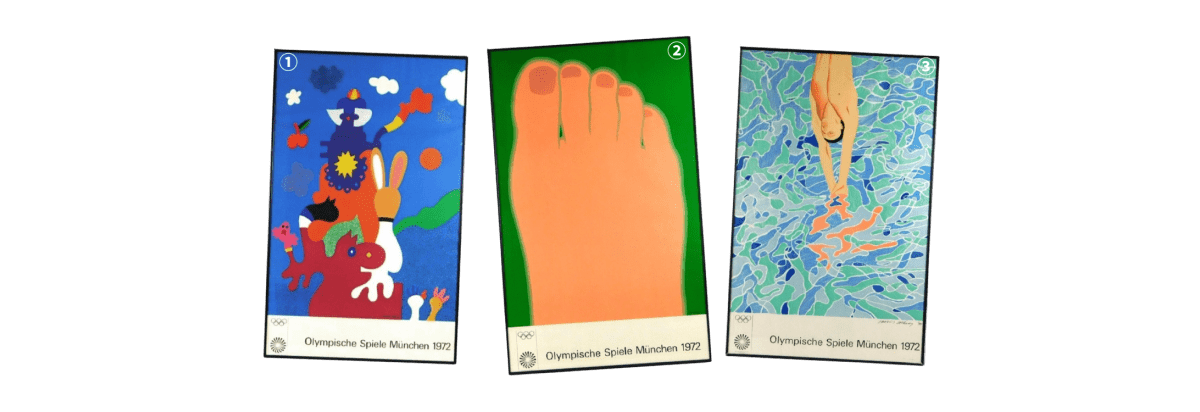
Prior to the 1972 Olympic Games in Munich, organizers recruited a murderer’s row of artists[6] to create posters celebrating the soon-to-be-infamous XX Olympiad. The resulting posters sell for between $300 and $400, but three will go for much less tomorrow at a Plainville, CT estate sale. The Wesselman foot is, of course, the standout. Presumably Tarantino will be bidding.

  1. Otmar Alt. The German proto-Murakami is known for whimsical paintings and sculptures, but not popular outside his home country.
  2. Tom Wesselmann. Dude is having a bit of a moment thanks to a collection from Tombolo and a Louis Vuitton exhibition. The work oozes sex without feeling pervy. There’s a market for that.
  1. David Hockney. The English painter transformed himself into California’s Uccello and a Capote-esque public figure. Big hitter with Art History minors. And boy oh boy did the guy like pools. More than Titian liked clouds. More than Vermeer liked windows. More than Andy Wharhol liked Andy Wharhol.

NOTES & FOOTNOTES


[1] The word “Inconceivable” springs to mind.

[2] We take Michael Lewis for granted. Sure, the SBF book was a miss, but the guy’s influence on culture is unbelievable and he’s a cool guy. Seriously. Email him. He writes back.

[3] Also, there’s something Proustian and horny in there, but we don’t need to run that to ground.

[4] This is the swerve of the moment. Witness the camo Harris/Walz caps.

[5] Still a good movie.

[6] Also rans: Max Bill, R.B. Kitaj, Jacob Lawrence, Peter Phillipps, Richard Smith, Paul Wunderlich, F. Hundertwasser, Horst Antes, Shusaka Arakawa, Eduardo Chillida, Pieor Dorazio, Allen Jones, Pierre Soulages, Victor Vasarely, Alan Davie, Josef Albers, Allan D'Arcangelo, Valerio Adami, Hans Hartung, Oskar Kokoschka, Charles Lapicque, Jan Lenica, Marino Marini, Serge Poliakoff, Fritz Winter.
Disclaimer: This is not financial advice you dummy.
Upper Middle Logo

Paperwork Studios LLC

105 Lexington Ave.

New York, NY 11238