|
Check Out Our Upcoming Online NBCC Approved Trainings!
After successful completion of the following trainings: CCTP, CAMTP, CSOTP, CATP you will be eligible for certification.
*Please note, training fees do not include certification.
Clinical Trauma Professional (CCTP)
online training
Cost $200; 13 CE Hours
September 11 - October 22, 2017
Anger Management Treatment Provider (CAMTP)
online training
Cost $200; 13 CE Hours
September 11 - October 22, 2017
Sex Offender Treatment Provider (CSOTP) online training
(This course is a requirement for the advanced level training Certified Forensic Sex Offender Treatment Professional (CFSOTP))
Cost $200; 24 CE Hours
September 11 - October 22, 2017
Child & Adolescent Trauma Professional (CATP) online training
Clinicians in the Courtroom: A Primer for Mental Health Professionals (CIC) online training
(This course is a requirement for the advanced level training Certified Forensic Sex Offender Treatment Professional (CFSOTP))
Cost $170; 13 CE Hours
September 11 - October 22, 2017
Preparing Forensic Assessments: Interviewing, Testing, Reporting (PFA) online training
(This course is a requirement for the advanced level training Certified Forensic Sex Offender Treatment Professional (CFSOTP))
Cost $170; 13 CE Hours
September 11 - October 22, 2017
Neurobiology for Mental Health Professionals (NBT) online training
(This course is a requirement for the advanced level training Certified Forensic Sex Offender Treatment Professional (CFSOTP))
Cost $170; 13 CE Hours
September 11 - October 22, 2017
|
|
The Most Recently Certified Professionals
________________
Jennifer Abbott
Juliana Abercrombie
Nina Abernathy
Amy Acker
Suzanne Acosta
Ivyia Adams
Liza Albidress
Nadine Allen
Gary Ammons
Rebecca Anderson
Carlyn D. Andrew
Theodora Appiah-Acheampong
Liesel Aronyosi
Julia Atkins
Rebecca Atkins
Charles D. Atkinson
Bianca Augustine
Beatriz Ayala
Lorrette Ayers
Curt Bachman
Gladys Baez-Pere
Allison Baird
Kelly Baker
Richard Baker
Brigette Banks
Teresa Barlett
Susan Bearns
Joy Bearor
Carrie Becker
Erica Beer
LaTasha Behn
Janet Beitel-spacher
Cassandra Bengela
Renet'e Benjamin
Steven Bennett
Roseann Bennett
Tristan Bentch
Jayme Berggren
Jacquelyn Berke
Lauren Berry
Kerri Blakey
Ann Blancato
Deborah Bbango
Jody Bockorny
Krista Boncheff
Deborah Booth
Sandra Borkovic
Dianne Boyd
Judith Boyle
Amy Brown
Cristi Brown
Jacquette Brown
Jeanne Brown
Linda Brown
Rachel Brown
Carol Brusca
Anquella Buchanan
Johanna Buchman
Gina Buckman
Linda Buckmon
Jennifer Budruweit
Jennifer Burch
Janine Burick
Theresa Burke
Liz Burkholder
Rachna Buxani
Lorraine Byam-Shabazz
Rebecca Cagle
Mary S. Cahilly
Lisa Calabrese
Teri Callaghan
Sheree Campbell
Lori Cangilla
Anne Caputa
Chandra Caraway
Lura Carey
Merrill Carinici
Marta Carmona
Tara Carney
Brittney Carter
Michelle Cassavaugh
Margaret M. Casteel
Linda Casto
June Castonguay
Barbara M. Cattano
Jessica Cavin
X'Cel Cedeno
Melissa Chaput
Ferlin Charles
Beverly Chase
Shondalette Chatfield
Sarah Chavez
Tomica Chitterson
Sudha Choldin
Phyllis Ching
Enakshi Chouduri
Olivia Cissell
Sarah Cark
Jennifer Claus
Julie Clayton
Michelle Clipfell
Kaarin Coe
Kathryn Coker
Grace Colasacco
Theresa Cole
Debbie Coleman
Marjori Collingsworth
Jessie Connolly
Rosanna Conti
Christine Cook
Carla Cooke
Luciann Cooke
Melinda Cooper
Kelly Copley
Rebecca Corbicz
Danielle Corbin
Shannon Corda
Karoline Crawshaw
Sherrica Cressor
Richard Cross
Erica Cummings
Renee Cummings
Brandon Curtis
Sharon Czako
Robert Dalonzo
Veronica Dance
Carolyn Daniels
Deborah Danton
Matthew Dass
Arthur Davalos-Matthews
Mari Davenport
John Davidson
Carmen Davis
Kendra Davis
Glenda Demas
Nichole DeMpya
Camille Derose-King
Dhira DiBiase
Gina DiBona
Michelle Dickens
Katherine Dickson
Nichole Ditch
Natalie Donaldson
Elizabeth Donnellan
Jennifer Drager
Robert J. Drago
Dawn Drakeford
Bonnett Dulaney
Samantha Dull
Alesia Dumas
Amanda Dunn
Dare Dutter
Nancy Earl
Tameika Easter-Griffin
Patricia Edwards
Shelly Ehmann
Jenny Elizabeth
Amy Elliott
Melissa Elliott-Brogan
Jayne Ellis
Rosemary Ellmer
Donay Butler Ernest
Richard Correa Escoda
Candy Escorza
Katherine Estevez
Kathy Evans
Laura Farrell
Daniel Fayerberg
Melina Fazzolari-Napoli
Robert Ferow
Rose Fingerer
Richard Fincke
Michelle Finley
Amy Foote
Jill Foster
Judy Frankl
Holly Fremling
Sherry Friedman
Lori Frison
Christine Fuchs
Carolina Fuentes
Rasha Gardner
Lindsey Gary-Ford
Alicia Gatti
Randy Gaul
Kurt Gehlert
Glendon Geikie
Deborah Gellis
Jodie Gerson
Candice Gibert
Corey Gilbert
Loretta Gilmore
Mary Godbey
Sarah Godoy
Mary Goe
Kayce Goley
Carlos Gomez
Natalie Gomez
Jessica Gonzalez
Marian Gonzales
Angelica Gonzalez-Echevarria
DeAna Gray
Meka Green
Kareen Greenawalt
Lutricia Greene
Amy Greeman
Sara Gresset
Coreen Grolle
Erica Gruen
Andrew Gruler
John Guiliano
Maria Gustis
Christina Hafner
Danielle Hagedoorn
Nichole Haight
Amanda Hannah
Karla Hardin
Aretha Hargrove-Edwards
Shelly Harlow
Warren E. Harper
Iesa Harrigan
Cheryl Harris
Megan Harris
Lee Harvey
Carter Haskins
Monica Haskins
Catherine Hatcher
Jennifer Haug
Michelle Hawkins
Neil Headman
Cheryl Healy
William Heath
Amy Hecht
Judith Heckenlaible-Habig
Jerry Heidrich
Angela Heiney
Amber Henderson
Jessica Hendrix
Meghan Hennessy
Diane Henning
Gloria Hernandez
Diane Herseth
Julia Hess
Michael Hester
Jennifer Hillbo
Ryan Hite
Kimberly Hlavka
Laurie J. Hoffman
Megan Hoffman
Christopher Holcomb
Ilene Holcombe
Kim Hollingdale
Amanda J. Holloway
Courtney Holmes
Jennifer Holmes
Naharia Holy-Elliott
Sussette Horne
Valerie Travis Horne
Jaime Horner
Emily Houck
Rachelle Hudelson
William Gordon Hughes
Michael Humphrey
Sarah Humphreys
Lauralyn Hundley
Natalie Hunter
Ebony Hutchinson
Amy Iannitelli
Berenice Ibanez
Jennifer Illig
Kayla M. Jackson
Judy Jacobs
John Jacobson
Christopher Jakub
Sandra Jarzombeck
Jesusa Jasso
Meg Jay
Marian Jefferson
Mike Jilkings
Elaine Jiminez
Christopher Johannes
Andrieah Johnson
Cynthia Johnson
Dalton Johnson
Diana Johnson
Gayle Johnson
Ronda Johnson
Laura L. Jones
David Jordan
Moreen Jordan
Sarah Kaiser
Brittney Kalmas
Allison Kaminski
Katrina Kelly
John Kempf
Julie Kendall
Jill Kenler
Jody Kennedy
Ryan Kennedy
Stephanie Kilgannon
Dawn Kilian
Jenna Kimock
Heidi Kling
Sdhari King
Jacquelyn Kirby
Charles Kissick
Dawn Kleann
Matthew Knapp
Audra J. Knieper
Casey Koch
Shawna Kosakowski
Katherine Krizman
Kelsey Krohner
Caroline Kuehn
Richard Kuehn
Danyelle Kuss
Jacqueline Lacy-Diggins
Ronald La Fleur
Sandra La Joy
Natalie Lamb
Heather Lane
Jonnie Lane
Barnett Langford
Kimberly Lapo
Jody Larson
Terrence Lassiter
Deidre Lawrence
Grant Lawrence
Cheryl Lawson
Victor Leclerc
Quynh Lee
Roy Leitch
Eilene Leventis
Paulette Levesque
Tawanna Lewis
Maureen Lewis-Huebel
Michele Linden
Kimberly Lindley
Thomas Lipsitz
Kenneth Litwak
Amanda Lobato
Carole Love
Julia Loverdi
Catherine Loveless
Danielle Lozano
Elizabeth Lueking
Julie Lusk
Christine Lynch
Barbara Machina
Jamee Mack
Tracey Mack
Gabriele Mamone
Susan Marcus-Mendoza
Marci Martel
Sandra ason
Priscila Matei
Tanesha Mayo
Tammy Mayden
Gillian Mayson
Michael McAllister
Nancy McBride
Kristin McCabe
Kevin McDonald
Maureen McEntee
Patricia McGovern
Tamara McKay
Marla McLaughlin
Kozma McLean
Tania McLean-Nicholas
Kevin McDonald
Dawn Meadow
Avital Meirzon
Staci Melvin
Katie Mendal
Joell Menefee
Patricia Mencsh-Shell
Crystal Mercer
Melissa Meyer
Golda Miller
Catherine Mills
Alexandra Milspaw
Jacqueline Mims
Ashley Mitchell
Shacara Mitchell
Karen Moniz-Smith
Toni Monreal
Sasha Montgomery
Ashley Moore
Deborah Moore
Jennifer Moore
Sonya Moore
Janet Moroos
Julia Morris
Karlice Moss-Teams
Fawn Moyer
Heather Mullaly
Aliya Mullins
Nancy Mulvihill
Alexandra Munet
Anastasia Murphy
Amanda Murray
Beth Murray
Cara Nagy
Danielle Napoli
Sonia Neale
Melissa Negoita
Carolynn Nelson
Janet Nelson
Holly Nemec
Jacqueline Nesci
Melissa Newborn
Laurie Newcomb
Stephanie Ney
Tasha Nicholas
Deborah Nielsen
Vivian Nix-Early
Marikathryn Nooe
Bruno Nora
John Nord
Michael Nordquist
Patricia Norris
Christine Norton
Chinedu Nwogburu
Rebecca O'Connell
Sean O'Hearne
Kellyn Olver
Debra Olson-Morrison
Jill Omoto
Melodie Ondecker
Kristine Ore
Beverly Osbourne
Adam Oshnock
Karen Oxholm
Karan Pace
Rachel Packer
Heidi Paessler
Letha Page
Kay Pantier
Carol Lee Papin
Rachel Parden
Christina Parker
Joanna Parrish
Justine Patai
Gita Patel-Steingart
Tammy Patrick
Taylor Patrick
Teresa Patterson
Cheryl Paulhus
Maurice Antonine Pauline
Elizabeth Peart
Stacy-Fawn Pegg
Patxi Peguerp
Lisa Pelino
Tam Penningtoni
Katherine Peralta
Jannine Pergola
Colleen Peterson
Mollie Peterson
Susan Podbielski
Tina Politte
Alycia Post
Christine Pound
Rebekah Price
Michelle Przedwiecki
Janet Pudlinski
Robert Purdy
Elissa Quiles
Allison Quinones
Megan Ragone
Tricia Raimondi
Kirsten Ramey
Chrischel Ramsey
Evelyne Raposo
Jamie Ratowski
Andrew Reed
Yvonne Reedy
Nicole Rettino-Lambert
Kirby Reutter
Alexandra Rickeman
Jean Riley
Shawna Riley
Charmaine Rimple
Sharon Rinearson
Constance Rita
Patzy Rivera
Bronwyn Robertson
Rochelle Ross
Lisa Robin-Sanford
Megan Rockwood
Gloria Rodriguez
Amanda Rogers
Evelyn Rogers
Amanda Roman
Stefanie Romay
Ingrid Rose
Lindsay Rothschild
Tracey Rubenstein
Jennifer Ruden
Jerry Ryan
Kaula Ryks
Deborah Salamone
Jaime Salazar
Mary Salehi-Boettler
Courtney Samset
Sheila Sampton
Kelly Sandlin
Carrie Sandman
Jennifer Sanford
Wanda Santiago-Huerta
Tracey Sasso
Nobue Sato
Yakeita Sawyer
Silvi Saxena
Morgan Schell
Lia Schillinger
Michael Schlein
Mollie Shmelzer
Candace Schmidt
Sarah Schnatter
Michelle Scofield
Megan Segarves
Laura Selker
Anna Settle
Shana Sexton
Brian Shaffer
Sheldon Shalley
Heather Shank
Dareece Shaw
Dorothy Shellman
Abby Sheneman
Shannan Shiderly
Charles Shields
Linda Shoebottom
Sara Shotsberger
Alison Silvius
Alicia Simmons
JoAnn Simmons
Nicole Sirko
J. Patrick Slifka
DeeAnn Smith
Jon Smith
Sonja Smith
Lona Snell
Amy Solderich
Dana Spade
Vicki Spahr
Dessra Spoon
Kim Spooner
Paula Stahl
Robert Stahn
Nicholas M. Stanco
Margaret Stapleton
Cynthia Starnes
Alaina Stechmesser
Jan B. Sellers
Ryanne Stelkingwerf
Kymberly Stephens
Eric Stobie
Julia Stone
Lee A. Straub
Derek Stricklin
Heather Stromley
Vesna Sturman
Mary Sullivan
Nicole Sullivan
Kelly Swann
David Swearingen
Emily Swingle
Evelyn Sylvester
Andrea Tarantella
Michelle Taylot
Melissa Tejada
Angela Territo
Annette Thacker
Mike Thayer
Cindy Brooks Therwanger
Brandi Thomas
Shantal Thomas
Krystyna Thompson
Stephanne Thornton
DeAnna Tidwell
Bonnie Tieche
Shelly Tjapkes
Meg Tobin
Yvette Torres
Katherine Traut-Savino
Diana Trujillo
Maria Tsoukalos
Thomas Tu
Catherine Turner
Kristi Tyson
Janet VanScoyk
Sandra Varley
Akilah Vasquez
Shelley Vasquez
Silvia Vaughn
Salvador Velasco
Elisabeth Venables
Lora Verley
Raushannah Verwayne
Sophie Vila
Liz Villanueva
Keesha Vines
Thea Vondracek
Bethany Vroom
Jennifer Wagner-Felker
Laura Walker
Tenise Wall
Beatrice Waller
Lance Waltman
Andriea Washington
Paul Watkins
Denise Watterson
Lori Watts
Natasha Webb
Callie Weber
Claudia Weber
Amy Wenditz
Kasey West
Mar y Sol Weston
Karyn Westrick
Denise Whalen
Meghan Wheeler
Angela Whiteacre
Brittany White
Laura White
Charlotte Williams
Kris Williams
Lisa Williams
Robert Williams
Nikole Wilson
Deborah Winchock-Ebert
Maey Winds
Sarah Windt
Vicky Winick
Jennifer Winter
Debra Wolfe
Seth Wollwage
Brenda Wood-Clark
Janelle Woods
Bernadette Wormuth
Kenneth Wulf
Roger Yoder
Elaine Young
Nicole Youngs
Megan Yount
Sambra Zaoui
Sonya-Lee Zezza
Sue Ellen Zhanga
-----------------------------------------
|

--------------------------------------
|
|
International Association of
Trauma Professionals (IATP, LLC)
5104 N. Lockwood Ridge Rd.
Suite 201
Sarasota, FL 34234
|
|
|
IATP continues to expand its course offerings. For the September 11 cycle we are introducing two new courses: Neurobiology for Mental Health Professionals and Preparing Forensic Assessments: Interviewing, Testing and Reporting. Both courses can be taken on their own or as part of a bundle which leads to certification as a Forensic Sex Offender Treatment Professional, IATP's higher level of certification.
This higher level certification comes at the request of members seeking to add to their skills as forensic mental health professionals. The interest has been so great that IATP is planning to expand its higher level trainings to Child and Adolescent Trauma, Traumaddictions, and Anger Management. Coming in 2018, training in Domestic Violence Treatment and Victimology.
The Neurobiology course is designed to provide a solid foundation of neuroanatomy and neurophysiology to mental health professionals who may have had little or no training in brain science. This knowledge is essential for the 21st century professional to stay relevant in the field. This course will be taught by Dr. Jaime Picanol who has an extensive background as a therapist, university faculty member, and a law enforcement professional.
The Forensic Assessment course is designed to fill the gap in the training of mental health professionals who may have graduated from programs which did little to prepare them to interact with the courts and other institutions. Often these professionals are at a loss as to how to conduct a high quality forensic assessment and produce a professional report. This course will be taught by Dr. Harry Morgan who, as many of you already know, creates interesting and fun learning situations.
NEW ADVANCED CERTIFICATION:
Certified Forensic Sex Offender Treatment Professional (CFSOTP; 80 CE Hours)
In this advanced certification training, participants will take a course bundle that includes our core Certified Sex Offender Treatment Professional (CSOTP), as well as Clinicians in the Courtroom (CIC), Preparing Forensic Assessments (PFA), Neurobiology for Mental Health Professionals (NB), and Victimology (the latter will be added in the January 2018 cycle). See the sidebar for links to course descriptions.
As always, keep up the great work you all do in the field of trauma.
Mike Dubi, President
If you would like to submit an article for this newsletter, contact Mike Dubi. Please include your complete contact information. We reserve editorial license.
*****
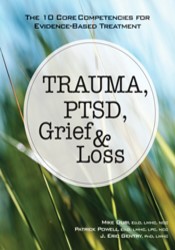
The newly released book,
Trauma, PTSD, Grief & Loss, published by PESI Publishing & Media, ISBN 9781683730392, $24.99 (available at
www.pesi.com and
www.amazon.com
)
provides a holistic and systemic path of understanding of traumatic stress, and charts the most effective treatments outlined via the 10 core trauma competencies. Trauma experts Mike Dubi, Patrick Powell and Eric Gentry bring years of clinical trauma experience to the field, providing best-practice, evidence-based clinical interventions
and techniques.
The chapters include discussions on accelerated trauma treatment using the active ingredients and positive expectancy, perceived threat, the autonomic nervous system and self-regulation, posttraumatic stress and PTSD assessment, the tri-phasic model, narrative exposure therapy, grief, loss and mourning and the next phase for the treatment of trauma.
This book is an excellent overview for the understanding and treatment of traumatic stress for new trauma therapists and a review for more experienced clinicians.
|
BOOK REVIEWS
by
Glynnis Thomas BA (Hons),
Adv. Dip. Dyslexia, MA (Ed)
|
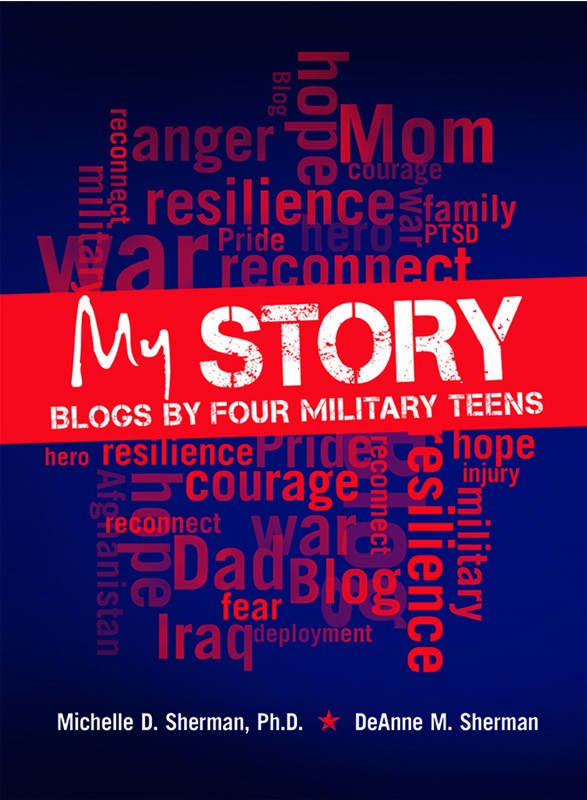
My Story, Blogs by Four Military Teens
by Michelle D. Sherman, Ph.D.
and DeAnne M. Sherman
ISBN: 9781 59298 303 2
Publisher: Beaver's Pond Press
Price: $12.95, paperback 64 pages
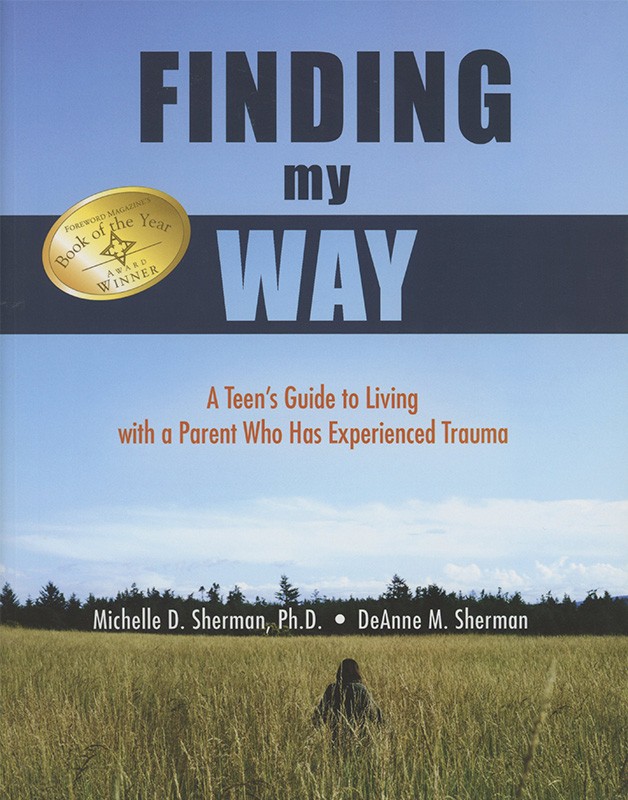
Finding My Way: A Teen's Guide to Living with a Parent Who has Experienced Trauma
by Michelle D. Sherman, Ph.D.
and DeAnne M. Sherman
ISBN: 159298 1178
Publisher: Beaver's Pond Press
Price: $20, paperback 144 pages
My Story, Blogs by Four Military Teens
and
Finding My Way
are two books written by a uniquely qualified mother and daughter team, Michelle D. Sherman, and DeAnne M. Sherman. Michelle is a clinical psychologist directing a Family Mental Health Program, and her mother DeAnne is a teacher with over 40 years of experience in educating and mentoring teenagers. The books certainly reflect their combined experience, have a real-life practical quality to them and have many useful anecdotes and hypothetical situations/scenarios to illustrate the more theoretical side of the text. Where there is a theoretical aspect to the text, this is very much linked to the need for the teenager to understand where the parent is 'coming from' so is not abstract in any way. 'Knowledge is power' is a quotation used in the book, and this is very much an underlying theme.
Finding My Way
was in print first (2005), with My Story following in 2009, the latter having a narrower focus and being much shorter in length.
My Story,
a slim volume of 64 pages, is aimed at teenagers whose parents are serving in the military. The book deals with how these youngsters cope with the separation, sometimes for long periods, from a parent, and then how they deal with the return of that parent where everyone has essentially 'moved on'. The book is in the form of blogs written by Mariah, Adam, Carlos and Meredith, which reflect the struggle each teenager is experiencing in coping with separation and reconnection, as well as dealing with issues such as PTSD, alcoholism and war injury, with all the attendant emotions of confusion, shame, depression, resentment and anger. In such a small book a lot of ground is covered. The aim of the book is to help young people in similar situations understand what's going on, and to help them develop coping strategies without feeling guilty or ashamed. It serves a very useful introduction to the topic. The book is extremely easy to read and, in my view, is likely to appeal very much to the intended audience, although it could also be useful to a wider audience than just teenagers. For example to parents, families, educators etc.
Finding My Way is a
wider ranging book and sets the teenager in the context of a family where one parent is experiencing trauma, as is evident from the book's subtitle, A Teen's Guide to Living with a Parent Who Has Experienced Trauma. The format of this book is totally different from the first and the book is longer, being 144 pages. The book is basically set out as a study guide which includes a series of exercises and prompts to help the teenager through the various processes of gaining information and knowledge, exploring feelings, developing self-help strategies, building a supportive network of friends, family members, teachers, counselors etc. and learning about further resources, such as websites.
Finding My Way
is set out in a very attractive and easy-to-read format. The language is friendly and accessible. The tone throughout is reassuring but thought-provoking and even empowering. The 'exercises' are non-threatening, with the stated option that they need not be completed in written form, but can just be used to reflect on the topic, if that is what the teenager wants to do. The young person is also encouraged to dip into various parts of the book as needed, rather than reading it straight through, and to revisit sections at a later date. In other words there is every reason to suppose that most teenagers will feel able to use some or part of the book.
The book is divided into three parts, the first called 'The Basics' explains Trauma and PTSD very clearly. It provides clear definitions, causes and manifestations and illustrates these with real-life stories and anecdotes. It describes a number of different situations in which trauma can be triggered. The section is full of useful information, enabling the teenager to understand more about their parent's situation. This 'case study' approach is particularly helpful and makes it very accessible to the teenage audience it is aimed at.
Part Two, 'Life with a Parent Who Has Experienced Trauma' provides a way for teenagers to explore their emotions and reactions to their parent's trauma and evaluate those feelings in personally non-judgmental ways. A prompt list of emotions is included to help the young person identify their own emotions more objectively. This section of the book also explores many opportunities for dealing with their situation constructively, including how to take responsibility for themselves as well as how to help their parent. However the advice in this section is honest and realistic in suggesting that not all problems can be resolved easily.
The last Section, 'Wrap-Up' basically summarizes what has gone before. By far the most useful part of this section, in my view, is the list of resources for further information. This includes useful websites, books and phone numbers, for PTSD, depression, anxiety disorders, substance abuse and mental illness in general. Interestingly this resource section includes books for both adults and children, including young children suggesting that the authors acknowledge the wider usefulness and appeal that the book may have.
The most helpful parts of the book in terms of the messages given were, in my opinion: helping youngsters not to feel guilty (it's not their fault); how to take responsibility in taking care of themselves, and, without losing compassion and connection to their parent, not to be afraid to have fun; and how to take control of their lives, rather than feeling responsible for their parent. I found these messages very empowering. To give an example one way to cope was entitled 'Distracting Yourself and Having Fun'. This legitimized the idea that it was okay to laugh and have a good time - an important message. An insert to that page asks the question,
Did you know that preschool children laugh on average of 400 times per day?
QUESTION: Guess how many times per day (on average) that an adult laughs?
ANSWER 15.
In my view both these books fill a useful niche. All those who have to do with young people in a professional and non-professional role would benefit from reading them, and they would be useful to use in the context of the family as a whole by helping the traumatized parent, as well as other carers, gain insights into the effects and outcomes of trauma within the whole family. As well as being useful books, these books are easy to read and easy to use.
ABOUT THE AUTHORS
Michelle D. Sherman, Ph.D., LP
is a licensed clinical psychologist and a nationally recognized expert on the effects of trauma and mental illness on the family. After directing the Family Mental Health Program at the Oklahoma City VA medical center for 16 years, she is now a Professor at the University of Minnesota-Twin Cities. She graduated from the University of Notre Dame and later earned her doctoral degree in clinical psychology from the University of Missouri at Columbia. Dr. Sherman has worked extensively with families dealing with mental illness and a range of traumatic experiences, including military combat, domestic violence, and sexual assault. She co-chaired the American Psychological Association's (APA) Presidential Task Force on Military Deployment Services for Youth, Families and Service Members, and is a Fellow of the APA Division 43 (Society of Family Psychology).
DeAnne Sherman
, Michelle's mother, is a French teacher, trained dancer, and choreographer. She graduated from the College of St. Catherine in St. Paul, Minnesota, where she received degrees in French, education, and speech and theater. She owned and operated a dance studio for ten years where she worked extensively with teens and young adults. In addition to being an experienced public speaker, DeAnne also volunteers her time teaching and mentoring junior high and high school students in the performing arts. DeAnne's mission is to educate, affirm, encourage, and cherish each of her students, whether it is in the classroom, in the dance studio, or on the stage. In her free time, she enjoys exercising, traveling, and speaking French with her grandsons.
|

MORE GOOD STUFF TO FILL YOUR TOOLBOX
(HIGHLY RECOMMENDED!)
|
The following excellent and free resources were provided by
Dr. Michelle Sherman and are chock full of great information for professionals working with PTSD, teens, families and veterans.
Veteran's Guide to Talking with Kids about PTSD
a 25-page interactive pamphlet for veterans about talking with children about parental PTSD.
Support and Family Education (SAFE)
http://www.ouhsc.edu/SafeProgram/
is an excellent 18-session family education curriculum for adults who care about someone living with mental illness/PTSD
Operation Enduring Families
www.ouhsc.edu/OEF
is a 5-session family education curricula for OEF/OIF/OND veterans and/or family members.
Reach Program
www.ouhsc.edu/REACHProgram
is a 9-month family psychoeducational intervention based on the evidence-based Multifamily Group Model (William McFarlane, MD), adapted for PTSD & the VA system.
|
Traumatized Brain in the Domestic War Zone
by
Kweethai Neill, Ph.D., CHT
& Steve Stork, Ed.D., CHT
|
|
Technically speaking, Post Traumatic Stress Disorder is a clinical diagnosis that can only be determined by a properly licensed mental health professional. PTSD, on the other hand, is firmly entrenched in the popular lexicon, and therefore bandied about freely. As a hypnotherapist, I do not diagnose; yet many clients come to me claiming they have it. I neither agree or disagree. Rather, even for clients who have received a medical diagnosis of PTSD, but for whom treatment has been found wanting; I agree to help them deal with the stressful consequences of trauma.
Anecdotally, hypnotherapy is often an effective alternative when conventional treatment has produced unsatisfactory results. It would be helpful, of course, to have more definitive proof; yet hypnotherapy does not lend itself to the narrow strictures of positivistic research. So I promise my clients only that I will give them the best of my work.
Hypnotherapy is commonly associated with smoking, weight loss and other lifestyle habits. I learned aversion therapy as a hypnosis strategy, but did not like using it. I preferred the concept of finding initiating events and sensitizing events; in which negative emotions, often arising in childhood, influenced behaviors and habits as an adult. The strategy is to locate that event in the subconscious mind, in hypnosis, reframe it, and thereby release it. This frees the client to release an unwanted behavior or engage a preferred change.
A client often thinks she knows the nature of the negative event and has established a causal link to a current behavior; but it is a logic arising from her conscious mind. I learned not to trust the client's assumptions, but rather to allow the subconscious mind to reveal an event for which she has no recollection or seeming relevance.
In allowing the subconscious to go where it might, I was surprised by the consistency with which instances of sexual imposition, rape and incest came out; mostly in females but also in some males. My primary strategy, when that occurs, has been to reconfigure the emotion effect of the event. The child-self took the blame and adopted a sense of being unlovable. Reframing places blame on the abuser; with the adult-self now being mature enough to understand what actually took place. The key being that this shift must take place in the subconscious, not the conscious mind; hypnosis being required to access the subconscious.
Now the client feels better but is stuck with habits of mind and behavior born out of years, and often decades, of suffering. That is when I don my health educator cap and start teaching her how to love herself.
I developed iChange Therapy as an integration of hypnotherapy, life enhancement training and Feng Shui (adapting the client's environment to support changes). It is a comprehensive approach that has effectively dealt with client's issues while also helping them learn to make better choices. Clients change inside and outside for a complete sense of peaceful living.
My shift to Trauma-Focused Hypnotherapy began with an invitation to volunteer at a battered women's shelter. I interacted with women who had been sexually assaulted, beaten and belittled; with a constant threat of more to follow. I had previously addressed PTSD in battle-worn veterans returned home. But these were women abused by the very people they trusted most to love and protect them; parents, spouse, friends, children. I recognized very similar symptoms and behaviors.
The difference is that their experiences and symptoms did not rise to a level of clinical diagnosis. They were clearly traumatized, but not in a way that qualified them for formal assistance, much less treatment.
Not that they were even asking. Most abusers had made thin excuses, expressed insincere remorse, explained away aberrant behavior, professed underlying love, asked for forgiveness, or blamed the abused; getting away with it and escaping any legal or moral consequences. A combination of low self-esteem and being cowed into submission had convinced these women their suffering was inevitable.
This experience gave me new insights about the traumatized brain. Most of my clients up to that point had only a minimal exposure to trauma. Even that was enough to negatively influence behaviors; but my process had shown them to be amenable to change. At the battered women's shelter I experienced brains that had been trained to respond in ways it should not have to; expressing fear and anger inappropriately and unnecessarily; eroding self-confidence and pushing away positive relationships in the process. And due to the severity and chronic exposure to trauma, such brains seemed less amenable to change.
Most heart-rending to me were the middle-class women with no history of prior abuse who had been, and currently were, terrorized by a post-military PTSD sufferer. While former military only recently have received services from the Veterans Administration for PTSD, their families have largely been left to fend for themselves.
I caution beginning hypnotherapists not to try and guide sessions themselves, but to allow the client's subconscious to determine where a session might go. To deal with what emerges, in practice, means creating safe space for dissociated memories to emerge from where they lie hidden.
I also recommend the hypnotherapist resist the temptation for sense-making; i.e., seeking details or attempting to help the client construct a coherent story. Dr. van der Kolk explains that traumatic memories are saved differently from conventional memory. In conventional memory, a 'story' changes slightly each time it is told; varying from earlier tellings. Further, each participant in an event experiences it uniquely, so each person's story is also unique. The implication is that memory is not very objective; making specific details of a subsequent story irrelevant.
In contrast, details from a trauma experience are recalled again and again with little change, though in incomplete pieces. Fear escalates into re-vivification of the experience, suffering the same terror, completely immersed in the memory; with no sense of escape.
It seems that trauma creates a 'memorable' impact, yet pieces of the memory get stored in disparate parts of the brain. So, nightmares and flashbacks repeat the original experience over and over without change; but often with incomplete details. And in therapy, bits of memory are parsed out over time; but during any particular session the client may not have access to all the details.
Overly inquisitive probing risks engaging the conscious mind (a no-no in hypnosis), while the client's access to incomplete details and illogical sequences is frustrating. So, in hypnotherapy, we follow the lead of the client's subconscious and address only what it spontaneously reveals; what it needs to heal most.
I describe hypnotherapy to my clients as a process of rewriting the software of the brain; deleting programs that no longer work and replacing them with new software. Trauma research describes it as re-wiring the brain. Brain plasticity is the term developmental psychologists have used to describe how the brain reassigns functions lost through illness or injury, usually in children. The current understanding is that this plasticity occurs throughout the lifespan. Basically, PTSD represents changes in the brain's wiring caused by trauma. So, the sufferer responds to the world following assumptions associated with that trauma. The beauty of this concept is, if the brain adapts to trauma, it can adapt to peace.
The challenge is to find a means of producing that effect. The purpose is not to 'reverse' the trauma, but to re-wire the brain toward assumptions associated with peace.
Trauma research is showing that the brain can be purposefully rewired.
That is the insight that lead me to study PTSD more deeply. I was seeing more clients who had spent much of their life in fight-or-flight mode. Their brain had adopted that as its 'normal' state. Their habit of mind was to treat even innocuous sensory input as somehow threatening. Something the otherwise normal (i.e., peaceful) brain would ignore, they perceive, via the traumatized brain, as an alarm.
I came to the conclusion that most of my hypnotherapy practice involves trauma resolution; minor or major, war related or domestic. I address it with reframing, guiding the client to reinterpret negative emotional scars in ways that support her basic goodness and worth. The basis of Trauma-Focused Hypnotherapy is that; prior to any attempt at reframing, the traumatized brain needs to be completely retaught notions of goodness and worthiness. The client can then be supported through the process of learning to interact within a peaceful world; rewiring for harmonious living.
All this must take place at the subconscious level. The client knows, consciously, the difference between right and wrong, fear and love; but subconscious emotions overwhelm conscious intent. Attempts at reasoning away pain and suffering is no different from measuring pain with a ruler. The right tool for the right job, reconfiguring emotional responses, must come from reorganizing the emotional source. Therefore, working with clients' subconscious mind effectively helps them feel better. When the client feels better, responding calmly to events rather than reacting out of fear, the client regains a sense of peace in her world.
ABOUT THE AUTHORS
Dr. Kweethai Neill is a Clinical Hypnotherapist and Founder/President of iHealth Center for Integrated Wellness in Roanoke, Texas. She received her PhD in Curriculum and Instruction in Health Education from Kent State University.
Dr. Steve Stork is Director of Technical Support at iHealth Center for Integrated Wellness. He received his Masters and Ed.D. at Auburn University in Physical Education Pedagogy.
|
info@traumapro.net
One of the biggest hitches we see while communicating with our participants, members and certificate holders is that some of you have spam filters and firewalls which prohibit you from getting our emails. Please be mindful of that and look in your spam folder! This applies especially to those of you contacting us from institutional emails/websites. If you would like to provide an additional address to ensure timely communications, send an email to info@traumapro.net
|
|
| |
| |
|