|
Hi,
If you are looking to strengthen the workplace culture by improving communication, everyday interactions, presentations, teamwork, leadership, relationships and the ability for everyone to get along better with colleagues, customers, co-workers or employees please let me know.
I am providing you with an update of the types of clients I have worked with and what I have delivered for them. Many of these are repeat!
Please feel free to contact me anytime at
speaker@arnoldsanow.com
- 703-255-3133 or my cell phone at 703-869-1881
Please Don't Keep Arnold a Secret ... Referrals Appreciated!
------------------------------------------------------------------------------------------------
- Government Organizations - US Department of the Treasury, US Department of Agriculture, National Institutes of Standards and Technology, US Patent and Trademark Office, US Department of Transportation, US Geological Survey, Drug Enforcement Agency, Homeland Security, Federal Bureau of Investigation, National Aeronautics and Space Administration, US Department of Justice, US Department of the Interior, Alcohol, Tobacco, Firearms and Explosives, US Small Business Administration, US Department of Commerce, Office of the Comptroller of the Currency and others - Delivered hundreds of keynotes, half, one and two day programs on, Getting Along Better with Anyone, Anytime, Anywhere", "Winning Presentation Skills", "Communication for Leaders" and "Team building" for administrative, mid-level and senior level employees in Governmental organizations. Also, hired to provide executive coaching and 360 degree feedback.
- Lexus/Toyota - Delivered keynotes and multiple all day workshops throughout the USA for field representatives, service managers, and dealers of Lexus/Toyota to improve communication, persuasion, relationship building and getting along with customers and co-workers.
-
Alaska Slope Regional Corporation - Delivered keynote address for annual meeting, "Present with Power, Punch and Pizzazz" and then facilitated workshops on presentation skills, personal presence and persuasion
- Society of Financial Service Professionals - Delivered keynote address for both their annual eastern and western meetings. This session focused on "How to build rapport, relationships and connections with both clients and co-workers." It was for financial planners, insurance agents and stock brokers.
- Federal Executive Institute - Deliver ongoing workshops for Senior Level Executives (SES level) from various Government agencies on team building and leadership, presentation skills and communication.
- Bristol Meyers Squibb - Delivered Keynote presentation for Interns focusing on improving rapport, relationships and connections with customers and co-workers.
-
Outdoor Retailers Association, Ski Industries of America and the Outdoor Recreation Coalition of America -
Designed and delivered over 20 keynotes and breakout sessions for the groups in the Outdoor Industry. All topics were related to "Customer Service, Communication, Presentation Skills and Interpersonal Relationships".
- Washington State Fire Commissioners Association - Keynote and Breakout speaker with talks on how to build high performing teams by improving communication, everyday interactions, relationships and the ability to get along better with anyone, anytime, anywhere.
- National Governors Association - Deliver all day programs for the leadership staff of various Governors focusing on improving presentation skills, persuasion and personal presence in their communication and interactions with constituents, the governor, state secretaries, each other and other stakeholders.
-
North Carolina, New Hampshire and Pennsylvania Automobile Dealers Associations -
General session and keynote speaker for the annual meeting of the state associations. My topic was "Get Along Better with Anyone, Anytime, Anywhere ... Build Rapport, Relationships and Connect"
- Power Transmission and Distributors Association - Keynote address "Get Along Better with Anyone, Anytime, Anywhere" for annual meeting.
-
Embassy of Australia
- Workshop leader for over 20 sessions. The 3-hour to 1-day sessions focused on communication, team building, leadership and interpersonal relations.
-
Forever Broadcasting
(chain of 64 radio stations). Keynote speaker and follow up seminar leader for radio station managers, owners and sales directors for 4 years in a row. Titles were, "Keeping Customers for Life", and "Get Along Better with Anyone, Anytime, Anywhere ... Building Rapport, Relationships, and Connecting with Customers and Co-workers", "Teams that Work" and "Present with Power, Punch and Pizzazz."
- Federal Bureau of Investigation - Workshop for FBI Academy Training Division Leadership Retreat. Training the trainers on best practices for leadership and team development.
- Aspen Institute - Worked with 5 different teams of the institute to provide sessions on team-building/getting along/communication. I also worked 1 to 1 with attendees as a coach on various leadership/communication challenges and concerns.
- Naval War College - Deliver ongoing one day sessions for officers and civilians on "Teams that Work ... Communicate, Cooperate, Connect."
- WellPoint (Blue Cross/Blue Shield). Delivered program to sales reps on "Relationship Selling ... Build Rapport, Relationships and Connect."
- CVENT - Delivered keynote address for annual sales meeting. Title - "Get Along Better with Anyone, Anytime, Anywhere for More Sales"
- Fairfax County, Virginia Health Department - Delivered the Keynote address to 700 employees for the 100th anniversary of the department. The title of the presentation was "Get Along Better with Anyone, Anytime, Anywhere ... Build Rapport, Relationships, Connect."
- Forrester Construction - Delivered 1/2 day session, "Communication for Leaders" and a follow up programs for employees on "Communication for employees" and "Presentation Skills" for project managers.
.
- Educational Systems Federal Credit Union- Facilitated the all-day annual retreat for 200 + employees of the credit union. The focus was on teamwork, getting along and communication with co-workers and members of the credit union.
- Sigma Tau Pharmaceuticals (new name Leadient Bio-Sciences) - Delivered workshops and coached executives to improve communication, leadership and teamwork.
- National Association of Counties - Delivered all day sessions for the internal staff on "Getting Along with Anyone, Anytime, Anywhere" and also delivered a 1/2 day session for internal staff on "Dealing with Bullies at Work" and "Winning Presentation Skills."
- Southern California International Brotherhood of Electrical Workers. Delivered/Facilitated all day team building sessions. One session for senior executive team and another for managers.
- Property Managers Association - Delivered keynote address for their annual meeting on "Leadership Communication"
- Bauer Built Tire - Delivered afternoon workshop for annual meeting for supervisors, sales and office staff on "Creating enduring connections ... Build Rapport, Relationships and Connect"
- Bremer Bank - Keynote speaker for the annual leadership conference for the leaders of the branches. My topic was "Get Along Better with Anyone, Anytime, Anywhere ... Build Rapport, Relationships and Connect." Emphasis is on the fact we are in the relationship business.
- Donaldson Group - Delivered workshop for annual meeting for all employees of this property management firm. The workshop focused on "Building Stronger Customer and Workplace Relationships."
- Eichberg Construction - Trained project managers and superintendents on improving their presentation, personal presence and persuasion skills when working with customers.
- US Department of Agriculture Rural Development Division - Facilitated 2-day team building retreat focusing on communication, interpersonal relationships, getting along and improving the workplace culture.
- Armenian Assembly of America - Delivered/Facilitated teambuilding retreat for the associations leaders.
- Guest Services - Delivered workshop and coached this hospitality company on building rapport and connecting with internal and external customers and also presentation skills to win an oral proposal.
- Institute for Excellence in Sales - Delivered General Session for sales people from different types of companies, Title, "Get Along with Anyone, Anytime, Anywhere for Better Sales."
- Stratford University - Commencement/Keynote Speaker for 450 graduating undergraduate and graduate students and 1,900 guests.
- Homeland Security -Delivered the same session over 20 times on "Winning Presentation Skills" for various offices.
- Land Trust Alliance - Coached the President on improving his presentation skills as well as helping to prepare, write and deliver his presentations.
- Medical Device Association - (AdvaMed) - Worked with staff to do a 360 degree feedback session and coaching.
- Panhandle Telephone Company - Delivered and facilitated an all day workshop for managers at the telephone company on "Communication for Leaders."
- Futrend - Delivered General session to Technology company on "What Customers Love .... Create a WOW Customer Experience."
- Agilent Technologies - Ending keynote speaker for annual meeting. Focus of the talk was on "Communicate Like a Pro"
- National Association of Credit Management - Breakout speaker at the annual meeting and keynote speaker at various chapter meeting.
- Town of Gypsum, Colorado - Delivered an all day seminar for municipal employees focusing on customer service, getting along, emotional intelligence and communication.
- Marin County, California Realtors Association - Hired multiple times to deliver luncheon presentations - Talks on "Relationship Selling", "Getting Along" and Presentation Skills and Personal Presence."
- International Foundation of Employee Benefit Plans - Delivered 2 - 5 hour sessions at annual convention. The sessions were on "Getting Along" and "Teams that Work." The audience consisted of people connected with administering and operating pension and benefit plans.
- Biolin Scientific - Ending keynote speaker for a meeting with a Swedish company with offices in the USA. I was the ending speaker after a 3 day annual retreat for the leaders and managers of the company. My focus was on "Leadership Communication"
- U.S. Department of Energy - Delivered 2-day programs on "Communication for Leaders."
- WPX Energy - Delivered the ending presentation for the leaders and executives of this oil and gas company. The focus was on building rapport, relationships and connecting with clients, employees and the people they had to lobby and persuade.
- Lockheed Martin - After dinner keynote for annual meeting of the Business Management Division. My topic was, "Personalize the Brand ... Build Rapport, Relationships and Connect."
- Cobham - Delivered a 1/2 day workshop for the companies leaders on "Communication for Leaders" and also facilitated a 2-day team building workshop for employees. Also, coached specific leaders and staff on presentation and communication skills.
- Ross Management Services - Motivational and Inspirational presentation at the annual awards dinner. Focus on going from Good to Great and not becoming complacent.
- Forever Broadcasting (chain of 64 radio stations). Keynote speaker and follow up seminar leader for radio station managers, owners and sales directors for 3 years in a row. Titles were, "Keeping Customers for Life", and "Get Along Better with Anyone, Anytime, Anywhere ... Building Rapport, Relationships, and Connecting with Customers and Co-workers" and "Present with Power, Punch and Pizzazz.
- Public Risk Management Association -Keynote speaker for the annual meeting. The topic was, "Get Along with Anyone, Anytime, Anywhere."
- Bureau of Economic Analysis - Delivered a workshop on "Winning Presentation Skills" with Economists at the agency.
- Chartered Property Casualty Underwriters Society of Southern California - Keynote speaker for the annual meeting. The topic was " How to Get Along with Anyone, Anytime, Anywhere" with an emphasis on building professional relationships.
- Wiley Rein Law Firm- Delivered 1/2 day workshop to for all their internal staff on presentation skills, and personal presence.
- AgCarolina Financial (part of nationwide Farm Credit System) -.Opening/Keynote speaker for annual meeting of credit unions.
- Mayer, Brown Law Firm - Delivered half day and all day programs on team building, presentation skills and getting along for all
- Subsystems - Delivered program to IT company on how to build stronger customer and workplace relationships with customers and co-workers.
- Skadden Arps Law Firm - Delivered 1/2 and full day sessions on communication, interpersonal relationships and emotional intelligence.
- Federal Bureau of Investigation - Delivered all-day sessions for the managers on communication, team-building and getting along.
- National Automobile Dealers Association - General session speaker at the annual meeting on "What Customers Love ... Build a WOW Customer Experience." Also, worked with internal staff to deliver sessions on "Creating Enduring Connections ... Build Rapport, Relationships and Connect"
- Court Services and Offender Supervision Agency - Delivered a workshop on Team-building.
- National Council of LaRaza - Delivered a 1/2 day teambuilding session to work on improving internal and external relationships for this Hispanic advocacy group.
- American Association of Colleges of Nursing -Speaker/facilitator for all day session with top management of the association focusing on improving rapport, relationships and connections with co-workers and members.
- Leisure Trends Group - Delivered multiple training sessions for this consulting firm focusing on presentation skills, personal presence and relationship sales.
- Jefferson Government Relations - Delivered training session for lobbyists on "How to build rapport, relationships and persuade"
- Kaiser Permanente - Delivered general session for account executives. Focused on how to build instant rapport and connect with customers.
- Traylor Construction -Delivered keynote presentation for the companies annual meeting of managers. The topic was "Get Along Better with Anyone, Anytime, Anywhere." I also did some long-term one to one coaching with various employees.
- Project Management Institute - Keynote speaker for annual meeting of the Atlantic Regional chapter. Title of talk was "Building Stronger Customer and Workplace Relationships." Audience was made up of project managers.
- Victory Automotive Group - Delivered workshop for the annual retreat for a car dealership with 25 dealerships. Topic on developing better relations with employees and customers.
- Health and Human Services - Delivered and facilitated a 2-day retreat on team-building.
- Inter-American Development Bank - Facilitated and delivered an all day session employees throughout the agency. The focus was to work with managers to improve their presentation skills, personal presence and communication. All participants received my book, "Present with Power, Punch and Pizzazz!"
- Baldrige Performance Excellence Program - Facilitated an all-day retreat for the staff that administers and awards the "Baldrige Quality Awards" to companies that excel. The facilitation was titled, "How to create a customer service mindset."
- Chrysler Corporation - Delivered an all day session on getting along and communication for minorities that own dealerships.
- Willard Hotel - Delivered workshop for managers of the hotel on customer service.
- Office of Personnel Management - Delivered 2 -day workshop on Presentation skills.
- North Carolina Telecommunications and Cable Association Delivered general session at annual meeting. The topic was "Keeping Customers for Life .... Create a WOW Customer Experience."
- Homeland Security - Delivered a 2.5 hour workshop on "Winning Presentation Skills." Hired to deliver same session 8 times.
- Slotesz, Associates - This is an engineering firm that has hired me to deliver training sessions on customer service, presentation skills and communication.
- National Labor Relations Board - General Session and luncheon speaker for various meetings to groups such as attorneys, supervisors and office staff.
- PMMI - The association for Packaging and Processing Technologies. Have delivered half and full day programs focusing on team building, interpersonal relationships, dealing with bullies at work and presentation skills.
- Xerox, Saic, Vistronix, Soltera, ACS, Booz-Allen - Worked with companies such as these to assist them in winning oral proposals/contracts. This entailed helping them with their powerpoint slides, talking points, persuasiveness and review of their presentation skills and personal presence. I have helped them win over $4 billion in contracts.
- Washington DC Metropolitan Council of Governments - Delivered 3 hour workshop titled, "Creating a Customer Service Mindset." This was for managers of the various counties and cities in the Washington DC metropolitan area.
- CDW - Delivered a full day seminar for a large computer reseller. The seminar focused on ways to persuade, motivate and influence others by building rapport, relationships and connecting with others.
- U.S. Army - Facilitated 2.5 day retreat on "Leadership Communication" for civilian graduates of the Executive leadership program of the Army.
- Southern California International Brotherhood of Electrical Workers Delivered and facilitated an all day workshop with the executive staff of the union on "Communication for Leaders"
- Phillips Seafood - Keynote speaker for annual meeting. This is a chain of Sea Food Restaurants and worldwide fish buyers. My keynote presentation focused on persuading, influencing, getting along and communicating with customers and co-workers.
- British Telecom - Presentation skills training for all presenters for annual meeting. Watched rehearsals of each presenter prior to their presentations and provided critiques and suggestions for improvement.
- Marin County California Realtors Association - My keynote presentation was titled, "Get Along Better with Anyone, Anytime, Anywhere ... Build Rapport, Relationships and Connect with Customers and Co-workers. This 90 minute presentation was for Realtors in Marin County.
- American Association of Retired Persons (AARP). - Delivered and facilitated a one day retreat for the employees of the customer service branch of the association. The focus was on, "Building a WOW Member Experience."
- Choice Hotels - Delivered back to back breakout sessions for annual convention. The presentation was titled, "15 Ways to an Irresistible You"
- Manitoba Hydroelectric - Delivered 90 minute interactive webinar for the staff.
- Willard Hotel - Delivered a luncheon speech for hotel management on "What Customers Love ... Create a WOW Customer Experience."
- U.S. Treasury (Financial Management Service) -Delivered over 20 programs consisting of everything from keynotes on Getting Along to 2 day workshops on Presentation Skills and Teambuilding. Also, delivered a presentation to Secretary of the Treasury and his staff.
- National Education Association- Delivered keynote address for the annual meeting of the Membership Benefits Division. The keynote is titled, "Relationship Selling ... Getting and Keeping Members for Life".
- U.S. Comptroller of the Currency - Delivered full day workshops over 10 times on topics; Customer Service, Presentation Skills, Personal Presence and Communication Skills. Was also general session speaker at annual events for administrative personnel on Communication.
- Sioux Falls Sales and Marketing Executives International - Delivered After Dinner Speech and Breakout Session. The focus of the talks were on "Relationship Selling" and "Keeping Customers for Life".
- Environmental Protection Agency - Delivered an facilitated a 2-day program focusing on communication, emotional intelligence, negotiation and conflict resolution.
- Florida Independent Schools Business Officers - Ending keynote speaker for the annual meeting. My presentation was titled, "Get Along Better with Anyone, Anytime, Anywhere ... Build Rapport, Relationships and Connect with Customers, Co-workers, Family and Friends".
- Simonton (window and glass manufacturer and distributor). -Delivered Keynote speech at their annual meeting for sales reps. The keynote was "Working a Successful Trade Show Booth by Building Relationships, Rapport and Connecting with Customers". In addition, I was hired to deliver a motivational speech the day before the National Trade Show.
- Hellenic American Women's Council - Keynote speaker at the annual meeting. My presentation was titled, "Get Along Better with Anyone, Anywhere, Anytime ... Build Rapport, Relationships and Connect with Customers, Co-workers .. even kids".
- Toyota - Work with the field travelers from Toyota corporate on how to improve their relationships, interactions and communication with the dealers and those who work in the dealerships.
- Full Circle Group representing Northface Outdoor Clothing - Delivered and facilitated a one and a half day retreat. I worked with a dozen sales people who sell Northface clothing to retail stores to assist them in client relations, persuasion skills, personal presence and presentation skills.
- The Executive Committee (now Vistage)Delivered 1/2 day seminars for TEC groups around the USA on, "Keeping Customers for Life" and "Communicate Like a Pro". TEC is made up of CEO's of companies ranging from 3 million to 1 billion in sales. Arnold Delivered about 15 sessions a year.
- Long and Foster Realtors - Delivered a 3 hour session on "Communicate Like a Pro" for the annual managers meeting.
- National Institutes of Health (NIH) - Delivered one day programs and one and half day retreats for various divisions of NIH . The focus of these seminars/facilitations was on communication, getting along, teambuilding and building a positive and productive work atmosphere.
- New England Satellite Systems - Delivered 2 - 1/2 day workshops for to assist the sales staff in customer relationships and internal and external communication skills.
- Forward Corporation - Delivered 1/2 day seminars focusing on communication and negotiation skills for managers and key employees. Forward corporation is made up of convenience stores, gas stations, restaurants and motels.
- U.S. Department of Commerce - Delivered one day seminars for the on Presentation Skills, teambuilding and leadership.
- Dewberry Companies (Dewberry and Davis) - Delivered a 75 minute luncheon keynote speech for the annual business meeting of the an engineering and architect firm. The meeting consisted of 200+ managers and the topic was "Boost Your Communication IQ ... Building Relationships Today, Next Week and Next Year".
- Government Program Management Summit - Delivered Keynote for the 2nd annual meeting . The title was, "Get Along Better with Anyone, Anytime, Anywhere ... Building Rapport, Relationships and Connecting with Customers and Co-workers".
- Virginia Association of Meeting Planners - Delivered Keynote presentation for the . Keynote focused on my book, "Get Along with Anyone, Anytime, Anywhere".
- Georgia Propane Gas Association - Delivered the same 3 hour program 5 times to different districts throughout the state of Georgia . The program focusing on "What Customers Love ... Create a WOW Customer Experience" was for members and employees who were propane dealers.
- Precision Tune Up and Lube Shops - Keynote Speaker for the annual franchise meeting. Focus was on building relationships and customer service.
- Hess Construction Company - Leader of a weekend retreat to provide presentation and communication skills to assist them in building relationships and rapport with clients. In addition, we worked on presentation skills in relation to giving oral proposals to win contracts. Included videotaping and critiquing.
- Mid-Atlantic Cable Television Marketing Association - Delivered 90 minute keynote on "Keeping Customers for Life ... Building Relationships Today, Next Week and Next Year".
- Health Sport (a chain of fitness centers) - Provided customer service/communication seminars to all staff, mystery shopping prior to the session, and then I delivered a "Keeping Customers for Life" seminar to their membership.
- Morgan Keegan, Inc. (Investment and Banking) - "Winning Presentation and Communication Skills" The focus was to train sales staff on how to make presentations to sell investment products to banks, state organizations and others.
- World Trade Center of Trinidad and Tobago - Delivered all day session on "Winning Customer Service."
- Archer Daniels Midland - Designed and Delivered the Keynote speech for annual brokers meeting. The title of the presentation was "Building Relationships .. Today, Next Week and Next Year". I also coordinated and participated in a Meet the Pro's meeting at the conference.
- Ryan's family Steak Houses - Delivered 2 hour session for the annual District Managers Meeting. The topic was "Marketing Relationships ... Building Sales Today, Next Week and Next Year".
- Retail Solutions Providers Association - Delivered breakout sessions on "Get Along with Anyone, Anytime, Anywhere" and "Teambuilding and Leadership for Sales Manager."
- Michigan Works - Delivered 1/2 day session on "Customer Service."
- NASA - Delivered 1/2 day sessions on presentation skills and getting along for NASA employees.
- Mayer, Brown, Rowe and Maw Law Firm - Facilitated and led an all day retreat for the Law firm for their annual support staff meeting. The focus of the retreat was on communication and interpersonal relations.
- National Propane Association - Delivered 3 hour seminar on "Get Along Better with Anyone, Anywhere, Anytime" for their annual meeting.
- Edison Electric - Facilitated the annual retreat of the executive team of the association that represents the energy industry.
- Combined Construction Groups - Delivered keynote speech for annual meeting. The keynote was "Keeping Customers for Life ... Building Relationships, Today, Next Week and Next Year".
- Independent Cash Register Dealers Association - Delivered 2 breakout sessions for the annual meeting. My topics were, "Keeping Customers for Life" and "Winning Presentation Skills".
- Market Bridge Research Firm - Delivered a presentation skills seminar with videotaping and critiquing for to help them win more oral proposals.
- Grand Rapids Home and Building Association - After dinner speaker for the association. Focus was on customer relations.
- Pennsylvania Funeral and Cemetery Directors Association - Keynote speaker for annual meeting of the Pennsylvania Funeral and Cemetery Directors Association. My presentation was titled, "Create Enduring Connections ... Build Rapport, Relationships and Connect"
- Andrews Federal Credit Union - Facilitated Board of Directors meetings on the Governance Issue of values. I also facilitated a session on how the Board and the CEO can work together better.
- Columbia United Providers Healthcare -Delivered Keynote Presentation for "Quality Week". My talk focused on "Building and Keeping Relationships with Internal and External Customers".
- Pfizer Pharmaceuticals - General Session speaker for conferences on, "Winning Presentation Skills". I have also been a facilitator for Pfizer staff and doctors on helping them to build and enhance their presentation skills (videotape and critique).
- American Bus Association - Delivered 3 breakout sessions for the annual meeting Topics included, "Winning Presentation Skills", "Building Relationships" and "Selling Yourself.".
- Medical College of Georgia - Delivered a seminar for the Doctors, staff and medical school students on "Boosting Your Communication IQ".
- Medical Group Management Association - Keynote speaker for the annual meeting. My talk was, "Working with Emotional Intelligence .. Boosting Your Communication IQ". In addition, I did a breakout session on "Relationship Selling".
- NCI Information Systems - Facilitated a 2-day retreat for the top executive team. We focused on "connecting" with each other in a more positive way and what needs to be done to grow the company to the next level and a review of the strategic plan.
- Mainstreet Technologies - Delivered a 4 hour communication and relationship building skills session for a small consulting firm.
- SAIC (Science Applications International Corporation) -Designed and Delivered a 2-day course on Negotiation Skills through the EBW group. I have delivered this session 2-day program over a dozen times to employees of SAIC throughout the USA.
- Fairfax County Department of Taxation - Delivered the keynote speech for the annual "Smiles" campaign for over 500 employees. The speech focused on customer service and communication.
- Coastal Health Department of Georgia - Delivered a one day seminar 5 times in a row for all employees of the. The sessions focused on Communication, Dealing with Conflict and Getting Along.
- Satellite Broadcasting and Communication Association - Keynote and Motivational speech for the association. The title was, "Don't Just Survive ...Thrive!".
- U.S State Departments' Credit Union - Delivered breakout sessions on "Keeping members for Life" This focused on how to provide excellent customer service to the credit unions's members.
- AmericInn Motel - Closing keynote speaker for the Franchisees annual meeting. My closing topic was, "Winning Customer Service ... Create a WOW Customer Experience!".
- National Association of Convenience Stores -Seminar leader for a ½ day session on "Customer Service" at the annual meeting.
- Washington DC Pretrial Agency - Delivered 90 minute session on customer service.
- Defense Logistics Agency - Delivered a full day program for the staff on Presentation Skills.
- Phillips Publishing - Facilitated an all day meeting for the publisher. The session was titled, "Managing Chaos". It focused on communication, team building and profitability.
- Cable Television Marketing Association - Delivered a luncheon speech for the Washington DC chapter on "Boosting Your Communication IQ".
- Business Technology Association - Dinner speaker at chapter meetings across the USA. Most requested topics included, "Keeping Customers for Life", "Communicate Like a Pro", "Marketing Boot Camp", and "Don't Just Survive .. Thrive!".
- ERA realty - Keynote speaker and breakout session speaker for annual meeting. Also Keynote speaker for Virginia Association of Realtors annual meeting. Keynotes were titled, "Building Business by Building Relationships ... Positioning vs Competing". The breakout session was "Boost Your Communication IQ".
- PEPCO (Potomac Electric and Power Company). - Delivered motivational and instructional seminar, "Communication for Leaders" and then facilitated a meeting to work on communication challenges within the organization.
- Outdoor Industry Association - Delivered a pre-conference 1/2 day session on "Winning Presentation Skills" and then delivered a breakout session on "Keeping Customers for Life".
- Association of Professional Nanny Agencies - Keynote Speaker for the annual meeting My talk, "Keeping Customers for Life ... Building Relationships Today, Next Week and Next Year" was for owners of Nanny agencies throughout the USA.
- Document Management Industries Association. - Provided short seminars on "Keeping Customers for Life" at trade shows around the USA . I also developed an online training course for them.
- Comstor (computer manufacturer - subsidiary of GE) - Delivered a 2-hour motivational talk at the annual sales meeting of My talk was titled "Don't Just Survive... Thrive". They requested that I come in every month for a meeting with the sales team to provide 45-minute talks on strategies relevant to making more sales.
- Commodity Brokers Association - Keynote speaker 3 years in a row for the annual meetings. Topics were, "Keeping Customers for Life", "Teams that Work" and "Communicate Like A Pro".
- American Society of Travel Agents - Delivered 9 keynote speeches for the regional meetings of the association. My topic was, "Attracting Customers, Keeping Them Through Exceptional Customer Service and Getting Enthusiastic Referrals".
- Bicycle Business Conference - Keynote and ending speaker for the bicycle manufacturers and dealers. My keynote was on "Keeping Customers for Life" and the ending speech was on, "Don't Just Survive, Thrive".
- Heery International (a design build, architectural and engineering firm) -Keynote, luncheon and breakout session speaker at a number of meetings. I have also been a keynote speaker for Greenvest, Inc. (land developer and realtor) and Garco (design-build and land developer). My topics have focused on marketing, communication and customer relations.
- Department of Agriculture - Delivered a seminar and facilitated a two day retreat for employees of the agency. The title of the session was "Developing Customer Service Teams.
- Meeting Planners International -Luncheon speaker on, "Keeping Customers for Life".
- Close Up Foundation - Provided an all day seminar for the Non-Profit organization. Workshop was titled, "Creating Enduring Connections".
- Planning Research Corporation and Litton Industries - Delivered keynote speeches on "Boosting Your Communication IQ" and "Keeping Customers for Life."
- Calvert Financial Group - Trained all sales, marketing, customer service, and financial planners on on Presentation Skills.
- Texas Pest Control Association - Keynote speaker for the annual meeting of the . My presentation was titled, "Marketing Boot Camp".
- Regan National Airport in Washington DC. Trained all the service people, managers and office staff with an ongoing "success skills" program focused on customer/guest relations, people skills, communication and dealing with difficult people/conflict resolution. Worked with groups of 15. Met each group 4 times a year. Supplied workbooks and copies of my book.
- CANUSA Inc - Keynote speaker and seminar leader for a environmental leadership company. Worked with top managers to develop a marketing plan and specific strategies. I then facilitated a 3 - hour session on managing chaos, team-building, communication and building profitability.
- Marasco-Newton Consulting - Designed and developed a 3-hour program for the firm on "Building Business by Building Relationships.. Position vs. Compete". This program was for the annual retreat.
- Greenvest land development and Cambridge Builders - Delivered luncheon speech for (annual meeting) on "Keeping Customers for Life".
- National Association of Home-builders - Delivered speeches and breakout sessions for the at various national and regional meetings. The talks focused on Marketing and Customer relations.
- American College of Physicians - Delivered 3-hour presentation skills workshop for Doctors and Administrators
- Industrial Fabrics Association - General session speaker for the annual meeting on "Attracting and Keeping Good Employees"
- American Subcontractors Association - Keynote and breakout session speaker for the annual conference of the association. Topics were on, "Keeping Customers for Life" and "Communicate Like a Pro"
.
- CARR Realty - Provided seminars for sales staff, office staff and service workers. Delivered 5 sessions. Each group had a customized session focusing on communication, customer relations, conflict resolution and dealing with difficult people.
- Delaware National Guard - Keynote speaker for the for their annual meeting. Title of the speech was, "Boosting Your Communication IQ".
- Washington Post - Designed and Delivered a seminar for the annual retreat of the service workers on developing customer focused teams.
- National Glass Association - Designed and delivered customized 2 and 3 day Communication and Customer Service programs.
- National Telecommunications and Cooperative Association -Keynote and general session speaker at various meetings throughout the USA
- Baton Rouge Chamber of Commerce, Fairfax Chamber of Commerce and the Skokie Illinois Chamber of Commerce on "Keeping Customers for Life ... Building Business by Building Relationships". These were all major events with audiences ranging from 250 to 1,000.
- American Association of Art Museum Directors - Keynote speaker for the annual meeting of the. My topic was "Get Along with Anyone, Anytime, Anywhere".
- American Trial Lawyers Association - Delivered communication sessions, "Boosting Your Communication IQ" and "Winning Presentation Skills."
- Sales and Marketing Executives International - Delivered all day workshops sales people on, "Attracting Customers, Keeping Them Through Exceptional Customer Service and Getting Enthusiastic Referrals".
- BDE Engineering - Provided workshops to on Presentation Skills. The purpose was to help them be more effective presenters when going after contracts.
- National Association of Industrial and Office Properties - Delivered opening presentation for the annual meeting of the The title of the presentation was "Keeping Members for Life ... Building Relationships Today, Next Week and Next Year".
These are just a few of the programs I have offered. I've delivered over 2,500 paid presentations and have worked with over 500 different types of companies, organizations and governmental agencies. I average 4.8 to 5.0 out of 5.0 on presentations with over 90% of my clients hiring me back. Please contact me and I'd be happy to provide you with information on what I've done for companies like yours.
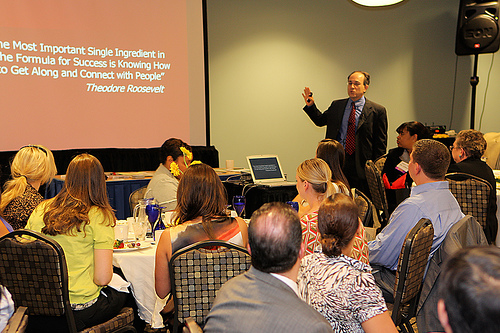
Arnold Sanow, MBA, CSP works with companies and organizations to build stronger customer and workplace relationships by improving communication and interpersonal relationships. He is a professional speaker/trainer with over 2,500 paid presentations. He is the author of 6 books to include, "Get Along with Anyone, Anytime, Anywhere" and "Present with Power, Punch and Pizzazz." He is a frequent guest and commentator in the media (CBS evening news, ABC world morning news, Wall Street Journal). He was recently named by Successful Meetings Magazine as one of the top 5 "best bang for the buck" speakers in the USA" and was voted by his peers as one of the top 30 Global Gurus in Communication.
www.arnoldsanow.com
- www.speakingcoach.com
speaker@arnoldsanow.com
- 703-255-3133
See Arnold's recent newsletter article below ...
|
7 Ways to Handle Difficult and Uncomfortable Conversations
Throughout your work with customers, colleagues, co-workers and employees there will come a time when you will need to have an uncomfortable and difficult conversation.
Uncomfortable topics such as personal hygiene, sexism, inappropriate behaviors, vulgar language, lack of cooperation with others, bullying, rudeness and dress need to be addressed.
The problem is many times we don't address them because we are uncomfortable in providing feedback to others. And when we don't the problem continues to persist.
As someone who works with companies and organizations to improve customer and workplace relationships, I am often hired as a coach to provide the feedback and engage the "perpetrator" in the difficult conversation.
Here are some ways to help you deal with these difficult and uncomfortable conversations:
* In a nice manner let the person know you have some feedback you would like to share. Ask if they have a few minutes to talk now or if they would like you to come back later. Don't start the conversation at such times as before lunch and when they are going home.
* Don't go directly into the feedback. Tell them the feedback you are going to share is difficult for you. If you are uncomfortable let them know that too. I sometimes mention, "feedback is like a gift. If you don't like it, you can return it to the store."
* If others have complained about this person's behavior, don't go into specifics about who the "accusers" are. This tends to get people madder and makes the feedback even more uncomfortable for the person.
* Depending on how comfortable you are, you may want to go in and directly state the problem. Sometimes keeping it simple, straightforward and honest is the best policy. As an outside coach, this is the one I use the most. Many times the person doesn't realize that they are being a bully, are rude or are using inappropriate language. Many times the problem is "cured" immediately by stating the problem directly.
* Tell the person the benefits (what they can save, gain or accomplish) they will get by changing their behavior. The key to persuasion is WIFM (What's in it for me?)
* If you are the manager, set up an agreement of what the person will do to change their behavior. When I am hired to coach someone with poor behavior, I ask them to tell me what they are going to do to change. I then set due dates and a time frame. I measure the results by asking other employees on a regular basis to provide feedback about the person.
* Follow up on an ongoing basis. As a coach, I have offer a four month contract where I continually monitor a person's behavior. When I see them going backwards I immediately confront them on their behavior and let them know what I expect. Also, make sure they understand how to "fix" the problem.
|
|
See Website for Professional Development Programs
and Solutions that Work!
|
Keynotes, Training, Professional Development Programs
Arnold Sanow the "Get Along Coach" and author of "Get Along with Anyone, Anytime, Anywhere" works with leaders and teams to assist them in improving their ability to get along better with colleagues, co-workers, employees and customers to build more positive, productive and profitable organization. Call 703-255-3133 - speaker@arnoldsanow.com - www.arnoldsanow.com
|
|
Do You Get Along with Anyone, Anytime, Anywhere?
See 2 minute video on tips to Get Along with Anyone, Anytime, Anywhere from Interview Arnold had with the ABC world morning news. www.a
|
|