View as Webpage

TORAH PORTION: EMOR

Parashat Emor

May 18, 2024 | 10 Iyyar 5784

Torah: Leviticus 21:1–24:23 Triennial: Leviticus 22:17–23:22

Haftorah: Ezekiel 44:15–31

We believe that in times of great strife, words of Torah can provide stability and comfort in our lives.

We know that you join us in praying for the safety of our soldiers and citizens, and that together we mourn the terrible losses already suffered.

We stand together for a strong and secure Israel.

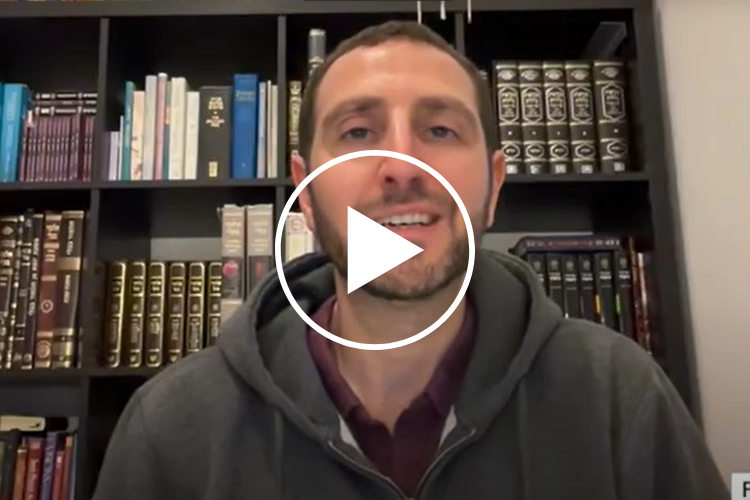
In this week's Torah Sparks, you'll find a D'var Torah on the Torah portion by Bex Stern-Rosenblatt called "Reflecting God's Light", Rabbi Daniel Raphael Silverstein asks shares insights from Hassidut in a video titled "Bringing Peace Above and Below", and Ilana Kurshan reflects on the parashah through poetry in a piece called "Grasp Hold of Time".

Choose a Torah Sparks Subscription!
Download TORAH SPARKS Printer-Friendly File

D'VAR TORAH

Reflecting God's Light

Bex Stern-Rosenblatt

Parashah


There is a tension running through all of Leviticus, through all of Torah, through all of life. God in all God’s infinite power nonetheless is bothering with us humans, playing our little human games. God is inviting us to bask in the reflection of God’s holiness, to aspire to be God-like without ever thinking ourselves gods. God is needing us, or at least wanting us. And we seem to be uncomfortable with the idea of a God who does. 


Our parashah contains a beautiful description of the continual lighting of the menorah, to burn eternally. The verse is tripping over itself to emphasize the everlasting nature of this project: the lamps will burn forever, eternally, for all your generations. The lamps will burn from evening to morning, just as God guided us in the wilderness. Over and over again, we read the word tamid, perpetual, continual, always. It’s a beautiful concept. Just as God was there for us in the wilderness, now too, we will always be there for God, lighting the menorah as long as our descendants survive, which will be forever, so that they too can keep the menorah lit. 


And yet we push back against this idea of being there for God, of God needing us. Rabbi Shmuel b. Nahmani succinctly explains (b. Menachot 86b) that the point of lighting was for us and not for God, as God does not need its light. Rather, the point of the light was to be a “testimony to all of humanity that the Divine Presence rests among the Jewish people.” We do not light for God, we get to light as a gift from God. 


Likewise, we read a midrash (Vayikra Rabbah 31:8) in which the rabbis express a deep discomfort with the idea of God needing us. They detail the many times that God has brought light to the world from nothingness, from darkness. We read of the brilliance of lightning, power of sight emerging from the blackness of the pupil, the formation of light from darkness, the creation of the fetus in the darkness of the womb. After each example comes God’s refrain, “Do I need your light?”  And yet this midrash is commenting on our verse in this parashah, this moment in which we offer God our light. And in response to each of these queries, Rabbi Acha replies in God’s voice, saying, “I have commanded (you to light the menorah) in order to give you merit.” We answer that God does not need our light. God is allowing us, rather to partake in God’s light. 


But there is one more take on this, a beautiful midrash (Vayikra Rabbah 31:4) recounting a conversation between God and Adam shortly after the formation of the world, the creation of all that light. We read that God said to Adam: “Your light is in my hands and my light is in your hands.” The source text for our light being in God’s hands is Proverbs 20:27, “The light of God is the soul of man.” The source text for God’s light being in our hands is our parashah, “to light a continual light.” We both hold each other, our souls form God’s light from which our souls are then formed. So perhaps God does need us to light the menorah. Perhaps God’s eternal light is dependent on our eternal lighting. Let us not be the ones who let it go out.

HASSIDUT

Bring Peace Above and Below

Rabbi Daniel Raphael Silverstein

Insights from Hassidut

*

Rabbi Daniel Silverstein teaches Hassidut at the CY and directs Applied Jewish Spirituality (www.appliedjewishspirituality.org). In these weekly videos, he shares Hassidic insights on the parashah or calendar.

WHITE FIRE: POETRY ON THE PARASHAH

Grasp Hold of Time

Ilana Kurshan


Time passes quickly when we do not stop

To mark some days as different and unique

We lose track of our hours and our days

And next we know, it’s been another week.


So God says: Stop! Take note! Not every day

Is just another workday. You must rest

The seventh day is sacred unto Me.

The Sabbath. It is sanctified and blessed.


Six days precede each Sabbath. Week by week,

The year unfolds. But not each week’s the same—

Each spring, recall how time began anew

When out of Egypt’s bondage we all came. 


Count seven weeks from Passover and eat

No new bread or parched grain until you bring

A sacrifice. First fruits to celebrate

The source of all our bounty, fall to spring.


At summer’s end, more sacred days arrive

The seventh month comes ‘round with shofar blasts

The first day is a sacred day of rest. 

The tenth day – self-denial. Full-day fast. 


And when the moon is full that month, depart

Your home and live inside a booth instead

Take palm and citron, celebrate, and pray

This harvest might sustain in months ahead.


Said God to Moses: Do not let time fly

Grasp hold and mark these days ere they pass by.


*

The Talmud teaches that the Torah was given in black fire on white fire (Y. Shekalim 6:1). The black fire is the letters of the Torah scroll, and the white fire is the parchment background. In this column, consisting of a poem on each parashah, I will try to illuminate the white fire of Torah – the midrashim, stories, and interpretations that carve out the negative space of the letters and give them shape.

Support Torah Sparks


Do you love Torah Sparks? It's brought to you by The Fuchsberg Jerusalem Center and we rely on your contributions to keep the learning going. Support Torah Sparks by making a donation to FJC or by selecting a subscription below:

Choose a Torah Sparks Subscription!

Access the Torah Sparks Archive

For more information about the Fuchsberg Jerusalem Center, please sign up for our weekly FJC Newsletter, visit our website or contact us at israel@fuchsbergcenter.org.