DONATE >

Weekly Newsletter

September 6, 2023

Quote of the Week:

“Strength doesn't come from what you can do.

It comes from overcoming the things you once thought you couldn't.”

– Rikki Rogers

Tips for Caregivers Navigating Hospitalizations

Webinar by Dr. Landau 8/30/2023

Click play to watch the recording below:

How can you help? How do you prepare? When they come home...


It is disturbing to hear that hospitalization can be “bad for you”. And at the same time may be where you must go to get help for serious medical issues. With that said, for older adults — it’s not just scary, uncomfortable, and inconvenient to be hospitalized (and already sick). But it can be seriously more challenging than for almost anyone else.


There’s a list of common problems for older adults during and after hospitalizations: 

“Known as Hazards of Hospitalizations.”

1. Delirium or Increased confusion that can result in increased and persistent cognitive decline even after hospitalization.

2. Incontinence while in hospital that can persist after discharge.

3. Pressure ulcers 

4. Increased problems with mobility

5. Overall functional decline

6. Depression

How can you, the caregiver, help your loved one while

in the hospital and when they come home?


What to bring to the hospital: (and make sure is documented as having been brought to hospital)

1. Medication bottles (in addition to list of medications).

2. Anything they use to enhance function: hearing aides, dentures, glasses.  

3. Medical devices such as CPAP, cane, walker.

4. Copy of POLST: Physician Orders for Life-Sustaining Treatment (POLST)

5. Copy of durable power of attorney for healthcare, California: names somebody to make medical decisions any time you are incapable to do it on your own, even if you are expected to make a full recuperation. CA Medical Power of Attorney Form

6. For you: pad of paper and pen; your cell phone and charger; water and snacks

Special needs if patient has cognitive impairment or dementia:

  1. Let hospital staff (nurses, doctors, aides, therapists) know that there are memory issues and confusion — especially if it’s not yet been diagnosed and therefore isn’t on their medical problem list.
  2. Help hospital staff learn about your loved one — what makes them happy, or upset, how to help them when they are upset.
  3. Inform hospital staff about details of your loved ones living situation: who they live with, where they live.
  4. Bring comfort items for your loved one: photographs, pillows, etc.

Connecting with hospital staff:

*Each new situation your loved one is in, example ER, on hospital floor, ICU — get names and phone numbers of the physicians working with your loved one.


  1.  Doctors — the ultimate decision maker is the “attending doctor” get their name and how to reach them. Ask for their card.
  2. Other doctorsSpecialists called in by the attending doctor.
  3. Fellows (MD in training for a specialty), interns, medical students — all may be present, knowledgeable, and helpful.  
  4. Nurses: Nurse supervisor — Can be your last stop for problems that don’t seem easily solved.
  5. Primary nurse — there may be an RN assigned to your loved one and often their name and phone number is listed in their hospital room. 
  6. Therapists: Speech Therapist (often involved with swallowing and choosing safe food textures to avoid aspiration.) Occupational Therapists (help maximize and maintain basic functional skills like self-feeding, toileting, dressing, etc.) Physical Therapist — helps maximize and maintain mobility like turning in bed, standing up walking. Let therapists know what their functional skills were before the hospitalization or before their recent reason for hospitalization.  
  7. Social worker or discharge planners. These folks may not be involved when patient is first admitted.


Don’t be surprised if this “cast of characters” changes over time. 

Just start over introducing yourself and your loved one as appropriate.

Important information that hospital staff need

for older patients especially:

  1. How or why did they go to the hospital?
  2. Was the reason for hospitalization sudden or over a period of time.
  3. Bring a list and share with appropriate staff: all medical problems.
  4. (As mentioned earlier) list of medications. If any of the medications were only recently started.
  5. List of medical specialists that have been involved in your loved one’s care and their phone numbers.
  • Offer to help make connections or clarify — develop your partnership with these providers!


Common problems be be alert to that can arise

for older adults in hospital: 

  1.  New incontinence problems.
  2. Increased problems with memory. May be indicator of delirium that if addressed promptly can improve outcome significantly:
  • Delirium: 30-60% of older adults will have problems with delirium during hospitalization.
  • 80% of older adults in ICU will have problems with delirium. Sudden onset confusion that can wax and wane throughout the day can be indicative of delirium.
  • Family caregivers may be the first to recognize symptoms of delirium!


Stay Informed:

  1.  Any new diagnoses that are found during hospitalization.
  2. Test results (can be helpful to ask ahead of time how to find out about results of tests).
  3. When you can’t be at the hospital — find out who you should call to know how things are going.

Your eyes and ears are really important to your loved ones care:

Things to take note of…

  1. Encourage staff to let them eat while sitting up: Better for digestion. Better for maintaining muscle mass. Better for preventing aspiration pneumonia. Better for preventing delirium and resulting increased cognitive impairment.
  2. Early mobility — Eating while sitting up, helps with this. Remember for an older person 3 days in bed will result in 40 to 50% loss in muscle mass.  
  3. Toileting — keeping track of bowel movement regularity.  What was it before hospitalization?  Let the staff know.  Help prevent skin breakdown and maintain functional skills.
  4. Increased or new pain. Let the staff know.  
  5. Sudden change in functional skills — like all of the sudden, no longer feeding themselves.
  6. Any new, sudden onset and or worsening symptoms you notice.


Staying connected and partnering with medical professionals

taking care of your loved one:

Interpersonal creativity: Be kind and patient as possible. Help them see you as an advocate in their job. It is said… “You can catch more flies with honey…”


When communication seems to have broken down:

  1. Connect with the nurse supervisor.
  2. Find out if there is a patient advocacy office.
  3. Come prepared with your questions and concerns with paper and pencil.  Even bring notes you’ve taken documenting your concerns
  4. Remember health care and hospital work in particular  is a labor or love but labor, nonetheless!

When your loved one is coming home:

  1.  Get written discharge notes and make sure you understand them, before you leave the hospital.
  2. Medications: What is continued? What is new?  If new, are there side-effects to watch out for.  Who to call if you are concerned about these.
  3. Home health OT, PT or nurse aide: may be ordered. You can ask for it — discuss with the discharge planner.
  4. If you are advised to make follow up appointments with doctors, ask for help to set these up with the discharge planner before you leave the hospital. Make sure these are set up before you leave the hospital.

DayBreak is here for you!  

Let us know of other topics you want to hear about.  

 (510) 926 - 0798

Tribute to Karen from Our Caregiver Community

Karen has been a beacon of light for our caregiving community. Her unwavering support, compassion, and dedication have been a source of inspiration for all of us. She leads with kindness and empathy, always ready to lend an ear or offer a helping hand.

In moments of uncertainty and exhaustion, Karen's wisdom and warmth have provided comfort and strength. She embodies the true spirit of perseverance, reminding us that even in challenging times, we can find grace and resilience.

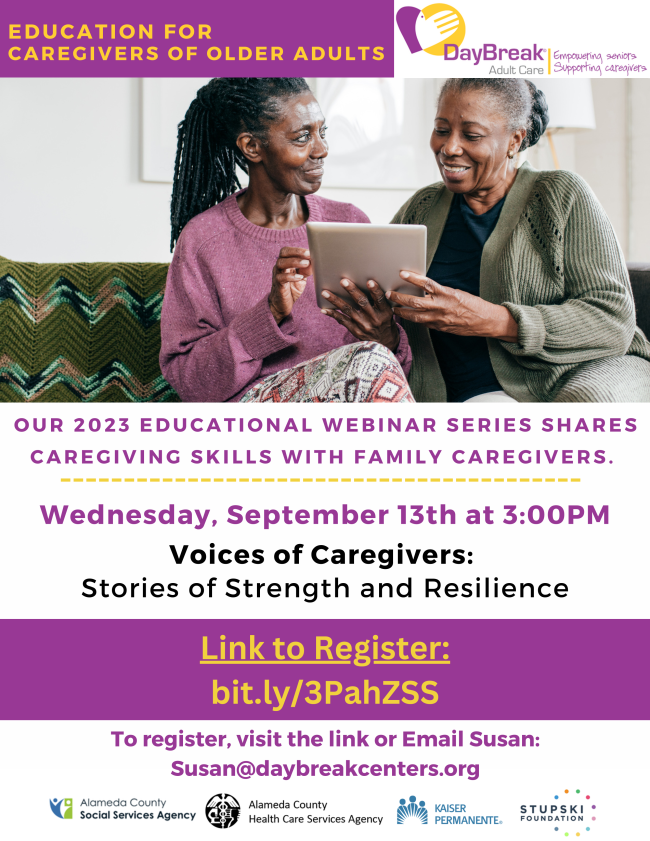
Upcoming Workshops & Events:

Empower Change through Giving: 

Together, we can make a meaningful difference in the lives of

elders and the caregivers who selflessly support them.

DONATE NOW >>

DayBreak is committed to offering essential support to elders and caregivers navigating diverse difficulties. If you're acquainted with a senior who could find value in our care and coordination services, or if you're aware of a caregiver seeking assistance, encourage them to reach out to us at:

510-834-8314

Web  YouTube  Facebook  Instagram