July 2024 | Issue 50..............................................................Click to View Online | |
|
Spill the Tea.
First, for all our Baby Boomers in the audience who have no idea what the phrase, “spill the tea” means, we will enlighten you before we proceed with this topic. Spill the tea has been a phrase used for several years by Gen Z and Gen Y to mean to share juicy or exclusive details about a situation or person; therefore, when one says that they are going to spill the tea, that means they are going to tell you some new and timely information. Try using that phrase with your grandchildren and they will be so impressed with your modern vocabulary. Now we will spill the tea about what has been going on behind the scenes at Roberson Law!
The elephant in the room, for our past and present clients, is that our firm has grown at an exponential rate over the past 5 years. We have been blessed, and solely contribute this growth to God’s provision for our firm. However, growing pains are hard (for us and for our clients), primarily because there are only so many hours in the day to help people. While our goal has been to maintain the excellent standards that we have the reputation of providing to clients over the past 40 years, we are human and make mistakes due to being so busy. While we are instituting procedures to help maximum efficiencies and productivity, the fact remains that we simply cannot keep up the pace of our case load with our current staff count.
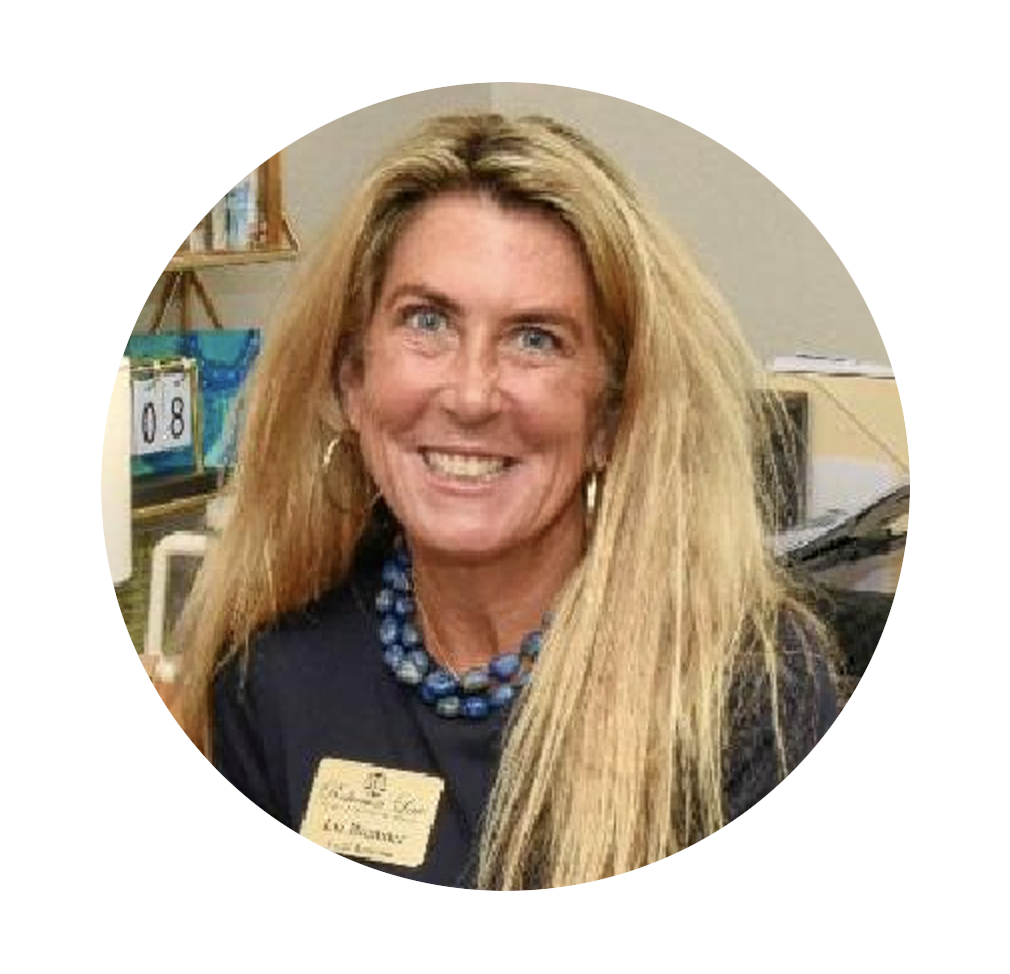
For the first time in our Roberson Law history, we will be adding a fourth attorney, and an additional legal assistant, to our staff to help serve our clients! The legal assistant is none other than our infamous former client-loved employee, Liz Bremner! Liz worked at our office for several years before leaving to take a break from the legal profession. However, the break is over, and Liz has returned and started serving our clients again! The other new employee is a recent graduate from the University of Dayton School of Law, Kristen Cochran. Kristen will take the Ohio Bar at the end of the month and then will participate in an apprenticeship with us to learn the ropes. Kristen received her under-graduate degree from Cedarville University and has worked a couple of years for a law firm specializing in non-profits. We are so excited to have Liz and Kristen join us in our efforts to improve!
| |
|
How old do you need to be to do Estate Planning?
2018 archived article reboot
Many years ago, Attorney Nancy Roberson was interviewed for the news show WHIO Reports, and one of the topics addressed was how old a person needs to be to do estate planning. The program contained almost 30 minutes of valuable advice about estate planning and discussed the topic of being prepared at any age for sudden illness or death. Shortly after that interview, Consumer Reports published an article about the same topic.
Jane F. Wolk, a lawyer who contributed to the Consumer Reports article titled Will You Be Able to Help Your College-Age Child in a Medical Emergency? states, “Once a child turns 18, the child is legally a stranger to you. You, as a parent, have no more right to obtain medical information on your legal-age son or daughter than you would to obtain information about a stranger on the street."
The Consumer Reports article shares a frightening story about a parent of an 18-year-old who was denied information about her son's medical condition in the hospital emergency room due to HIPAA laws. The son was in the middle of a medical procedure, had not completed a HIPAA form or Health Care Power of Attorney, and was not in a position where he could give authorization for his mother to obtain updates about his medical condition.
A scenario similar to the previous story occurs very often with our clients who have children with special needs. The child with special needs turns 18 years old and then suddenly the parent is not privy to information about the son or daughter's health, even though the parent still remains the primary caregiver.
Most 18-year-olds do not need the lengthy, comprehensive wills that we prepare in our office. Therefore, we have an abbreviated version of our customized will that is appropriate for unmarried, young adults, who do not have children or own a home. At a drastically reduced price, we will do this service for our clients’ children in conjunction with the client’s own estate plan that we prepare for them. If you are a client, and your adult child fits this description above, then please reach out to us to inquire about getting basic estate planning documents prepared for him or her so that you and your adult child don’t find yourself unprepared in the middle of a health or financial emergency.
| |
|
R-E-S-P-E-C-T
Recently I was fiddling with social media, and an article about the top entertainers of all time popped up. As usual, a video of Aretha Franklin belting her signature song, “Respect” appeared. “Respect” is my favorite pop song, and I deeply admire Aretha’s life and career except for one weird thing: Her Last Will and Testament was found under sofa cushions in her house! Aretha’s will was handwritten, so evidently she had not consulted with an estate planning lawyer who would have admonished her about writing a Letter of Instruction to her family about the location of her legal and other important documents.
Years ago I was hired to handle an estate, but the children could not find their mother’s will. I asked my mentor for suggestions about where to look. After the obvious places, like the safe deposit box and home security box, he suggested the following: under throw rugs, behind drapes, in the glove box of a car, in a freezer, and so on. As a young lawyer, I had a lot to learn about human behavior!
The point of this article is to remind you to write your Letter of Instruction if you have not already done so…and to update the letter if it’s been a while since you wrote it. We’d love to have a copy of your letter for your file in our office. If you met with me or another attorney in our office, you would have been given a photocopy of an article about writing the Letter of Instruction, and that action item would have been written on your To Do List. Please don’t leave your executor suffering in silence about where to start looking for your will; respect your executor with guidance about where to find your legal documents. The best written will isn’t any good if it can’t be found.
| |
|
Does your deceased relative have unclaimed funds available to you?
The Ohio Division of Unclaimed Funds (ODUF) operates for the benefit of returning funds that are owed to a person, whether dead or alive. The funds could possibly be from a closed bank account, rent or utility deposit, uncashed check, undelivered stock certificate, or uncashed insurance policy. According to the ODUF, if there is no activity in the account for a period of time, and the company cannot reach the account owner, the funds are reported to the ODUF for safekeeping until the rightful owner claims the money.
Contacting the ODUF is a process that our probate department recommends on behalf of every decedent's case we handle. We want to ensure that the decedent didn't have any unclaimed funds that should be included in the inventory that is often completed for the estate administration.
If you would like to check to see if you or your deceased loved one has money deposited with the ODUF, go to:
https://com.ohio.gov/divisions-and-programs/unclaimed-funds/claiming-funds/claiming-funds .
| |
|
Will your financial institution accept your legal documents?
Banks, brokerage firms, and investment companies are cracking down on the policies pertaining to a person's use of a General Durable Power of Attorney (GDPOA) to conduct account changes or transactions on behalf of the account holder.
Changing beneficiary designations can be an integral part of estate planning, and the task of doing so is sometimes executed by a person other than the actual account holder. We realize that the activity of liquidating accounts or changing beneficiary designations by someone other than the account holder can be viewed by financial institutions as a questionable activity. However, sometimes the account holder is unable to make account changes himself or herself due to an illness or other reason that prohibits him or her from doing so. The agent listed in the GDPOA needs to be able to conduct the account transactions quickly without getting push back from the financial institution about the agent's authority to do so. Unfortunately, sometimes the financial institution refuses to cooperate.
Banks are usually more willing to accept a GDPOA, but we know for a fact that at least two well-known investment companies did not accept a power of attorney other than the internal POA forms that the investment companies have created themselves. Another investment company will accept a GDPOA other than its own form but requires additional documentation, an Affidavit, submitted by an attorney that validates the authenticity of the GDPOA before allowing an agent to conduct transactions on an account holder's behalf.
We have had the experience of a bank refusing to accept a GDPOA because of its age. As a result, we recommend that you "refresh" your GDPOA about every five years. Refreshing your GDPOA is simple and inexpensive, so just call our office for assistance.
The moral of the story is that you shouldn't automatically assume that a financial institution will accept your GDPOA. We suggest that you contact your financial institutions and ask what their requirements are for you to allow another person to conduct business on your behalf. You should be proactive about this task because you don't want to be in a situation where you are physically or mentally unable to make a needed account transaction but your agent unable to help you because the financial institution will not accept your GDPOA.
| |
|
Finding the Strength to Keep Going
by Robert Greenlaw
When you look back on the significant accomplishments of your life, they were probably not easy at the time. Most things you want—including a good education, meaningful relationships, quality workmanship, financial security, and physical health require some degree of effort and endurance to keep pressing on, especially when you feel like giving up.
Endurance involves grit, tenacity, perseverance, and determination. It is built on patience, hope, optimism, and faith that what you are doing is worth the effort. It is being honest about the challenges before you without getting lost in negative thought, discouragement, and despair.
Endurance is not easy. It requires wisdom to know what to do and dedication to pursue it. Perhaps you need to step back and get perspective on what you are doing and why. Maybe you need to start early and attack the day with renewed vigor. You might be trying to do too much, and you need to share the load with someone else.
Don’t let stress or difficulty overwhelm you. Find the strength to keep going and give your very best. After all, failure is only final when you quit trying.
Article was published online at https://characterfirsteducation.com.
Robert Greenlaw has led character-based training programs for more than 100,000 participants in 16 countries. Watch his new teaching videos for children at www.CharacterFirstEd.com.
| |
Watch this 5-minute video break: “The Similarities of Surgery and Estate Planning” by Jon Braddock from his YouTube channel: Estate Planning Nightmares and How to Avoid Them
| |
|
Have you received an email from Amy Cary and are wondering if it is legit?
Yes, it is!
Although we would like to be able to send out this newsletter every quarter, it's just not possible due to our heavy case load and the tyranny of the urgent that happens in our office every day. However, to supplement our limited newsletters, and in an effort to improve client engagement, our Business Manager, Amy Cary, is communicating with some of our clients once a month about helpful tips that pertain to our practice areas.
Due to spam regulations pertaining to email, Amy is only sending these informational emails to a select number of people who read our newsletters. That being said, if you do not want to be included in Amy's emails, please let us know and we will remove you from her list. She only sends one informational email a month but will remove you from her list if you do not want to receive her monthly email.
| |
|
A Day To Remember
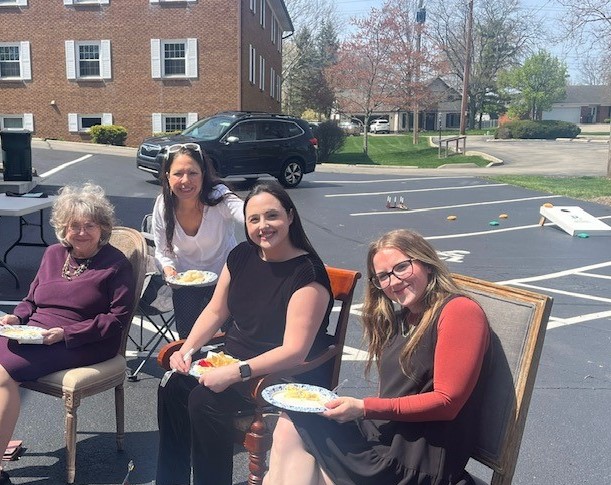
We made history as we threw our first (and only until 2099) total eclipse viewing party for our staff and their families. A good time was had by all!
| |
|
Help us. Help others.
from Amy Cary, Business Manager
Please take a moment to review your experience with us. Your feedback not only helps us, but it also helps other potential clients. If you cannot give us 5 stars, please reach out to me personally at acary@dayton-attorney.com. I am here to assist you if there is anything that we can do to improve your experience with our firm. Thank you for helping us in our efforts to continue to maintain the excellent, high standards that have been the backbone of our reputation for over 40 years!
Please help us get to 100 on Google; we only have 5 to go!
CLICK HERE TO REVIEW NOW!
| | | | |