|
From the Right Seat
Peter Rafle ATP CFII
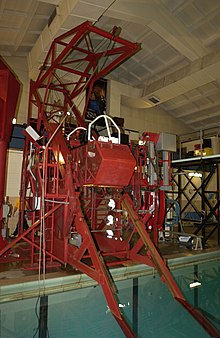
I entered the Navy in September 1963, and, for about sixteen weeks, my class was kept busy with physical training, marching drill, Aerodynamics, engines, weather theory, swimming, and so many other details of military life. We had all heard about the “Dilbert Dunker”, a machine used to teach us how to survive an aircraft ditching. The classes ahead of us would spread horrific tales of being trapped near the bottom of the pool in the cage-like contraption. Being prospective Naval Aviators, we were not frightened, but curious, and impatient to be tested by
the “Dunker ”.
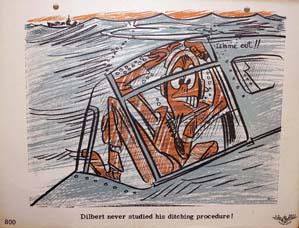
The name “Dilbert” referred to a popular cartoon character used in World War II posters and training materials. Dilbert was always shown screwing up an approach to the carrier, or being distracted while flying, etc. He was the clear example of What not To Do! He should not be confused by the IT geek named Dilbert of more recent comic strips.
After the Battle of Midway, the Navy began to look into how pilots could be trained to survive a
ditching. Too many pilots were lost after ditching. Survivors testified to the need for better
checklists and the need for better training on how to get out of the airplane and live. In early
1944, Ens. Wilfred Kaneb was assigned the job of developing a device to train pilots to orient
themselves underwater, release any restraining belts, and exit the cockpit and swim to the
surface. He used the name of the cartoon aviator who never did anything right, and from the
first day of use has been known as the Dilbert Dunker.
It was built with a cockpit based on the SNJ Texan that contained” all the equipment in the
cockpit that would hinder a pilot’s exit from the cockpit . This included the instrument panel
(minus the instruments themselves) and the stick, rudder pedals, and brake pedals, which were
spring loaded to simulate actual conditions by holding them in place.” (1)
|