|
Image Above: Finger Lakes Independence Center--FLIC--Logo: The letters: F-L-I-C and the letter I looks like an open door. Finger Lakes Independence Center Opening Doors to Independence |
|
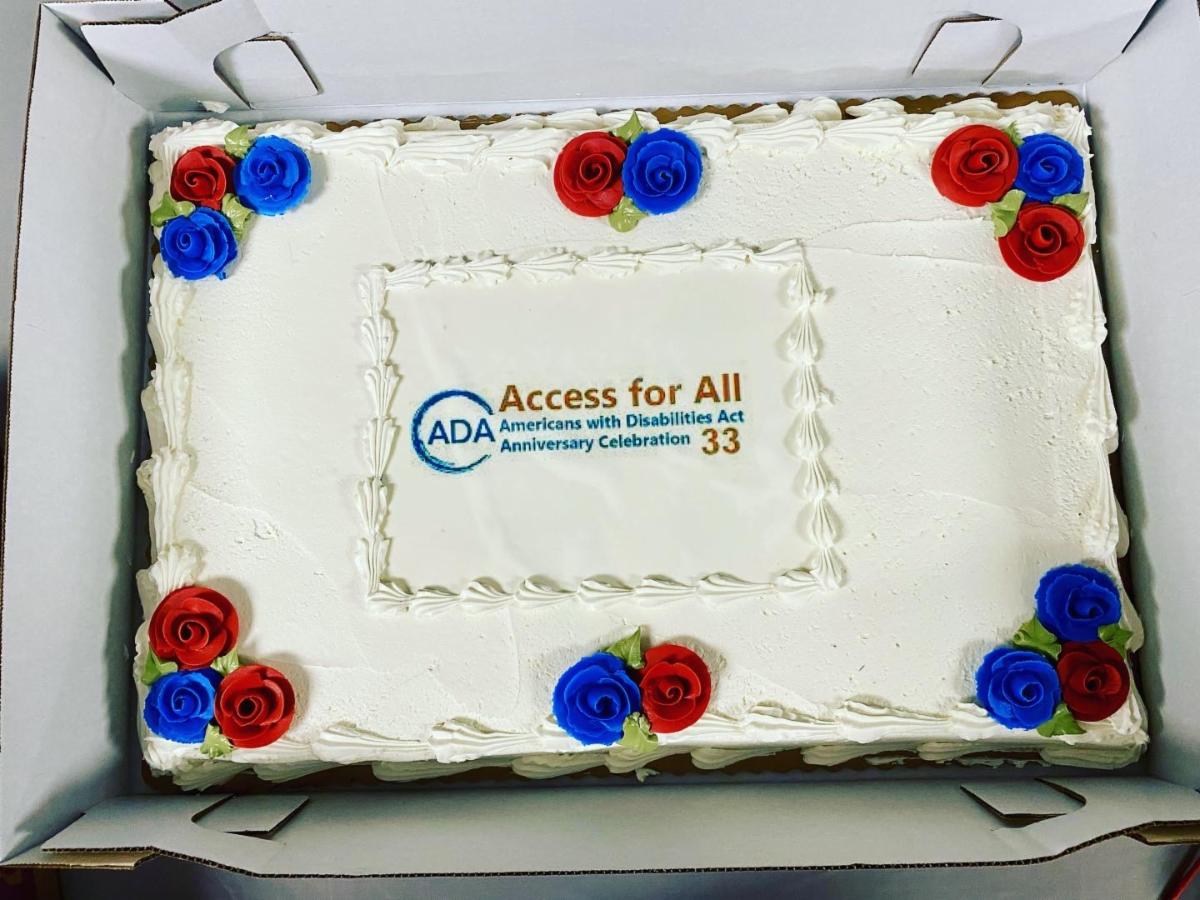
Image Above: Photo of white sheet cake with red and blue icing roses. In the center of the cake it reads, "ADA, Access for All: Americans with Disabilities Act Anniversary Celebration 33. | |
FLIC Celebrates the 33rd Anniversary of the Signing of the Americans with Disabilities Act (ADA)-Disabilities Independence Day! | |
|
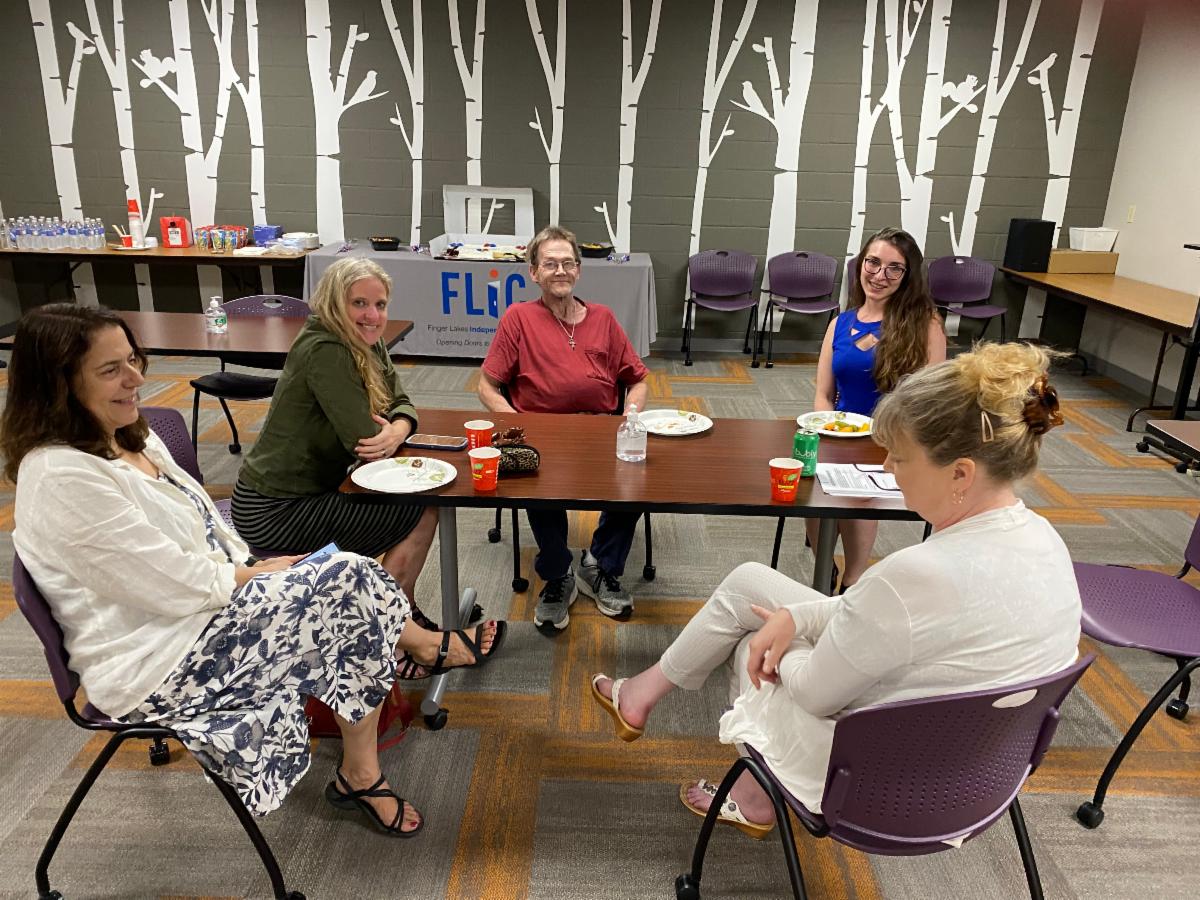
The Americans with Disabilities Act, commonly referred to as the ADA, was signed into law on July 26, 1990. This year marks the 33rd anniversary of the signing. This important date in the civil rights of persons with disabilities is also now knows at Disabilities Independence Day. To mark the celebration, FLIC hosted an open house on Friday, July 28th from 1:00 to 4:00 pm, with cake, fruit, beverages, trivia questions, swag and time to interact with FLIC staff. (Pictures below)
Test your knowlegde on the trivia questions. Answers are at the bottom of the newsletter.
1) Besides a dog, what other animal can be a service animal?
2) What is an example of a type of housing that is exempt from the Fair Housing Act?
a. Owner-occupied buildings with no more than four units,
b. Single-family houses sold or rented by the owner without the use of an agent,
c. Housing operated by religious organizations,
d. Private clubs that limit occupancy by members,
e. A and C,
f. All of the above
3) True or False--Two accessible parking spaces can share an accessible aisle with the access aisle BETWEEN the two spaces.
4) How may accessible parking spaces would be needed for a parking lot of 125 spots?
5) What does this sign indicate?
| |
|
6) Which of the following movies share an anniversary year with the Americans with Disabilities Act (1990)?
a. Home Alone,
b. Dances with Wolves,
c. Total Recall,
d. Ghost,
e. All of the Above.
7) True or False--According to the ADA, it is optional for employers to provide reasonable accomodations to people with disabilities.
8) What president signed the ADA into law?
9) True or False--Employers cannot ask medical or disability-related questions on a job application/interview.
10) Advocacy led to the creation of the ADA. In what country did the self-advocacy movement start?
a. US
b. France
c. UK
d. Sweden
e. Brazil
11) List three examples of communication aids and services that can be offered by a business to assist with people who have communication disabilities (deaf, hard of hearing).
12) True or False--A golf cart can be used by a person with a mobility disability and is covered by teh ADA.
13) If someone is using a golf cart for mobility in a location where golf carts are generally not allowed, can an entity ask the user for 'proof' of a disability?
14) True or False--wave pools and lazy rivers must be made accesible to people with disabilities.
15) The ADA is separated into sections called 'titles.' How may titles are there in the ADA?
| |
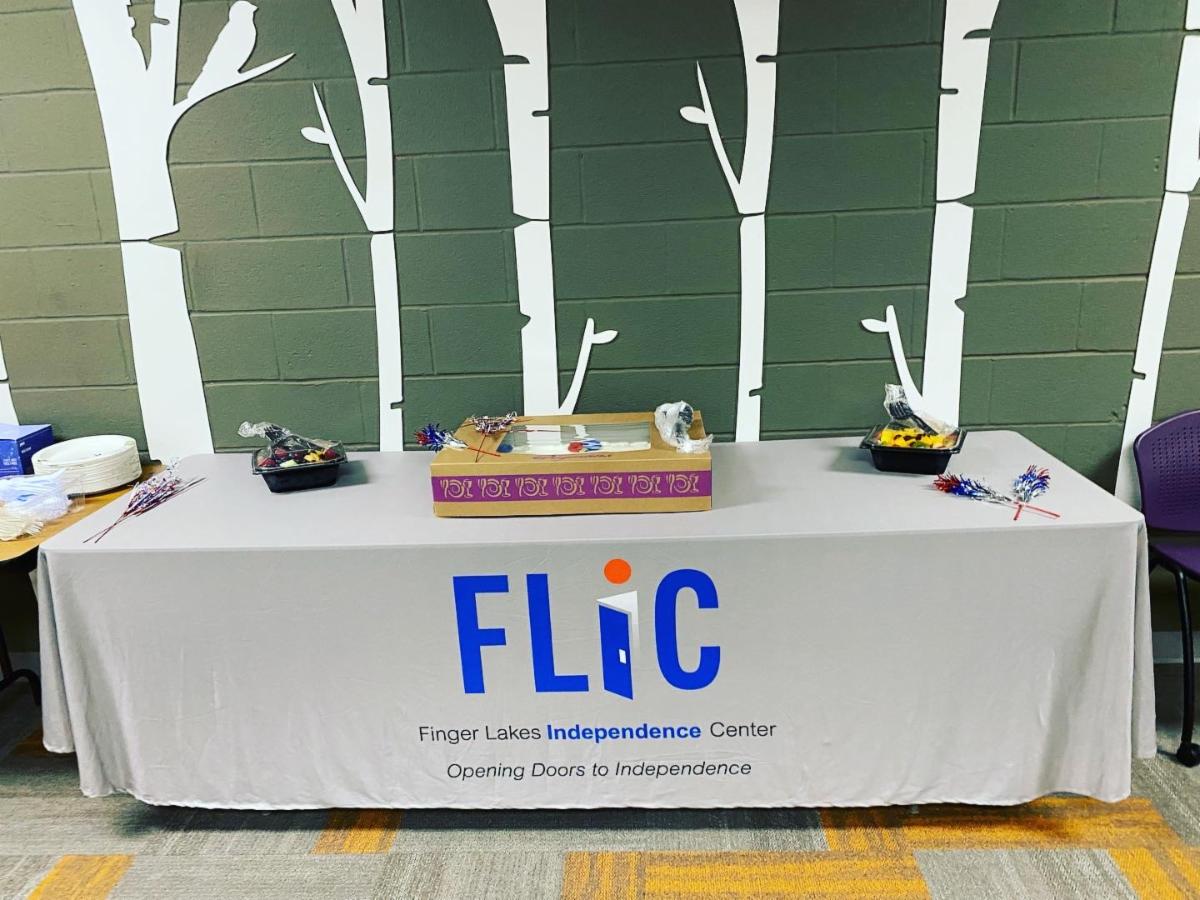
Picture Above: Photo of the display table in FLIC's conference room. Table covered in gray tablecloth with FLIC's logo on the front. On top of the table is the cake and fruit. | |
Picture Above: Photo of some attendees and staff at the Celebration. From left to right, clockwise: Cathy Emilian, Assemblyperson Anna Kelles, Gary Harris, Andrea Champlin, and Teressa Sivers. COO Tracy Decker photographer. | |
Image above: Blue and green pennants hanging above a sign that reads, "Welcome Our New Staff! Introducing the newest members of our team!" | |
Tracy Decker - Chief Operations Officer
Tracy became the Chief Operations Officer in June of 2023, a newly created position to focus on compliance, policy creation and adherence, personnel retention, and contract management. Part of this position focuses on working closely and sharing some duties with the Executive Director. Tracy was born and raised in Ithaca and has spent the last 30 years in not-for-profit leadership in the community, with almost 20 of those years spent managing and directing residential mental health rehabilitation services. Formerly on the FLIC Board of Directors, as well as the Coddington Community Center board, Tracy continues to serve on the Mental Health Subcommittee of the Tompkins County Community Services Board, advocating for those who experience struggles with “hidden” disabilities.
| |
| |
|
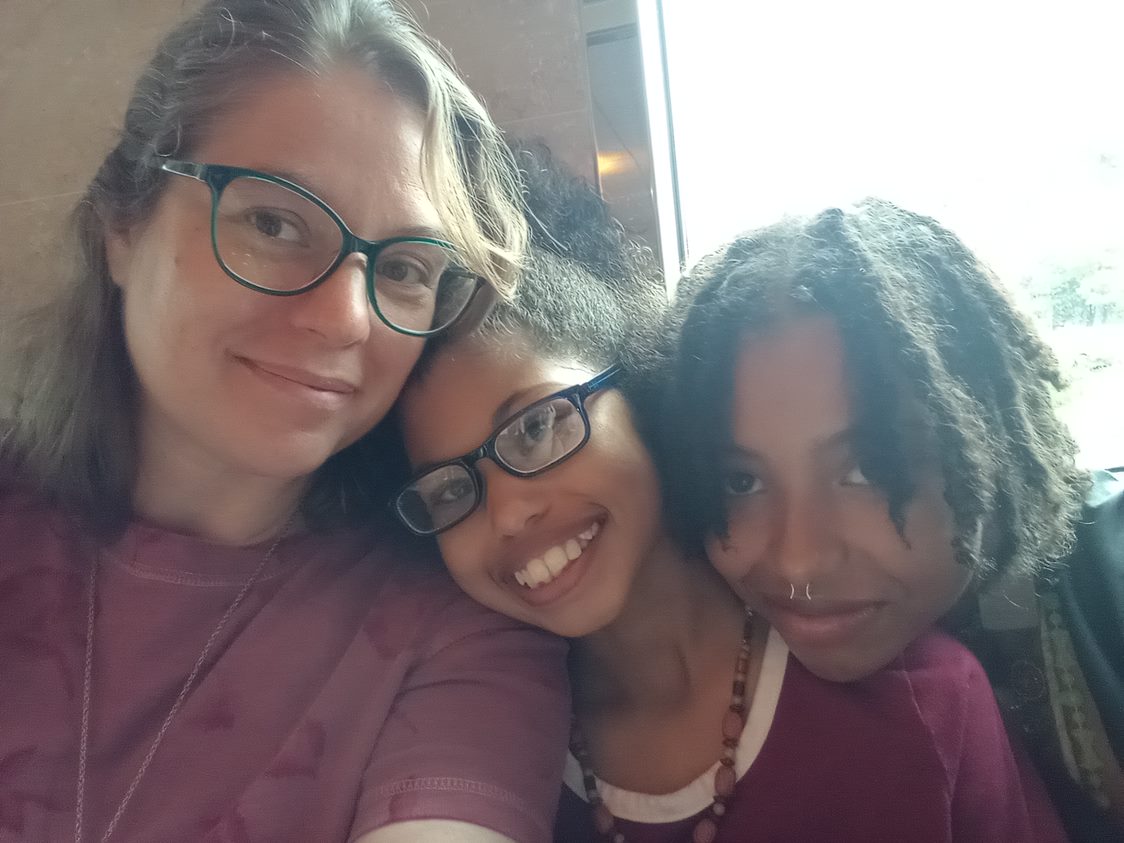
Valerie Foster Githinji - Advocacy & Support Specialist
As an Advocacy and Support Specialist, Valerie helps people with disabilities with life skills, finances, housing, accommodations, listening, and assisting in advocating for an individual’s rights and needs. She is a cultural anthropologist by training as well as a parent to a child with disabilities. She has years of experience advocating for her daughter’s health and development, and access, inclusion, and rights in school and in the community. Valerie is excited to be part of FLIC and to learn about the assistive equipment, and skills that help people live well, independently, and to help and care for those in the community.
| | |
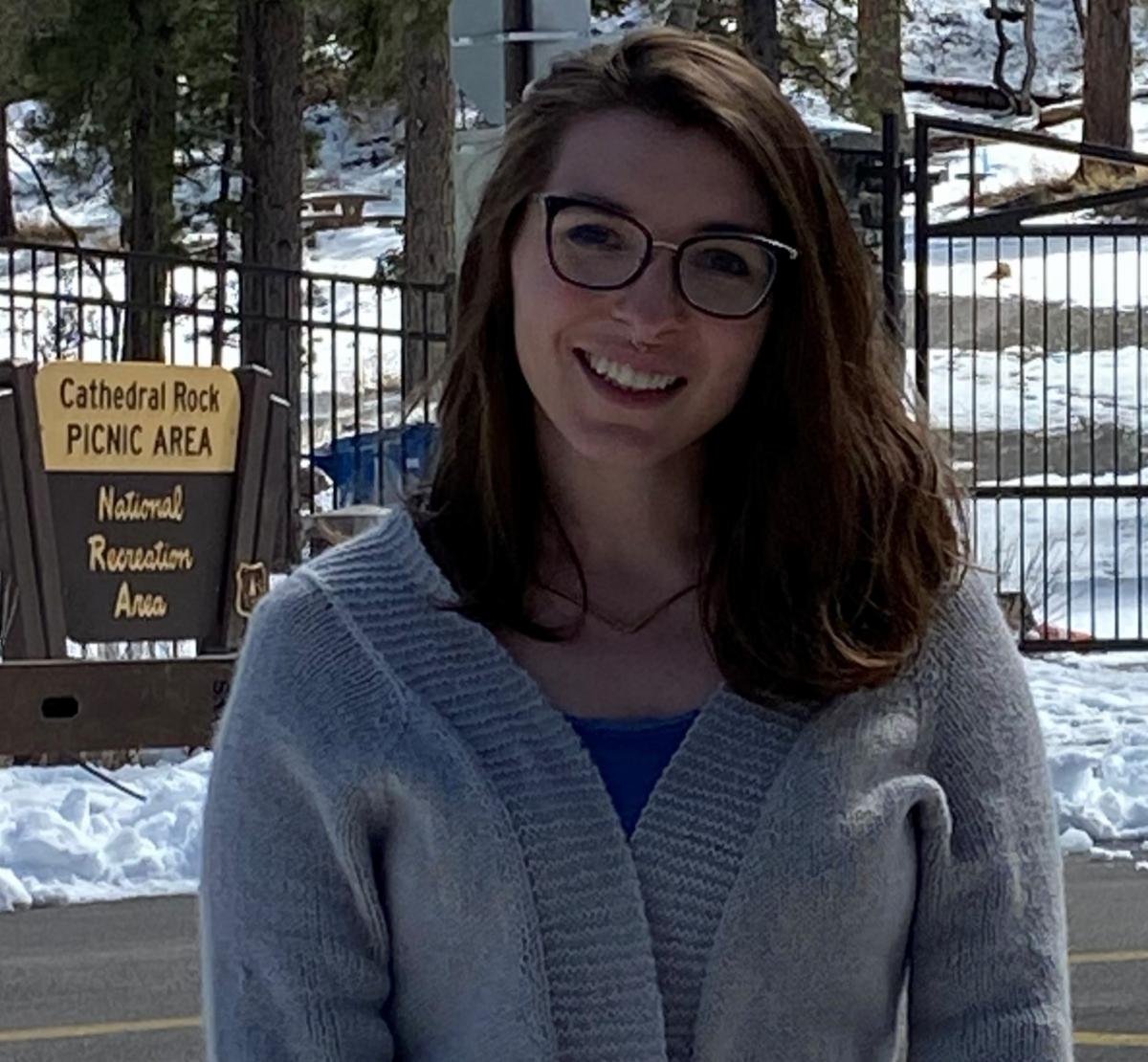
Andrea Champlin (she/her) - Advocacy & Support Specialist
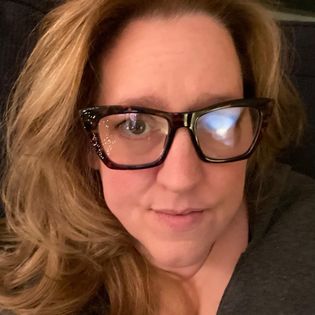
Andrea (she/her) is an Advocacy Specialist at FLIC. She enjoys using her own experiences with disability, along with her professional knowledge, to help consumers reach their goals. A Finger Lakes local, she attended Tompkins Cortland Community College and Ithaca College. After graduation, Andrea stayed in Tompkins County and has worked at a variety of local youth-serving organizations. She is currently completing her Master of Social Work degree part-time at the University at Buffalo. When she is not working or studying, she can be found dancing, knitting, and tending her plants and pets.
| |
|
|
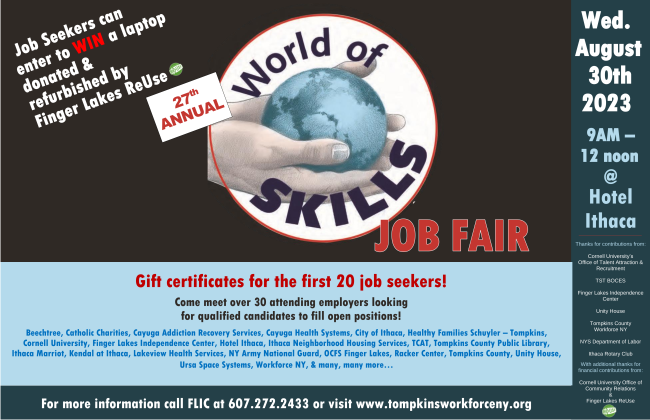
Poster Above: 27th Annual World of Skills Job Fair. Wednesday, August 30, 2023, 9 AM to Noon at the Hotel Ithaca. Job seekers can enter to win a laptop, donated and refurbished by Finger Lakes ReUse. Gift certificates for the first 20 job seekers! Come meet over 30 attending employers looking for qualified candidates to fill open positions!
Beechtree, Catholic Charities, Cayuga Addiction Recovery Services, Cayuga Health Systems, City of Ithaca, Healhty Families Schuyler-Tompkins, Cornell University, Finger Lakes Independence Center, Hotel Ithaca, Ithaca Neighborhood Housing Services, TCAT, Tompkins County Public Library, Ithaca Marriot, Kendal at Ithaca, Lakeview Health Services, NY Army National Guard, OCFS Finger Lakes, Racker Center, Tompkins County, Unity House, Ursa Space Systems, Workforce NY, and many, many more... Thanks for contributions from: Cornell University's Office of Talent Attraction & Recruitment, TST BOCES, Finger Lakes Independence Center, Unity House, Tompkins County Workforce NY, NYS Department of Labor, Ithaca Rotary Club. With additional thanks for financial contributions from: Cornell University Office of Community Relations and Finger Lakes ReUse.
| |
|
27th Annual Tompkins County World of Skills Job Fair
9:00AM-12:00PM on Wednesday, August 30th, 2023
Hotel Ithaca - 222 S. Cayuga St Ithaca, NY 14850
Employer Registration
Name of Business:
Contact Person:
Phone:
Email:
Please answer whether you prefer your own table or shared table:
Description of Business (no more than 3 sentences please):
Types of available job opportunities:
The Finger Lakes Independence Center spearheads this job fair with help from community members on the Steering Committee.
This year we are hoping to attract more job seekers with some giveaways. This will be our last year with a refurbished laptop donated by the generous people at Ithaca ReUse as our grand prize.
If we can get enough donations of items from employers, we can have a second prize gift basket. We are also requesting that employers consider donating any minimal amount for gift cards, or gift items for job seekers. Maybe you have some larger promotional item that could be donated, or a gift card would be appreciated. These are tough times to find employees so we want to do everything we can to encourage their attendance.
Please let us know if & what you’re able to contribute anything.
Please respond by August 1st, 2023 via email to Jorge@fliconline.org or via fax:
(607) 272-0902 or return via mail to: FLIC, 215 5th Street, Ithaca NY 14850
TO DOWNLOAD THIS INFORMATION, CLICK HERE: https://fliconline.org/FLIC/wp-content/uploads/2023/07/Employer-Registration-updated-6-29-23.docx
| |
TCPL to Offer Cybersecurity Workshop for Seniors on August 14
ITHACA— Tompkins County Public Library is pleased to offer Cybersecurity Basics for Seniors on Monday, August 14, from 10:00 to 11:30 am in the Digital Lab.
Led by trainer and consultant Lisa Carrier-Titi, participants will learn how to avoid scams and how to protect their mobile devices.
To learn more and register, visit TCPL’s online event calendar at https://www.tcpl.org/event/cybersecurity-basics-seniors-0.
Questions prior to the workshop can be directed to 607-220-4502 or via Lisa’s website, www.lisacandoit.com.
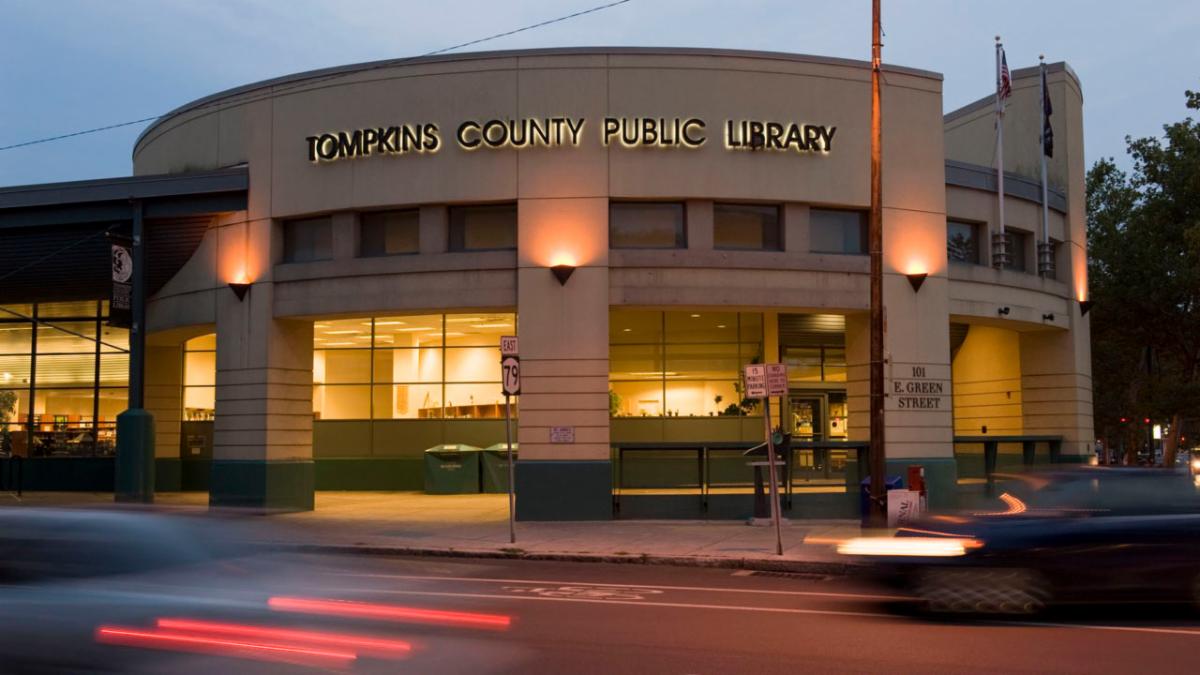
| Image Above: Picture of Tompkins County Public LIbrary in the evening with the lights on. | |
Image Above: The Special Olympics Logo | |
New York Special Olympic Summer Games Held in Ithaca for a Second Year | |
New Study Links Hearing Loss with Dementia in Older Adults
Findings highlight potential benefit of hearing aide use
Johns Hopkins: Bloomberg School of Public Health
| |
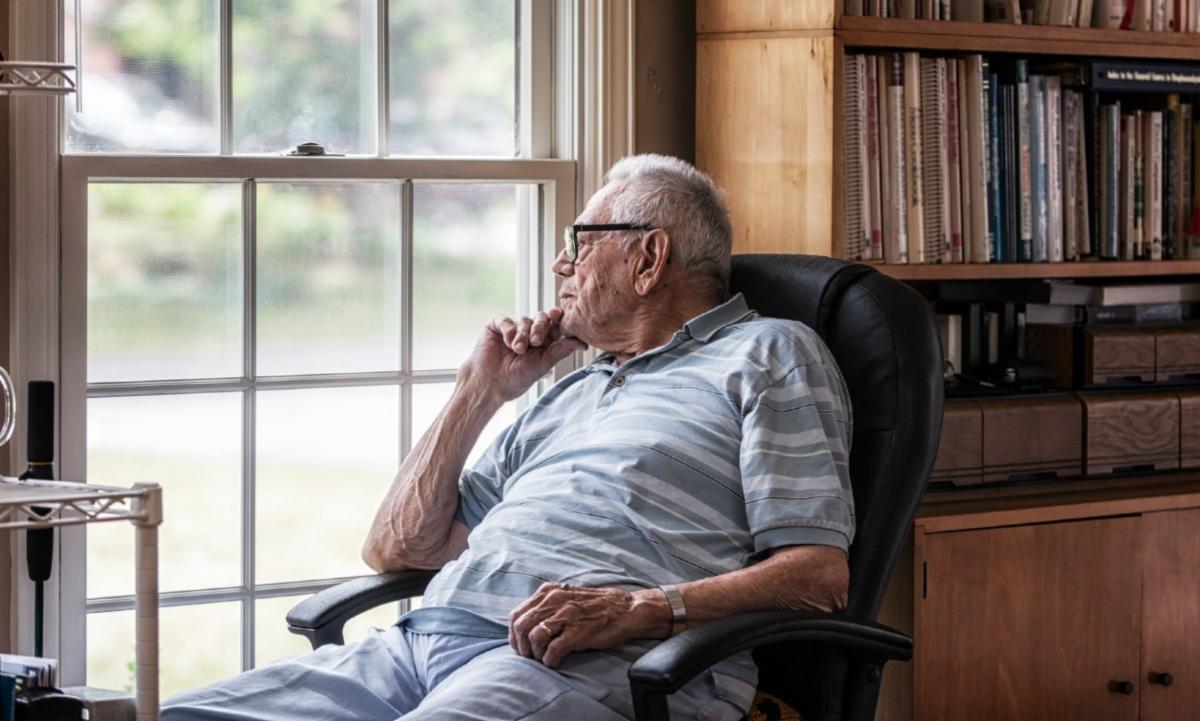
Picture Above: Photo of older adult white man with glasses and grey and white striped shirt sitting in chair and looking out a window with hand on his chin. | |
|
A new study led by researchers at the Johns Hopkins Bloomberg School of Public Health found that older adults with greater severity of hearing loss were more likely to have dementia, but the likelihood of dementia was lower among hearing aid users compared to non-users.
The findings, from a nationally representative sample of more than 2,400 older adults, are consistent with prior studies showing that hearing loss might be a contributing factor to dementia risk over time, and that treating hearing loss may lower dementia risk.
The findings are highlighted in a research letter published online January 10 in the Journal of the American Medical Association.
Follow this link to continue reading the article: https://publichealth.jhu.edu/2023/new-study-links-hearing-loss-with-dementia-in-older-adults
| |
Emergency Preparedness Monthly Goal-August
Make Your Community Stronger by Getting Trained & Getting Involved
| |
|
It takes more than police, fire and EMS to respond to a disaster. It takes people who are committed to neighborhoods, churches, schools and volunteer organizations. When people are willing to work together for the good of others, communities are stronger.
People who are involved are the key to a disaster resilient community. They are willing and able to look out for themselves and others. A resilient community is one that can withstand a disaster and get back to normal quickly (even if normal isn’t the same as it was before).
Remember, community preparedness starts at home. If you know that your family is prepared at home, you will be better able to help others in your community.
Task One: Connect with an isolated individual in your neighborhood or start a neighborhood organization.
Isolated individuals are more vulnerable during and after a disaster. They are less likely to ask for help or follow emergency instructions. The elderly or those with disabilities may have trouble getting out of the house, and may not have much contact with the outside world. Someone who doesn’t speak English well may have trouble understanding emergency instructions. People may also be isolated just because they are new to the area, or because their work hours keep them from meeting their neighbors.
Who are the isolated individuals in your neighborhood? Take time to meet them. Help them make a plan for emergencies, and include checking on them in your plan.
Neighborhood watches and other groups can be a great way for you to become better connected to your neighbors. If your neighborhood doesn’t have a group, consider starting one. There are resources available online at www.usaonwatch.org or by calling your local police or sheriff’s department.
Task Two: Promote emergency preparedness in your community.
Scout troops, service clubs, residential associations, communities of faith—almost any organization you belong to can become a partner in emergency preparedness. Organizations that promote emergency preparedness make their community more able to withstand and recover from disaster. Here are some suggestions for involving your organization:
- Include a Do1Thing preparedness topic in newsletters or on bulletin boards each month.
- Talk to your scout troop leader about how Do1Thing activities can be used toward a preparedness badge.
- Get a group together to make emergency kits for seniors or kids who stay home alone.
- Visit the www.do1thing.com website to see how other organizations are promoting preparedness in their communities.
The Red Cross, ready.gov, and many other organizations also promote preparedness. Find the materials that will work best for your organization and become a partner in preparing your community!
Task Three: Become a volunteer in your community.
There are many places to volunteer in your community. Many police and fire departments use volunteers to help with special projects, events, or program. The American Red Cross, Salvation Army, and other organizations train volunteers to work in disasters.
If you are interested in helping in your community or other communities during a disaster, become a volunteer for your local Red Cross or Salvation Army chapter. But don’t wait for disaster to strike—volunteer now. These organizations won’t send untrained volunteers into disaster areas.
Many communities also have a volunteer center or a Retired and Senior Volunteer Program (RSVP). These programs can find ways for you to help in your community that will fit your schedule and abilities.
If you are already a member of a volunteer organization, consider getting your volunteer group involved in VOAD (Voluntary Organizations Active in Disaster). VOAD is a national program that helps volunteer groups work in their community during a disaster.
https://www.do1thing.com/individuals/involved/
| |
The Registry Referral Program | |
The Finger Lakes Independence Center administers the Registry Referral Program. This is a free referral service linking individuals seeking independent employment to people who need care in their home. Opportunities include: elder companion, housekeeper, run errands, cook, personal care aide, home care aide, LPN, RN. People looking for help can call and receive names of people willing to provide those services. If you either need assistance or if you would be interested in listing your name as a caregiver, pease call FLIC at 272-2433 or email: info@fliconline.org. If you have experience caring for a friend or loved one, please consider sharing your compassion with others. This program is made possible through funding from the Tompkins County Office for the Aging. | |
Need a Public Notary?
Contact Cheryl Baker at FLIC at
607-272-2433 to make an appointment.
Services are free!
Image left: gold star with the words "Notary Public" in black, bold letters in teh center. Double circle surrounds these words. In the circle at the top it reads "Official" and, at the bottom, "Duly Commissioned."
| |
|
|
1) Miniature Horses! These can be trained to guide people who are blind, can pull wheelchairs, or support people who have Parkinson's Disease. Miniature Horses have a life span of 30-40 years (longer than dogs) and have great range of vision, memory and focus.
2) f-All of the Above
3) True--unless in situations of angled parking spaces.
4) 5
5) Accessibility
6) e-All of the Above
7) False. The ADA requires employers to provide reasonable accomodations to employees who have disabilities.
8) George H. W. Bush
9) True. The exception is that a government agency can ask an applicant to voluntarily disclose a disability for affirmative action purposes.
10) d-Sweden--The self-advocacy movement can be traced to Sweden where in the late 1960s, people with intellectual disabilities were supported to create and lead their own leisure clubs.
11) ASL interpreter, video remote interpreting, notetakers, large print materials, captioning, accessible eletronic and information technology.
12) True, as well as Segways.
13) Yes, this is called credible assurance.
14) False. There are a few exceptions to the ADA pool accessibility requirements.
15) Five-Employment (Title 1), Public Services (Title 2), Public Accomodations (Title 3), Telecommunications (Title 4), and Provisions (Title 5).
| | | | |