2023 Fishing Licenses are Available Online | | |
|
Fishing Fuels Conservation!
100% of your investment funds fish and fishing
| |
Latest Updates from the Fisheries Division
To advance the conservation, enhancement, restoration, use, and appreciation of Connecticut’s fish, fisheries and fish habitats.
| |
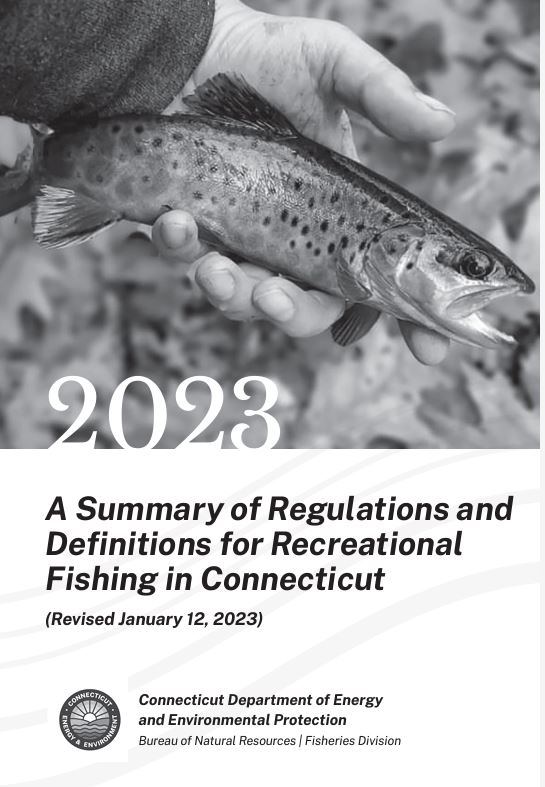
The changes to the regulations for freshwater fishing are now in effect (as of December 27, 2022). Learn more in the section below or view a simple summary. | | |
|
|
Fishing Regulations:
The Fisheries Division WILL be printing a limited run of fishing regulation guide books in 2023. A PDF is available on our webpage for download.
Stay tuned for where and when you can get your printed copy. Please be advised the Fisheries Division strives to do all possible to conserve and protect our environment. This includes encouraging everyone to make use of our digital fishing guide so we can reduce wasted paper whenever possible.
| |
2023 Fishing Licenses are available. Don't miss one day of potential fishing. Get yours online or stop by your favorite license vendor. | |
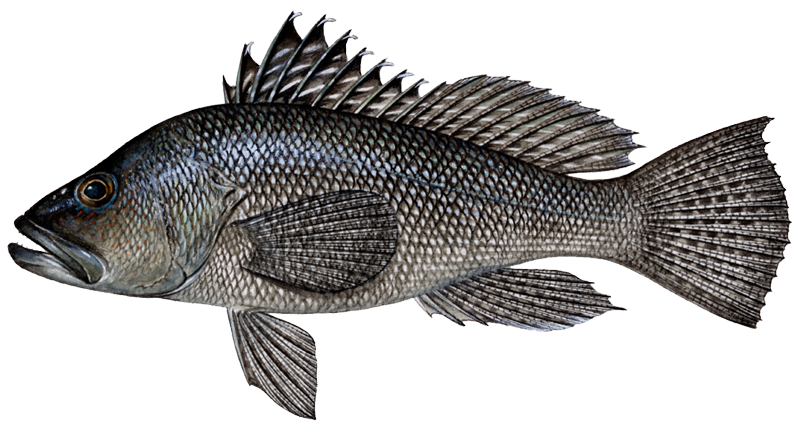
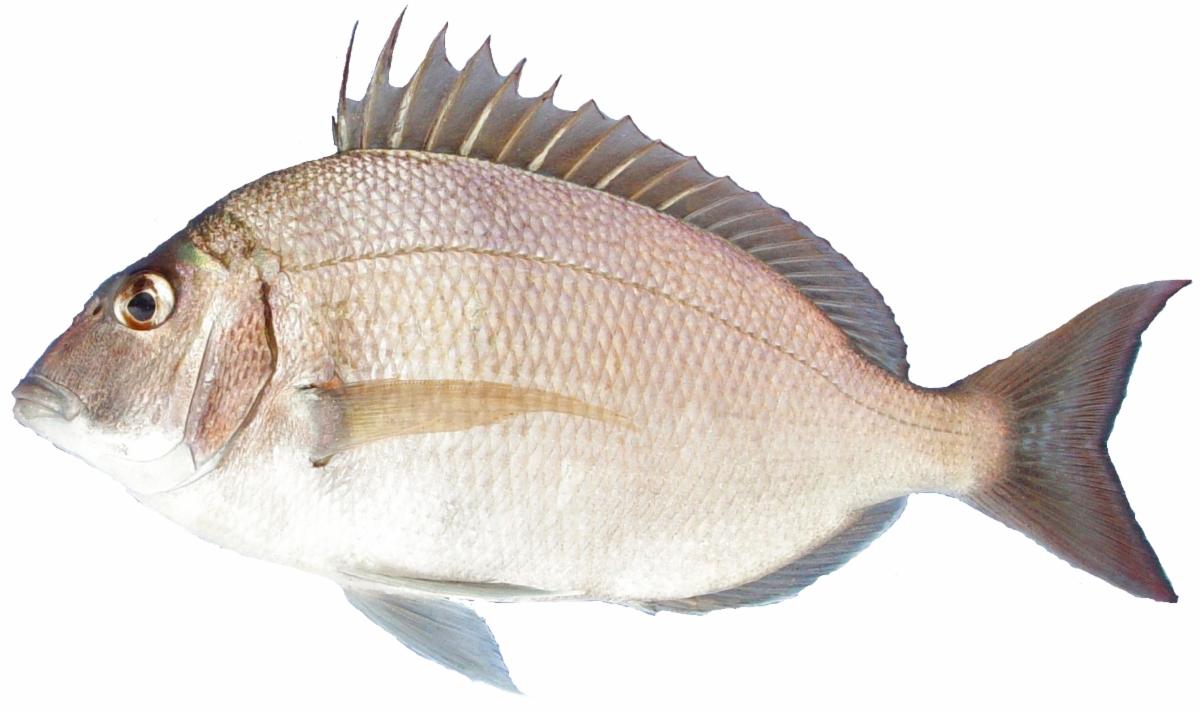
NEW! Marine Regulations for Black Sea Bass and Scup (Porgy) | |
|
View the 2023 Marine Recreational Fishing Regulations here.
Black Sea Bass
Min Length
Season
-
From private boat or shore: May 19 – June 23, July 8 – Dec.1, season closed June 24 – July 7.
- For-hire boats: May 19 – Dec. 31
Bag Limit
- Boat, shore: 5 fish
- For-hire boats:
- May 19 – Aug. 31: 5 fish
- Sept. 1 – Dec. 31: 7 fish
| |
Scup
Minimum Length
- Boat anglers: 10.5” (increase from 10” in 2022)
- Shore anglers: 9.5” (decrease from 10” in 2022)
- Enhanced Opportunity Shore Locations: 9.5” (increase from 9” in 2022)
Season
- All anglers: May 1 – Dec. 31 (decrease from year-round in 2022).
Bag Limit
- From private boat or shore: 30 fish.
- For-hire boats:
- May 1 – Aug. 31, Nov. 1 – Dec. 31: 30 fish
- Sept. 1 – Oct. 31: 40 fish (decrease from 50 fish in 2022).
| |
|
Most Trout Fishing Goes "Catch and Keep"
6:00 am April 8
| |
The passage of Public Act 21-12 removed the closed season for trout. As such the DEEP revised the inland fishing regulations to implement a period of Catch and Release statewide for trout from March 1 until 6:00 am on April 8, 2023. This applies to all waters except for Trout Management Lakes (which allow harvest of 1 trout per day; minimum length apply); waters classified as "Tidal Waters and Tributaries" (daily limit of 2 trout; 15 inch minimum length), and in Trout Management Areas which are either Catch and Release year-round or already have been since September 1st. When in doubt, check the regulations for the waterbody your are fishing using our online resources or download a copy of the fishing guide. | |
|
Partners on the Water
A Year-Long Focus on Women Anglers
| |
Each month in 2023, CT Fishin' Tips will highlight one of Connecticut's many inspirational female anglers. The featured anglers have a deep passion for Connecticut's fisheries and serve as role models for all of us. | |
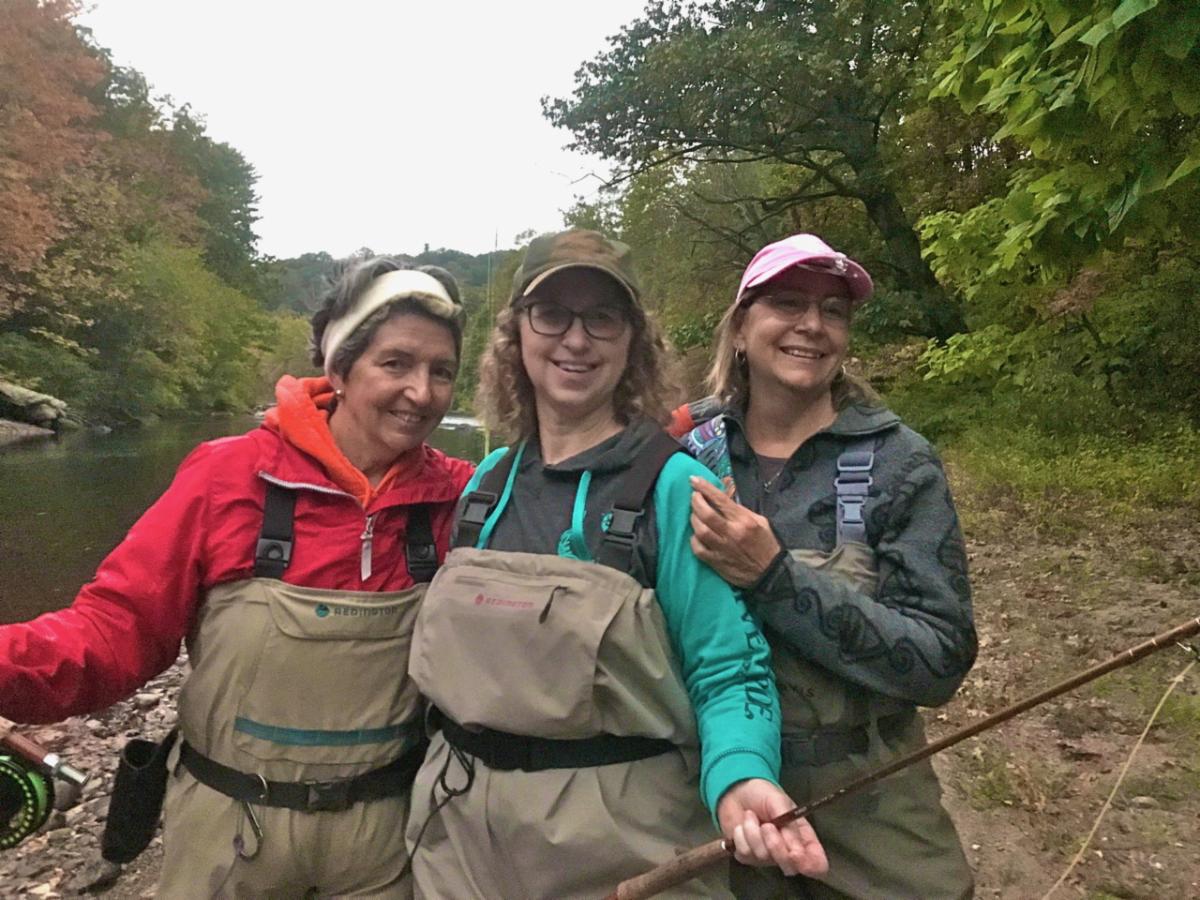
Mickey AKA Michele Gearan Saulis | Michele Gearan Saulis (left in red photo below), also known as Mickey, grew up in the suburbs of Boston, Massachusetts. She enjoyed outdoor activities in beautiful New England, but only started fishing in 2018 when she joined the national organization Sisters on the Fly, the largest outdoor adventure organization for women in the country. Michele has explored flyfishing on Capecode, in the Catskills, on the French Broad River in NC, on several rivers in PA and VT. Michele is an active participatant with the fly fishing community as a volunteer and member of flyfishing organizations such as Farmington River Trout Unlimited and Casting for Recovery. She plans to flyfish this season on weekdays at the Farmington River and its tributaries, as well as exploring rivers in Pennsylvania with a group from Fearless Flyfishing led by Cynthia Harkness. Beyond flyfishing, Mickey is married to her husband Steve, cares for her mother in West Hartford and is an active golfer and quilter. | |
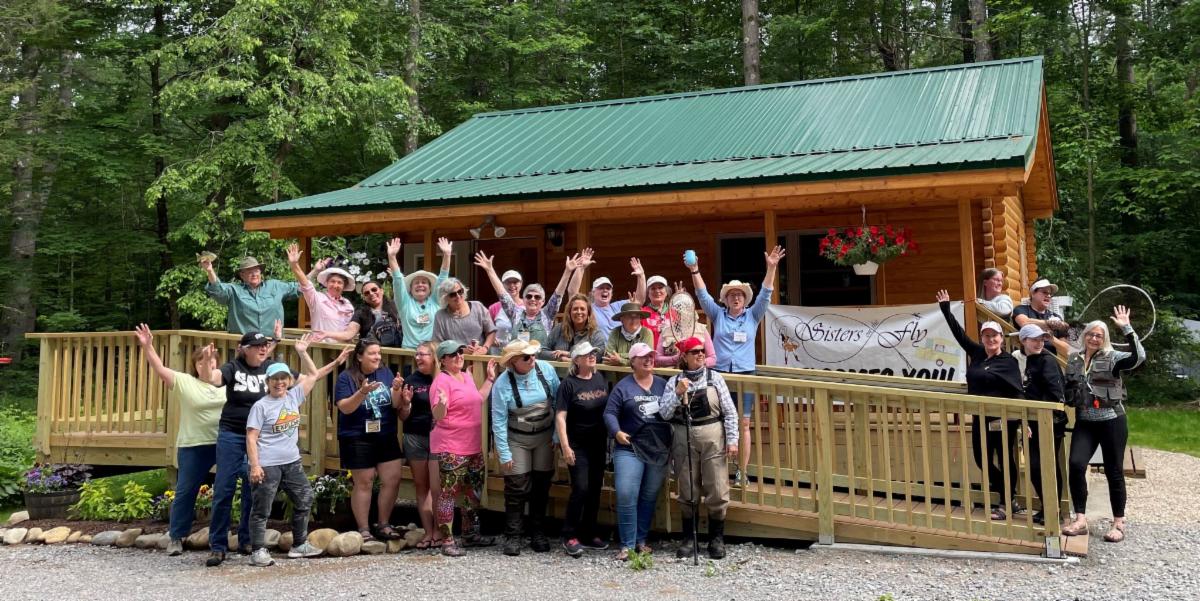
In 2019 Michele and a few other Sisters on the Fly took a full day fly fishing lesson from a Farmington River guide, Mark Swenson who she contacted through UpCountry Sports in New Hartford. These three women flyfishers continued their new found skills on the Farmington River and throughout the northeast. In June 2022 Michele organized 27 women to camp at the Austin Hawes Campground in Barkhamsted, CT for a three-day weekend of fly fishing and enjoying the beautiful Farmington River. During that weekend a group of eight took a flyfishing 101 class from Mark Swenson, several groups of three women partnered with six river guides and had lots of success at different parts of the river. The whole group told flyfishing stories and celebrated our accomplishments with a gracious service and delicious food at the Riverton Inn along with many campfires by the river back at camp. | |
|
She is recently retired from a career in education, which included leadership positions in public high schools in Connecticut. Her college degrees are in nutrition, biology, math education, and school leadership; they all gave her the skills to focus on STEM (Science Technology, Engineering and Math) education throughout her career.
In recent years she developed environmental education programs for the Connecticut River Academy at Goodwin University, a magnet high school on the Connecticut River in East Hartford, Connecticut. The programs networked with many environmental agencies including DEEP and CT River Conservancy to provide opportunities for Hartford and greater Hartford students to explore science related to- and experience recreation on the Connecticut River. Ten years on the rivers and streams with area youth along with new friends she met in Sisters on the Fly intrigued her to explore fly fishing.
| |
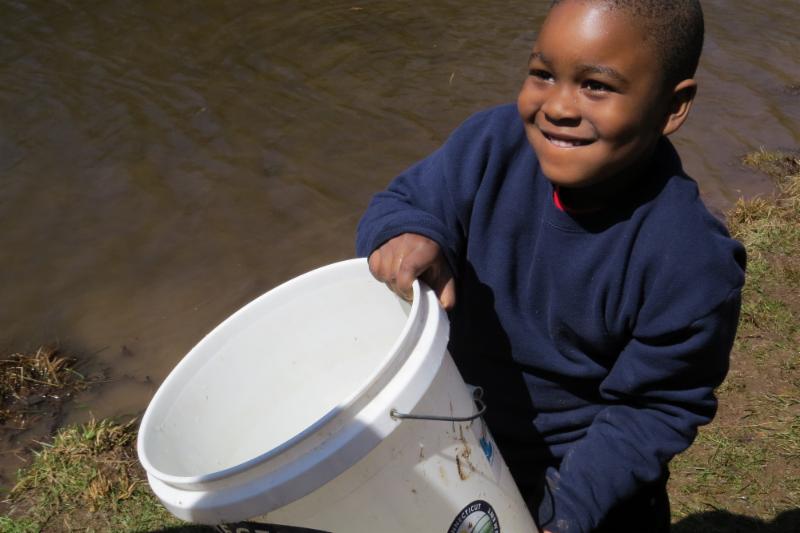
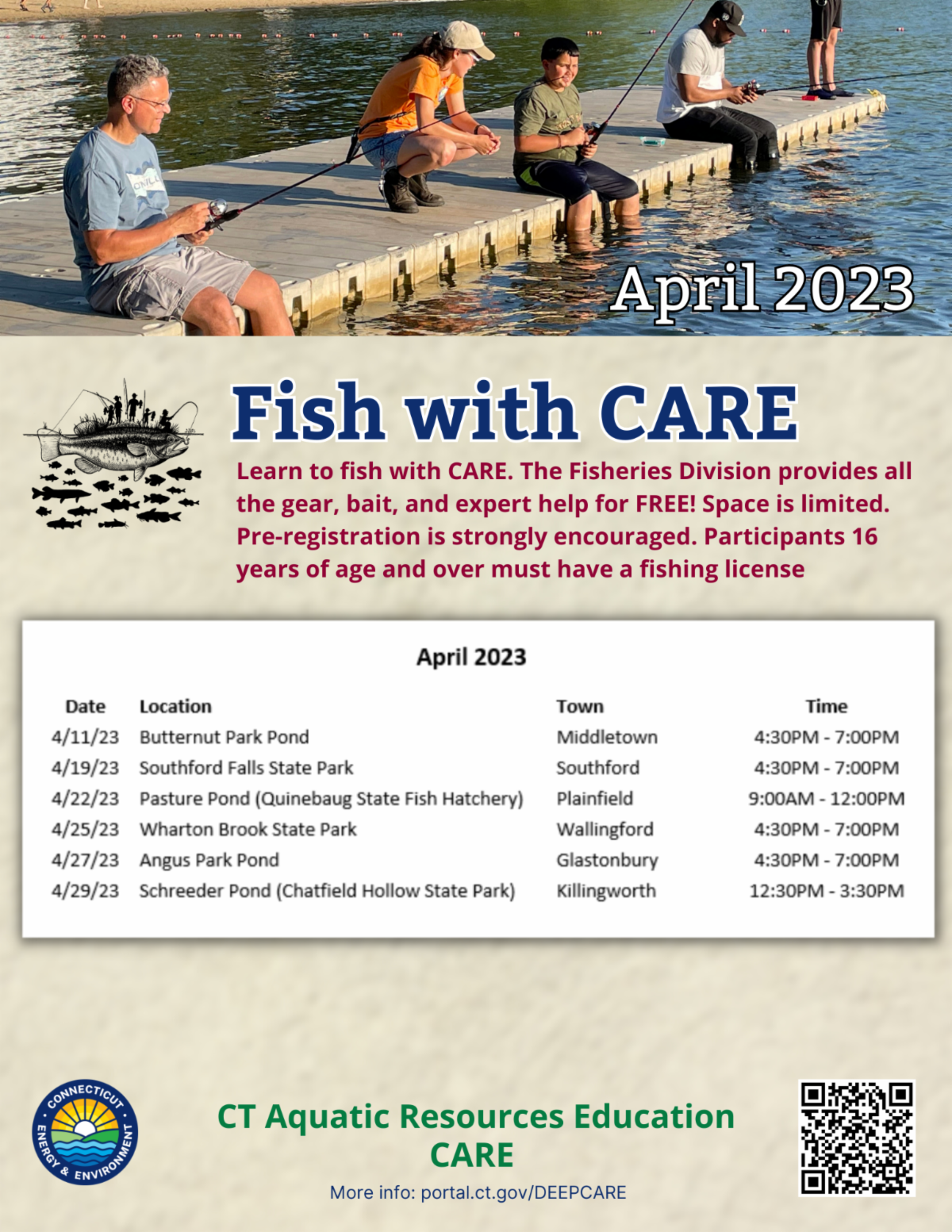
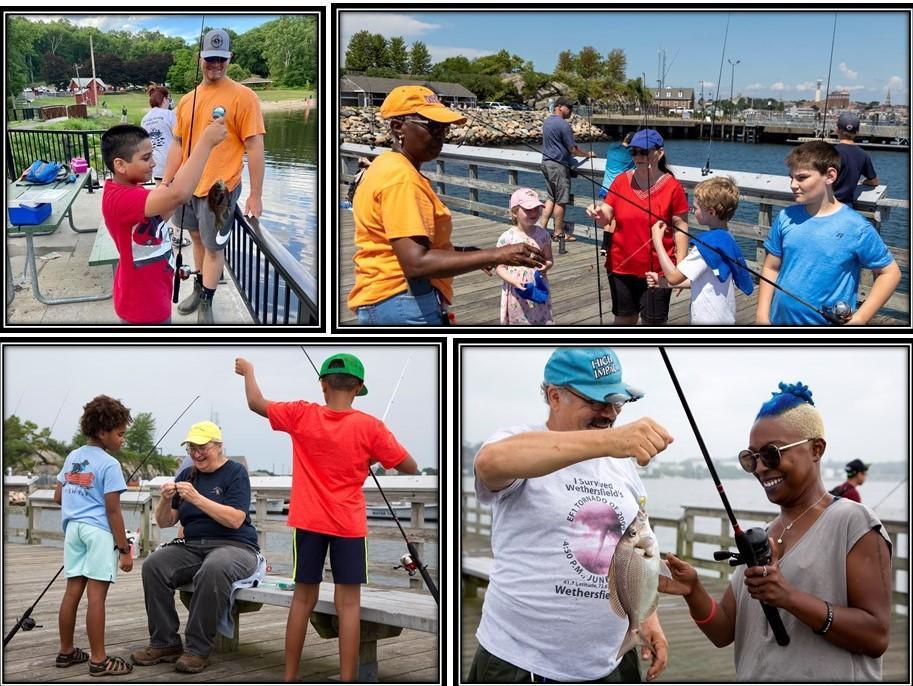
The Fisheries Division is offering FREE learn to "Fish with CARE" classes and events starting April 11th and continuing throughout the spring/summer/fall! Our team of fishing coaches will be traveling to waterbodies around the state with all the bait, equipment, and instruction available for you to get started fishing on the right path. Register for a Fish with CARE event today and prepare yourself for success by reviewing our CT Let's GO Fishing online course! | |
|
Lakers in CT?
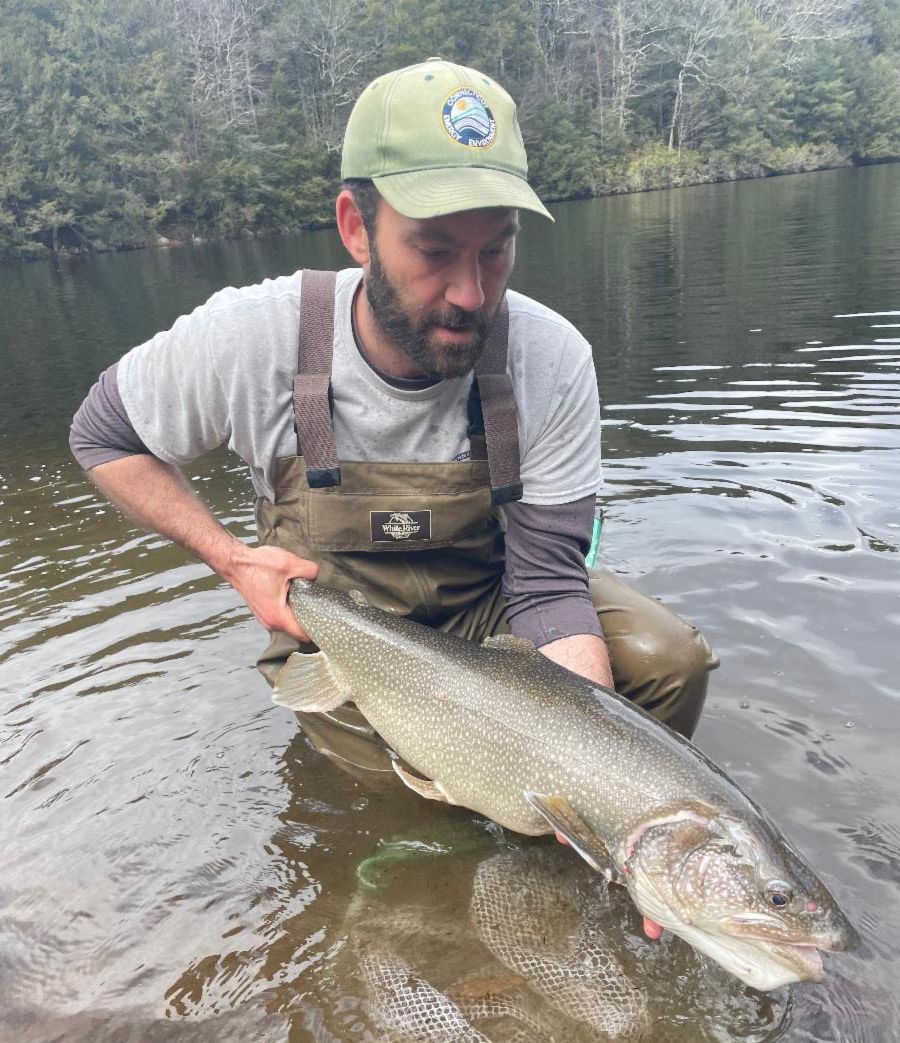
Thanks to the US Fish and Wildlife Service, lake trout (Salvelinus namaycush) have returned to Connecticut waters in 2023!
| |
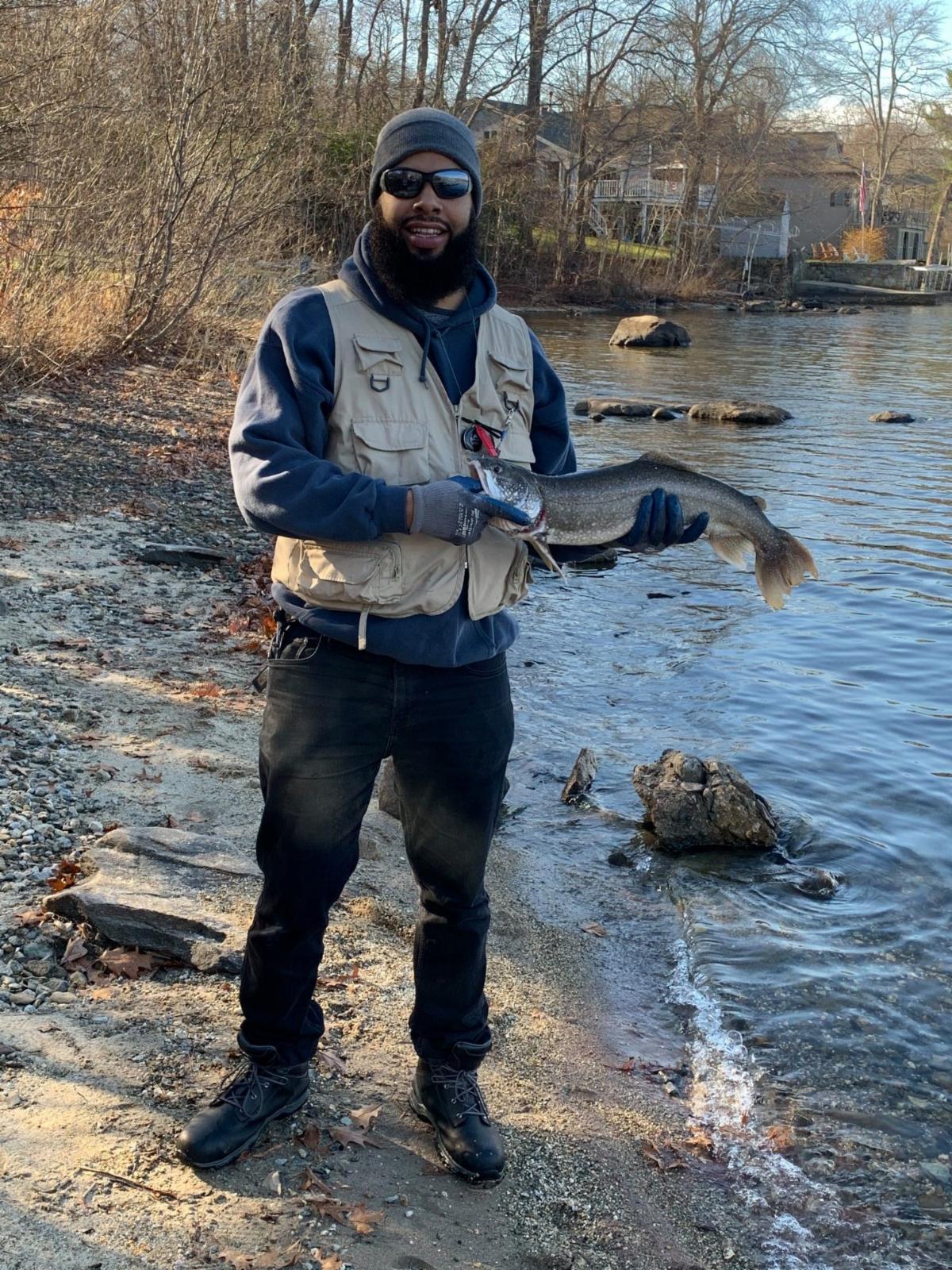
The CT DEEP Fisheries Division is pleased to announce a surprise “bonus fishery,” of lake trout. Four hundred and forty lake trout are being stocked this week in select waters around the state!
Averaging 30 inches in length (range = 24-36”) and averaging 12 pounds (range = 6-18 lbs), these fish are ready to catch in the following waterbodies: Coventry Lake, Crystal Lake, Tyler Lake, Squantz Pond, and Bigelow Pond. These fish are not expected to holdover for an extended period of time (years) and they will not reproduce in CT waters.
As lake trout are considered trout along with brooks, browns, rainbows, and tigers, there will be no special rules or regulations applied with this specialty stocking; therefore, after the catch and release season (from March 1 to 6:00am on the 2nd Saturday in April) the standard statewide regulation of 5 trout per day applies to all stocked lake trout as well. The exceptions are in Squantz Pond and Crystal Lake (Trout Management Lakes) where from March 1 to 6:00am on the 2nd Saturday in April the daily creel limit is 1 trout that must be 16” or greater. Additionally, from 6:00am on the 2nd Saturday in April to the last day in February, Crystal Lake has a protected slot limit of 12” to 16” for all trout, and a daily creel limit of 5 trout, only 1 of which may be 16” or greater.
|  | |
|
These bonus Lake Trout, which are surplus brood stock, come from the U.S. Fish & Wildlife Service’s Dwight D. Eisenhower National Fish Hatchery in North Chittenden, Vermont where hatchery manager Shane Hanlon and his crew raise Lake Trout for restoration efforts in the Lower Great Lakes as well as for recreational fishing opportunities throughout Vermont.
Lake trout are the largest of the freshwater char and are native to northern North America, from Alaska to Nova Scotia and throughout the Great Lakes. Historically, lake trout used to be reared by the state of Connecticut and stocked into a handful of lakes around the state; stocking ceased in 1967 and was likely attributed to poor survival in the wild. The current harvest state record dates to 1918, for a fish caught out of Lake Wononskopomuc that weighed a whopping 29 lbs. 13 oz.!
While these recently stocked fish won’t break the state record in the harvest category (the largest fish by weight), they should provide the catch of a lifetime for many, and for the possibility of filling the state record in the “Catch & Release” (the largest fish by length) category. For more information on state record fish visit the Trophy Fish Award program.
| |
|
CARE to Teach Fishing? We do!
We Need You!
| |
The Fisheries Division – Connecticut Aquatic Resources Education Program (CARE) is seeking volunteers to join our team of certified Fishing Coaches! FISH with CARE program hosts classes and events all over the state where we teach basic fishing skills to adults, families, and youth. FISH with CARE coaches work with Fisheries staff to educate and engage the public in the outdoors through the sport of fishing. If you are interested in sharing your love and knowledge of fishing while creating the next generation of environmental stewards, consider joining our Fishing Coach team! Our next certification training is being offering in April, information to get involved can be found HERE! | |
|
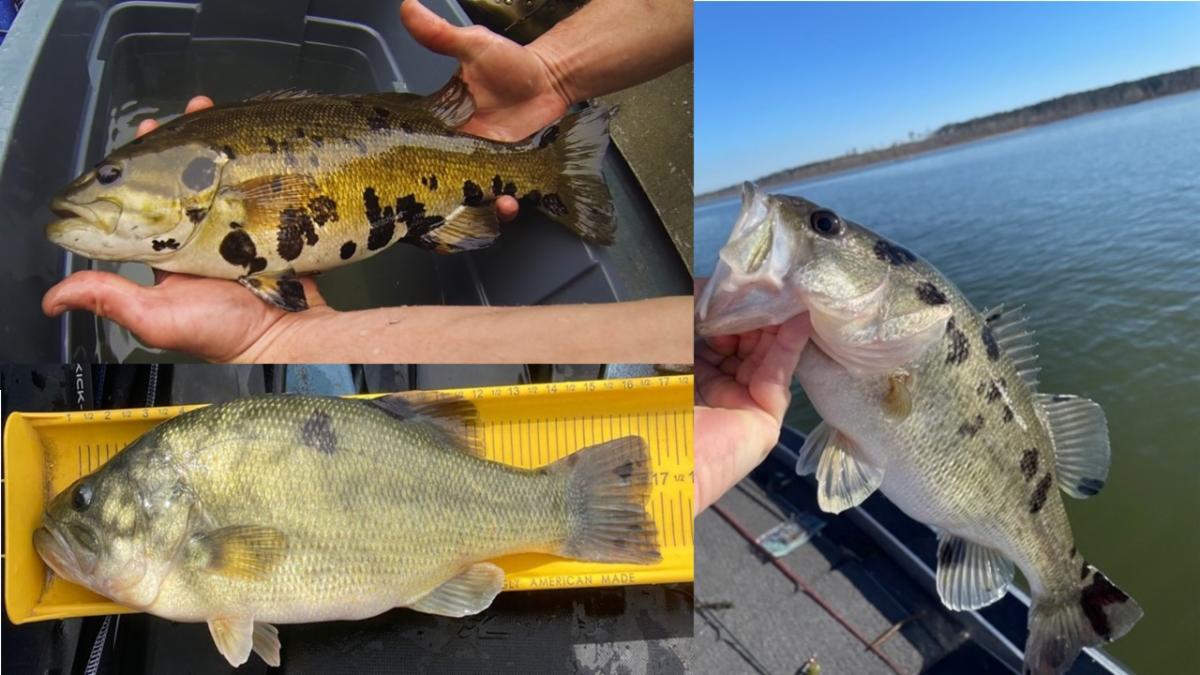
Got a Blotchy Bass? Researchers are collecting data on hyperpigmentation/melanosis, a.k.a Blotchy Bass Syndrome, in freshwater bass species associated with a virus. Angler reports of both normal and blotchy individuals are needed for this study.
Please report catches of ANY bass (blotchy or not) via the Angler’s Atlas MyCatch app’s 2023 Blotchy Bass Bonanza.
The virus has never been identified in humans or common domestic pets. As long as the fish are in good condition, they're safe to handle and eat if cooked properly.
For more information about the blotchy bass research visit the USGS webpage.
Thank you for helping us learn more about BBS! Questions may be directed to Andrew.bade@ct.gov
| |
Would you like to see your catch highlighted in upcoming issues of CT Fishin' Tips? If so, please email your photo to mike.beauchene@ct.gov | |
New Freshwater Regulations in Effect | |
|
The following is a simple summary of the key changes to the regulations for sport fishing in the inland district. The full version of the regulations is available on the Secretary of State’s web page. Questions may be sent to mike.beauchene@ct.gov
Download the simple summary of inland fishing regulations.
Seasons
Removes the closed season for fishing on all lakes, ponds, rivers, and streams. (Legal access still required, for example if a park is closed to all activity then fishing is not allowed).
Establishes a statewide “Catch and Release” season for trout and kokanee salmon from March 1 to 6:00 am on the second Saturday of April (Opening Day of harvest).
Extends the season on Trout Management Lakes from March 31 to 6:00 am on the second Saturday of April (Opening Day of harvest). (Previously the season was March 1 to March 31, then it was closed to fishing).
Retains thermal refuge closures to protect trout seeking refuge in cold-water tributaries as indicated by signs posted by CT DEEP.
Species
Revises the statewide daily creel limit for trout and kokanee to be 5 trout daily AND 5 kokanee daily (previously 5 of either, 8 in aggregate).
Waterbodies
Establishes the following special trout regulations on East Twin Lake and Lake Wononskopomuc: During the period from 6:00 a.m. on the second Saturday in April through the last day of February the daily creel limit for trout shall be five, not more than one of which may be a brown trout, and the minimum length for brown trout shall be twenty-two inches. During the period from March first through 6:00 a.m. on the second Saturday in April, inclusive, the daily creel limit for trout shall be one and the minimum length limit shall be twenty-two inches.
Adds Long Pond (North Stonington) and Lake Wononskopomuc to the list of Trout Management Lakes.
Prohibits ice fishing on Factory Pond (Salisbury), Lake Chamberlain (Bethany), Lake Saltonstall (Branford, East Haven), Maltby Lakes (Orange, West Haven), Lake McDonough (New Hartford, Barkhamsted) and Shenipsit Lake (Ellington, Tolland, Vernon).
Gear
Establishes a limit of two devices per person when ice fishing on East Twin Lake or Lake Wononskopomuc. This may be two (2) tip ups, two (2) jigging rods or one of each.
Definitions
Establishes a definition for Cast Net, Inline Circle Hook and Culling.
Revises the definition of Closed Season to conform with the definition provided in state statute
| |
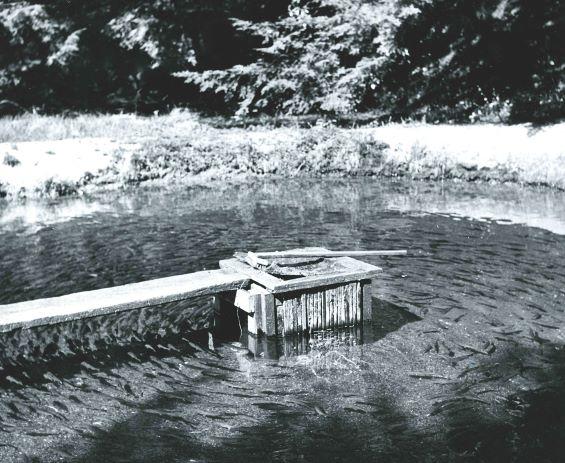
Hand dug and lined with sand, the "dirt ponds", so named because they are not made with concrete, continue to be an important space at the Burlington Fish Hatchery. While any one pond cannot produce larger number of fish, those reared in these ponds tend to be a beautiful looking fish and closely resemble a wild trout. | |
The following video is a quick tutorial on how to use the online fishing guides. There is one for Freshwater and one for Saltwater. Several benefits to digital guides include; increased accuracy (can make changes), immediately updated, accessible 24/7, reduced waste (many were recycled each year), and money used to print can be redirected to fishing. | |
Fishing Challenge - For YOUth | |
NEW for 2023 - The list of species has been increased to include many popular fish, both freshwater and saltwater. The challenge is ON! Start catching and submitting, you can be CT's next "Top Angler" | |
The Youth Fishing Passport Fishing Challenge is a year long fishing scavenger hunt. To have your catch count, simply snap a photo of your fish (from our scorecard) and use our online submission form. The top four anglers (who catch the most different types on our list) receive a prize pack full of fishing swag.
| |
CT's FREE Youth Fishing Passport is your child's ticket to all of the amazing outdoor discoveries fishing has to offer. Fishing involves knowing about habitat, environmental quality, food webs, life history of species, and so much more. You can get a Youth Fishing Passport, for those 15 or younger, using our online licensing system. Register your child as a new user. If you have questions please contact us.
| |
|
How to get the Youth Fishing Passport | |
This Month's Mystery Fish | |
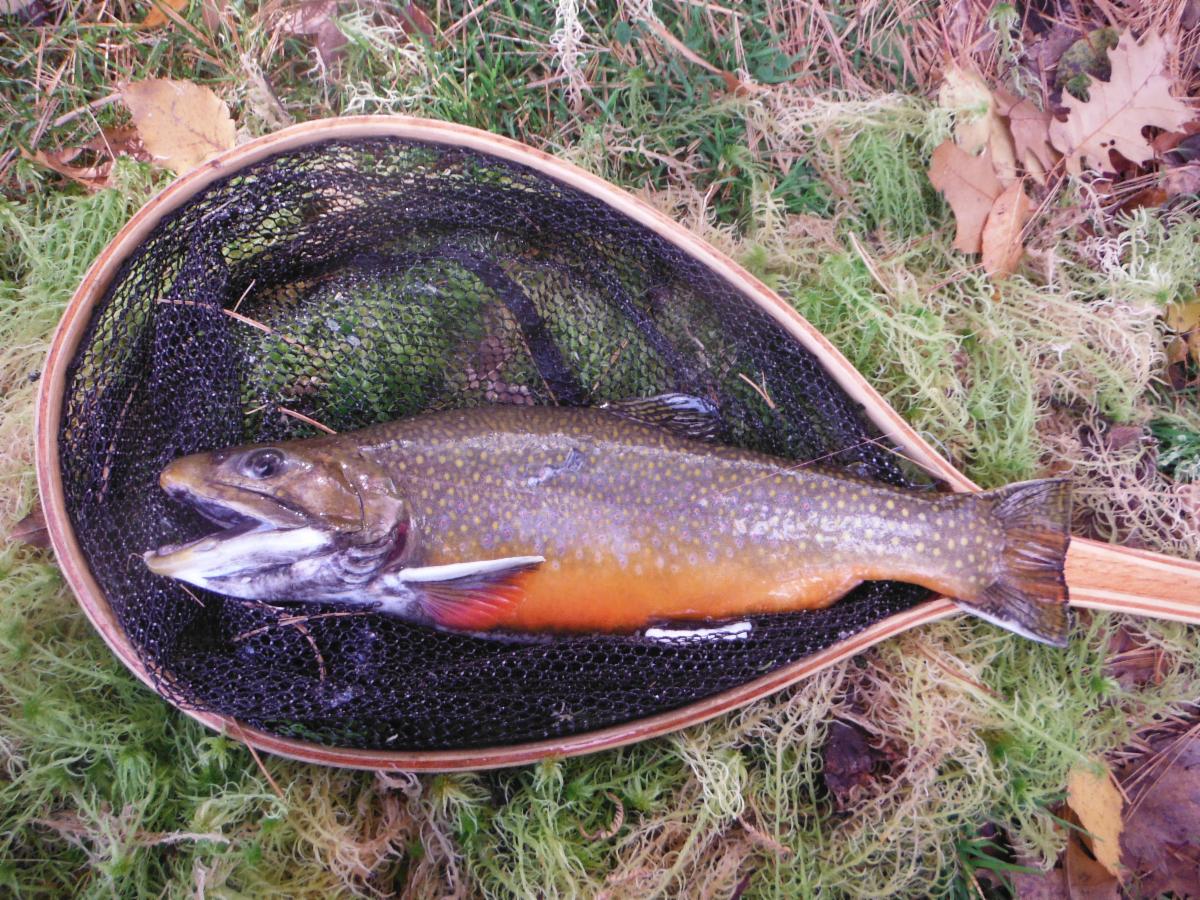
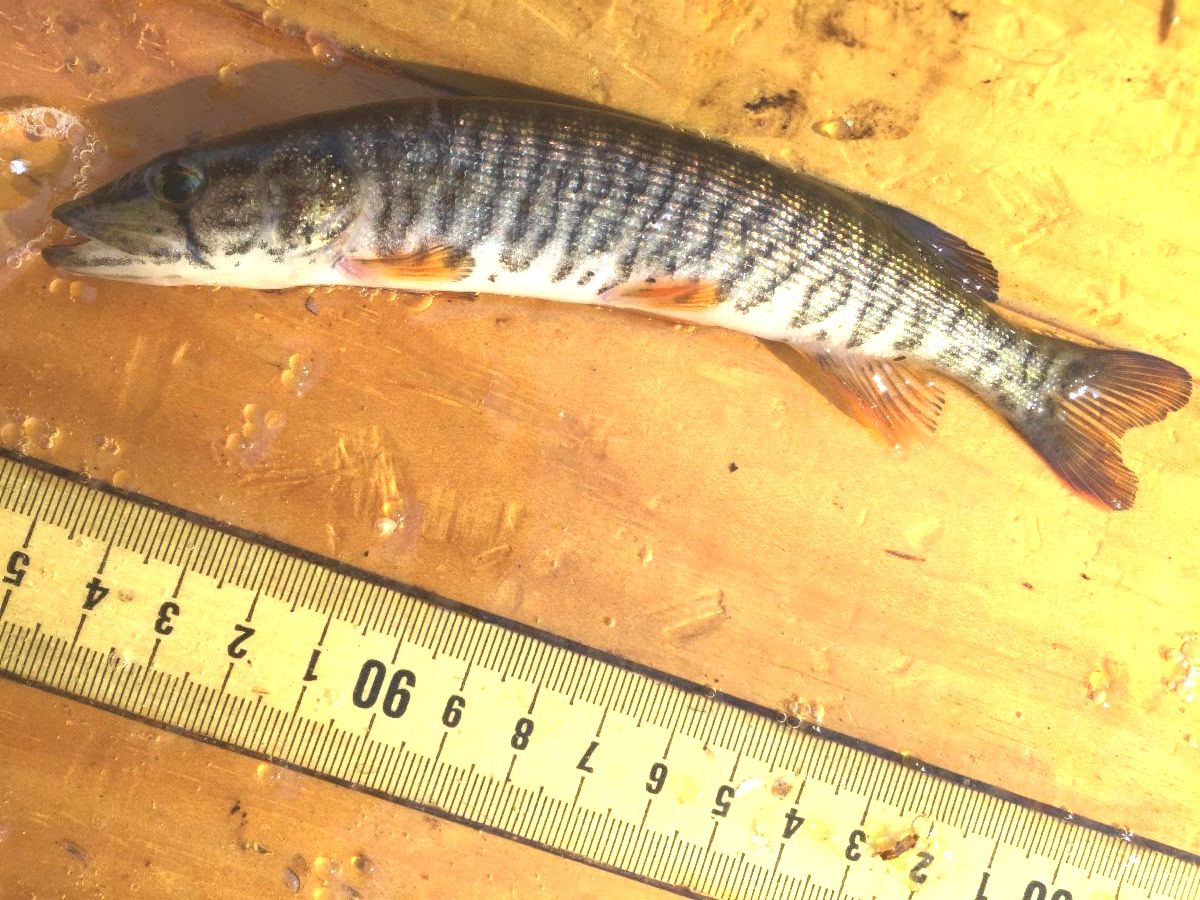
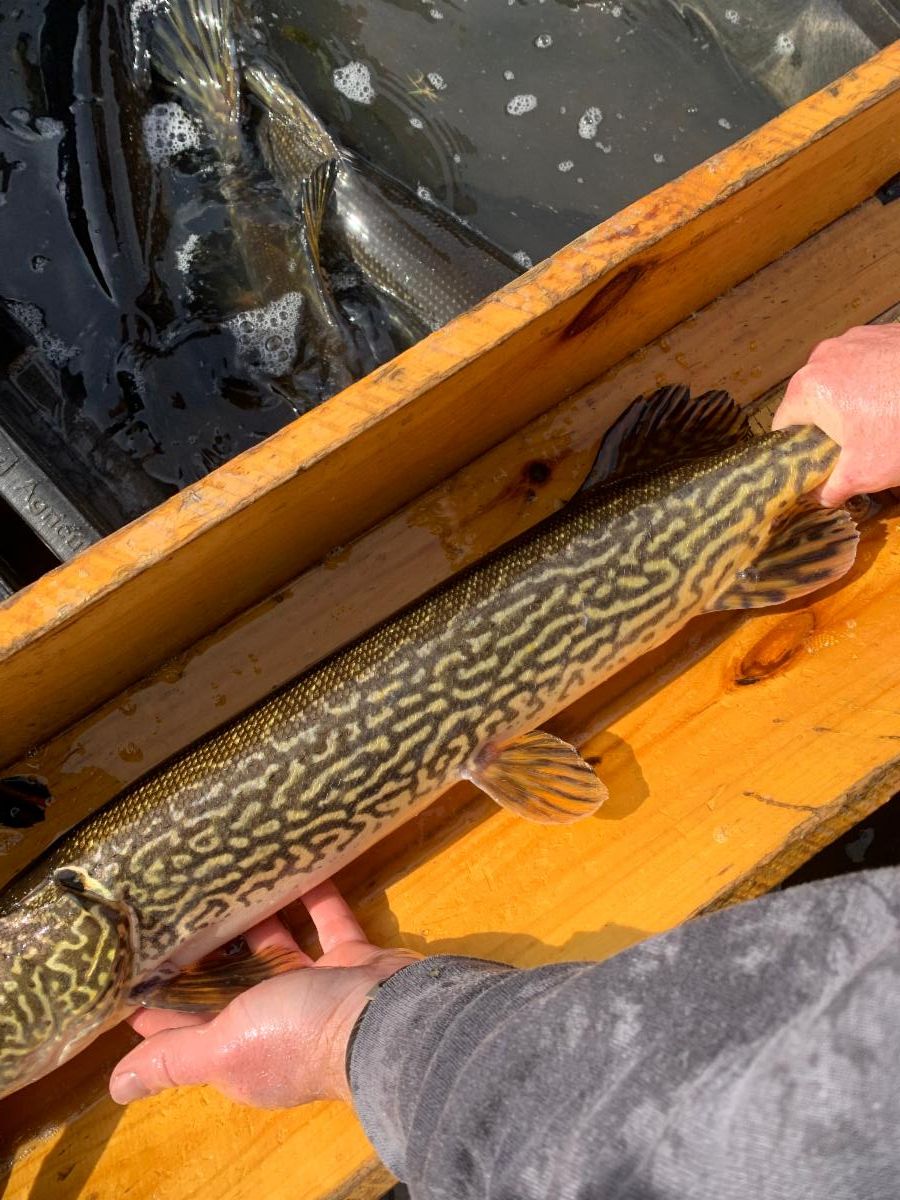
The March mystery fish was a Northern Pike (Esox lucius). This particular fish may make you think Tiger Muskie or a pickerel x pike hybrid and that would be a reasonable guess. It is actually a Northern Pike (with a few stray genes, possibly from a musky). Each year the Fisheries Division has been accepting about 100,000 pike fry from the State of New Jersey. We have found several specimens like this that began showing up when we started using New Jersey fish. Makes for a very unique looking fish and we are grateful to New Jersey for their generosity. Learn more about CT's Pike Management Program. | |
How to get your License Online | |
Información disponible en español
| |
The Connecticut Department of Energy and Environmental Protection is an Affirmative Action/Equal Opportunity Employer that is committed to complying with the requirements of the Americans with Disabilities Act. If you are seeking a communication aid or service, have limited proficiency in English, wish to file an ADA or Title VI discrimination complaint, or require some other accommodation, including equipment to facilitate virtual participation, please contact the DEEP Office of Diversity and Equity at 860-418-5910 or by email at deep.accommodations@ct.gov. Any person needing an accommodation for hearing impairment may call the State of Connecticut relay number - 711. In order to facilitate efforts to provide an accommodation, please request all accommodations as soon as possible following notice of any agency hearing, meeting, program or event.
| |
This program receives Federal financial assistance from the U.S. Fish and Wildlife Service.
Under Title VI of the 1964 Civil Rights Act, Section 504 of the Rehabilitation Act of 1973, Title II of the Americans with Disabilities Act of 1990, the Age Discrimination Act of 1975, and Title IX of the Education Amendments of 1972, the U.S. Department of the Interior prohibits discrimination on the basis of race, color, national origin, age, sex, or disability.
If you believe that you have been discriminated against in any program, activity, or facility, or if you need more information, please write to:
Office of Diversity, Inclusion and Civil Rights
U.S. Department of the Interior 1849 C Street, NW
Washington, D.C. 20240
| | | | |