|
The TCCPI Newsletter
Issue #78: September-October 2023
| |
TCCPI is a multisector collaboration seeking to leverage the climate action commitments made by Cornell University, Ithaca College, Tompkins Cortland Community College, Tompkins County, the City of Ithaca, and the Town of Ithaca to mobilize a countywide energy efficiency effort and accelerate the transition to a clean energy economy. Launched in June 2008 and generously supported by the Park Foundation, TCCPI is a project of the Sustainable Markets Foundation.
We are committed to helping Tompkins County achieve a dynamic economy, healthy environment, and resilient community through a focus on energy efficiency and renewable energy.
| |
Officials, Advocates Call for NYS intervention in Potential Cargill Salt Mine Sale
by WHCU, 10/27/23
| |
|
Elected officials, local lawmakers, agritourism business owners, and environmental advocates are calling on Governor Kathy Hochul and the NYSDEC to halt the reported sale of Cargill Salt Mine in Lansing.
A group that included State Senator Lea Webb, Assemblymember Anna Kelles, Tompkins County Legislator Anne Koreman, environmental researchers and executives with CLEAN and Seneca Lake Guardian, and a local winery owner all gathered on Wednesday to implore the Governor to get involved.
“The risk is way too huge because Cayuga Lake provides drinking water for over 100,000 people,” added Kelles. “Plus, the $3-billion-dollar-60,000 employee local agritourism economy depends on the lake.”
| |
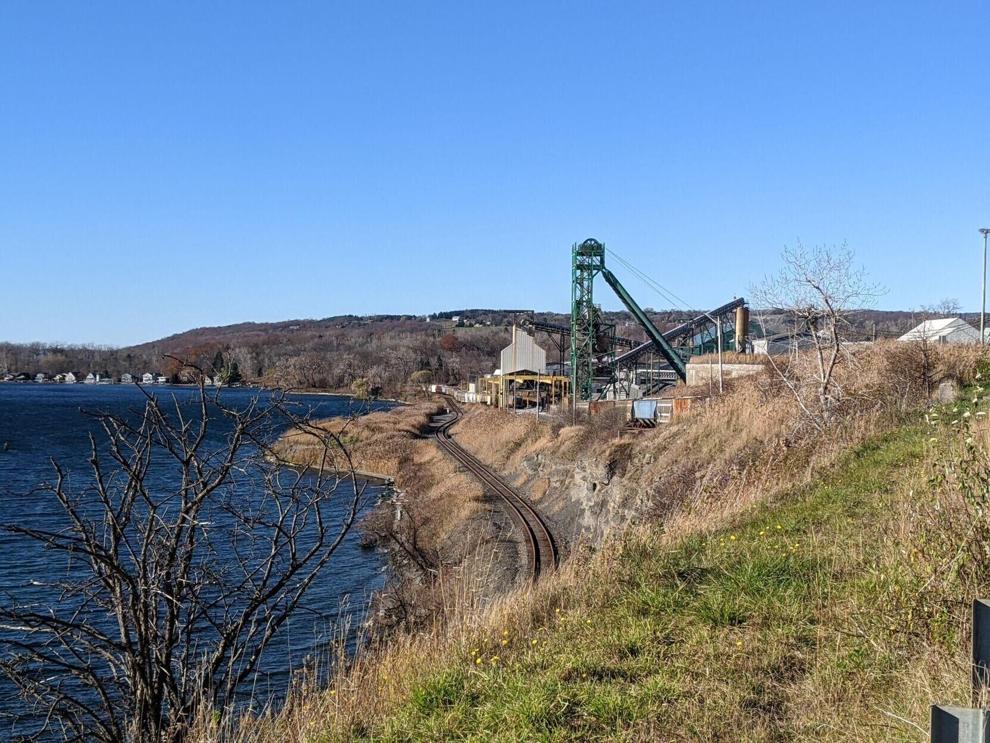
The Cargill Salt Mine in Lansing. | |
|
Risky Business
Kelles says she’s heard the community criticisms about the economic impact the closure of the mine would have in the Town of Lansing and for Cargill employees. Kelles says a program exists in the state for certain companies in transition that helps to decrease the impact of local sales tax losses and provides job re-training.
According to the Community Science Institute, the median chloride concentration of the lake is 47.35 milligrams per liter (mg/L), with a slightly higher concentration of 52.1 mg/L at Myers Point based on 15 years of monitoring data. Both are more than twice the 20 mg/L concentration level considered safe to drink for people with hypertension. The salt concentration is double all of the other Finger Lakes except for Seneca.
Officials with the Community Science Institute also claim that a recent review of public domain seismic data shows that the mine below the lake is in danger of a collapse, which would cause salinization that would “likely exceed the NYSDEC’s standard for chloride of 250 mg/L in water bodies with a best use for drinking water. To be clear, if the CSM collapses, Bolton Point Water System will need to become a desalination plant, potentially costing millions, and leaving the above communities without water in the interim.” Some in the community have challenged the validity of these findings, but advocates say that’s all the more reason for an independent review.
Sheldrake Point Winery Owner Chuck Tauck says people visit local wineries for the views as much as they do for the wine.
“Finger Lakes wineries are a significant tourism ‘magnet’ that attract hundreds of thousands of visitors to the region, and the health, beauty, and recreational appeal of the lakes are central to the visitor experience,” said Tauck. “There are myriad efforts to protect water quality and any risk from salt mining operations under the lake is inexcusable. New York State must ensure that the current salt mine operations are subject to rigorous environmental review; and any change of ownership of the mine, or closure of the mine, is subject to public scrutiny and the proposed environmental bond to protect the lake the public for future negligence or future disaster.”
Assemblymember Kelles agrees, saying part of review process should include contingency plans with a financial commitment in the event of a disaster.
Cargill closed its Avery Island, Louisiana mine several years ago after a collapse. The group is calling on Cargill to post a $10 billion bond to ensure there is enough money to mitigate any environmental risks that come with mining salt under freshwater resources.
Cargill has still not confirmed that the mine is for sale after a report surfaced in August.
| |
|
Next TCCPI Meeting
Friday, December 15, 2023
9 to 11 am
TCCPI meetings have moved online. Contact Peter Bardaglio, the TCCPI coordinator, for further details at pbardaglio@gmail.com.
| |
Ithaca Carshare to Resume Operations in March 2024
By Dalton Mullins and Grace Liu, Cornell Daily Sun, 9/19/23
| |
|
Ithaca Carshare will be returning to the city in March 2024 after it suspended operations in May due to insurance issues. This comes after Governor Kathy Hochul signed a bill on Friday, Sept. 15 that allows nonprofit risk retention groups not based in New York State to provide auto insurance to New York policyholders.
Ithaca Carshare is New York’s only nonprofit carshare service, providing over 1,500 members with nonstop access to 30 different vehicles. While the service was insured through Philadelphia Insurance — one of only two in New York State willing to insure car sharing companies — the insurance company went off the market in May 2023.
| |
Ithaca Carshare makes a comeback thanks to the efforts of State Sen. Lea Webb and Assemblymember Anna Kelles. | |
|
In response, Ithaca Carshare found a risk retention group based in Vermont willing to provide the nonprofit with auto-insurance, but as New York State requires RRGs to be domiciled in New York to offer insurance, Ithaca Carshare was unable to purchase this insurance.
Lost Revenues
Ever since it lost insurance in May, Ithaca Carshare has been losing revenues due to the pause in operations. Liz Field, director of Ithaca Carshare, said the service’s finances were so dire that she was the only active employee, and they had sold several cars to meet operating expenses. The lack of revenue also impacted Ithaca Bikeshare and Bike Walk Tompkins, which Ithaca Carshare is partnered with as part of the Center for Community Transportation.
“We furloughed all [the] staff except for myself,” Field said. “We know [Ithaca Bikeshare and Bike Walk Tompkins] have been kind of hobbling along. But without revenue from Carshare, we’ve really been struggling.”
Because Ithaca Carshare cannot resume operations until March 2024, members must find alternative modes of transportation in the meantime.
Prior to Hochul signing the Webb/Kelles Ithaca Carshare Bill, State Senator Lea Webb (D-N.Y.) and Assemblywoman Anna Kelles (D-N.Y.) introduced twin bills, Senate Bill 5959 and Assembly Bill 5718, in March 2023 to allow risk retention groups not based in New York to provide auto-insurance to nonprofit organizations such as Ithaca Carshare, allowing them to continue operations.
Webb explained the urgency behind getting the bill signed into law.
“The challenge with this particular bill is that [because] Carshare had stopped operating at the end of May, the timeframe with regards to getting it signed into law was very time sensitive,” Webb told The Sun.
Webb said she had the community in mind when drafting the bill, as well as the environmental impact of Ithaca Carshare. A 2013 study conducted by Cornell found that for every vehicle operated by Ithaca Carshare, 15.3 vehicles were taken off of the road.
“It helps [community residents] to reduce their carbon footprint because we know that cars are some of our largest pollutants that we have that contribute to carbon gas emissions, so it also helps with getting more cars off the road,” Webb said.
“The other cool thing about this bill is that it not only will allow for car sharing in Ithaca, but in other communities such as Albany, Rochester [and] Buffalo,” Webb added. “This program not only helps with getting people access to transportation, it also provides jobs that get people connected so they can go to their appointments or work.”
Despite the setbacks, Ithaca Carshare feels optimistic about returning to the carshare market. During the six months before Ithaca Carshare restarts operations, Field said the nonprofit is working on attracting new members and using a grant from the state to purchase electric vehicles to expand their fleet of cars.
“[Working with] the city and property managers with electric charging infrastructure is another project we want to be working with community partners on and trying to help figure that out. That’s a big issue in Ithaca. And getting more cars out there on the street so that we can better serve the community,” Field said. “I’m hoping that we’ll just keep growing.”
| |
Black Diamond Trail Expansion Takes A Big Step
by Jadyn Davis, Ithaca Voice, 10/20/23
| |
Black Diamond Trail by Cynthia Todd. | |
|
The Black Diamond Trail, a popular spot for biking, hiking, and nature views all year round, is a step closer to further expansion.
With recent property acquisitions, the plan to expand the trail from Buttermilk Falls State Park to Treman State Park on the east side of Route 13 is closer to a reality, with the help of the Town of Ithaca, Tompkins County, and New York State.
The actual construction connecting the trail will still take a few years to complete, according to town officials.
| |
|
The Black Diamond Trail is currently 8.4 miles, stretching from Jacksonville Road in Trumansburg to the Ithaca Children’s Garden. The northern part of the trail goes from the city of Ithaca’s waterfront area to Taughannock Falls State Park, while the stage is now set for the trail’s southern expansion from Buttermilk to Treman.
During a Common Council Meeting on Oct. 4, Town of Ithaca Deputy Supervisor Rich DePaolo, said the town acquired the last private property needed to start the expansion project of the southern part of the trail.
Bill Goodman, Ithaca Town Board Member and former supervisor, said the town had been working with the state and the county to acquire three parcels. Two were purchased in spring 2023, while the third was purchased in September 2023.
From here, Goodman said the town is hoping the state soon purchases the land, giving the town the money to complete the trail. Goodman said people he has spoken to are looking forward to using the southern part of the trail once it is completed.
Network of Trails
“Whenever I’ve been telling people […] who are into trails, everybody’s very excited because the Black Diamond Trail has been planned for decades,” Goodman said. “So the actual construction is still probably a couple of years. But at least we’ve now secured into public ownership, all the land that’s needed.”
Goodman said the overall goal is to create a network of trails, which include the Black Diamond Trail, the South Hill Trail, and the Gateway Trail.
“We’ll have three three large trail connections going,” Goodman said. “I’ve used the northern portion of the Black Diamond Trail and I’m looking forward to using the southern portion because it is very close to us here, located right in the town of Ithaca. So within a couple of years, people will be able to ride and bike many miles through the trails network.
Additionally, Goodman said the City of Ithaca is working on a portion of the trail that would be going through city property, where the City of Ithaca will be constructing a bridge that will allow people to cross the Cayuga Inlet. Goodman said people will be able to go from the Taughannock Falls, to Buttermilk Falls and Treman State Park once the City of Ithaca and the Town of Ithaca completes their parts of the trail.
“Making progress is a key component of the overall county’s trails network priority trails […] and [it] can help with recreation and with community and with tourism,” Goodman said.
| |
Take a step to save money and energy! | |
One Last Thing: Time to Rein in the Cargill Salt Mine | |
|
Cayuga Lake is one of our community’s most precious natural assets. Not only does it offer a large array of recreational opportunities, but it also provides the drinking water for over 100,000 people. As global warming accelerates and fresh water sources become increasingly scarce, we are fortunate to have such a plentiful resource available. In addition, as Assemblymember Anna Kelles points out in the above news article, the $3-billion-dollar local agritourism economy, which employs 60,000 people, depends on the lake.
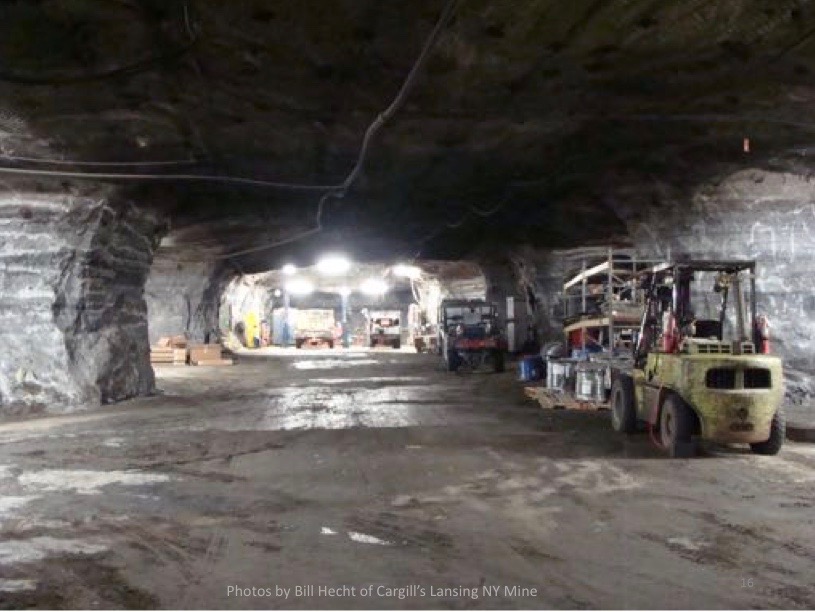
Little wonder, then, why there is growing concern about the future of the Cargill Salt Mine after reports surfaced that the company is looking to sell the operation. Cargill has been operating the mine since 1970. It produces roughly 2 million tons of road salt each year and ships it to over 1,500 locations throughout New York and the Northeast. The mine goes down 2,300 feet, making it the deepest salt mine in North America, and it runs for more than seven miles underground.
| |
Inside the Cargill Salt Mine. Photo by Bill Hecht. | |
|
Lack of Environmental Safeguards
Despite pressure from local environmental organizations, the Cargill Salt Mine has never been required to carry out an environmental impact statement. The New York State Department of Environmental Conservation (NYSDEC) has only required Cargill to post a $3.5 million bond to insure the mine in the event of a potential flood, an amount that clearly falls far short of what would be needed in such an instance.
Make no mistake: the collapse of one of Cargill’s salt mines is not a theoretical proposition. A roof collapse in December 2020 killed two miners at its Avery Island mine in Louisiana. Cargill shut down the mine in June 2022 and intentionally flooded it.
| |
|
Time to Speak Out
Geologic experts have warned that a similar event could take place at Cargill’s salt mine under Cayuga Lake. Members of Cayuga Lake Environmental Action Now (CLEAN), as reported above, are calling for the company to put in place a financial guarantee bond of $10 billion in event of a catastrophic event. Aside from this awful possibility, the Community Science Institute findings underscore the fact that the current salt concentration of the lake water is already reaching unhealthy levels. It doesn’t take a lot of imagination to see that a mine collapse would dramatically worsen the situation.
We are fortunate to have local legislators such as State Senator Lea Webb and Assemblymember Anna Kelles who are not afraid to take a stand and are calling on Governor Hochul and the NYSDEC to halt the reported sale of the Cargill Salt Mine and undertake a review process that would include contingency plans with a financial commitment in the event of a disaster.
Tompkins County residents have the opportunity this Wednesday, November 8 at the next meeting of the County Legislature to make their voices heard on this vital matter. The County Climate and Sustainable Energy Advisory Board will be presenting a resolution asking the legislators to back the effort to have the Governor and NYSDEC step in to assure the safety of the community’s drinking water and take measures to mitigate the other environmental risks of continued mining beneath the lake, including requiring Cargill or any future buyer to post a $1 billion environmental bond.
Privilege of the floor, where you can speak out, will begin about 5:45 pm. In addition, you may write to the legislators at www.tompkinscountyny.gov/legislature/email.
Peter Bardaglio
TCCPI Coordinator
| |
Be sure to visit the website for TCCPI's latest project, the Ithaca 2030 District, an interdisciplinary public-private collaboration working to create a groundbreaking high-performance building district in Downtown Ithaca.
| |
309 N. Aurora St.,
Ithaca, NY 14850
607-229-6183
| | | | | |