Waltham and Lincoln Receive Grants to Help Prepare for Climate Change and Build Resilience
The Baker Administration announced over $2 million in grant funding has been awarded to 82 towns and cities across the Commonwealth including Waltham and Lincoln to complete climate change vulnerability assessments and develop resiliency plans through the Municipal Vulnerability Preparedness (MVP) program. Waltham will receive $41,500 and Lincoln will receive $20,000.
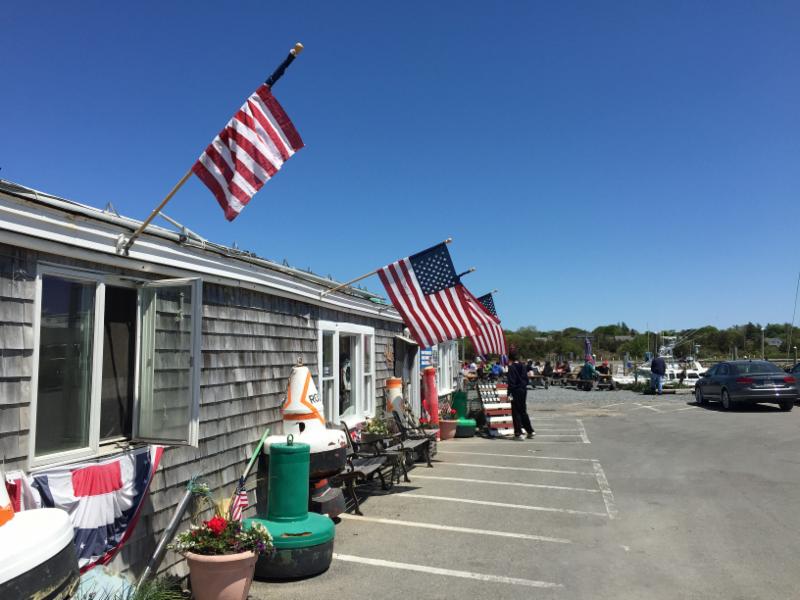
The grant and designation program provides communities with technical support, climate change data and planning tools to identify hazards and develop strategies to improve resilience. The grant awardees, representing 43 percent of municipalities in the state, across all regions of the Commonwealth, were announced by Energy and Environmental Affairs Secretary Matthew Beaton, as part of a tour of storm damage on the beaches of the outer Cape.
Through the MVP Program, municipalities work through a community-based workshop process to identify key climate-related hazards, vulnerabilities and strengths, develop adaptation actions, and prioritize next steps. Results of the workshops and planning efforts will be used to inform existing local plans, grant applications, and policies, such as local hazard mitigation plans.
The MVP program is led in each town by an experienced Project Coordinator from the town with a core team of town staff and volunteers representing town planning departments, emergency managers, conservation commissioners, economic councils, the business community and other key stakeholders. Technical assistance is delivered by state-certified MVP providers using a standardized toolkit for assessing vulnerability and developing strategies, and newly developed climate projections and data from the Northeast Climate Science Center at UMass-Amherst. Upon successful completion of the program, municipalities are designated as a "Municipal Vulnerability Preparedness (MVP) program community," which enables them to compete in EEA's MVP Action Grant program.
Waltham and Lincoln Receive Early Education and Care Department grants
Congrats to Communities United, Inc. (serving Waltham) and South Middlesex Opportunity Council - SMOC (serving Lincoln) on receiving Commonwealth of Massachusetts Early Education and Care Department grants through the Head Start State Supplemental Grant program! This initiative supports quality enhancements in Head Start programs, including salary and benefits; the hiring of additional staff to provide lower child/staff ratios; professional development opportunities; and funding for grantees to meet their 20 percent Federal Head Start matching requirements.
Rep. Stanley's bill to increase veterans' burial expenses included in House veterans' package
Rep. Stanley is pleased to announce that legislation he filed, House Bill 1942, An Act relative to veterans' burial expenses, was included in legislation passed by the House of Representatives last week. The current veterans' burial benefit of $2,000 has not kept up with the rising costs of burial services. The National Association of Funeral Directors estimates that the average funeral with a burial costs approximately $7,180. While funeral homes are still performing burials for veterans in need, $2,000 is no longer adequate to provide for a dignified funeral. This bill would increase the veterans' burial benefit to reimburse up to $4,000 of the total cost of burial.
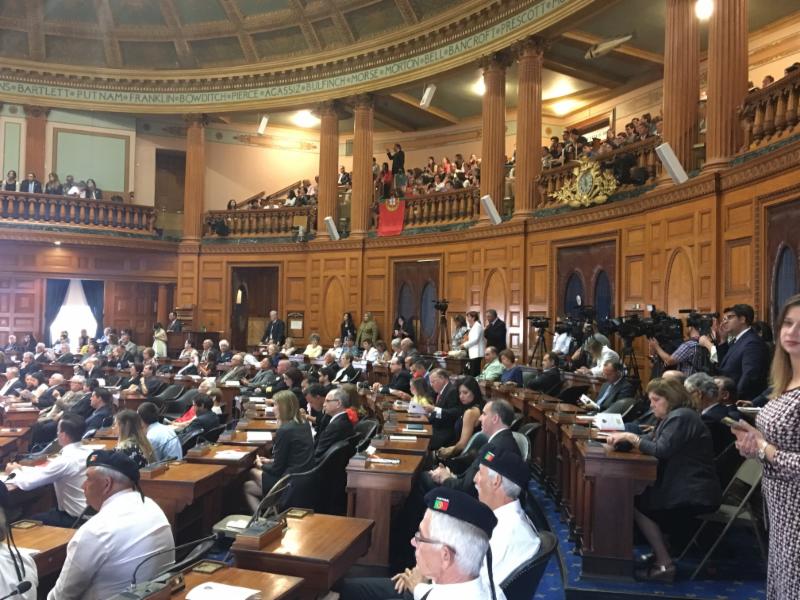
Last week, Rep. Stanley joined his House colleagues to pass legislation to support Massachusetts' veterans and military families including an important provision to make more veterans eligible for property tax exemptions by relaxing the residency requirements. This bill builds upon the Commonwealth's legacy as a national leader for the number of programs and services it offers to military personnel, veterans and their families.
In addition to increasing the amount a deceased veteran's estate may receive to assist with funeral and burial expenses from $2,000 to $4,000, the bill creates a $1,000 active-duty death benefit, in addition to any annuity the person would have received. Recognizing that many people who serve in the military have specialized medical training, the legislation makes it easier for military personnel to become EMTs once they return home. Lastly, under this legislation every municipality in the Commonwealth will now designate one parking space at its town or city hall as "veterans-only parking."
Rep. Stanley lobbies for funding for Charles River Community Health
Rep. Stanley sent a letter to Speaker DeLeo, Majority Leader Mariano, House Ways and Means Chair Sanchez, and Joint Committee on Health Care Financing Vice Chair Roy, urging for the inclusion of the Community Health Center Transformation Fund (CHCTF) with dedicated appropriations ($30m) in the upcoming House Health Care bill. In Rep. Stanley's district, Charles River Community Health (CRCH) has had a presence in Waltham for over 15 years, providing quality, comprehensive, coordinated care that is patient-centered, family friendly, and community focused. Last year, Charles River Community Health served 13,554 patients through over 65,000 medical, dental, mental health and vision visits.
The CHCTF will help stabilize the finances of Community Health Centers (CHCs) across the Commonwealth who are experiencing serious fiscal challenges due to the uncertainty in federal health care policy. CHCs are patient-directed, community-based non-for profit organizations providing a comprehensive range of services, including medical, pharmacy, dental, mental health and vision services to anyone in need of services regardless of their insurance coverage or ability to pay.
Statewide, CHCs have served over a million patients in 96% of the Commonwealth's cities and towns. Overall, CHCs have a $2.7b economic impact in addition to saving the state $2.4b through reduced ED visits, hospital stays, and higher-cost specialty care.
Rep. Stanley Supports Increased Funding for Head Start
Rep. Stanley signed onto a letter to Budget Conference Committee Members requesting support for the Head Start supplemental line item at the $9.6M funding level included in the House final budget. The Head Start program provides services to approximately 15,000 of the youngest and most economically disadvantaged infants, toddlers, preschoolers, and their families throughout the Commonwealth.
Head Start services include comprehensive family support, parent education, and health, nutrition, dental and mental health services, and community referrals that connect families to needed outside support that move them to self-sufficiency. An investment in this crucial work is central to the state's overall increased investment in early education and care and supports the quality and access to services that provides our youngest children and their families with opportunities they might not otherwise have.
For approximately $3 per child per day, over 15,000 children are served through Head Start who would otherwise need services through the EEC subsidy system, or who would not qualify for subsidy. The lack of these additional services would provide these children with no experience in high quality early education and care before entering the public school system to address the potential achievement gap. Currently with 52 programs at 28 agencies across Massachusetts, Head Start programs are proven to have long-term positive outcomes for children and families where children are less likely to need special education classes or repeat grades when they are older, and they are more likely to graduate high school, attend college, and escape the cycle of poverty.
Rep. Stanley cosigns letter supporting a Chapter 70 Foundation Review
Rep. Stanley and his colleagues sent a letter to Rules Committee Chairman Galvin requesting that the Committee on Rules report favorably on An Act Modernizing the Foundation Budget for the 21st Century (S.2525) and bring the bill to the House floor expeditiously. A bipartisan commission made up of legislative and executive branch appointees issued a report over three years ago calling for meaningful, attainable adjustments to our public school funding that take into account the true costs of education for our more disadvantaged students and districts. The Senate unanimously passed a bill -- An Act Modernizing the Foundation Budget for the 21st Century (S.2525) -- that enacts these recommendations. This bill currently sits in the House Committee on Rules.
School district budgets across the state have experienced steady erosion over the nearly two decades since Chapter 70 was fully implemented. Between FY02 and FY18, Chapter 70 funding declined by nearly 9% when adjusted for inflation. As a result, we are seeing larger class sizes, fewer wraparound services, and a reduction or elimination of access to foreign languages, arts, and extracurricular activities, despite our constitutional responsibility to "cherish" our education system.
In response to years of advocacy from school districts, parents, educators, and students, the Legislature established the Foundation Budget Review Commission (FBRC) to recommend improvements to the current formula. This bill directly reflects those bipartisan, unanimous recommendations and will modernize our foundation budget with regard to special education students, low-income students, English learners, and employee and retiree healthcare costs.
Rep. Stanley Urges Favorable Action on Automatic Voter Registration legislation
In a letter to Chairman Sánchez, Rep. Stanley urged favorable action to Automatic Voter Registration (AVR) legislation this session via House Bill 4320, An Act automatically registering eligible voters and enhancing safeguards against fraud. As you know, H.4320 was referred to the House Committee on Ways and Means back in March (3/22/18) after receiving a favorable recommendation from the Joint Committee on Election Laws. Rep. Stanley supports AVR and believes this legislation will help streamline the voter registration process while ensuring that our elections remain safe and secure. Overall, AVR legislation improves the accuracy of voting rolls, allowing for elections to be more secure, along with significantly cutting down on cost and paperwork, by digitizing the registration process.
Currently, more than 680,000 residents (15% of eligible citizens) in Massachusetts are not registered to vote. As a modern democracy that prides itself voter engagement and participation, these statistics are very alarming and unacceptable. More must be done to reduce the barriers that prevent residents from voting. In 2016, Oregon became the first state in the nation to implement Automatic Voter Registration and as a result, over 270,000 individual citizens registered to vote through the new initiative. Approximately 42.73% of those citizens voted in the 2016 General Election, helping Oregon set a new state record for number of votes cast.
H.4320 seeks to implement a program similar to Oregon's by changing the voting system from an "opt-in" to an "opt-out" system. The bill specifically requires state agencies to collect registration information for citizens who interface with them and to transmit such information in a secure fashion to local Registrars of Voters. H.4320 also requires for the Commonwealth to join the Electronic Registration Information Center (ERIC), a national clearinghouse that collects state registration information to eliminate duplicate registrations, and directs local Registrars to communicate in-state to avoid duplicate registration as well. Lastly, the bill requires the Secretary of State to issue regulations to prevent the erroneous disenfranchisement of eligible citizens and to protect non-citizens from being erroneously registered.
Rep. Stanley cosigns letter supporting Community Solar Credit Reimbursement Changes
Rep. Stanley recently signed onto a letter to the commissioners of the Department of Public Utilities expressing support of continued progress on solar in Massachusetts, with all of the economic and environmental benefits that this clean, local energy provides. The representatives support the overall design of the new SMART solar incentive program, and its potential to drive cost-effective growth for the next phase of development.
The Department of Public Utilities (DPU) has proposed Alternative On-Bill Credits (AOBC) for these projects' kWh usage, which would reduce the current credits granted to customers and ultimately increase their energy bills. Considering that most of these projects are utilized by and benefit low-income individuals and those in multi-family housing, it is crucial that any new energy policies prioritize equity and justice.
They letter expressed concern about the utility proposal in the SMART docket, and the potential for the final SMART Program to fail to meet needs of our constituents. The utility proposal for an Alternative On-Bill Credit (AOBC) mechanism is presented as an alternative to net metering, but comes with a new harmful cap on customer credits and other conditions that have not been present in previous programs. The DPU must ensure that the new program enables solar development for all consumers and communities, including renters, low-income residents and our cities and towns.
Baker Administration Awards $2 Million in Community Compact IT Grants to 45 Cities and Towns
Governor Baker announced $2 million in technology grants will be awarded to 45 cities and towns across the Commonwealth, benefiting more than 120 municipal entities, through the Community Compact Information Technology (IT) Grant Program. The announcement brings the total number of municipal IT grants issued over the past three years to 144, assisting more than 250 communities with $6 million in grant funding to modernize their technology systems and deliver service to their residents more efficiently.
Cities and towns have used the IT grant funding to upgrade their websites, implement new systems that allow residents to apply for permits and licenses online, improve the security and capacity of municipal IT systems, digitize records, and develop other solutions to costly technological challenges.
Baker Administration Announces Designation Status to Early College Programs
The Baker Administration officially designated five early college programs to help high school students better prepare academically for college while also earning college credits at no cost to them. Early college programs combine traditional high school courses with an opportunity to earn college credit at a public college or university and are typically aligned to a particular career pathway. The five designated early college programs - in Chelsea, Charlestown, Holyoke, Brockton and Salem - will enroll hundreds of students this fall.
Early college has been shown to boost college completion rates for low-income students, minorities and first-generation college-goers. By creating designated early college programs, the Baker-Polito Administration aims to break down barriers between high school and higher education in order to create a more seamless path for students to move to college and careers.
$11.7 Million Awarded for Opioid Prevention, Treatment and Recovery Programs
The Baker Administration announced that Massachusetts has received an $11.7 million federal grant to continue its public health response to the opioid epidemic and bolster community overdose prevention, outpatient opioid treatment, and recovery services across the Commonwealth. This is the second consecutive year the state has received the funding, bringing the two-year total to $23.8 million
.
This grant, from the Substance Abuse and Mental Health Services Administration (SAMHSA), is the second round of funding authorized under the 21st Century Cures Act, signed into law in December 2016. The funds address the opioid crisis by increasing access to treatment, reducing unmet treatment needs, and reducing opioid overdose-related deaths through the provision of prevention, treatment and recovery activities for opioid use disorder. It supports existing statewide services managed by the Massachusetts Department of Public Health's (DPH) Bureau of Substance Addiction Services.