Rep. Stanley Files Legislation to Identify Alternatives to the Gas Tax
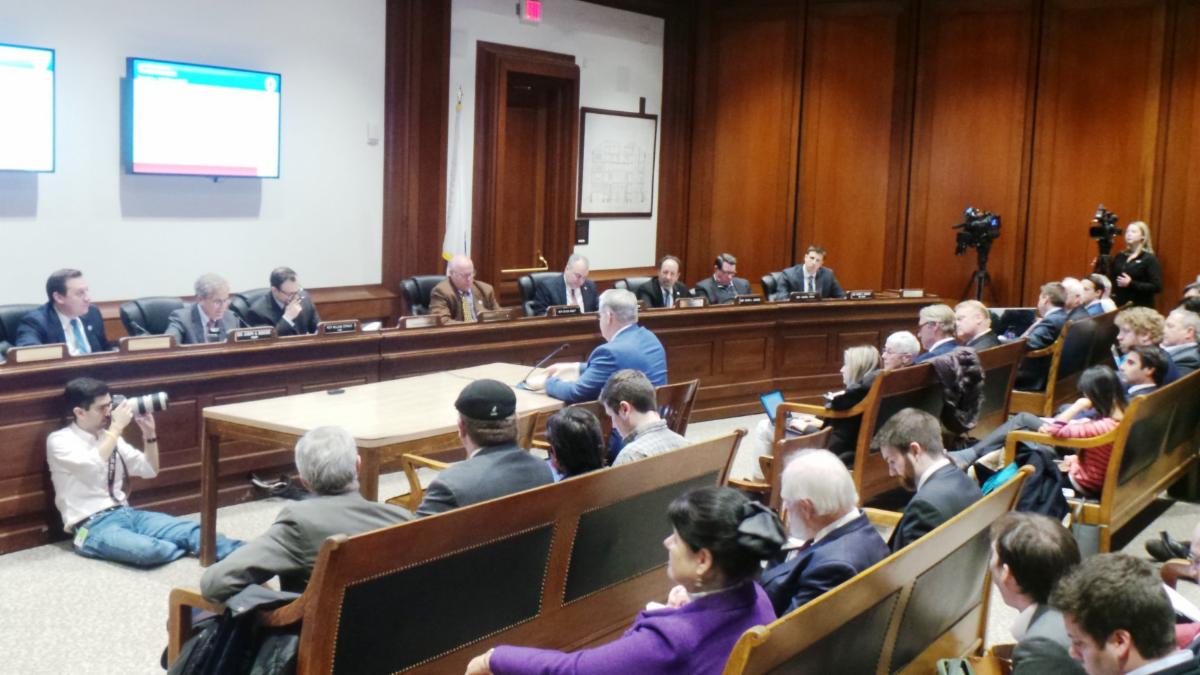
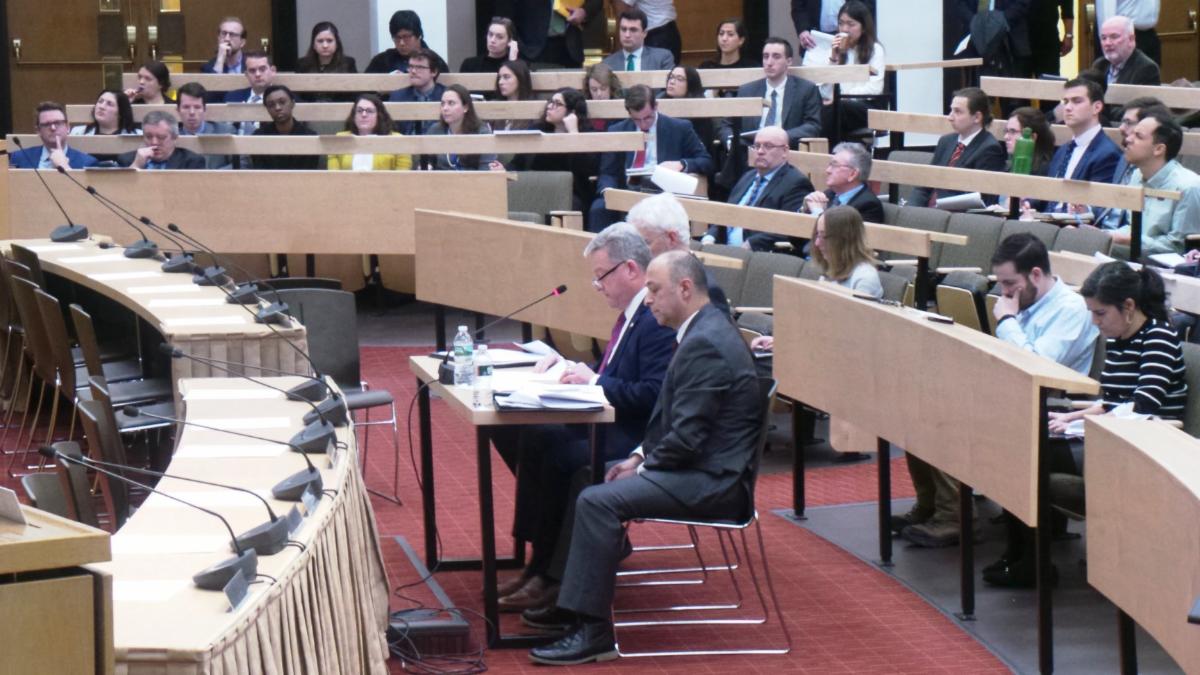
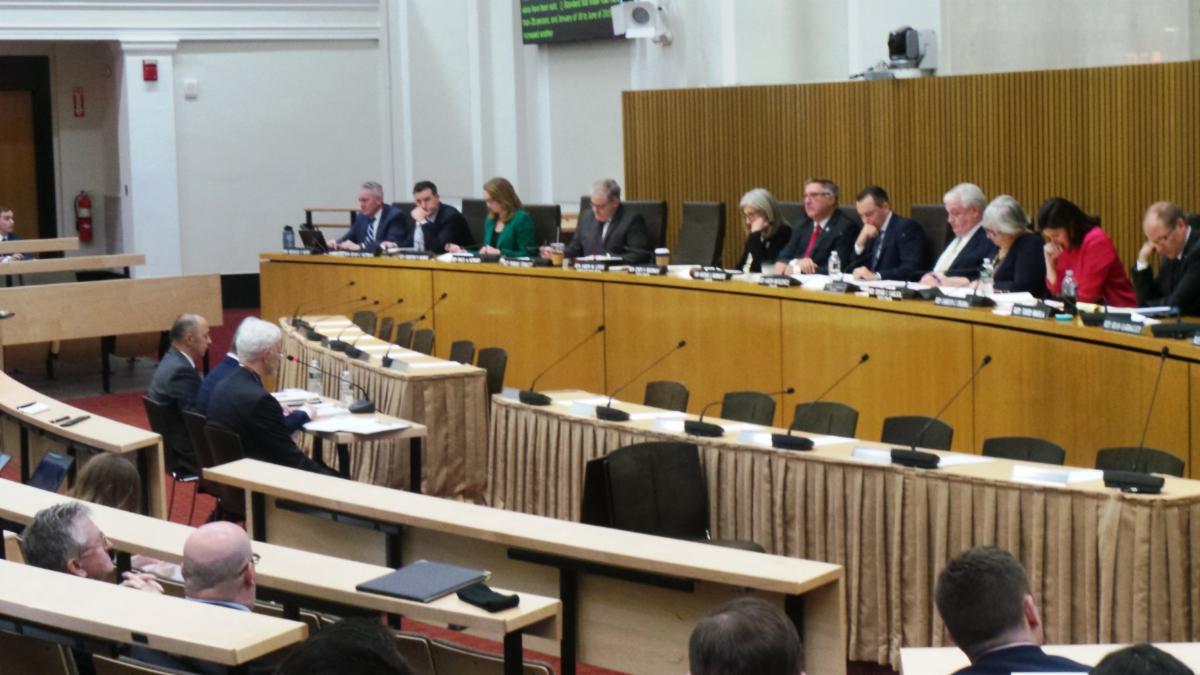
In a letter to the chairs of the Joint Committee on Transportation. Rep. Tom Stanley (D-Waltham) and Rep. Tricia Farley-Bouvier (D-Pittsfield) requested favorable action on legislation they jointly filed to form small, voluntary Vehicle-Miles Travelled (VMT) pilot program to identify alternatives to the state gas tax.
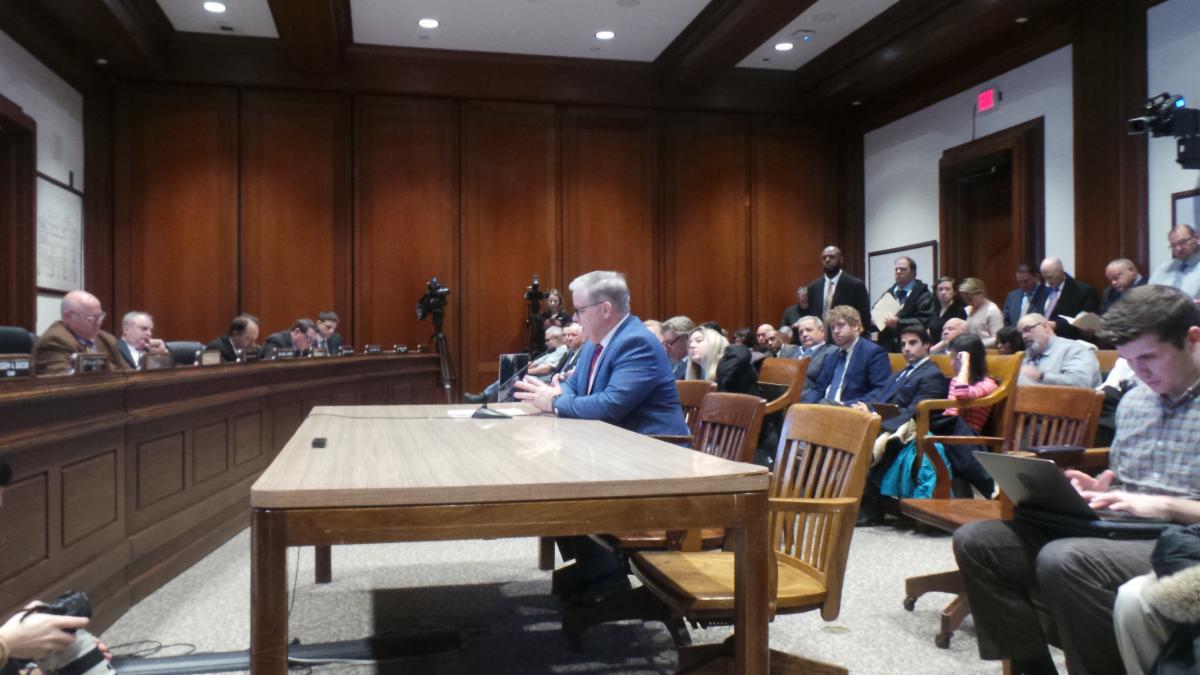
House Bill 3010 would establish a mileage-based user fee task force to guide the development and evaluation of a pilot program to assess the potential for a mileage-based fee to replace motor fuel taxes. The task force would be required to gather public comment on issues relating to a pilot program, make recommendations to MassDOT on the design of a pilot program, and evaluate any pilot program implemented by MassDOT. Under the bill, MassDOT is required to develop and implement at least one mileage-based user fee pilot program that would last a year. The pilot must include at least 1,000 volunteers from across the Commonwealth who must be representative of drivers of trucks, passenger cars, and commercial vehicles. Volunteers will have on-board vehicle-mileage-counting equipment added to their vehicles
The pilot will test the reliability, ease of use, cost and public acceptance of technology and methods for (1) counting the number of miles traveled by particular vehicles; (2) reporting the number of miles traveled by particular vehicles; (3) collecting payments from program participants. The pilot will also review the ability of different technologies to protect data collection and reporting; ensure driver privacy; and vary pricing based on time of driving, type of road, proximity to transit, vehicle fuel efficiency, participation in car-sharing or pooling, or income of the driver. To ensure that program participants are not spending more on fees/taxes than if they had not participated in the program, they will be refunded by MassDOT for any gas taxes paid during the pilot.
Waltham Receives Fire Department Grant Award
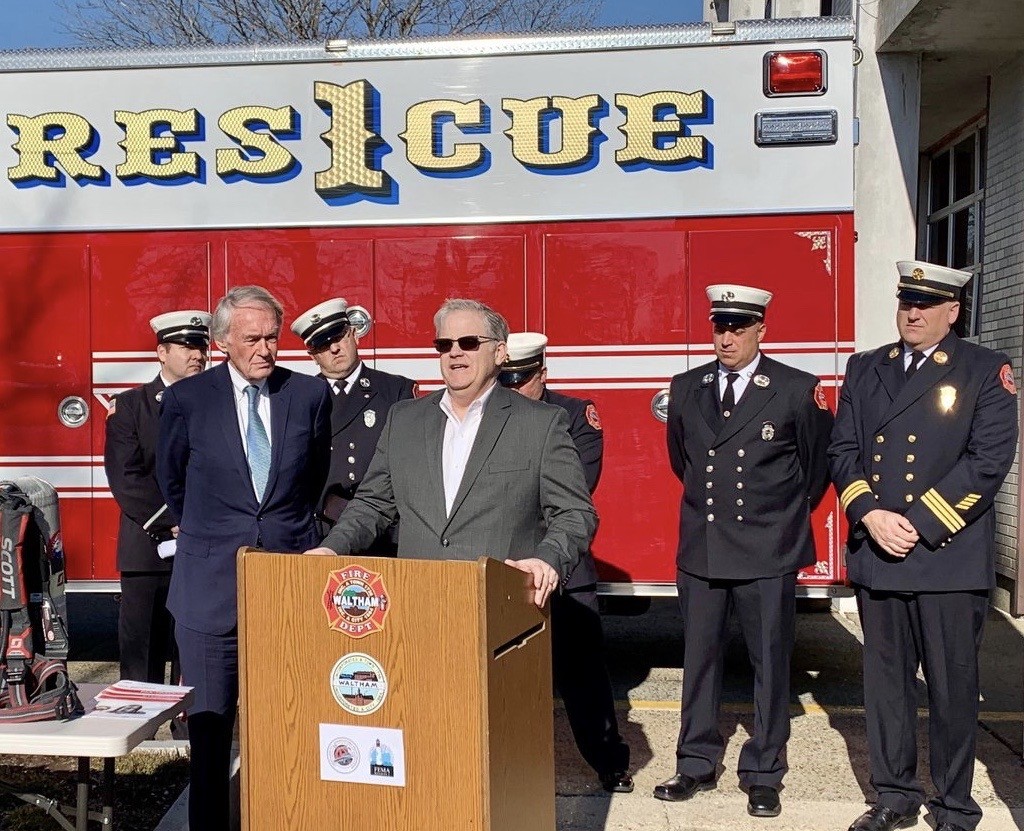
Governor Baker announced $920,000 in grant awards to 174 Massachusetts fire departments for gear and equipment for that will reduce firefighters' exposure to cancer-causing chemicals on the job. The Firefighter Turnout Gear Grant program will provide firefighters in 144 departments with new hoods and gloves for structural firefighting activities. These items will reduce exposure to cancer-causing chemicals in the head and hand areas, which are high-risk areas for dangerous chemicals to enter the body. In total, approximately 3,000 hoods and 3,000 pairs of gloves will be purchased with the $500,000 from this program. The Waltham Fire Department received $8,715 in turn out gear grants.
Through the Washer-Extractor Equipment Grant, $420,000 was awarded to 75 departments that will receive a new washer-extractor to clean their structural firefighting gear after exposure to smoke and other toxic chemicals. Because some of the recipient agencies are purchasing regional-use machines, 84 departments will actually benefit from them. A national standard set by the National Fire Protection Association (NFPA) on the care and cleaning of structural firefighting gear delineates specific types of machines that should be used to effectively remove cancer-causing chemicals after each fire. All washer-extractors purchased with this grant will meet this standard, and enable personnel to wear clean gear each time they leave the fire station for an emergency.
Gov. Baker Signs Education Funding Bill Providing Investments in Public Schools
Governor Charlie Baker signed S. 2412, an act relative to educational opportunity for students, which boosts investment in public schools by $1.5 billion annually when fully phased in over the next seven years. These investments will ensure school districts have additional resources to provide high-quality education to all students by revamping the formula used by the state to calculate the cost of educating students by updating costs related to health care and special education, as well as educating English Language Learners and low-income students.
Waltham is projected to annually receive an additional $4.3 million dollars in Chapter 70 education funding over current funding levels. Total annual Chapter 70 funding would change from $14,846,143 today to $19,212,071. Waltham Public Schools will also receive an additional $730,000 next year to help with special education costs, a 20% increase over current funding.
In addition to historic increases in state investments, the bill requires school districts to develop three-year plans to close achievement gaps using evidence-based programs and supports, such as expanded learning time, increased counseling and psychological services, professional development, expanded early learning and pre-kindergarten, early college and career readiness pathways, and a more diverse teacher workforce. The Commissioner of Elementary and Secondary Education will establish statewide targets for addressing persistent achievement gaps among student groups, and will review each district's plan to ensure it sets measurable goals for student improvement, with credible strategies for achieving them. Districts must amend any plan deemed by the Commissioner not to conform with these standards.
The bill also requires the Secretary of Education to collect data on student preparedness for college and career success by school district and high school, including student participation rates in college and career readiness programs, college acceptance and graduation rates, as well as the percentage of students in internships and earning industry-recognized credentials. The annual report will be developed in consultation with a data advisory commission, school districts, the Department of Elementary and Secondary Education, the Department of Higher Education and other state agencies
Under the legislation, school districts will see increased reimbursements for transporting students to out-of-district special education placements. It also raises a cap on state funding for school building projects by $150 million from $600 million to $800 million.
Governor Baker Signs Legislation Requiring Hands-Free Use of Electronic Devices While Driving
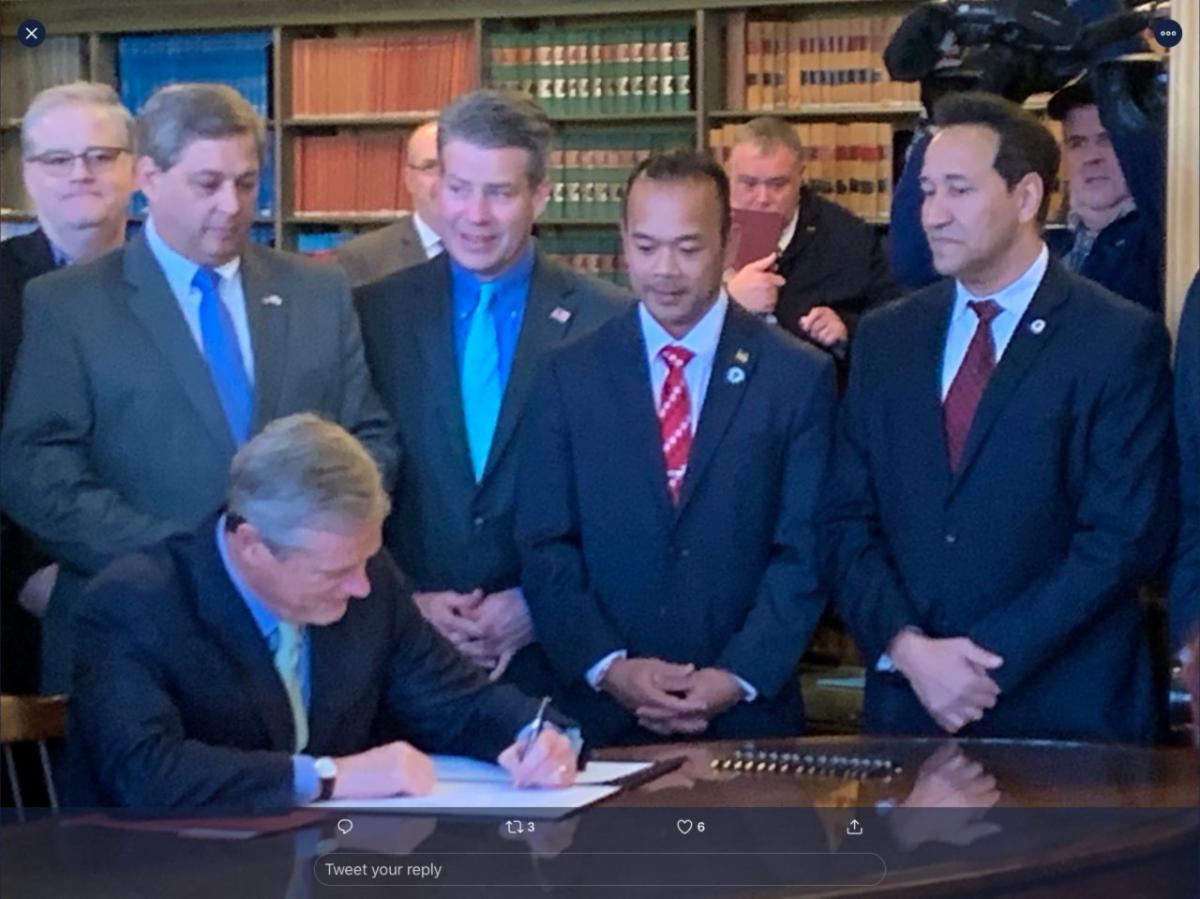
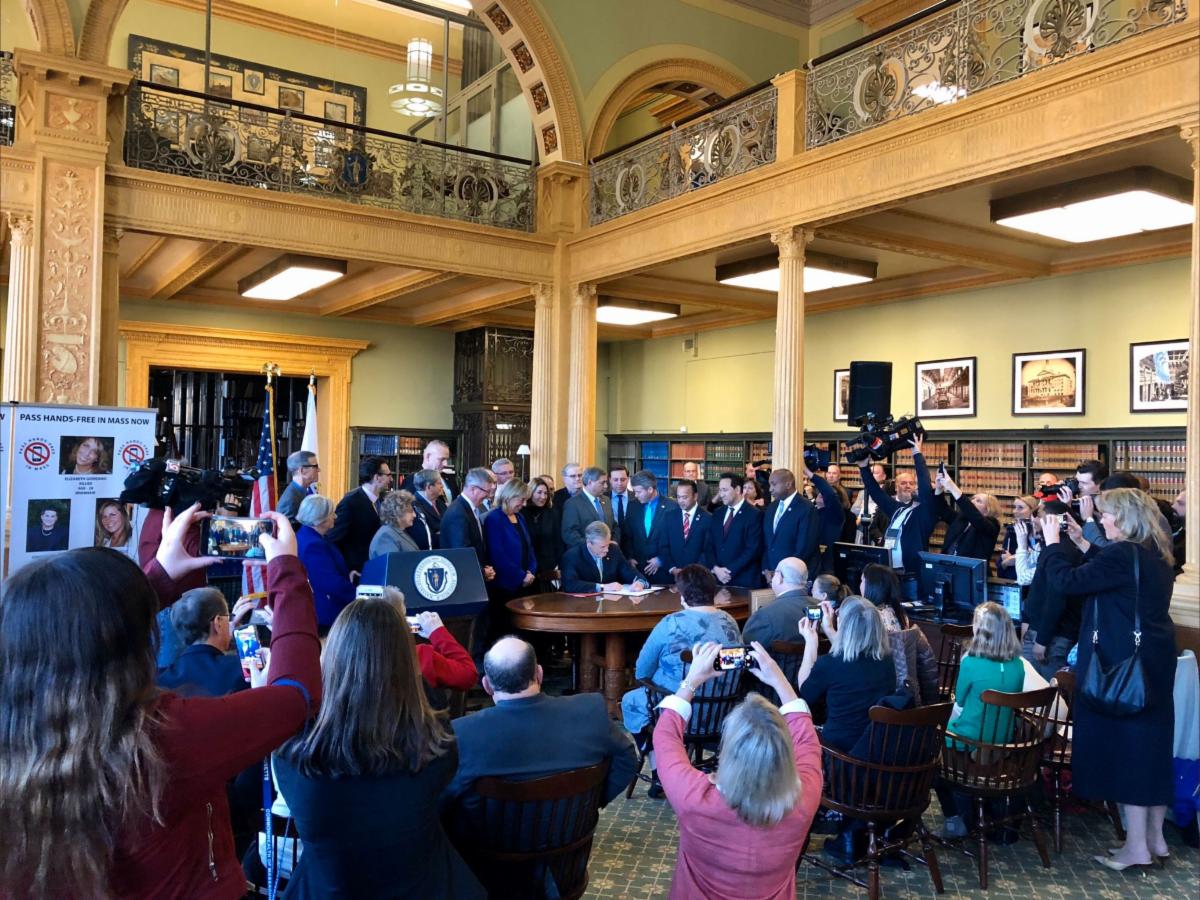
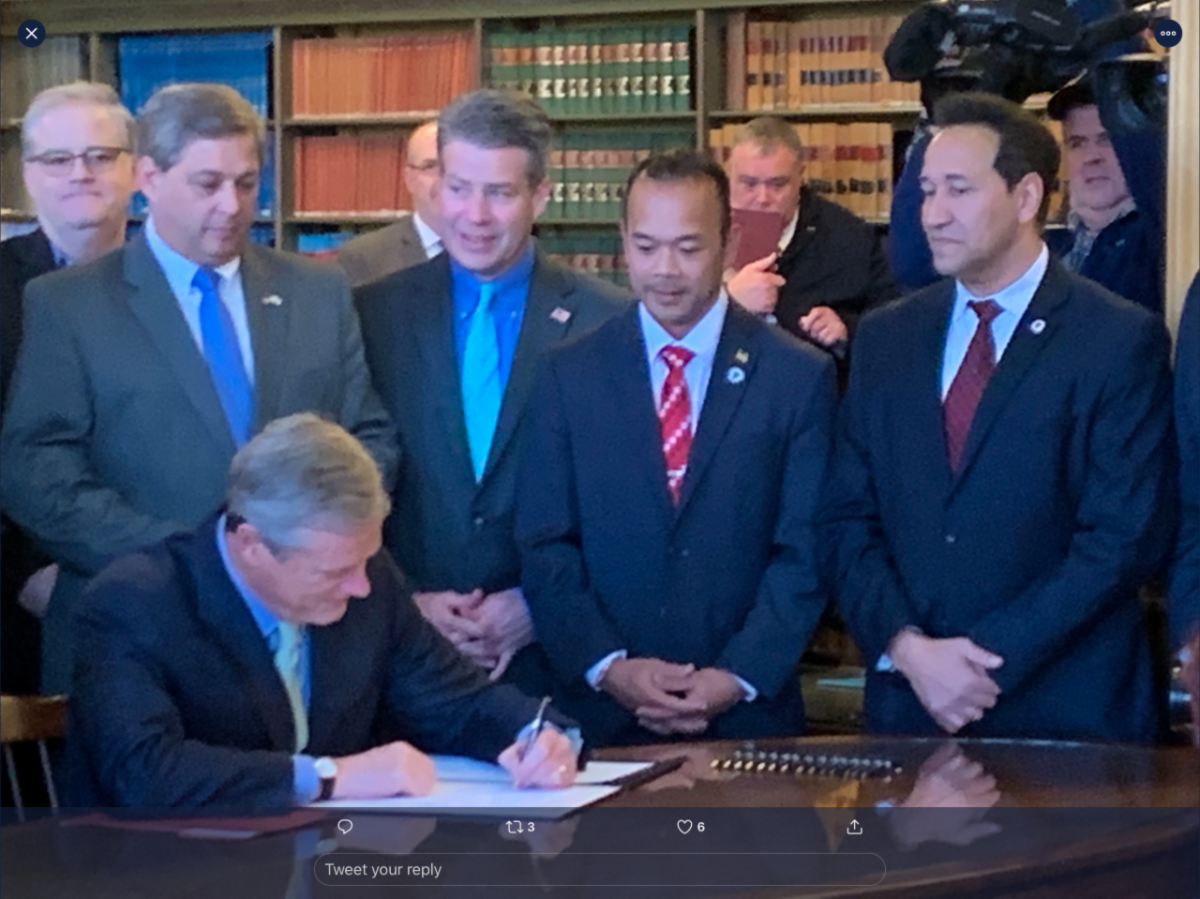
Governor Baker signed legislation to improve road safety in the Commonwealth, which stipulates that no motor vehicle operator may use electronic devices while driving unless the technology is being used hands-free. The legislation, which adopts recommendations from the Commonwealth's Strategic Highway Safety Plan, also sets forth penalties for violating the law and requires that law enforcement officers report data on violations so the information can be shared with the public.
Under the new law, titled An Act requiring the hands-free use of mobile telephones while driving, operators of motor vehicles cannot use an electronic device unless the device is being used in hands-free mode. Operators cannot read or view text or look at images or video, unless what is being viewed on the device is helping with navigation and the device is mounted in an appropriate location. They also cannot make phone calls unless they are able to do so without holding the phone, utilizing technology such as Bluetooth. The new law permits the use of electronic devices if they are being used in response to an emergency, necessary for first responders to do their jobs. It also permits use if operators are stationary and not in active lanes of travel.
Punishment for violating the hands-free law includes a $100 fine for a first offense, $250 fine for a second offense and $500 fine for a third or subsequent offense. A third or subsequent offense will count as a surchargeable incident. Operators who commit a second or subsequent offense are required to complete an educational program focused on distracted driving prevention.
Rep. Stanley submits testimony on legislation requiring mental health parity for disability policies
In a letter to Chairs Welch and Murphy of the Joint Committee on Financial Services, Rep. Stanley expressed support of H.908/S.615, a bill requiring mental health parity for disability policies. This legislation prohibits insurance companies from imposing time limitations on short-term and long-term disability benefits paid out as the result of a behavioral health disorder where no similar time limitations exist on benefits paid as the result of any other medical condition. Federal and state laws already require mental health parity in health insurance. H.908/S.615 would extend that principle to disability insurance.
Currently, private short- and long-term disability policies contain inequitable limitations. Either no benefits are paid or the payout period is shorter for those with mental health disabilities. The current benefit limits are based on stigmatization of persons with mental disabilities - not on hard evidence that covering persons with mental disabilities costs more than covering persons with physical disabilities. Mental health parity in disability insurance will ensure that an insured who is disabled as the result of a behavioral health disorder is still able to afford food, shelter, and other necessities by replacing lost wages due to the disability, just as is someone who is disabled as the result of any other medical condition.
Rep. Stanley cosigns letter to Gov. Baker on Board of Building and Regulation Standards
Rep. Stanley signed onto a letter to Governor Baker urging him to express to the Board of Building Regulation and Standards (BBRS) the importance of their role in tackling the climate crisis and to provide any necessary oversight and guidance to ensure that the BBRS develops and implements a net zero stretch energy code. Governor Baker plays a critical role in providing oversight and guidance to the BBRS.
In order to effectively combat climate change, Massachusetts needs net-zero buildings that are running off of renewable energy or producing as much energy as they use. Many municipalities have committed to higher energy efficiency standards or to being net-zero by 2050, and even more have committed to being a Green Community. The Green Communities Act in 2009 established the original stretch energy code for energy efficient buildings, but over the last decade improvements to the current building base code have advanced to the point where the stretch code is no longer such a stretch. Many of you joined us earlier this year in a letter urging the BBRS to adopt a net zero stretch code. While the BBRS has since then indicated an interest in exploring the adoption of a net zero code, recent actions and statements by the BBRS have raised concern over their commitment to incorporating climate change into their work and pursuing a net zero code.
Rep. Stanley supports FUTURE Act
In a letter to the Joint Committee on Telecommunications, Utilities and Energy, Rep. Stanley urged action on legislation for utility transition to using renewable energy, also known as the FUTURE Act. The FUTURE Act requires gas companies, just like electric companies, to reduce their emissions every year, either through energy efficiency or through renewable thermal energy. The legislation seeks to achieve this goal by allowing gas companies to provide renewable thermal heat (i.e. district energy), thus ensuring that people who still have unhealthy gas in their homes are able to transition to a safer, cleaner and healthier heating source. District energy refers to when a neighborhood shares a single boiler, with the resulting heat pumped underground to the nearby buildings.
The FUTURE Act also encourages gas companies to prioritize repairing the largest and most dangerous leaks (7% of leaks emit 50% of the methane). Under the bill, gas companies would be required to report all hazardous leaks to local fire chiefs within an hour of finding them and fix all leaks that currently do not have a definite time frame for repair, such as leaks that are within 150 feet of a school zone ore leaks that are killing street trees, within 6 months. The FUTURE Act also improves municipalities' ability to claim property damage caused by gas leaks with the DPU.
Rep. Stanley asks Joint Committee on Financial Services to Act on Genetic Craniofacial Conditions bill
Rep. Stanley urged favorable action on House Bill 1116, legislation ensuring treatment for genetic craniofacial conditions. As the lead sponsor of H.1116, Rep. Stanley believe this legislation would provide patients suffering from Genetic Craniofacial Conditions with essential medical coverage to be able to adequately pay for treatments and live a more comfortable life without the impediments caused by these conditions. Genetic Craniofacial Conditions refer to the malformation of the face and skull that may result from birth defect, disease or trauma.
With treatment costing upwards of $100,000 per patient, few families can afford to pay out of pocket. This leads some to seek crowd-funding, take second jobs, sell their homes, travel to other countries for treatment, or forego treatment entirely with disastrous health consequences. Without treatment, patients will continue to suffer from chronic pain, difficulty eating, loss of facial bone, infections and psychosocial issues due to pain and abnormal appearance. Treatment is medically necessary as Genetic Craniofacial Conditions can prohibit functions such as eating and speaking. In more severe cases, patients need to make frequent visits to orthodontists, oral and maxillofacial surgeons and speech and language pathologists.
H.1116 would close the "cosmetic" loophole that allows insurers to deny coverage for treatment of rare, disabling genetic defects. Under the bill, all insurance contracts would be required to provide coverage provide coverage for medically necessary repairs and/or restorations of genetic abnormalities affecting teeth.
Rep. Stanley lobbies for passage of his Mitochondrial disease bill
In a letter to the Joint Committee on Financial Services, Rep. Stanley urged favorable action on legislation he filed relative to the care and treatment of patients with mitochondrial disease. As the lead sponsor of H.1115, he believes this legislation would provide patients suffering from Mitochondrial disease the treatment they need to manage their symptoms and enhance their quality of life.
Mitochondrial disease is an inherited chronic illness that can be present at birth or develop later in life. It causes debilitating physical, developmental, and cognitive disabilities with symptoms including poor growth; loss of muscle coordination; muscle weakness and pain; seizures; vision and/or hearing loss; gastrointestinal issues; learning disabilities; and organ failure.
H.1115 helps families with private insurance obtain reimbursement for components of the Mito Cocktail not currently covered by their prescription drug benefit plan. A CHIA Mandated Benefit Analysis of this legislation found that insurance coverage for the Mito Cocktail would only increase health insurance premiums by mere pennies. Access to treatment would also reduce overall health costs as patients will require fewer hospitalizations.