The state of Florida is attempting to close down the Arthur R. Marshall Loxahatchee National Wildlife Refuge near Palm Beach. The Refuge was created to stop the sugar industry dumping dirty water. The U.S. Department of Justice has enforced water quality laws and ordered sugar industries to clean up their act.
Loxahatchee comes from the Seminole meaning "River of Turtles." The Loxahatchee National Wildlife Refuge is a mosaic of wet prairies, sawgrass ridges, sloughs, tree islands, cattail communities, and a 400-acre cypress swamp. The refuge provides essential wildlife habitats for the King Rail, Limpkin, Fulvous Whistling-Duck, White and Glossy Ibis, Sandhill Crane, threatened Wood Storks, and endangered Everglade Snail Kites - home for 250 species of birds and
two turtles, Peninsula Cooter and Florida Softshell.
|
|
Wednesday evening, still shell-shocked, I spent an hour talking on a podcast with Canadian ocean scientist, Andrew Lewin whom I had met in Newfoundland. Andrew was asking about how the presidential election will impact ocean conservation. I do not like it. However, we managed to find a silver lining to the sow's ear. Hawaiian-born Obama created the National Ocean Council and we have focused much energy on making asks of this ocean president. We won't be doing that with the next president.
Instead we must go local returning to the communities and places we belong to. Listening to the details of particular situations, we find the grassroots ways to advance ocean conservation and to save the planet.
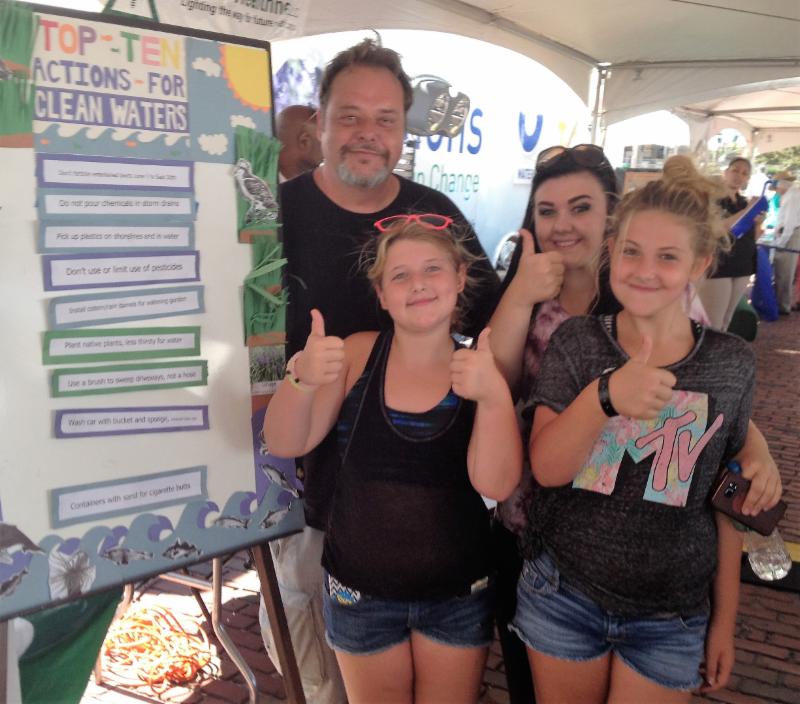
The Ocean River Institute's Ten Yard Actions for Clean Water program offer families easy to do activities. For example, fertilize grass less often and wash your car with a bucket not a hose. People share with neighbors and friends why they are doing things a bit differently and responsible stewardship grows organically. Families and businesses discover ways to reduce harm to oceans or to lessen their carbon pollution that results in cleaner conditions and often cost savings. They will not go back to less good practices just because the federal regulators have been shut down.
When communities see ways that government should help, they call on their representatives who in turn confer with colleagues for best practices and most robust inclusive solutions. The number of legislators grows until they are majority. It's difficult for a president to stop Congress when many Americans are calling their reps to task. That would be un-American.
Ocean conservation and climate change actions may start in yards and in businesses. Grassroots conservation actions are more tenacious then are executive orders from Washington because only they are rooted locally. Let's foster marine and freshwater stewardship together from the ground up.
P.S. I posted on Facebook and Andrew wrote back:
Our conversation lit a fire under my butt to stop mourning a lost country to help the people who want to protect the environment. I look forward to not only having people listen to your interview that I will publish next week, but for my listeners to feel empowered to start making that change!
|
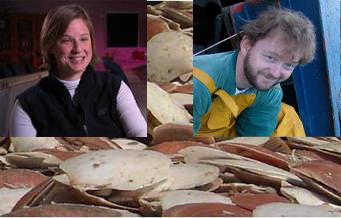
Missing mollusks, Skylar Bayer (Darling Marine Center in Walpole, Maine) reveals the truths behind the story of two buckets of scallop gonads lost during a hand-off outside a convenience store on Mount Desert. Flyers of missing scallop parts went up and out to media. Journalists from the Colbert Report traveled to the far-flung lobster state and were shocked by what they imaged - an obsessed woman with diabolical intentions to take over the world by doing science from her laboratory.
Chomping-forward scallops, Bryce Stewart (marine ecologist and fisheries biologist at the University of York, UK) explains why young king scallops wear byssus threads to hold onto to high-rise hardscapes. Adolescent scallops loose the threads to become remarkably active, out maneuvering crabs at the click of a claw. Adult scallops settle in to a low-profile couch-potato kegger lifestyle on ocean floors where the sediments are not too fine or pebbles too big.
|
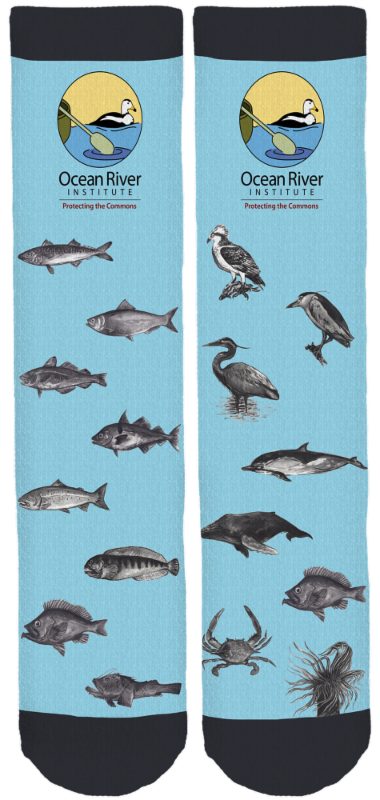
Save ocean wildlife while saving your feet from the cold with ORI marine life socks.
Step out with wolfish and monkfish on the soles of your feet, cod and haddock on ankle.
We've got socks for the first individuals who donate $5 or a more a month.
From top to bottom the fish are mackerel, blue-back herring, cod, haddock, salmon, wolfish, ocean perch (Acadian redfish) and monkfish. On the other foot you'll have osprey, black-crowned night heron, great blue heron, common dolphin, humpback whale, ocean perch, blue crab and a stalked sea anemone.
These premium socks are made with 200 needle machines with the finest fabrics: 75% Bamboo Rayon, 22% Nylon & 3% Elastane. Bamboo Rayon comes from Bamboo and feels softer than cotton. The socks are one size fits all, up to a size 12 Male U.S.
Click here for more information on ORI marine life socks.
|
Moir's Environmental Dialogues, Ocean River Shields of Achilles. Choose from over a hundred podcast episodes, also available free on iTunes
.
|
|
|
|
|