|
In honor of World Press Freedom Day on May 3, members of the National Press Club’s Press Freedom Team have interviewed journalists in exile living in the U.S. We will feature their stories this week to shed light on global press freedom issues.
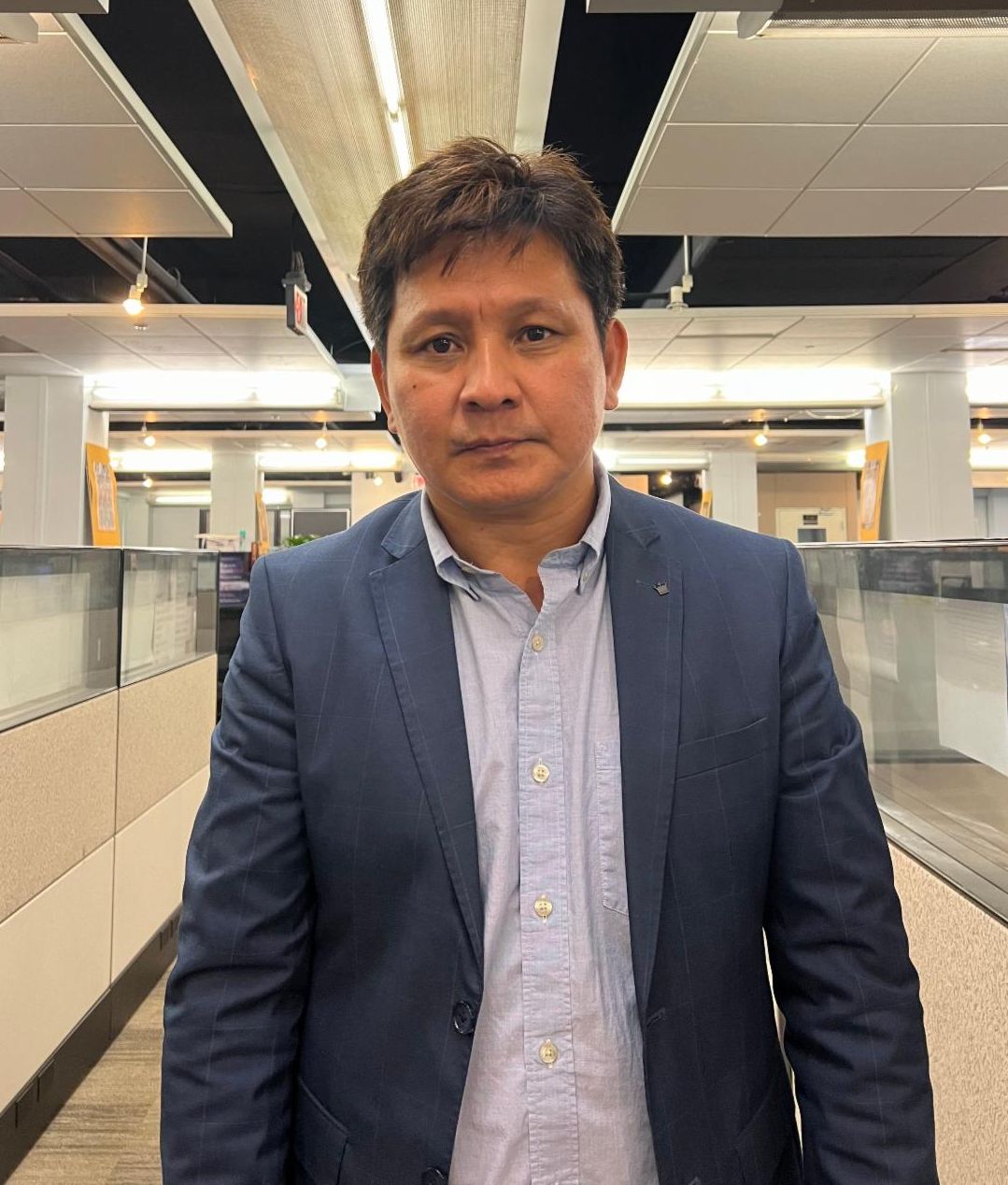
Tashi Wangchuk (shown) is a journalist and acting deputy service director for Radio Free Asia who has been living in exile in the U.S. for the past 12 years. Wangchuk previously was an editor and broadcaster for the Voice of Tibet, a prominent Tibetan exile radio station based in India. As part of his reporting on monks and other high-profile Tibetan activists, Wangchuk would use code language to talk to his sources, circumventing Chinese surveillance. Facing threats from the Chinese government, he moved to the United States. Through Radio Free Asia, Wangchuk continues to report on how the Chinese government infringes on the cultural and political rights of Tibetans.
What policies have made it easier or harder for you to continue your journalism work in exile?
Wangchuk: Chinese authorities engage in “transnational repression against the exiled Tibetans living outside” of Tibet, in countries such as India, Nepal, the U.S., and other Western countries. There are reports published by the U.S. government and Freedom House that reveal some of those threats, harassment, surveillance, and coercion frequently faced by Tibetan-Americans and other Tibetans living in Western democratic countries. [The threats] are believed to be carried out by the Chinese government. CitizenLab has found many instances that support these claims.
I have contacts in Tibet, both direct and indirect (anonymous), in various locations. I produced a series of stories that exposed the Chinese policies targeting marginalized Tibetan officials. Sometimes Chinese forces get to my sources through their families.
In late 2022, a local [China] United Front official approached a source’s family member in Qinghai with a photo and copy of my article published on Radio Free Asia’s website. My source was out of the Chinese Communist Party's reach since the source had been residing in exile in India for the past five years.
The family member of my source was summoned and questioned, citing the interview with a Radio Free Asia Tibetan journalist. In my last conversation, my source told me: “I won’t be able to speak with you, Tashi Wangchuk, on the record in the future ever again since my family back home was clearly instructed to refrain from speaking to Tashi Wangchuk of RFA.”
Are you still facing harassment or threats from the government of your home country?
Wangchuk: I have received threats from the Chinese government throughout my journalism career. This has progressively gotten worse, especially through various social media platforms, since 2021. The attackers often pose as members of various political ideologies; however, the majority of these accounts are not real because they have only four or five friends and frequently lack proper names, locations, pictures, and other detailed profile information.
The harassing posts and comments from these accounts generally are aimed at my stories on the communist government and its policies affecting Tibetan nationals.
My Instagram account was hacked/compromised two years ago, so I had to open a new account. There have been attempts to break into my email from sources somewhere in Malaysia. Every time I notice a new follower on my Facebook from an unknown or newly created account, I would say there is a 50 to 70 percent chance that it is a suspicious account.
On Friday, May 3, at 1 p.m. the National Press Club will host a live-streamed roundtable discussion on the state of press freedom. This 90-minute discussion will explore the year’s biggest stories in press freedom and the state of press freedom around the globe.
|