May 4, 2022

Top stories

■ Ruling or leak? A battle to shape the media narrative on abortion (Washington Post) 


■ I am told that, in the spirit of transparency, ABC News President Kim Godwin informed staff on the network’s morning editorial call that she has tested positive for Covid after WHCD weekend.’ (Oliver Darcy) / Journalists from multiple news outlets test positive after White House Correspondents Dinner weekend (CNN) / 'New: Secretary of State Anthony Blinken tested positive for Covid-19 this afternoon, per spokesman. He tested negative on Tuesday and as recently as this morning. Blinken was at the White House Correspondents dinner.' (Hugo Lowell) 


■ New York Times reaches 9.1 million subscribers (New York Times) / New York Times experiences growing pains with The Athletic (Front Office Sports) / Buying Wordle brought ‘tens of millions of new users’ to the New York Times (The Verge) / Understanding Twitter conversations: A Wordle case study (Lauren Fratamico


■ Women journalists see harassment as part of the job, a new study finds (Nieman Journalism Lab) 


■ 'Things are gonna get a lot worse’: Female sports reporters are worried about Elon Musk and Twitter (Time) 


■ How this CBS journalist and organ-donating mom finds purpose in military vet reporting (L.A. Times) 


■ 'Everyone failed these young, Black girls': Journalist Jim DeRogatis on his decades-long battle to expose R Kelly (The Guardian) 


■ ‘I was supposed to be a sports reporter. But then “Spider-Man” happened.’ (Washington Post)


Press freedom


■ Inside Biden's meeting with Austin Tice's parents (Axios) / Austin Tice's parents say they received support from Biden for efforts to get him home (CNN) 


■ Correspondent Reuben Johnson was captured by Russian soldiers outside of Kyiv and held captive at gunpoint for two weeks in Ukraine. This is the story of what happened (Breaking Defense) / Popular Russian TV journalist, Kremlin critic added to Wanted List (Radio Free Europe) 


■ Slain journalist James Foley’s mother says terror trial was ‘chilling and heartbreaking’ (WBZ)

Conflict photography: Telling Ukraine’s story

By Nathaniel Liu


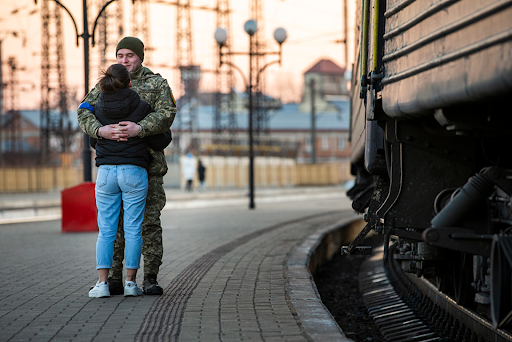
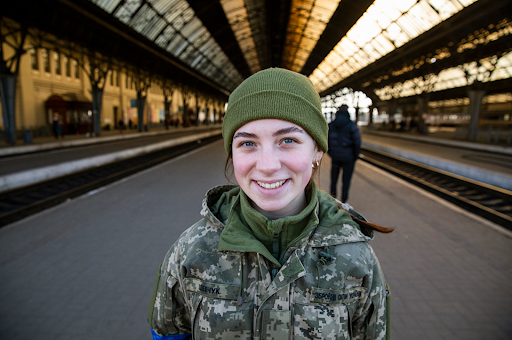
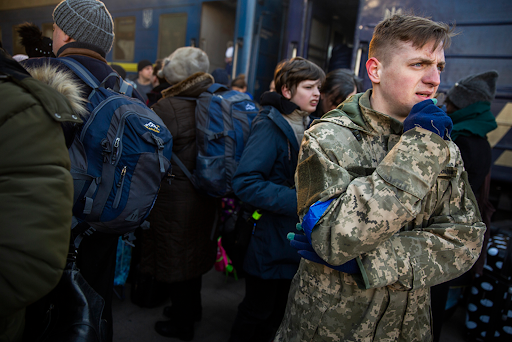
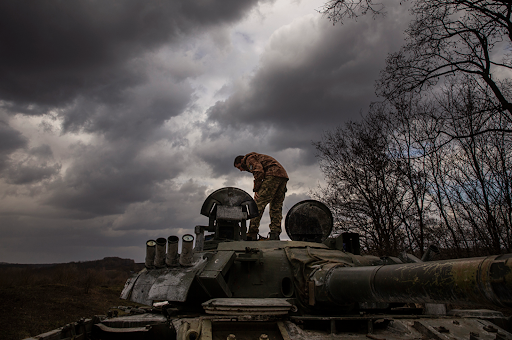
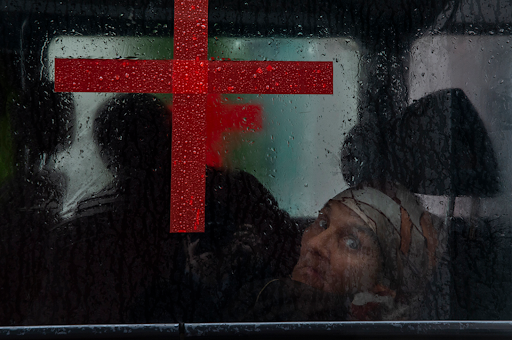
At a train station in Lviv where soldiers were saying their goodbyes and embracing their loved ones, Daniel Carde sees the humanity of war. 


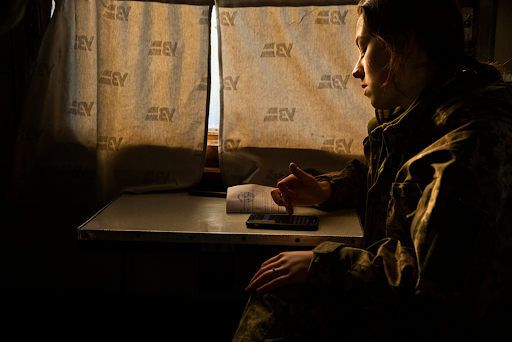
The freelance conflict photographer captured emotional scenes among soldiers and civilians in one of the most war-torn areas in Ukraine. “They were just joking and being friendly,” he said. “And then they were just back to their soldier selves.”

Ukraine 1.png
Ukraine 5.png

Some of the best pictures coming out of Ukraine have not just been a moment in time, but those that show the broader scene of a region in crisis. I spoke with Carde, who is currently reporting from Eastern Ukraine, by phone in April. We discussed his process for developing each story and the complexities of reporting in areas affected by conflict.


“I wanted to try to show all the emotions that I was seeing” among the Ukrainian soldiers and civilians, “and if they were sad all the time, that's all the images would have been,” he said. “But I didn't only show sadness. I showed what they allowed me to see.”


Choosing the location and the story


Freelance journalists have the flexibility to choose their stories. Carde has reported in the Middle East, Southeast and Western Asia, and the United States. 


“I want to make sure things are documented,” he said, referring to times of war when, often, not enough pictures are taken. “So that's why I got on the hard news, but I kind of choose things based off of [my] interests.”


Carde often sends pitches to news agencies. Those pitches could be accepted as a commissioned assignment or on “spec,” in which he would rely on his own funds to do the assignment. On spec, the agency would pay Carde for his work if it is impressed by it. A commission means a journalist is working with the news agency’s funds. 


In Ukraine, Carde has taken pictures for Le Point, a mainstream French magazine, and videos for German broadcast station Tagesschau. His photo agency, ZUMA Press, also has sold his photos to various publications throughout the world. 

Ukraine 7.png
Ukraine 6.png

Planning the trip


Preparations for the trip begin before departure and continue throughout the time in the country. A journalist could set up a place to stay and, suddenly, that building or area might become unsafe. Or, a journalist could spend weeks arranging a “fixer” or a driver, only for them to cancel for a better paid opportunity or a change of heart. “It's just trying to make sure everything lines up so you can get to where you're trying to get for the day,” Carde said.


Complications can come from any direction. On the day of our call, Carde was headed to Severodonetsk when his car broke down. A drive that was supposed to take under two hours resulted in him spending most of the day at a nearby auto repair shop.


Mitigating risk


Carde stressed that there is no preventing risk, only mitigating it. This process is threefold: bringing the right equipment, preparing for any conceivable scenario, and making the right decisions in the moment.


In Ukraine, Carde carries body armor rated for the rifle rounds that Russian and Ukrainian troops use. He also carries basic first aid equipment, including bandages and tourniquets. As a former Army engineer, Carde received military and medical training. It is also standard for journalists reporting in unstable areas to receive hazardous environment awareness training (HEAT) or some equivalent. Much of the burden of mitigating risk comes down to real-time decisions. 


Carde emphasized the difference between necessary and unnecessary risk: “I try not to take risks that aren't needed.” He asks himself, “Do I really need to take that risk for this story?” Last summer while in Iraq, he decided against entering a minefield even though he had a de-miner with him. “It was very dense jungle. The area that we were in [was] very foresty and the ground was covered. And so I stayed outside. I would have gotten much better images, but I didn’t feel like it was the right decision.”


The reporting


“There’s no typical day here,” Carde said. Sometimes his day is just mundane tasks — washing his clothes or reading the news — but often he’s chasing down leads, making calls to ensure his plans are still solid, and working on assignments. 


Working with locals is often crucial to getting the job done. Local assistants, sometimes called fixers or local producers, can provide transportation, language skills, or connections to foreign journalists like Carde. They also can be an instrumental part of the storytelling process: Correspondents and locals have different priorities when telling a story, and Carde thinks journalists should tell the story that locals find important as well. Carde finds his local sources in various ways. 


Many Facebook groups (or social media equivalents) can help establish connections between locals who need work and journalists who need locals. Carde also meets people by keeping his eyes and ears open. On a train ride to a new location, Carde met and exchanged stories with a Ukrainian local who introduced him to her circle, opening a doorway to many new connections.


Many journalists find strength in numbers and often will share rides and lodging with each other. “I try not to go out too often on my own. I prefer to be with another journalist,” Carde said. “For the most part, I’ve been with other freelancers and journalists.”


Framing the story


Photojournalists need to take pictures that accurately and fully tell the story. Destroyed buildings are common in war-torn areas, Carde said. It can be helpful to capture smoke coming out of a destroyed building to show urgency because, in the viewer's mind, that photo could be from five minutes or five months ago. “You’re trying to find things that show that it’s a timely event,” he said.

Ukraine 3.png
Ukraine 4.png

“Photos are always going to be subjective, as long as the photographer is a human,” Carde said. To minimize the appearance of bias, photographers can try to get the whole scene in one picture, then show as many sides of the story as possible. This may mean getting a higher vantage point, using a wider angle lens, or stitching together multiple photos to make a panorama. 


Capturing moments beyond bombings and devastation is important, Carde said, to show the reality of life in a war-torn area. 


“Editors pick what they want out of what we send them, but our job is to show them what we've seen,” Carde said.


Carde has reported from Ukraine since the beginning of March. If you want to see more of Carde’s work, visit his website or Patreon.


Nathaniel Liu, NPCJI intern, can be reached at institute@Press.org

Manager's Minute: How do I give feedback to someone who may not take it well?

Jill Geisler, Bill Plante Chair in Leadership & Media Integrity at Loyola University Chicago and Freedom Forum Fellow in Women’s Leadership, on ways to provide feedback for someone who may push back, cry, or react in anger.

Manager's Minute: How do I give feedback to someone who may not take it well?

Read nextGreat bosses avoid ‘one-size-fits-all’ feedback


Get more career adviceRead Jill's columns | Watch Manager's Minute videos

Resources
This newsletter is written & edited by the National Press Club Journalism Institute staff: Beth Francesco, Holly Butcher Grant, and Julie Moos. Send us your questions and suggestions for topics to cover.

Get this from a friend? Subscribe, and view the archives.

If you value this newsletter, consider supporting The Latest with a tax-deductible, recurring gift to the Institute: Even $5 a month will help fund the technology and time it takes to provide this important service.  
Facebook  Twitter  Linkedin  Youtube  

The National Press Club Journalism Institute promotes an engaged global citizenry through an independent and free press, and equips journalists with skills and standards to inform the public in ways that inspire a more representative democracy. As the non-profit affiliate of the National Press Club, the Institute powers journalism in the public interest.