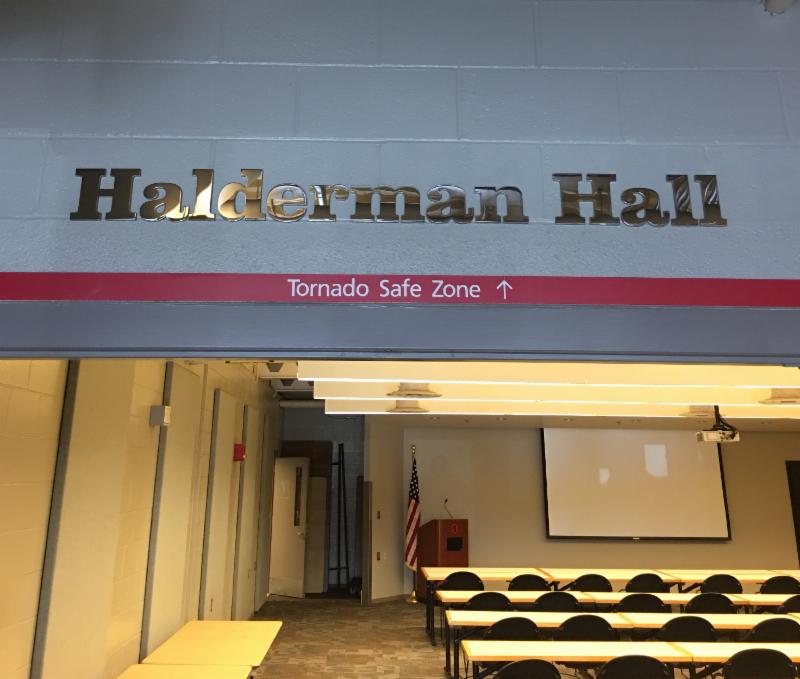
I am pleased that Sinclair Community College, in Dayton, Ohio, has named the main automotive classroom "Halderman Hall" in my honor. I am pleased to help support the automotive program that I taught at for many years through a student scholarship fund that I hope many others can add to over the coming years.
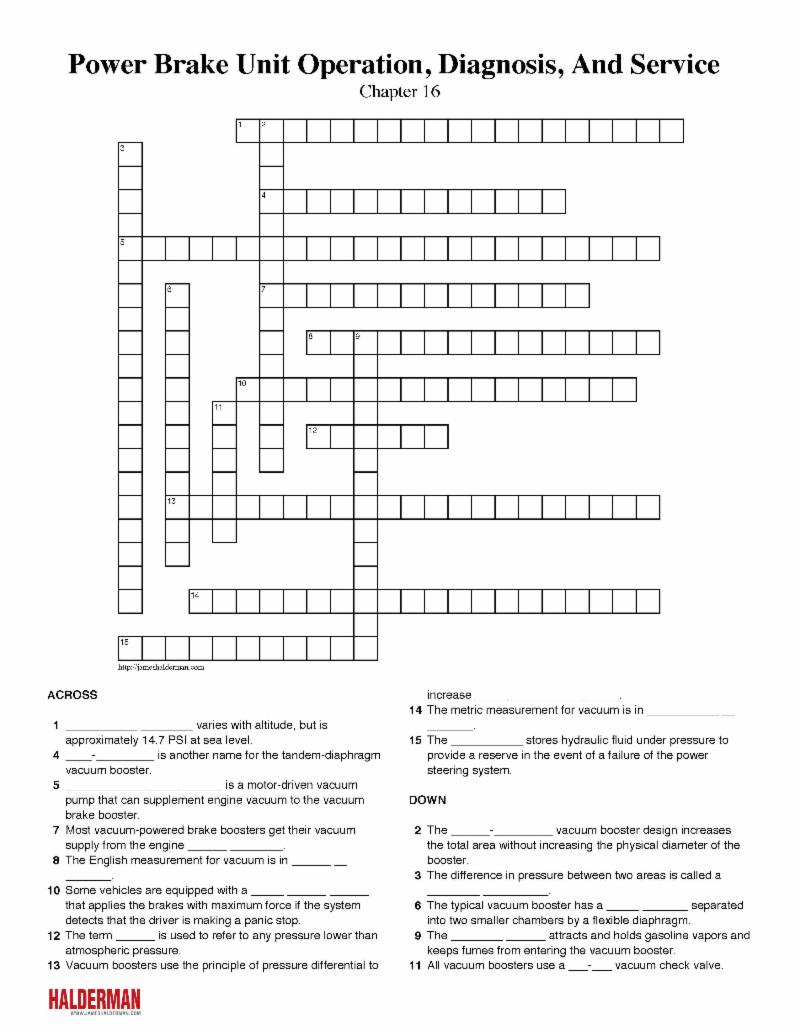
Find this month's puzzle of the month at this
link and test your students knowledge on transmissions.
Auto Trivia
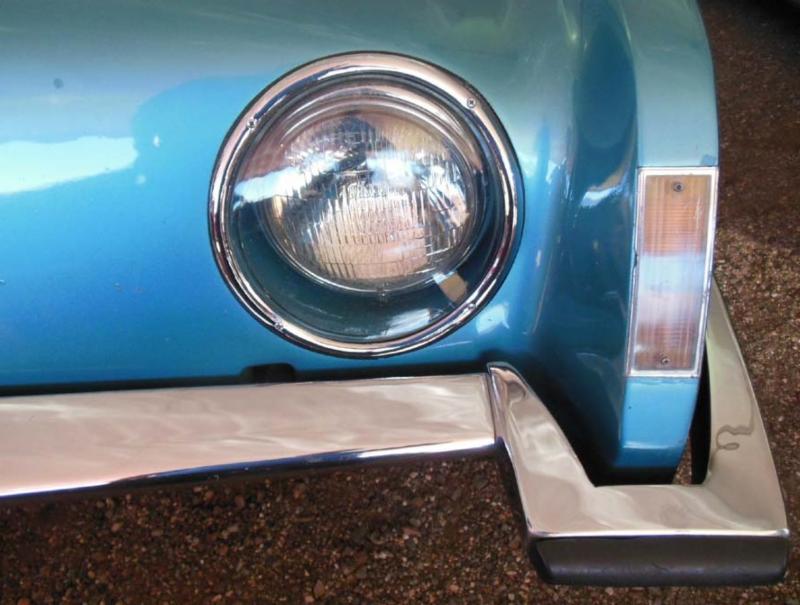
What car is this?
a.Crosley
b.DeSoto
c.Studebaker
d.Packard
Answer at the bottom of this page!
FAQ
What are the Types of DOT 4 Brake Fluid?
There are several types or specifications under the DOT 4 designation including the following:
* DOT 4-Specified for use in many European vehicles
and some domestic vehicles.
* DOT 4 (long life)
* DOT 4+-Specified for use in many Mercedes and Volvo vehicles.
* DOT 4 LV (low viscosity)-Specified for use in some BMW vehicles.
* DOT 4 racing brake fluid-Usually blue in color to make it easy to see when all of the old fluid has been purged from the system during a brake fluid replacement procedure.
Sample ASE certification-type question
Question:
The rear brakes lock up during a regular brake application. Technician A says a stuck open metering valve could be the cause. Technician B says that stuck front disc brake calipers could be the cause. Which technician is correct?
a. A only
b. B only
c. Both A and B
d. Neither A nor B
Answer/ Explanation
The correct answer is b. Technician B is correct because if the front disc brake caliper were stuck, a higher than normal force would be needed on the brake pedal to slow the vehicle. This greater force on the brake pedal will cause the rear brakes to apply before the front brakes creating a rear brake lockup condition. Technician A is not correct because a stuck open metering valve is unlikely to cause this problem because fluid pressure would be delivered to the front brakes without being delayed until the pressure reaches over about 300 PSI. Answers c and d are not correct because only Technician B is correct.
Tech Tip
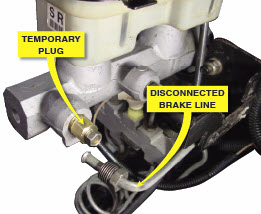
Block Off the Master Cylinder
Technicians often get frustrated when trying to repair a low or spongy brake pedal. While many times, the cause is due to air trapped somewhere in the brake hydraulic system, the problem could also be due to a fault in some components such the ABS or master cylinder. One method that works is to isolate the system to see what part of the system is causing the problem. For example, if the brake line to the front brakes is blocked off using a plug and the brake pedal is now normal, then the source of the problem has been narrowed to the front brakes components.
Straight Talk
From the April 28, Wheels section of Dayton Daily News
Reader Questions Need to Warm Up Engine
Wheels:
Brian asks by email:
"I have a neighbor who goes outside and starts his truck every morning at 6:00 AM. I know this because when the engine starts, his headlights come on and they are pointed right at my bedroom window. The truck runs until he leaves at 6:45, which means that the engine is running all that time. Last year, I talked to him and he said that his father always warmed up the engine before driving it and he has been doing it too. He even does it in warm weather because he says it is still outside all night and needs to be "woken up" before he drives it. I think it is a waste of gas. Is he right or am I right that today's vehicles don't have to be started and allowed to run before driving first thing in the morning."
Halderman:
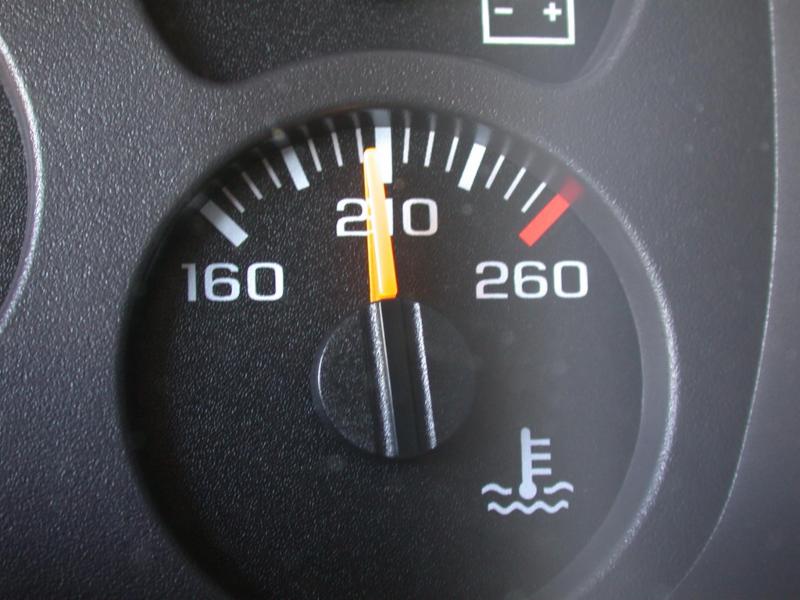
You are right Brian. While no one really likes to get into a cold vehicle, it is a waste of time and fuel to allow the engine to run before driving. Even vehicles that have a remote start feature limit the engine run time to ten minutes. The best and most efficient way to warm a vehicle to start and engine and fasten the seat belt. By that time, the engine oil pressure has been established and the vehicle is ready to drive. Drive slowly for the first few miles, if possible, before entering a freeway and driving at highway speeds. This procedure also allows the transmission fluid and final drive fluid (differential, if equipped) to warm, whereas your neighbor's truck has warmed just the engine.
Have an automotive question? Please write to Jim with your questions at jim@jameshalderman.com
Trivia question answer: C, Studebaker Avanti.
Please let me know what you think of the newsletter. I would love to include any of your automotive news, trivia questions or any tech tips you might have. Send me your suggestions!
You can email me
here or visit
my website. You can connect with me on Facebook, Twitter and LinkedIn too (links above).
Regards,
Jim Halderman
James D. Halderman writes automotive technology textbooks for Pearson Education. He is an ASE-certified Master Technician with more than 20 years instructional experience.