Volunteer Spotlight: Becky Clemons | | |
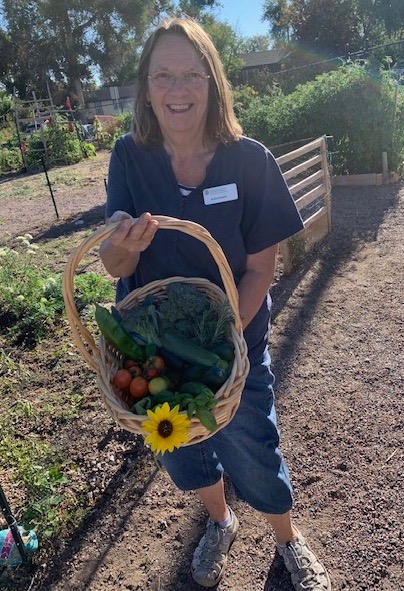
Colorado Master Gardener℠ (CMG) volunteers are a dedicated group of individuals who are knowledgeable and passionate about sharing gardening, landscape and horticulture education. This month we are highlighting Becky Clemons. | |
When did you join the Colorado Master Gardener program and why did you join?
I was accepted into the Colorado Master Gardener program in 2020. Such an exciting time for me. During my last year of working for the Englewood School District, as I had decided to retire from being an IT Specialist, I eagerly wanted to learn more, and do more, with gardening. I’ve always enjoyed plants of all kinds. My husband and I enjoy growing flowers and tending to a small vegetable garden in our yard. He saw an article about the Master Gardener program and encouraged me to look into it. The perfect next step for me following my retirement!
| |
|
|
Vegetable Gardening from A(rtichoke) to Z(ucchini)
By Debbie Moody, Colorado Master Gardener
| | |
Raised beds at Hudson Gardens. Photo: Kathi Thistlethwaite | |
|
The Hudson Gardens Vegetable Demonstration Garden is located on the grounds of the Hudson Gardens and Event Center, 6115 S. Santa Fe Drive, Littleton, Colorado. This garden is a cooperative project between Hudson Gardens & Event Center, South Suburban Parks and Recreation and CSU Arapahoe County Master Gardeners.
As with any garden, there are challenges: Deer, geese, rabbits, raccoons and squirrels think we have created a garden just for them! Floating row covers are utilized for all newly planted beds to protect the seedlings and plants. While the Cottonwood tree provides shade for Master Gardeners during those hot days of summer, it also limits the types of vegetables that can be grown in its vicinity. Fortunately, arugula, lettuces and spinach do well in the shady beds.
| |
|
Seeds - The Source of Life
By Lynne McKinley, Colorado Master Gardener
| |
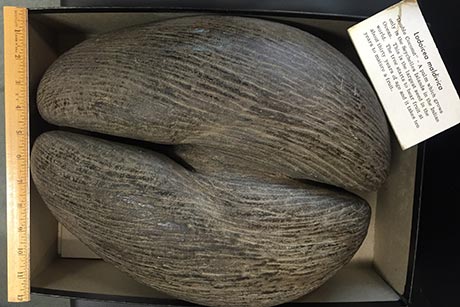
Double coconut (Lodoicea maldivica). Photo: Krishna Ramanujan, cornell.edu | |
|
It is time to start sorting, classifying and evaluating our seeds. Did you ever stop to think about the amazing abilities of seeds and how they appear in the most unlikely places?
Seeds travel in unique ways. The largest seed in the world, the double coconut palm, travels with the ocean current. The smallest seeds, tropical orchids, are blown through the rain forest air like dust. Some seeds are spiky and stick to the fur of a moving animal. Other seeds are eaten by birds and are eliminated in their droppings miles away.
| |
Are Nuisance Invaders Bugging You? | |
Extension staff receives year-round questions about insects we find inside our homes. People want to know where they come from, what the identification is, and how they can prevent them from entering the home.
Entomologists are curious about the insects and arthropods in our homes, too. A 2016 study at North Carolina State University found over 500 different types of arthropods in homes. The majority of the arthropods were harmless, and some were actually beneficial (Bertone et al., 2016).
| |
|
Lisa Mason
CSU Extension Horticulture Agent
|
|
|
Does Your Lawn Look Puzzling?
By Martha Kirk, Colorado Master Gardener
| |
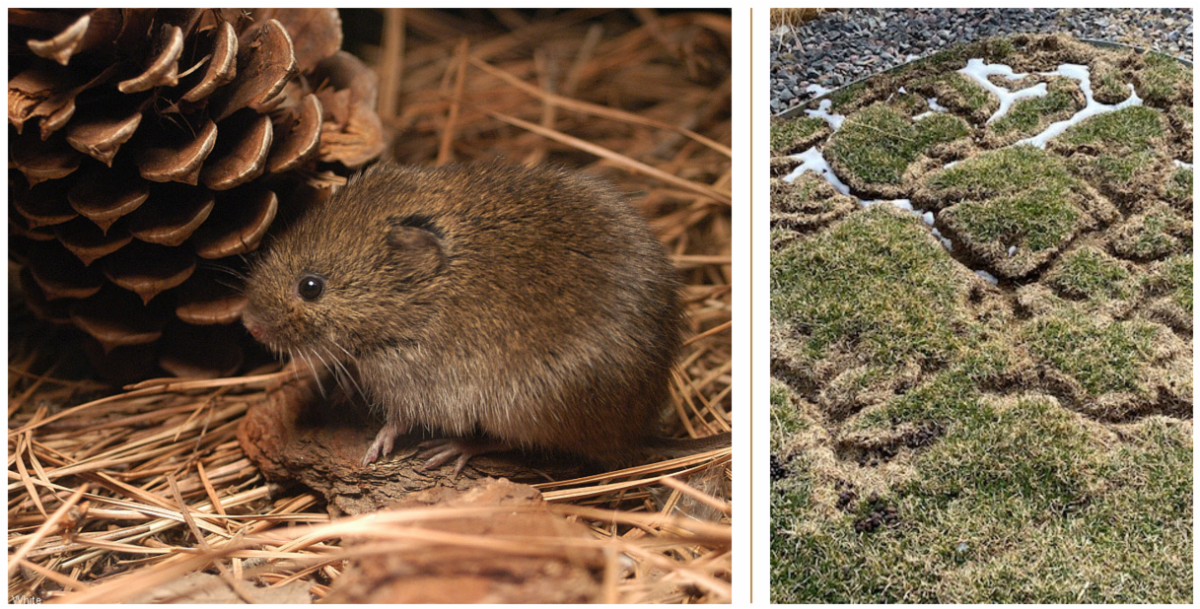
Meadow vole (left) and vole damage in turf (right). Photos: John White, calphotos.berkley.edu and Donnetta Wilhelm | |
When I saw this photo of a vole, I thought how adorable and sweet, straight out of a Beatrix Potter book. As cute as voles are, they can be damaging to home landscapes. They create tunnels in lawns and chew the bark of shrubs and trees, thereby girdling woody plants and disrupting the flow of water and nutrients throughout the plant. In winter months with extended snow coverage, they go unnoticed until the snow melts, revealing their trails. The pattern often looks like puzzle pieces or shifting continents. | |
|
Getting Started - How to Compost
By Judy Kunz, Colorado Master Gardener
| |
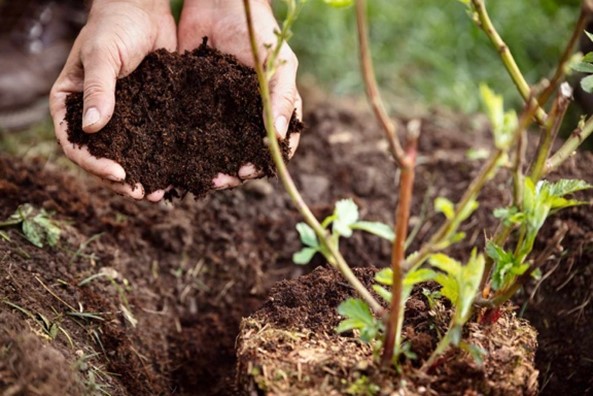
The benefits of incorporating compost into almost any soil on an annual basis are substantial. Compost adds organic matter that helps retain moisture and nutrients in sandy soils, adds oxygen by breaking up tightly packed soil particles in clay soils, and introduces beneficial microorganisms that enhance deeper roots, overall plant growth and soil health. In addition, some studies have demonstrated that compost may indirectly suppress plant diseases by promoting soil health and, therefore, plant vigor. | |
|
I Didn't Know That!
By Donnetta Wilhelm, Colorado Master Gardener
| |
Photo: CO-Horts Blog, December 30, 2015 | |
|
Snow Mold
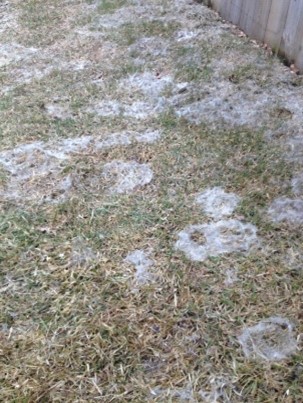
Gray snow mold, the most common of the snow molds in Colorado, requires extended periods of snow cover (40-60 days) AND soil temperatures in the 30°F to 40°F range[1]. Those endless days of frigid teens, zero, and sub-zero temperatures we’ve experienced? Not ideal for the snow mold fungus Typhula incarnata. Fungus symptoms appear as the snow melts and are straw-colored or grayish brown patches in the lawn. The color comes from the gray-ish mycelium of the fungus. The good news is in lawns where snow mold occurs, only the lawn blades are killed, not the crown of the plant. Typhula incarnata dies off when exposed to the ultra-violet light of the sun. After the snow melts, a thorough raking of the matted areas can encourage new lawn growth. Remaining dead spots can be aerated and easily overseeded, as noted by Dr. Tony Koski CSU Extension Turf Specialist.
[1] https://pddc.wisc.edu/2019/11/12/typhula-blight/
| | |
|  |
PHONE
(303) 730-1920
EMAIL
mastergardener@arapahoegov.com
LOCATION
6934 S. Lima St., Suite B
Centennial, CO 80112
| | |
Colorado State University Extension is an equal opportunity provider. | Colorado State University does not discriminate on the basis of disability and is committed to providing reasonable accommodations. | CSU’s Office of Engagement and Extension ensures meaningful access and equal opportunities to participate to individuals whose first language is not English. Colorado State University Extension es un proveedor que ofrece igualdad de oportunidades. | Colorado State University no discrimina por motivos de discapacidad y se compromete a proporcionar adaptaciones razonables. | Office of Engagement and Extension de CSU garantiza acceso significativo e igualdad de oportunidades para participar a las personas quienes su primer idioma no es el inglés. | | | | |