Volunteer Spotlight: Judy Kunz | | |
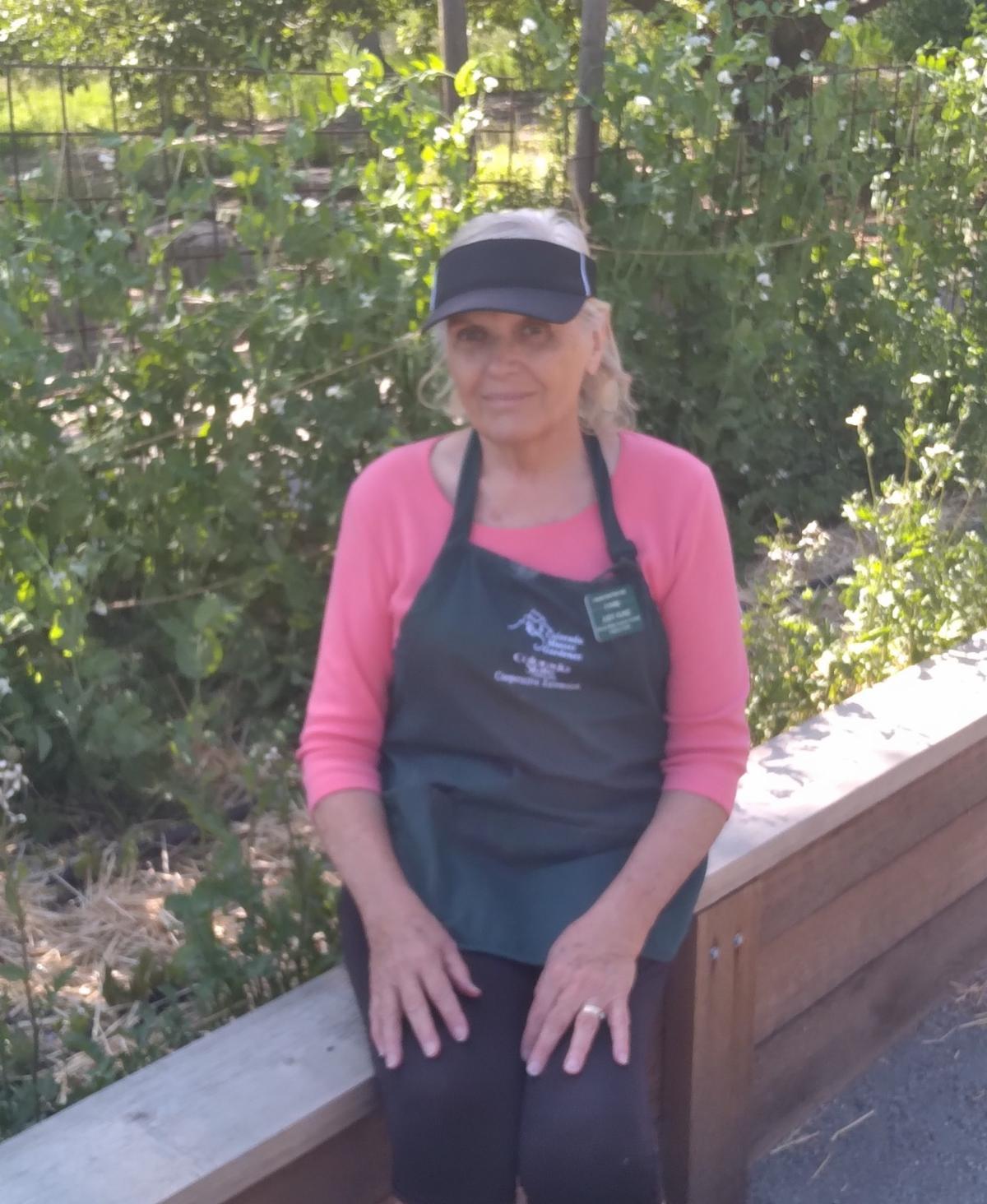
Colorado Master Gardener℠ (CMG) volunteers are a dedicated group of individuals who are knowledgeable and passionate about sharing gardening, landscape and horticulture education. This month we are highlighting Judy Kunz. | |
When and why did you join the Colorado Master Gardener program?
I joined the program in 2006 when my youngest son left for college. I felt that I needed an activity to take my attention away from the empty nest and the MG program was something I had heard about. I was interested in learning more because I had always liked gardening, but, as it turned out, I didn’t really know anything about gardening. Also, I am a Colorado native and have an interest in geology and weather science and how they affect growing conditions along the Front Range. Horticultural classes and online learning have enhanced my knowledge of these subjects.
| |
|
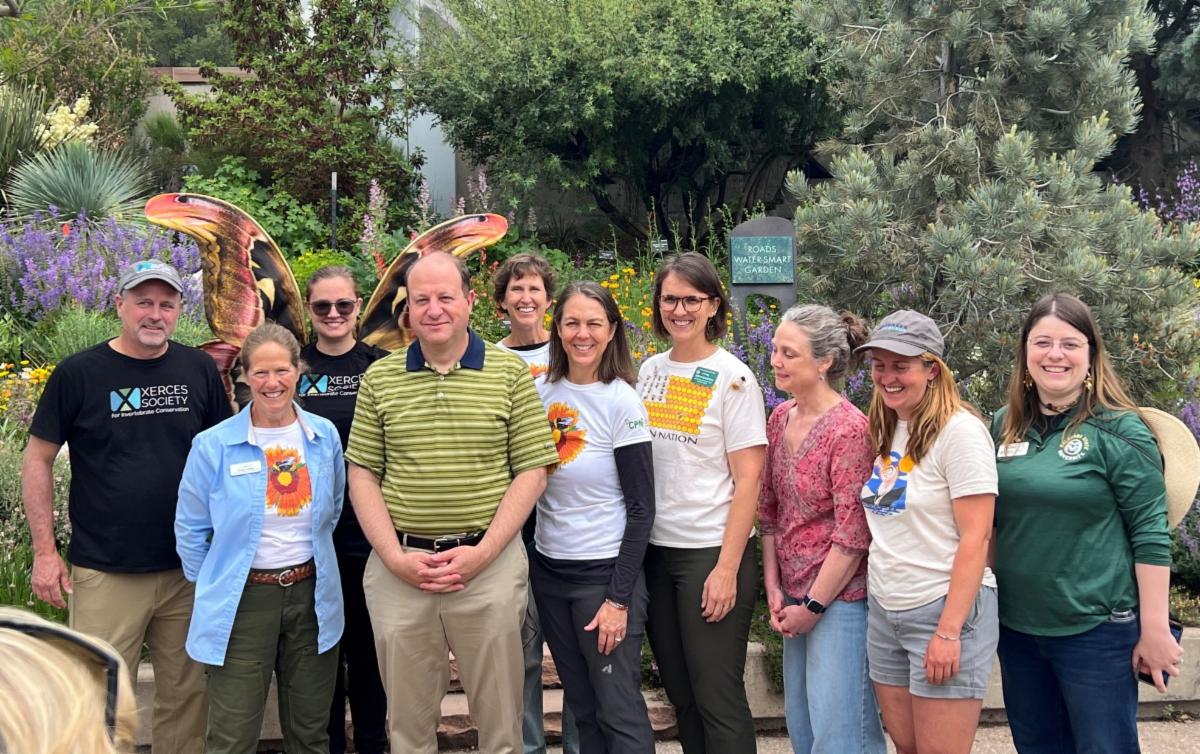
The Colorado Pollinator Network hosted the Big Day of Bugs at the Denver Botanic Gardens on Saturday, June 17, 2023. The day was full of insect education from a variety of partner organizations, including the Denver Botanic Gardens, Butterfly Pavilion, Denver Audubon, The Xerces Society, The People and Pollinators Action Network, CSU Extension and more. A special thank you to Governor Jared Polis for stopping by the event and showing support for pollinators! | |
|
Look for CSU Extension staff in the media:
| |
|
Spirit of the Garden & Spirit of the Sun
By Evelyn Alton and Gloria Huegel, Colorado Master Gardeners
| |
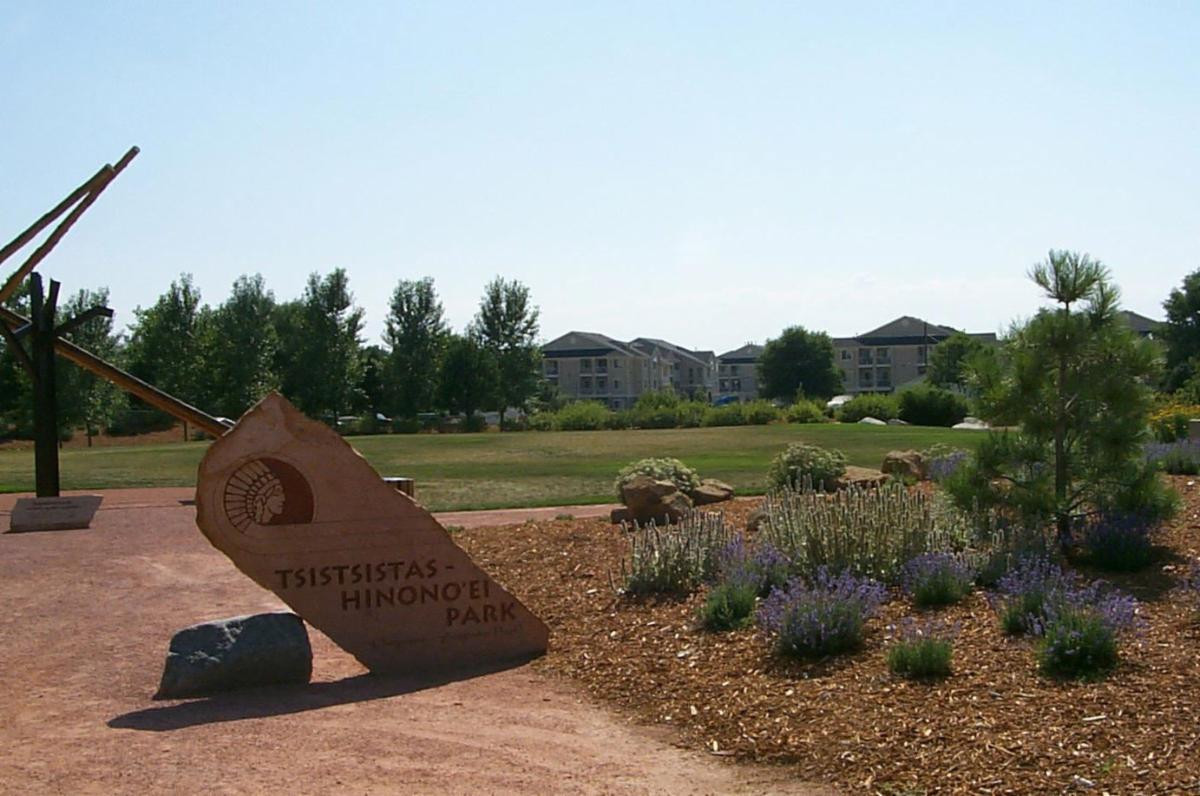
Cheyenne-Arapaho Park, Photo: Arapahoe County | |
The Tsistsistas Hinonóei (Cheyenne Arapaho) Park honors the Plains Native American tribes with inspired art and a council gathering ring. The park is located at 9200 E. Iowa Ave., Denver. In 2022 Arapahoe County Open Spaces, the CSU Extension Colorado Master Gardener (CMG) program in Arapahoe County and Denver Urban Gardens partnered to provide a demonstration garden in a newly constructed community garden. “I am thrilled to see our newest demonstration garden up and running, and ready for educational programming,” says Arapahoe County Open Spaces Director Shannon Carter. “May we continue to see good things grow, come together as neighbors, and enjoy this beautiful park!” | |
Emerald Ash Borer is in Littleton: What You Need to Know | |
Have you heard the news? Emerald ash borer was recently discovered in Littleton and Carbondale, Colorado.
When emerald ash borer was first discovered in Boulder in 2013, experts didn’t know how long it would take for EAB to spread throughout the Front Range and Colorado. A Boulder County quarantine provided information and education to help reduce the transport of firewood in and out of the county to slow the spread. EAB remained in Boulder County for about 5 years. Since then, it has been identified in Broomfield, Larimer and Adams counties, and more recently in Erie and Thornton in 2021. Now in June 2023, EAB has been confirmed in Littleton and Carbondale. Both of these discoveries are huge “jumps” from the currently know infestation on the northern Front Range. Likely, infested firewood was transported to both locations.
| |
|
Lisa Mason
CSU Extension Horticulture Agent
| |
|
Design a Potager
By Kathi Thistlethwaite, Colorado Master Gardener
| |
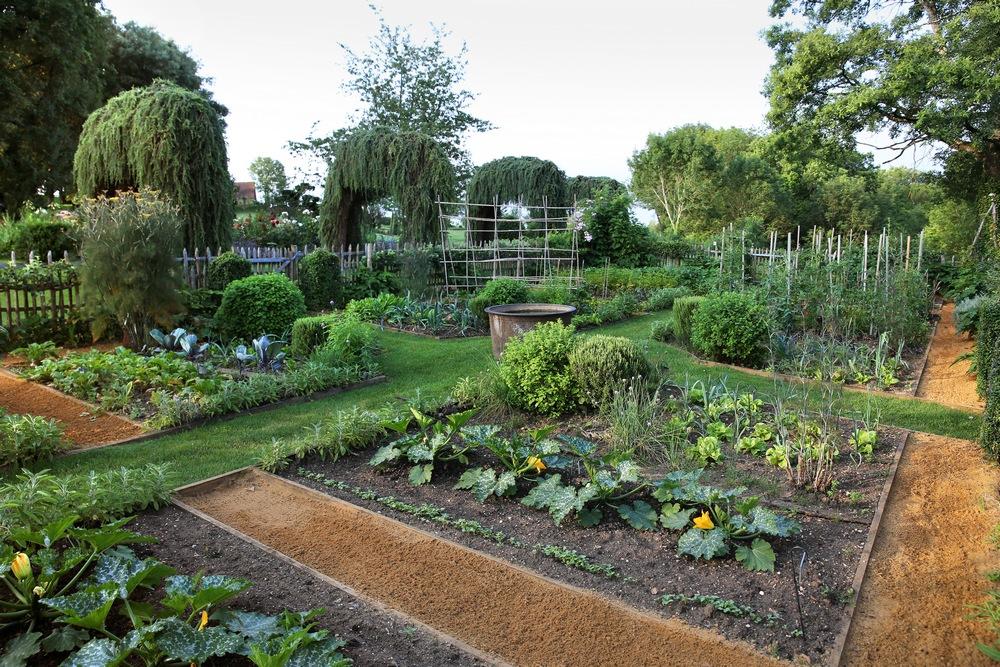
Design a what? A potager (pow·tuh·jay), is a kitchen garden, taken from the French "jardin potage" or soup garden. Potagers have been a part of historic estates, country homes, and informal cottage gardens throughout history in France and many other cultures. In addition to incorporating basic garden design elements, the potager is a beautiful mixture of vegetables, fruits, herbs and ornamentals. It is artistic and functional at the same time. | |
|
Botanically Speaking
By Deena Lawrence, Colorado Master Gardener
| |
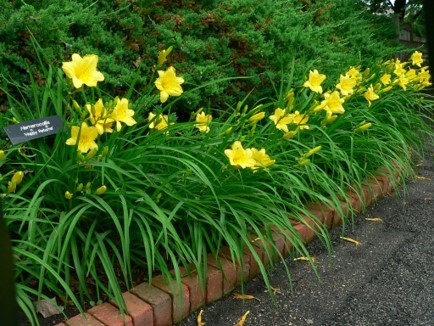
Hemerocallis, Photo: Julie Weisenhorn, UMN Extension | |
|
Confusion abounds when we talk about plants. Botanical names are mostly in Latin, a language in which few of us are fluent. So logically we use common names to discuss plants. The problem is that some common names can be misleading.
A good example is flowers we call “lilies.” Plants commonly called daylilies are in the genus Hemerocallis. Calla lilies are Zantedeschia. Canna lilies are the genus Canna and Peruvian lilies are Alstroemeria. The only true lilies are the ones we recognize as oriental and Asiatic. These are in the genus Lilium. Asiatic lilies grow from bulbs, not tubers or rhizomes like the other “lilies” listed.
| |
|
Water-Saving Turf. What's New?
By Martha Kirk, Colorado Master Gardener
| |
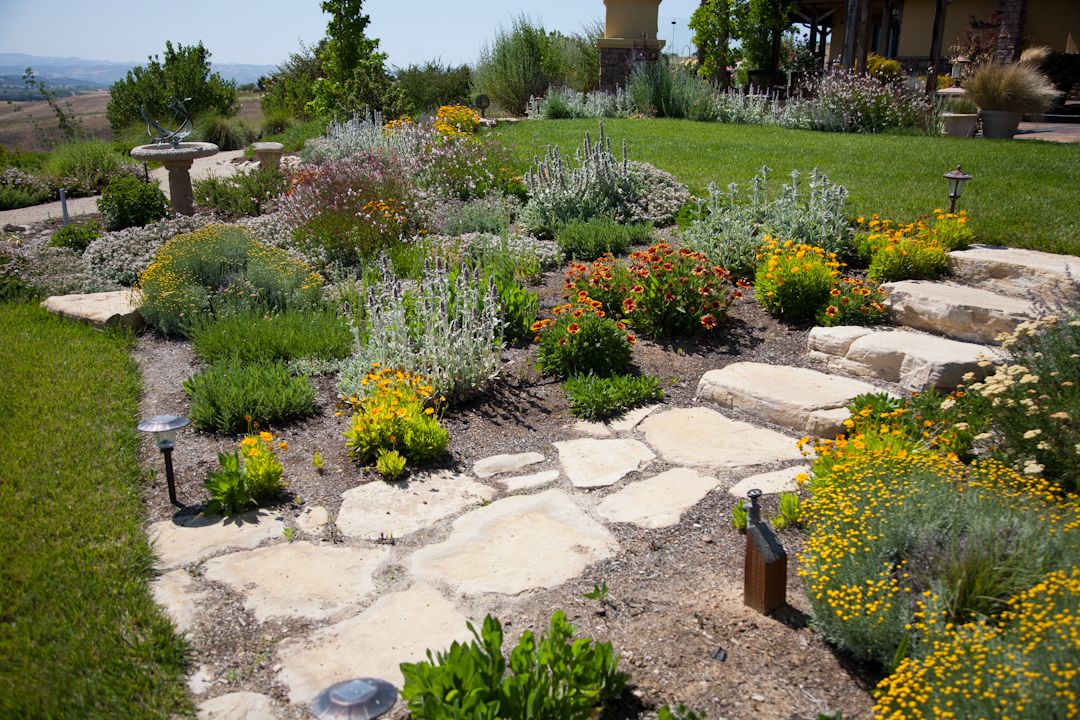
Xeriscape and turf, Photo: pinterest.com | |
Turf has gotten a bad rap recently. Homeowners are tearing out lawns and installing rock as a low maintenance and low water landscape. I’m here to tell you that rock is not the answer! It is costly and creates a heat island effect that is hard on soil and plant roots. In addition, woody shrubs and trees that remain must be watered. Tree root systems extend three times or more beyond the canopy. | |
|
I Didn't Know That!
By Judy Kunz, Colorado Master Gardener
| |
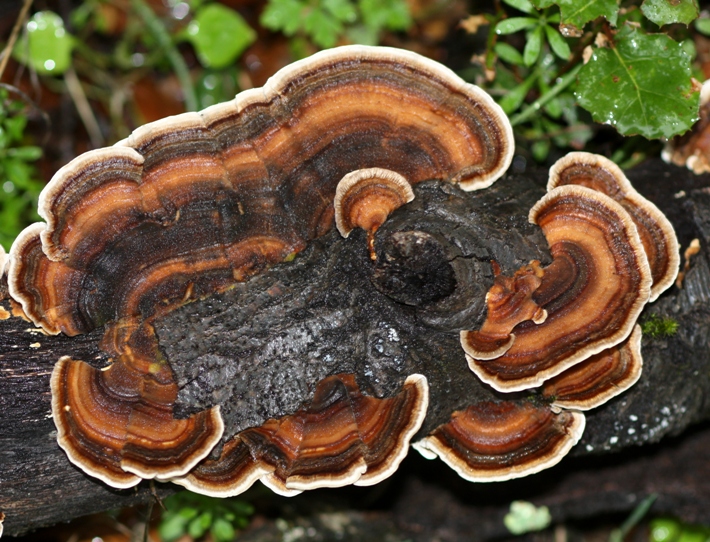
Shelf Lichen - Turkey Tail Bracket Fungi, Photo credit: Stanford.edu | |
Nature's Natural Recyclers
If you’ve ever been hiking in the back country and have seen growing or fallen trees or tree stumps with woody, ruffle-type growths on them, you have probably seen bracket or shelf fungi. This unusual appearing phenomenon is a reflection of the decomposition process. The shelves are actually the organisms’ fruiting bodies, spreading fungi through airborne or soil borne microscopic spores. As they blanket their food source, they absorb minerals and sugars to aid in their growth, usually adding a new layer every year. Bracket fungi are an important part of a forest ecosystem, digesting and recycling living or dead organic matter and providing a habitat for insects and small animals. However, in an urban setting, bracket fungi can be a signal that the structural integrity of a tree has possibly been compromised by decay. In this situation it is best to consult a certified arborist.
For further information, see this link from Michigan State University.
| | |
|  |
PHONE
(303) 730-1920
EMAIL
mastergardener@arapahoegov.com
LOCATION
6934 S. Lima St., Suite B
Centennial, CO 80112
| | |
Colorado State University Extension is an equal opportunity provider. | Colorado State University does not discriminate on the basis of disability and is committed to providing reasonable accommodations. | CSU’s Office of Engagement and Extension ensures meaningful access and equal opportunities to participate to individuals whose first language is not English. Colorado State University Extension es un proveedor que ofrece igualdad de oportunidades. | Colorado State University no discrimina por motivos de discapacidad y se compromete a proporcionar adaptaciones razonables. | Office of Engagement and Extension de CSU garantiza acceso significativo e igualdad de oportunidades para participar a las personas quienes su primer idioma no es el inglés. | | | | |