|
The Dorchester Reporter
Signs of peace abound in Northern Ireland, but deep divisions remain rooted in cultures
By Bill Walczak, Reporter Columnist
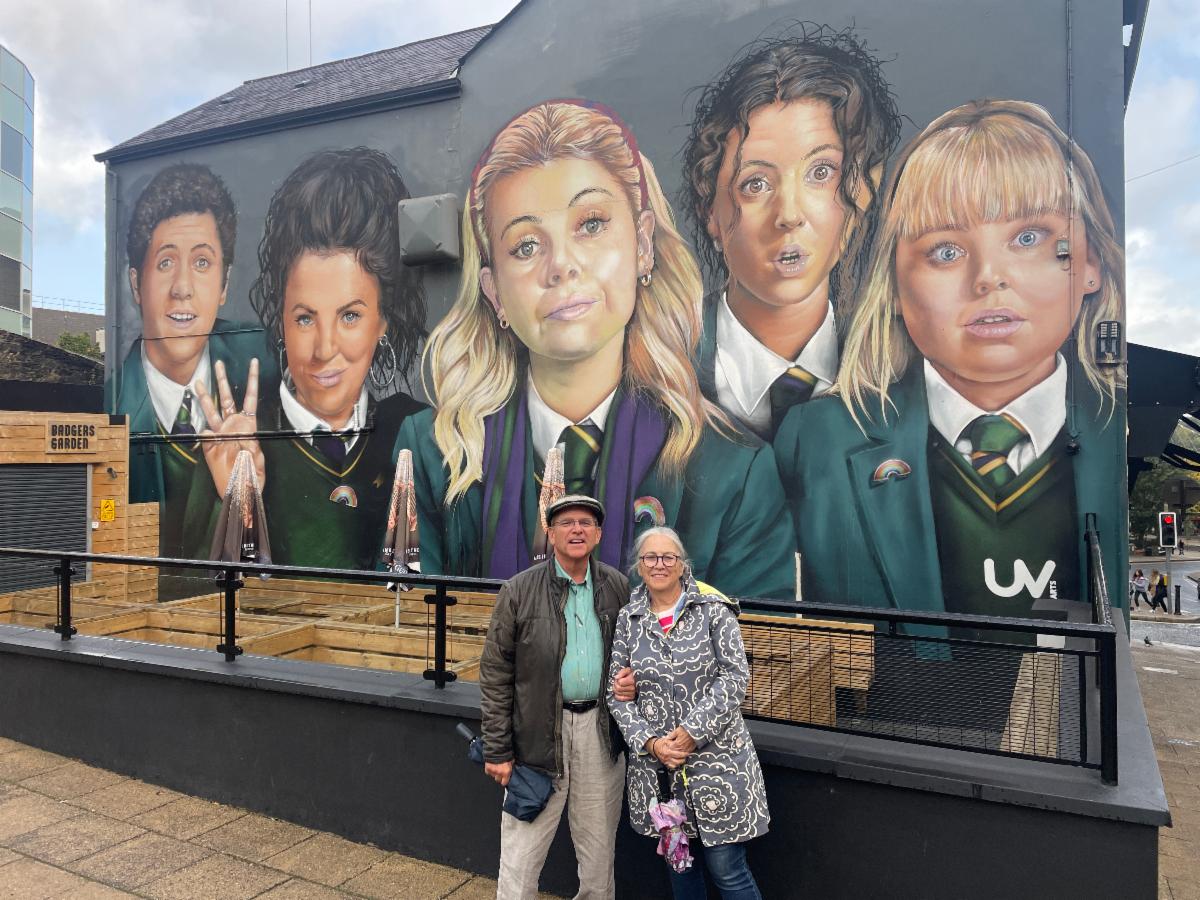
There’s a street mural and museum exhibit in Derry, Northern Ireland celebrating "Derry Girls," one of the most popular shows on television over the past four years. The show is a somewhat autobiographical story about four teenage girls and an English boy who go through their teenage years while Northern Ireland endures the final years of civil strife and violence known as “the Troubles.”
Crowds of people wait their turn to get a selfie in front of the mural showing the main characters of the show, a comedy that includes scenes of soldiers stopping the school bus carrying the Derry girls to school to check for bombs.
I loved the show, partly because I worked on the peace effort between 1999 and 2010 in my capacity as CEO of the Codman Square Health Center and recognized the places and character types on the program. I also loved it because the mere ability to have such a show would seem to indicate that the peace process was successful.
My role in the peace process was to work with Catholic community leaders (also referred to as republicans or nationalists, meaning that they want Northern Ireland to be part of the Republic of Ireland, and are represented politically by Sinn Fein and the Social Democratic and Labour Party) and Protestant community leaders (also referred to as loyalists or unionists, meaning that they are loyal to and want union with the United Kingdom, and are represented politically by the Democratic Unionist Party and the Ulster Unionist Party).
These leaders came to Codman Square to learn to work together in a racially diverse community that had its own history of strife. It felt similar to their struggle but wasn’t theirs. The groups worked in youth and public health programs, and I went to Northern Ireland several times to speak about topics such as community policing from the community’s perspective, and about running a nonprofit, fundraising, and managing a diverse staff.
With these memories, my wife and I decided to go to Northern Ireland for the 25th anniversary of the 1998 Good Friday Peace Accord, to see Northern Ireland again after more than a decade away. We visited with friends and checked out some of the places where I’d spoken and worked for peace beginning 24 years ago.
One striking thing these many years later is that you don’t know when you are crossing the international border between the Irish Republic and Northern Ireland, which is part of the United Kingdom (UK). Sometimes there was a sign that welcomed you to a different county, but often the only visible markers were the posting of prices at the gas station - was it in pound sterling or the euro?
Whether borders are “hard” with barriers, entry check points and soldiers, or soft and porous – just drive through! - is a very big issue for keeping the peace. On one of my trips to Ireland, I met with Joe Doherty, a member of the Irish Republican Army who spent 23 years in prison for killing a British soldier before being released as part of the Good Friday agreement. Joe explained that he was fighting for a united Ireland, but that had been accomplished via both Ireland and the UK being in the European Union (EU), and that there was no international border.
Then came Brexit (the vote that removed the UK from the EU), which nearly upended the peace agreement by threatening to recreate a border, but the UK and EU were able to work out agreements which preserved the status quo of no border.
There were lots of physical signs of peace. During my work there, Northern Ireland police vehicles looked more like tanks than cars (they had chains dragging to prevent grenades from being thrown under them and bullet proof windows), and police stations, called “barracks,” looked like prisons. Today the police drive colorful sedans, and many of the police barracks have been ripped down or transformed.
The Seamus Heaney Homeplace, a charming museum in the poet’s honor, is a former police barracks, though all traces of its militaristic days are gone, replaced with an attractive modern museum. It was the best example of "beating swords into ploughshares" that we observed.
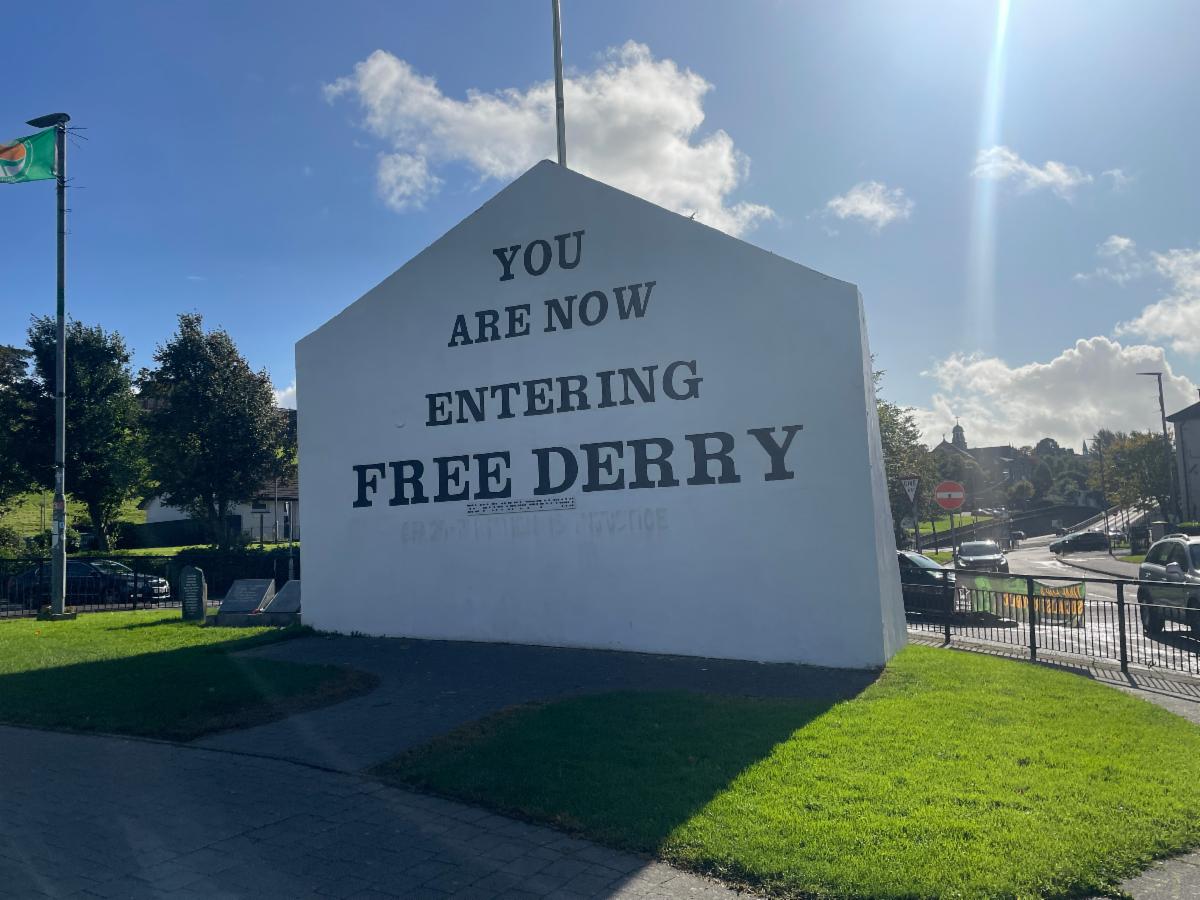
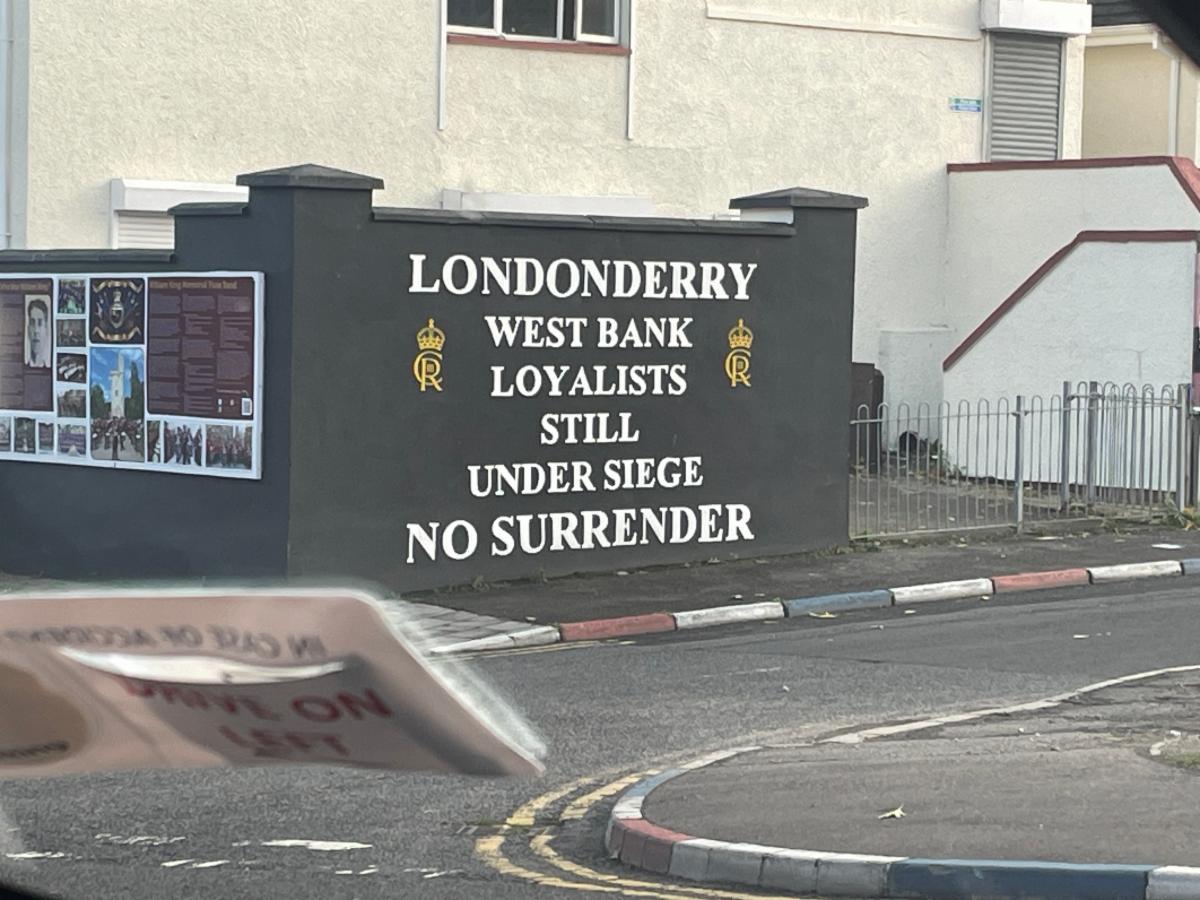
Twenty years ago, you’d know whether you were in a Protestant or Catholic area because there would be flags on street poles representing flags of Ireland or the UK and curbs painted the colors of the Union Jack (red, white and blue, the colors of the flag of the United Kingdom) or the TriColor (green, orange and white, the colors of the flag of the Republic of Ireland). Driving recently through various towns in Northern Ireland, I saw far fewer flags and painted curbs.
Discussions on the Troubles with local people all noted that sectarian violence has disappeared, and they didn’t fear going places. We visited an autumn festival in Belfast with thousands of people and no sense of danger, or, for that matter, overt police presence.
But the divisions have not gone away. There had been hope that Catholics and Protestants would achieve reconciliation following the Peace Accord, but it has not developed. They live in separate neighborhoods, with separate schools, cultural preferences, even sports teams. An exhibit at the Ulster Museum in Belfast puts things more succinctly with this statement, “We have a shared past, but we do not have a shared memory.”
There have been calls for a Truth and Reconciliation Commission to untangle the animosities and investigate atrocities committed by both sides. There is a lot of anger to go around from 3600 deaths and countless more injuries.
On top of all that, there is at this point no functioning government in Northern Ireland. The Democratic Unionist Party, one of the major parties in the Assembly (their Congress), last year refused to allow the election of a First Minister (also known as speaker) from Sinn Fein, the other major party, with the result that there is currently no acting Assembly or executive leadership for Northern Ireland. This follows other periods since the Good Friday Peace Accord when there was no functioning government.
The unanswered question is: will the peace, or perhaps lack of civil war, continue?
We left Ireland convinced that there is no appetite for the renewal of violence, and that there is recognition that Northern Ireland is the rare place on our planet where civil strife from animosities going back hundreds of years was successfully quelled.
Nonetheless, the peace is fragile. There is a tangle of unresolved issues from the Troubles, continued deep divisions between the Catholic and Protestant populations, which are nearly equal in number, and difficulty finding agreement on how to move forward.
The "Derry Girls" series ends with a scene in which the referendum on the Good Friday Peace Accord is supported by 71 percent of the voters of Northern Ireland, and the Derry Girls are overjoyed. No wonder the mural celebrating the Derry Girls is one of the most popular places in Derry. It’s a sign of hope.
|