|
TAKE A PEW
As a young college chaplain, always fun was the annual Christmas dinner held in Hall for the domestic staff of the college. But there was one feature of the evening that never failed to strike me as soon as I arrived. Enveloping the energy of the disc jockey plying his trade at the far end of the Hall and that of the younger staff members dancing up a storm in the cleared middle of the floor— there sat at tables around the dance area and fanning back to the walls --- the older members of staff in family or friendship groupings. You had the sense they had all arrived early to stake their claim to the table or area they preferred most. And there they sat mostly all the night long and stirring only to fetch another drink from the bar.
All that sitting was bewildering to a much younger me. But we do change, and as I have advanced in age, I am making my way slowly but surely into the camp of the most always seated. I knew I was heading in that direction when I started thinking twice before attending a local church—that I otherwise really liked--- if I started thinking about how long I might have to stand during the choir’s singing of the Sanctus (with its Benedictus) if the chosen Eucharist choral setting contained some notoriously long pieces.
This all brings me around to the subject of church pews. In the earliest days of the church in the West, the standard posture for worshippers was kneeling or standing, as it continues to be in the East even today. In time, as a concession to the aged and infirm, some stone seats were attached to the walls. Ever wondered where Shakespeare got that phrase from in Romeo and Juliet, ‘the weak go to the wall’? Now you know. By the end of the 13th century help was at hand for all in the form of fixed wooden benches. These became known as pews (probably from the Latin podium meaning a seat above floor-level).
I started thinking about church pews when I came across an article by Andrew Green, ‘Room with a pew’ in an architecture review magazine last month. That led me to reflect further on another article I saw about the new interior furnishings chosen for the restored nave of Notre-Dame in Paris that is scheduled to re-open this December. In place of pews solid oak interlocking chairs (some 1,500 of them) have been designed by Ionna Vautrin and manufactured by the French furniture manufacturer Bosc.
I shared my thoughts on pews with Jonathan Rich, the author of Spires in the Sun: The Carpenter Gothic Episcopal Churches of Florida, asking him about the pews in these beautiful churches across the Diocese of Florida. The result is the wonderful interview styled article by Jonathan Rich that is featured in two sections in this Newsletter. His article is accompanied by several beautiful photographs from Spires by the book’s photographer Philip Eschbach.
I hope you enjoy the article and I wish every Eastertide-Pentecost blessing to you, and your loved ones,
Douglas
| |
|
Pentecost:
Sunday, May 19, 2024
| |
|
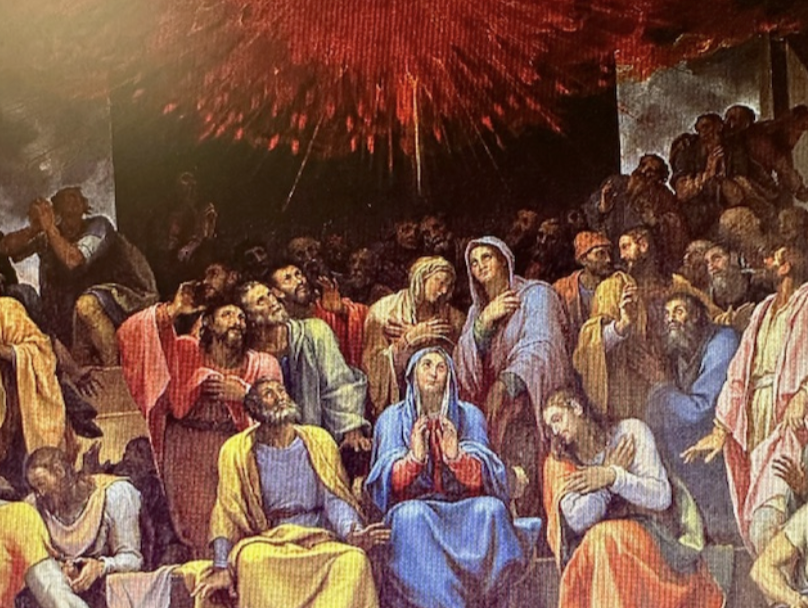
PENTECOST is not the feast of the Holy Ghost, it is the feast of his descent upon us. The Son of God came down and was made man in the womb of Mary.
The Holy Ghost came down and was made human in the souls of Christians. When Jesus was ripe for birth, he left Mary's womb, to grow up and be himself. He outgrew first her womb and then her lap, first her protection, last her person and her mind.
But as the Holy Ghost grows in us, it is not he but we who grow. He does not grow up and leave us behind, we grow up into him. He becomes the spring and substance of our mind and heart. He is the never-failing fountain of which Jesus spoke to the Samaritaness. We break up the stony rubbish of our life again and again, to find and release the well of living water.
Austin Farrer (1904-29)
| |
|
An Interview with Jonathan Rich, author of
Spires in the Sun: The Carpenter Gothic Episcopal Church of Florida
with photographs by Philip Eschbach
| |
|
1. Did all of the Carpenter Gothic churches you visited in doing the research for Spires have pews or, if no longer pews, the evidence of pews in earlier days? Was all the original seating for the Carpenter Gothic churches in the Diocese of Florida in the form of pews?
Nearly all of the 39 of the 19th-century wood-frame Gothic Revival Episcopal churches profiled in Spires in the Sun still have their wooden pews. All of them had such pews in earlier days. Old St. Paul's, built in South Arlington in Jacksonville in 1888, underwent reincarnations as a Sunday schoolhouse and children's theater before becoming San Marco Preservation Hall in Fletcher Park in 1994. Today used as a rental venue, its nave is filled with rows of sleek, dark rail back chairs. Originally, it had pews hand-crafted by Edward M. Fetting, Sr., a neighbor of church founder Harriet Rees Colfax Stevens. In contrast, another deconsecrated church, Old St. Paul's by-the-Sea, Jacksonville Beach (1887), now known as Beaches Museum Chapel, has kept its short, straight-backed pews during its secular life as a rental venue.
The very first seating in the churches did not always take the form of pews. Sometimes, barely completed churches had improvised or temporary seating while they awaited completion of pews (as well as their other furnishings, and sometimes even their window glass). When Bishop Weed went to Titusville in 1888 to consecrate St. Gabriel's (then named St. John's), the church was full to overflowing even though it still lacked pews. For the service, the congregants sat on rows of upended orange crates. In the earliest years of St. Margaret's, Hibernia (1875), originally the Fleming family's chapel, the Flemings and their guests carried chairs from the Fleming House over to the chapel. At Old St. Paul's by-the-Sea on Jacksonville Beach, until pews could be obtained, church founders John and Henrietta Christopher and their fellow congregants used wicker chairs. These may have been hand-me-downs from the Christophers' nearby three-storied, turreted, and pennant-flying Murray Hall (1886), the first of the opulent hotels to spring up on Florida's east coast.
2. Did the original seating in our Carpenter Gothic churches denote any kind of ‘social hierarchy’ in the congregation?
Today, rectors find it challenging to get worshipers to take seats at the front of the church! But Colonial Americans had no such reticence. Notwithstanding Luke 14:10 and James 2:3, they accepted that their church seating denoted their social standing. The closer a family sat to the altar and pulpit, the higher its social rank. This seating hierarchy was also linked to pew rentals, a subject discussed further below.
Florida's Carpenter Gothic churches, of course, were constructed over a century later than the Colonial era, from 1855 until about 1910. By then, social hierarchy was no longer formally reflected in church seating arrangements. Probably in the 1800s, just as today, some church founders, leaders, and longtime members had favorite -- and probably well-situated -- pews in which they sat customarily. Other congregants generally would have deferred to their preferences. But these patterns, then as now, would have arisen more from simple courtesy and habit than from any unwritten code.
To continue reading, please click here.
| |
Bishop's Institute Book Picks for May | |
|
Sarah Bessey. Field Notes for the Wilderness: Practices for an Evolving Faith (Hardcover) –
February 20, 2024.
Reading her new book is like opening a boxed lunch in the wilderness packed by someone who knew just what would get you through—along with a note that says, ‘Your soul is just fine.’
The only difference is that this book keeps feeding you after you have finished the last page (the one you hoped would never come). –Barbara Brown Taylor
| |
|
Tony Jones. The God of Wild Places: Rediscovering the Divine in the Untamed Outdoors. Hardcover – April 2, 2024.
"I love this book. I love its honesty, its tenderness, its craft, its settings, its quests and questions, and the profound mysteries toward which it bows. It takes you places you need to go. And it is so well written you will reread many passages." —Brian McLaren, author, activist, and angler
| |
|
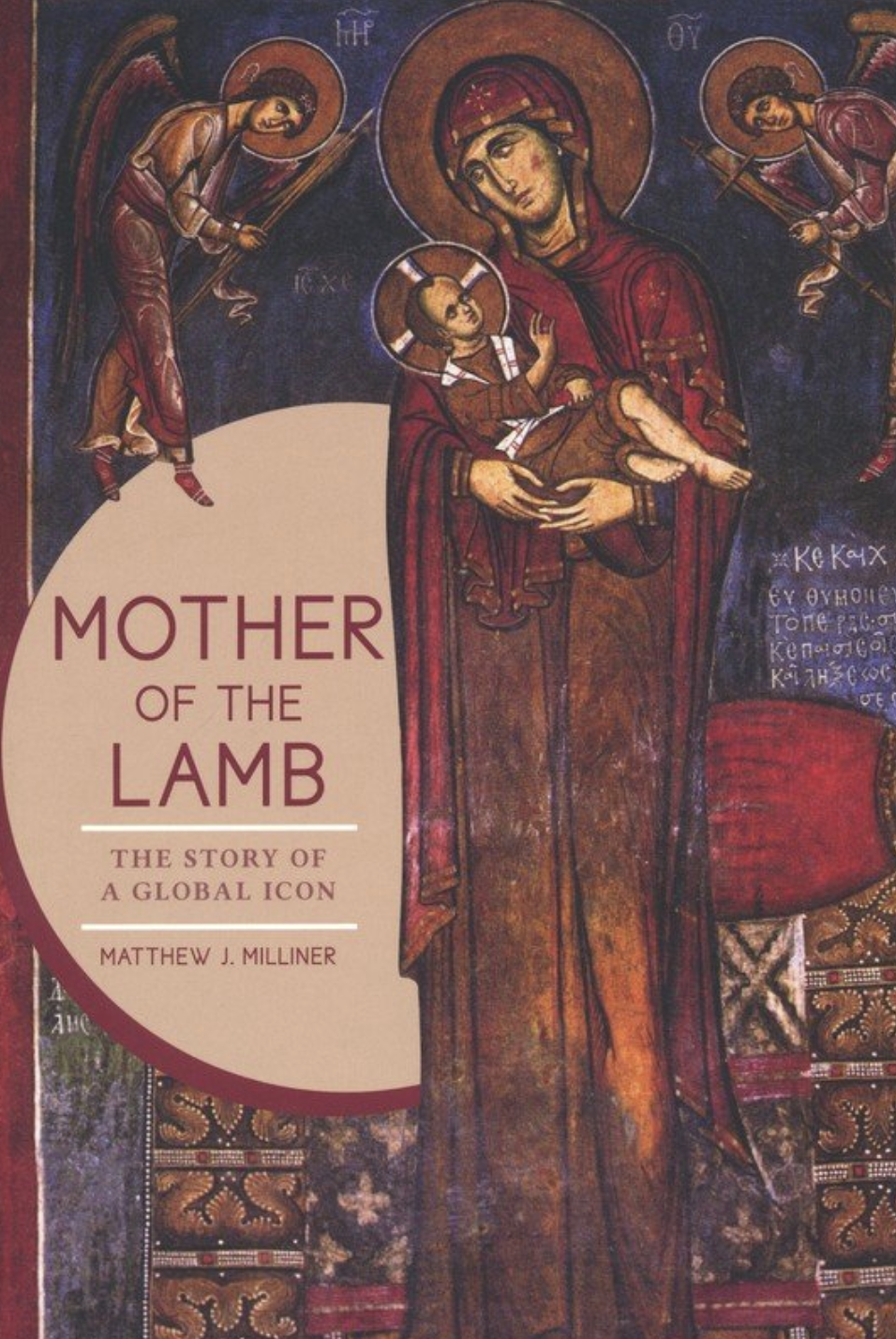
Matthew J. Milliner. Mother of the Lamb: The Story of a Global Icon (Hardcover) – October 2022.
Milliner traces the remarkable history of the origin of the icon in the aftermath of the Third Crusade until the present day: and its significance as an image of Mary’s ministry of suffering love and as an icon of humanity in a power-hungry world.
Similarly, have you ever wondered why the Lord’s mother is so often shown with a book on her lap in images of the Annunciation? Here is your answer in this very accessible essay on the subject by Joel J. Miller ‘The Virgin Mary: Evolution of a Bookworm:' https://www.millersbookreview.com/p/virgin-mary-evolution-of-a-bookworm
| |
|
Christopher Phillips. Battleground: 10 Conflicts that Explain the New Middle East (Hardcover) – March 12, 2024.
Praying for peace in the Middle East but stumped with the recurring thought that the whole recent history is unclear and bewildering? Phillips’ book sheds light on the key conflicts and the scramble for power in the region from the Arab Spring to the Israel-Gaza crisis.
| |
|
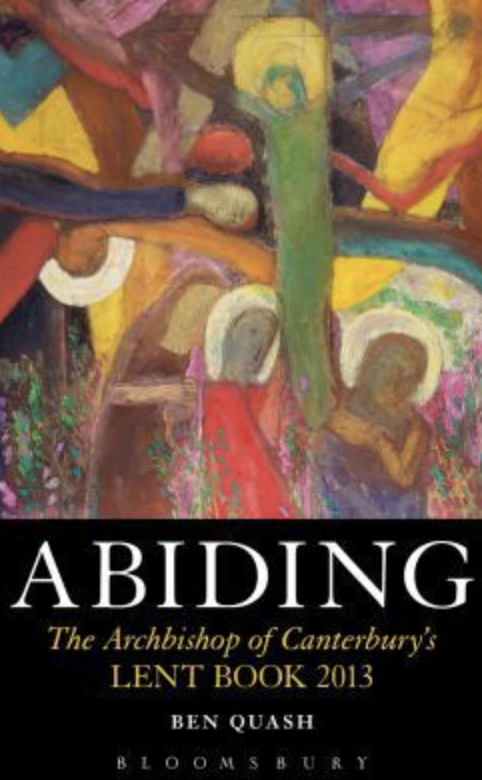
Ben Quash. Abiding: The Archbishop of Canterbury's Lent Book 2013 (Paperback) – January 1, 2015.
A wonderful meditation on one of the key themes of the Gospel readings during Eastertide: ‘Abide with me’. Ben Quash is a theologian who has written extensively on the visual arts as a doorway to the interpretation of Holy Scripture. He is a founder of the Visual Commentary on Scripture: thevcs.org
| |
|
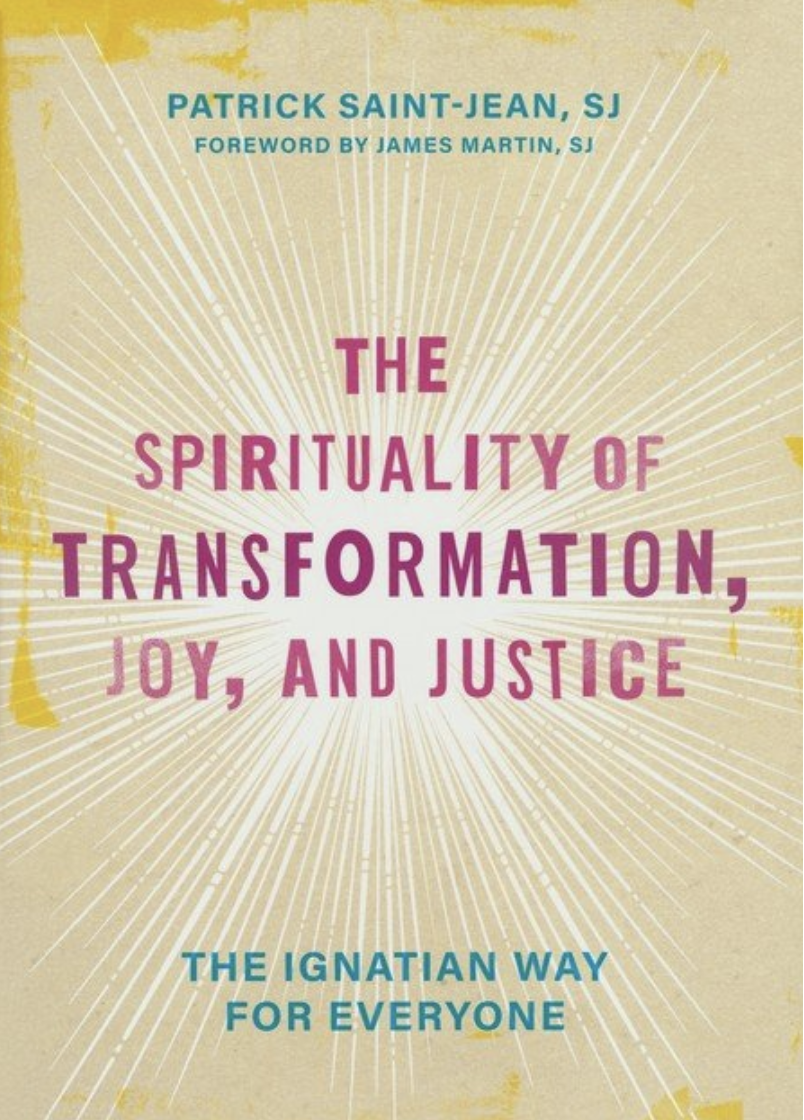
Patrick Saint-Jean, SJ. The Spirituality of Transformation, Joy, and Justice: The Ignatian Way for Everyone Hardcover – October 24, 2023.
A good introduction to Ignatian spirituality and the Spiritual Exercises developed by St Ignatius of Loyola--- but with an emphasis on being inspired to look outward into the world, God’s creation, and the work of the Holy Spirit in every aspect of the world.
| |
|
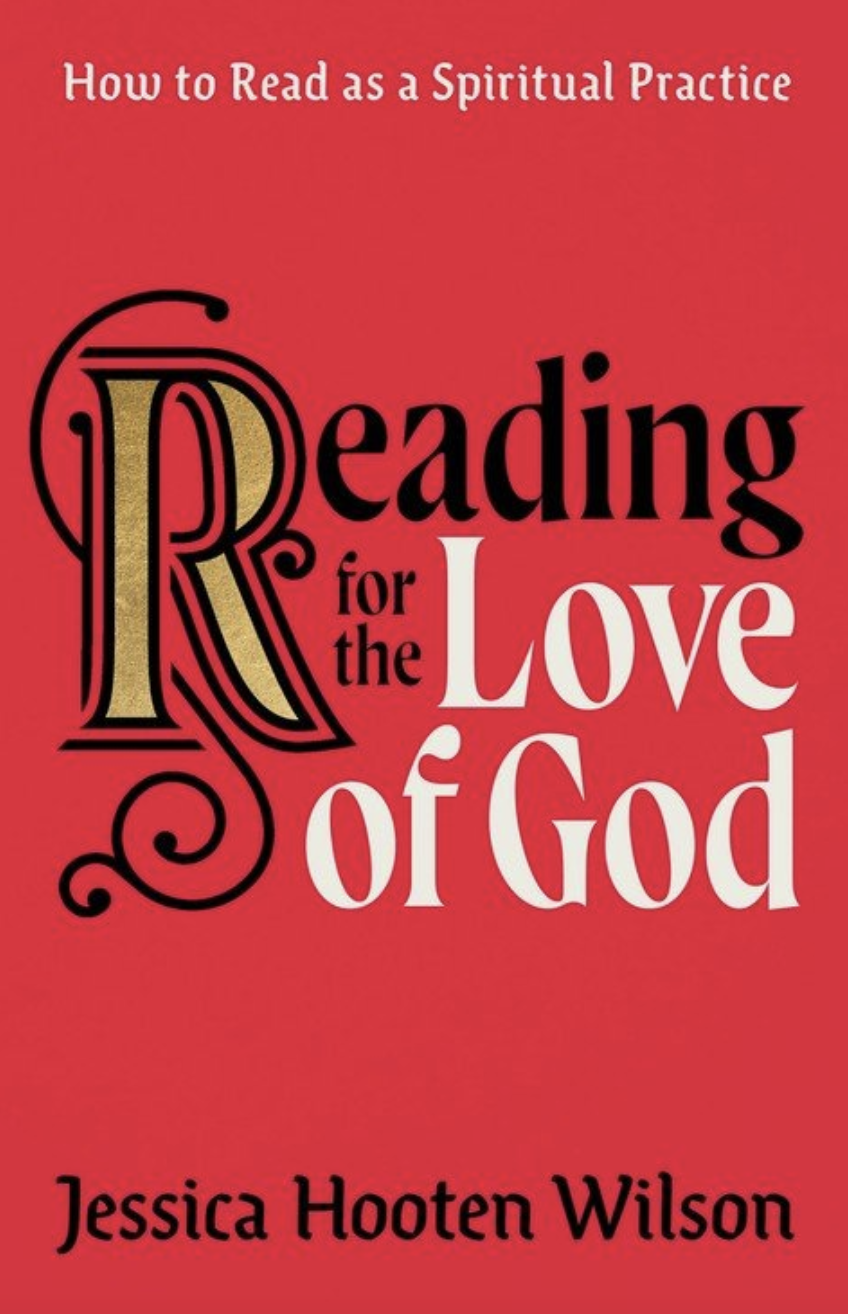
Jessica Hooten Wilson. Reading for the Love of God: How to Read as a Spiritual Practice (Hardcover) – March 28, 2023.
In Reading for the Love of God, award-winning author Jessica Hooten Wilson does just that--and then shows readers how to reap the spiritual benefits of reading. She argues that the simple act of reading can help us learn to pray well, love our neighbor, be contemplative, practice humility, and disentangle ourselves from contemporary idols. – Amazon.
| |
A Review by Owene Courtney | |
|
Cerveny Speakers Series:
Easter Gardens: Images of Resurrection
A teaching and preaching weekend at St John’s Cathedral May 3-5, 2024 with
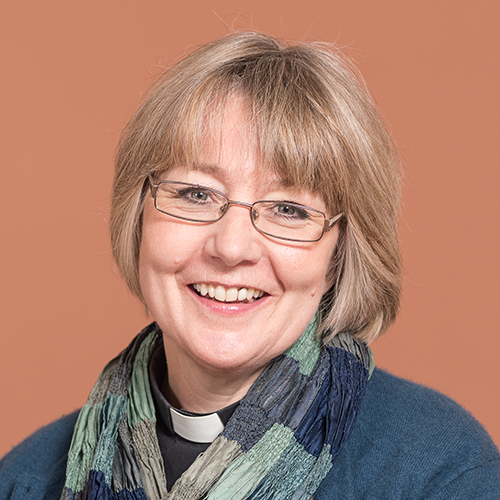
CANON SUSANNAH GUNNER
| |
|
Some background
At the beginning of COVID, Bill Courtney and I were invited to join some American friends for a zoom church service held with a congregation at St. Andrew’s Church in Field Dalling, a village in the English county of Norfolk. That time together led to an across the pond friendship filled with love and respect, a visit last fall to Field Dalling and the beautiful Cerveny Speaker Series held at St. John’s Cathedral earlier this month. Part of our regular gatherings with the congregation of St. Andrew’s included homilies and small group classes facilitated by the canon for the Diocese of Norwich, the Rev. Susanna Gunner. I quickly took a liking to Susanna…her way of teaching, her poetic way of speaking and her generally lovely demeanor.
The small groups during COVID included studies of a Mapping series she wrote, a curriculum for reading, marking and inwardly digesting various seasons of the church, the gospels and contemporary crises and every day faith. In the winter of 2022, the Cathedral Bookstore began selling Susanna’s “maps” and small groups at the Cathedral (and across the pond) began meeting to study them.
In 2017, a group of parishioners at the Cathedral decided to honor Bishop Frank Cerveny, the sixth Bishop in the Diocese of Florida who served for 18 years (1974–1992), beginning a campaign called Preserve and Proclaim: Honoring The Rt. Rev. Frank Cerveny. The Preservation Fund is to endow our beautiful building, and specifically to endow our pulpit in Frank’s honor. The Proclaim Fund (Cerveny Speakers Series) created a small endowment to bring great preachers, writers and speakers to the Cathedral each year in perpetuity.
The Speaker
During Covidtide we were unable to bring speakers, but this May we were fortunate to be able to bring the Reverend Canon Susanna Gunner to the Cathedral for a long weekend teaching and preaching about ‘Easter Gardens: Images of Resurrection.’
Susanna is an Anglican priest with a background in education and a particular interest in the relationships between theology, spirituality and the arts. She lives in Norfolk, UK and, since her ordination, has held roles which have enabled her to teach and preach across the Diocese of Norwich. During the pandemic, the digital resources she produced in her role as Spirituality Advisor encouraged many beyond the UK. She has also served as Chaplain to the Bishop of Norwich and is a Chaplain to King Charles III.
To continue reading, please click here.
| |
|
5. How would you describe the most common or ‘typical’ pew or seating in the Carpenter Gothic churches in Florida when they were built? Were they quite modest and ordinary? Uncomfortable? Comfortable? Well-constructed or flimsy and precarious? Beautiful oak or ordinary pine?
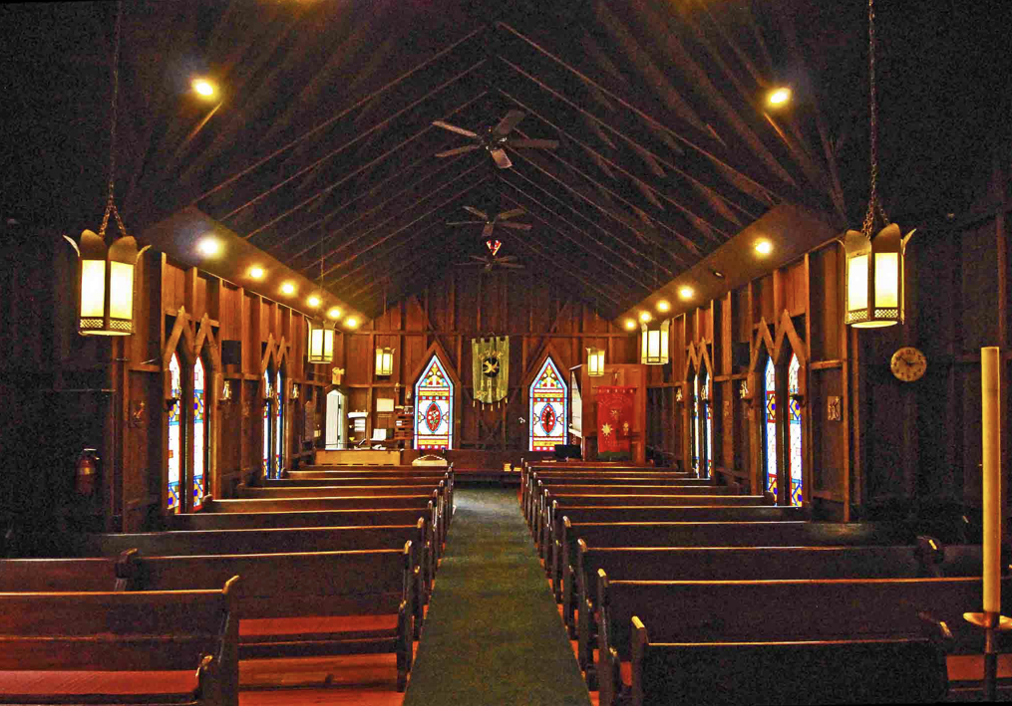
Slip pews, the long, narrow wooden seats we associate with the word "pew" today, are the type found in Florida's Carpenter Gothic churches. Like the churches themselves, they tend to be simple and unadorned, but elegant. They are almost always made of heart pine, have rich grain, and are stained a hue of brown ranging from mid or light-toned (Holy Comforter, Crescent City (1878)) to dark (St. Agatha's, Defuniak Springs (1895)). Their seats and backs may be flat or slightly contoured. A simple Christian symbol, such as a trefoil, might be incised at the pew's end. They are all very solid and well constructed, as their century-plus of use attests.
| |
All Saints, Enterprise: nave and pews | |
|
A number of the Carpenter Gothic churches, such as Christ Church, Monticello (1885) and All Saints, Enterprise (1883), have pine pews that are wood-pegged and original to the churches. According to the best information available, some or all of the pews in St. Mary's, Palatka (1883), St. Mary's, Milton (1878), St. James, Lake City (1880), St. Mary's, Madison (1881), St. Clement's Chapel of the Church of the Advent, Tallahassee (1895), St. Bartholomew's, High Springs (1897), Good Shepherd, Maitland (1883), Holy Trinity, Fruitland Park (1888), Christ Church, Fort Meade (1889), Grace Church, Port Orange (1893), and Holy Apostles, Satellite Beach (1892) are also original. Pews were donated to Christ Church, Longwood (1880) by the congregation of Holy Cross in Sanford after Holy Cross's storm-damaged first church had to be demolished in 1880. Christ Church, Longwood and St. Mary's, Daytona (1883) have both undergone expansions of their naves, and each therefore has a blend of original and well-matched, later-added pews. When Hurricane Dora destroyed the original Church of Our Saviour, Mandarin (1883) in 1964, the parish rescued eight original wood-pegged pews from its nave. Today, those eight originals are among the pews of the "new" Church of Our Saviour's side chapel, which was created to mimic the atmosphere of the old church and house the latter's salvaged windows and furnishings.
6. As the churches are today—as you visited them: a) what percentage have their original pews still in place? b) what percentage still have pews old or modern? C) what percentage have taken out the pews and replaced them with chair or other seating?
It is difficult to ascertain or verify the originality of the pews at some of the churches, but I would estimate that fully a third, at least, of the churches in Spires in the Sun have at least some of their original pews still in place. With the exception of the deconsecrated San Marco Preservation Hall (a/k/a Old St. Paul's, South Arlington), all of the churches still have pews for their seating, and in virtually every case the pews are at least of vintage origin, if not original.
7. Fancy embellishments: any beautiful or ornate pew-end carvings or brass plates denoting dedications? Well-appointed kneelers or beautifully embroidered hassocks?
The pews vary in their terminal embellishments. Some pews are quite simple, terminating in rounded or level ends, such as those at Christ Church, Fort Meade, All Saints, Enterprise, and Grace, Ocala (1880). Others are slightly more elaborate, such as those at Christ Church, Longwood, which have ends topped with carved trefoils.
At least one of the churches, Holy Trinity, Melbourne (1886), has small brass plates with dedications at the ends of its pews. The great majority, however, do not have such plates.
Christ Church, Longwood has individual kneeling rail cushions that are covered in intricate and vibrant needlepoint depicting Christian symbols such as the Christogram, Alpha and Omega, and fish. Kneeling rail cushions of the longer variety are often upholstered in red, as is the case at St. Cyprian's, St. Augustine (1900) and Holy Trinity, Melbourne (1886).
Sometimes chairs in the chancel for presiding clergy have needlepoint cushions. An example of these is found at All Saints, Jensen Beach (1898).
Pew seats are often covered with long cushions. Usually, these are red and hand-tufted with fabric-covered buttons, as they are at Good Shepherd, Maitland. In Spires in the Sun, I wrote about the ambience created by the red cushions at Christ Church, Longwood: "In the late afternoon, when sunlight falls on the west windows, light reflects from the cushions to saturate the interior's west alcove with a ruby glow. Spangled with tiny, prismatic refractions from the stained glass, the radiance makes the alcove look like a glass of burgundy wine struck by the sun."
The blue pew cushions at Grace, Port Orange (1893) are remarkable for another reason. They have been recovered over the years, but are said to still be stuffed with the hair of horsetails put in them by parish women when the church was built.
To continue reading, please click here.
| |
|
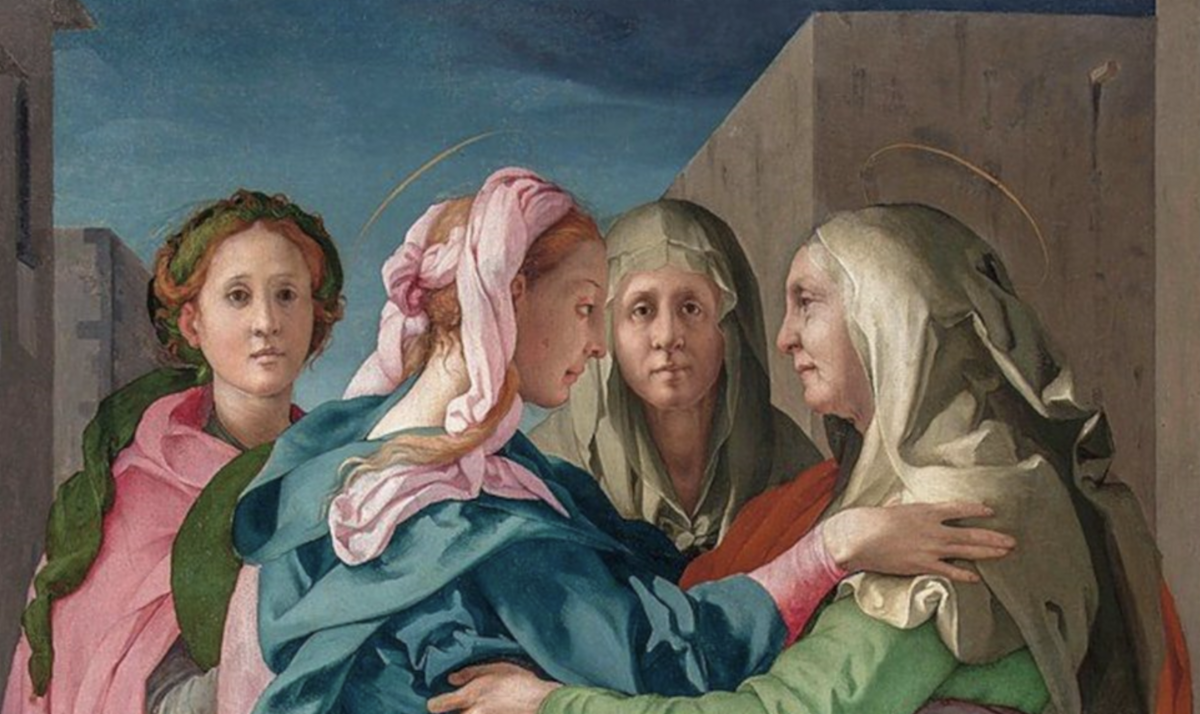
The Visitation of the Blessed Virgin Mary:
May 31
| |
|
Father in heaven, by whose grace the virgin mother of thy
incarnate Son was blessed in bearing him, but still more blessed
in keeping thy word: Grant us who honor the exaltation of her
lowliness to follow the example of her devotion to thy will;
through the same Jesus Christ our Lord, who liveth and reigneth
with thee and the Holy Spirit, one God, for ever and ever. Amen.
| |
|
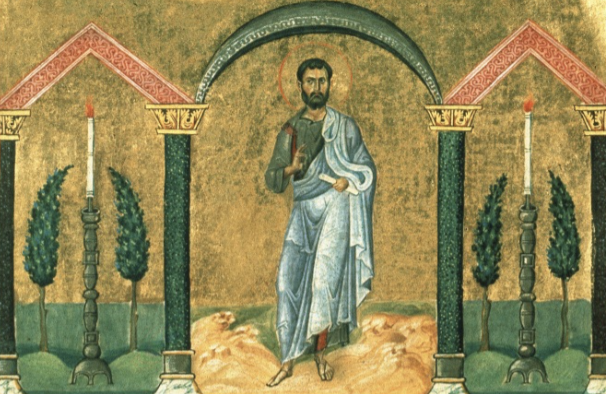
When we think about the first deacons in the early church, Saint Stephen and Saint Philip are the two likely to come to mind. That is because much about their lives and ministries are recorded in the Book of Acts. But what do we know about those other early deacons? Let us share a little bit about the life and ministry of Saint Timon, one of the first seven deacons.
The first proto- deacons are named in the Book of Acts.
In those days when the number of disciples was increasing, the Hellenistic Jews among them complained against the Hebraic Jews because their widows were being overlooked in the daily distribution of food. So, the Twelve gathered all the disciples together and said, “It would not be right for us to neglect the ministry of the word of God in order to wait on tables. Brothers and sisters, choose seven men from among you who are known to be full of the Spirit and wisdom. We will turn this responsibility over to them and will give our attention to prayer and the ministry of the word.”
This proposal pleased the whole group. They chose Stephen, a man full of faith and of the Holy Spirit; also, Philip, Procorus, Nicanor, Timon, Parmenas, and Nicolas from Antioch, a convert to Judaism. They presented these men to the apostles, who prayed and laid their hands on them. (Acts 6:1-6).
Saint Timon will not be mentioned again in the Scriptures, but there is much we can know about him, from both his name and church tradition.
His name (Τίμων/Timon) is Greek, meaning honor or honorable. Like the other proto-deacons, he was most likely selected because of his heritage as a Greek-speaking Jew. This possibly meant that he was a diasporic Jew from elsewhere in the Roman Empire who had come to Jerusalem, or it could be that he was a Greek-speaking Jew living in Jerusalem who likely had names in both Hebrew and Greek.
Timon, as all of the first deacons, was selected because of his “good reputation”. The Scriptures also note that Timon was “full of the Spirit and wisdom” and one who was “put in charge” of the needs of the Church.
According to St Hippolytus of Rome (c. AD 170-235), as recorded in his On the Seventy Apostles, Timon became the “bishop of Bostra” (southern Syria). In fact, while writing about Timon, some evidence suggests that Hippolytus himself was “bishop of Bostra”. If so, this would perhaps give some validity to his claim for Timon.
To continue reading, please click here.
| |
|
Save the Date:
Yoga and Christian Prayer Retreat on
Sept. 27-29
| |
|
THE BISHOP’S INSTITUTE
YOGA AND CHRISTIAN PRAYER RETREAT
Sept. 27-29, 2024
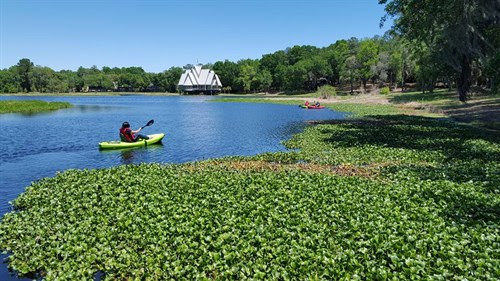
Camp Weed and Cerveny Conference Center
The Bishop's Institute for Ministry and Leadership invites you to attend a Yoga and Christian Contemplative Prayer Retreat this Fall at Camp Weed and Cerveny Conference Center for the weekend of Sept. 27-29 2024. The retreat will begin at 5 p.m. on Friday, Sept. 27, and conclude after lunch on Sunday, Sept. 29.
About the Retreat
Megan Cochran will lead the yoga sessions and our retreat chaplain leading prayer will be The Very Rev. Kate Moorehead Carroll. This retreat follows in line with several very much appreciated retreats at Camp Weed pre-COVID.
Enter the autumn of the year before Thanksgiving and before the start of Advent and Christmas by experiencing the delightful blending of the physical practice of yoga with the enduring tradition of Christian contemplative prayer. Set time aside in the quiet and beauty of Camp Weed to still distraction and open heart and mind to the indwelling presence of the Holy Spirit.
No yoga experience is needed. This retreat works for those trying yoga for the first time and for those who regularly practice yoga. Chair yoga is an option. All ages are welcome. The retreat is inter-generational and singles as well as couples are welcome.
Megan Cochran is an experienced yoga teacher and retreat leader. She is the Director of Administration and of Youth Ministries at St John’s Cathedral.
Kate Moorehead Carroll is the Dean of St John’s Cathedral and the author of a goodly number of books including most recently Vital Signs of Faith: Finding Health in Your Spiritual Life, 2022.
Rates:
Single: $263 (includes 2 nights room + six meals + CW service fee + BI program fee)
Double: $188 (includes 2 nights sharing room + six meals + CW service fee + BI program fee)
Saturday only commuter (includes lunch): $50.
Registration will be posted in the coming days on the Camp Weed and Cerveny Conference Center website.
| |
Juneteenth Concert at St. John's Cathedral | |
There will be a Juneteenth concert at St. John's Cathedral, Jacksonville on Saturday, June 15 at 5 p.m. More information is below. | | | | |