|
Humble yourselves, therefore, under God’s mighty hand, that he may lift you up in due time.
1 Peter 5.6
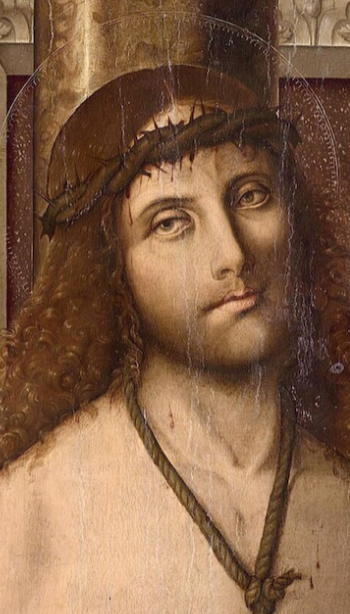
Spring has arrived and the end of Lent is within sight as we anticipate the joys of Easter. I find myself re-reading each year as we approach Passiontide and Holy Week the Dutch Roman Catholic priest, theologian and author Henri Nouwen (1932-1996).
Nouwen does a wonderful job of helping us to set the passion of Jesus in relation to his life and preaching. Nouwen tells us it is easy to misunderstand what the Gospels mean by the Passion of Jesus. When we use the word passion in relationship to Jesus’ suffering, we immediately connect it to the idea of passion as pain, the pain of the crucifixion, of scourging, of whips, of nails in his hands, of humiliation before the crowd. Nouwen says the Passion of Jesus does refer to all of these, but the word suggests a different focus here:
The English word passion takes it root in the Latin, ‘passio’ meaning passivity, and that’s its real connotation here. The word “patient” also derives from this. Hence what the Passion narratives describe is Jesus’ passivity, his becoming a “patient”. He gives his death to us through his passivity, just as he had previously given his life to us through his activity.
Up until his arrest, the Gospels describe Jesus as supremely active and moving from place-to-place teaching, preaching, and healing with great energy, a ‘man in a hurry’. But then,
After his arrest, all the verbs become passive: he is led away, manhandled by the authorities, whipped, helped in carrying his cross, and ultimately nailed to the cross. After his arrest, like a patient in palliative care or hospice, he no longer does anything; rather others do it for him and to him. He is passive, a patient, and in that passivity, he gave his death for us.
Nouwen tells us that Jesus presents to us ‘the great mystery of the descending way’:
It is the way of suffering, but also the way of healing. It is the way of humiliation, but also the way of resurrection. . . It is the way of persecution, oppression, martyrdom, and death, but also to the full disclosure of God’s love.
As we heard in the Gospel for the fourth Sunday in Lent (John 3.14-15): “As Moses lifted up the snake in the desert, so must the Son of man be lifted up”. Nouwen comments here:
You see in these words how the descending way of Jesus became the ascending way. The ‘lifting up’ that Jesus speaks of refers both to his being raised up on the cross in total humiliation and to his being raised up from the dead in total glorification.
And the Gospel has a message for us as we follow Jesus. Of this, Nouwen concludes:
Each one of us has to seek out his or her own descending way of love. That calls for much prayer, much patience, and much guidance. It has nothing at all to do with spiritual heroics, dramatically throwing everything overboard to “follow” Jesus.
The descending way is a way that is concealed in each person’s heart. But because it is so seldom walked on, it is often overgrown with weeds. Slowly but surely, we have to clear the weeds, open the way, and set out on it unafraid.
A blessed Holy Week to us all, and a joyous Easter.
Douglas Dupree
| |
|
He Answered Nothing
Matthew 27. 11-14
| |
|
11 And Jesus stood before the governor: and the governor asked him, saying, Art thou the King of the Jews? And Jesus said unto him, Thou sayest.
12 And when he was accused of the chief priests and elders, he answered nothing.
13 Then said Pilate unto him, Hearest thou not how many things they witness against thee?
14 And he answered him to never a word; insomuch that the governor marveled greatly.
| |
|
“Matthew 27”
Mighty Nothing! unto thee,
Nothing, we owe all things that be.
God spake once when He all things made,
He saved all when He Nothing said.
The world was made of Nothing then;
’Tis made by Nothing now again.
... Richard Crashaw (1613-1649)
| |
|
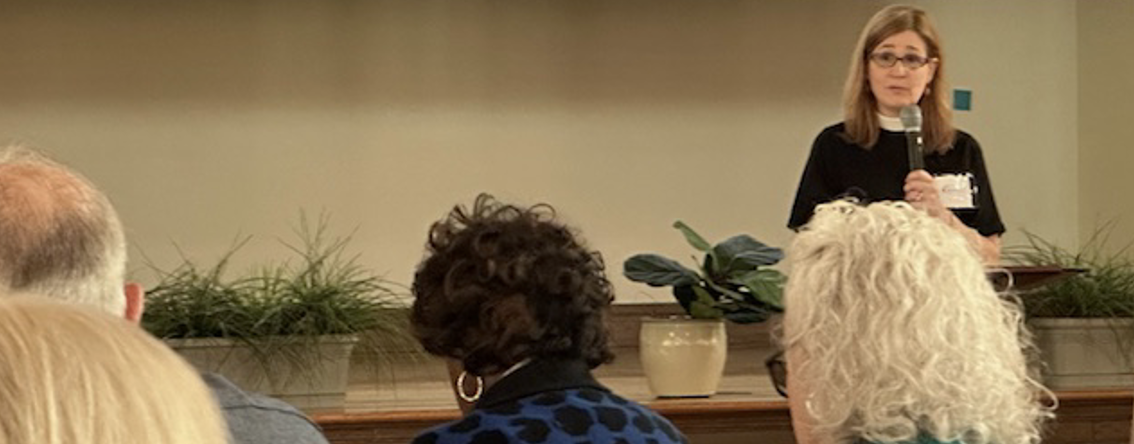
A workshop titled ‘The Art of the Funeral’ was held at St John’s Cathedral on March 2, 2024. Some forty clergy and laity from churches in the Diocese participated including a group of clergy and laity led by the Rev. Dr James Taylor, Rector of St George Episcopal Church the Villages in the Diocese of Central Florida who saw the event advertised last month in this e-Newsletter.
The morning and afternoon workshop was led by the Very Rev. Kate Moorehead Carroll, Dean of the Cathedral. Everyone came away better equipped to answer the questions that the Dean set out for us to explore, i.e. ‘How do we balance gentle pastoring with liturgical intelligence? How can we craft a service that speaks of the life of a person while remaining faithful to our ancient liturgical practices? And how can we translate our liturgy to those who have never experienced it?’
| |
|
Here are some of the insights Dean Kate shared with those participating in the workshop.
The Interview
1. The title of your opening talk, ‘The Denial of Death and the Hope of Resurrection’ strikes a note of opposition or at least contrast. Is our culture death- denying or reluctant to face its reality?
Yes. Our entire medical system is based on the notion of “saving a life” and losing a life” which means that we do not see the life that Christians trust is beyond death. Death in our culture is seen as a failure of our medical system, even when a person is 99 years old!
Christians must recognize that we exist is a foreign land now, that people do not share our hope and need to be introduced to it. This is one of the greatest forms of evangelism open for us today, but it also means being counter-cultural and that is both challenging and scary.
2. Funerals are part of the life and ministry of all of our churches. What can our churches do to better prepare all of us to face the reality of our deaths and to celebrate the life of our loved ones when they die?
We must create what I would call a resurrection culture in our parishes. We must introduce the basics of our faith not just in worship but in practice. Encourage your members to plan their funerals, to write a will, to discuss their dying as a process of being born to eternal life. Resurrection can be practiced in sermons, classes and in daily living.
3. When death comes is there a timeline in pastorally supporting those who are experiencing the death of a loved one and in helping them prepare a funeral?
I would not say that there is a timeline, but I would say that the priest has to be both counselor, teacher and guide in a process that is replete with emotion and is frightening to the bereaved. Often families want to rush the planning of the funeral and even set a date before their loved one has died. We should help them focus on just being present during the process of dying and being born to eternal life, on simple tasks like sleeping enough, eating, staying safe.
The planning of the funeral should not begin before everyone has had a chance to get a good night’s sleep. But again, as pastors and counselors, we need to be flexible and sometimes families insist on premature planning simply to alleviate their anxiety.
To continue reading, please click here.
| |
|
I Julian: A Story That Made All
Things Well for the Author
A book review by Owene Courtney
| |
|
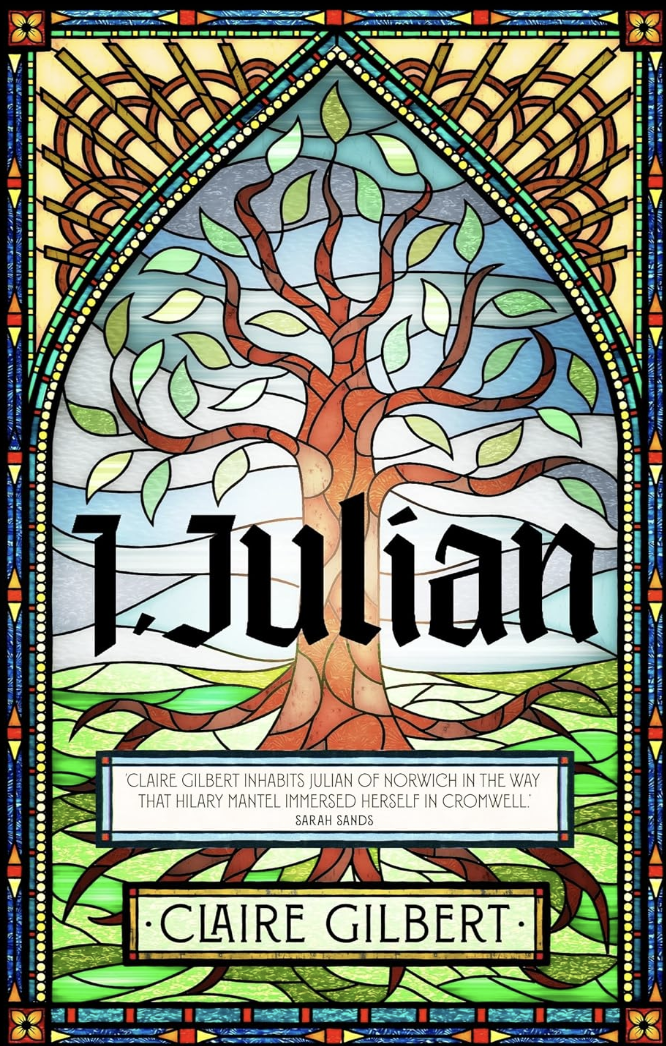
For Claire Gilbert, what began as a “dry as dust Oxford theology degree” ended with the discovery of a bright, lively thinker who ultimately accompanied Claire through two and a half years of grueling cancer. While studying for that theology degree, Claire read Julian of Norwich’s Revelations of Divine Love, the 14th century mystic’s telling of her 16 spiritual revelations from God. Though Julian of Norwich began as the subject of Claire’s doctoral thesis, she soon became Claire’s spiritual companion as she faced cancer.
I, Julian is a fictional autobiography of Julian of Norwich, told in first person because as “I, Claire” emerged from her cancer, she heard a clear call to tell her story in the same voice she had discovered in her autobiography Miles to Go Before I Sleep: Letters on Hope, Death and Learning to Live, (2021). And so she did, following Julian’s instructions to those to whom Julian gave her writings, “Don’t look at me, look at what I saw.”
If you treat yourself to this lovely story within a story, you will discover much about Julian, much about Claire, much about what they were both shown by God, and especially how we the readers might open ourselves to what we are being shown.
In her journey with Julian and cancer, Claire heard God say just as God said to Julian, “You will see that I will make all things well,” and regarding her cancer, Julian told her to “walk towards the cancer, don’t put it away or fight it, but become porous to it, walk through it and joy will emerge.” Claire follows Julian’s instructions and tells Julian’s story as an homage to her.
To continue reading, please click here.
Claire Gilbert. I, Julian: The fictional autobiography of Julian of Norwich—Hardcover, August 15, 2023.
| |
|
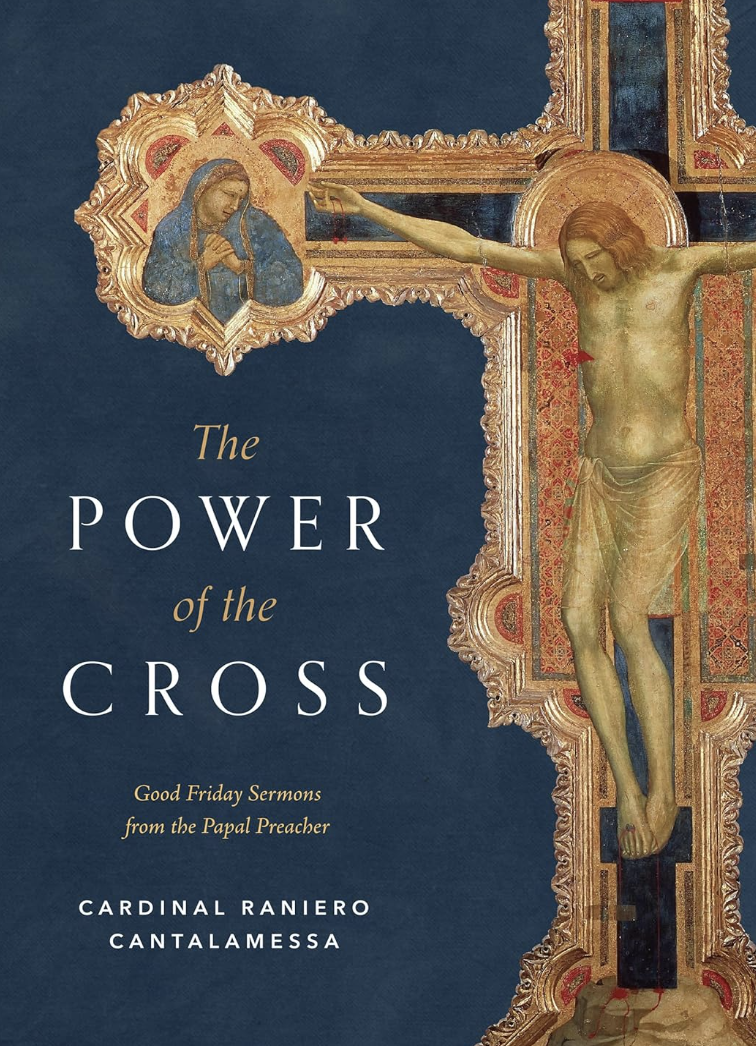
Rainero Cantalamessa. The Power of the Cross: Good Friday Sermons from the Papal Preacher Hardcover – January 30, 2023.
For over forty years, the Capuchin Father Raniero Cantalamessa, in his role as Preacher to the Papal Household, has delivered a yearly homily in St. Peter's Basilica during the Good Friday liturgy. He has offered his meditations in the presence of the last three popes: Pope John Paul II from 1980 to 2005, Pope Benedict XVI from 2006 to 2012, and Pope Francis from 2013.
| |
|
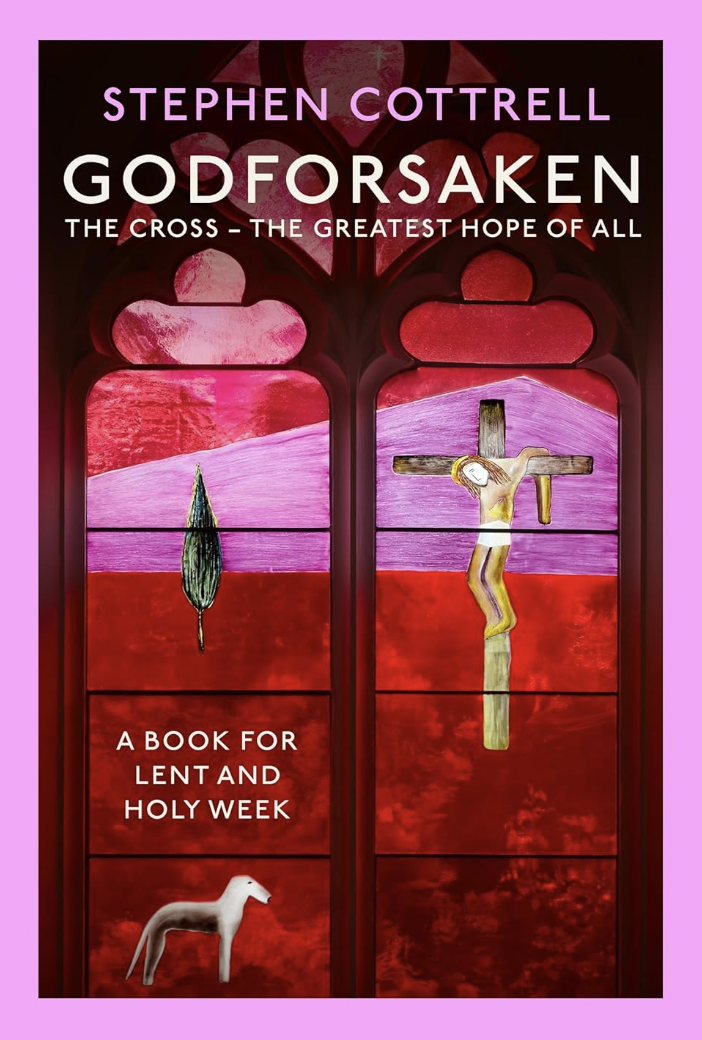
Stephen Cottrell. Godforsaken: The Cross: the greatest hope of all Paperback – March 5, 2024.
The Archbishop of York, Stephen Cottrell ponders the significance of the cry of Jesus from the Cross: ‘My God, my God, why have you forsaken me?’ (Psalm 22). What did it mean for Jesus to have quoted these words at the end of his life?
| |
|
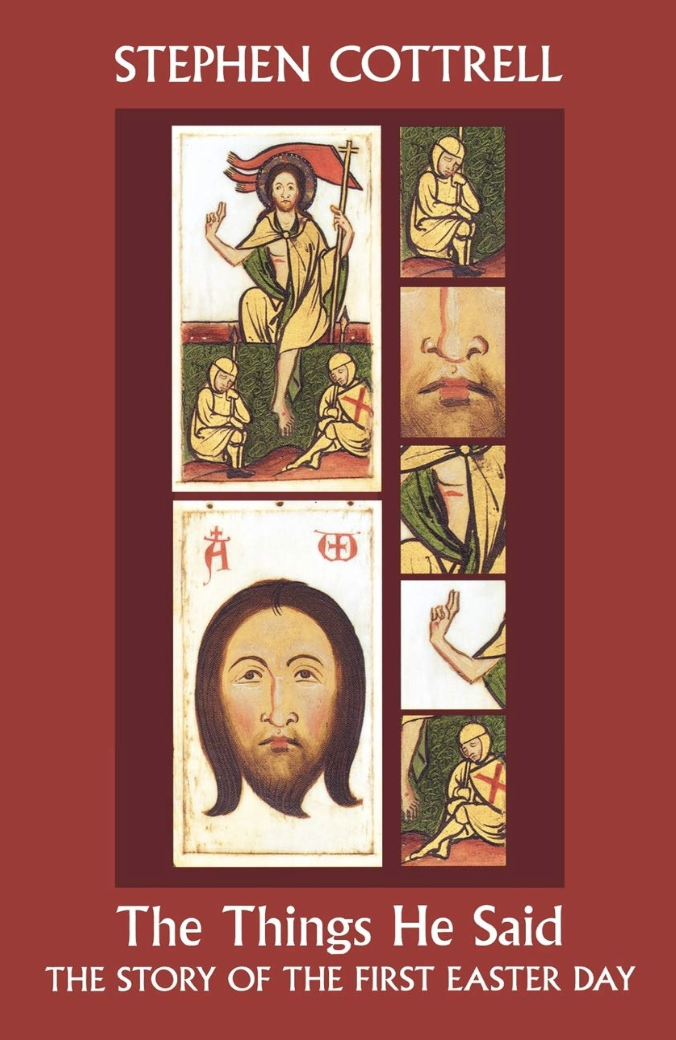
Stephen Cottrell. The Things He Said - The Story of the First Easter Day Paperback – November 20, 2009.
Here Cottrell offers us a very clear way into the spirit of Eastertide by inviting us to consider afresh the words spoken that first Easter day.
| |
|
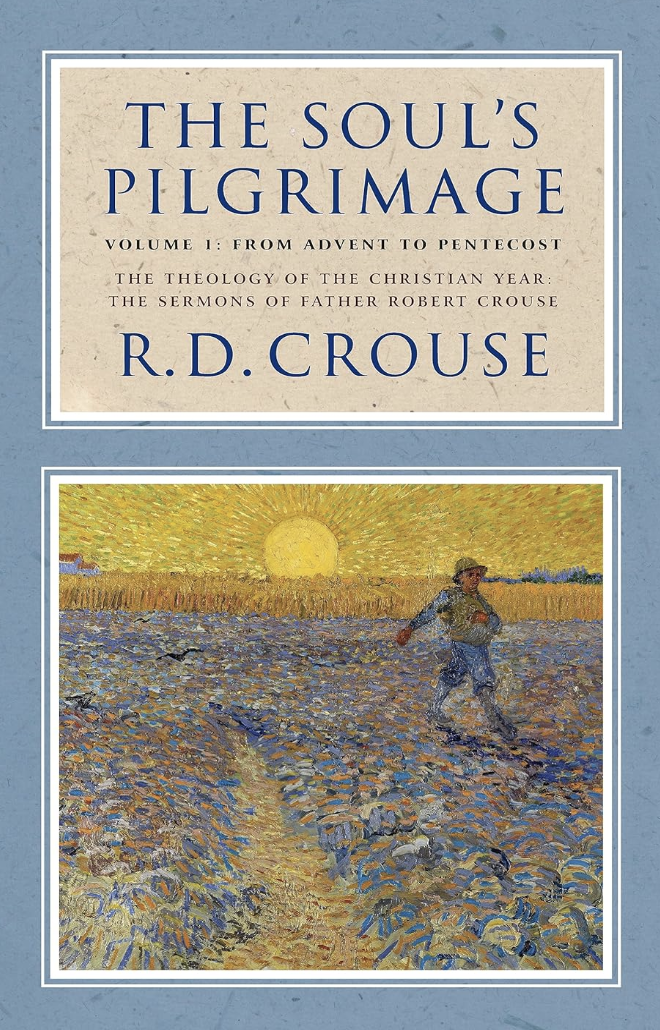
Robert D. Crouse (author) and Rowan Williams (forward). The Soul's Pilgrimage - Volume 1: From Advent to Pentecost: The Theology of the Christian Year: The Sermons of Robert Crouse Hardcover – November 30, 2023.
This renowned preacher and theologian lived much of his life on Crouse Road, Crousetown, Novia Scotia while recognized internationally as an authority on Augustine and Dante.
| |
|
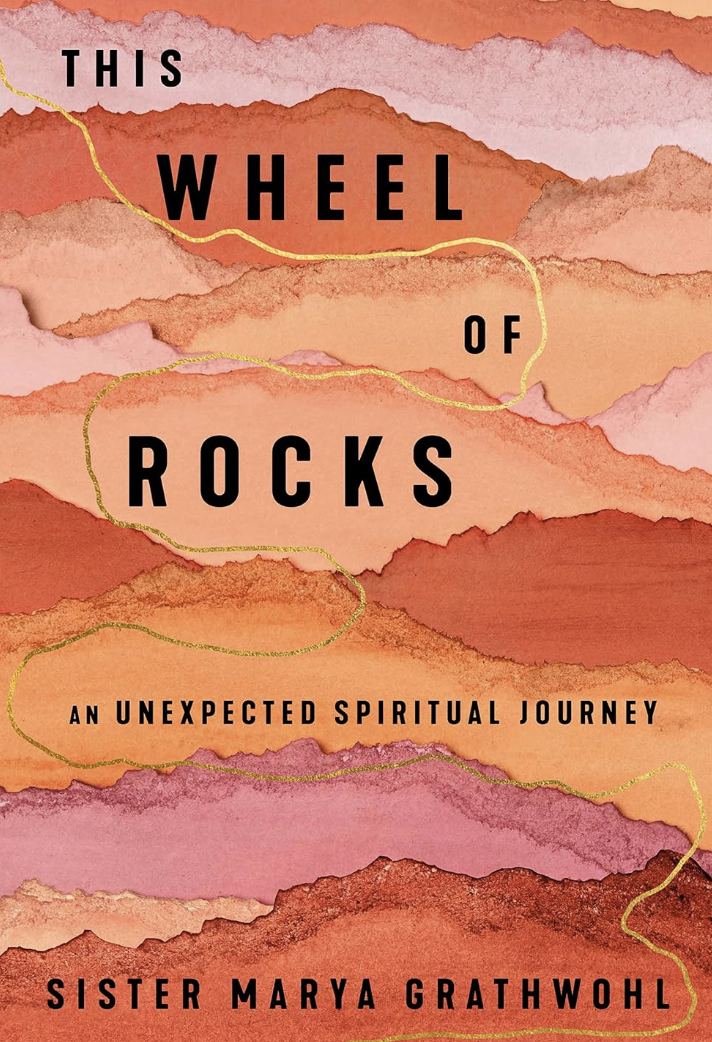
Sister Marya Grathwol. This Wheel of Rocks: An Unexpected Spiritual Journey Hardcover – November 14, 2023.
This Franciscan nun from Ohio, adopted by the Crow and Northern Cheyenne, shares her spiritual blessing of forty years of ministry in Montana adopted by the Native American communities with whom she shared her life. Sister Helen Prejean, author of Dead Man Walking, commends the book: “I predict that the shining knowledge and insights inside these pages will blow your soul wide awake in ways you can scarcely imagine.”
| |
|
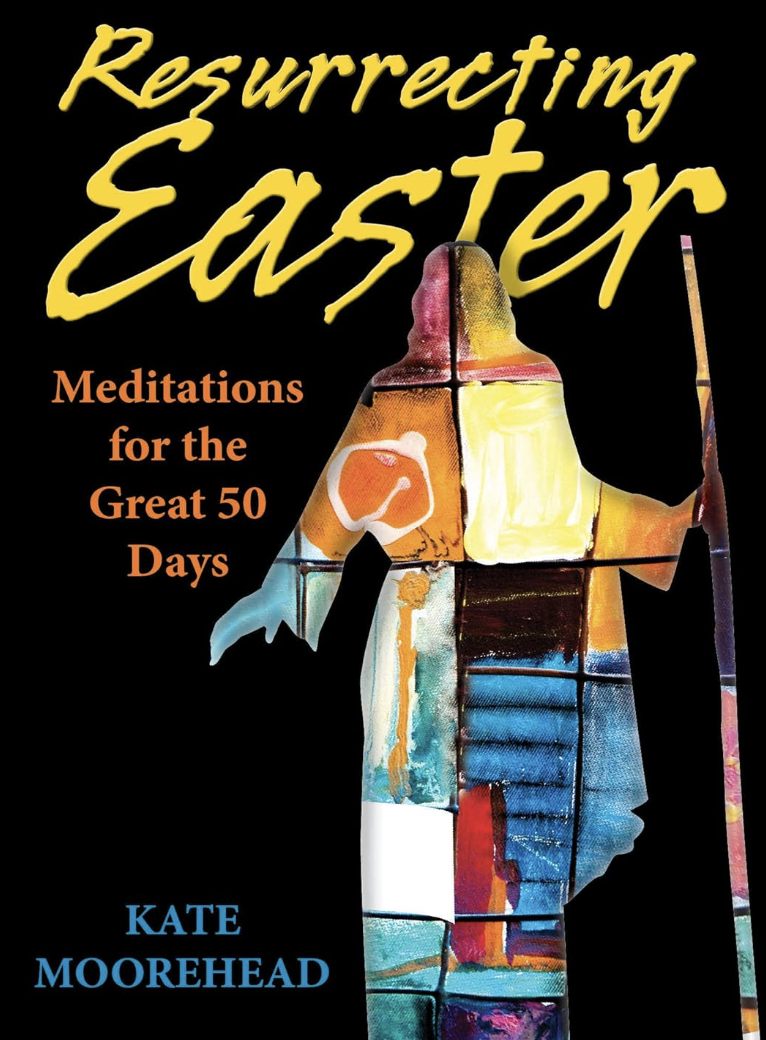
Kate Moorehead Carroll. Resurrecting Easter: Meditations for the Great 50 Days Paperback-- Oct 20, 2013.
Dean Kate offers us a guide to the spirit and joy of Eastertide through these meditations.
| |
|
Cynthia Briggs Kittredge.
A Lot of the Way Trees Were Walking: Poems from the Gospel of Mark Paperback – February 4, 2015.
Cynthia Briggs Kittredge, New Testament scholar and leading contributor to the Fortress series of biblical commentaries offers here a remarkable reflection on Mark’s Gospel through poetry.
| |
|
Marilynne Robinson. Reading Genesis Hardcover – March 12, 2024.
This great novelist and Christian apologist offers a beautiful and fresh interpretation of the book of Genesis.
| |
|
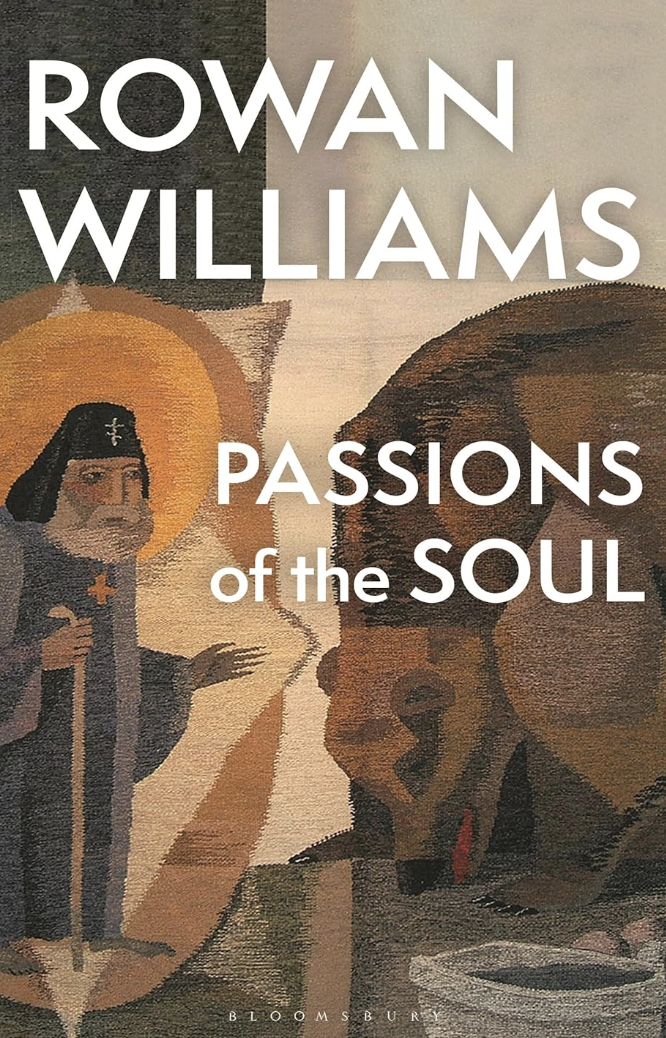
Rowan Williams. Passions of the Soul Paperback – March 19, 2024.
Williams introduces us to the great classics of Eastern Christianity and spirituality to nourish and renew our souls.
| |
Do you Recognize this Man? | |
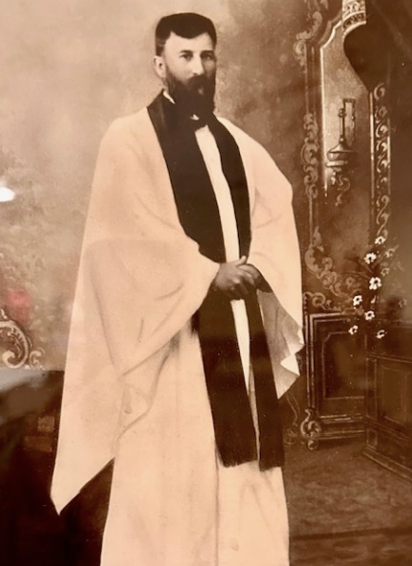
I had an email from the Rev. Deacon Lydia Bush last month titled ‘Do you recognize this Archdeacon Curtis Grubb? with a photograph of him belonging to St James, Lake City. I did not but I forwarded the photograph to Jonathan Rich, author of ‘Spires in the Sun: The Carpenter Gothic Episcopal Churches of Florida’ knowing that he would, and he did. Here is his answer to Lydia’s and my inquiry. | |
|
THE REV. CURTUS GRUBB: A HARDWORKING MISSIONARY
By Jonathan Rich
This remarkable man was the Reverend Curtis C. Grubb, a hardworking missionary who served the Diocese from 1896 to 1930. In the first eight of those years, he had five (and in one year six) missions in his charge. From 1898 through 1903, they were St. James, Lake City; St. Luke's, Live Oak; St. Mary's, Madison; a mission at Glen St. Mary, and one that the Reverend Grubb started himself, St. John's, Columbia City. He was also assigned at times to Macclenny and Alton (a sawmill town three miles from Mayo). As he reported to the Diocese's Church Herald: "You can see that if I am not a busy man I ought to be."
In 1898, in anticipation that Lake City's Florida Agricultural College would soon become the new University of Florida, St. James Church was lifted from its piers at its original location (on the northeast corner of Alachua and Nassau streets) and hauled, probably by oxen over logs, about a half mile south to the northeast corner of South Marion and Brown streets, where it would not only be closer to the college but also the city's main thoroughfare. The move was overseen by the Reverend Grubb, who was St. James' rector at the time.
The Reverend Grubb was also an accomplished carpenter. Once St. James Church was settled on new piers at its Marion Street location, Grubb led the construction of a two-story rectory on the premises. The rectory, like the church, would face Marion Street, but it stood on the opposite side of the churchyard.
When the rectory was completed, Grubb and his wife, whom he had met and married in Liberia while both were working there as missionaries, moved into it with their five children. The rectory built by Grubb was later moved, together with the church and Birley Hall, to the McFarlane Avenue property, where it stands today. All three buildings - church, rectory, and Birley Hall - were moved in a single day, August 23, 1987.
The Reverend Grubb, who served as Archdeacon under Bishop Weed, is mentioned on page 232 (and other pages) of Spires in the Sun. I only wish we had had the space to do greater justice to his life of service.
| |
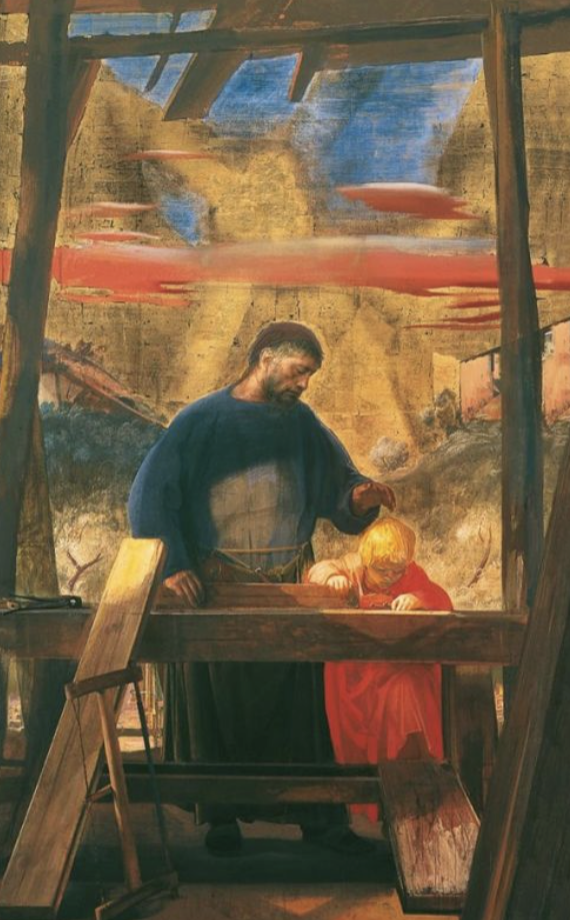
St. Joseph's Day: March 19 | |
|
The Collect
O God, who from the family of your servant David raised up Joseph to be the guardian of your incarnate Son and the spouse of his virgin mother: Give us grace to imitate his uprightness of life and his obedience to your commands; through Jesus Christ our Lord, who lives and reigns with you and the Holy Spirit, one God, for ever and ever. Amen.
| |
|
A Eucharistic Visitor
Luke’s Gospel, tells us about two disciples who are fleeing to Emmaus, following the crucifixion of Christ. The resurrected Jesus joins them on the way, but they do not recognize him. As the three travel together, Jesus explains to them all the Scriptures concerning Him, yet they still don’t recognize Him. When they stop to eat Jesus takes the bread, gives thanks, and breaks it. Immediately they recognized Him, and He disappears from their sight. Jesus has made His presence known by the breaking of bread!
When I started volunteering at St. John’s Cathedral, Dean Kate asked if I would like to take the Eucharist to our shut-ins and become a Eucharistic Visitor. I agreed, not knowing what that entailed, but as an usher I invited folks to the altar and that was wonderful. I could only imagine what it would be like to take and share the body of Christ with someone in need. But what was a Eucharistic Visitor and how is that different from a Eucharistic Minister?
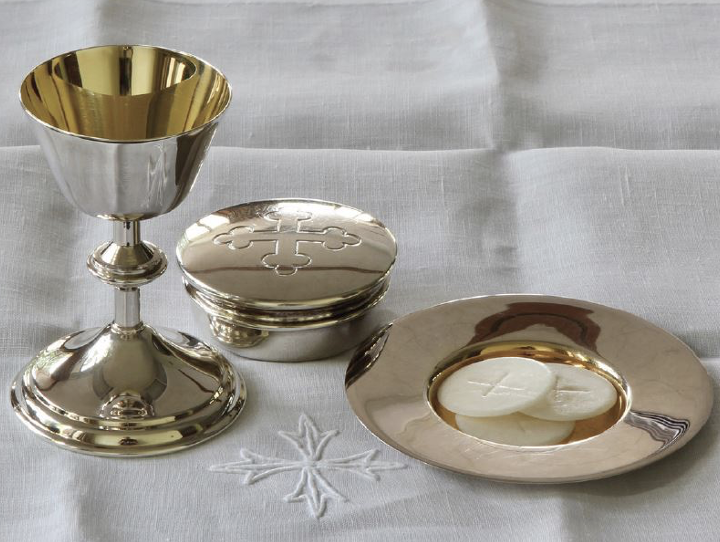
A Eucharistic Minister helps the Priest or Deacon administer the Elements in the church, e.g. a chalice bearer, and a Eucharistic Visitor takes the Consecrated Elements to shut- ins. Both need to be recommended by their Priest and both need training.
Dean Kate signed me up for a Eucharistic Visitor course at Christ Church. We learned how to handle, and perform a small Eucharistic Visitor’s Service and to understand just how important our time and presence meant to our shut-ins.
After arrangements had been made in advance, I prepared for my first visit. Armed with a Eucharistic Visitor’s Kit, I went out both nervous and excited. I visited a long-term member of the Cathedral at a local nursing home. She had mobility issues and was losing her vision. I was so worried about making a mistake, and she was just so glad to see someone, hear about our church, listen, and talk about the Gospel, and participate in a small service.
In her room, I felt like the two of us were just like the two disciples on the road to Emmaus. The presence of Jesus was made known in the breaking and sharing of bread. He was right there with us!
When I left, she thanked me and said what a blessing it was that I had come. But as I walked to my car, I realized that I was the one who had truly been blessed that day. I visited her many times after that, and since I have made hundreds of visits to others. In every case the greater blessing has always been mine, and each time I could feel the presence of Jesus in the breaking of bread and in sharing of time with one another.
Each of us is called to serve. You might be amazed how blessed you will be on your own road to Emmaus. Remember that we are all one body because we share one bread, one cup. If you are interested in becoming a Eucharistic Visitor then speak with your clergy because there are two classes in April 2024.
- Saturday, April 6, 2024 at St. John’s Cathedral Jacksonville FL. 9 till 11 am.
- Saturday, April 27, 2024 at St Luke’s Episcopal Church, Live Oak FL 10 a.m. till 12 p.m. and on Zoom.
Please remember the following if you are attending:
- Students must be recommended by clergy
- Sign up Forms are on the Diocesan Web Site under Forms, Guidelines and Resources/ Eucharist Visitor
- Students must, in advance, attend the online Safeguarding classes (Parish Administrator)
- A Eucharistic Visitor License is good for 5 years
I hope to see you at one of the classes. For more information, please feel free to contact me: mrichardson75@att.net or Hannia Reyes at the Diocesan Office: hreyes@diocesefl.org
Praying that our Lord finds you and yours well.
Archdeacon,
The Ven. Mark Richardson
| |
|
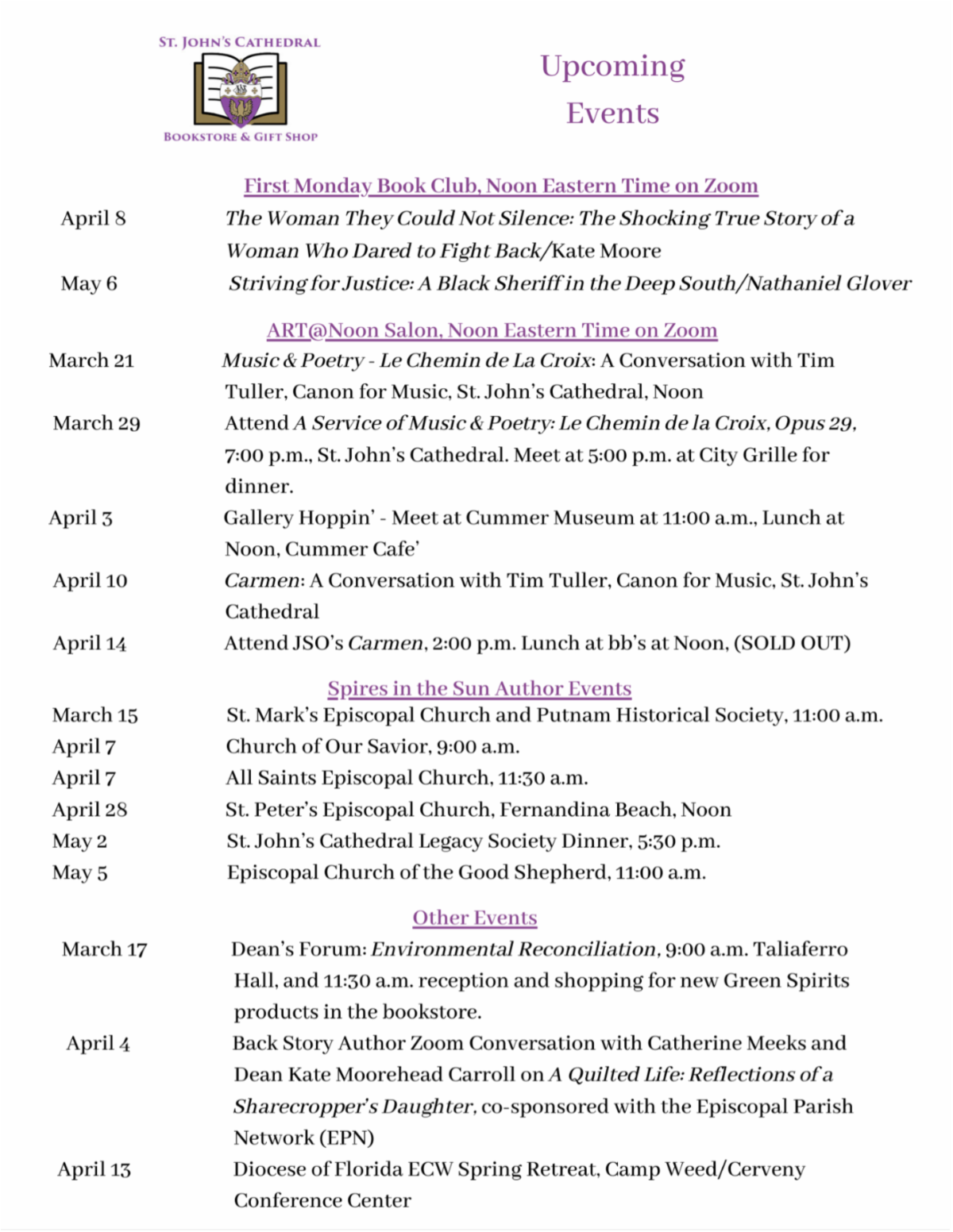
Upcoming Events at the
St. John's Cathedral Bookstore
| | | | |