The Bishop’s Institute for Ministry and Leadership was established in 2015 in the Episcopal Diocese of Florida to provide opportunities to develop lay and clergy leadership in the Diocese; to prepare candidates for ordination to the vocational diaconate and the local priesthood; to prepare candidates for licensed lay ministries and to be a focus for the continuing education for laity and clergy alike. | |
|
‘A new commandment I give to you, that you love one another: just as I have loved you, you also are to love one another. (John 13.34-35.)
Without any deliberate intention, what has emerged over this Lent is that Roman Catholic authors have dominated my reading---- most notably Pope Francis, the American Southern writer Flannery O’Connor and the British mystic and writer Caryll Houselander.
All through Lent I have repeatedly reflected on and wrestled with Pope Francis’s advice on how to fast. In a list of ten ways to fast during Lent, the Pope especially encourages us to think about how to treat others in word and deed. These begin with the advice to ‘Fast from hurting words and say kind words’ and towards the end, ‘Fast from grudges and be reconciled’ and finally, ‘Fast from words and be silent so you can listen’.
The Pope’s advice resonates with the spirit and advice Robert Herrick (1591-1674) gave in his beautiful poem ‘To Keep a True Lent’:
It is to fast from strife,
From old debate
And hate;
To circumcise thy life.
Herrick’s advice, in turn, is a classic update on the Lenten admonitions of St John Chrysostom (c. 347-407) who reminds that fasting involves more than abstaining from food:
Let the mouth too fast from disgraceful speeches and railing. For what doth it profit if we abstain from birds and fishes; and yet bite and devour our brethren? The evil speaker eats the flesh of his brother, and bites the body of his neighbor.
Chrysostom’s advice resonates, in turn, with that of St Paul, who utters the chilling warning:
If you bite and devour one another, take heed that ye be not consumed one of another (Galatians 5.15).
The words of Flannery O’Connor (1925-1964) that I have reflected on, from her letters advising fellow Christians, mostly focus on the ‘deep’ and ‘hidden’ work of God’s grace in our lives. Jesus told his disciples, at the Last Supper, after Judas had gone out,
‘A new commandment I give to you, that you love one another: just as I have loved you, you also are to love one another. (John 13.34-35.)
Flannery O’Connor names the substance of this love as ‘hard, enduring, charity’ --- and so it must be in order to triumph over the terminally embedded sin in the heart and imagination of man. She writes:
The Holy Spirit rarely shows himself on the surface of anything. . . The Church is founded on Peter who denied Christ three times and couldn’t walk on the water by himself. You are expecting his successors to walk on water. All human nature vigorously resists grace because grace changes us and the change is painful. Priests resist it as well as others.
You are not going to find the highest principles of [Christianity] exemplified on the surface of life. . . It is what is invisible that God sees and that the Christian must look for. Because he knows the consequences of sin, he knows how deep in you have to go to find love. To expect too much is to have a sentimental view of life and this is a softness that ends in bitterness. Charity is hard and endures.
In 1952 Flannery O’Connor learned she was dying of lupus. For the rest of her life she and her mother lived on the family dairy farm outside Milledgeville, Georgia. She enjoyed raising peacocks, pheasants, swans, geese, chickens and Muscovy ducks. She was so gifted, eccentric, observant of and forgiving of human nature and so full of grace.
No less deeply spiritual or eccentric was Caryll Houselander (1901-1954). She suffered much in her life but this, and her Christian faith, gave her a natural empathy for people in mental anguish. During the Second World War, doctors began sending patients to Houselander for counselling and therapy. A psychiatrist, Eric Strauss, later president of the British Psychological Society, said of Houslander: ‘she loved them back to life--- she was a divine eccentric’. Fr Ronald Knox, translator of the contemporary English version of the Vulgate Bible, said of Houselander:
"she seemed to see everything for the first time, and the driest of doctrinal considerations shone out like a restored picture when she had finished with it. And her writing was always natural; she seemed to find no difficulty in getting the right word; no, not merely the right word, the telling word, that left you gasping."
The Houselander observation that I keep pondering these last weeks is:
In the world as it is, torn with agonies and dissensions, we need some direction for our souls which is never away from us; which, without enslaving us or narrowing our vision, enters into every detail of our life. Everyone longs for some such inward rule, a universal rule as big as the immeasurable law of love, yet as little as the narrowness of our daily routine. It must be so truly part of us all that it makes us all one, and yet to each one the secret of his own life with God.
Those are my Catholic guides this Lent and I am grateful for them. May the Lord richly bless you, and yours, this Holy Week and Easter.
Douglas Dupree
| |
The Annunciation of the Blessed Virgin Mary | |
|
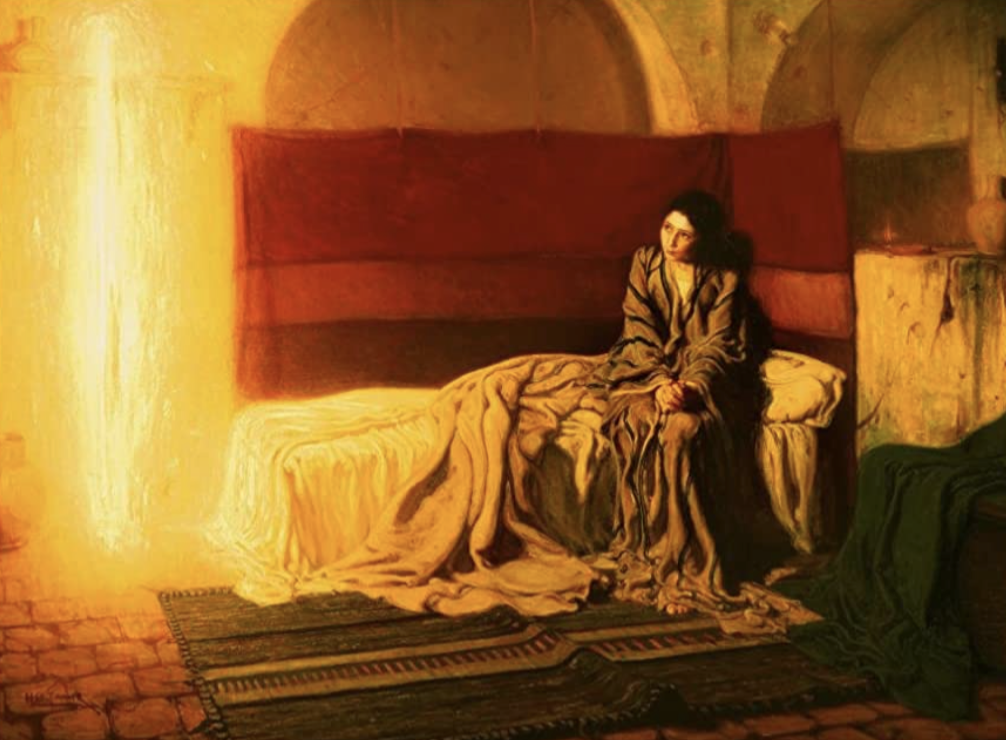
The Annunciation by Henry Ossawa Tanner
(March 25)
| |
|
We beseech thee, O Lord, pour thy grace into our hearts; that, as
we have known the incarnation of thy Son Jesus Christ by the
message of an angel, so by his cross and passion we may be
brought unto the glory of his resurrection; through the same
Jesus Christ our Lord. Amen.
| |
If anyone should be interested in the authors I have mentioned in my introduction to this newsletter here are some suggestions for reading. | |
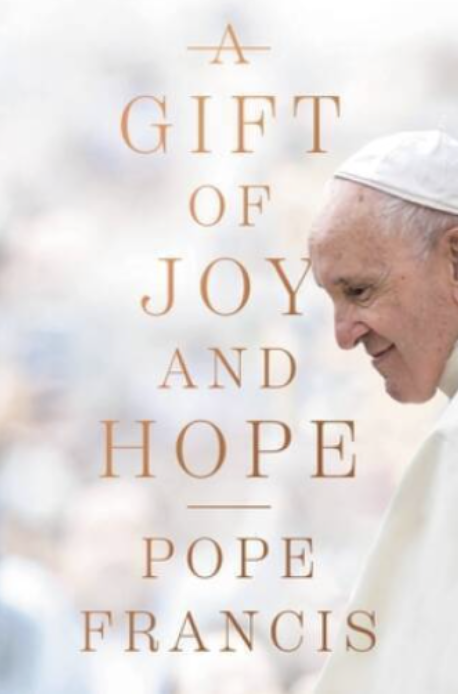
Pope Francis. A Gift of Joy and Hope. (Hardcover, 2022; Paperback coming September, 2023). | |
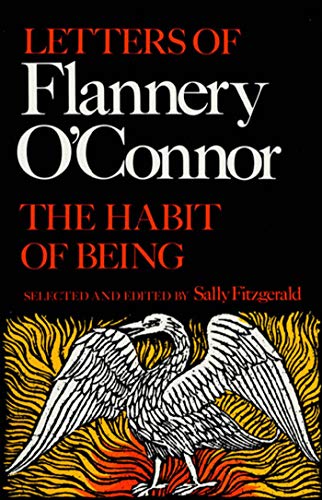
Sally Fitzgerald, editor. Letters of Flannery O’Connor: The Habit of Being. (Paperback, 1988). | |
|
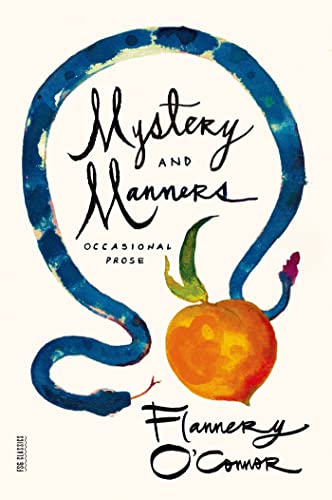
Sally and Robert Fitzgerald, editors. Mystery and Manners: Occasional Prose Flannery
O’Connor. (Paperback, 1970).
| |
Flannery O’Connor. The Complete Stories (FSG Classics), (Paperback, 1971). | |
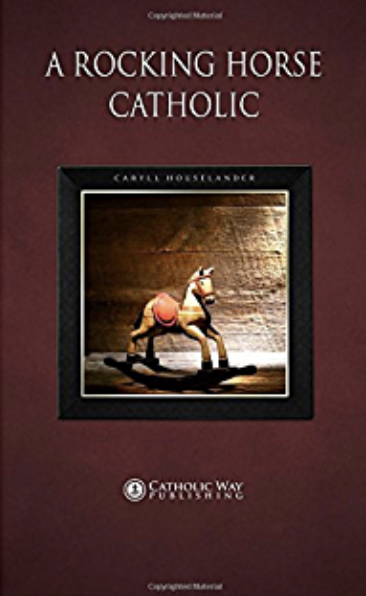
Caryll Houselander. A Rocking Horse Catholic (Paperback, 2013). | |
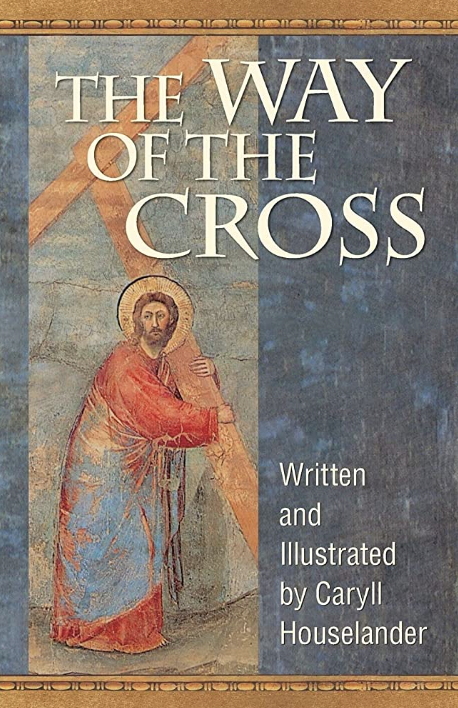
Caryll Houselander. The Way of the Cross. (Paperback, 2002). | |
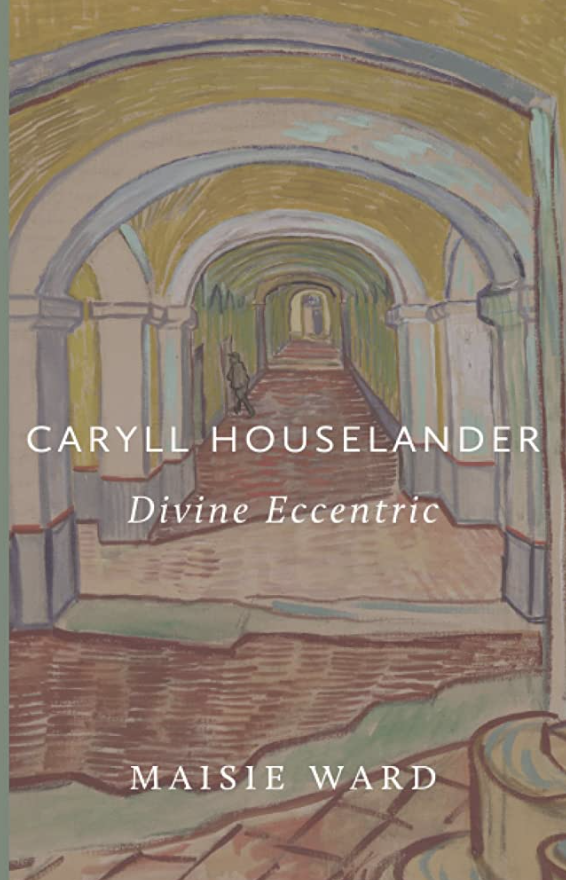
Maisie Ward. Caryll Houselander: Divine Eccentric. (Paperback, 2021). | |
Ronald Knox. A Spiritual Aeneid. (Paperback, 2022). | |
Evelyn Waugh. Ronald Knox. (Paperback, 1988). | |
|
The Red Lion Gift Shop at
St. Mark's Episcopal Church, Jacksonville
| |
|
The Red Lion Gift Shop is located on the campus of St. Mark’s Episcopal Church, Jacksonville.
The St. Mark’s gift shop was reopened and rebranded The Red Lion by Sandi White in August, 2019. Sandi is an experienced businesswoman who ran the popular and successful Green Alligator children’s gift shop in Avondale for some fourteen years.
The Red Lion carries Bibles, prayer books, and a variety of liturgical items suitable for Baptisms, Confirmation and more. In addition, it offers something for all of life’s celebrations, including gifts for children. Profits benefit nonprofit outreach organizations supported by St. Mark’s Episcopal Church.
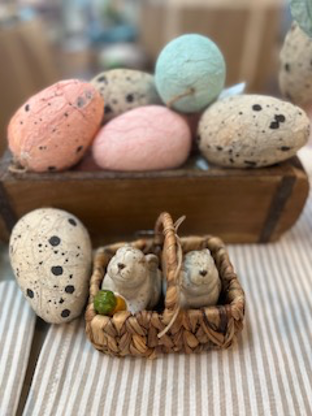
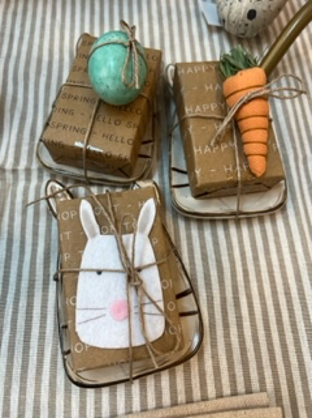
Sandi has stocked the Red Lion with a large and attractive range of gifts appropriate for Easter. Come on by for a warm and friendly welcome at The Red Lion.
Operating Hours and Contact Information
Hours: Monday - Friday from 11 a.m. - 3 p.m. and on Sunday from 10 a.m. - 12:30 p.m.
Address: 4149 Oxford Avenue Jacksonville, FL 32210.
Phone: (904) 389 - 4422
| |
As we enter the last days of the season of Lent and come to Holy Week and Easter, our Quiz challenges us to consider the many ways Holy Week and Easter are observed around the world. |  | |
QUIZ QUESTIONS
1. In which country is there an elaborate Holy Week procession with a large wooden float weighing several thousand pounds carried through the streets for up to eight hours and requiring some eighty persons to carry it?
2. In which country to the people make sawdust rugs on the streets which will later be part of the Good Friday ‘holy funeral procession’?
3. In which country on Good Friday are mirrors covered with black cloth and parents wake their children with twigs?
4. In which country do the people believe that the Lord’s mother was one of the first witnesses to the Resurrection and this is honored by an Easter Day meeting of two processions: one bearing the image of Jesus and the other of his mother?
5. In which country do families make and bring into their homes Easter trees made of branches cut from flowering bushes?
6. In which country does “Spring Cleaning” kick off Holy Week as families begin a major housecleaning while observing a very strict fast throughout the week?
7. In what country is there a major city in which every Holy Saturday people bring their pets to be blessed by the Archbishop?
8. In which country do participants take part in a bare-knuckle fight as part of a local tradition on Good Friday?
9. In which country, on Easter Monday, clad in traditional folk costumes, young men throw water on young women who, in turn, present the young men with beautifully colored Easter eggs?
10. In which country is there an annual Easter Parade and Bonnet Festival on Easter Day?
Here are the countries to choose from for your answers:
a. Hungary
b. Guatemala
c. USA
d. Russia
e. Germany
f. The Philippines
g. USA
h. El Salvador
i. Antigua, Guatemala
j. Poland
Click here to view the quiz answers.
| |
|
A Brief History of Lent
It would be difficult to briefly record the two-thousand-year origins, traditions, and history of the season of Lent. However, I hope this brief overview is helpful for those wishing to know more. Beginning about six weeks before Easter, Lent is a time traditionally set aside for fasting, prayer, and reflection, as we Christians prepare to celebrate the resurrection of Jesus Christ. The English word “Lent” is a shortened form of the Old English word “lencten”, meaning "spring season", as its Dutch language cognate “lente” still does today.
Historians agree that the 40-day period before Easter, known as Lent, was established by the Nicene Council in 325 to eliminate a dispute about the number of days required for the pre-Easter fast. A period of fasting before Easter had dated back to the Apostles. According to St. Irenaeus (c. 130 - 202), in a letter to Pope St. Victor, “variation in observance did not originate in our own day, but very much earlier, in the time of our forefathers." Irenaeus himself was a third-generation disciple after the Apostles, so his dating establishes it as a practice from the very earliest days of the church. The Nicene Council established the 40-day period to remind the faithful the number of days Jesus, as well as Moses and Elijah, went without food in their respective fasts.
Those earliest observances of Lent were focused primarily on new converts as a period of repentance, fasting, and reflection before baptism at Easter. Lent quickly became a general practice churchwide. The 40-day period varied from region-to-region, until Pope Gregory I (590 - 604) established the period of Lent, beginning on a Wednesday 46 days before Easter with a ceremony of ash, and not to include Sundays, which were perennial days of celebration.
The practice of “ashes” was later institutionalized by Pope Urban II who in 1091 decreed that “on Ash Wednesday, everyone clergy and laity, men and women will receive ashes.” The custom was to remind the faithful of their own mortality by receiving a “memento mori” in the form of ashes on their foreheads on the first day of Lent; hence the name Ash Wednesday. It is also a reminder to focus on aligning our hearts with God, and to live in the way that, at our death we may enjoy eternal life with Jesus.
By the 1400s, Christians had begun eating the one meal earlier in the day, and later began to add a smaller meal to keep up their strength for work. Eventually, the one-meal restriction was lifted altogether, and new practices emerged, like the idea of giving up some luxury or need as a personal sacrifice for the season. Over time, “giving something up” became the centerpiece of Lent. Later the modern practice is to take on a new spiritual practice or devotion.
By the Reformation Lent began to fall out of favor. Writing in 1536, John Calvin charged that Lenten practices were not a true imitation of Christ and was abandoned by most early Protestant faiths. Yet within the Lutheran Church, Lent remained an important part of the lectionary, but became voluntary for individual observance. However, within the Catholic Church Lent remained a “Sacred Tradition,” with the force of church law behind it. But over the years, Lent has become less strict in almost every western tradition.
From the 1700’s the practice of Lent fell out of favor in all but the catholic faiths, however, in the 2000’s the traditions of Lent have grown in popularity. In recent years, Lent has seen a renewal amongst Protestant churches. In a time that some call the “post-Christian era,” many evangelicals have gained a new appreciation for the Church’s Liturgical Calendar, and for a season to reflect on their need for the cross and to prepare their hearts to celebrate Christ’s resurrection. Some current day Lent traditions are:
- The Stations of the Cross
- Many churches remove flowers from their altars and veil crucifixes, religious statues that show the triumphant Christ, and other elaborate religious symbols in violet fabrics in solemn observance of the event.
- The use of purple or violet liturgical colors to symbolize penance and mourning.
- Often on Wednesday and Friday evenings there are Lenten studies and communal Lenten supper, which may be held in the church's parish hall.
- Many continue to mark the season of Lent with a traditional abstention from the consumption of meat, most notably among Lutherans, Roman Catholics, and Anglicans, and mostly only on Fridays.
-
The “Gloria in excelsis Deo”, which is usually said or sung on Sundays is omitted and many do not say or sing “Alleluia” during Lent.
- The fourth Sunday in Lent, which marks the halfway point between Ash Wednesday and Easter Sunday, is referred to as Laetare Sunday. Due to the more "joyful" character of the day, vestments are often a rose color instead of violet.
The 40 days before Easter is a time of preparation. A period for prayer and fasting, penance and almsgiving. A time to acknowledge our sins, repent, and refocus on Jesus. Lent reminds us, of our need for a savior. It begins on Ash Wednesday when we receive ashes and are told “you are dust, and to dust you shall return.” Lent ends with the celebration of Easter and the knowledge that Jesus defeated death for all of us, and that we too can share in His eternal life. Let us prepare and celebrate as the old hymn retells “Christ is risen, He is risen indeed.”
Praying that our Lord finds you and yours well,
The Ven. Mark Richardson, Archdeacon
| |
|
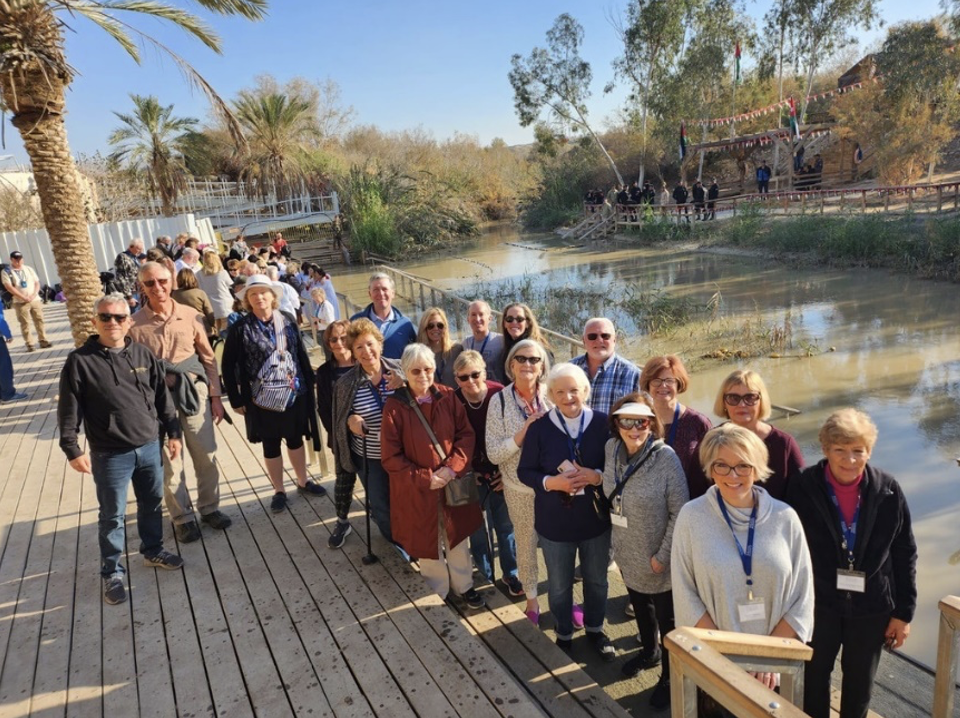
The New Year brought a marvelous opportunity for a group of clergy and lay persons from the Diocese of Florida to make a pilgrimage to the Holy Land. The Rev. Aaron Smith, Rector of Grace Episcopal Church, Orange Park led the pilgrimage on Jan. 17- 25.
The clergy members were: The Revds. Charlie Erkman (Holy Comforter, Crescent City), Laura Magevney, St. Mary’s, Jacksonville), Sarah Minton, (St. Mary’s, Green Cove Springs), Tanya Scheff (St. Paul’s, Quincy) and Steve Seibert (St. Cyprian’s, St. Augustine).
On returning, Mother Sarah Minton said,
Certainly, my experience of walking where Jesus walked, talked, listened, healed, called, and loved to the end has had a profound effect on the way I see the world and read scripture.
She was particularly drawn to the image of the Jerusalem Cross as a large cross in the center with four smaller crosses surrounding it and the interpretation of it as
the large cross representing Christ and the four smaller ones representing Matthew, Mark, Luke and John . . . Now when I see the Jerusalem Cross and wear one, I have new understanding of what it means to have been to Jerusalem and what God has called me to do in proclaiming the Word. . . My pilgrimage energized my Spirit like never before!
The clergy of the Diocese were treated to a kind of virtual pilgrimage to the Holy Land at their annual Spring Clergy Conference at Camp Weed and Cerveny Conference Center February 23-24. The Rev. Heidi Kinner, Chaplain of Christ Memorial Chapel, Hobe Sound, Florida, was guest speaker. An archaeologist and Biblical scholar, she took as her topic ‘The Bible in the Art of the Holy Land’. She spoke on a number of artists who painted the Holy Land and Biblical scenes including the American artists Frederic Edwin Church, Lockwood de Forest, John Singer Sargent and the protégé of Thomas Eakins, Henry Ossawa Tanner, (whose father was a bishop in the African Methodist Episcopal Church). The French government made Tanner a chevalier of the Legion of Honour in 1923.
I have been asked by the company that organized Fr Aaron’s pilgrimage to lead a pilgrimage to the Holy Land and Jordan at the end of October 2023 (see the advertisement at the end of this Newsletter). I would be very happy to do so if there is sufficient interest in another trip this year.
Douglas Dupree
| 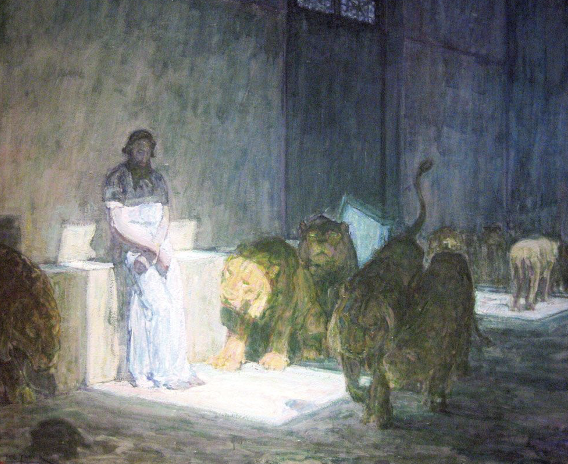 | Daniel in the Lions’ Den by Henry Ossawa Tanner (1859-1937) | |
|
Pilgrimage to the Holy Land & Jordan:
Oct. 24 - Nov. 4, 2023
| |
|
This fall on Oct. 24 - Nov. 4, 2023, the Rev. Canon Douglas Dupree will be hosting a Pilgrimage to the Holy Land and Jordan, Asia. On the trip you'll explore destinations such as Mt. Beatitudes, Megiddo National Park, Nazareth, Sea of Galilee, Bethlehem, Jerusalem, the Dead Sea and more!
To view the brochure, please click here. For more information, please contact the Rev. Canon Douglas Dupree: ddupree@diocesefl.org.
| |
St. John's Cathedral Psalters for Sale | |
|
St. John's Cathedral, Jacksonville is selling psalters with 150 Psalms in an easy-to-read, musician-friendly format. The following is featured in the psalter:
- Coverdale Translations
- Standardized 2/4 Meter throughout
- Marked with Pointings, Dynamics and Repeats
- Biblical Names Pronunciation Guide
- 8.5" x 11" with a Flexible Binding to Lay Flat
- Title on Spine for Easy Storage on Bookshelves
- Six Zero-fray Ribbons to Use as Page Markers
- Index includes title, tune, composer, key
- 12 pt font, Tunes on Every Page
The psalters are $68 with a Special Offer of a 10% discount for churches. If you are interested in ordering, please contact: St. John's Cathedral Bookstore & Gift Shop Attn: Kathryn Bissette.
| | | | |