|
| |
|
Team CSSA E-News - September 9, 2016
|
|
|
COMMENTARY: WHAT U.N. FIREARM MARKING MEANS FOR YOU, THE CANADIAN FIREARM OWNER
|
|
* This is Part 1 in our series on the UN Marking Scheme and what it means for Canadian gun owners.
The Firearm Marking Regulations, introduced on December 23, 2004, have been postponed for 11 consecutive years by 3 separate governments for one simple reason: No government wanted to be responsible for killing Canada’s legitimate civilian firearm industry.
Until now.
On June 1, 2017 – just ten short months from now – the shoe drops.
For most of us, the United Nations Firearm Marking scheme is an esoteric set of rules that really have little meaning for regular Canadian gun owners. The common refrain we hear is this: “So what if the gun has an extra marking on it. That doesn’t mean anything to me.”
If you don’t care about paying an extra couple of hundred dollars for every single gun you purchase, then you are absolutely correct. The UN Firearm Marking scheme means nothing to you.
However, most Canadians are not so eager to fork over an extra $200 on each new firearm they purchase. Under the UN Marking scheme, an inexpensive firearm that is worth $150 today would, because of UN Marking, become a $350 firearm after June 1, 2017.
That’s utterly insane and that’s why this issue is so important.
How can a small mark added to a gun possibly cost so much? To understand why the costs are so high it is necessary to examine Canada’s Bill C-10 Regulations on Firearm Marking.
First, Canada’s Bill C-10 Regulations state precisely how the marking must be applied to a firearm:
4. (1) The firearm shall be marked by permanently stamping or engraving on the firearm’s frame or receiver the word “Canada” or the letters “CA” and
(a) in the case of a manufactured firearm, the name of the manufacturer and the firearm’s serial number; and
(b) in the case of an imported firearm, the last two digits of the year of the importation.
(2) The markings shall
(a) be legible;
(b) have a depth of at least 0.076 mm and a height of at least 1.58 mm; and
(c) subject to subsection (3), be visible without the need to disassemble the firearm.
In short, this means every single firearm imported into Canada must have “Canada” or “CA”, a serial number, the manufacturer's name (on the receiver) and a two-digit code for the year it was imported.
No big deal, right?
Canada imports roughly 350,000 firearms every year. If these regulations come into force on July 1, 2017 as scheduled, every single firearm imported must have this information engraved on its receiver in plain view.
Firearms are made from many things: different grades of steel, aluminum, titanium, alloys, brass, case hardening, plated metals and polymer frames/receivers. The only practical method for applying the country code and year of import to firearms is Computer Numerically Controlled (CNC) Laser Engraving. It is the only method that can cope with such a wide variety of materials effectively.
Each CNC laser-engraving unit costs nearly $100,000. The fixtures to hold firearms in the CNC machine during engraving cost another $3,000 or so FOR EVERY MODEL OF FIREARM imported.
You cannot use the fixture for a Beretta 92 handgun for a Sig Sauer P-226. Nor can you use the fixture for a Mossberg 12 gauge shotgun on a Ruger 10/22 rifle. Every make and model of firearm requires a laser engraving fixture specifically for that make and model at a cost of roughly $3,000 a piece. Imagine just 100 different makes and models of firearms. That’s $300,000 for a single fixture for each of those firearms.
It gets worse.
These astronomical costs must be duplicated for every single firearm importer and firearm manufacturer in Canada. Every single penny of those costs are passed on to consumers in the form of higher firearm prices – higher by an estimated $200 per firearm.
Why can't the manufacturers apply the marking when the firearm is manufactured? Because Canada’s Bill C-10 Regulations state precisely when those markings must be applied:
3. (1) Every individual, business or public service agency that imports a firearm shall ensure that the firearm is marked in accordance with section 4 before the 60th day after its release as defined in subsection 2(1) of the Customs Act or before transferring the firearm, whichever occurs first.
Further to this point is the spirit of the C-10A legislation. The UN Marking is intended to be an import mark, not an export mark. If the manufacturer marks the firearm with the UN-correct marking, it only serves to identify that the manufacturer intends to ship the firearm to Canada, not that the firearm has actually been imported to Canada.
Firearms cannot be marked at the point of manufacture. Firearms can only be marked AFTER they are released from Canadian Border Services Agency (CBSA) and they must be marked within 60 days of their release from CBSA. There are many valid reasons for this, but for Canadian gun owners it cannot be done at the cheapest point in the manufacturing process, at the gun manufacturer’s facility. It must be done in a Canadian facility that, at this time, does not exist.
Those facilities must be built, inspected and set up for firearm marking. Let that sink in for a moment. Those facilities do not exist in Canada. They must be created from scratch and that is very expensive.
Do you want to guess who will be paying for it?
The Firearm Marking regulations will come into force on June 1, 2017, unless the Trudeau government can be convinced that the regulations are not in the best interests of Canadians.
Our partner organization, the Canadian Sporting Arms and Ammunition Association (CSAAA), the firearm industry group that lobbies on behalf of hunting and shooting related businesses in Canada, estimates the total cost to apply the UN Marking to a firearm is just over $200 per firearm.
This estimated cost includes CNC Laser Engraving machines, training and salary of the technicians required to run those machines, the new facilities that must be built or leased to house all of this, along with the labour to unpack and repack firearms from their factory packaging once the process is complete. It also includes the labour and computer systems required to track all of this activity so it can be reported to the United Nations.
The CSAAA estimates the cost of processing all firearms imported into Canada at about $60 million per year. This does not include the cost of purchasing the equipment and training the people necessary. This is the cost PER YEAR after all the marking equipment is purchased, configured, the staff trained and the site is operational.
Can Canada’s firearm industry really withstand a 60 million dollar tax PER YEAR? It’s highly unlikely.
Firearm manufacturers, importers and distributors simply do not have the profit margins to allow them to absorb these astronomical additional costs. Every penny of this cost must be passed on to consumers: Canada’s firearm owners.
Marking every firearm that enters Canada is no small task physically or financially. It is, however, an excellent way to radically limit the importation of firearms without actually banning firearms from civilian ownership.
If you disagree with Canada’s looming implementation of the UN Firearm Marking Regulations, please write to the following people and express politely why you believe implementing these regulations is a very bad idea for Canada.
You can find contact information for Members of Parliament and Minsters here: http://www.parl.gc.ca/Parliamentarians/en/members
|
|
|
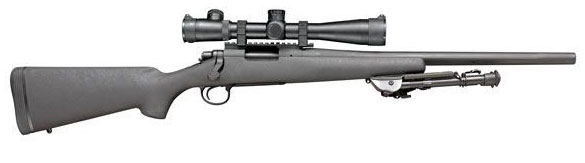
REMINGTON DESIGNED THE 700P RIFLE
FOR POLICE DEPARTMENTS ...
|
|
|
Now we're giving one away.
Model 700P LTR (Light Tactical Rifle), chambered for .308 Win, features a slimmed down stock to improve portability and reduce weight. The flutes in the 20" LTR not only assist in weight reduction and heat dissipation, but are engineered to enhance barrel rigidity for pinpoint accuracy.
Like its big brother, the LTR stock is laid up around an aircraft-grade aluminum bedding block that runs up the entire length of the receiver. It has a textured, black, non-reflective finish and comes with sling swivel studs.
All you have to do is make a $20 donation to the CSSA, and we will give you a free chance to win this great gun. Better yet, we will give you three chances to win with a $50 donation and a $100 donation can get you TEN CHANCES and a free one-year membership to the Canadian Shooting Sports Association.
This superb rifle will find a new home on September 30, 2016.
Please send your donation to:
700P, c/o CSSA (see our office address below) or call 1-888-873-4339.
Please note: The winner must have a valid Canadian firearms license.
|
|
|
CLASS ACTION 10/22 + 10
WHAT YOU NEED TO KNOW
|
|
|
Individuals are advised not to use, transfer, dispose of, alter or modify, or transport these magazines at this time.
At this time, due to the controversy, importers, dealers and individual owners are advised to stop sales and transfers of all 10/22 high capacity (over 10 rounds) rifle magazines. Businesses are cautioned not to attempt to “pin” magazines unless their licenses specifically authorize work on prohibited magazines.
We are advising against businesses or their customers surrendering or returning these magazines to anyone at this time.
If you are the consumer owner of one of these magazines, your participation in the action is very much desired.
THERE IS NO FEE FOR YOUR PARTICIPATION, BUT DONATIONS TO THE ACTION ARE WELCOME.
DONATIONS CAN BE CALLED IN AT 1-888-873-4339 OR MADE AT THE CSSA WEB STORE:
10/22 +10 Class Action Donation
We also accept donations by Electronic Money Transfer (EMT) to e-transfer@cssa-cila.org
From consumer owners we need:
- A communication informing us of your willingness to participate in a class action lawsuit. Please include all contact information;
- Brands and models of 10/22 +10 round capacity magazines currently in inventory and the value of the inventory if possible;
- Digital copies of product packaging, manufacturers’ or distributors’ product sales information, product press releases if possible;
- Any information, actions or comments by your Chief Firearms Officer, Inspectors, RCMP or any other law enforcement agency if possible.
Consumer owners interested in joining the class action are asked to email the above information to the CSSA at
classaction@cssa-cila.org
.
For more information, please call the CSSA at 905-571-2150.
|
|
|
Goodale rescinds Conservative directive that opened door to gun 'misclassification'
By Elizabeth Thompson, CBC News
|
|
|
Then and now: Public Safety Minister Ralph Goodale (above) and former Minister Steven Blaney (right)
|
|
|
|
Former public safety minister Steven Blaney issued a secret directive in the dying days of the Conservative government that opened the door for firearms to be classified according to a gun manufacturer's suggestion, CBC News has learned.
Responding to complaints from firearms advocates and the industry, Blaney's directive gave the RCMP 180 days to evaluate a gun, decide its classification and issue the Firearms Reference Table (FRT) number needed to import that model into Canada.
If that deadline wasn't met, the firearm would automatically be classified according to the manufacturer's suggestion and the FRT number would be issued.
The directive sent to RCMP Commissioner Bob Paulson, personally signed by Blaney, is dated July 30, 2015 — three days before former prime minister Stephen Harper plunged Canada into a general election campaign. It was also just a couple of days after Blaney met with members of the government's Canadian Firearms Advisory Committee, which under the Conservatives was dominated by firearms advocates.
The next day, Blaney issued a news release to announce he had overturned the RCMP's decision to classify the Ceska Zbrojovka CZ-858 rifle and certain Swiss Arms firearms as prohibited firearms — but there was no public announcement of his directive to Paulson.
In fact, Ralph Goodale, the current Liberal minister of public safety, said he only learned of Blaney's directive during one of the briefings he received from officials months after he became minister. He rescinded the directive on June 6, less than a week after he learned of its existence.
In an interview with CBC News, Goodale said one of the problems with Blaney's directive was its timing.
"That's the one thing that immediately sent up a red flag — that it came just two or three days before an election was called. That is not the right way to make public policy — at the last minute, on the back of an envelope."
Goodale said ministerial directives are supposed to dictate changes to policy, not administration, and Blaney's directive imposed an "arbitrary timeline."
"For those three reasons, the very lateness of the directive, the fact that it was misusing, in my judgment, a policy instrument to deal with an administrative issue, and, thirdly, that it was entirely arbitrary and could lead to the misclassification of certain weapons and therefore present a danger to public safety — for all of those reasons we rescinded the directive."
Goodale said he was advised no firearms were classified, or were about to be classified, under the directive. "We were able to rescind it quickly enough that it did not have any negative effect."
"If we had left it in place the negative effect might have developed over time."
However, Tony Bernardo of the Canadian Shooting Sports Association said he knows of one firearm that was classified by the RCMP while the directive was in effect. While the application from an importer had been languishing for four years, it was suddenly processed after the directive was issued. The RCMP determined the firearm should be prohibited despite the manufacturer's recommendation that it be classified as restricted.
Blaney defends his decision to issue the directive.
"This ministerial directive honours our commitment to always stand up for law-abiding hunters, farmers and sport shooters and I will continue to do so in the future to ensure legal firearm owners are not treated like second-class citizens by this Liberal government," he said in a statement to CBC News on Thursday.
Classifications and variants
Blaney's directive goes to the heart of one of the most contentious issues in Canada's debate over gun control: who should have the power to classify firearms and which firearms should be classified as non-restricted, restricted or prohibited. The higher that classification, the harder it is to purchase a firearm and the more onerous the rules surrounding it.
Currently, the RCMP's Canadian Firearms Program classifies guns and assigns an FRT number to new models entering the country. According to a government briefing note obtained by CBC News, "restricted and prohibited firearms require physical verification, while the verification of non-restricted firearms is done over the telephone by CFP staff during the registration process."
The briefing note says experts began physical examinations of several types of guns in 2009 "following several misrepresentations by importers and verifiers." Having such experts physically examine firearms is also intended to reduce the chances a firearm ends up having to be reclassified after being imported to Canada.
The RCMP has angered gun enthusiasts for changing classifications.
For example, according to a 2014 briefing note, the RCMP determined in 2013 that CZ-858 models previously classified as restricted or non-restricted based on barrel length "were converted fully automatic Vz58 firearms, and, therefore, prohibited."
In 2001, the program classified the Swiss Arms family of rifles as restricted or non-restricted depending on the barrel length, "based on documents provided by the manufacturer and the importer, which indicated incorrectly that the firearm was a variant Swiss Arms SG540."
In 2013, though, the RCMP's firearms program received information that a prohibited version of the firearm was available and conducted a physical inspection.
"As a result, the RCMP has determined that all of the Classic Green Rifles and its variants are descendants of the prohibited Swiss Arms SG 550 firearms and are prohibited firearms under the Criminal Code," officials wrote, adding that there are more than 2,000 of the Swiss Arms family of rifles in Canada.
Frustration over delays
In issuing his directive, Blaney cited the reclassifications of the CZ-858 and the Swiss Arms rifles and "significant delays in processing new requests for classification of firearms."
"In fact, I have had a Canadian business bring to my attention a case in which they waited three years to receive an answer. In my view, this is not the manner in which we ought to respond to the needs of law-abiding Canadians, including Canadian business," he wrote.
Blaney then outlined a series of eight steps the RCMP were to follow in handling applications for FRT numbers, from acknowledging all requests for classification within two days to the automatic classification of a firearm according to the manufactures' recommendation if an FRT number was not issued within 180 days.
The directive also spells out a process for reviewing classifications, saying the RCMP must render a decision within 30 days of a review application being made and, subject to any review applications, an FRT entry "is not to be altered once it has been in place for 365 days."
Blaney's directive also curbed the program's latitude for classifying new models of guns, saying "a new entry in the FRT is not to be created for a firearm that is substantially similar to a firearm already in the FRT."
Wendy Cukier, president of the Coalition For Gun Control, said Blaney's directive could have resulted in people being able to obtain firearms that shouldn't be available in Canada.
"We know that there are always efforts to circumvent the restrictions on firearms and clearly what could have happened is what we have seen happen before, which is that firearms that ought not be available to civilians come into the market because small changes have been made (and) they are called something different."
Bernardo, however, said the directive was simply an attempt to introduce service standards to a department that has sometimes taken years to issue classifications for some firearms.
"When a business is trying to make a living, especially a small business, that's completely unacceptable."
Bernardo, who sat on the Conservatives' firearms advisory committee, said Blaney's directive came after the committee flagged the delays to the minister.
Goodale said the RCMP is preparing a protocol to ensure classification is done "in a timely way" without compromising public safety.
READ THE MEMO HERE
|
|
|
Trudeau government rejects e-petition to lift restrictions on AR-15
|
|
|
By Elizabeth Thompson | CBC News | September 5, 2016
|
|
Prime Minister Justin Trudeau's government has shot down one of first e-petitions to go before Canadian Parliament, saying it has no plans to change the restricted status of the popular Armalite AR-15 rifle.
In a response to the petition, quietly tabled in the House of Commons this summer while it wasn't sitting, Public Safety Minister Ralph Goodale said he has "no intention" of invoking a section of Canada's criminal code to reclassify the firearm as unrestricted.
Goodale said police should be the ones to decide how each firearm in Canada is classified.
- Canada's restricted gun ownership increased 9.5 per cent in 2015
- Orlando shooting prompts questions about Tory MP's support for AR-15 rifle e-petition
"The government is committed to putting decision-making authority about weapons classification back into the hands of police, not politicians," wrote Goodale, pointing out that the government believes in striking a balance between public safety and ensuring firearms owners are treated fairly under the law.
"The Royal Canadian Mounted Police is responsible for the technical determination of the classification of firearms in accordance with the criteria stipulated by Parliament in the Criminal Code."
25,000 signatures gathered online
Goodale's comments come in response to an e-petition launched by Marc Bennett of Cornerbrook, N.L., and sponsored by Conservative MP Bob Zimmer. The petition, calling on the government to reclassify the AR-15 as unrestricted, garnered 25,249 signatures.
It is legal to own the AR-15, although its restricted status means that gun owners must have a restricted firearms licence and are only supposed to use them for specified purposes, such as target shooting at an approved club or range.
The petition points out that the AR-15 is popular with gun owners, many of whom believe it was classified as a restricted firearm based more on its cosmetic appearance. They say it is no more dangerous than many other, non-restricted rifles.
"This rifle is the most versatile hunting rifle in the world," the petitioners wrote. "The calibre can easily be changed to meet lawful provincial hunting requirements from small game to big game animals, without the need to purchase multiple gaming rifles."
However, the AR-15 has become a lightning rod in the debate over gun control, after it was used in a number of mass shootings in the United States like the one at Sandy Hook Elementary School in Connecticut and a movie theatre in Aurora, Colorado.
Variant of military rifle
Goodale said the AR-15 is restricted because it is "a named variant of the restricted M-16 rifle.
"The AR-15 is restricted because of its lineage to the military-issued M-16 assault rifle," he wrote.
Gun advocates were quick to criticize Goodale's decision.
Tony Bernardo of the Canadian Shooting Sports Association said he expected the government to be "intransigent" and refuse to reclassify the AR-15 because he says it is a "no win" issue for the Liberals. He said he is particularly disturbed about the government's decision to leave firearm classification to police.
"What is very concerning is that we'll let the police decide what our firearms laws are," he said. "The last time I looked, we elected parliamentarians to the House of Commons to decide what our laws are, not police officers."
"Police officers jobs are to enforce the law - not create it."
Gun control advocates, however, applaud Goodale's position.
"I think that's an appropriate decision," said Wendy Cukier of the Coalition for Gun Control.
"Most countries around the world, at least industrialized countries, prohibit civilian access to the AR-15 because it is a military weapon," she said. "So the fact that it is even available on a restricted basis in Canada, from our perspective, is a problem."
Firearms a hot button issue
As Parliament prepares to resume sitting later this month, the fate of the AR-15 may be the least of the government's problems when it comes to firearms.
The Liberals made a series of promises during the election, many of which would tighten up Canada's gun rules. In their first few months in office, however, they do not appear to have made much headway in fulfilling those promises.
Scott Bardsley, spoksman for Goodale, said the government is working to develop a strategy to reduce gang violence and make it harder for criminals to acquire and use handguns and assault weapons.
"We are also committed to continuing to make major investments in social infrastructure to address social roots of violence."
While the federal government doesn't plan to recreate a gun registry, officials are helping the Quebec government, which plans to create its own registry, he said.
The government's firearms advisory committee is currently in limbo. Previous members, like Bernardo, were told in December that their mandates had expired, but new members have not been named.
UN marking system
Bernardo said the biggest issue in coming months for gun advocates will be the prospect of Canada implementing proposed United Nations regulations on the marking of firearms.
"The United Nations firearms marking system, the deadline for implementation on that is June 1, 2017," Bernardo said. "Its implementation will be absolutely ruinous to the firearms industry, yet there doesn't seem to be any intention of changing that implementation date."
Bernardo said there is also concern over a recent decision to turn a particular type of magazine for .22 rifles into a prohibited device.
"They took a magazine for a .22, just a regular .22 - as a matter of fact, the most popular .22 rifle ever made - and they have made 1.25 million magazines for this rifle that are in Canada now - into prohibited devices. And these prohibited devices, if you're caught with them, can carry a jail term of up to 10 years in jail."
Meanwhile, gun control advocates like Cukier want the Liberal government to start making good on its election promises.
"To give them the benefit of the doubt, they have had a very, very full legislative agenda. They have had a number of issues that they had not anticipated. So I think, on balance, it's understandable that perhaps this wasn't one of the first things that they did during their mandate but we're really looking forward to action this fall."
See the story: http://www.cbc.ca/news/politics/guns-firearms-ar-15-gun-control-1.3746616
|
|
|
AN E-NEWS SUBSCRIBER WRITES:
|
|
|
Reality Check... OK!
NO ONE IS GOING TO TAKE AWAY YOUR GUNS!!!!!!!!!!!!!!!!!!!!!!!!
SHOULD I REPEAT THIS???? IT'S NOT GOING TO HAPPEN!
BTW - NO HUNTER ON EARTH NEEDS AN AR15
IF YOU SAY THEY DO, YOU ARE BEING DISHONEST.
I am a shooter, a pistol and rifle owner.
I have a Federal Firearms Business Licence.
I make a part of my living with Firearms - restricted, non-restricted, and prohibited. And Prohibited devices.
I am regulated and inspected.
I am treated with dignity and respect by the CFO.
Most of what you are whining about ONLY HAPPENS IN THE USA!!!!!!!
You know that, or you are also fooling yourselves.
The CSSA should get back to their original mandate and stop pretending to be the Canadian NRA.
It's not very attractive.
You make us all look like fools.
I dare you to publish this in your next "newsletter."
Mark Fine - Toronto
mark@airmagicfx.com
EDITOR'S NOTE: Did you ever wonder how your "prohibited" firearms and "prohibited" weapons got that way?
|
|
|
Swiss Culture is Fed up with the EU’s Forced Gun Control
|
|
|
By William Stauff | Andrea Noble | constitution.com | September 5, 2016
|
|
Liberals always point to Switzerland as this wonderful place, thanks to gun control. Swiss culture disagrees.
Liberals are relentless. If you defeat them at the ballot box, they regroup to fight another day. The EU received a stunning defeat from Brexit and now they strike back against Swiss Culture. The European Union’s latest push towards gun control has people in Switzerland saying enough is enough. It’s an unexpected push back from the Swiss.
The proposed gun restrictions which Switzerland, a non-EU member, would be obliged to implement under cross border agreements, has raised hackles among the Swiss, who resent intervention from Brussels, the news wire reported.
It also comes at a time of increased tensions between Switzerland and the EU over Swiss efforts to curb immigration.
Swiss Culture has become more hostile towards gun control. Swiss people have had enough.
There’s a real bad European Union measure that really puts the final squeeze when it comes to gun control. The Swiss recognize that their current gun control laws are awful. The latest edict from the EU is the final straw. This latest measure disarms thousands. Now that Brexit has gone through, there is a renewed boldness to oppose the EU.
Swiss culture is already fed up with the immigration problems that the EU has inflicted on them.
They have had enough. Switzerland is a non-EU member, but the problem is that the Swiss would be forced to implement these gun control measures. Swiss are obliged to implement this under cross border agreements with the EU. The reach of the EU is unbelievable. EU forces the Swiss culture to limit online weapon sales and impose greater restrictions on assault weapons. The EU decided to enact these measures right after the Paris Terrorist attacks from ISIS members. It was enacted during a time when people need weapons to defend themselves. In conclusion, all these events have created real anger in Switzerland.
The Swiss Culture’s reaction to these directives have been overwhelmingly negative.
The ban means a ban on the long existing Swiss tradition of ex-soldiers keeping their assault rifles. Consequently, they would have to give those up with this new directive. In the fine print the EU is also trying to push for psychological tests and cracking down on gun club memberships. Europe has finally had enough with liberalism. Sometimes I wish America’s reaction was as swift as what we are seeing in Europe. Europe has been inflicted with socialism for decades and they are finally pushing back. Most of America hasn’t experienced a full throttle socialist society, and are ignorant to the dangers of it. If they were aware and awake they would be more apt to speak out. Because we’ve been ignorant for so long on the dangers of statism, we won’t realize when socialism takes control of America.
See the story: http://constitution.com/swiss-culture-fed-eus-forced-gun-control/
|
|
|
|
|
Upcoming Training Courses ...
|
|
We are offering Club Level Safety/Train the Trainer and Range Safety Officer training on the weekend of September 17 and 18, 2016. This course will take place at the CSSA office in Etobicoke, ON.
If you are interested or would like more information, please contact Louise at 416-679-9910, 1-888-873-4339 or at: info@cdnshootingsports.org.
|
|
|
|
|
Federal gun-buying ban upheld for medical marijuana cardholders
|
|
|
By Andrea Noble | The Washington Times | August 31, 2016
|
|
A federal appeals court upheld the federal ban on the sale of guns through federally licensed firearms dealers to individuals who hold medical marijuana cards, agreeing that possession of a card gives a dealer “reasonable cause to believe” that a person is an unlawful drug user.
A Nevada woman brought the case after a gun store owner declined to sell her a firearm, citing the federal rule banning the sale of guns to illegal drug users because he knew she possessed a medical marijuana card.
A unanimous ruling Wednesday by a three-judge panel of the U.S. Court of Appeals for the 9th Circuit, based in San Francisco, upheld a lower court decision that dismissed the woman’s claims.
S. Rowan Wilson sought to buy a firearm from a gun store in the small town of Moonstone, Nevada, in 2011, several months after obtaining a medical marijuana card in the state. Gun shop owner Frederick Hauser stopped her as she was filling out required paperwork for the purchase, saying he could not sell her a firearm because he knew she had obtained a medical marijuana card.
Medical marijuana has been legalized by eight of the nine states covered by the 9th Circuit ruling — with recreational marijuana also being legal in Alaska, Washington and Oregon. But the federal government still outlaws pot as a Schedule I controlled substance.
The month before Ms. Wilson tried to make the purchase, the Bureau of Alcohol, Tobacco, Firearms and Explosives issued a memo that advised federally licensed firearms dealers not to sell guns to individuals who have medical marijuana cards.
In her failed court challenge, Ms. Wilson contended that she was not actually a marijuana user and rather had obtained the card as a political statement. As a result, the court found that Ms. Wilson did not have standing to challenge the federal government’s ban on sale of firearms to drug users because she was not one.
The court only allowed her case to challenge the notion that she could be considered a likely drug user and therefore blocked her from purchasing a firearm because she possesses a medical marijuana card.
“With respect to marijuana registry cards, there may be some small population of individuals who — although obtaining a marijuana registry card for medicinal purposes — instead hold marijuana registry cards only for expressive purposes,” Senior District Judge Jed S. Rakoff wrote for the three-judge panel. “But it is eminently reasonable for federal regulators to assume that a registry cardholder is much more likely to be a marijuana user than an individual who does not hold a registry card.”
Federal law prohibits individuals from possession of firearms under a number of circumstances, including if they are convicted felons, fugitives from justice, residents of another country in the United States illegally, have been adjudicated mentally defective or been committed to a mental institution or are unlawful users of or are addicted to marijuana, depressants, stimulants or other narcotic drugs.
A firearm transaction record, which must be filled out by a person seeking to purchase a gun from a federal firearms licensee, specifically asks potential buyers, “Are you an unlawful user of, or addicted to, marijuana, any depressant, stimulant, narcotic drug, or other controlled substance?”
The 9th Circuit agreed that such drug use “raises the risk of irrational or unpredictable behavior with which gun use should not be associated.” Despite the fact that Ms. Wilson was not a drug user, the court held that the correlation between having a card and the likelihood of using marijuana justified the extension of the ban.
“Registry cardholders are more likely to be marijuana users, and illegal drug users, including marijuana users, are more likely to be involved in violent crimes,” the 9th Circuit opinion reads. “Accordingly, preventing those individuals who firearm dealers know have registry cards from acquiring firearms furthers the Government’s interest in preventing gun violence.”
Ms. Wilson’s attorney, Chaz Rainey, told The Associated Press that he plans to appeal the case, arguing that it represents an inconsistency in applicability of the Second Amendment.
“We live in a world where having a medical marijuana card is enough to say you don’t get a gun, but if you’re on the no-fly list, your constitutional right is still protected,” Mr. Rainey told the AP.
Second Amendment expert Adam Winkler, a professor at the UCLA School of Law, said the case has limited applicability to firearms law.
“It’s a very minor case that deals only with a small number of people who have a medical marijuana card but do not use marijuana,” Mr. Winkler said. “Because she wasn’t a drug user, she couldn’t have a full frontal challenge to the ban on firearms purchases by drug users.”
The court’s opinion notes that if Ms. Wilson were to surrender her medical marijuana card, she would again be eligible to purchase a firearm.
See the story: http://www.washingtontimes.com/news/2016/aug/31/federal-gun-buying-ban-upheld-for-medical-marijuan/
|
|
|
Self-defence is an ancient right
|
|
|
By Lorne Gunter | Edmonton Sun | September 6, 2016
|
|
A week ago last Sunday, Johnathan Tews had just arrived at his parents’ home in the working-class, west end Edmonton neighbourhood of Canora. He was talking to his father who was relaxing on a recliner in the living room when he heard a commotion on the street out front.
When Tews looked out, he saw his mother returning home from a grocery errand fighting off two men who were trying to force their way into her car.
Tews and his father rushed out to the curb where their mother and wife had managed to push one of her assailants out of the driver’s door while the other attacker was climbing out of the front passenger door.
Tews tackled the nearer thug while the one his mom had shoved out the driver’s side began to walk away. Tews’ dad took over holding the nearer attacker down while Tews went back to the house, grabbed a baseball bat and began pursuing the other attacker down the block.
After a foot chase, Tews caught the attempted carjacker and held him until police arrived.
The outrage is that in addition to charging the pair of perps, Edmonton police also charged Tews with aggravated assault because the attacker he subdued three blocks from his parents’ home had to be taken to hospital.
An Edmonton police source told me the assailant Tews apprehended three blocks away was beaten “pretty bad.” And that officers on the scene thought there were enough inconsistencies in the stories of Tews and his parents to cast doubt on “whether they were telling the whole story.”
I guess time will tell. But on the surface this seems to be yet another case of police and prosecutors reacting incorrectly to an incident of self-defence.
Tews’ mom’s attackers were dangerous criminals with long rap sheets. He didn’t know that at the time he forcefully subdued them. But he did see their face tattoos, hear one of them demand “give us the keys, bitch” and see them physically assault his mother.
He shouldn’t need any more justification than that for the action he took.
The Crown will argue that after the driver’s-side assailant left the immediate vicinity, the threat disappeared. So at that point Tews had no right to pursue and counterattack.
I say if are committing a violent crime and you bite off more of a reaction than you can chew, too bad for you. If you’re jostling some guy’s mom and he thinks he has to give you a couple of pops, you should count yourself lucky he didn’t kill you.
This is like the case of David Chen, the Toronto green grocer who in 2009 pursued a shoplifter down the alley by his store, subdued the man by brandishing a box cutter, bound him and threw him in the back of a van until police arrived.
Police charged Chen with unlawful confinement and prosecutors cut a deal with the shoplifter in return for his testimony against Chen (who was eventually acquitted).
It’s also like the case of Brian Knight, a central Alberta farmer who one night in 2009 caught a man trying to steal an ATV from his farmyard. Knight pursued him in a vehicle and shot the perp in the back of the leg with birdshot.
Before his successful appeal in 2012, Knight was initially sentenced to 90 days in jail, versus his robber’s 30 days.
We all have an ancient right – a right much older than organized police forces and justice systems – to protect ourselves (and our moms) from criminals intent on doing us harm. We are not acting outside the law when we use force to defend ourselves, our loved ones or property.
See the story: http://www.torontosun.com/2016/09/06/self-defence-is-an-ancient-right
|
|
|
Bullying probe at Ryerson preceded Cukier's exit from Brock's top job
|
|
|
By Alex Ballingall | Toronto Star | September 2, 2016
|
|
Wendy Cukier and Brock University called an end to her appointment as president by "mutual" decision just days before she was scheduled to begin the job.
Ryerson University called in an external investigator last year to probe allegations of workplace bullying by Wendy Cukier, one of the school’s most prominent academic leaders, the Star has learned.
Cukier was slated to become the first female president of Brock University in St. Catharines, but the appointment was unexpectedly cancelled in a “mutual decision” announced Monday, three days before she was scheduled to take the job.
John Suk, chair of Brock University’s board of trustees, said in an emailed statement Thursday that Cukier was initially chosen after a “vigorous reference check process” and that the school was not aware of the investigation into alleged bullying at Ryerson.
Cukier, meanwhile, has not responded to requests for comment from the Star this week.
According to a series of internal emails, as well as interviews with former staffers, the long-time Ryerson executive was accused of fostering a “toxic” work environment where some employees felt demeaned, overworked and disrespected.
The allegations originally came from an anonymous email account that claimed to represent the views of about 15 staffers in Cukier’s office, when she was Ryerson’s vice-president, research and innovation. The accusers also claimed they were frequently “coerced into” working overtime without pay, and spoken to disrespectfully by Cukier, which in some cases caused people to weep in the office.
One email to the human resources department claimed the worker had to miss a dead family member’s visitation because Cukier made the employee work.
The emails show that in August 2015, after the group of employees threatened to leak their allegations to the media, Ryerson hired an external investigator to interview people from Cukier’s office and produce a report on any problems with the workplace culture.
According to one former staffer who spoke with the Star on condition of anonymity, the report was delivered to the office verbally last January, at a meeting attended by Cukier and other managers. By that time Cukier had already been announced as the next Brock University president, which was revealed in December 2015.
The staffer said the participants were not told that bullying had occurred nor that it was a toxic environment. They were told the investigation uncovered problems with office communication and suggested staff exercises and retreats to improve a sense of workplace “togetherness.” This included a team-building activity that featured Lego blocks, as well as an off-site retreat where “respect, better communication and work-life balance” were discussed as ways to improve the workplace.
According to an email to employees from Ryerson’s human resources office last summer, the bullying investigation was carried out by Jennifer Wootton Regan, a Toronto lawyer who specializes in workplace mediation and training. She did not return requests for comment Wednesday and Thursday.
The Star was unable to determine if any action against Cukier was prompted by the investigation. An email last March to the employee account from Ryerson’s assistant vice-president of human resources, Christine Sass-Kortsak, said a “number of measures” had been taken to address issues raised by the investigation, but did not say what they were.
Ryerson’s director of communications, Michael Forbes, said the school would not comment on specific human resources issues. He added, however, that school management takes such matters seriously.
“We are dedicated to being an employer of choice with a very strong commitment to workplace civility,” Forbes wrote. “When issues do arise, the university has a variety of tools, processes and procedures to ensure a positive workplace for our community.”
Now that Cukier won’t be taking the job at Brock, she will return as a faculty member at Ryerson’s Ted Rogers School of Management, Forbes said. She is currently on “post-administrative leave,” which Forbes described as akin to a sabbatical that typically lasts for a year, to which tenured employees like Cukier are entitled.
According to Ontario’s public salary disclosure database, Cukier was paid $289,784.04 for her role as a Ryerson vice-president in 2015.
The Star reached out to dozens of people who worked with Cukier at Ryerson. Several declined to comment. Five people agreed to speak on condition of anonymity because they worried it could affect their careers.
Four said they felt bullied working for Cukier.
That wasn’t the fifth individual’s experience, who reported having stayed in that work environment for several years — implying that if it had been “toxic” the person would have moved along.
Julie Cafley works for the Public Policy Forum and has researched executive hiring — and firing — at Canadian universities. Commenting on media speculation that the cancellation of Cukier’s Brock presidency could bring up issues of gender bias, Cafley noted that many people she has interviewed in her research have said some post-secondary institutions maintain an “old boys’ club” culture where women are disadvantaged. Furthermore, she said only 19 per cent of university presidents in Canada are women, while only two of the last nine presidents to have been fired are men.
“Is there inherent sexism, are there different expectations for male and female leaders?” Cafley asked. “I can’t help but go back to that gender question.”
She added that the “long transition” between the time Cukier’s Brock job was announced and her scheduled start-date — nine months — could have been a factor that caused friction between existing leadership and the incoming president.
In a statement Thursday, the chair of Brock’s board of trustees, John Suk, would say only that the decision to cancel Cukier’s presidency was “mutual.”
See the story: https://www.thestar.com/news/gta/2016/09/02/bullying-probe-at-ryerson-preceded-cukiers-exit-from-brocks-top-job.html
|
|
|
CANADA IN THE ROUGH
- Black Bears By Boat -
|
Airing September 10, 2016
Kevin Beasley jumps into a float plane to get to a remote lake in Northern
Ontario to hunt black bears with Agich's Kaby Kabin's.
With giant bears on
the trail cameras, Kevin knows that this is going to be a week to remember.
Canada in the Rough
can be found on OLN, WILD TV, and CHEX. For a full schedule, visit:
http://www.canadaintherough.com/schedules/
|
|
|
|
|
Guns for bus tickets: Halifax councillors say amnesty program is a 'joke'
|
|
|
By CTVNews.ca Staff | September 6, 2016
|
|
The Halifax Regional Municipality is offering gun owners a deal: hand in your firearms and ammunition for bus tickets.
Starting next week, residents can turn in a gun for 50 bus tickets as part an amnesty program that is set to run from Sept. 12-23.
The program comes in response to increasing gun violence. Most recently, a man was fatally shot behind a Dartmouth elementary school.
Despite a unanimous vote Tuesday, many councillors mocked the approach to such a serious issue.
Coun. Gloria McCluskey described it as some “kind of a joke” to offer bus tickets.
She was among a number of critics who say bus tickets are not worth enough to make a difference in the lives of people involved with gun violence.
In the past, advocates argued gun amnesties are ineffective because they target responsible gun owners without lowering violent crime levels.
Coun. Jennifer Watts said the program will be beneficial either way.
“[It] allows people to come forward that maybe have a gun that they’re concerned about and that they’re actually able to bring forward that they’re not then penalized,” she said during the meeting.
This is not Halifax’s first gun amnesty program.
In 2009, the Pixels for Pistols program offered a digital camera in exchange for a firearm. More than a thousand guns and 10,000 rounds of ammunition were turned in. Staff Stg. Scott MacDonald told CTV Atlantic it was Halifax’s “most significant amnesty.”
In 2015, more than 500 firearms were collected across Nova Scotia without an incentive.
Coun. David Hendsbee said he will ask for an additional $10,000 to fund the program and offer other incentives.
“For the rural residents, it would have no benefit of bus tickets. That’s why I think a cash option would be much better.”
Amid ongoing investigations into recent deaths, HRM public safety staff are quick to point out that this is no miracle solution.
“Data shows us that gun amnesty programs don’t necessarily take care of the violence,” Halifax public safety advisor told council.
See the story: http://www.ctvnews.ca/canada/guns-for-bus-tickets-halifax-councillors-say-amnesty-program-is-a-joke-1.3060887
|
|
|
HOW CAN GUN OWNERS PROTECT THEMSELVES FROM UNFAIR CHARGES? ... WITH FIREARM LEGAL DEFENCE INSURANCE.
We pay legal fees, court costs and time off work to attend court; up to $150,000 per occurrence (recently increased 50% for no additional cost!) and $500,000 total per policy year. Plus get unlimited legal advice through our toll-free Legal Advice Helpline.
What price for peace of mind?
The price is just $95 per year and CSSA members are eligible for a $10 discount – click on “Buy Now” and enter the following exclusive club code to access your savings: CSSA001.
You are not required to disclose any information about firearms in your possession.
Firearm Legal Defence insurance covers:
- Defence from prosecution should you be charged with an offence arising out of the use, storage, display, transportation or handling of a firearm;
- cases where a firearm is used in self defence, the defence of a person under your protection or the defence of your property;
- appealing an event where a licensing, regulatory or judicial authority refuses to renew, suspends, revokes, cancels or alters the terms of your firearms license. Note that this provision does not apply to new license applications.
It will pay for:
- The cost of retaining a lawyer or other appointed representative, including court fees, experts’ fees, police reports and medical reports;
- costs awarded by the court to opponents in civil cases if the insured person has been ordered to pay them, or pays them with the agreement of the insurance company;
- lost salary or wages for the time the insured is off work to attend court or any other hearing at the request of the appointed representative, up to a maximum of $500 per day, and $10,000 in total.
For details, go to www.firearmlegaldefence.com.
NOTE - FirearmLegalDefence is not a CSSA product but is highly recommended by the association and is used by our staff and directors. - Tony B.
|
|
|
Gun sales on track to set a record
|
|
|
By Aaron Smith | CNNMoney (New York) | September 6, 2016
|
|
Guns are selling at unprecedented levels this summer, which means 2016 is well on its way to breaking the all-time record for background checks.
Background checks conducted by the FBI totaled 1,853,815 in August 2016, a 6% increase from August 2015.
That's the most checks ever in the month of August since the FBI started conducting background checks in 1998. In fact, every monthly tally this year has hit an all-time high, meaning that 2016 is on track to be the record year for background checks and, by proxy, gun sales.
Background checks don't correlate directly to gun sales, but do serve as an important indicator for them, since there are no industry sales figures.
But Smith & Wesson (SWHC) and Sturm Ruger (RGR), the two publicly-traded gun companies, recently reported a double-digit jump in sales. Smith & Wesson said quarterly sales soared 40%, while Ruger said sales jumped 19%.
Mass shootings in the last several years have helped drive gun sales. Gun buyers worry that every mass shooting will prompt more restrictive gun control laws, and that's been the case in states like Connecticut, Colorado and Virginia.
The political rhetoric of the 2016 presidential campaign has taken center stage in the gun industry. Ruger CEO Michael Fifer said recently that Hillary Clinton was "actively campaigning against the lawful commerce in arms."
Clinton, if elected president, plans to expand background checks, restrict "military-style assault weapons," and hold gun dealers and manufacturers accountable for gun violence. She wants to repeal a law protecting the gun industry from lawsuits related to the misuse of guns.
Every time a gun is purchased from a federally-licensed gun dealer, the dealer submits the buyer's personal information to the FBI, which runs it through the National Instant Criminal Background Check System, or NICS. If the check reveals that the buyer is a felon, or has other criminal history red flags like domestic violence or drug use, then he or she is denied the gun.
But most buyers pass the background check.
See the story: http://money.cnn.com/2016/09/06/news/guns-fbi-background-checks/
|
|
|
|
|
|
|
|