| Operon's Employee Spotlight exemplifies our commitment to employee engagement. We aim to lay the foundation for our employees to have rewarding and successful careers. |
|
Name:
Andrew C.
Started working with Operon: 2005
Starting Job Title: Inspector Packer
Current Job Title: Project Engineer
Andrew began temping as an Inspector Packer in one of Operon's client's injection molding divisions, catching on quickly and displaying the right attitude to help him progress in the organization. Andrew took on assembly roles and soon became a Service Person in the assembly division of one of our largest clients. Throughout his tenure with Operon, the client would continually praise his work and attitude, making it no surprise that he was eventually hired on by the client. Andrew was recently promoted to a role off the manufacturing floor as a Project Engineer. Read more about Andrew's journey with Operon.
|
|
Follow Us on Social Media!
|
|
Follow and Like us on Twitter, LinkedIn, Facebook and Tumblr to see updates from Operon and interesting articles on #meddev, #manufacturing and #HR.
|
Legal Update: H1B1 Changes Require Amended Visa
|
|
Under a decision issued this past April by the Administrative Appeals Office of U.S. Citizenship and Immigration Services, employers are now generally required to file a new H-1B visa petition whenever an H-1B employee's job location changes. Previously, a change in job location required only submission of a new Labor Condition Application. According to Schwartz Hannum PC, H-1B employers should give prompt attention to this issue and prepare to file amended petitions as necessary.
Read more
.
|
Event: Cyber Security in Medical Devices
|
|
|
The Massachusetts Medical Device Industry Council (MassMEDIC) is taking on a key issue that is increasingly on the minds of business leaders: cyber security.
Registration is now open. More information about tickets is available at MassMEDIC's website.
|
|
 |
|
|
Greetings from Operon!
In our quarterly newsletter, we often talk about the need for workforce training and renewed support for health care manufacturing jobs. In this edition, we're offering some solutions.
Operon, as a member of the Community College Consortium for Biosciences Credentials, has been working on developing curriculum for community colleges that will help prepare young people for medtech manufacturing jobs upon graduation. The program is in its beginning stages, however, we foresee this as a great opportunity to boost the bio-manufacturing workforce. Read more below.
Operon has also observed ways that states can lead the effort to develop programs to support manufacturing. California and Minnesota have gone as far as offering housing for employees and designing specialized training programs for the field. What is your state doing to promote manufacturing? See article below.
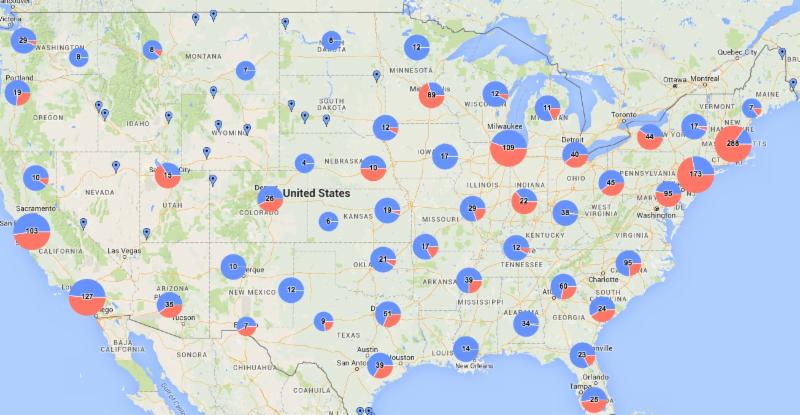
In addition, we've created an interactive tool that maps every community college in the U.S. and nearby medical device manufacturers to make it easy for medtech executives to connect with local colleges in hopes of collaborating on training programs.
For our next issue, we are working on an article about the effects of 12-hour shifts on workers and employers. Is there a hot topic you hope to see in our next newsletter in December?
|
|
|
Did you see us at BIO2015?
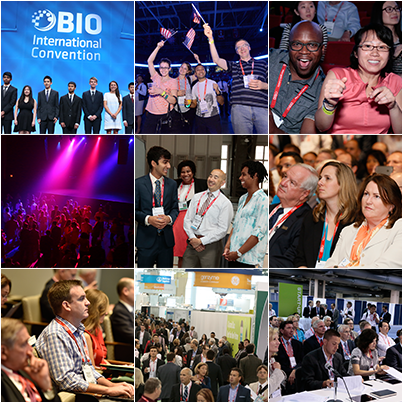
Operon CEO Steve Sawin had the opportunity to join a panel at the June BIO International Conference about solutions for the workforce shortages facing medical device and pharmaceutical companies. Activating community colleges as training partners was a key solution.
The Community College Consortium for Biosciences Credentials (c3bc) is a US Dept. of Labor Trade Adjustment Assistance grant initiative that creates a national set of skill standards in the area of medical devices and the core biosciences based on industry needs. These standards were presented at the Community College Program at BIO2015.
Beginning in 2012, with respect to medical devices, the aim of this initiative was two-fold, to identify a set of medical device industry standards for five functional areas--engineering, instrumentation and metrology, production, quality, and regulatory affairs--and to develop curricula for a national network of community colleges that will elevate the skills of entry-level workers (links above show the product of the initiative and what will be used by colleges to create new programs).
This past spring, c3bc completed the requirements set forth for the identification of medical device skill standards for entry-level workers. Working closely with both key players in the medical device industry and community college partners clustered in Minnesota, Indiana, Massachusetts, Pennsylvania, Florida, California, and North Carolina, c3bc developed new industry standards for the five functional areas.
Over the next year, we expect to see new curriculum based on the skill standards to be implemented and tested in the c3bc consortium and its partner colleges across the country. The curriculum will harmonize what community college students are taught with what the medical device industry needs.
|
|
Map it Out: Connecting You to Your Local Community College
|
If you want to get involved in the community college movement, we have a tool for you. To make things easier on medtech executives, Operon has put together an interactive database that includes thousands of community colleges in proximity to major clusters of medical device manufacturers. This map shows clusters of medical device companies (red) in comparison to nearby community colleges (blue) to help these colleges find medical device "customers", and vice versa. This will further promulgate the application of the grant program and result in better skilled entry level workers.
Explore nearby colleges with our interactive map
here
.
|
|
|
Manufacturing in Minneapolis-Saint Paul: Minnesota Medical Manufacturing Partnership Receives Federal Designation
|
 |
|
Advanced manufacturing is a driving industry in a number of states across the country. The following is the second in a series of special features as Operon takes a look at leaders from chambers of commerce and economic development groups, examining what they are doing to promote manufacturing in their region.
Michael Langley, CEO of GREATER MSP, outlines a new designation from the Obama Administration for the Minnesota Medical Manufacturing Partnership. GREATER MSP (Minneapolis Saint Paul Regional Economic Development Partnership), a participant in the Minnesota Medical Manufacturing Partnership, is a non-profit organization dedicated to providing public and private sector leadership, coordination and engagement to grow the economy of the 16-county Minneapolis Saint Paul region.
U.S. Secretary of Commerce Penny Pritzker announced in July that the Minnesota Medical Manufacturing Partnership received an important designation under the Obama Administration's Investing in Manufacturing Communities Partnership (IMCP) initiative.
|
|
|
Michael Langley, CEO of GREATER MSP
|
This U.S. Commerce Department-led program is designed to accelerate
the resurgence of manufacturing in communities nationwide by supporting the development of long-term economic development strategies. As a designated manufacturing community, the Minnesota Medical Manufacturing Partnership will receive coordinated support for its strategies from 11 federal agencies with more than $1 billion in federal economic development assistance.
The federal designation sets our state and region apart. It confirms and will strengthen our global leadership in medical technology.
Secretary Pritzker said an IMCP designation is an important signal to potential investors that a community is a good place to spend money, and this is smart government at work.
Minnesota leaders across sectors worked together and drafted a medical technology sector strategic plan that addresses: workforce and supply chain challenges; infrastructure; research and innovation; trade and investment; capital access; and operational improvement for manufacturing companies.
|
|
|
|
Is Your State Falling Behind in Workforce Development?
|
|
|
|
As a health care manufacturing staffing company headquartered in Massachusetts, Operon has a first hand look at the squeeze put on local medical device manufacturing companies because of a shortage of workers. Our state is often known as a hub of innovation; however, it is falling behind its top competitors in terms of workforce development.
Looking nationally, in their most active regions, medical manufacturing clusters are among the leading economic forces for their states. The most robust clusters are found in California, Minnesota and Massachusetts. Among the factors that foster growth and profitability of device manufacturing is access to an educated, skilled workforce.
Although Massachusetts ranks among the top states for public and private higher-level education, the skills needed for the medical manufacturing industry are highly specialized and specific programs are required in order to create qualified job candidates. Other states have made important strides in educational funding and programs that provide the skills needed to increase job creation. With the advanced manufacturing industry seeing an increase in retirement rates, recent figures have reported a 60 percent increase in job listings. At the same time, Massachusetts has seen devastatingly low rates of qualified applicants to fill these positions.
As the leaders in medical device employment growth, Minnesota and California-based companies have utilized various programs to achieve the fastest growth rates in the country.These programs include everything from housing for workers to special training.
Read more
about what individual states are doing to promote medtech job growth in a joint op-ed published in CommonWealth Magazine by Operon CEO Steve Sawin and SMC, Ltd. Corporate Vice President Brian Payson.
|
|
|
|
Seasonal Hiring and its Effect on Manufacturing
|
|
|
UPS recently announced it will hire 90,000 to 95,000 employees to help handle shipping and deliveries over the holiday season. Toys-R-Us plans to hire 40,000 seasonal employees across the nation and clothing retailer Kohl's plans to hire 69,000 extra employees.
Outplacement firm Challenger, Gray & Christmas said it expects retailers to add roughly 755,000 seasonal hires to their payrolls in the final three months of the year.
How does that impact health care manufacturers? Workers.
The rest of the hiring community will feel the pinch between the months of October and January as shoppers hit the stores and demand longer hours and more retail employees. As the number of seasonal hires is projected to remain at the same level as last year, it will still be a challenge for manufacturers to fill shifts during the holiday rush.
Medical device manufacturers should start thinking about a plan for production schedules to avoid falling short on workers.
|
|
|