Nine Planning Grants Awarded for TMD IMPACT | |
|
In January 2023, the National Institute of Dental and Craniofacial Research (NIDCR) in partnership with other elements of the National Institutes of Health, and also the U.S. Food and Drug Administration, announced the availability of funding for the design and implementation of a national, interdisciplinary, patient-centered research collaborative. The aim of the TMD Collaborative for IMproving PAtient-Centered Translational Research (TMD IMPACT) is to advance basic, translational, and clinical research to improve the prevention, diagnosis, and treatment of Temporomandibular Disorders. The TMJ Association and its patient advocates have been engaged in this initiative since the outset ensuring that the voices and needs of patients with Temporomandibular Disorders (TMDs) are heard.
By way of background, TMDs reflect more than 30 conditions that can cause debilitating pain and dysfunction in the temporomandibular joint (TMJ), chewing muscles, and surrounding tissues. Five to ten percent of the U.S. population are affected and TMDs are twice as common in women than in men. TMDs are driven by a complex interplay of biological, psychological, and environmental factors, defying scientists’ understanding of all the underlying mechanisms, confounding medical and dental professionals, and often resulting in delayed, ineffective, and even harmful treatments. The complexity of TMDs calls for a coordinated and multilevel approach to address them.
The planning grants will enable institutions to develop the partnerships, infrastructure, and capabilities to address the goals of the collaborative. They are also intended to enhance their competitiveness to secure funding for the future collaborative.
Grant Award Recipients
In October 2023, NIDCR awarded nine planning grants totaling $2.8 million for one year of support to the following investigators:
-
Gary D. Slade and Anne E. Sanders, University of North Carolina, Chapel Hill PUFA Metabolism for Prevention and Treatment of TMD Pain: An Interdisciplinary, Translational Approach
-
Yang Chai and Jianfu Chen, University of Southern California Center for TMD IMPACT
-
Julie K. Olson, University of Minnesota The Minnesota TMD IMPACT Collaborative: Integrating Basic/Clinical Research Efforts and Training to Improve Clinical Care
-
Fernando Guastaldi and Shruti Handa, Massachusetts General Hospital Boston Collaborative for TMD Research
-
Alejandro Jose Almarza and Roger B. Fillingim, University of Pittsburgh Collaborative for REsearch to Advance TMD Evidence (CREATE)
-
Richard Ohrbach and Keith L. Kirkwood, State University of New York at Buffalo Traumatic Events and Injury: Etiologic Mechanisms for Temporomandibular Disorders
-
Hai Yao and Janice S. Lee, Clemson University TMJ SYMPHONY Systems-Integrated Model and Mechanisms of Patient-Centered Holistic Outcomes and Network-Supported Training and Therapy
-
Sunil D. Kapila, University of California, Los Angeles Interdisciplinary Clinical Advances and Research Excellence in TMDs (ICARE 4 TMDs) Collaborative
-
Alexandre DaSilva, David H. Kohn, and Yuji Mishina, University of Michigan Michigan Collaborative Hub for TMD Patient-Centric Research (MICH T PCR)
| |
An Interprofessional Education Model | |
|
Following the publication of the 2020 National Academies report on Temporomandibular Disorders, The TMJ Association collaborated with the Medical College of Wisconsin (MCW) to address a key recommendation from the report: "interprofessional education that teaches dentists and physicians about the unique knowledge and skills that each brings to the table and prepares them to work together as a team" - in the treatment of TMD patients.
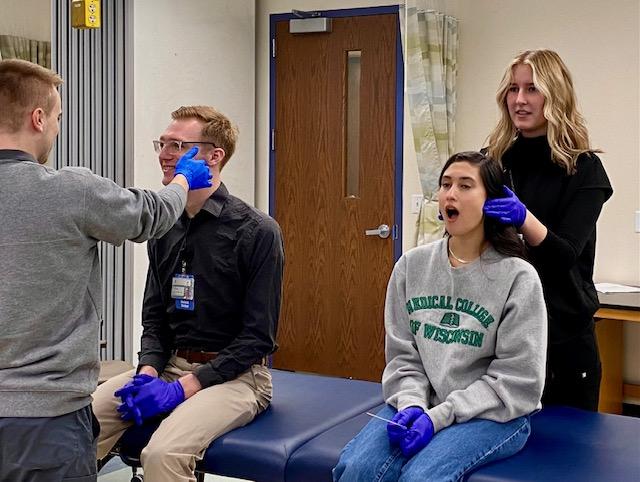
In 2023, MCW, in partnership with Marquette University Dental School and the TMJA, organized the first interprofessional session, bringing dental and medical students together at the college to learn about TMDs. Feedback from both students and staff was positive, prompting some changes and an expansion to include physical therapy in the curriculum. Future efforts may also include new evidence-based research findings as they become available. We also plan to involve medical professionals further by introducing an additional session for third-year medical students.
We are delighted to share an article featured in Marquette Today, which highlights the collaborative efforts of the School of Dentistry and the MCW in bridging the gap to address jaw disorders.
Marquette University & Medical College of Wisconsin Bridging Gap to Address Temporomandibular Disorders
Marquette’s School of Dentistry and the Medical College of Wisconsin are bridging the gap between medicine and dentistry on the issue of temporomandibular disorder (TMD), which causes pain and dysfunction in the jaw joint and muscles controlling jaw movement.
On Thursday, February 8, students from Marquette’s School of Dentistry participated in a collaborative interprofessional event at the Medical College of Wisconsin, learning alongside first-year medical students about the necessity of coordinated care for this multi-faceted condition. The interprofessional program, now in its second year, included 300 students from both campuses with plans to expand next year to include students enrolled in Marquette’s physical therapy program.
The inception of the program began when The TMJ Association, a patient advocacy group based in Milwaukee, reached out to the Medical College with the goal of promoting awareness among practitioners. This advocacy group, created by patients with TMD, is intimately aware of the impact on patients when there is limited evidenced-based training and a lack of standardized care. Patients who live with the orofacial pain associated with TMD can experience prolonged and debilitating effects. The condition can affect basic day-to-day functions like kissing a loved one, eating or sleeping and can have broader-reaching impacts on emotional and psychological health.
Dr. Yasser Khaled, assistant professor in Marquette’s School of Dentistry, shared appropriate care options for TMD through the lens of dentistry. Underscoring the true need for this event, he shared: “Many medical and dental students and physical therapy students are not aware of how to treat TMD. Thus, many patients are lost between different providers until they can finally be referred to TMD specialists.” Shuffling back and forth between providers can further exacerbate the frustrations of patients living with TMD. To address this issue, the workshop braids three disciplines to broaden students’ understanding of the condition through the lens of medicine, physical therapy, and dentistry. Dr. Teresa Patitucci, associate professor in cell biology, neurobiology and anatomy at MCW guided students in an examination of real anatomical specimens of the temporomandibular joint (TMJ) to better understand the underlying structures associated with TMD. And in the spirit of interdisciplinary curiosity, medical and dental students had the chance to step into the shoes of a physical therapist by learning hands-on techniques from staff of Marquette’s Physical Therapy Clinic under the direction of Brent Bode, who also serves as adjunct faculty in Marquette’s Physical Therapy department.
Kirstin Marcks, a second-year dental student at Marquette, shared her experience of the workshop: “As someone who broke their jaw in 2018 leading to TMJ issues, I have never had a good understanding about what happened and what structures were involved with the accident. During the IPE session, I learned more about how the joint works and what symptoms present for different problems. I also have a deep appreciation for working with medical students, as patients are shared across healthcare specialties. The IPE session was extremely beneficial for the future of treating patients with TMJ problems.”
The goal of the workshop is to both promote awareness of TMD, but also to provide students the opportunity to learn how to become collaborative practitioners. Dr. Pradeep Bhagavatula, professor at the School of Dentistry and member of the Interprofessional Education and Collaborative Practice Committee at Marquette summed it up: “The opportunity to exchange ideas and insights with individuals from diverse backgrounds truly highlights the value of interdisciplinary collaboration.”
Interprofessional education events like the TMD workshop teach students the importance of providing coordinated team-based care and how crucial that is for our health care system as they embark on their careers as health professionals.
| The Current Thinking on Temporomandibular Disorders | |
|
A summary paper on the Current Status of Research, Education, Policies, and its Impact on Clinicians (written by Dr. Klasser et al) represents the current thinking on Temporomandibular Disorders (TMDs) from members of the American Academy of Orofacial Pain (AAOP). The TMJ Association, in collaboration with the Advocacy Subcommittee of the AAOP's Access to Care Committee, agrees that this paper captures our current thinking on TMDs, which is why we are sharing it with our readers.
In 2021, the American Dental Association designated Orofacial Pain as a new specialty, which requires a broad knowledge of pain assessment, diagnoses, individualized treatment plans, and the overall management of a broad spectrum of patients with orofacial pain conditions.
As of 2022, the Commission of Dental Accreditation (CODA) mandated that TMDs must be included in dental school curricula. According to CODA standards, each dental school will develop its own TMD curriculum.
These developments resulted from recommendations in the National Academies of Sciences, Engineering, and Medicine 2020 consensus study, Temporomandibular Disorders Priorities for Research and Care. We hope these two events will lead to evidence-based care for TMJ patients.
| |
3 Out of 4 Patients with Fibromyalgia Have Comorbid Temporomandibular Disorders | |
|
The following is from Consultant Live: https://www.consultantlive.com/view/3-out-of-4-patients-with-fibromyalgia-have-comorbid-temporomandibular-disorders
Temporomandibular disorders (TMDs) frequently coexist with fibromyalgia and chronic widespread pain (CWP), particularly for those with painful myogenous TMDs, according to research published in the Journal of Oral and Facial Pain and Headache.
Fibromyalgia, a chronic condition considered a subgroup of CWP, is characterized by widespread musculoskeletal pain. Concomitant TMD and fibromyalgia is often regarded as a pair of chronic overlapping pain conditions (COPCs). Other COPCs include migraine, chronic tension-type headache, chronic lower back pain, chronic fatigue syndrome, and irritable bowel syndrome (IBS). The similarities between these conditions indicate they are related by epidemiology, symptomology, and underlying mechanisms.
“Although several studies have considered the coexistence of fibromyalgia and TMDs, the association between these 2 disorders remains unexplicit,” wrote lead investigator Pankaew Yakkaphan, DDS, associated with the Faculty of Dentistry, Oral and Craniofacial Science, King's College London, United Kingdom, and colleagues. “Understanding the epidemiologic perspective of this association is instrumental to appropriately diagnosing and managing patients with these conditions.”
A systematic search was conducted among electronic databases, including PubMed, Scopus, Web of Science, MEDLINE, and PsycINFO, to determine the prevalence of CWP and fibromyalgia in patients with TMD, as well as the prevalence of TMDs in patients with fibromyalgia. Study quality was determined using the Newcastle-Ottawa Scale and pooled prevalence estimates were assessed using meta-analyses with defined diagnostic criteria.
A total of 19 moderate to high quality studies were included in the assessment, of which 9 evaluated the prevalence of CWP/fibromyalgia in patients with TMDs and 10 evaluated the prevalence of TMDs in patients with CWP/fibromyalgia. Most (n = 10) studies were case-control, 6 were cross-sectional, and 3 were cohort studies. Heterogeneity of the pooled studies was observed due to varying criteria guidelines and protocols, the subjectivity of patient and clinician assessment, and differences in application over time.
According to the meta-analyses, 3 out of 4 patients with fibromyalgia had concomitant TMDs (76.8% [69.5% - 83.3%]) and approximately one third (32.7%, 4.5% - 71.0%) of patients with TMDs had comorbid fibromyalgia. Compared with disc displacement disorders, myogenous TMDs were more prevalent in this patient population (63.1% [47.7% - 77.3%] vs 24.2% [19.4% - 39.5%], respectively). Comorbid inflammatory degenerative TMDs were observed in 41.8% (21.9% - 63.2%) of patients with fibromyalgia.
The highest proportions of patients with TMDs experiencing fibromyalgia symptoms were observed in a study of patients with painful disorders of the masticatory muscles lasting ≥6 months (63.2%), as well as a study in which patients were referred to a physiatrist to evaluate possible fibromyalgia (52.4%).
Estimates of comorbid CWP in patients with TMDs ranged from 30% to 76%, due in part to classification criteria variances.
As such, investigators noted the potential disparity in prevalence rates due to the differing diagnostic criteria as a limitation of their study. Additionally, although most patients (80% - 90%) were female, which is representative of fibromyalgia, results may not be generalizable to male patients with fibromyalgia and/or CWP. Further hindering generalizability, investigators mentioned most TMD samples were from patients with more severe TMDs who sought treatment. As TMDs are a collective condition, results may not reflect the larger patient population. Lastly, since the review was performed in 2020, there have been additional studies evaluating comorbid TMDs and fibromyalgia/CWP. However, newer findings reinforced the results from this analysis.
“These findings suggest a need for clinicians to consider the overlap between TMDs and CWP/fibromyalgia when treating affected populations, and, where appropriate, to consider multidisciplinary approaches to care,” investigators concluded.
| |
|
Every day, The TMJ Association receives emails from patients seeking help, information and advice. It's messages like this one that fuel our passion to reform the existing scientific landscape and elevate public awareness.
"Hi, My girlfriend has had TMJ for almost 4 years now, It affects every part of her life, in the last few days I have been doing some research and I am absolutely distraught that all I can seem to find is stories of TMJ never getting better and there not being a cure. I'm not someone that cries much but I can't stop crying every time she's not around. I can't stand the thought of her having to live with this for the rest of her life. I feel sick with worry that this is only the start and it's going to get even worse once the cartilage completely breaks down, she's only 22, every time she talks to me I know it is causing her pain and it stresses me out just hearing her talk. She occasionally hints about suicide and I just don't know what to do I feel so helpless, she says that I'm the only reason she's still here. I need to do something about this.
Firstly, I need to find out if there are stories of people TMJ being cured, is it possible to cure TMJ with surgery as I haven't heard many positive stories or is there any new research being done to find alternate cures?
Secondly, I want to get her the best medical care possible, but I've just read one of the stories of someone going to over 30 different specialists and not one of them being able to fix it, I know you don't recommend doctors but I need to know what the best thing to do is after physio, chiro, braces, mouth guards, massage, dry needling, Botox. Is her next best option surgery? If so I saw online that there a high chance of complications, I also read that surgery is not possible once the cartilage has fully worn away, is this true?
Thirdly, I want to raise awareness for TMJ, what is the best way I can do this, I want everyone in the world to know what TMJ is and understand how bad it is so that more money can be invested into research. How can I make this possible? We need more scientific research into this, it baffles me that in this age of technology that we don't have any good cure for this and surely with science and technology constantly improving surely in the next 10 years if there's enough investment someone will find a cure? or is it just accepted that TMJ will never be cured?
Any response would be massively appreciated, Apologies for my poor wording and grammar, I can't really think straight at the moment. Thank you"
| |
"Nothing About Us Without Us" - First Recommendations for Partnering with Patients in Clinical Pain Research Published | |
|
A longstanding priority of the TMJA and its initiative, the Chronic Pain Research Alliance (CPRA), has been to change the culture of scientific research to one that is more patient-centric and includes “patients as partners” on research study teams. It is vital that patients – who have substantial expertise and valuable perspectives from living with their medical condition(s) – be included in the planning and execution of research studies, as well as activities to disseminate study findings. Studies show that doing so benefits both science and the public by developing research questions that are more meaningful and relevant to patients, improving the feasibility of study methods, increasing study participant recruitment and retention rates, and communicating study findings more broadly to diverse audiences.
Although patients are routinely included as study team members in other fields, such as cancer and HIV research, this rarely occurs in research on chronic pain conditions, including TMD and its overlapping conditions. To begin to change this, CPRA’s director, Ms. Christin Veasley, co-chaired an international meeting with Yale professor, Dr. Robert Kerns, to develop the very first guidance for the clinical pain research community on how to meaningfully “partner with patients” on clinical pain research studies. The meeting was supported by, and organized under, the public-private partnership ACTTION/IMMPACT (www.acttion.org). To include perspectives from all key decision-makers, the meeting brought together patients and representatives from academic institutions (clinicians and clinical scientists), advocacy organizations, government regulatory agencies, research funding organizations, academic journals, and the biopharmaceutical industry.
The journal PAIN recently published a summary of the meeting and its recommendations in the article, Patient Engagement in Designing, Conducting, and Disseminating Clinical Pain Research: IMMPACT Recommended Considerations, which is open access and can be viewed at this link.
We encourage you to read the article and broadly disseminate it to your networks. Research truly is better when we do it together!
| |
NIH Funds Innovative Research on Back Pain | |
|
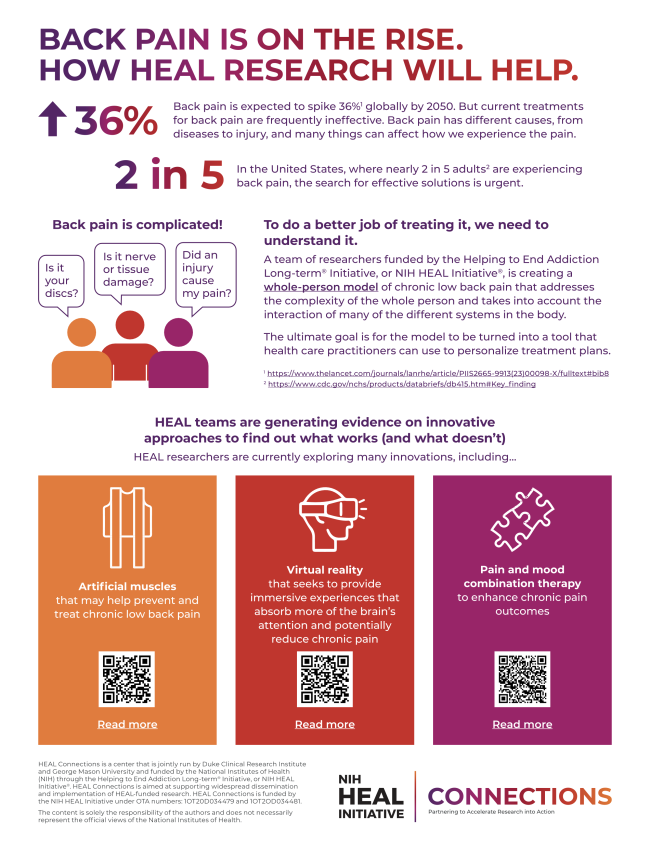
The Chronic Pain Research Alliance, an Initiative of the TMJA, focuses on advancing a collaborative and collective approach to the research, care and treatment of TMD and its overlapping conditions, including chronic low back pain. A recent study published in The Lancet found that by 2050, a 36% increase in total number of cases of low back pain is expected globally, driven by population growth and aging. To address the complexity of low back pain and its comorbidities through a whole-person model, the National Institutes of Health recently funded the Back Pain Consortium (BACPAC) Research Program. To learn more about some of the innovative research approaches included in BACPAC, click here to view this new infographic.
| |
Lead Apron for Dental X-Rays Is No Longer Needed Says the American Dental Association | |
On February 1, 2024, the American Dental Association said it will no longer recommend the use of lead aprons and thyroid collars on patients who are getting dental x-rays. There are two main reasons for the change. First, x-ray beams are now more focused, so there is less concern about radiation hitting other parts of the body. Also, the aprons and collars can sometimes block dentists from getting the images they need. The Council’s recommendations are also aligned with recent recommendations released by the American Academy of Oral and Maxillofacial Radiology. Read more here. | |
Research Studies Recruiting TMJ Patients | |
|
Central and Peripheral Factors in Temporomandibular Disorder
Researchers at Emory University in Atlanta are in need of TMJ patients to participate in their study. They are investigating people who experience chronic pain in the head and/or face in everyday life. They are using unique tests to find out how the brain processes chronic and acute pain messages and will observe patients to see how pain and sensory processing differs in TMD. Click here to view the informed consent form for this study. Contact Daniel Harper, PhD (Principal Investigator) at 404-727-7789 or daniel.harper@emory.edu with any questions and to participate.
| |
|
Impact of Daily Physical Activity and Chronic Musculoskeletal Pain Survey
A research team from the Faculty of Rehabilitation Sciences of Hasselt University in Belgium is investigating the relationship between the intensity of daily physical activity and chronic musculoskeletal pain. They will be looking at fibromyalgia, chronic temporomandibular disorder, osteoarthritis, chronic neck pain, chronic shoulder pain, and chronic low back pain. The study involves an online survey which will take approximately 50 minutes to complete. More details and a link to the study is available at: https://uhasselt.qualtrics.com/jfe/form/SV_etl78e58y2YeUDQ
| |
University of Minnesota In-Person Study
For those of you in the Twin Cities, Duluth, Rochester, or nearby areas, a researcher working with the University of Minnesota is looking for participants to collect data as an early step toward development of a new medical device. There is one brief in-person meeting required, but the researcher can travel to meet you if you are interested. Please see below for details.
"Have you been diagnosed with TMD/TMJ Pain, Chronic Low Back Pain, and/or Painful Peripheral Neuropathy? Has your pain lasted for more than 3 months with an average daily pain intensity in the past week of ≥3/10 and at least one instance of pain ≥6/10 in the past week? If so, please contact groenke@umn.edu for more information regarding possible participation in an ongoing, at-home research study seeking to learn more about how the body responds to different pain levels. There is a $20 gratuity payment following successful completion of the study."
| |
|
University of Connecticut School of Dental Medicine Study Conducting a Research Study on TMJ Pain
This federally funded research project provides non-surgical treatments to persons with pain in the area of the TMJ. The purpose is to test a new treatment approach. All volunteers will get an X-ray of the face, and
will receive a splint (a mouth guard), plus non-steroidal anti-inflammatory drugs (like Advil), and weekly monitoring, as well as additional instruction in coping and managing the pain of temporomandibular dysfunction (TMD).
Those eligible for participation must meet the following conditions:
• TMD-related pain for at least 3 months.
• Must live in proximity to UConn Health, Farmington, CT, to allow for treatment, monitoring of progress, and follow-ups.
To view the patient consent form, click here. Call 860-679-2745 for more information or visit https://health.uconn.edu/dental/patient-services/oral-and-maxillofacial-surgery/tmj-treatment/
| |
NIH Grant Opportunities for Researchers | |
|
Notice of Special Interest (NOSI): Maternal Health and the Dental, Oral, and Craniofacial Development of their Children
https://grants.nih.gov/grants/guide/notice-files/NOT-DE-23-005.html?utm_medium=email&utm_source=govdelivery
The National Institute of Dental and Craniofacial Research (NIDCR) is issuing this Notice of Special Interest (NOSI) to encourage research on prenatal environmental and physical stressors experienced by women during pregnancy that affect their child's dental, oral, and craniofacial (DOC) tissues through altered maternal physiology. The purpose of this NOSI is to support research elucidating the impact of maternal, environmental, nutritional, pharmaceutical, and/or infectious exposures upon the developing and formed oral and craniofacial complex.
The Intersection of Sex and Gender Influences on Health and Disease (R01 Clinical Trial Optional)
https://grants.nih.gov/grants/guide/rfa-files/RFA-OD-22-028.html
The purpose of this Funding Opportunity Announcement (FOA) is to invite R01 applications on the influence and intersection of sex and gender in health and disease, including: (1) research applications that examine sex and gender factors and their intersection in understanding health and disease; and (2) research that addresses one of the five objectives from Strategic Goal 1 of the 2019-2023 Trans-NIH Strategic Plan for Women's Health Research "Advancing Science for the Health of Women." The awards under this FOA will be administered by NIH ICs using funds that have been made available through the Office of Research on Women’s Health (ORWH) and the scientific partnering Institutes and Centers across NIH.
Understanding Chronic Conditions Understudied Among Women (R01 Clinical Trial Optional)
https://grants.nih.gov/grants/guide/rfa-files/RFA-OD-23-014.html
The purpose of this Notice of Funding Opportunity (NOFO) is to invite R01 applications on chronic conditions understudied among women and/or that disproportionately affect populations of women who are understudied, underrepresented, and underreported in biomedical Research should align with Goal 1 of the 2019-2023 Trans-NIH Strategic Plan for Women's Health Research "Advancing Science for the Health of Women." The awards under this NOFOwill be administered by NIH ICs using funds that have been made available through the Office of Research on Women’s Health (ORWH) and the scientific partnering Institutes and Centers across NIH.
(R21 Clinical Trial Optional)
https://grants.nih.gov/grants/guide/rfa-files/RFA-OD-23-013.html
ARPA-H Announces New Funding Opportunity
The Advanced Research Projects Agency for Health (ARPA-H)) Sprint for Women’s Health has released a new request for solutions (RFS) on “Objective and Quantitative Measurement of Chronic Pain in Women” (Topic #5).
Two funding tracks are available:
- "Spark" Awards (early-stage research, ~ $3M per award)
- "Launchpad" Awards (later-stage development, ~ $10M per award)
Key Dates:
- Submissions Open: March 13, 2024
- Question Deadline: March 27, 2024
- Submission Deadline: April 12, 2024
- Pitch Phase: May-July 2024
- Invitation for Collaboration & Negotiation: July-August 2024
- Awards: September 2024
To read the RFS and for additional information, please visit: https://sprint.investorcatalysthub.org/request-for-solutions/
| |
The TMJ Association is the ONLY patient advocacy organization fighting for the best science that will lead to a greater understanding of Temporomandibular and related disorders and treatments that will help and not harm patients.
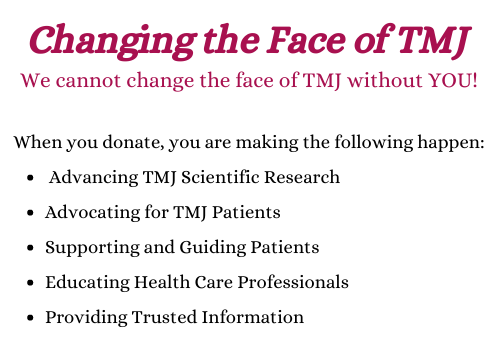
We cannot change the face of TMJ without YOU. Make a tax-deductible contribution today! Your contribution is more than a donation. It is how we will ensure that TMJ patients have a voice — through education, patient support and advocacy.
We cannot do this important work without you! Thank you for your generosity.
| |
|
About The TMJ Association ... Changing the Face of TMJ
The TMJ Association, Ltd., is a nonprofit, patient advocacy organization whose mission is to improve the quality of health care and lives of everyone affected by Temporomandibular Disorders (TMJ). For over 30 years, we have shared reliable information on TMJ with people like you. We invite you to visit our website, www.tmj.org.
| |
|
The TMJ Association, Ltd., P.O. Box 26770, Milwaukee, WI 53226
info@tmj.org | www.tmj.org
The TMJ Association, Ltd., is a nonprofit 501(c)(3) tax-exempt organization.
Copyright © 2024. All Rights Reserved.
| | | | |