|
"Freedom is not given; one has to take it.”
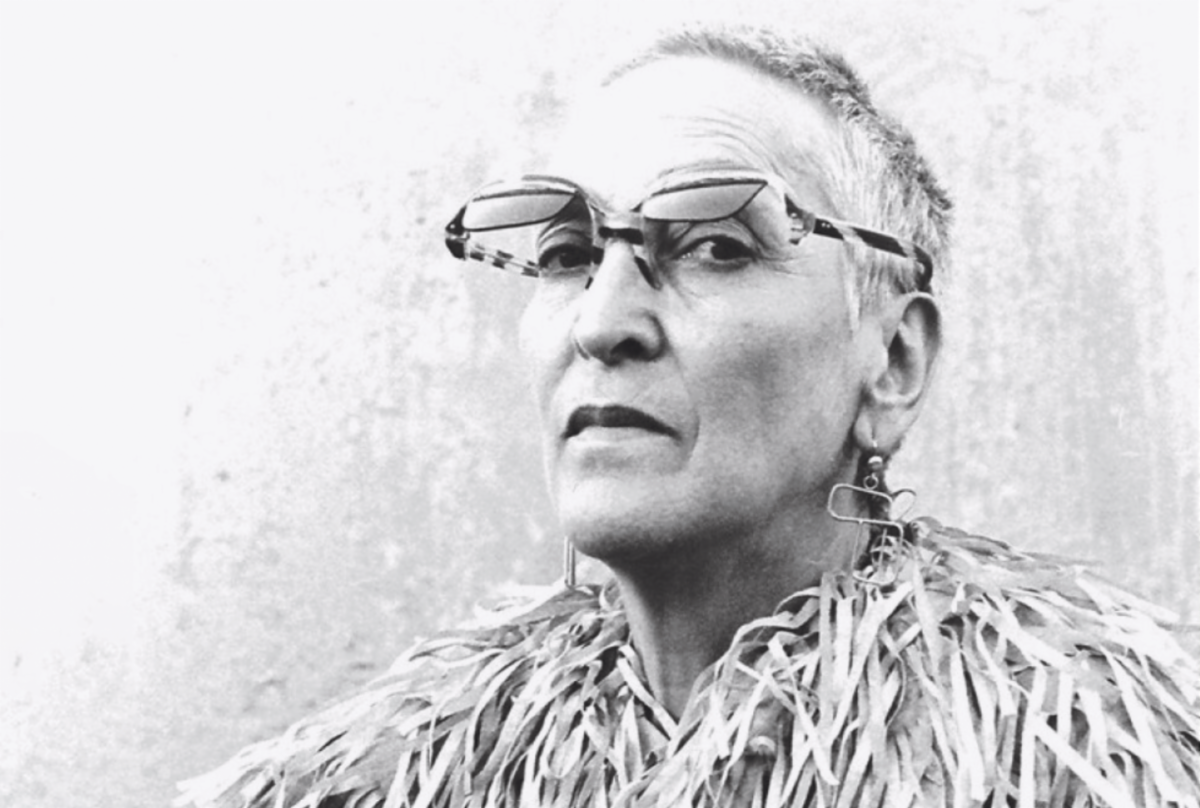
MÉRET OPPENHEIM, ARTIST
“Artists are expected to lead the kind of life that suits them – and his fellow citizens turn a blind eye to that. But if a woman does the same thing, then the eye pops open…As a woman, one is obliged to prove, via one’s lifestyle, that one no longer regards as valid the taboos that have been used to keep women in a state of subjugation for thousands of years. Freedom is not given; one has to take it.”
Artist Méret Oppenheim outlined her feelings about the challenges of being female and an artist, in 1975 after receiving the Basel Art Prize. Her creative output reveals only superficial reference to movements, markets, and gender, connecting to the artists or contemporary styles surrounding her only if it served her aims. “I have become known as a maker of Surrealist objects,” she said, “But they were the least of my endeavors. I thought of myself as a picture-maker.”
Born in Berlin in 1913, Oppenheim grew up in Switzerland with her mother, while her father fought for Germany in World War 1. In the aftermath of the war, she was exposed to the abundance of creativity sweeping Europe. German Expressionism, French Impressionism, Modernism, Fauvism, and Cubism; poetry, literature, theater – all within her young orbit. Aged eighteen, with the singular ambition to become an artist she moved to France, positioning herself into the heart of Paris’ dynamic art scene, then the center of the art world.
Throughout the ‘30s she was at the eye of a creative storm. She had quickly become known as a challenging, uncompromisingly artist who fought mediocrity and took on the—largely male—establishment. Her friends list reads like a page from the Who’s Who of great artists; Picasso, Man Ray, Breton, Duchamp, Ernst Arp, and Giacometti were all part of her inner circle. Oppenheim was immersed, committed, full of energy and Paris wanted more. But it wasn’t to last and towards the end of the decade, for Paris, Europe, and Oppenheim herself, everything was about to change.
Her German Jewish father, now a successful and well-respected doctor, was unable to practice under new antisemitic legislation and was forced into exile. For Oppenheim, the most exciting and creative part of her artistic life was over. She returned to Switzerland with an established reputation, but the effect of being forced out of the creative cauldron of Pais and now isolated by another world war, depression took hold. For over a decade she worked only very intermittently as an artist, destroying much of her existing work.
It was only in the mid 1950s that her desire for a creative life returned. “I recovered my pleasure in making pictures very suddenly in late 1954,” she said. I just walked out the door and rented a studio.”
Her work explored themes of reality and imagination, sensuality, and desire. It can be fearless and delicate, serious and humorously playful. We, the viewer, can—and do—try to categorize her. Often dadaist, or surrealist, other times post-modern or punk; whatever suits the context or conversation. So, while they can all be correct for us, for Oppenheim it was also about breaking those taboos of subjugation and about taking her freedom.
More from Méret Oppenheim at the bottom of the Muse.
|