BY THE ALEX MANFULL FUND TEAM | |
|
Dear TAMF Friend,
Welcome to the second quarterly publication of TAMF Newsletter. As I wrote earlier, we hope to inform you, inspire you, embrace you, and provide you with the tools to help us move mountains.
Let's begin with news...
Summer began in Vienna, Austria at the Federation of European Neuroscience Societies (FENS) conference where TAMF board member, Marina Selenica, and TAMF co-founder William ‘Towny’ Manfull and I met the five young world champions of the 2023 International Brain Bee (IBB) neuroscience competition. It was incredibly exciting to host the first dinner for these young scholars -- perhaps future neuroscience researchers or practitioners – from Hong Kong, New Zealand, Iran, Poland, and Canada. Joining us at the at the historic Griechenbeisl restaurant were their parents and members from the IBB Board and their governing partners: Alzheimer’s Association, American Psychological Association, FENS, International Brain Research Organization, and Society for Neuroscience. René Blanchard Akre, Chair of EXPAND - The European Immuno-Neuropsychiatric Association, was also in attendance. The next day, we led a discussion with the group titled, “From Bench to Bedside: The Role of Advocacy in Bringing Infection into the Understanding of the Treatment of Psychiatric Symptoms.” TAMF was thrilled to receive a shout-out at the Opening Ceremony of the FENS Conference by Dr. Jaime Diaz-Granados, Deputy CEO of the American Psychological Association and Chair of the IBB.
TAMF was also selected to participate in a brainstorming session with Harvard Business School and Harvard Kennedy School alumni who, as part of a volunteer program called Community Action Partners (CAP), share their expertise with Boston-area nonprofits. The subject was, “After a very successful two-and-a-half years, where should TAMF go from here?” I confess this was a tough two-hours in the ring for me, the Executive Director, but an outstanding debrief with board members afterwards assimilated CAP's insightful input and developed a great road map for TAMF’s future. (You will hear more about this!)
TAMF board member Nancy Dougherty and I took a short road trip to meet with Dr. Michal ‘Mikki’ Tal who recently opened her own lab at MIT. Called the Tal Research Group, Dr. Tal and her team study chronic Lyme, acute Lyme disease, Long COVID, and ME/CFS (myalgic encephalomyelitis/chronic fatigue syndrome) and their associated pathologies and co-occurring conditions. In a nutshell, Dr. Tal wants to explore unanswered questions: how people develop infection-associated chronic illness and who is at greatest risk? She is particularly interested in sex differences in disease mechanisms, clinical presentations, and trajectories. Dr. Tal is currently recruiting participants for her MAESTRO study who have recently been diagnosed with acute Lyme disease. (Contact Yuri Kim, the study nurse for any questions: ykim3@mit.edu .) Our heads were spinning by the end, but it was very exciting to learn about this cutting-edge research.
| |
|
TAMF board member Sheilah Gauch, LICSW, MEd, and TAMF volunteer Abby Gauch – a formidable mother-daughter team – recently traveled to Orlando, Florida to the International OCD Foundation Conference to join Elise Petronzio to present, “PANS/PANDAS: What It Is, What to Look For and How to Support.” As most readers know, obsessive and compulsive symptoms are cardinal symptoms of PANDAS and PANS – it is critically important to distinguish between OCD (a primary psychiatric disorder) and PANDAS and PANS (infection-associated, immune-mediated disorders) because the cause and treatment(s) are different for each.
Lauren Breithaupt, PhD, whose targeted proteomic research TAMF supported – along with The Louisa Adelynn Johnson Fund for Complex Disease and Neuroimmune Foundation – returned to Portsmouth, NH to introduce us to Siddarth “Sid” Seenivasa, MS, and Luke Dysart, MS, two very impressive biostatisticians whose services our funding supported. To refresh your memories, we hope this early research will eventually contribute to the identification of biomarkers for PANS/PANDAS which currently relies on a clinical diagnosis.
Shortly after that visit, Kyle Williams, MD, PhD, came up to Portsmouth, NH to meet with two local dermatologists about his research on the relationship of immune-modulating drugs used to treat psoriasis by targeting IL17 is related to OCD reduction. TAMF recently funded that research. What a fascinating conversation about the role of cytokines like IL17, IL6, and IL 23 in the development of autoimmune skin disorders that may be co-morbid with OCD.
Towny and Susan took a whirl-wind trip in late July and early August, making various stops related to TAMF’s work. Georgetown University Medical School was our first stop where, in preparation for the launch of “The Alex Manfull PANDAS/PANS Fellowship Fund,” I was interviewed and filmed about this inaugural program. Towny and I met with the PANDAS/PANS and Other Neuroimmune Disorders (POND) Brain Bank Team to discuss strategies to make researchers more aware of this precious brain tissue available for research and, with some sadness, we discussed how to let physicians, medical examiners, and families aware of this brain bank should a death occur. Currently, tissue from eight donors is in the repository. We just released our first printed brochure about the POND Brain Bank. To receive a copy, please send an SASE to TAMF, P.O. Box 705, New Castle, NH 03854; for more information about the POND Brain Bank, please also visit https://neurology.georgetown.edu/patientcare/pond-brain-bank/.
In Philadelphia, Towny and I attended a very interesting and informative conference, organized by The Alzheimer’s Pathobiome Initiative and titled, “Microbes & Alzheimers’s Bridging Silos to Accelerate Innovation.” There, we learned about research that may tie Bartonella, Borrelia, Candida, Chlamydia pneumoniae, and periodontal infections to Alzheimer’s Disease as well as cases of “reversible dementia.” Much more research must be conducted but this research was inspiring. (Of course, we stopped for the famous Philly cheesesteak at Dalessandro's Steak!)
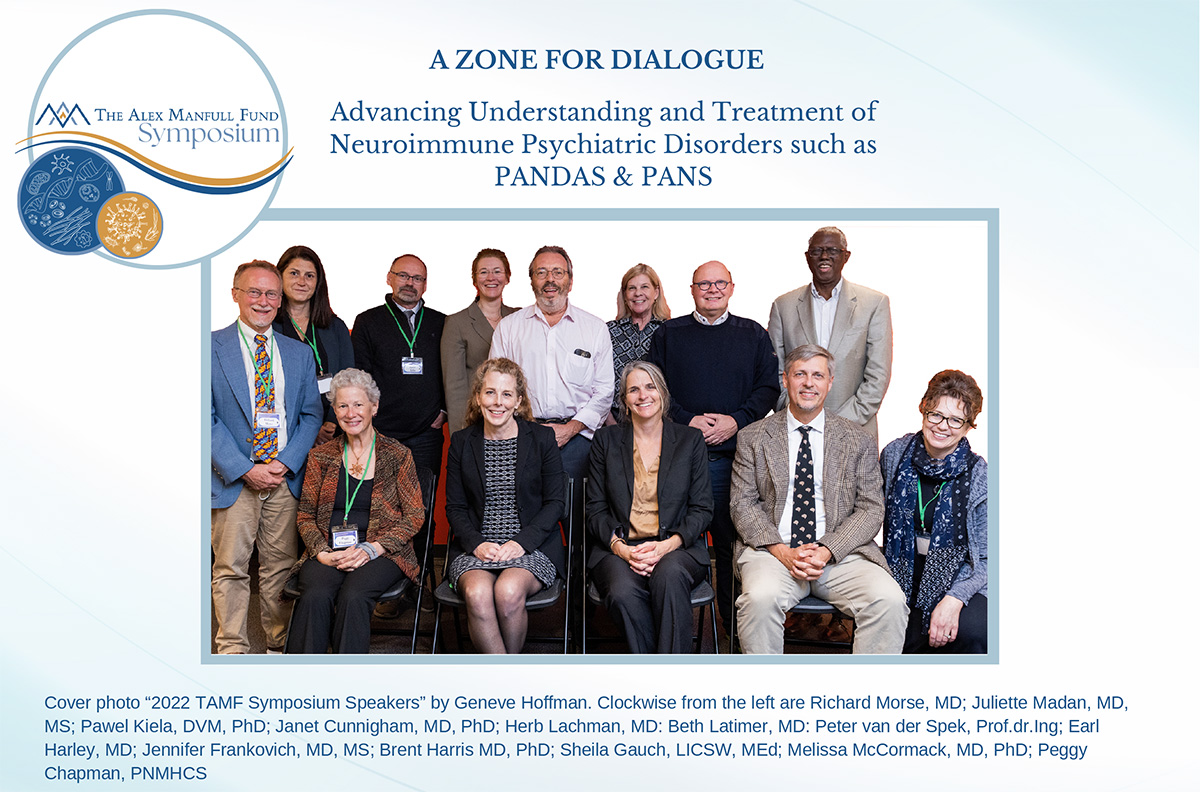
The Big Apple was our next stop where we had dinner with Dr. Herb Lachman, physician-scientist in the Department of Psychiatry, Medicine, Genetics, and Neuroscience at the Albert Einstein College of Medicine in NYC and a member of the Scientific and Medical Advisory Board of EXPAND. He shared some recent genetic findings, and, in subsequent conversations, he described a genetic mutation he is homing in on and that I think he will identify at our upcoming PANDAS/PANS symposium on November 2. (More to come on this symposium.)
Next, we traveled to Louisville, Kentucky where we met Alissa Johnson, co-founder with her husband Curt Johnson, of The Louisa Adelynn Johnson Fund for Complex Disease, an organization named in their daughter Lulu’s honor after she died at age 14. (You can read more about Lulu’s struggles with the medical system in these powerful essays written by Alissa: https://tlajfundforcomplexdisease.com/our-series%3A-hard-truths.) In Louisville, we represented Neuroimmune Foundation at the National Conference of State Legislators. There, we managed a booth devoted to educating legislators and other passersby about neuroimmune disorders such as PANDAS and PANS. The visitors to our booth were curious about those disorders (as well as POTS) and currently we are following up with those who would like to do something in their states to make a difference in the lives of these patients.
We returned home on the anniversary of Alex’s death, a profoundly sad day for us that marks an unspeakable tragedy from which we shall never recover. The loss of one’s child is impossible to fully fathom but, heartbreakingly, it is a loss Alissa and Curt – and far too many other parents – are forced to fathom. We are driven to make sure these horrific losses do not happen to other families.
The Alex Manfull Fund is hosting its third symposium on November 2nd in Portsmouth, New Hampshire. The chief goal of The Alex Manfull Fund PANDAS/PANS symposium is to educate physicians and mental health professionals so that these disorders are diagnosed early and treated appropriately. Information and tickets available soon on TheAlexManfullFund.org website. Please spread the word to medical and mental health professionals, our target audience.
| |
|
Very sincerely,
Susan Newman Manfull, PhD
Executive Director
| |
What is Chorea?
Find the answer at the bottom of this page
| | |
700
At least 700 species of bacteria live in the microbiome of the oral cavity. Researchers at the ADA Forsyth Institute in Cambridge, MA have cultured 70% of these bacteria (which are stored in a repository open to researchers). The remaining 30% are not cultivatable and are referred to as “dark matter.”
| |  |
17
Interleukin-17 (IL-17) is a cytokine, a small protein important in cell signaling, especially as related to the body’s immune response. Cytokines send signals to immune cells, directing them “where to go and what to do” to keep the immune system functioning. That is, they regulate inflammation. But too many cytokines can lead to an elevated inflammatory response, causing tissue damage, leading to autoimmune disease and metabolic disorders.
There are several categories of cytokines. IL-17 is one of 35 interleukin cytokines discovered (and numbered) thus far. Interleukins are primarily produced by T helper (Th17) cells. Currently, IL-17 is implicated in immune diseases, tumor diseases, and chronic inflammatory diseases, including multiple sclerosis (MS), rheumatoid arthritis, ankylosing spondylitis, and psoriasis. It may play a role in neurological and psychiatric disorders such as autism spectrum disorder (ASD), Alzheimer’s disease (AD), epilepsy, depression, and OCD.
|
| |
9
October 9 is designated as PANDAS/PANS Awareness Day in the United States and in other countries around the world such as Australia, Canada, Italy, Netherlands, New Zealand, Peru, Poland, Sweden, and the United Kingdom. (See the Calendar for various events surrounding Awareness Day.)
|
| |
|
References:
700
Shi, Wenyuan, PhD. CEO, The ADA Forsyth Institute in Cambridge, MA. From talk titled, “Exploring the connection between oral microbiome and Alzheimer’s Disease” presented at Microbes & Alzheimer’s: Bridging Silos to Accelerate Innovation Conference in Philadelphia, PA., July 27, 2024. (recording: https://bit.ly/Microbes-and-Alzheimer
Deo PN, Deshmukh R. Oral microbiome: Unveiling the fundamentals. J Oral Maxillofac Pathol. 2019 Jan-Apr;23(1):122-128. doi: 10.4103/jomfp.JOMFP_304_18. PMID: 31110428; PMCID: PMC6503789.
17
Holdsworth SR, Gan PY. Cytokines: Names and Numbers You Should Care About. Clin J Am Soc Nephrol. 2015 Dec 7;10(12):2243-54. doi: 10.2215/CJN.07590714. Epub 2015 May 4. PMID: 25941193; PMCID: PMC4670773.
Lu Y, Zhang P, Xu F, Zheng Y, Zhao H. Advances in the study of IL-17 in neurological diseases and mental disorders. Front Neurol. 2023 Nov 16;14:1284304. doi: 10.3389/fneur.2023.1284304. PMID: 38046578; PMCID: PMC10690603
| | |
| |
California Coalition PANS/PANDAS Community & Family Advocacy Event - Long Beach, CA. For more information: Link | | |
| |
Look Foundation 3K Walk - Boston Common - Boston, MA - Walk to raise awareness, hope and funds to support children and young adults battling PANS/PANDAS: Link | | |
| |
PANDAS/PANS Awareness Day - Portsmouth, NH - Join us on the early evening of October 9, 2024 to bring awareness of PANDAS/PANS to the Portsmouth community. Walk with us across the Memorial Bridge which will be lit green for PANDAS/PANS Awareness Day. Information to follow on our website: Link | | |
| |
Northwest PANDAS/PANS Network (NWPPN) Awareness Day Walk for Education. For more information: Link | | |
| |
The inaugural Vermont PANS/PANDAS 5K will be held in Burlington, VT. The organizers, Adrienne and Devin Gaskell, who live with their three children in Burlington, have partnered with TAMF to help raise awareness of PANS/PANDAS in VT for the benefit of Neuroimmune Pyschiatric Disorders (NIPD) Clinic at Dartmouth Medical Center. The Gaskells have endured the hardships of PANDAS though their son, Enzo. Enzo’s condition has stabilized and they have emerged with a clear mission: to help others living with this devastating condition. Registration and more information here: Link | | |
| |
The Third Biennial PANDAS/PANS Symposium for Physicians and Mental Health Care Professionals will be helds in Portsmouth, NH on November 2, 2024. Information and Registration will open soon: Link | |
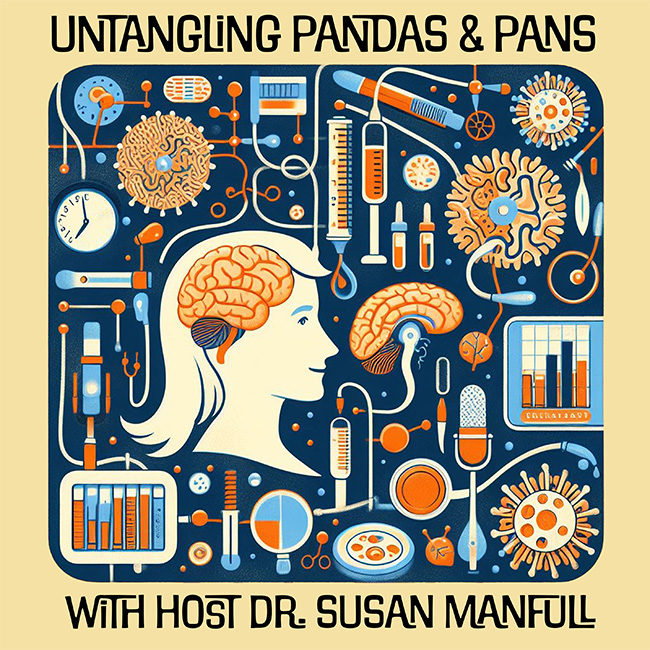 | |
The TAMF Podcast, "Untangling PANDAS & PANS,” already has six episodes posted for immediate listening and three episodes posted since our last newsletter:
Season 1, Episode 4 (June 30, 2024): Beth Latimer, MD Discusses How the Understanding of PANDAS has Progressed: It is Not Solely a Pediatric Disorder. Susan Manfull, PhD sits down with Dr. Latimer to discuss her career in pediatric neurology and her highly respected work that has spanned nearly forty years dedicated to treating patients in a field that still struggles to find a name. Whatever the field be called, Dr. Latimer’s name will certainly have a place in its history and in the hearts of many families.
Season 1, Episode 5 (July 28, 2024): Earl Harley, MD Talks About How Otolaryngologists Can Assist in the Treatment of PANDAS. Earl Harley, MD, FACS, FAAPS is a highly regarded pediatric otolaryngologist (Ears, Nose, and Throat doctor or ENT) at Georgetown University Medical Center. Dr. Harley is widely respected for his expertise in working with patients who have been diagnosed with PANDAS and PANS. Families travel from across the country (and well beyond) for consultations regarding adenotonsillectomies for their children suffering from these neuroimmune psychiatric disorders. Learn about his distinguished career spanning over 50 years and about how he came to know about PANDAS and PANS.
Season 1, Episode 6 (August 25, 2024): The Story Behind AB2105, California's Bill to Require Insurance Coverage for PANDAS/PANS Treatment. In this episode of Untangling PANDAS & PANS, Susan Manfull, PhD talks with April Ronay, founder of California Coalition for PANS/PANDAS (aka, Cal-Coalition), and Shari Strulson, one of the founding members of Cal-Coalition. Both are teachers, by profession, both have a family member with PANS, and both are tirelessly working to pass legislation in California to require insurance companies to provide coverage for doctor-prescribed treatments for PANDAS and PANS. They are currently working to pass AB2105, a bill sponsored by Assembly Member Josh Lowenthal.
| | |
|
The Committee on Classification of the World Federation of Neurology, defines “chorea” as "a state of excessive, spontaneous movements, irregularly timed, non-repetitive, randomly distributed and abrupt in character. These movements may vary in severity from restlessness with mild intermittent exaggeration of gesture and expression, fidgeting movements of the hands, unstable dance-like gait to a continuous flow of disabling, violent movements."
A tell-tale sign is an unusual repetitive grip and release of their fingers referred to as “milkmaid’s grip” (because it resembles someone milking a cow). There may be difficulty swallowing and talking, an abnormal walk, and peculiar tongue movements referred to as “jack-in-the-box tongue."
Chorea occurs mostly notably in Sydenham’s chorea (caused by Group A Streptococcus, particularly rheumatic fever), Huntington disease (inherited as an autosomal dominant trait), Wilson disease (inherited as an autosomal recessive trait), and cases of structural damage of the basal ganglia. The root of the pathology lies in the basal ganglia. Neurotransmitters that underlie chorea movements include dopamine, acetylcholine, serotonin, GABA substance P, and cannabinoids.
Merical B, Sánchez-Manso JC. Chorea. [Updated 2023 Jul 10]. In: StatPearls [Internet]. Treasure Island (FL): StatPearls Publishing; 2024 Jan-. Available from: https://www.ncbi.nlm.nih.gov/books/NBK430923/
| As Labor Day comes to a close, I am reminded of conversations with Alex as she grew older about the merits of packing our white linen clothes as well as more heated discussions about what kind of cake to make for her upcoming birthday. (More on the latter subject to come!) |
| | | |