|
About CPR
|
Meet the Birds
and at Parrot University
321 S Polk St, Pineville
Click
for map and directions
Visiting Hours:
Mon - Fri 10 AM - 7 PM
Saturday 10 AM - 6 PM
Sunday Noon - 5 PM
Contact Us
704-889-2325
Our Mission
The exclusive mission of Companion Parrots Re-homed is to accept companion parrots from unwanted, emergency or crisis situations throughout the Greater Charlotte, North Carolina, area and to facilitate through training and education, new adoptive homes for these sensitive and intelligent birds.
|
|
Volunteer Orientation
|
Sat. July 16, 1 pm
Sat. August 20, 1 pm
|
|
Recently Adopted
|
Celebrate these birds and their new families!
Emma Jane, Amazon
Cody, Goffin Cockatoo
Dallas, Amazon
Clyde, Eclectus
Wally, Conure
|
|
New to CPR
|
Alex, African Grey
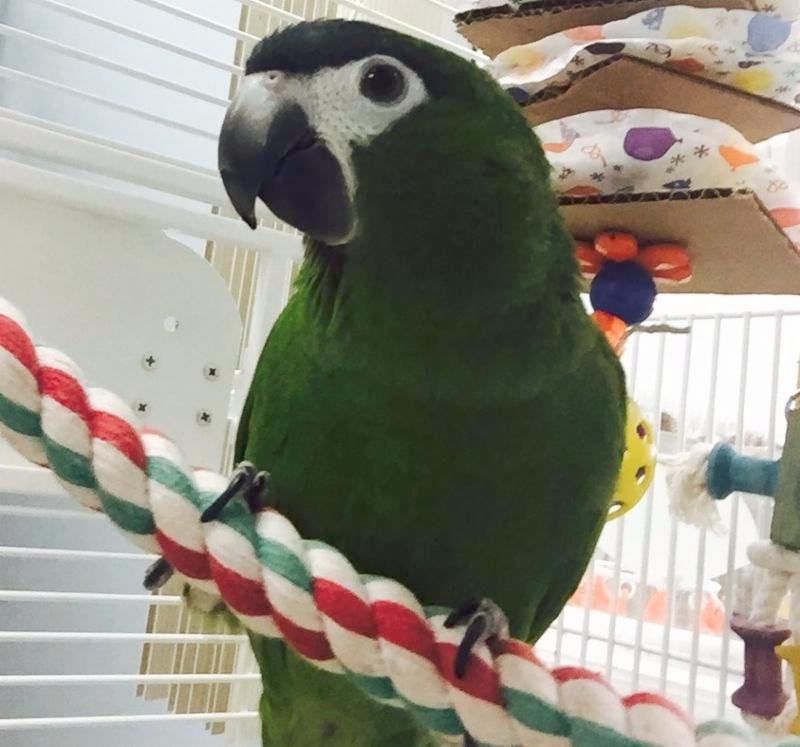
Pickle, Hahn's Macaw
Beauregard, African Grey
Peridot, Quaker
|
|
Joining Us Soon
|
Rainbow, Jenday Conure
Zoie, Red-bellied Parrot
|
|
|
|
Bosley's Big Birthday Bash
|
|
Bosley's Big Birthday Bash
Saturday, July 30, 2016 from 11 am to 4 pm
At Parrot University
Please join us at Parrot University on Saturday, July 30, from 11 am to 4 pm for Bosley's Big Birthday Bash. This is our opportunity to celebrate parrot adoption with all our wonderful friends and supporters.
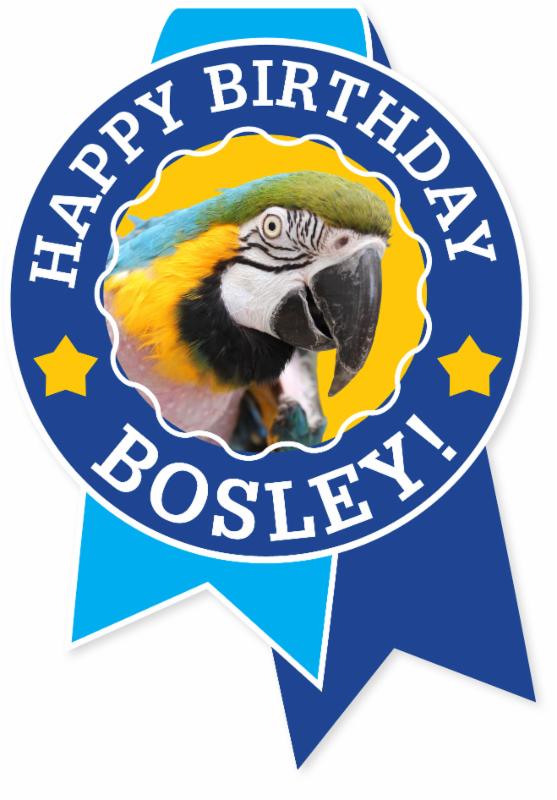
There will be light refreshments, cake for the birthday bird (and humans!) and fabulous raffle prize giveaways with all proceeds supporting the birds of CPR. Thanks to all of you, we had record raffle sales last year and hope to beat that record this year! The more tickets you buy, the more you help the birds, and the better your chances are for winning! Prizes include gift cards from Parrot University, AMC Movie Theatre, Discovery Place, Ben & Jerry's, as well as jewelry, art and more. Raffle tickets are on sale now at Parrot U for just $2 each, or 12 tickets for $20.
To help celebrate, Parrot University will be holding a special weekend sale with great savings on the products you need.
We hope you'll plan to join us to party with the parrots. Bosley can't wait to see you!
|
Meet Alex: Featured Bird
|
|
|
|
 |
|
Alex, African Grey
|
|
Species:
African Grey
Age: Approx 20 years
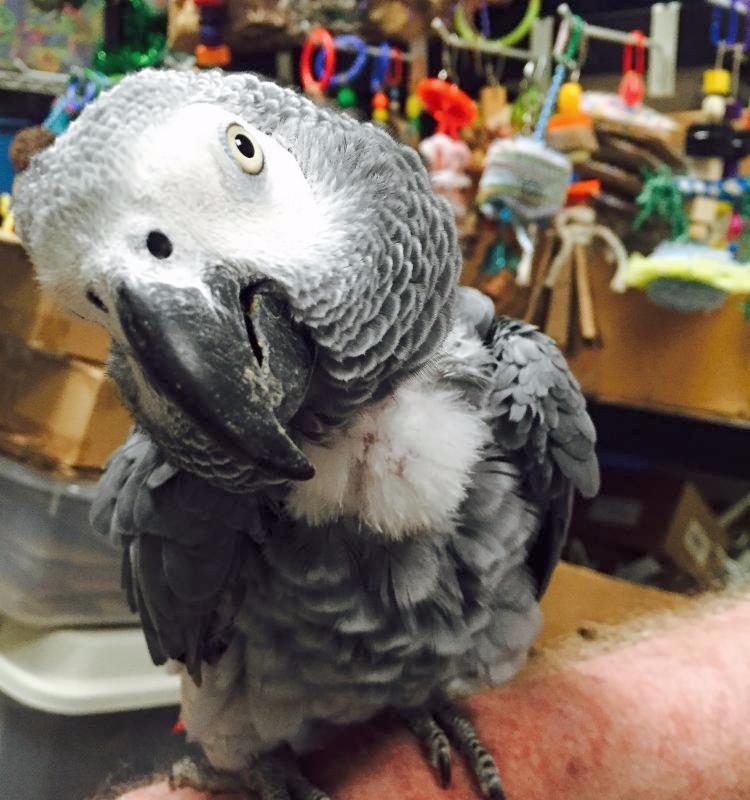
Alex is a male, Congo African Grey who's approximately 20 years old. He has lived in two different homes and was relinquished to CPR after his owner was no longer able to be home consistently to care for him. Alex can mimic a microwave beep and a smoke detector low battery warning. He makes a number of different whistles, and says phrases such as "Hey good looking" and "Hello handsome". Alex will make a great companion. Watch his video and please come meet him.
|
Meet Peridot: Featured Bird
|
|
|
|
|
| Peridot, Quaker Parakeet |
|
Species: Quaker Parakeet
Age: 13
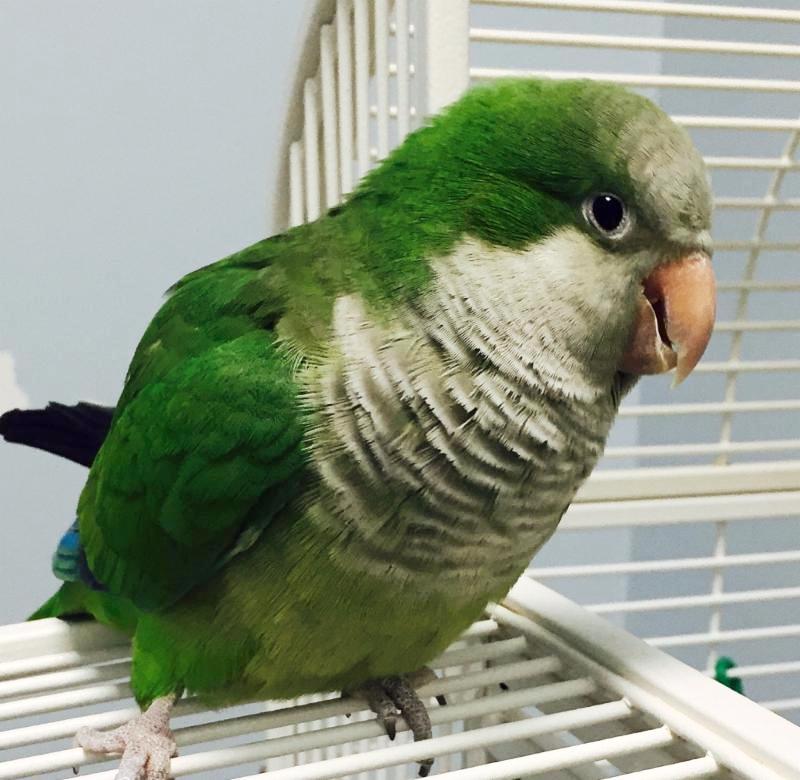
Peridot is a 13 year old, male Quaker Parakeet. He was released outside because he was no longer wanted, but luckily a kind citizen found him and was able to entice him with a piece of bread. The finder then relinquished Peridot to CPR, so a new home could be found. Peridot will make a wonderful companion. This adorable guy was named Peridot after the olive colored gemstone. Watch video and come meet him.
|
Meet Pickle: Featured Bird
|
|
|
|
|
| Pickle, Hahn's Macaw |
|
Species: Hahn's Macaw
Age: 3 1/2 years
Pickle is a 3-1/2 year old, male Hahn's Macaw. His original owner passed away and he was being cared for by her family. However, Pickle was recently surrendered to CPR in order to find a safer home, due to the stress and potential danger from the cats in the household. Pickle has a large vocabulary, including "What a good boy", "I love you" and "Goodnight". He will also say "Bonk! Bonk! Bonk!" while he bonks his beak against your nose -- this is the fastest way to bond with him. Pickle prefers that you don't ask him to "step up" but he will happily do so if you talk to him in a high pitched voice and ask him to "Come on!" Watch Pickle's video and come meet this fellow.
|
| Free Parrot Care Classes |
|
Our free, parrot care classes will help you keep your parrot healthy, safe and happy. Please register at
info@companionparrots.org
or 704-889-2325. Click for class descriptions.
Parrot 101
(required for adoption)
Saturday, Aug. 27, 2 pm
Avian Health & Medicine
(required for adoption)
Saturday, July 23, 2 pm
Sunday, Aug. 7, 2 pm
Sex & the Single Bird
Sunday, July 31, 2 pm
Saturday, Aug 13, 2 pm
Positive Reinforcement Training
Sunday, July 24, 2 pm
Sunday, Aug. 14, 2 pm
Fun with Food
Saturday, Aug. 6, 2 pm
Toy-Making
Saturday, July 23, 11 am
Saturday, Aug 20, 11 am
Classes are held at the CPR Education Center at Parrot University, 321 South Polk St. in Pineville. Donations are greatly appreciated.
|
| Parrot Care |
|
By Muriah Bottemiller
Toy Maintenance - When to Reuse, Reinvent, or Toss Out
Many of us buy new items for our feathered friends quite regularly -- it's fun picking out a new toy or perch for our bird's cage and watching their reaction. But what about the old toys and accessories? How do we know when they need to be spruced up, re-purposed, or tossed out completely? Here are some basic guidelines to follow to make this process a little easier:
|
|
|
| Luke, Available for Adoption |
|
Toys and perches a little poopy? With a little elbow grease, they can be good as new! Use an old toothbrush or scrubber to get off tough, dried messes. A short soak in water will make cleaning much easier. Make sure the item has thoroughly dried before returning it to the cage. This can be done with just about any material except paper, which will have to be discarded.
Beautiful new toy been reduced to a pile of blocks or pieces? As long as the pieces are of reasonable size, they can find new life as part of a new toy! If previously drilled holes are no longer usable, drill new ones, or collect several disassembled toy parts together in a fun foraging toy, like a baffle cage.
Rope perches or fabric pieces becoming frayed? First, assess whether the accessory has become unsafe. Frayed ends can easily become tangled and parrots can get caught in them, possibly leading to injury. Also, many rope perches have a flexible metal wire running through the center, which can be prone to rust when exposed.
These guidelines are just the beginning, but will hopefully help you get a little more life from your old toys before tossing them out.
|
| New Beginnings |
|
By Jennifer Drummond
|
|
|
| Charlie, Adopted in 2016 |
|
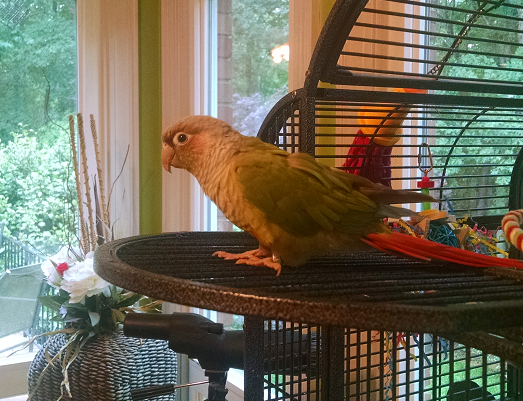
The term "Happy Ending" implies the story is over. At CPR, we prefer to use the term "New Beginning!" That's certainly the case for one adorable little Cinnamon Green Cheek Conure named Charlie. As a young bird, Charlie was lost and found and later came to CPR. We are now very proud to say that Charlie has found his new beginning with his forever family!
Charlie loves his new home, which he shares with an Umbrella Cockatoo and a Panama Amazon. He enjoys taking baths and hanging out on his new cage, which looks out into the backyard where there is lots of natural light. A natural clown, Charlie brings joy to his new mom and he is even working with his new dad on target training.
Please join us in congratulating the Minsk family on the new addition to their flock! Stop in soon to Parrot University and visit the wonderful birds who are available and waiting for their "New Beginning". Who knows, you just might find your match!
|
| Teach Your Parrot to Forage - Part 1 |
|
By Cindy Halperin
|
|
|
Maddie foraging |
We're commonly asked, "Why is my bird screaming or plucking?" Often the answer is simply that parrots become bored and seek attention by plucking or literally screaming for our attention. With a little effort, we can enrich our parrots' lives by teaching them to forage, which can also help to eliminate unwanted behaviors through stimulation and exercise.
The dictionary defines forage as "a search or process of searching for something, especially a search for food and supplies or a search among a varied collection of things". In our homes, food is delivered in a dish, which rarely presents a challenge to our companion parrots, unlike their wild cousins who must forage for food for hours each day. Foraging can and should be a fairly complex and time consuming activity that keeps our parrots busy and stimulated. Providing foraging opportunities for our birds actually makes them want to "work for food." Once you get started, you'll be amazed at how quickly your parrots love to "find" their food and toys.
Start with simple ideas that can be incorporated into your daily routine, and then add more time-consuming or complicated tasks that perhaps could be saved for the weekend. Here are some first steps to get your parrot(s) started and excited about foraging.
- Place empty bowls in the cage where food would normally go, and then use another bowl with a favorite treat across the cage. If you're limited on bowls, you can purchase 'Quick Lock Crocks' which simply adhere to the cage bar for easy on and off. This is the first step in teaching them to "search" for food. With foraging you don't have to use the bowls near perches.
- Next let your parrot watch you add their favorite treat to new and different bowls. Then start placing treats in other bowls while he or she is out of the cage and out of sight.
- Change out where you put their daily food, by simply dividing up the food into different bowls and moving them around. Note, some birds that don't eat after an hour or two, may need to be shown where their food is; others won't need this assistance.
- Use a brown paper lunch bag filled with yummy, finely cut veggies and add a couple of small pieces of walnuts or almonds. Then twist the top of the bag and slide the bag onto the inside of the cage door. You may have to show your parrot that there is food inside by tearing a tiny hole in the bag. We promise that they will soon learn that ripping is fun and a new way to find food.
You're just getting started. We've got lots more tips, so stay tuned for Part 2 in our next issue.
|
|
The Birds of Companion Parrots Re-homed
Board of Directors
Volunteers
|
|
|