I can only imagine from the three puncture wounds healing on this little beggar that he was able to wiggle from the grasp of some bird's large talons. I felt so sorry for him I set out a plate of
Wildlife Blend for him to nibble. Fox Squirrels are fattening up for the winter months ahead and may increase their weight by as much as 25 percent. The added weight mine has already gained may have just saved his life. Fox squirrels don’t hibernate like
Woodchucks. With a little extra weight, squirrels can spend the bad weather days in their nests. Then the extra flab along with a nice winter coat, helps them stay warm on the other days when they
seek squirreled-away food and other nourishment.
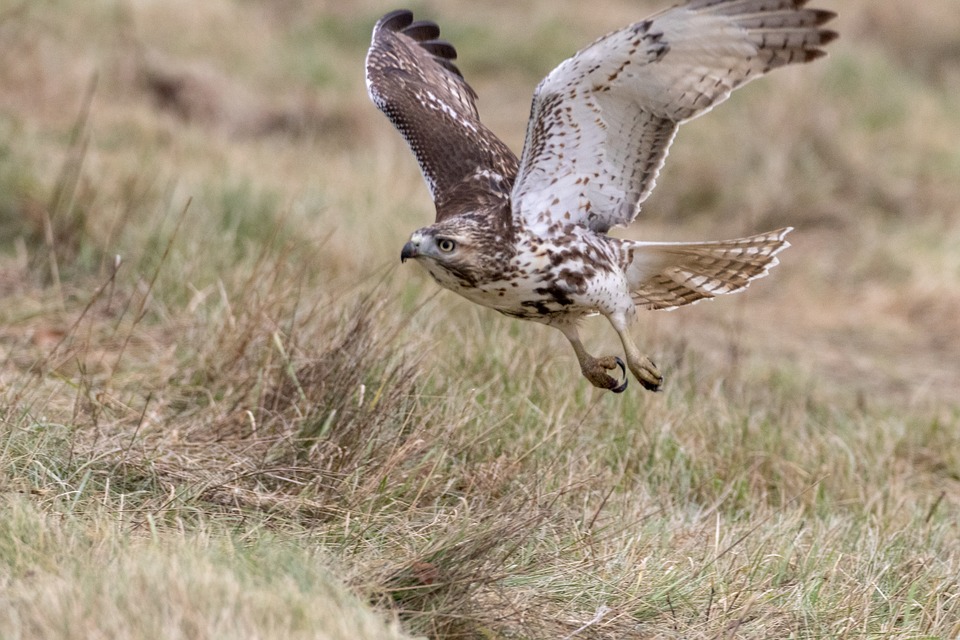
I'm guessing he had an encounter with a hawk. The Red-tailed Hawk uses its fast flight and large, sharp talons to capture a variety of different animal species. It feeds on small sized mammals, like squirrels, rabbits, and mice as well as snakes, birds, fish and insects.
Although we have hawks year-round in mid-Michigan, in the fall some of the northern hawks are migrating south and young hawks have just become independent.
By late September and early October the
Cooper's,
Red-tailed, and
Red-shouldered hawks;
Golden and
Bald Eagles,
Peregrine Falcon, and
Merlin are moving through to their winter territories. And watch for the
Broad-winged Hawk, which at times can be seen in flocks, or kettles, "boiling" high into the sky. The next most commonly seen migrants are the feisty
Sharp-shinned Hawk,
American Kestrel,
Osprey, and
Northern Harrier.