|
This month we continue our series circulating through the systems required to safely and reliably meet the water and wastewater needs of our city. Along the way we highlight a sampling of the dedicated staff who work hard to keep things flowing in our community. In February we focused on water production. The next stop is water treatment—the processes that prepare our water supply for consumption. As you can guess, there is some chemistry involved.
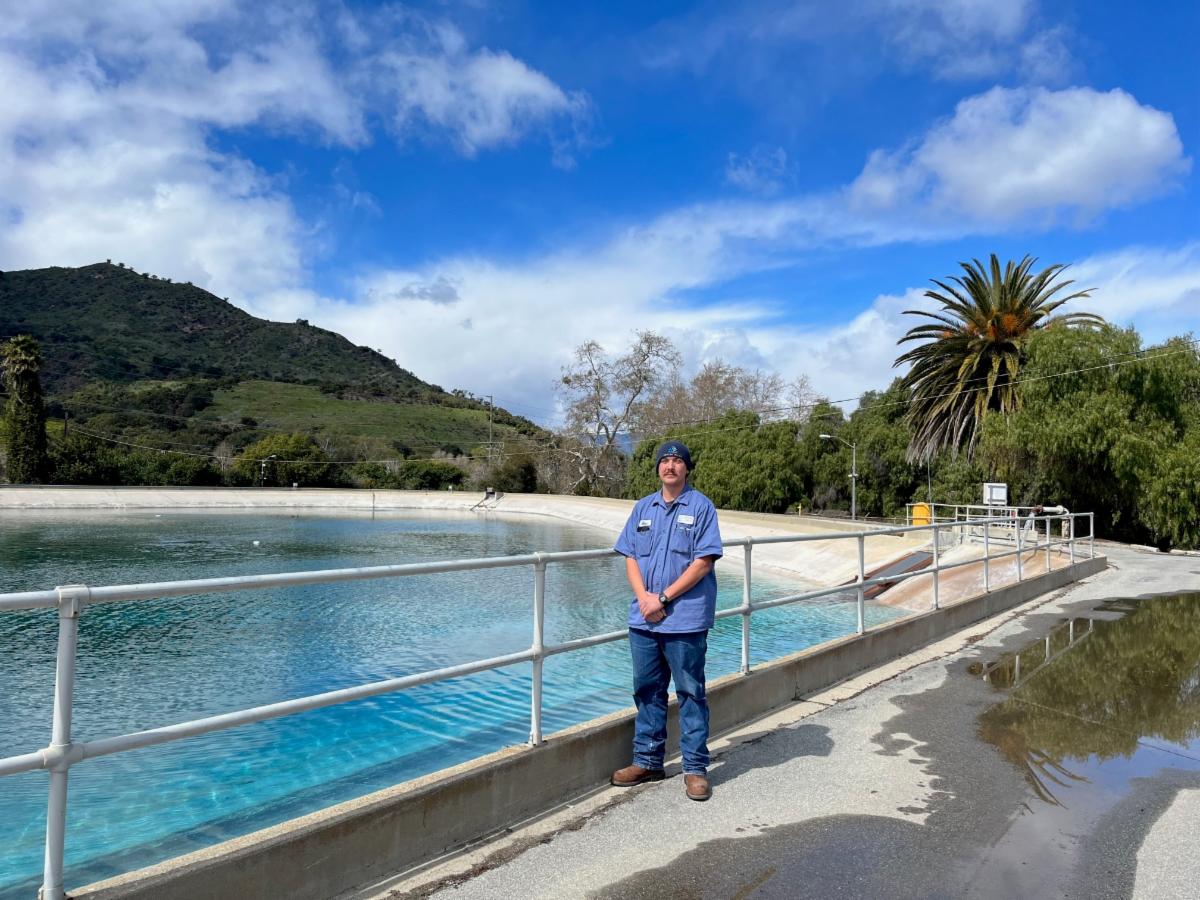
Alex Gonzales, Lead Plant Operator, works on a team of nine, all of whom must be state-certified water treatment operators. Alex explains that the task of making sure the City receives an adequate and safe water supply not only requires careful water testing and treatment, but also a combination of balance and timing. If treated water sits more than 4-5 days the chance of nitrification, (the creation of harmful nitrites and nitrates) increases, so operators must balance the amount of water treated with the demand. In winter people typically use less water and with the plethora of rainfall this winter, the balancing act was more complex.
Ventura’s water sources include river, lake, and groundwater–each requiring unique treatment processes. Surface water from the Ventura River is treated at the Avenue Water Treatment Plant utilizing a membrane filtration system. Water is first disinfected to remove any organic materials or contaminants. Trihalomethanes and haloacetic acids are disinfection byproducts (DBPs) that can lead to water quality issues, so a granular activated carbon system helps reduce DBPs. Finally, the plant’s ultrafiltration system removes any microorganisms or particles down to .02 microns small. For reference, the diameter of human hair is about 75 microns, and the thread of a garden spider is approximately 3 microns across.
Groundwater is treated at Ventura’s two water conditioning facilities. Because it is exposed to rocks and minerals groundwater is “harder”, meaning it can have a high mineral content. Iron and manganese are removed to improve color and taste, and mixed media filter vessels reduce the presence of total suspended solids.
All this chemistry and systems operation and maintenance goes on behind the scenes, around the clock, every day of the year. Thanks to the skill and commitment of our water treatment team, Ventura’s residents don’t need to worry about organics, nitrification, or DBPs. As Alex likes to say, “If you don’t hear from us, that means we’re doing our job.”
Flowing past water treatment, next month we’ll focus on how the necessary improvements to our water and wastewater systems transform from an idea to a plan.
|