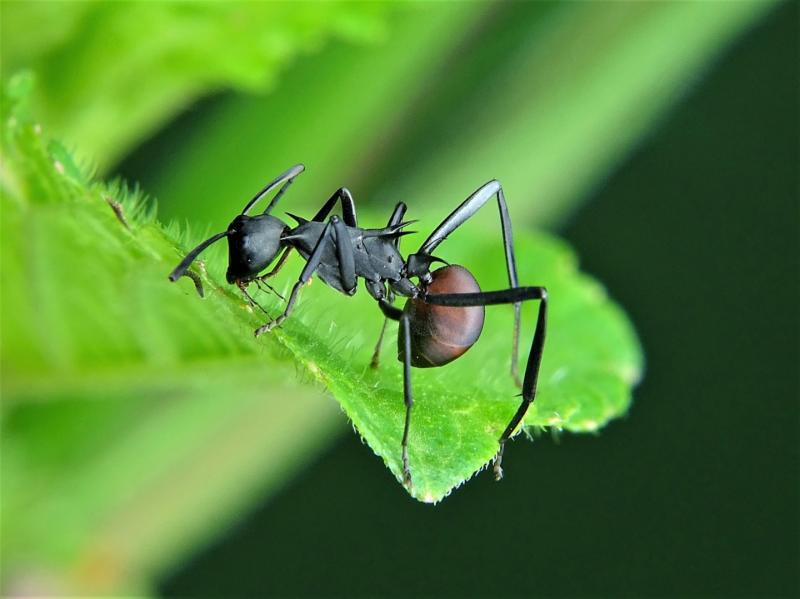
The ants go marching two by two...or is it more like 100 by 100? Sometimes it seems that way, right? Either way, spring has officially sprung and 'tis the season for all the ants that are starting to emerge. And it's no wonder why these guys are the number one nuisance pest. Most species are itty bitty, highly intelligent and sneaky little suckers. As we enter ant season, let's take a hot minute and learn a bit about ants, their colonies and how Blue Chip works to combat them.
HOW ANTS FORAGE
They may be little but ants are certainly not unintelligent. They have a strong sense of survival and will willingly sacrifice themselves for the survival of their colony. Your home or business represents a food source to them and food equals survival. As they forage for food, they leave a pheromone trail so that other ants can quickly & easily find the food and bring it back to the colony.
HOW OUR TREATMENTS WORK
Once the materials that your technician applies have ample time to dry, it can still take time before the materials affect the ants and you see a complete knockdown of the colony. As the ants pass through the materials, they pick some up on their bodies. They clean themselves similar to the way a cat would -- by licking themselves. As they do this, they ingest the chemicals and will die over the next couple of hours. It's just a good idea to set realistic expectations & know that there is not an overnight solution to eliminating an ant colony.
SEEING MORE ANTS BEFORE FEWER
As the ants die and don't return to the colony with food, the queen ant will send out more and more ants. They will have the same fate as the ones before them; however, ants are social creatures and live in colonies that could contain more than 10,000 ants. For this reason, not only can it take a couple of weeks to completely eliminate a colony of ants, it's also very common to continue to see ants (and possibly even more ants) before you see fewer ants.
WHEN TO CALL BLUE CHIP
Seeing a few ants is normal. They are simply exploring for food they can take back to their colony. If they find food, they'll leave a trail for other ants to find the food as well. If they don't find food, they won't return. It's that simple. By eliminating any potential food sources for ants to be attracted to, you will also eliminate any problems with ants. However, if you see a large number of ants (more than a few at one time) or a trail of ants, that's when you'd want to give our office a call. We might want to move up your next service visit or add an extra visit to focus on any interior ant problem.
Want more info on specific ant species? Interested in learning more about the some of the most common ants in our area? Check our
What's Bugging You Pest ID guide.