From The Top Wire
Spring 2024
|
|
USDA Specialty Crop Block Grant Projects Well Underway
Last October, the Hop Growers of Michigan received a $105,000 Specialty Crop Block Grant from the USDA to aid in marketing Michigan grown hops to breweries in the Great Lakes region.
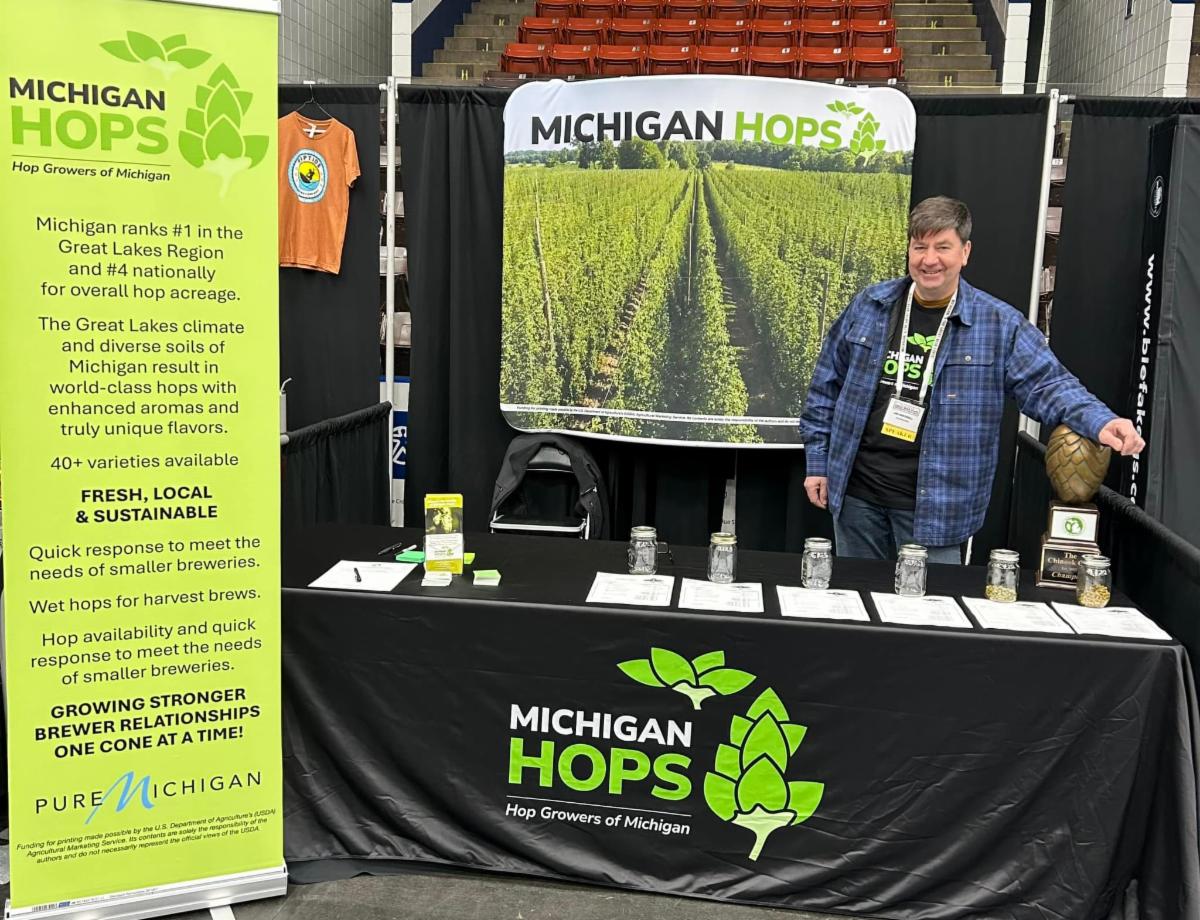
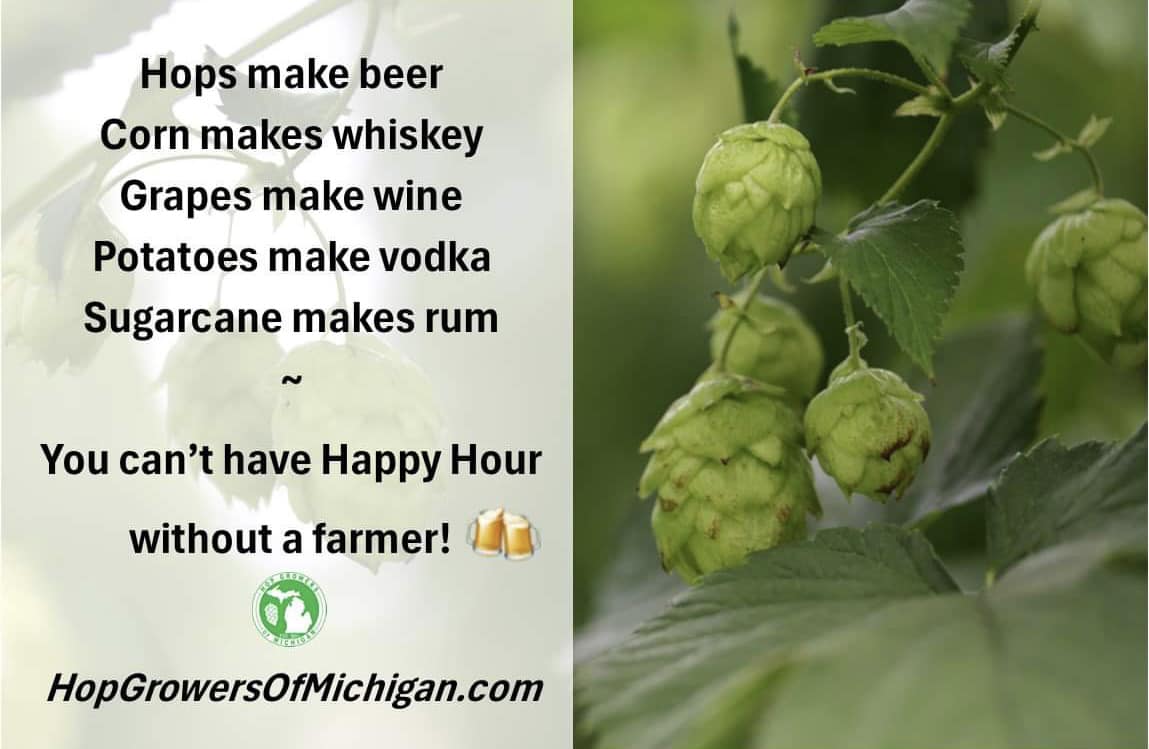
First on the list was the development of a new logo (see above) as well as the purchase of a variety of display items (signage, table coverings, rack cards and stickers) which were used at industry Trade Shows in Michigan and Ohio in January (with Wisconsin (Date TBD) and Indiana (November 17-18) coming up later in the year). We will be looking for volunteers to represent the organization, so please let us know if you're interested. We will also be asking for small donations of hops that can be available for attendees to see/smell.
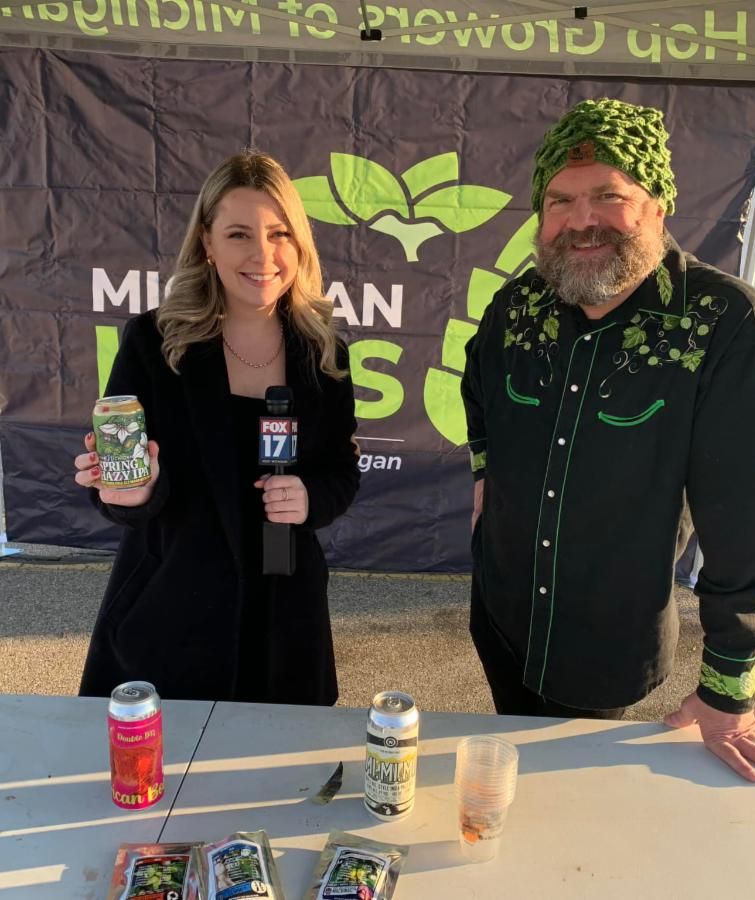
In February, HGM poured beer brewed with Michigan hops at the Michigan Winter Beer Festival near Grand Rapids -- and will also involved in the Michigan Summer Beer Festival, July 26-27 in Ypsilanti; U.P. Fall Beer Festival, September 7 in Marquette; and Detroit Fall Beer Festival, October 19 in Detroit. If you are interested in volunteering to help at these events (with expenses covered), please let us know.
The next big project is a website overhaul...providing more information about member growers and creating a brewer-friendly source to support the overall industry. WE NEED YOUR HELP in creating these member grower pages! Please take a few minutes to complete this questionnaire (and send photos and your logo) to help HGM represent you! For a sample of what these member pages will look like, please review the Michigan Cider Association website. The new website will also include a link to the updated GROWER MAP - please review your listing here and make sure the information is correct. Questions? Email secretary@hopgrowersofmichigan.com.
|
|
REMINDERS from the HGM Board
Membership renewals are now due - if you haven't submitted your payment, please do so ASAP. If you would like a digital invoice to pay via credit card, email Treasurer Jim Mikesell: j_mikesell@msn.com.
|
|
Marketing Update from
Committee Chair Brian Tennis
GR Winter Beer Festival. This was really a great event and we had excellent attendance at our booth. We had an awesome location as well, Thanks to the MBG for allowing us to participate, Dianna for making sure everything ran smoothly, and to our volunteers who helped staff the booth. We poured beers from Old Nation, 3 Gatos, and Short’s that prominently featured Michigan grown hops. We were featured on FOX17 News. We also had interest from several other breweries that want to participate in the next event and would like us to pour their beer at our tent. This of course would feature Michigan grown hops, hopefully 100%.
Michigan Craft Beverage Summit. Attendance was great for the first event. 300 Attendees from the craft beverage segment of Michigan. It was a very positive event and even Lt Governor Gilchrist showed up to voice his support for the industry. This event really focused on products made in Michigan with Michigan grown ingredients. We were able to network with producers, brewers, retail outlets, fellow growers, and some important folks in the agricultural sector including government representatives. A worthwhile event for sure. We need to keep doing events like this and stay connected with the officials who represent us as well as the government agencies that can help us promote our Michigan grown product.
Next event on the calendar is Summer Beer Festival in Ypsilanti. These events are very important in terms of shining the light on our organization and keeping Michigan hops in front of the brewing community and the craft beer fan. So, we would love to see your participation.
|
|
Michigan Craft Beverage Council Awards MSU Extension Grants for Hops Research
The Michigan Craft Beverage Council recently announced the recipients of their 2024 Research Grants. Nearly $350,000 was awarded to twelve projects. Three of the twelve projects will directly benefit the Michigan hop industry and related craft brewing industry and a fourth proposal will likely have a positive impact on Michigan’s hop industry as well.
Dr. Martin Chilvers, Dr. Tim Miles, and Karri Neugebauer (Michigan State University) were awarded $48,000 for their proposal “Assessment of Plant Varieties and Disease Management Practices to Improve Hop and Barley Quality”. The objectives of the proposal are to 1) Conduct a meta-analysis to determine the optimal fungicide program for head blight of barley; 2) Screen commercial hop varieties for resistance to downy mildew and halo blight; 3) Evaluate downy mildew and halo blight resistant male germplasm for breeding; 4) Update extension materials for Michigan hop and barley farmers with findings from research. The overarching goal of the research is to contribute to and improve hop and barley Integrated Pest Management programs to support Michigan’s craft beer industry.
MSU was also funded to continue research into hop-cyst nematodes. Dr. Marisol Quintanilla-Tornel and Usman Muhammad were funded $39,998 for their proposal “Protecting the Michigan Hop Industry Through Germplasm Evaluation for Hop-Cyst Nematode Tolerance”. The project will assess tolerance levels of different hop varieties against HCN in terms of their impact on both above and below-ground growth, nutrition, and yield. This approach will develop baseline information on how different hop varieties respond to HCN parasitism. Additionally, the research will offer growers essential information about the tolerance levels (resistant, moderate, susceptible, highly susceptible) of different varieties of hops to HCN damage. This knowledge will empower hops growers to select varieties with potential tolerance to HCN parasitism, leading to increased production without the need for intensive management efforts.
Drs. Josh Vander Weide, Rob Sirrine, Nicole Shriner, Emily Mayhew, and Tim Miles (MSU) were awarded $40,000 for their proposal: “Improving Michigan Hop and Beer Aroma and Flavor Using a Biostimulant”. The objective of this project is to evaluate the capacity of a natural plant hormone biostimulant, methyl jasmonate, to enhance hop and beer aroma. MSU will evaluate alpha and beta acid and aroma volatile concentrations in hops and beer, as well as conduct a sensory tests to understand whether consumers can distinguish beers made with methyl jasmonate-treated and untreated hops. This research may also demonstrate the potential to slightly alter harvest dates leading to improved hop yields and quality. HGM and MSU also submitted an expanded version of this proposal to the USDA Specialty Crop Block Grant Program, that if funded will expand the research to additional cultivars for at least two additional years.
Dr. Aaron Staples who recently completed his Ph.D. at MSU, Dr. Trey Malone (formerly at MSU), and Dr. Rob Sirrine were awarded MI Craft Beverage Council funding for their proposal: “Benchmarking best practices to expand craft beverage markets for the Michigan value chain”. This project will identify the regulatory, marketing, and other constraints related to local craft beverage supply chain development. It will also determine consumer policy and purchasing preferences across craft beverage value chains and explore which marketing strategies might be most effective for promoting the development of the Michigan craft beverage industry.
Thanks to the Michigan Craft Beverage Council for funding proposals that will benefit the Michigan hop and craft beer industries.
Also...the Michigan Craft Beverage Council has a website aimed to connect specialty crop growers with craft beverage producers. Businesses can search for Michigan specialty crop growers – such as hops – by variety, location and many other identifying characteristics. List your farm, for free, by submitting a grower form. For more information, check out this one-pager about this opportunity.
|
|
HGA provides resources to the entire hop industry which we are a part of. This includes the development and release of Non-Proprietary hop varieties, research into new pesticides, facilitates the international hop market, provides ongoing Best Practices and Carbon Footprint Studies.
|
|
REMINDER...
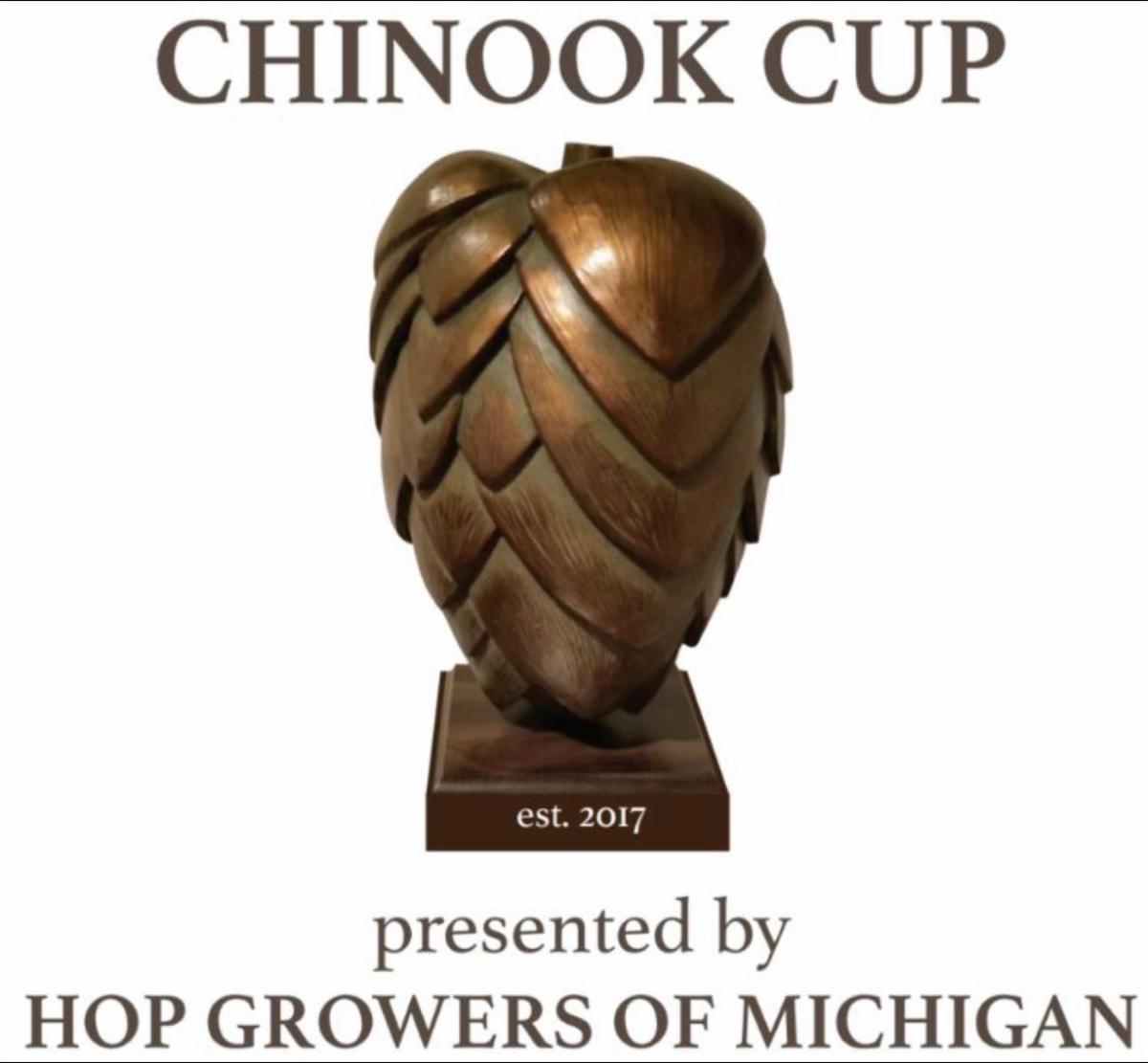
Save your Chinook samples for next year's competition!
Submissions will be due in
mid-December and awards presented at the Michigan's Great Beer State Annual Conference in Kalamazoo in January.
|
|
Michigan Hops in the News
|
|
UPCOMING EVENTS
-
2024 MSU Hop Chat Series: Every other Thursday, May 9 through August 15 from 12-1 pm (ET). FREE but registration is required.
|
|
Breweries Love Michigan Hops
THANK YOU!
Michigan Breweries for using superior Michigan Hops in your beer recipes!
Visit these breweries and let them know you like drinking beer crafted with Michigan hops!
if you know of other Michigan or Great Lakes breweries utilizing Michigan-grown hops
. . . and watch this list GROW!
|
|
· Anchor Bay Brewing Co, St Clair Shores MI
· Battle Alley Brewing Co, Holly MI
· Bell's Brewery, Comstock Park MI
· Big Lake Brewing, Holland MI
· Block Brewing Co, Howell MI
· BrickHaven Brewing Co, Grand Ledge MI
· Cadillac Straits Brewing Co, Madison Heights MI
· Charlotte Brewing Co, Charlotte MI
· Dearborn Brewing Dearborn MI
· Dimes Brewhouse, Dimondale MI
· Dog and Pony Show Brewing, Oak Park MI
· Downey Brewing Co, Dearborn MI
· EagleMonk Pub and Brewery, Lansing MI
· Eastern Market Brewing Co, Detroit MI
· Ferndale Project, Ferndale MI
· Flat River Brewing Co, Greenville MI
· Founders Brewing Co, Grand Rapids MI
· Four Leaf Brewing, Clare MI
· Great Baraboo Brewing Co, Clinton Township MI
· Guardian Brewing Co, Saugatuck MI
· Gull Lake Distilling Co Galesburg MI
· Hartland Brewing Co, Hartland MI
· Harbor Light Brewing, Howell MI
|
|
· Iron Bark Brewery, Jackson MI
· Kickstand Brewing Co, Commerce Township MI
· Kuhnhenn Brewing Co, Clinton Township MI
· Looking Glass Brewing Co DeWitt MI
· North Center Brewing Co, Northville MI
· Ogma Brewing Co, Jackson MI
· Old Mill Brewpub, Plainwell
· Original Gravity Brewing Co, Milan MI
· Our Brewing Co, Holland MI
· Pavlov's Brewing Co, Temperance MI
· Pigeon Hill Brewing, Muskegon MI
· River's Edge Brewing Co, Milford Township MI
· Rockford Brewing Co, Rockford MI
· Saugatuck Brewing Co, Douglas MI
· Sawyers Brewing Co, Montague MI
· Short's Brewing Co, Bellaire MI
· Sleepwalker Spirits and Ale, Lansing MI
· Steele Street Brewing, Ionia MI
· Tantric Brewing Co, Allegan MI
· Three Blondes Brewing, South Haven MI
· Townies Brewery, Ann Arbor MI
· Two Guys Brewing, Wyoming MI
· Wyandotte Beer Co, Wyandotte MI
|
|
|
~ Fundraising and Promotional items ~ |
|
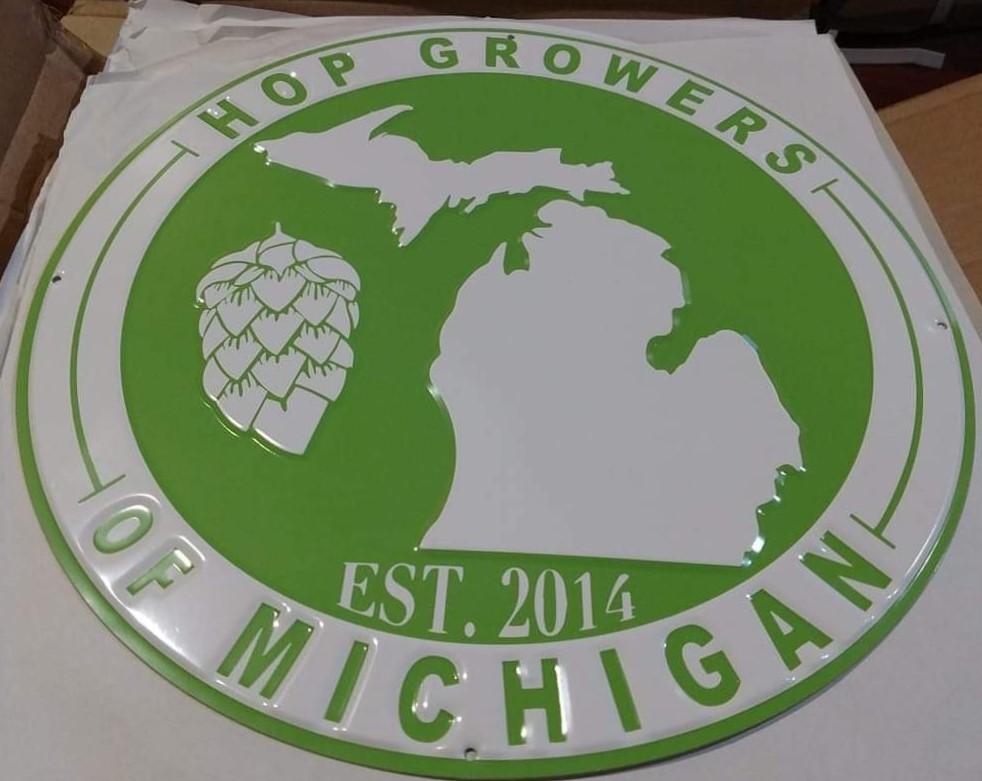
As a fundraising effort, the remaining Tin Tackers of the HGM logo are available for sale at a cost of $20. We're encouraging members to promote the sale of these to their customer base and/or purchase for themselves as marketing and/or gifts to their customers.
{If a grower gives an HGM tin tacker to a brewery as a gift, the cost to the grower is reduced to $10}.
|
|
HGM Tee-Shirts
aka Swag, Merch, Spiffies
|
A fundraising effort of newly printed HGM Tee-shirts is also in progress. Shirts are available in several sizes at a cost of $20. Contact: secretary@hopgrowersofmichigan.com
for payment options and shipping costs.]
|
|
Let Us Help You
Put Your Business Out There!
HGM is launching a new promotion to get you and your business in the front of potential new customers...and allow us to get to know each other better. Follow this LINK to complete the survey and we will be spotlighting YOU through the Newsletter, Social Media, Website, and word of mouth.
Introduce your business to new customers and
"Let them know who you are, what you do and how well you do it!"
|
|
Classified Advertisements and Vendor Section |
|
|
|
Do you have equipment to sell or want to let your customers know about a sale?
|
|
Hop Growers of Michigan | P.O. Box 514, Charlotte MI 48813
|
|
Follow us on Social Media |
|
|
|
|
|
|
|