The Electrical and Computer Engineering Department Heads Association | |
|
This edition of the ECEDHA Source is sponsored by Altera, an Intel Company | |
|
Letter from the Guest Editor
The Impacts of AI and ML in ECE Curricula Continue
| |
|
Badri Roysam
University of Houston
| |
|
Dear Colleagues,
Artificial Intelligence and Machine Learning (AI/ML) continues to transform the ECE research and teaching agenda. I was speaking with a classically trained archaeologist with 40 years of research experience yesterday evening at a reception, and she was describing the challenges associated with analyzing point cloud data from LIDAR sensors to seek out archaeologically relevant motifs. I wasn’t quite expecting that, although in hindsight, we should expect it. Maybe not that soon. It is now fully clear that AI/ML is starting to impact virtually all disciplines on our campuses, even disciplines that seemed far from our “world” even a few years ago. It is altering the work of students and faculty at all levels.
The pace of AI/ML innovation is breathtaking, even by ECE standards. Even more impressive is its democratization, global reach, and accessibility. While ECE researchers are at the cutting edge of the advances, we are interested in what impacts they will have on the educational side. While the training of large foundational models is still limited to the biggest industry players, the resulting models themselves are surprisingly accessible. Let’s watch this space.
| | |
|
How FPGAi is Helping Innovators Create New AI Solutions
Learn more about how Altera is partnering with Dr. Rania Hussein from the University of Washington and LabsLand to accelerate the AI revolution, powered by FPGAs; in a deep dive with Business Influencer, Bernard Marr.
| Subscribe here to learn more academic news from Altera University | | |
Programmable AI Chips
and the Next Generation
of Intelligent Machines
By Bernard Marr
| |
| |
|
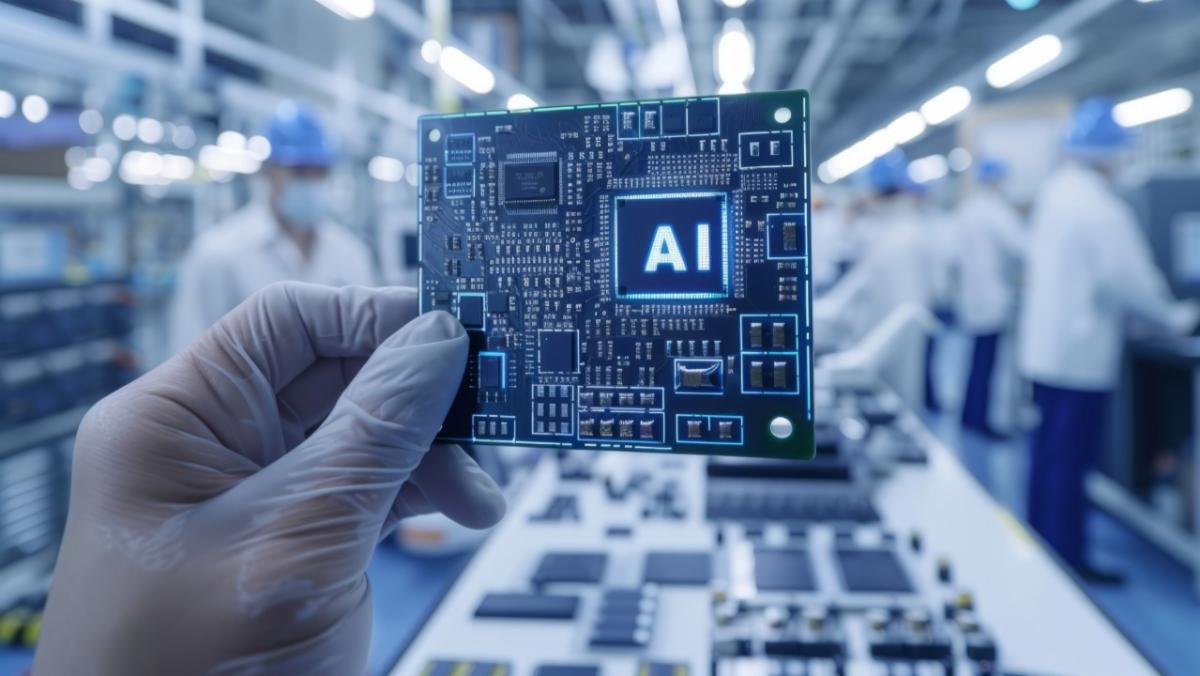
Today, we’re quickly becoming used to using AI-enhanced applications on our phones and PCs. However, although we call these "smart devices," the actual smarts often happen in the cloud, with our devices simply acting as terminals displaying the results.
But as the AI revolution gathers pace, everyday devices will increasingly come with intelligence “baked in” and will perform AI computing locally. This is called edge computing and has a number of benefits, such as reducing the need to transmit large amounts of information over the network, cutting bandwidth costs, and reducing security risks. However, as they run on our phones, vehicles and smart home appliances rather than data centers, edge processors have different requirements. For example, they usually need to be small and power efficient.
"Altera – a long-standing pioneer of programmable logic and now a subsidiary of Intel – is now trailblazing the field of FPGAi. With a full product line that extends from the highest performing FPGAs for the data center, in the network, and all the way to smart embedded systems at the edge, Altera is meeting new demands with innovative approaches to programmable logic." --Bernard Marr
| | |
|
Democratizing Semiconductor Fabrication Through CMU’s
“Hacker Fab” By Amy George
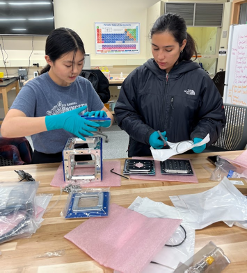
The Department of Electrical and Computer Engineering at Carnegie Mellon University (CMU) has developed the first open-source IC fab in tandem with an innovative hands-on introductory course—the “Hacker Fab”—encouraging students to repurpose, build, and share microfabrication tools and processes.
| |
| |
In light of the high barrier to entry in the field, expense of machinery, and growing demand for onshore semiconductor manufacturing, the Hacker Fab’s aim is to democratize nanofabrication, allowing anyone, anywhere to be able to fabricate semiconductor tools and devices in a fashion comparable to 3D printing—an exciting “DIY,” multidisciplinary educational experience for engineering students of all backgrounds. | | | |
UCF Launches Inaugural Mentorship, Scholarship
Initiative for Students in AI
By Eddy Duryea
| | |
|
UCF faculty are collaborating as part of a new five-year U.S. National Science Foundation grant led by UCF’s Center for Research in Computer Vision to guide and support promising low-income students in the multidisciplinary field of artificial intelligence
Faculty in UCF’s College of Sciences and College of Engineering and Computer Science are preparing incoming students to keep pace with the emerging multidisciplinary field of artificial intelligence.
A team of five faculty, led by UCF’s Center for Research in Computer Vision (CRCV), recently received a U.S. National Science Foundation grant totaling nearly $2.5 million over five years to serve as resources to uplift bright yet low-income or struggling undergraduate students in pursuing a well-rounded education in AI.
| | |
iREDEFINE Alumini Spotlight | |
|
Meet Stephanie Damas
iREDEFINE is a workshop funded by the NSF with the goal of increasing the representation of women and underrepresented minorities in ECE faculty positions. The iREDEFINE Fellows participate in dedicated programming to support their academic career paths, attend ECEDHA sessions, present their research, and take part in mock interviews.
| | | |
|
Stephanie Damas
iREDEFINE Alumni
PhD Student
Clemson University
| |
Greetings and humble salutations! My name is Stephanie Damas. I am a Black Haitian American woman from Clemson University in Clemson, South Carolina. I am a 4th-year PhD candidate studying Engineering and Science Education. My bachelor’s is in electrical engineering, and I attained a master’s in computer science with a focus on Human Centered Computing en route to PhD. My dissertation research delves into the critical area of institutional support for minority engineering programs and aims to reshape how institutions design and implement programs for students with marginalized identities. | | |
IEC 2to4 Scholar Spotlight | |
|
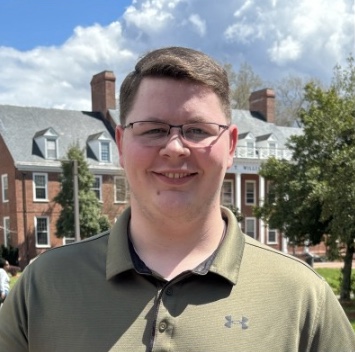
Meet Isaac Cullen
The IEC 2to4 program is an IEC initiative focused on supporting first-generation, underrepresented minority community college students in their transition to completing four-year ECE degrees. In Fall 2023, the first cohort of 2to4 students received scholarship funds. We invite you to share in their academic journey.
Learn more about the IEC 2to4 program.
| | |
|
Isaac Cullen
IEC 2to4 Scholar
Community College:
Delaware Technical Community
Current College:
University of Maryland Eastern Shore
| |
“My education pathway to studying engineering technology at the University of Maryland Eastern Shore began at Sussex Technical High School, where I took the electrical technology electives. Those classes gave me the foundational knowledge and practical experience in electrical work. Wiring houses during my senior year as part of a work-based learning program was one of my favorite parts of high school. After high school, I continued my education at Delaware Technical Community College, pursuing an associate degree in Electronics Engineering Technologies. I balanced my coursework with practical work experience.. My interest in engineering was solidified when I took a PLC (Programmable Logic Controllers) class, which I thoroughly enjoyed and found a strong interest in. | | |
My decision to transfer to UMES for a bachelor's degree in Engineering Technology was influenced by several factors, including the articulation agreement between Delaware Technical Community College and UMES, which ensured that my credits would be accepted. Additionally, the proximity of UMES to my new job at Process Integration, where I work on assembly lines and am being trained in PLCs, made it a convenient choice. This strategic decision aligns with my long-term goals of managing electrical equipment.” | | |
Association Announcements | |
2024-2025 ECEDHA Memberships
ECEDHA is preparing for the 2024-2025 ECEDHA membership renewal period. Please contact us if any updates need to be made to your institution's membership record or if you have any questions regarding your ECEDHA membership.
membership@ecedha.org
Invoices for membership renewal will be issued in August
| | |
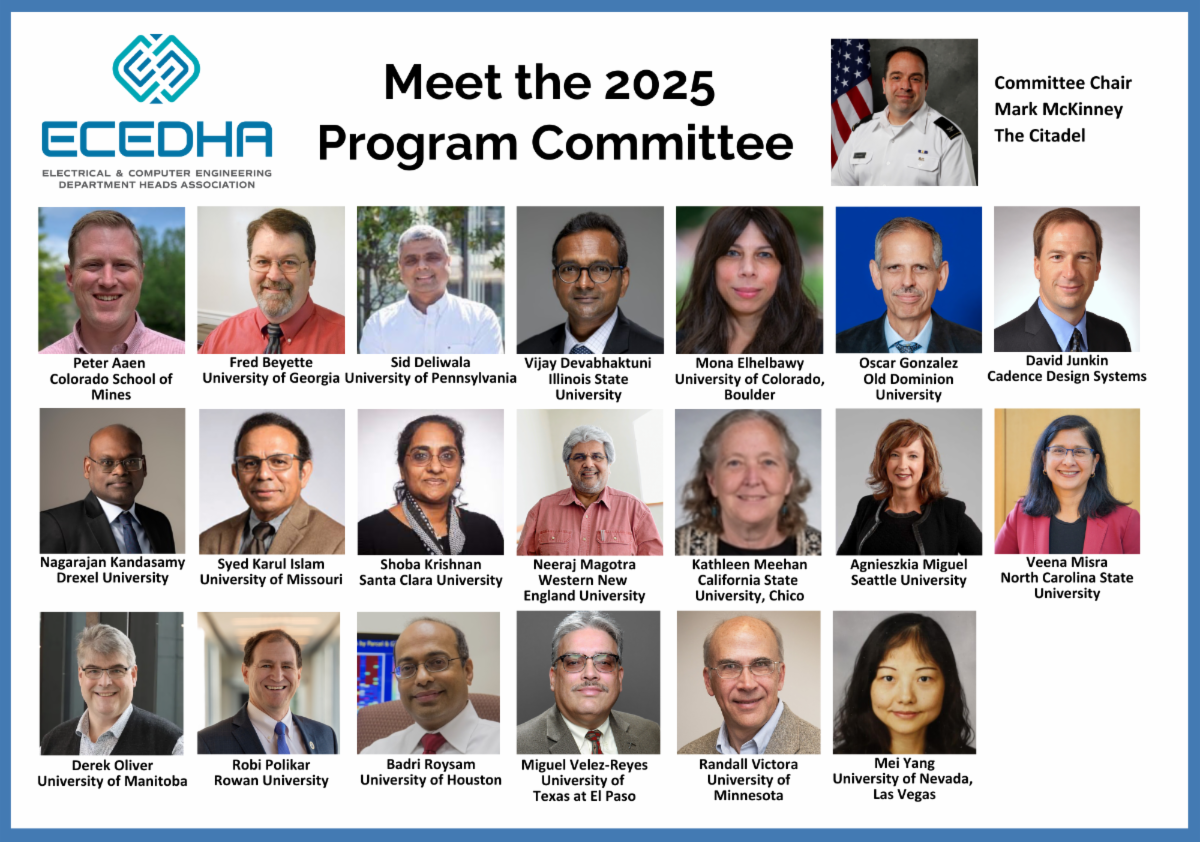
Interested in joining the 2025 Annual Conference Program Committee? Please contact Elizabeth Hibbler for more details at Ehibbler@ecedha.org
| | |
|
Have an article you would like to share?
Articles of interest to ECEDHA members for the ECEDHA Source are always welcome. Email your article for consideration to information@ecedha.org.
| | | |
|
ECE Summit: What is the Role of ChatGPT in ECE? How will Generative AI Drive Innovation?
Webinar produced in partnership by:
ECE Foundation & NVIDIA
| | | |
|
Professional Growth Series: Interview Like a Pro
Webinar produced in partnership by:
Texas Instruments &
Inclusive Engineering Consortium
| | |
A Little Engineering Humor | |
This ECEDHA Source eNewsletter is made possible by the support of our corporate sponsors. As such, by reading selective content, your email address may be shared with our sponsors. If you do not wish for your email address to be shared, please contact privacy@ecedha.org with the subject "Do not share request."
You are receiving this ECEDHA member communication because your organization is an ECEDHA member. If you wish to unsubscribe from ECEDHA member communications, please use the unsubscribe link below.
| | | | |