Sonoma Water E-News | June 2024 | |
New public dashboard launched
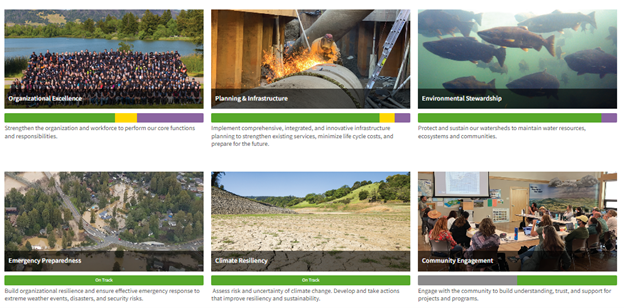
Sonoma Water has launched the public dashboard of its Five-Year Strategic Plan, an interactive, detailed snapshot of its progress in meeting the agency’s strategic objectives through 2027.
The dashboard displays how Sonoma Water is moving toward its goals across the pillars of organizational excellence, planning and infrastructure, environmental stewardship, emergency preparedness, climate resiliency and community engagement.
Sonoma Water is displaying its strategic goals and the progress made toward implementing its Strategic Plan to increase transparency and build trust with residents and other community stakeholders.
| |
|
Pictured above, top: Ranney collector wells at the Russian River near Wohler Bridge in 1965.
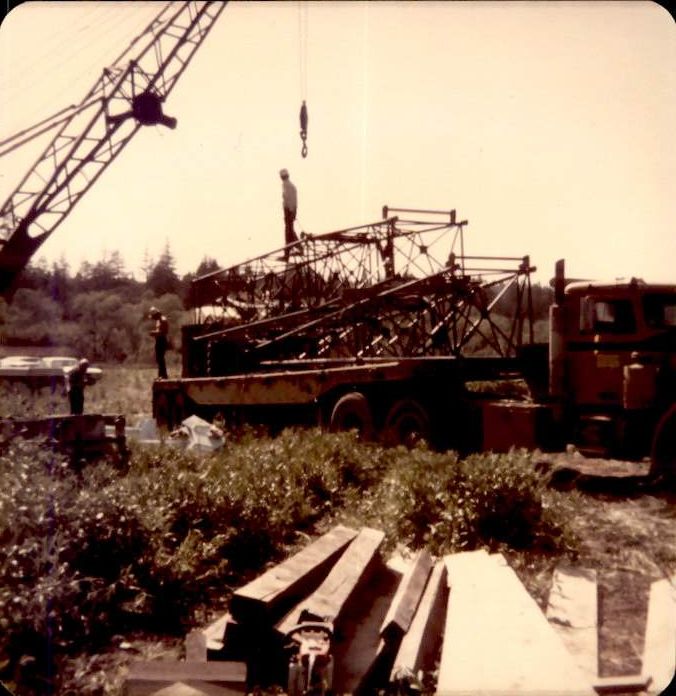
middle: Ranney collector well under construction
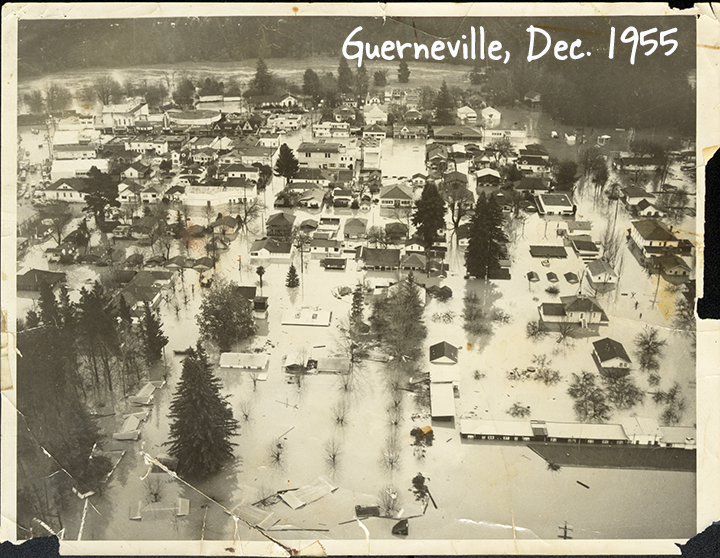
bottom: Aerial view of Guerneville after the Christmas Day flood of 1955
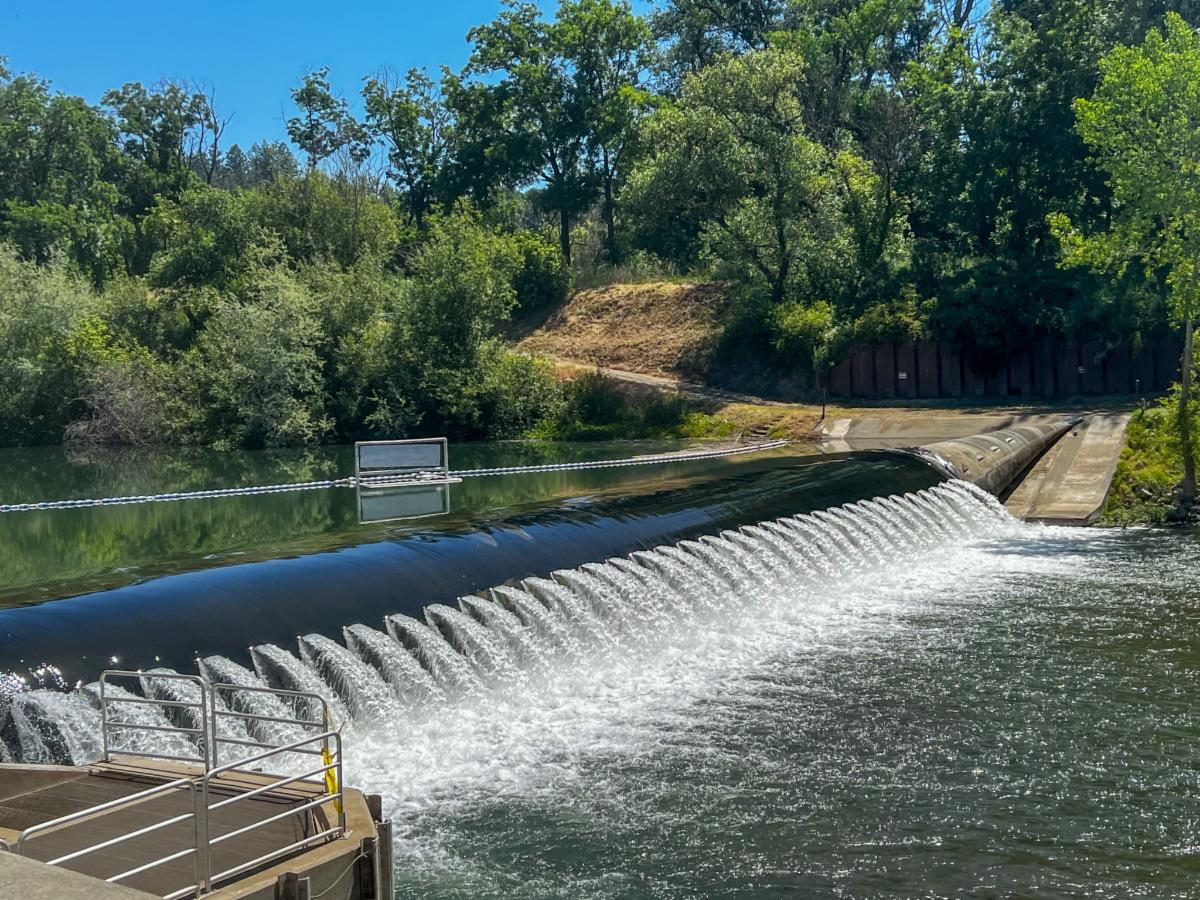
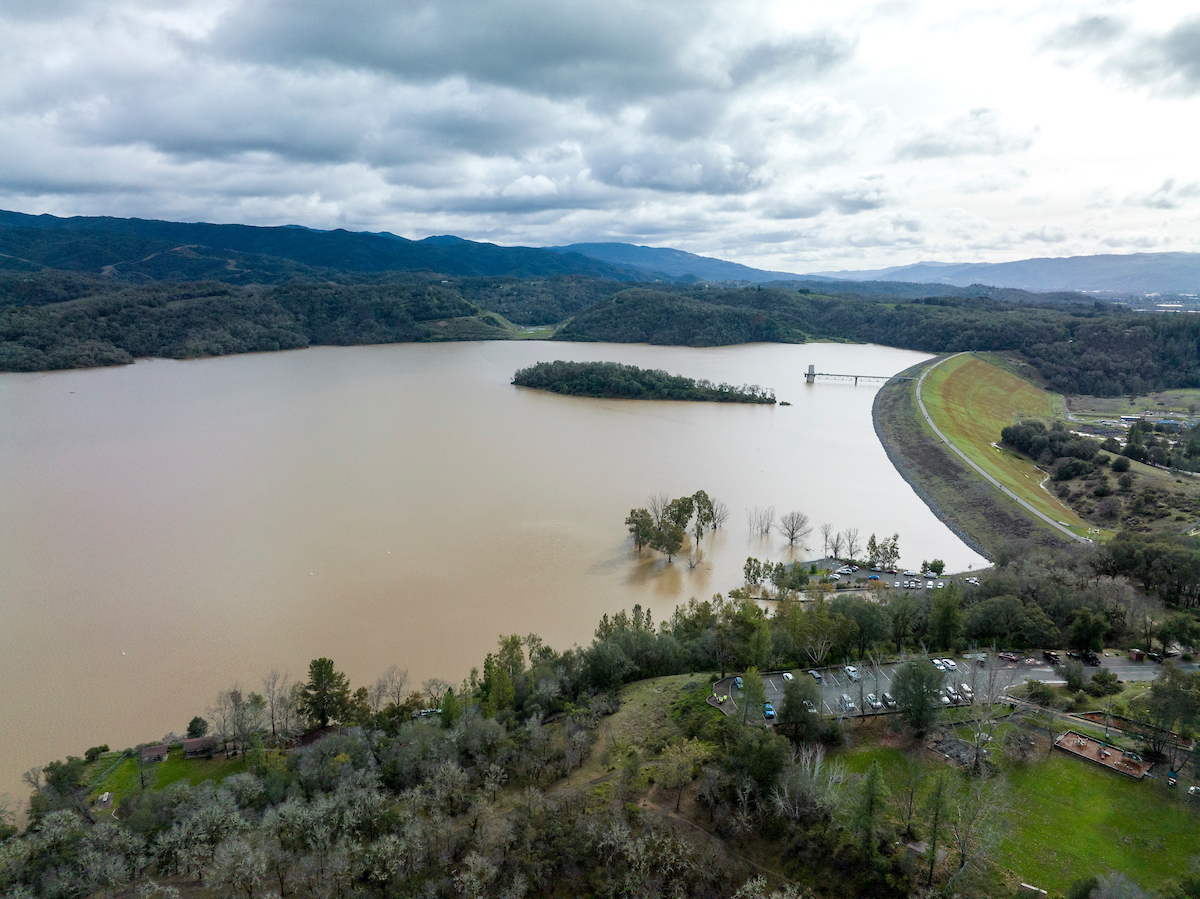
Image above article headline: Coyote Valley Dam at Lake Mendocino, 2023
| |
Looking back over 75 years: The 1950s
In 1950, the U.S. House of Representatives authorized the construction of Coyote Valley Dam near Ukiah. The project began in 1956 and was completed and dedicated in 1959, at a cost of $5.6 million raised through a bond measure. The dam created Lake Mendocino and was operated by the U.S. Army Corps of Engineers. It helped reduce high winter flows and stored 118,000 acre-feet of water. An acre-foot of water equates to 325,851 gallons. The Sonoma County Water Agency and the Mendocino County Russian River Flood Control and Water Conservation Improvement District share state water rights permits to store water in the reservoir. However, as the local sponsor for the construction of Coyote Valley Dam, the Sonoma County Water Agency has maintained the right to control releases from the water supply pool in Lake Mendocino.
Once water stored in the lake reached the flood control pool, releases were determined by the Army Corps. As the local sponsor for the project, Sonoma Water also assumed responsibility for maintaining channelization works on the Russian River constructed along with Coyote Valley Dam.
| |
In 1955, Sonoma County suffered from heavy flooding for several days starting on Dec. 25. Flood waters covered 30,000 acres of land and reached a height of 47 feet, underscoring the need for more flood control measures.
Sonoma Water began providing water to the City of Santa Rosa on May 24, 1959, under a 1956 agreement that set the fees the city was to pay, and the quantities of water Sonoma Water was to provide. To provide sufficient revenues to expand the system, Sonoma Water entered into similar agreements with principal cities and water districts along the route of each ensuing aqueduct before its construction.
| | |
The bond measure that funded the Coyote Valley Dam also provided for the initial construction of Sonoma Water’s water supply and transmission system. The system began simply enough, with a single diversion facility called a Ranney collector at Wohler Bridge, which collected water from a depth of approximately 60 feet in the gravel next to the Russian River and pumped it through the Santa Rosa Aqueduct for 15.6 miles to storage tanks near Lake Ralphine. The Santa Rosa Aqueduct formed the backbone of the Sonoma Water’s delivery system, with all future aqueducts connecting to it. | |
Agency-wide Disaster Preparedness Exercise | |
|
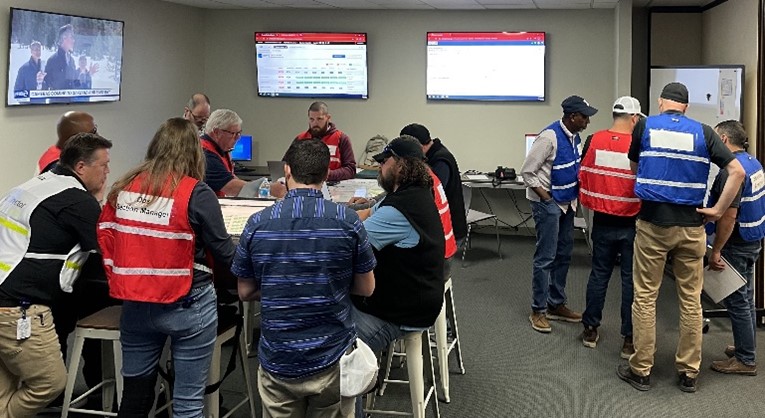
On May 23, approximately 80 Sonoma Water staff participated in a half-day disaster preparedness exercise simulating a large-scale earthquake impacting our region. The exercise included a field-based drill to assess our ability to rapidly assess damage to our water, wastewater, and flood control infrastructure, and to stabilize these systems to prevent further disruption or damage.
This field exercise was designed to validate the agency’s new Emergency Concept of Operations. The plan has been in development for almost two years and outlines Sonoma Water’s tactical response to major emergencies that may impact critical sites, locations, or infrastructure within the water, wastewater, and flood control systems. The plan can be automatically employed after a sudden onset emergency event such as an earthquake or in anticipation of a forecasted event like a winter storm.
| |
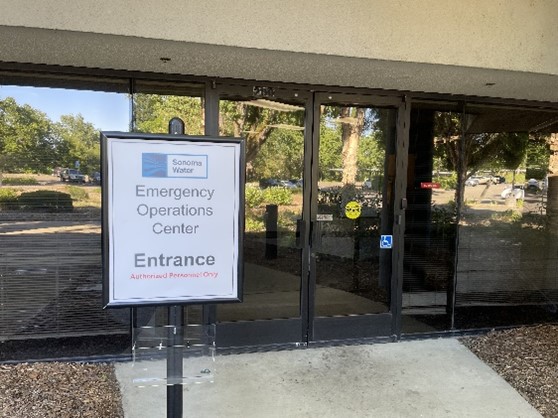
Sonoma Water’s Emergency Operations Center was activated to support field operations during the drill, collect and analyze information coming in from the field, develop recovery objectives based on the impacts, and practice general emergency operations center facility operations. The exercise used a detailed, multi-stage scenario, simulated calls from local agencies and the public, and a collection of impacts that were posted at approximately 50 locations throughout our infrastructure. Staff gained experience in their field or emergency operations center roles and collectively discovered the strengths and areas for further improvement within Sonoma Water’s disaster response framework.
| |
Sanitation Rate Relief Program – Applications due July 10 | |
|
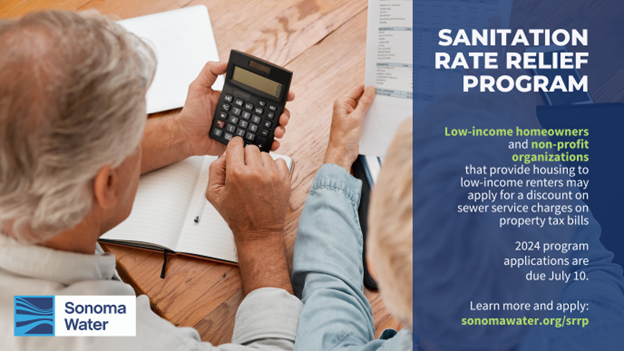
Sonoma Water Board of Directors has approved a Sanitation Rate Relief Program, allocating up to $1 million for low-income property owners in the eight sanitation districts and zones managed by Sonoma Water (listed below). The new program will reduce qualified residential property owners' sanitation rates by 50% of their total annual sewer service charge.
To be eligible for the Sanitation Rate Relief Program, property owners in the eight districts or zones listed below must be billed for sewer services on their property tax bill, own their home, and live in it as their primary residence. Non-profit 501(c)(3) organizations can also apply for the program, provided that they rent 85% or more of the property to tenants who have household earnings of 75% or less of the area median family income.
Sonoma Water operates and manages Occidental County Sanitation District, Russian River County Sanitation District, Sonoma Valley County Sanitation District, and South Park County Sanitation District (Districts).
Sonoma Water owns, operates, and manages Airport/Larkfield/Wikiup Sanitation Zone, Geyserville Sanitation Zone, Penngrove Sanitation Zone, and Sea Ranch Sanitation Zone (Zones).
|  | |
|
Free Saturday Public Tours
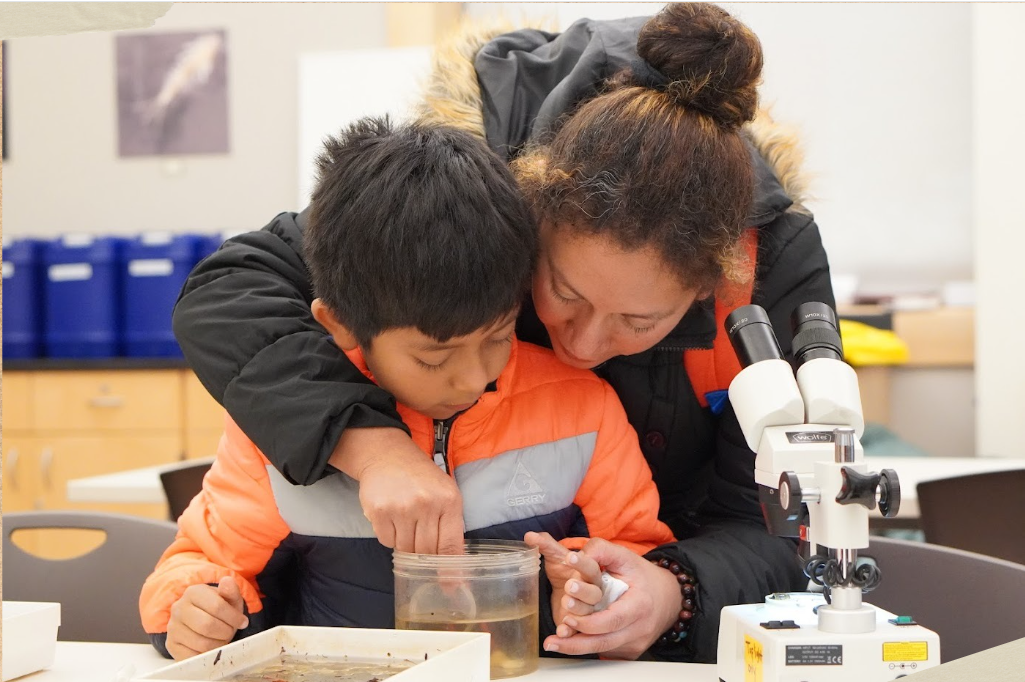
Did you ever wonder what happens to wastewater after you flush? Are you curious how Sonoma Water distributes drinking water to 600,000 people in our region every day? Join a public tour to learn about these services and hear from professionals who operate these systems. This summer, we have two free tours in Spanish via a partnership with LandPaths. Tours are free, but pre-registration is required and space is limited.
Mark your calendar for Saturday tours in Spanish!
-
June 22, Water Supply System Tour / Invertebrados Increíbles
- July 27, Lake Sonoma Tour / Explorando Lake Sonoma
| |
Irrigation Season is Here!
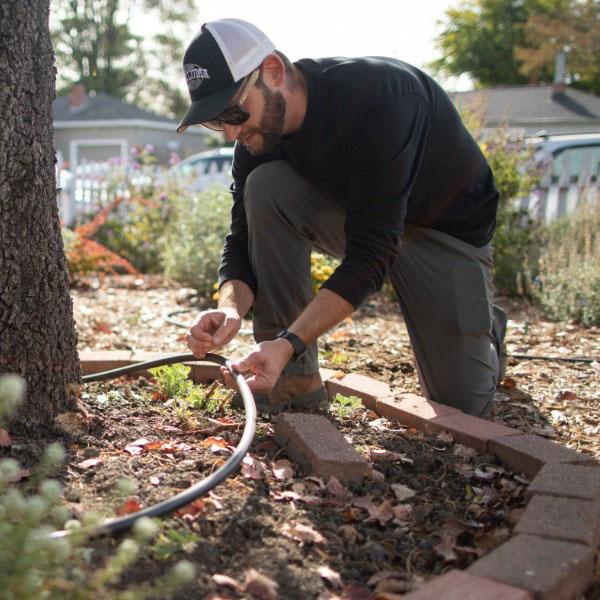
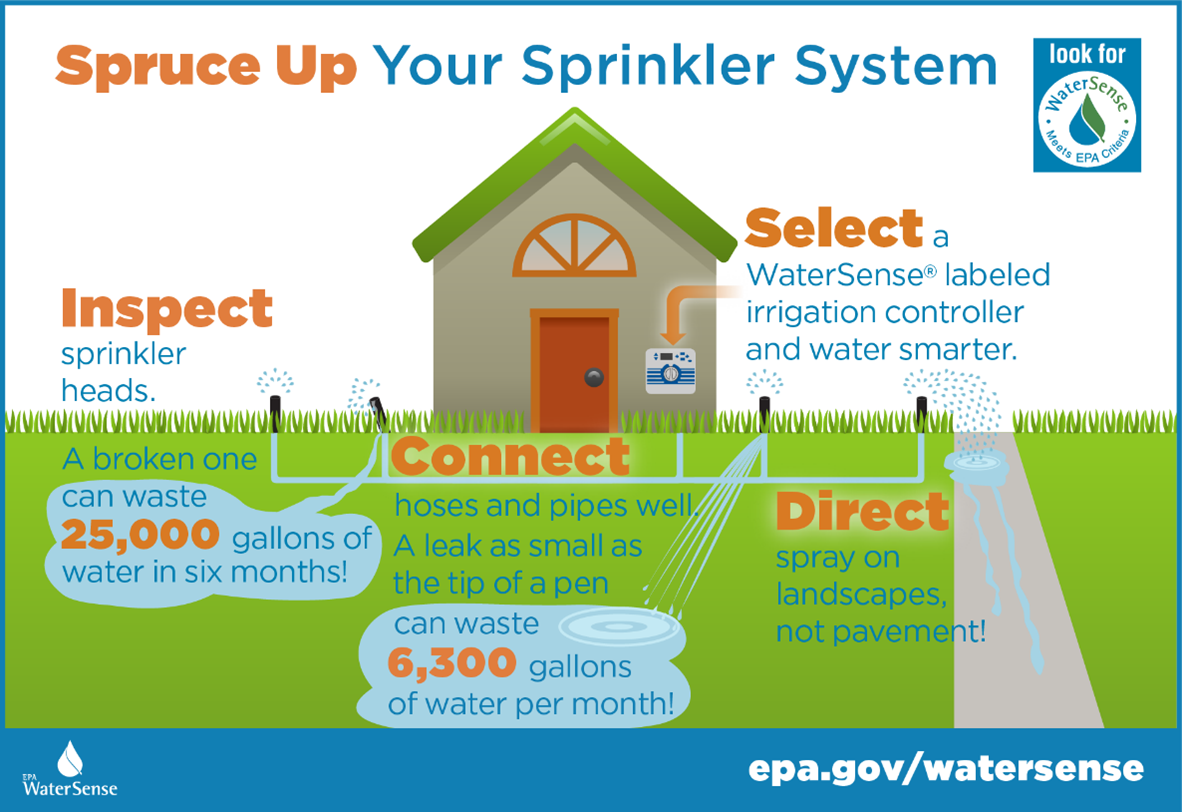
Spruce up your sprinklers for the summer irrigation season to save water. Check for leaks or breaks in your irrigation system. A broken or missing sprinkler component can waste as much as 1,000 gallons of water per week! Making simple repairs can save thousands of gallons of water and save money on your water bill over the summer months.
First, turn on your irrigation system and look for sprinkler heads that do not fully pop up or are misdirected. If you find a broken head, place a flag next to it so that you can remember to fix it.
If you have a drip irrigation system, walk along the drip line, and check to make sure the drip emitters are not clogged. Typically drip emitters are quiet, so be sure to listen for any hissing sound or for the sound of water hitting the ground/soil/plant. If you can hear water jetting out of the drip line, then investigate a little further until you find the leak and either flag it to repair later or repair it by replacing the drip emitter or plugging the hole with a goof plug.
Set your irrigation controller to the automatic weather adjust mode or enter a customized schedule from the Irrigation Scheduling Tool.
Need help with your irrigation system?
· Download a free guide to finding and fixing leaks from EPA WaterSense.
· Check with your water provider for a free water use assessment
· Hire a Qualified Water Efficient Landscaper
| |
|
Current water supply conditions as of 6/10/2024:
Lake Mendocino FIRO* Target Water Storage Curve: 111,000 acre-feet
Current Storage: 96,656 acre-feet (87.08% of FIRO Storage Curve)
Lake Sonoma Minor Deviation Curve: 264,000 acre-feet
Current Storage: 258,011 acre-feet (97.73% of Minor Deviation Storage Curve)
*FIRO is the acronym for Forecast Informed Reservoir Operations
Current rainfall conditions (10/1/23 –6/11/24)
Ukiah:
Current Water Year: 38.15” which is 105% of average
Average (1894-2023 water years): 36.47"
Santa Rosa (STS):
Current Water Year: 35.61” which is 100% of average
Average (1950-2023 water years): 35.63"
Rainfall Data Source: NOAA's California Nevada River Forecast Center
| |
Did you know?
About Harbor Seals
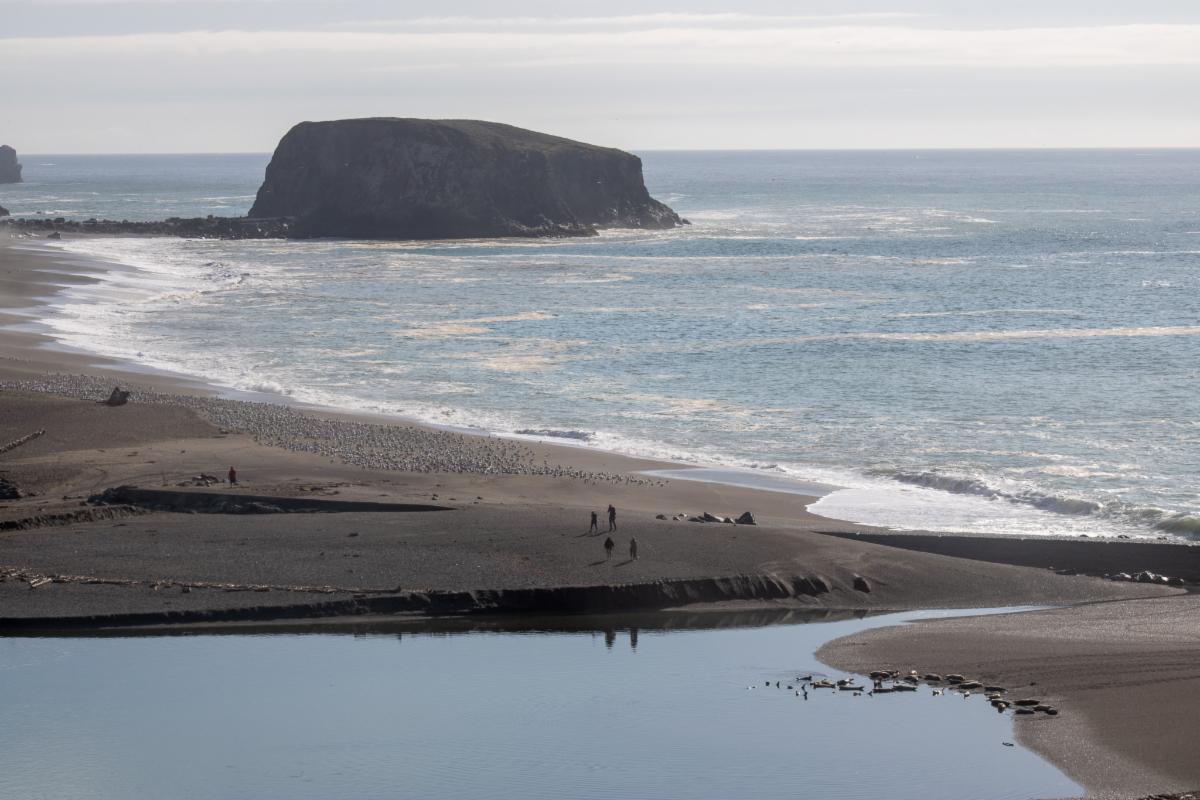
-Goat Rock State Beach is home to the largest concentration of harbor seals along the Sonoma County coast.
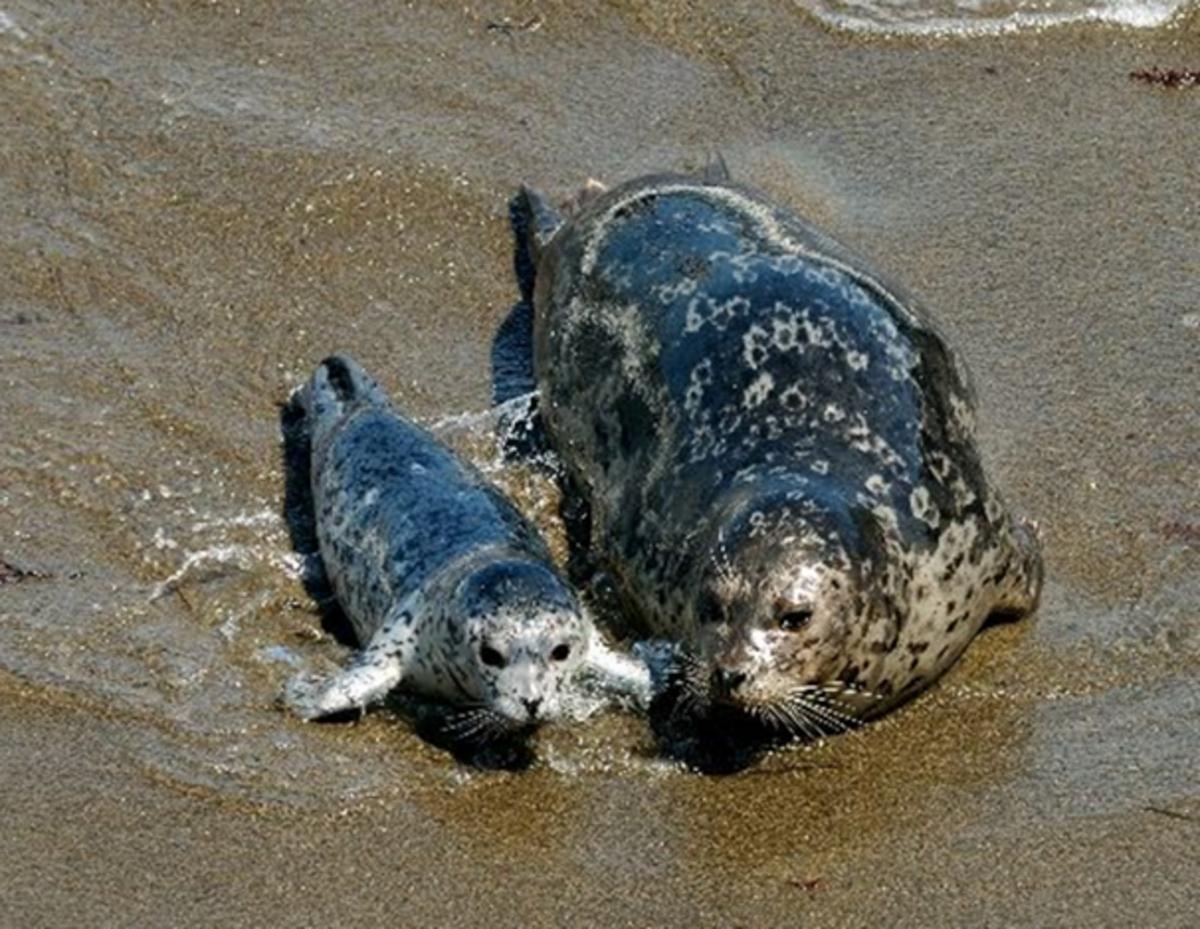
-Harbor seals use the beach to rest, warm up, molt, give birth and nurse their pups. Females give birth to one pup annually between March and June. Harbor seal pups can swim immediately after birth.
-Females remain with their pups, feeding them rich milk for approximately 30 days and pups may double in size by the time they are weaned.
-Following the pupping season, harbor seals molt their worn fur and spend more time ashore aiding the process of growing a new coat.
-Visitors to the Russian River Estuary in June and July may see the territorial displays of the males slapping their flippers on the water’s surface.
| |
-Visitors to the Russian River Estuary in June and July may see the territorial displays of the males slapping their flippers on the water’s surface.
-The productive waters near the Russian River outlet provide foraging grounds for these generalist predators, which are known to feed on a variety of locally abundant fishes and cephalopods.
-Feeding near the top of the local food chain puts harbor seals in the unique position of acting as an indicator of the overall health of our ecosystem.
-By monitoring the population of seals that call the Russian River their home, Sonoma Water’s environmental resources team is adding to our knowledge of the overall health of this valuable ecosystem.
| |
|
Upcoming Meetings
Eel-Russian Project Authority Board of Directors
View the agenda and video recording of the March 19 Eel-Russian Project Authority Board of Directors Meeting.
For more information visit eelrussianauthority.org/events.
Sonoma Water Board of Directors Meetings
The Sonoma Water Board normally holds its regular meetings on Tuesdays, beginning at 8:30 a.m. and will be facilitated virtually through Zoom and at Board of Supervisors Chambers (BSC) 575 Administration Drive 102A.
•Jun 10 BSC/Virtual/Special Meeting
•Jun 11 BSC/Virtual/Budget Hearings
•Jun 12 BSC/Virtual/Budget Hearings
•Jun 13 BSC/Virtual/Special Closed Session
•Jun 14 BSC/Virtual/Budget Hearings
•Jun 17 BSC/Virtual/Budget Hearings
•Jun 18 BSC/Virtual/Budget Hearings
•Jun 20 BSC/Virtual/Budget Hearings
•Jun 21 BSC/Virtual/Budget Hearings
•Jul 16 BSC/Virtual/
•Jul 19 BSC/Virtual/Special Closed Session
•Jul 23 BSC/Virtual
Board Agendas:
View upcoming Agenda items
| |  |
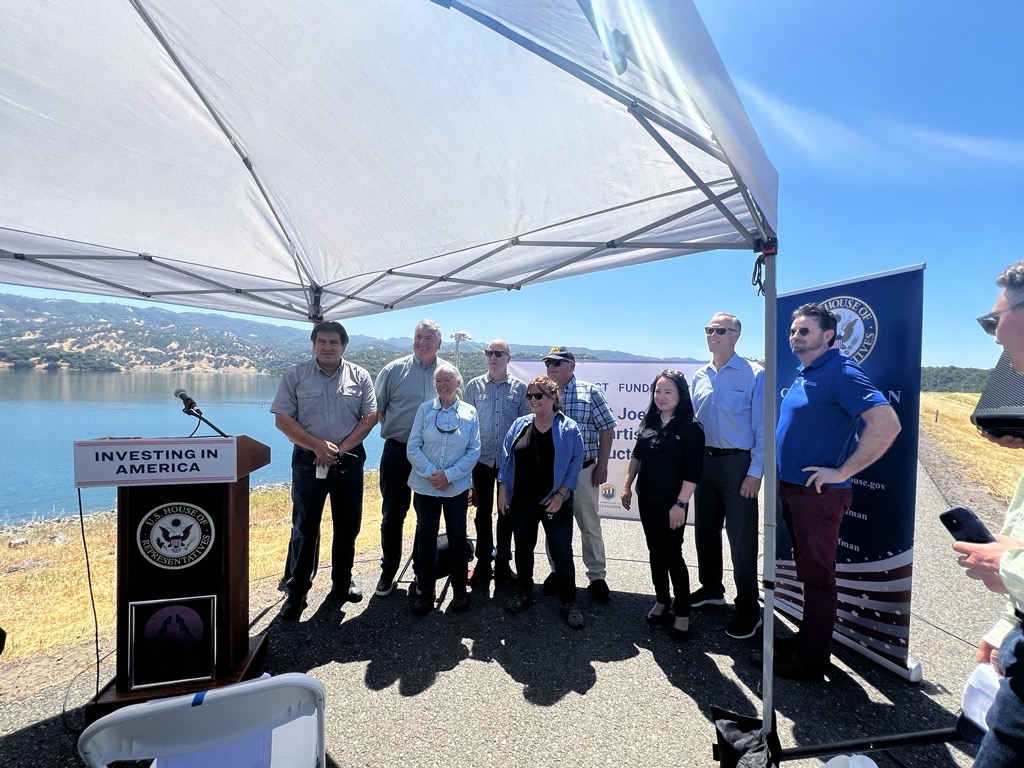
U.S. Bureau of Reclamation Commissioner Camile Touton joined Congressman Jared Huffman and David Rabbitt, Chair of the Eel-Russian Project Authority, Sonoma County Board of Supervisors and Sonoma Water Board of Directors for a site visit to announce a $2 million Infrastructure Investment grant to Sonoma Water. The funding will support the design of a new transfer pump station to meet the goals of the two-basin solution and ensure that the local aquatic ecosystem is restored and protected and ensure a reliable water supply for the region. | | |
Sonoma Water | 404 Aviation Blvd, Santa Rosa, CA 95403 | SonomaWater.org | | | | |